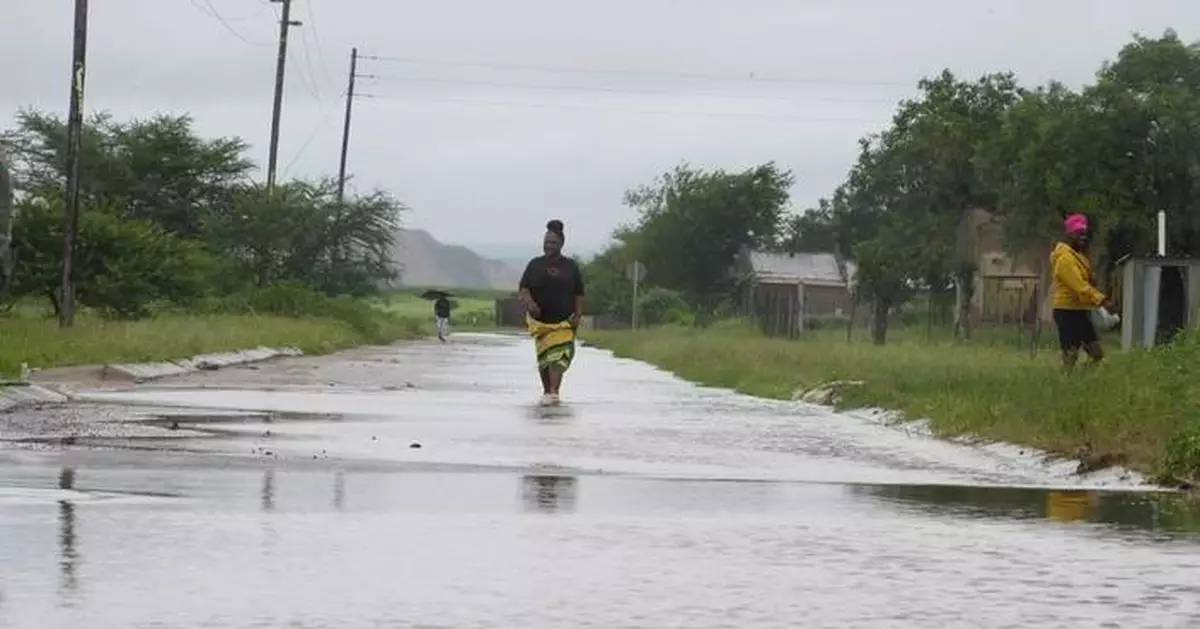
CAPE TOWN, South Africa (AP) — South Africa declared a national disaster Sunday over torrential rains and floods that have killed at least 30 people in the country's north, damaged thousands of homes and washed away roads and bridges.
The declaration was made by the head of the National Disaster Management Center and announced by the government. It allows the national government to coordinate the response to the disaster.
The worst impact is in the northern provinces of Limpopo and Mpumalanga, where the fatalities occurred. But the Ministry of Cooperative Governance and Traditional Affairs said at least three other provinces had also been affected by the severe weather.
Parts of South Africa and neighboring Mozambique and Zimbabwe have experienced heavy rains for weeks. That resulted in severe flooding in central and southern Mozambique and northern South Africa. More than 100 people have died in the three countries since the rains began late last year.
The floods in northern South Africa caused the closure of the Kruger National Park and the evacuation of hundreds of tourists and staff members from flooded camps to other parts of the park.
The premier of Limpopo province said the weather had caused around $240 million in damage in her province, with many houses and buildings washed away completely.
More than 100 people died in floods last year in South Africa's Eastern Cape province in the south of the country, while more than 400 died in flooding in the eastern KwaZulu-Natal province in 2022.
Rescue teams in South Africa continued with the search for four people, including 5- year-old Siyanda Baloyi believed to have been swept away when his home in Limpopo province was flooded last Thursday.
Authorities also said Sunday that a government official in South Africa’s Ekurhuleni municipality, east of Johannesburg, was missing after a vehicle he was traveling in was swept away by floods in Mozambique.
Andile Mngwevu and other occupants who were in the vehicle are still missing.
Meanwhile, South Africa’s famed Kruger National Park was set to reopen for visitors after a suspension forced by heavy flooding which led to the evacuation of over 300 tourists and staff.
The park, which is one the biggest game reserves in the world covering about 2,000 hectares (7.7 square miles) bordering Mozambique and Zimbabwe, suffered extensive damages as heavy downpours devastated the Mpumalanga and Limpopo provinces and killed more than 20 people.
Associated Press writer Mogomotsi Magome in Nkomazi, South Africa contributed to this report.
AP Africa news: https://apnews.com/hub/africa
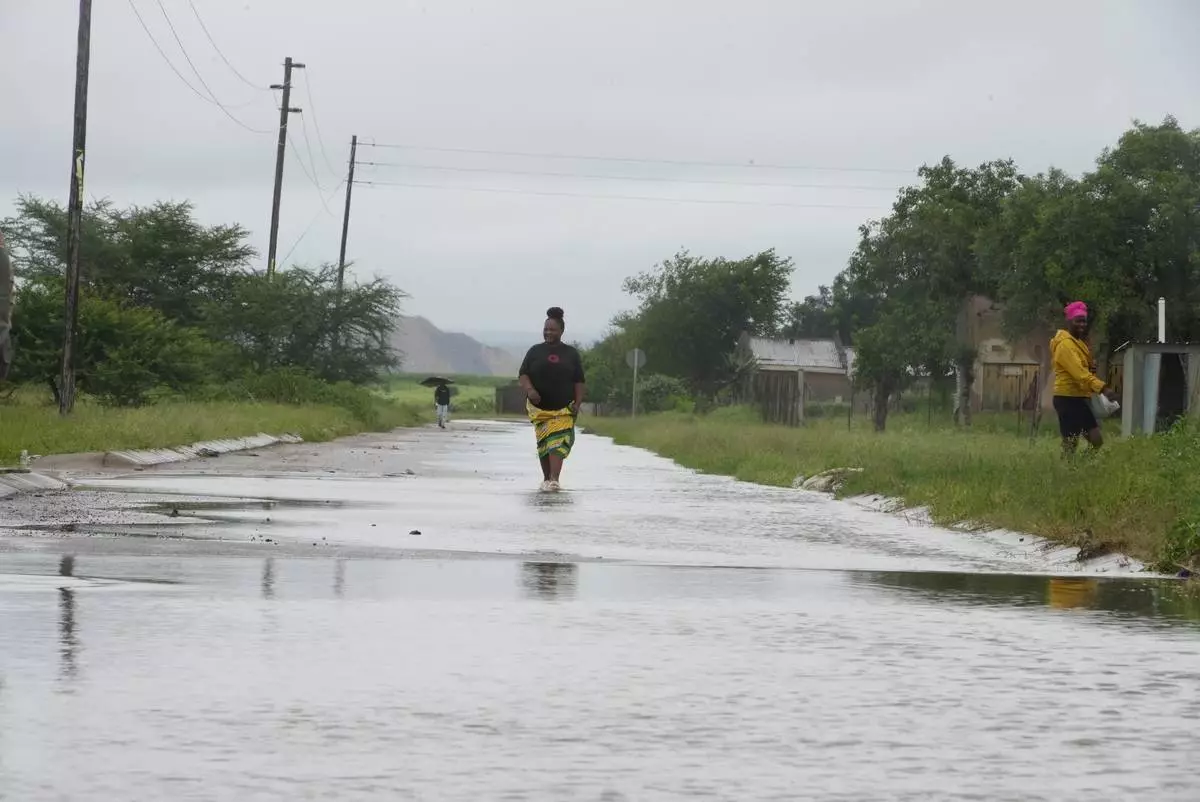
People walk through floodwaters in Nkomazi, Mpumalanga Province, South Africa, on Friday, Jan. 16, 2026. (AP Photo/Alfonso Nqunjana)
The dispute between the United States and Europe over the future of Greenland isn’t the first time the allies have been at loggerheads.
Deep disagreements have flared up from time to time since World War II, bringing trans-Atlantic diplomatic crises.
Here’s a look at some of them.
When France, the United Kingdom and Israel invaded Egypt in 1956, aiming to topple Egyptian President Gamal Abdel Nasser and take back control of the Suez Canal, the U.S. employed heavy diplomatic and economic pressure to stop it.
The U.S. intervention severely strained Washington’s relations with London and Paris, which were key allies during the Cold War, and was a milestone in Europe’s waning postwar influence.
While European countries except France gave diplomatic backing to the U.S., they refused to provide troops.
Street protests in Europe against the war had a significant political cost for the continent’s governments, which had to reconcile their support for the U.S. with an erosion of their domestic popularity, and were a burden on trans-Atlantic relations.
Russia’s deployment of its new SS-20 missiles that could quickly hit targets in Western Europe compelled NATO to install U.S. Pershing nuclear-tipped ballistic missiles and cruise missiles in Europe in order to maintain the balance of the nuclear arms threat.
The move ignited an uproar on the continent, where fears of a new arms race deepened. Huge anti-nuclear peace demonstrations, with protesters often aiming their ire at Washington, filled the streets of European capitals in the 1980s.
The U.S. invasion of Iraq in 2003 sparked a major crisis in relations with Europe, especially France and Germany after they refused to support the attack on President Saddam Hussein’s government.
Washington officials rebuked Paris and Berlin, with U.S. Defense Secretary Donald Rumsfeld referring to them as “Old Europe” and praising Eastern European countries as “New Europe.”
As part of its “war on terror,” the United States captured and sometimes kidnapped suspects, and then transferred them to locations in countries where they were interrogated and often tortured outside the reach of U.S. law.
While some European governments were complicit in the program, a public outcry forced political leaders to denounce the practice.
When U.S. President Donald Trump returned to the White House in January 2025, he upended three years of American policy toward Russia’s invasion of Ukraine.
Trump spoke warmly of Russian President Vladimir Putin, was cold toward Ukrainian President Volodymyr Zelenskyy, and then significantly reduced U.S. military aid for Kyiv.
Alarmed European leaders, who see their own security at stake in Ukraine, have pressed Trump to be on Ukraine’s side.
The Trump administration set out a new national security strategy last December that portrayed European allies as weak.
It was scathing of their migration and free speech policies, suggested they face the “prospect of civilizational erasure” and cast doubt on their long-term reliability as American partners.
With relations between the U.S. and Europe deteriorating, Trump threatened the continent last July with heavy trade tariffs in what was seen as a deeply hostile move.
Trump initially announced tariffs of 30% on the 27-nation European Union, which is the biggest trading partner of the United States. Both sides later agreed to a trade framework setting a 15% tariff on most goods.
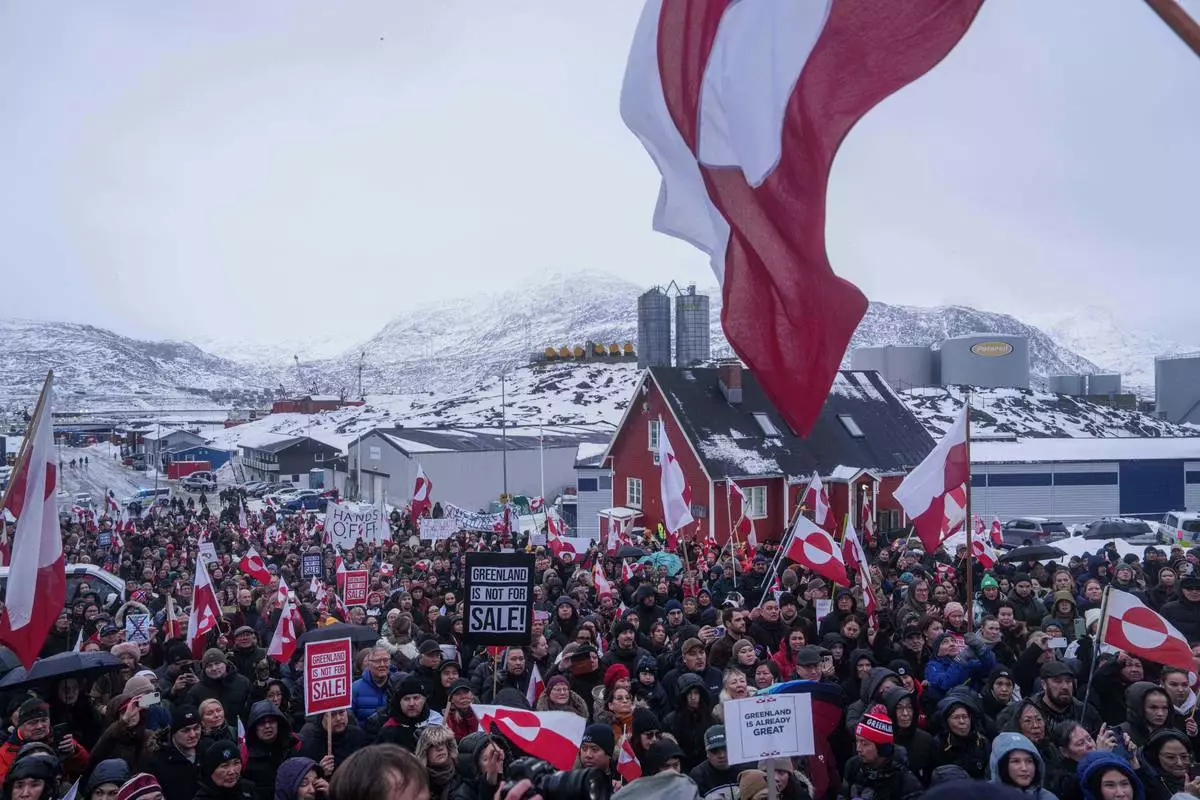
People protest against Trump's policy towards Greenland in front of the US consulate in Nuuk, Greenland, Saturday, Jan. 17, 2026. (AP Photo/Evgeniy Maloletka)
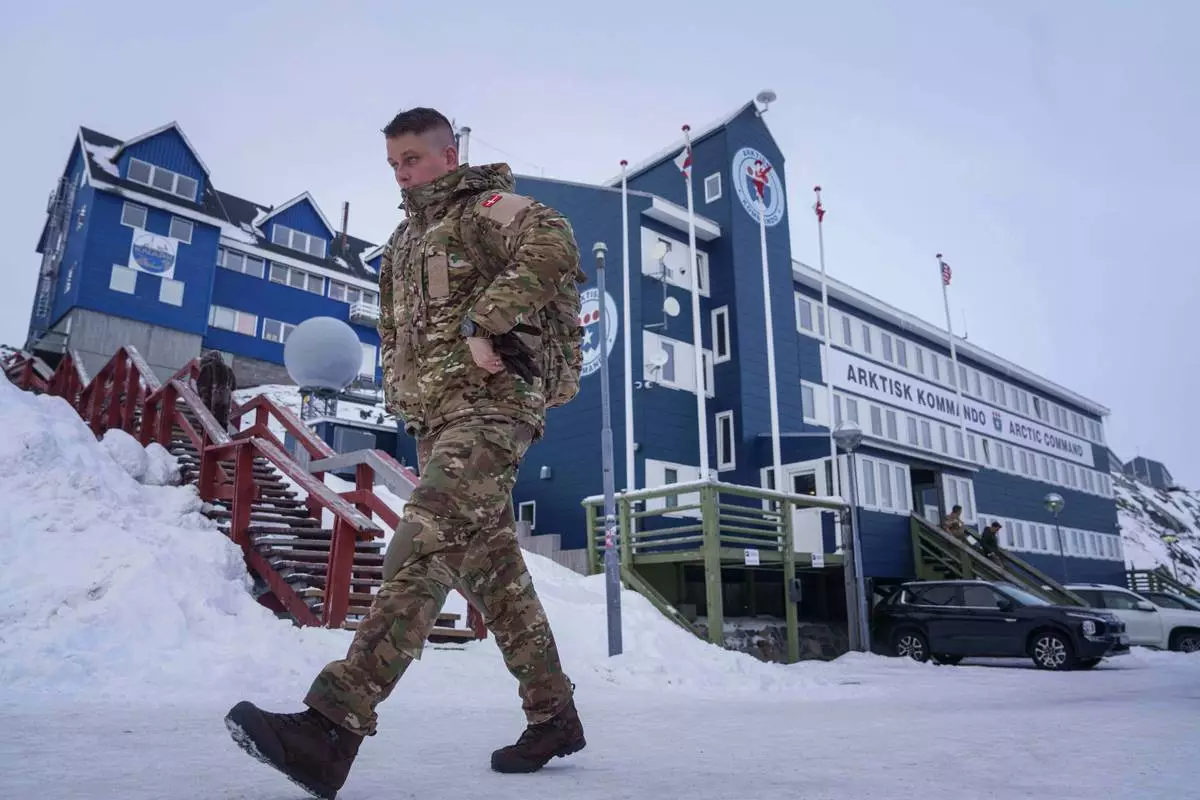
A Danish serviceman walks in front of Joint Arctic Command center in Nuuk, Greenland, on Friday, Jan. 16, 2026. (AP Photo/Evgeniy Maloletka)