TEL AVIV, Israel (AP) — Two of President Donald Trump’s closest confidants, a former British prime minister, an American general and a collection of top officials from Middle Eastern governments are at the forefront of the U.S. Gaza ceasefire plan.
The White House this week announced the members of a new Palestinian committee to run Gaza’s day to day affairs, along with an executive committee of international experts who will supervise these efforts. They include a high-powered group of people with strong connections across the region and varying degrees of leverage of Israel and Hamas.
Click to Gallery
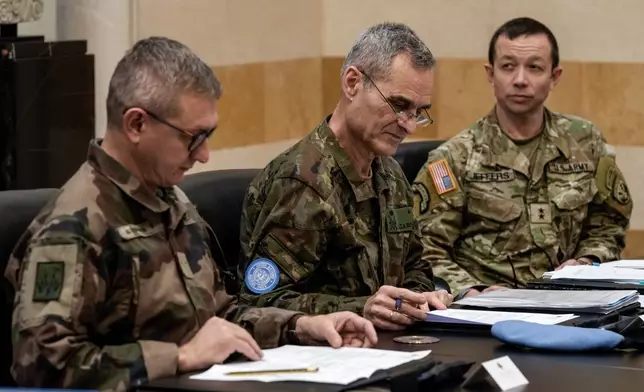
FILE - Members of the committee monitoring the Lebanon-Israel ceasefire, the Head of Mission and Force Commander of the United Nations Interim Force in Lebanon (UNIFIL), Major General Aroldo Lazaro Saenz of Spain, center, US Maj. Gen. Jasper Jeffers, right, and Gen. Guillaume Ponchamp of France, left, meet with Lebanese caretaker Prime Minister Najib Mikati, at the government palace in Beirut, Lebanon, Tuesday, Dec. 24, 2024. (AP Photo/Bilal Hussein, File)
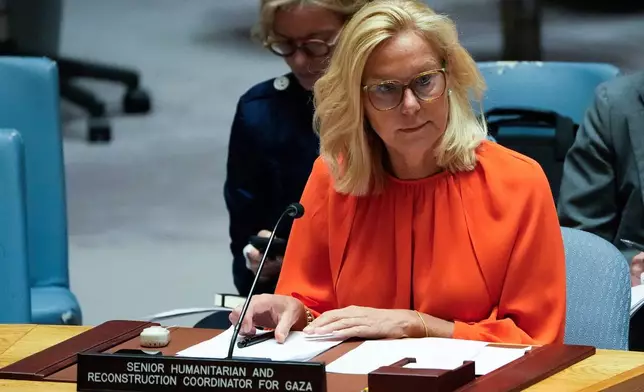
FILE - Sigrid Kaag, United Nations senior humanitarian and reconstruction coordinator for Gaza, attends a Security Council meeting at the United Nations headquarters, Tuesday, July 2, 2024. (AP Photo/Julia Nikhinson, File)
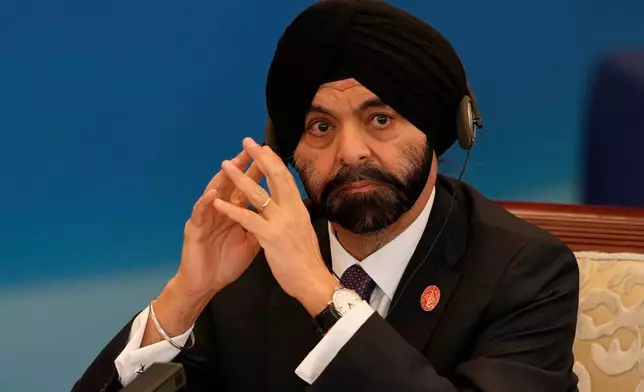
FILE - President of the World Bank Ajay Banga attends the 1+10 Dialogue between Chinese Premier Li Qiang and with heads of major international economic organizations in Beijing, China, Tuesday, Dec. 9, 2025. (AP Photo/Ng Han Guan, File)
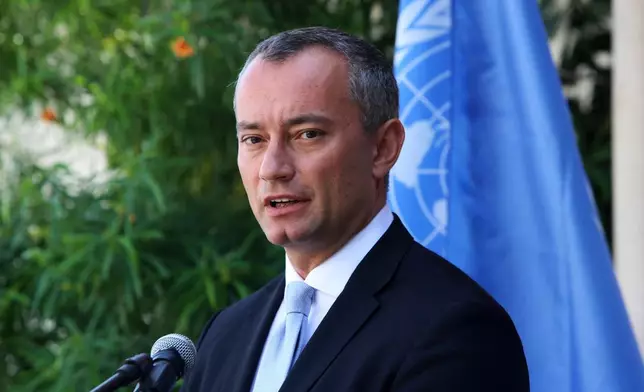
FILE - In this Sept. 25, 2017 file photo, the U.N. special envoy for the Middle East Peace Process Nickolay Mladenov, attends a press conference at the (UNSCO) offices in Gaza City. (AP Photo/Adel Hana, File)
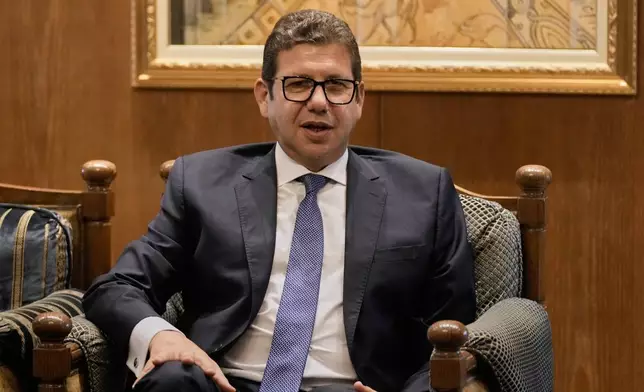
FILE - Egypt's intelligence chief Hassan Rashad attends his meeting with the Lebanese Parliament Speaker Nabih Berri in Beirut, Lebanon, Tuesday, Oct. 28, 2025. (AP Photo/Hassan Ammar, File)
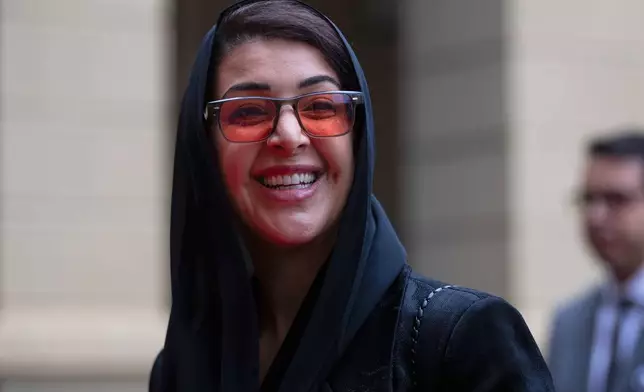
FILE - The UAE's Minister of State for International Cooperation Reem Al Hashimy arrives for the BRICS foreign ministers' meeting at Itamaraty Palace in Rio de Janeiro, Tuesday, April 29, 2025. (AP Photo/Bruna Prado, File)
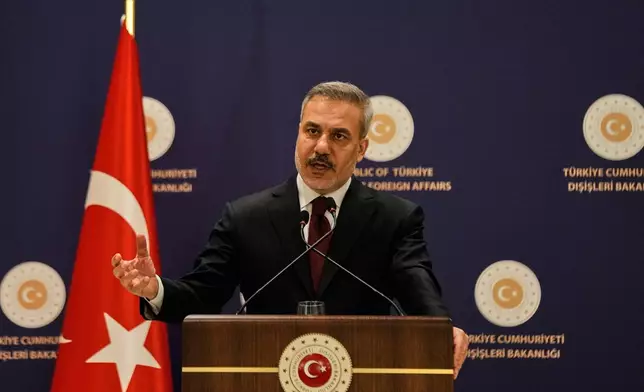
FILE - Turkey's Foreign Minister Hakan Fidan answers questions from reporters during a news conference in Istanbul, Turkey, Thursday, Jan. 15, 2026. (AP Photo/Khalil Hamra, File)
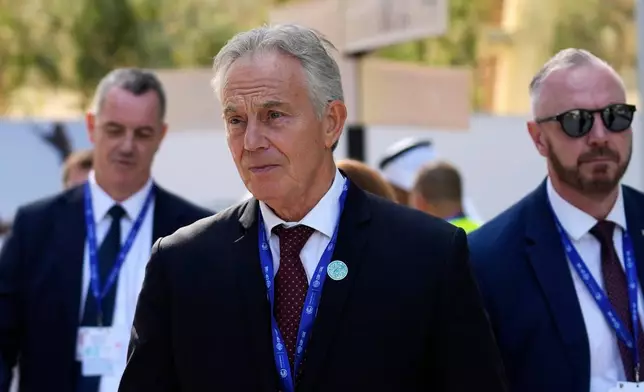
FILE - Britain's former Prime Minister Tony Blair walks through the COP28 U.N. Climate Summit, Sunday, Dec. 3, 2023, in Dubai, United Arab Emirates. (AP Photo/Rafiq Maqbool, file)
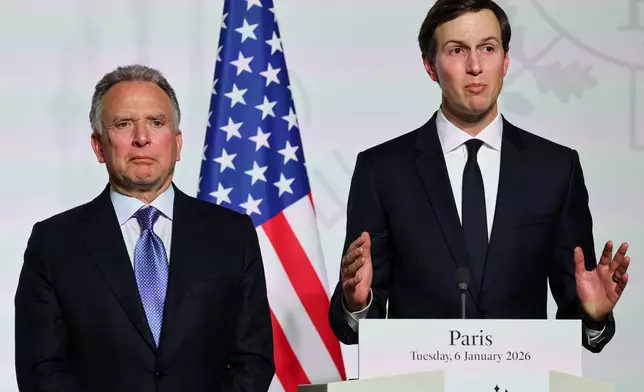
FILE - US envoy Steve Witkoff, left, and US businessman Jared Kushner attend a press conference after the signing of the declaration on deploying post-ceasefire force in Ukraine during the 'Coalition of the Willing' summit on security guarantees for Ukraine, at the Elysee Palace in Paris, Tuesday, Jan 6, 2026. (Ludovic Marin, Pool photo via AP, File)
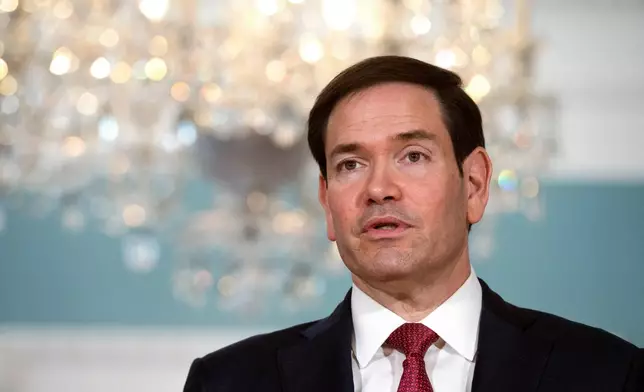
FILE - Secretary of State Marco Rubio makes a statement to reporters while meeting with Armenian Foreign Minister Ararat Mirzoyan at the State Department in Washington, Tuesday, Jan. 13, 2026. (AP Photo/Cliff Owen, File)
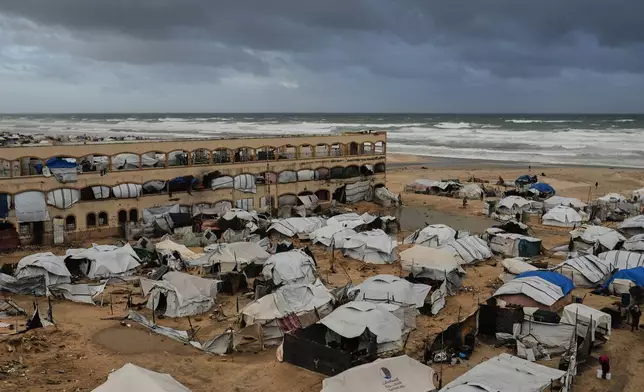
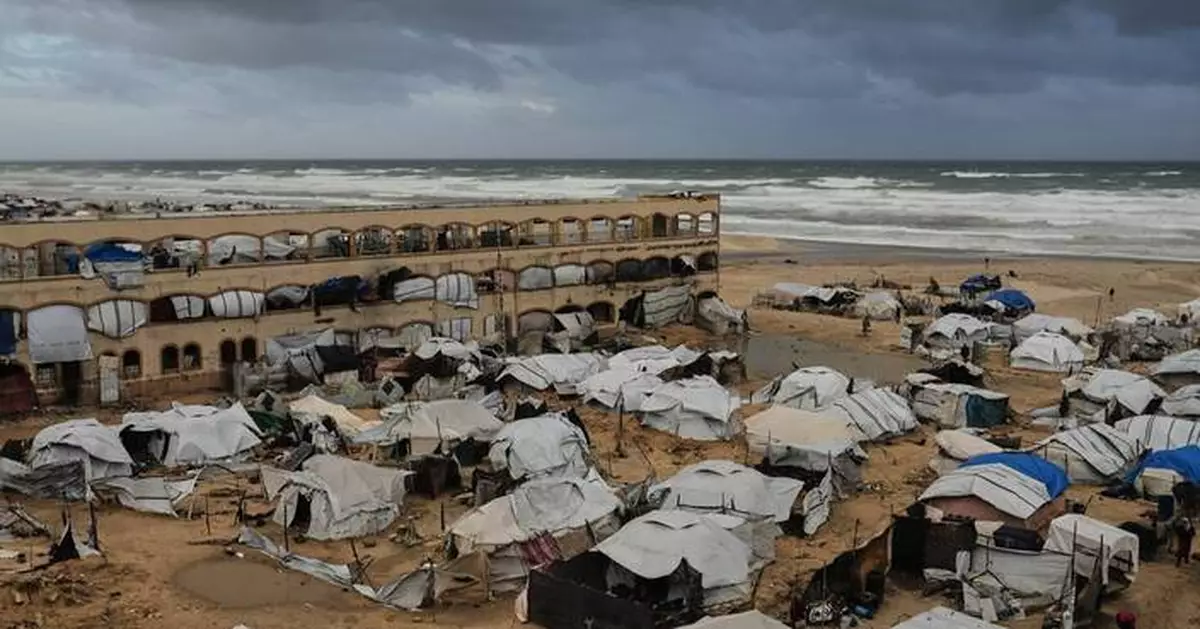
FILE - A displacement camp sheltering Palestinians on a beach amid stormy weather is seen in Gaza City, Jan. 13, 2026. (AP Photo/Jehad Alshrafi, File)
The entire effort will be overseen by the “Board of Peace” — a collection of world leaders led by Trump whose other members still have not been named.
Still, this week’s appointments mark an important step forward for Trump’s ambitious ceasefire plan. The White House this week said the plan had entered its second phase, which includes the new Palestinian committee in Gaza, deployment of an international security force, disarmament of Hamas and reconstruction of the war-battered territory.
Here’s a closer look at the appointments of the executive committee:
Rubio is the U.S. secretary of state and national security adviser, putting him at the center of American foreign policy.
Witkoff has served as the White House Mideast envoy during Trump’s second term in office. A real estate developer and close friend of Trump, he was a key architect of the ceasefire plan, which took effect on Oct. 10.
Kushner is Trump’s son-in-law who has long been a key foreign policy adviser to Trump. Kushner was a driving force in the Abraham Accords, a series of diplomatic agreements between Israel and Arab countries during Trump’s first term. Kushner has returned to the White House as an important player in pushing forward the new ceasefire.
The British prime minister from 1997 to 2007, Blair has decades of experience in the Middle East. He took the United Kingdom into the U.S.-led invasion of Iraq in 2003 despite strong public opposition. He later served as Middle East envoy for the “Quartet” of Mideast mediators — the United States, the European Union, Russia and the United Nations. The post began with great promise but struggled to deliver results in its quest to promote peace between Israel and the Palestinians.
Jeffers has been appointed commander of the International Stabilization Force, an on-the-ground multinational force meant to enforce and guarantee the ceasefire. Jeffers previously served as head of the U.S. military’s special operations command and oversaw implementation of the 2024 ceasefire between Israel and Hezbollah.
Fidan has been the Turkish foreign minister since 2023 and is close to President Recep Tayyip Erdogan. While Turkey has a strained relationship with Israel, it has good relations with Hamas and could play an important role in persuading the Islamic group to yield power and disarm.
Ali Al-Thawadi is a diplomat from Qatar, which has been a key mediator between Israel and Hamas throughout the war.
Rashad is the director of Egypt’s intelligence agency. Egypt borders both Israel and Gaza and, like Qatar, has been a key mediator throughout the war.
Al-Hashimy is a Cabinet minister for the United Arab Emirates. The wealthy Gulf country has strong ties with Israel and is expected to play an important role in the reconstruction process of Gaza.
Banga is the president of the World Bank. Born in India, since moving to the U.S. in the early 2000s, Banga has held prestigious positions in the corporate world, including heading Mastercard and serving as director of Exor and Temasek, large holding companies.
Rowan is a co-founder, chief executive and chairman of Apollo Global Management, a U.S. asset-management firm. The billionaire businessman is also a philanthropist who has supported projects in Israel, the U.S. Jewish community and the University of Pennsylvania, where he and Trump both studied.
Kaag, the Netherlands’ former deputy prime minister, has served as the United Nations coordinator for humanitarian aid to Gaza since the war erupted in late 2023.
Gabriel served as a policy adviser on Trump’s first presidential campaign and currently is deputy national security adviser.
Gabay is an Israeli billionaire who is a major shareholder in Aroundtown SA, a global real estate group. He previously was chief executive of Israel’s largest bank, Leumi. Gabay’s presence gives Israel an unofficial representative on the executive board.
Mladenov, a Bulgarian politician and former U.N. envoy to the Middle East, will serve as the “high representative” for Gaza. He will act as the on-the-ground link between the Board of Peace and the Palestinian technocratic committee.
Shaath has been named as head of the new Palestinian committee administering Gaza’s daily affairs. Shaath, an engineer, is a Gaza native who previously served as deputy transportation minister for the internationally recognized Palestinian Authority in the West Bank.
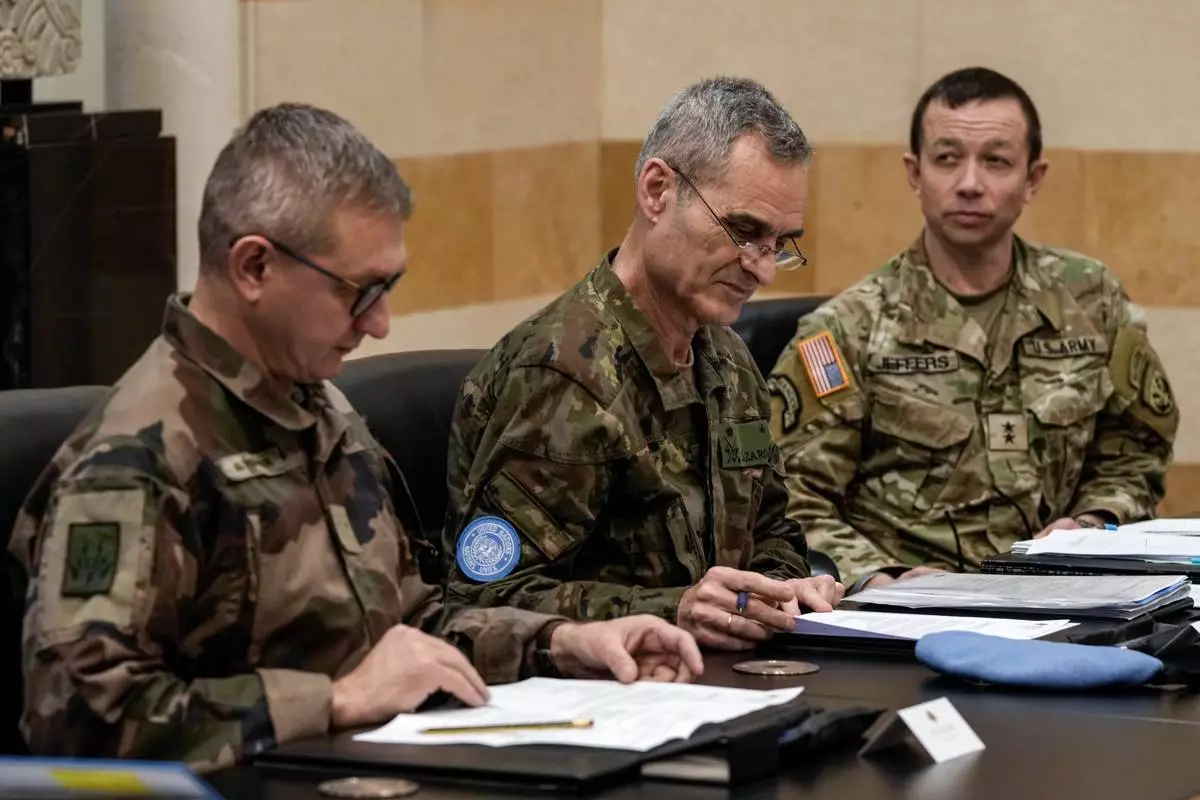
FILE - Members of the committee monitoring the Lebanon-Israel ceasefire, the Head of Mission and Force Commander of the United Nations Interim Force in Lebanon (UNIFIL), Major General Aroldo Lazaro Saenz of Spain, center, US Maj. Gen. Jasper Jeffers, right, and Gen. Guillaume Ponchamp of France, left, meet with Lebanese caretaker Prime Minister Najib Mikati, at the government palace in Beirut, Lebanon, Tuesday, Dec. 24, 2024. (AP Photo/Bilal Hussein, File)
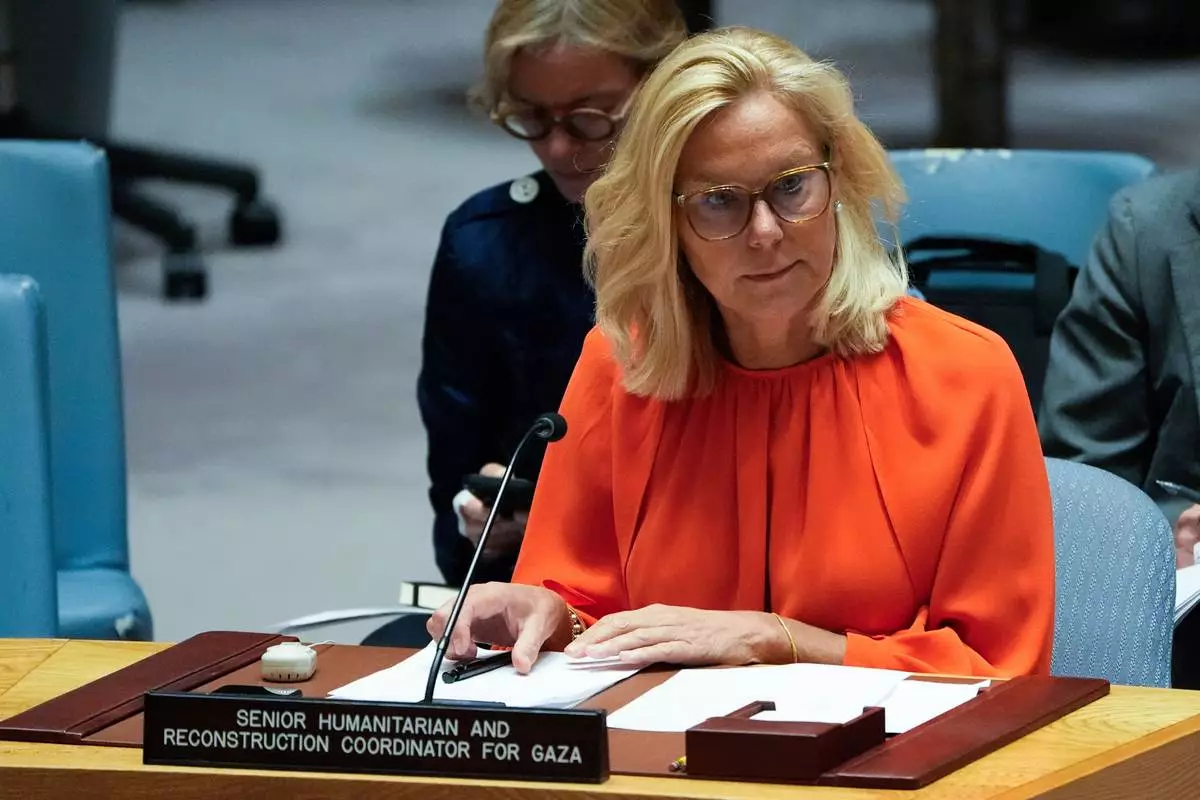
FILE - Sigrid Kaag, United Nations senior humanitarian and reconstruction coordinator for Gaza, attends a Security Council meeting at the United Nations headquarters, Tuesday, July 2, 2024. (AP Photo/Julia Nikhinson, File)
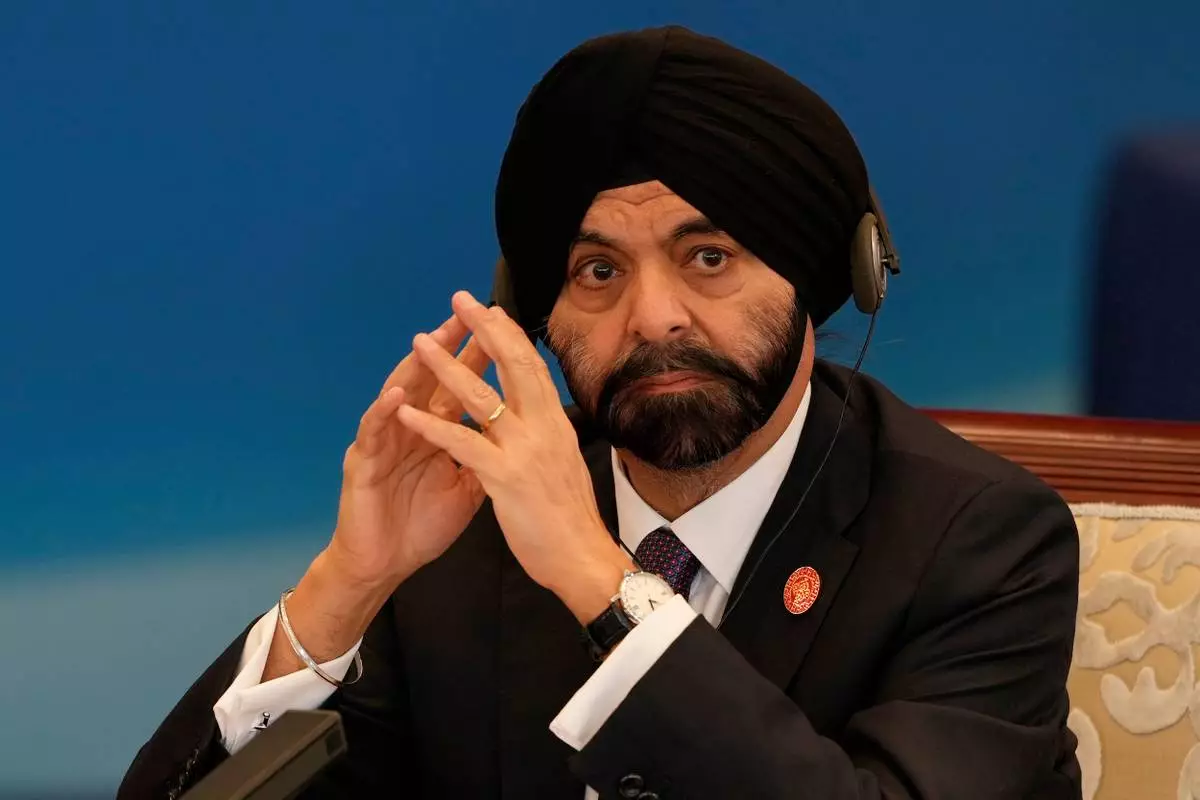
FILE - President of the World Bank Ajay Banga attends the 1+10 Dialogue between Chinese Premier Li Qiang and with heads of major international economic organizations in Beijing, China, Tuesday, Dec. 9, 2025. (AP Photo/Ng Han Guan, File)
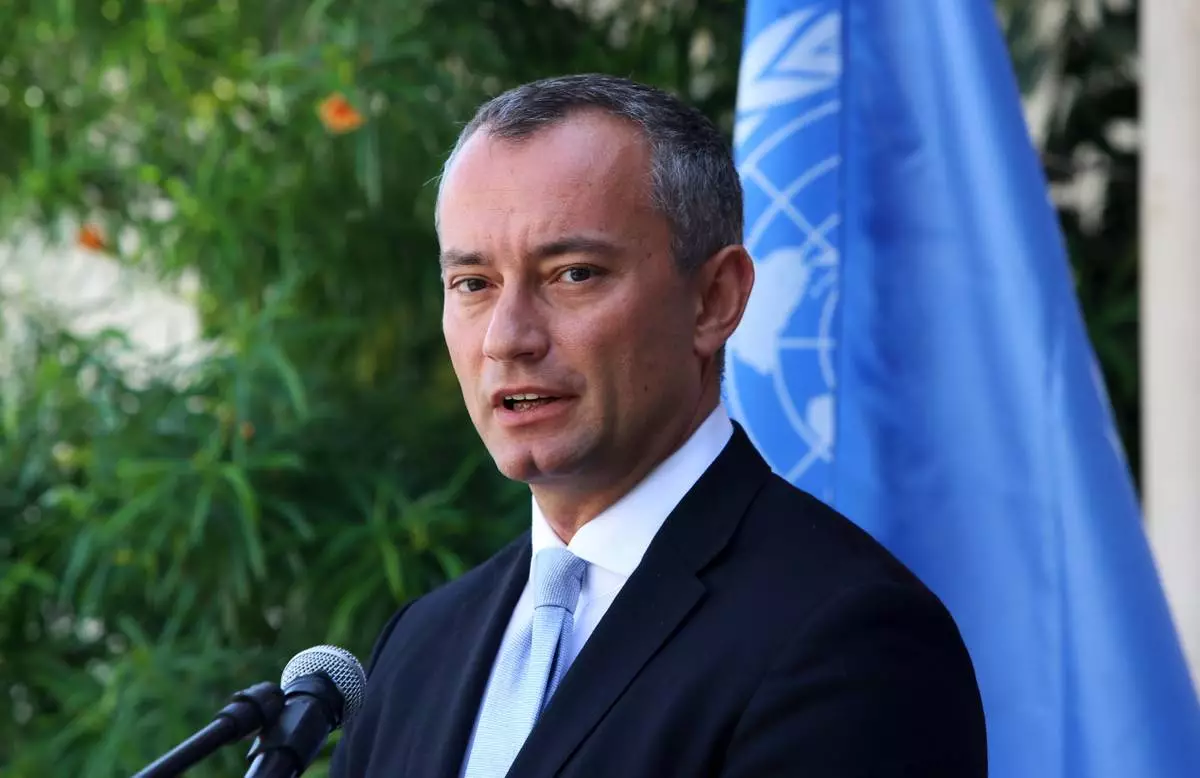
FILE - In this Sept. 25, 2017 file photo, the U.N. special envoy for the Middle East Peace Process Nickolay Mladenov, attends a press conference at the (UNSCO) offices in Gaza City. (AP Photo/Adel Hana, File)
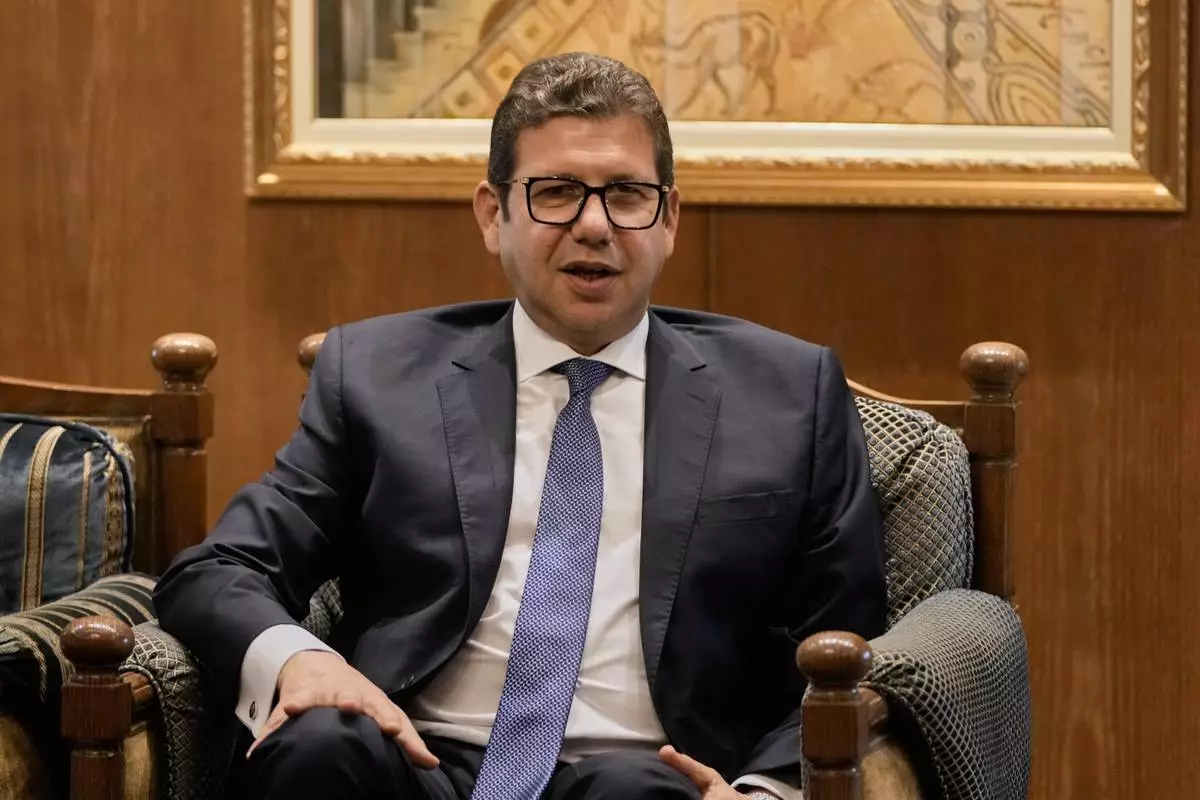
FILE - Egypt's intelligence chief Hassan Rashad attends his meeting with the Lebanese Parliament Speaker Nabih Berri in Beirut, Lebanon, Tuesday, Oct. 28, 2025. (AP Photo/Hassan Ammar, File)
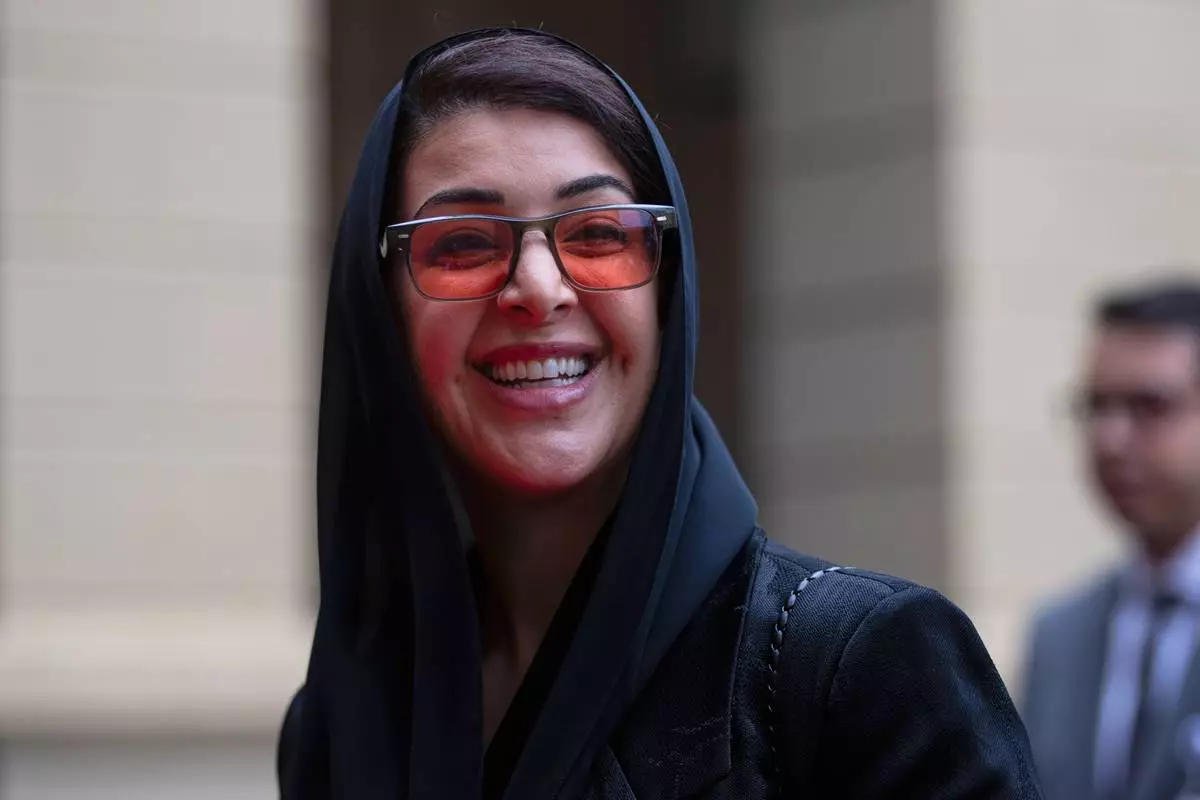
FILE - The UAE's Minister of State for International Cooperation Reem Al Hashimy arrives for the BRICS foreign ministers' meeting at Itamaraty Palace in Rio de Janeiro, Tuesday, April 29, 2025. (AP Photo/Bruna Prado, File)
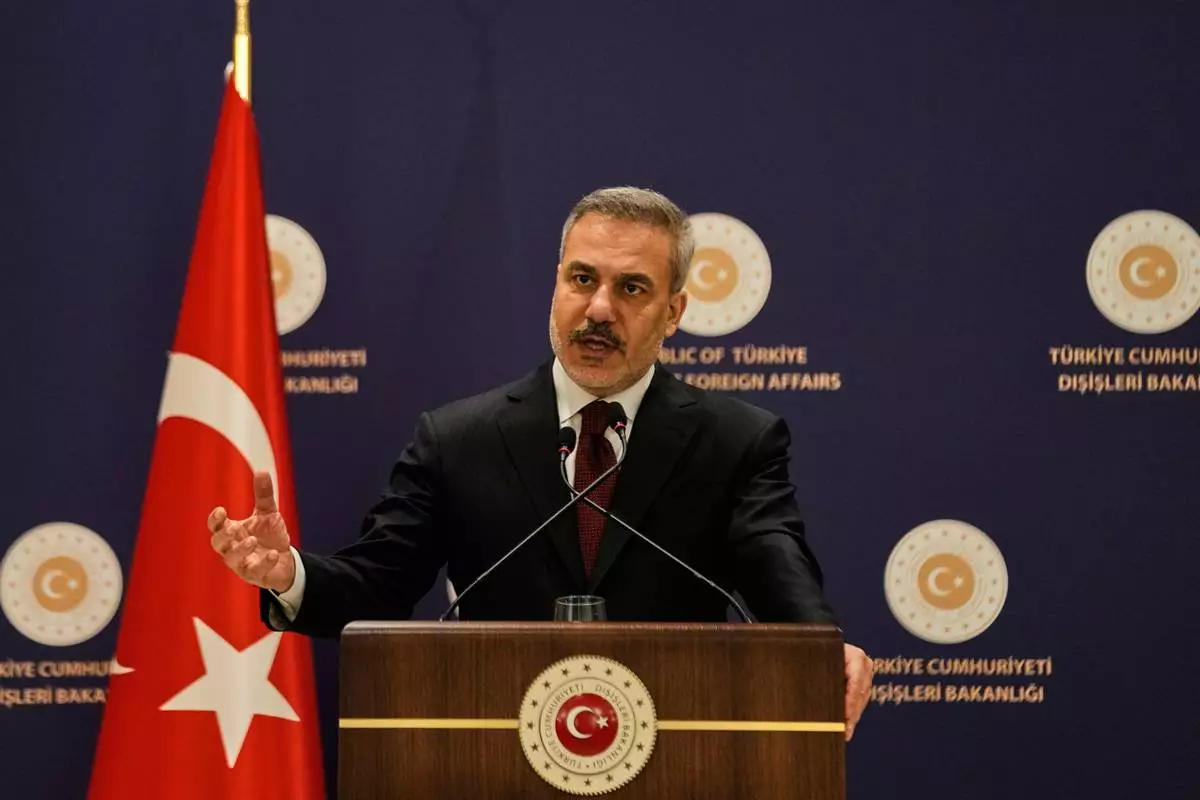
FILE - Turkey's Foreign Minister Hakan Fidan answers questions from reporters during a news conference in Istanbul, Turkey, Thursday, Jan. 15, 2026. (AP Photo/Khalil Hamra, File)
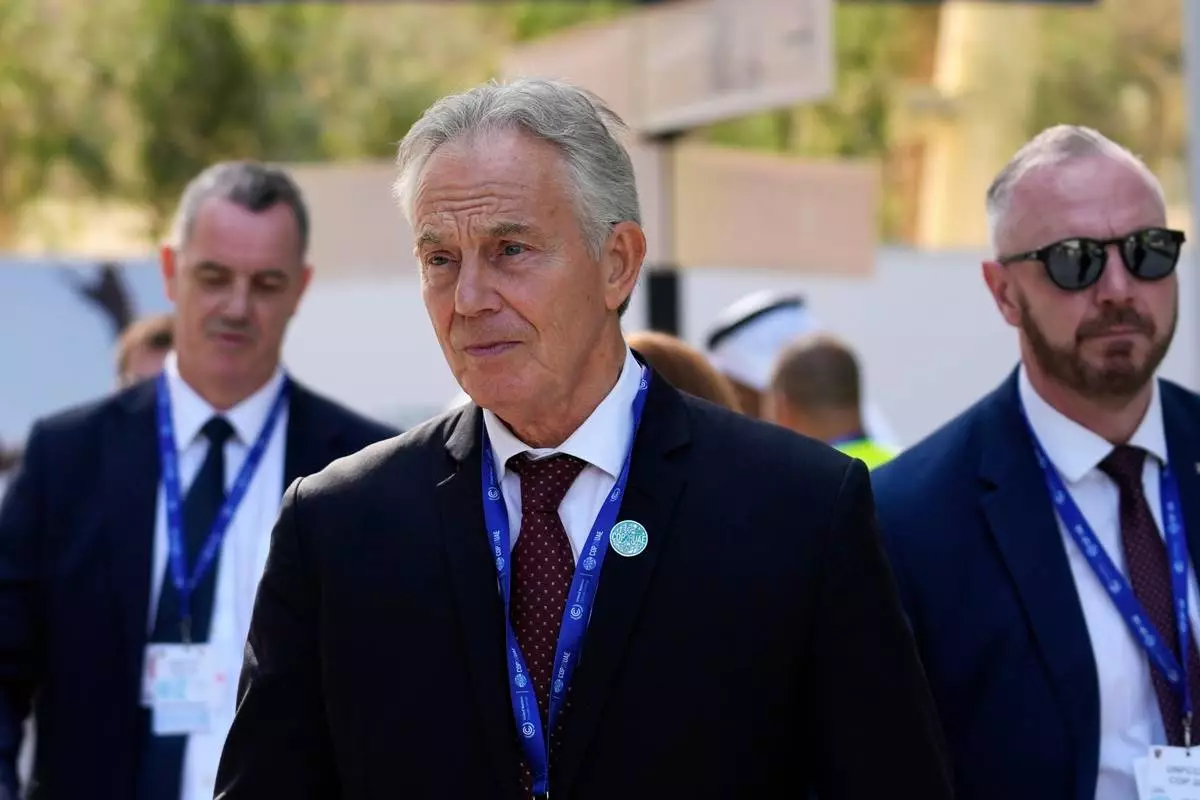
FILE - Britain's former Prime Minister Tony Blair walks through the COP28 U.N. Climate Summit, Sunday, Dec. 3, 2023, in Dubai, United Arab Emirates. (AP Photo/Rafiq Maqbool, file)
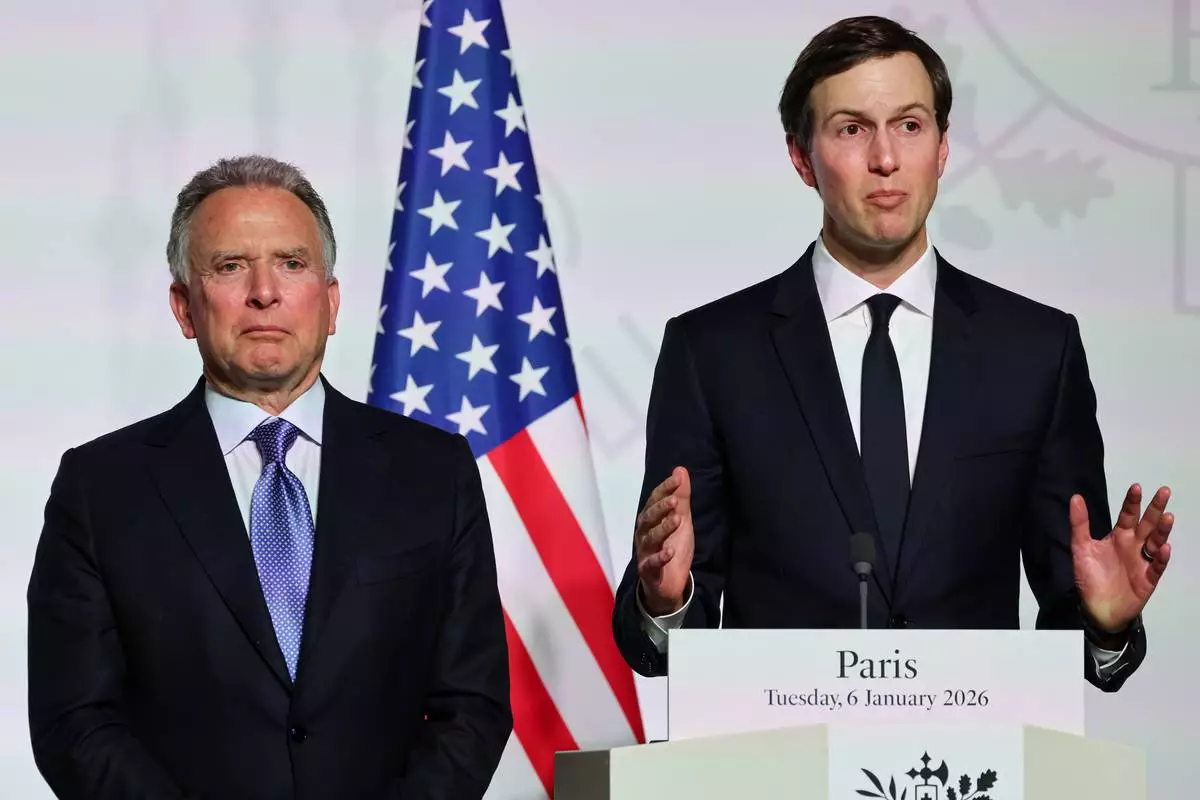
FILE - US envoy Steve Witkoff, left, and US businessman Jared Kushner attend a press conference after the signing of the declaration on deploying post-ceasefire force in Ukraine during the 'Coalition of the Willing' summit on security guarantees for Ukraine, at the Elysee Palace in Paris, Tuesday, Jan 6, 2026. (Ludovic Marin, Pool photo via AP, File)
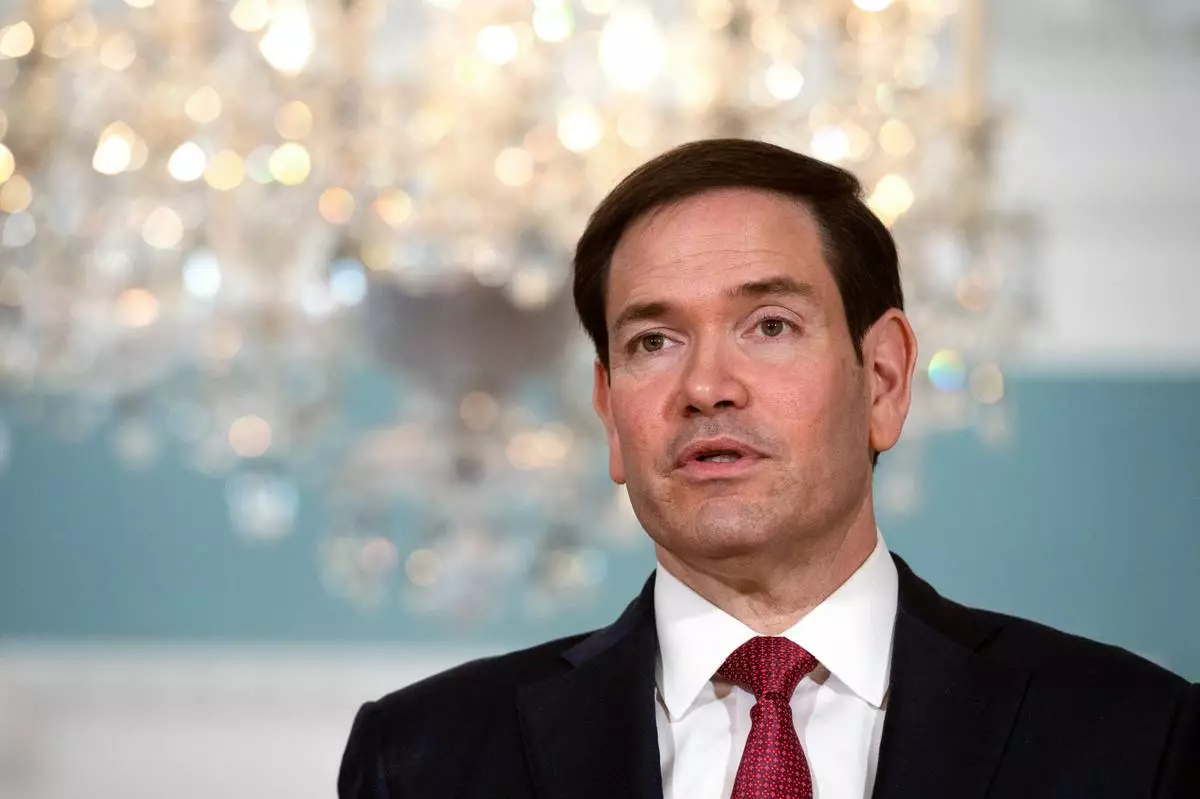
FILE - Secretary of State Marco Rubio makes a statement to reporters while meeting with Armenian Foreign Minister Ararat Mirzoyan at the State Department in Washington, Tuesday, Jan. 13, 2026. (AP Photo/Cliff Owen, File)
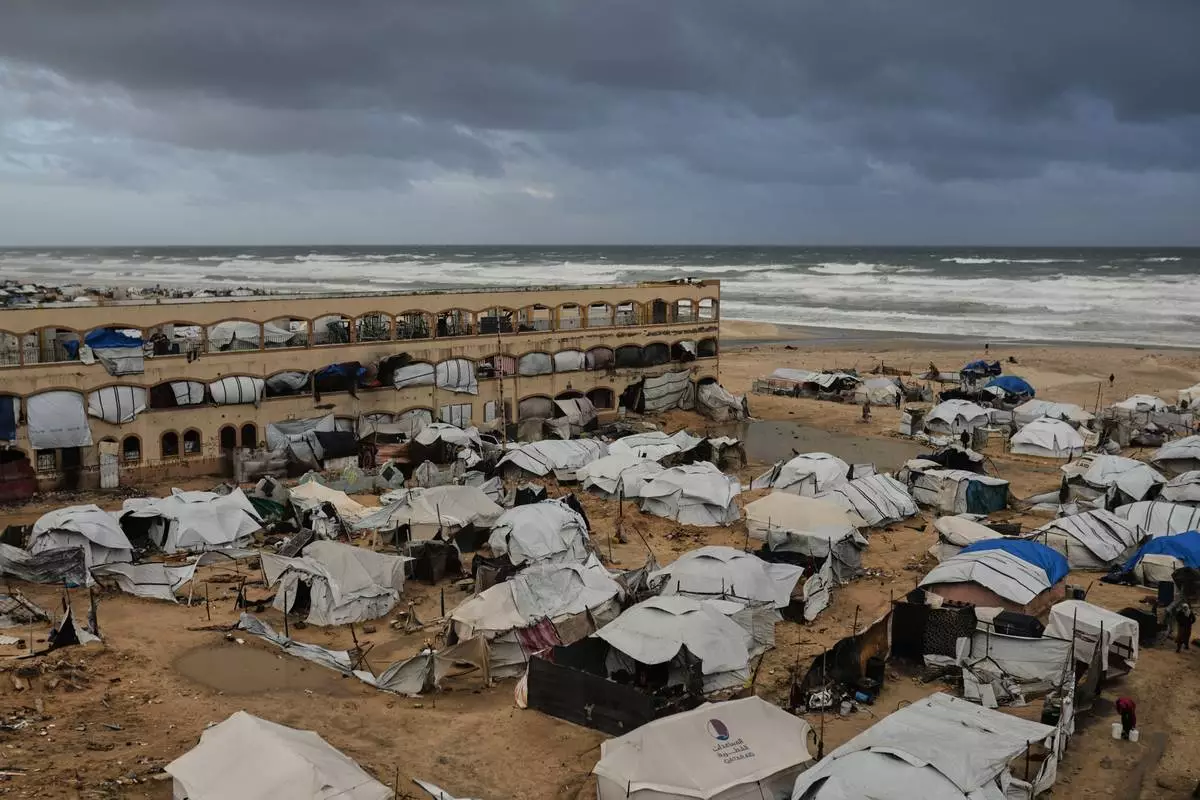
FILE - A displacement camp sheltering Palestinians on a beach amid stormy weather is seen in Gaza City, Jan. 13, 2026. (AP Photo/Jehad Alshrafi, File)