Skip to Content Facebook Feature Image

Trump's Twin Cities immigration crackdown has made chaos and tension the new normal

News

Trump's Twin Cities immigration crackdown has made chaos and tension the new normal
News

News

Trump's Twin Cities immigration crackdown has made chaos and tension the new normal

2026-01-17 13:01 Last Updated At:13:30

MINNEAPOLIS (AP) — Work starts around sunrise for the federal officers carrying out the immigration crackdown in and around the Twin Cities, with hundreds of people in tactical gear streaming out of a bland office building near the main airport.

Within minutes, hulking SUVs, pickup trucks and minivans begin leaving, forming the unmarked convoys that have quickly become feared and common sights in the streets of Minneapolis, St. Paul and their suburbs.

More Images
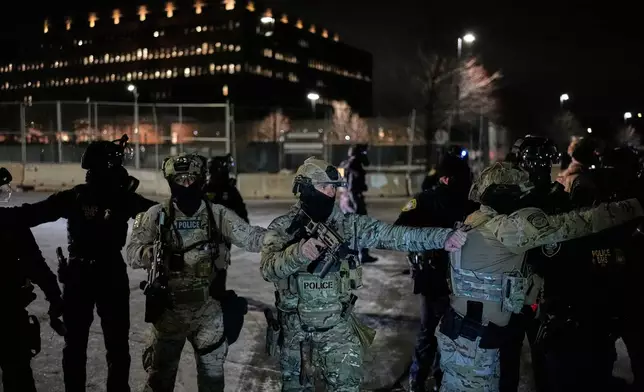
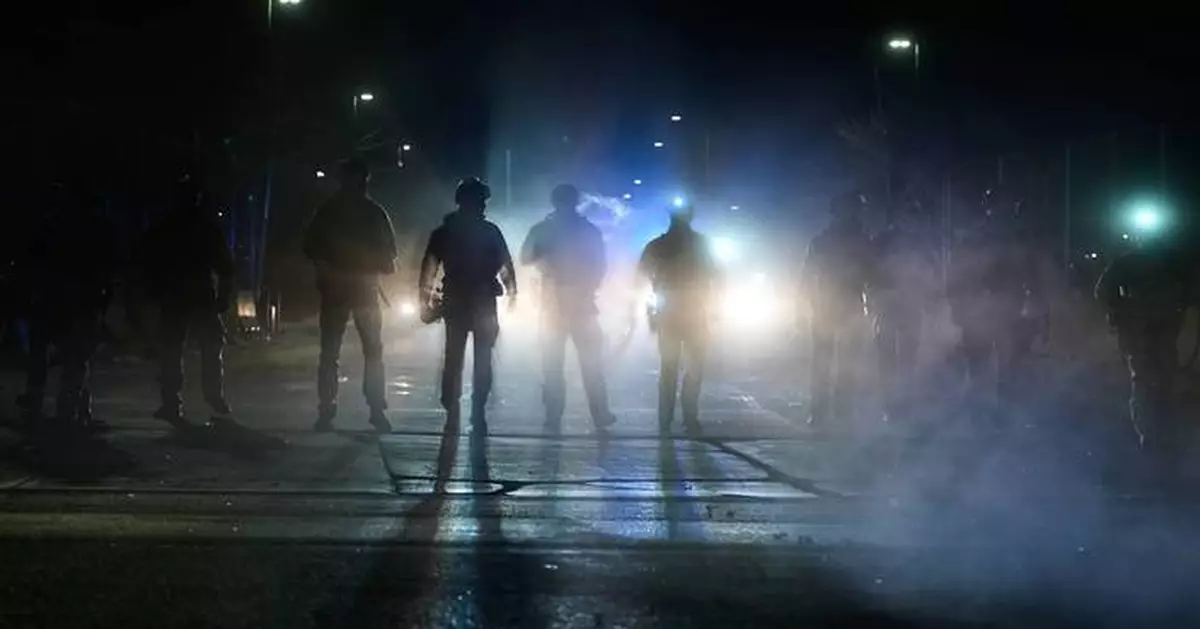
Federal immigration officers confront protesters outside Bishop Henry Whipple Federal Building, Thursday, Jan. 15, 2026, in Minneapolis. (AP Photo/Yuki Iwamura)
Federal immigration officers confront protesters outside Bishop Henry Whipple Federal Building, Thursday, Jan. 15, 2026, in Minneapolis. (AP Photo/Yuki Iwamura)

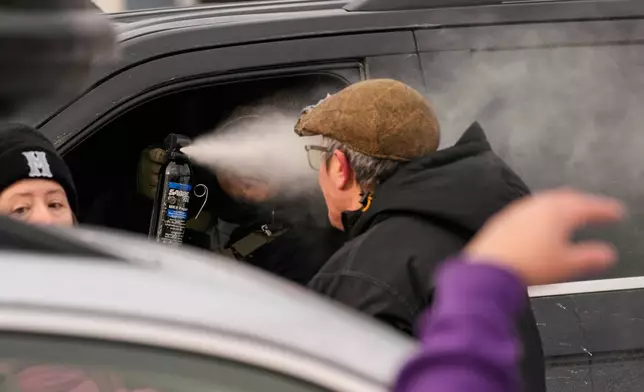
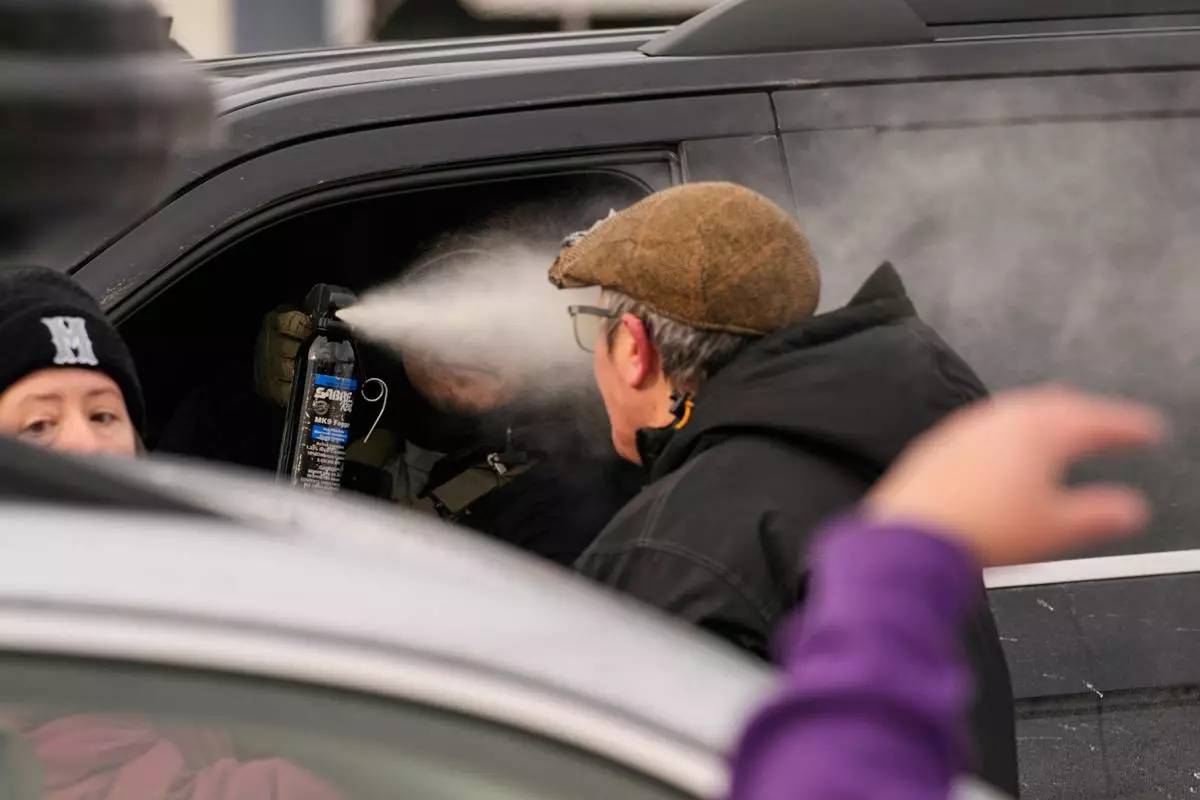
A federal immigration officer deploys pepper spray as officers make an arrest Sunday, Jan. 11, 2026, in Minneapolis. (AP Photo/John Locher)
A federal immigration officer deploys pepper spray as officers make an arrest Sunday, Jan. 11, 2026, in Minneapolis. (AP Photo/John Locher)

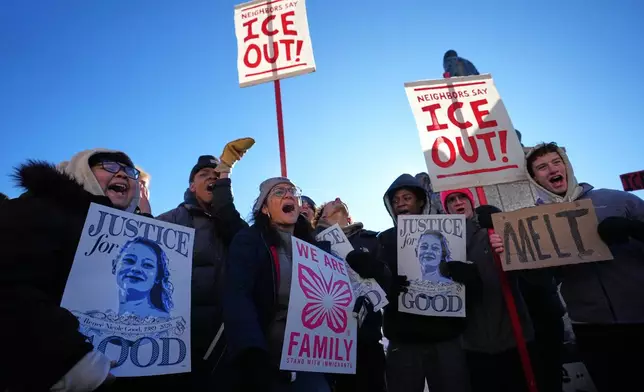
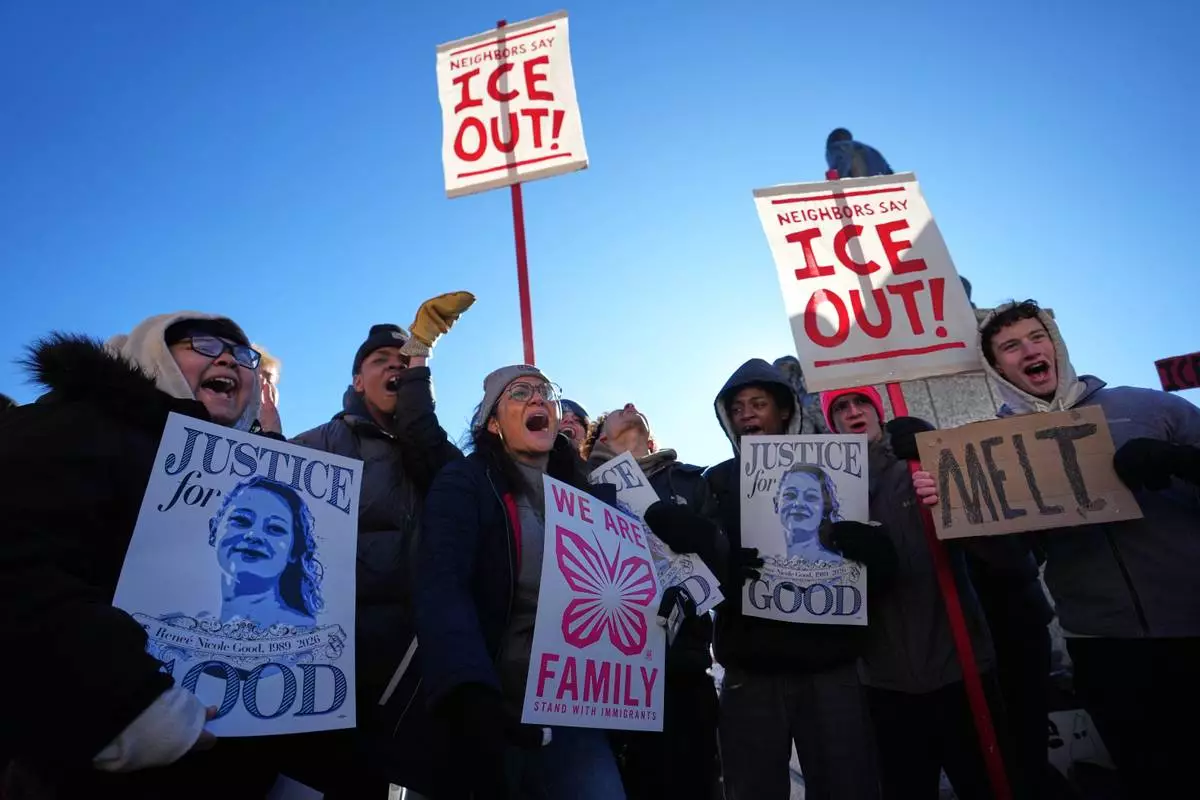
Protesters gather in front of the Minnesota State Capitol in response to the death of Renee Good, who was fatally shot by an ICE officer last week, Wednesday, Jan. 14, 2026, in St. Paul, Minn. (AP Photo/Abbie Parr)
Protesters gather in front of the Minnesota State Capitol in response to the death of Renee Good, who was fatally shot by an ICE officer last week, Wednesday, Jan. 14, 2026, in St. Paul, Minn. (AP Photo/Abbie Parr)

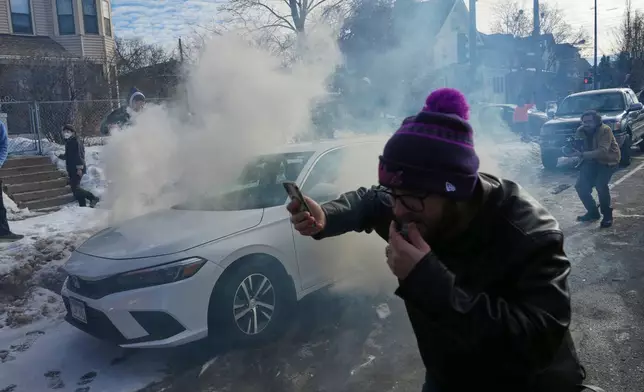
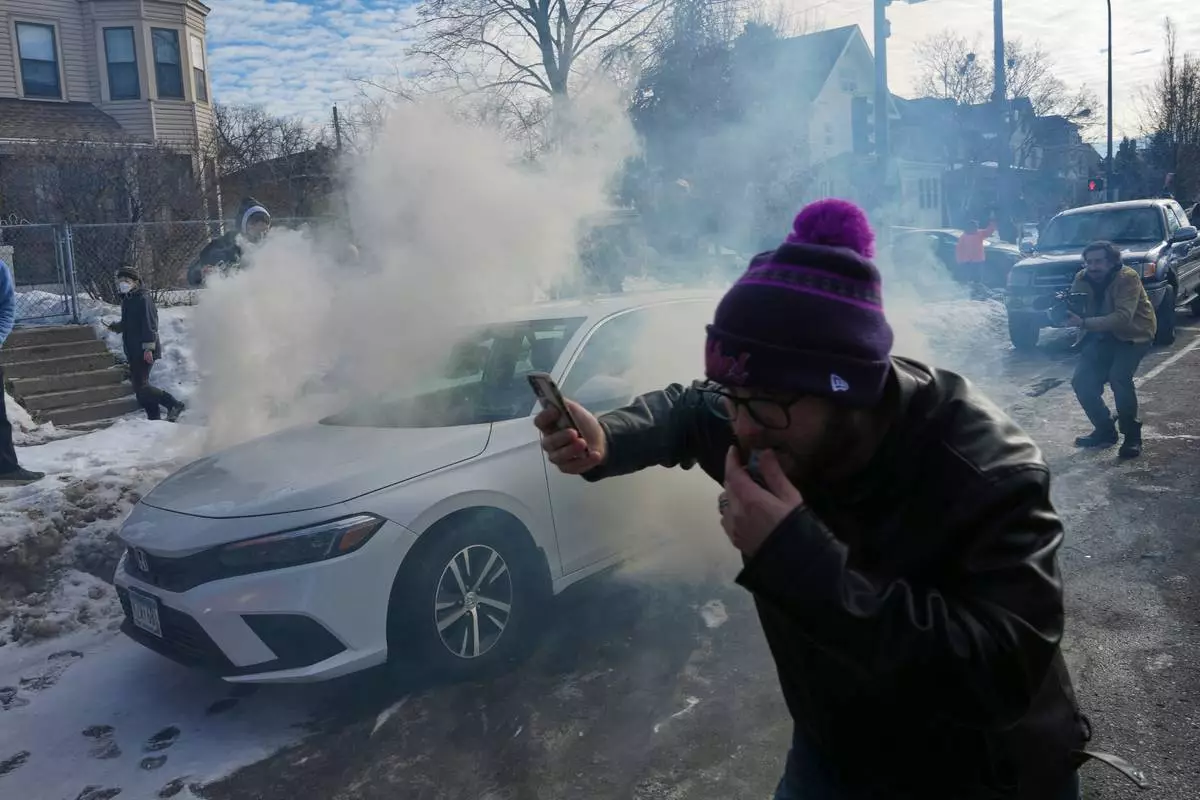
Protesters try to avoid tear gas dispersed by federal agents, Monday, Jan. 12, 2026 in Minneapolis (AP Photo/Adam Gray)
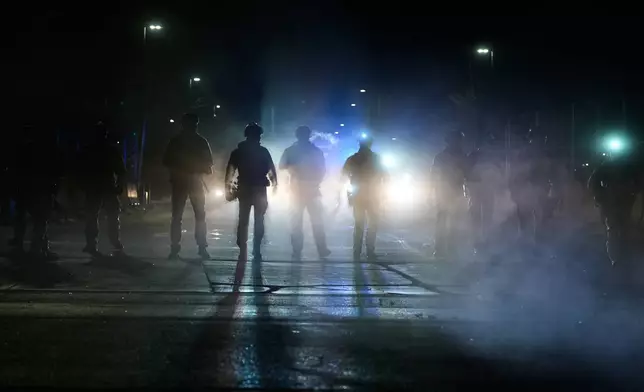
Protesters try to avoid tear gas dispersed by federal agents, Monday, Jan. 12, 2026 in Minneapolis (AP Photo/Adam Gray)

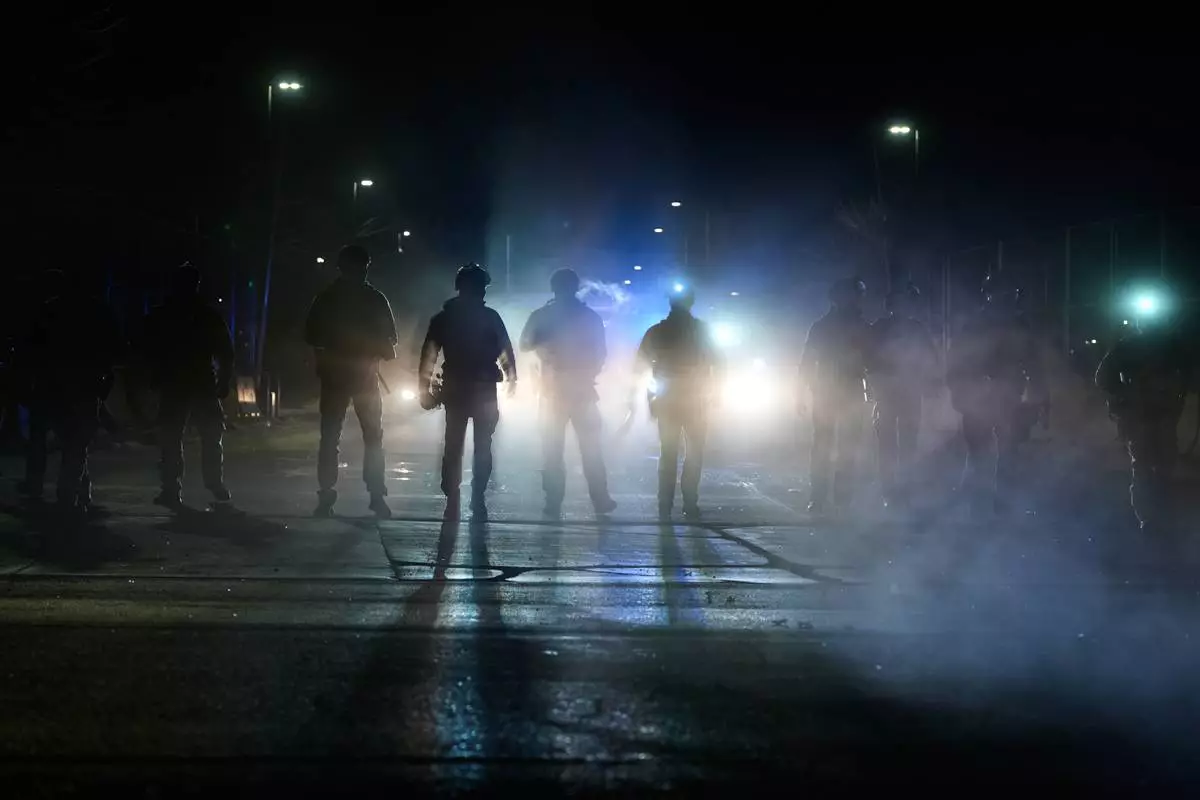
Federal immigration officers are seen outside Bishop Whipple Federal Building after tear gas was deployed Monday, Jan. 12, 2026, in Minneapolis. (AP Photo/Jen Golbeck)

Federal immigration officers are seen outside Bishop Whipple Federal Building after tear gas was deployed Monday, Jan. 12, 2026, in Minneapolis. (AP Photo/Jen Golbeck)

Protesters also arrive early, braving the cold to stand across the street from the fenced-in federal compound, which houses an immigration court and government offices. “Go home!” they shout as convoys roar past. "ICE out!”

Things often turn uglier after nightfall, when the convoys return and the protesters sometimes grow angrier, shaking fences and occasionally smacking passing cars. Eventually, the federal officers march toward them, firing tear gas and flash grenades before hauling away at least a few people.

“We’re not going anywhere!” a woman shouted on a recent morning. “We’re here until you leave.”

This is the daily rhythm of Operation Metro Surge, the Trump administration's latest and biggest crackdown yet, with more than 2,000 officers taking part. The surge has pitted city and state officials against the federal government, sparked daily clashes between activists and immigration officers in the deeply liberal cities, and left a mother of three dead.

The crackdown is barely noticeable in some areas, particularly in whiter, wealthier neighborhoods and suburbs, where convoys and tear gas are rare. And even in neighborhoods where masked immigration officers are common, they often move with ghostlike quickness, making arrests and disappearing before protesters can gather in force.

Still, the surge can be felt across broad swaths of the Twin Cities area, which is home to more than 3 million people.

“We don’t use the word ‘invasion’ lightly,” Minneapolis Mayor Jacob Frey, a Democrat, told reporters this week, noting that his police force has just 600 officers. “What we are seeing is thousands — plural, thousands — of federal agents coming into our city.”

Those agents have an outsized presence in a small city.

It can take hours to drive across Los Angeles and Chicago, both targets of Trump administration crackdowns. It can take 15 minutes to cross Minneapolis.

So as worry ripples through the region, children are skipping school or learning remotely, families are avoiding religious services and many businesses, especially in immigrant neighborhoods, have closed temporarily.

Drive down Lake Street, an immigrant hub since the days when newcomers came to Minneapolis from Norway and Sweden, and the sidewalks now seem crowded only with activists standing watch, ready to blow warning whistles at the first sign of a convoy.

At La Michoacana Purepecha, where customers can order ice cream, chocolate covered bananas and pork rinds, the door is locked and staff let in people one at a time. Nearby, at Taqueria Los Ocampo, a sign in English and Spanish says the restaurant is temporarily closed because of “current conditions.”

A dozen blocks away at the Karmel Mall, where the city’s large Somali community goes for everything from food and coffee to tax preparation, signs on the doors warn, “No ICE enter without court order.”

It’s been nearly six years since George Floyd was murdered by a Minneapolis police officer, but the scars from that killing remain raw.

Floyd was killed just blocks from where an Immigration and Citizenship Enforcement officer shot and killed Renee Good, a 37-year-old American citizen, during a Jan. 7 confrontation after she stopped to help neighbors during an enforcement operation. Federal officials say the officer fired in self-defense after Good “weaponized” her vehicle. City and state officials dismiss those explanations and point to multiple bystander videos of the confrontation.

For Twin Cities residents, the crackdown can feel overwhelming.

“Enough is enough,” said Johan Baumeister, who came to the scene of Good’s death soon after the shooting to lay flowers.

He said he didn’t want to see the violent protests that shook Minneapolis after Floyd’s death, causing billions of dollars in damage. But this city has a long history of activism and protests, and he had no doubt there would be more.

“I think they’ll see Minneapolis show our rage again,” he predicted.

He was right.

In the days since, there have been repeated confrontations between activists and immigration officers. Most amounted to little more than shouted insults and taunting, with destruction mostly limited to broken windows, graffiti and some badly damaged federal vehicles.

But angry clashes now flare regularly across the Twin Cities. Some protesters clearly want to provoke the federal officers, throwing snowballs at them or screaming obscenities through bullhorns from just a couple feet away. The serious force, though, comes from immigration officers, who have broken car windows, pepper-sprayed protesters and warned observers not to follow them through the streets. Immigrants and citizens have been yanked from cars and homes and detained, sometimes for days. And most clashes end in tear gas.

Drivers in Minneapolis or St. Paul can now stumble across intersections blocked by men in body armor and gas masks, with helicopters clattering overhead and the air filled with the shriek of protesters' whistles.

In a state that prides itself on its decency, there’s something particularly Minnesotan about the protests,

Soon after Good was shot, Gov. Tim Walz, a Democrat and regular Trump target, repeatedly said he was angry but also urged people to find ways to help their communities.

“It might be shoveling your neighbor’s walk,” he said. “It might mean being at a food bank. It might be pausing to talk to someone you haven’t talked to before.”

He and other leaders have pleaded with protesters to remain peaceful, warning that the White House was looking for a chance to crack down harder.

And when protests do become clashes, residents will often spill from their homes, handing out bottled water so people can flush tear gas from their eyes.

Residents stand watch at schools to warn immigrant parents if convoys approach while they're picking up their children. They take care packages to people too afraid to go out, and arrange rides for them to work and doctor's visits.

On Thursday, in the basement of a Lutheran church in St. Paul, the group Open Market MN assembled food packs for more than a hundred families staying home. Colin Anderson, the group’s outreach director, said the group has seen a surge in requests.

Sometimes, people don’t even understand what has happened to them.

Like Christian Molina from suburban Coon Rapids, who was driving through a Minneapolis neighborhood on a recent day, taking his car to a mechanic, when immigration officers began following him. He wonders if it's because he looks Hispanic.

They turned on their siren, but Molina kept driving, unsure who they were.

Eventually, the officers sped up, hit his rear bumper and both cars stopped. Two emerged and asked Molina for his papers. He refused, saying he’d wait for the police. Crowds began to gather, and a clash soon broke out, ending with tear gas.

So the officers left.

They left behind an angry, worried man who suddenly owned a sedan with a mangled rear fender.

Long after the officers were gone he had one final question.

“Who’s going to pay for my car?”

Associated Press reporters Rebecca Santana and Giovanna Dell’Orto in Minneapolis, and Hallie Golden in Seattle, contributed to this story.
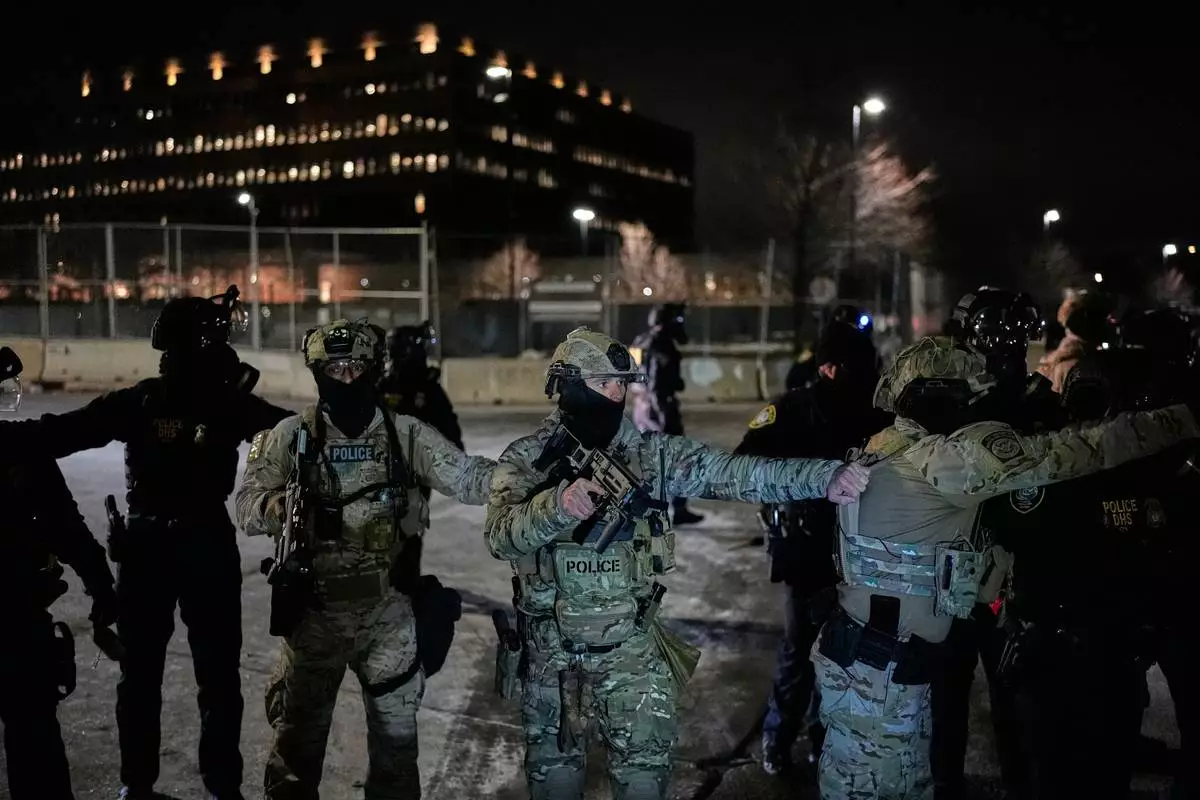
Federal immigration officers confront protesters outside Bishop Henry Whipple Federal Building, Thursday, Jan. 15, 2026, in Minneapolis. (AP Photo/Yuki Iwamura)
Federal immigration officers confront protesters outside Bishop Henry Whipple Federal Building, Thursday, Jan. 15, 2026, in Minneapolis. (AP Photo/Yuki Iwamura)

A federal immigration officer deploys pepper spray as officers make an arrest Sunday, Jan. 11, 2026, in Minneapolis. (AP Photo/John Locher)
A federal immigration officer deploys pepper spray as officers make an arrest Sunday, Jan. 11, 2026, in Minneapolis. (AP Photo/John Locher)

Protesters gather in front of the Minnesota State Capitol in response to the death of Renee Good, who was fatally shot by an ICE officer last week, Wednesday, Jan. 14, 2026, in St. Paul, Minn. (AP Photo/Abbie Parr)
Protesters gather in front of the Minnesota State Capitol in response to the death of Renee Good, who was fatally shot by an ICE officer last week, Wednesday, Jan. 14, 2026, in St. Paul, Minn. (AP Photo/Abbie Parr)

Protesters try to avoid tear gas dispersed by federal agents, Monday, Jan. 12, 2026 in Minneapolis (AP Photo/Adam Gray)
Protesters try to avoid tear gas dispersed by federal agents, Monday, Jan. 12, 2026 in Minneapolis (AP Photo/Adam Gray)

Federal immigration officers are seen outside Bishop Whipple Federal Building after tear gas was deployed Monday, Jan. 12, 2026, in Minneapolis. (AP Photo/Jen Golbeck)
Federal immigration officers are seen outside Bishop Whipple Federal Building after tear gas was deployed Monday, Jan. 12, 2026, in Minneapolis. (AP Photo/Jen Golbeck)

WASHINGTON (AP) — Sen. Thom Tillis isn't holding back during his final year in Washington.

“I'm sick of stupid,” the two-term Republican from North Carolina said from the Senate floor recently as he derided President Donald Trump 's advisers for stoking a potential U.S. military takeover in Greenland.

It was just one of several moments during the opening weeks of 2026 when Tillis, who isn't seeking reelection, seemed unconstrained by the anxieties that weigh down many of his GOP colleagues who are loath to cross the White House for fear of triggering a political backlash.

He's one of just two Republicans, along with Alaska Sen. Lisa Murkowski, who participated in a congressional delegation to Denmark this week while Trump threatens to seize Greenland. He was quick to criticize the Justice Department's investigation of Federal Reserve Chairman Jerome Powell. As Trump and his allies try to rewrite the history of the Jan. 6, 2021 riot, Tillis backed the eventual display of a plaque honoring police who defended the Capitol that day.

He has shown particular frustration with Trump's top aides, notably deputy White House chief of staff Stephen Miller.

“I don't want some staffer telling me what my position is on something,” he said after Miller gave a forceful interview on CNN saying Greenland “should be part of the United States.”

“He made comments out of his depth,” Tillis added.

The moves reflect the sense of freedom lawmakers often feel when they know they won't have to face voters again. They've helped attract swarms of reporters who follow Tillis through the halls of Congress as he offers candid thoughts on news of the day. And they've won support from the handful of other Republicans who sometimes cross Trump, including Murkowski, who called out “good speech!” as she passed him in the Capitol following his floor remarks on Greenland.

For the 65-year-old Tillis, who has won elections in one of the most politically competitive states, the approach is notable for the way in which he's pushing back against the White House. He's hardly staking out a position as a never-Trumper and repeatedly — often effusively — expresses support for the president.

Rather, he's targeting much of his criticism at senior White House aides, sometimes raising questions about whether Trump is receiving the best advice at a consequential moment in his presidency as the GOP enters a challenging election year.

“I really want this president to be very, very successful,” Tillis said this week. “And a part of his legacy is going to be based on picking and choosing the right advice from people in his administration.”

Heading into the midterms, Tillis said, “I want to create a better environment for Republicans to win.”

Tillis, who had a challenging childhood involving multiple moves, worked at an accounting and consulting firm before entering politics. He was the speaker of North Carolina's House of Representatives from 2011 to 2015. He said this week that he approaches his concerns from a business perspective.

“Sometimes there's just things that people need to say, ‘not a good idea, not in our best interest, hard to implement,” he said. “I probably should have started by saying that’s what I did in the private sector for about 25 years.”

Beyond Miller, Tillis has raised questions about Homeland Security Secretary Kristi Noem's immediate response to the fatal shooting of Renee Good by an ICE officer in Minneapolis. Hours after the shooting, while an FBI investigation was still unfolding, Noem defended the officer and said Good “attempted to run a law enforcement officer over.”

Speaking to reporters on Capitol Hill the next day, Tillis said he was “surprised by the level of certainty in her comments” and suggested such rhetoric influenced Trump, who was also quick to defend law enforcement.

“She's advising the president so the president's comments had to have come I assume through the advice of the secretary,” he said.

Tillis' balancing act was on particularly vivid display earlier this month on the fifth anniversary of Jan. 6, when he helped broker the deal to publicly show the plaque honoring officers that was held up by House Speaker Mike Johnson. Speaking from the Senate floor, he called the attack “one of the worst days in my 11 years in the U.S. Senate.”

He lauded the staff and U.S. Capitol police who defended lawmakers and helped ensure that Congress ultimately certified Joe Biden as the winner of the 2020 presidential election. But he also struck fiercely partisan tones, blaming Democrats for embracing a movement to defund the police and criticizing media coverage of protests that turned violent during the summer of 2020.

Tillis framed Jan. 6 as a “wonderful stress test for democracy” before arguing that the Biden administration went “overboard” by prosecuting “people who were dumb enough to walk into the building but they weren't the leaders.” He then pivoted to criticism of Trump's sweeping pardons of Jan. 6 defendants, including those who attacked police.

But even then, he didn't directly blame Trump, again focusing on his advisers.

“The president, on the advice of somebody in the White House — and I hope I find out the name of that person — also pardoned criminals who injured police officers and destroyed this building,” Tillis said. “If you had that happen to your office or your business, would you think well they were just a little hotheaded and let them go and not prosecute them? Or would you hold them accountable for destroying the citadel of democracy?”

The White House did not respond to a request for comment on Tillis' assessment of Trump's aides. The senator rejects any suggestion that he's stepped up his criticism because of his impeding retirement, calling the notion “hysterical.”

His relationship with Trump hit a low point last summer when he opposed the president's sweeping tax and spending cuts package. Trump accused Tillis of seeking publicity and said on social media that the senator was a “talker and complainer, NOT A DOER.” Tillis announced his retirement soon after voting against the measure, one of only two Senate Republicans to do so.

Trump has been more sanguine in response to Tillis' more recent comments. Asked this week about the senator's criticism of the Fed probe, Trump said, “That's why Thom's not going to be a senator any longer, I guess.”

“Look, I like Thom Tillis,” Trump said. “But he's not going to be a senator any longer because of views like that.”

Associated Press writer Stephen Groves in Washington contributed to this report.

FILE -Sen. Thom Tillis, R-N.C., speaks during a confirmation hearing for Supreme Court nominee Amy Coney Barrett before the Senate Judiciary Committee, Oct. 13, 2020, on Capitol Hill in Washington. (Sarah Silbiger/Pool via AP, File)

FILE -Sen. Thom Tillis, R-N.C., speaks during a confirmation hearing for Supreme Court nominee Amy Coney Barrett before the Senate Judiciary Committee, Oct. 13, 2020, on Capitol Hill in Washington. (Sarah Silbiger/Pool via AP, File)

FILE - Wearing a beaded bolo around a pin that says "United States Senate," Sen. Thom Tillis, R-N.C., listens to thanks from members of the Lumbee Tribe of North Carolina, after the passage of a bill granting the tribe with federal recognition, on Capitol Hill, in Washington, Dec. 17, 2025. (AP Photo/Jacquelyn Martin, File)

FILE - Wearing a beaded bolo around a pin that says "United States Senate," Sen. Thom Tillis, R-N.C., listens to thanks from members of the Lumbee Tribe of North Carolina, after the passage of a bill granting the tribe with federal recognition, on Capitol Hill, in Washington, Dec. 17, 2025. (AP Photo/Jacquelyn Martin, File)

Recommended Articles