An Afghan man in Oklahoma accused of planning an Election Day attack in the U.S. on behalf of the Islamic State group pleaded guilty Friday to terrorism-related charges in federal court.
Nasir Ahmad Tawhedi, 27, pleaded guilty to two offenses: conspiring and providing support to the Islamic State group, and attempting to receive firearms to commit a federal crime of terrorism. The Islamic State is designated by the U.S. as a foreign terrorist organization.
Tawhedi faces up to 35 years in prison.
“The defendant admits he planned and obtained firearms to carry out a violent terror attack on Election Day in 2024, a plot that was detected and disrupted through the good work of the FBI and our partners,” FBI Director Kash Patel said in a statement.
A phone message was left seeking comment from Craig Hoehns, an attorney for Tawhedi.
Tawhedi was living in Oklahoma City last year when he acquired two AK-47-style rifles and 500 rounds of ammunition to target large crowds, according to court documents. Authorities said he had conspired with multiple people, including his brother-in-law, Abdullah Haji Zada, for several months to plot out the attack.
Zada, who was 17 at the time, was charged as an adult and pleaded guilty in April. He faces up to 15 years in prison.
Tawhedi arrived in the U.S. in September 2021 on a special immigration visa shortly after the capital city of Afghanistan, Kabul, was captured by the Taliban. At the time of his arrest on Oct. 7, Tawhedi was on parole while his immigration status was pending, according to the Justice Department. His parole status has since been revoked.
FBI agents had testified earlier that Tawhedi, who worked as a rideshare driver and at auto shops, was under surveillance for more than a month before his arrest.
Lathan is a corps member for the Associated Press/Report for America Statehouse News Initiative. Report for America is a nonprofit national service program that places journalists in local newsrooms to report on undercovered issues.
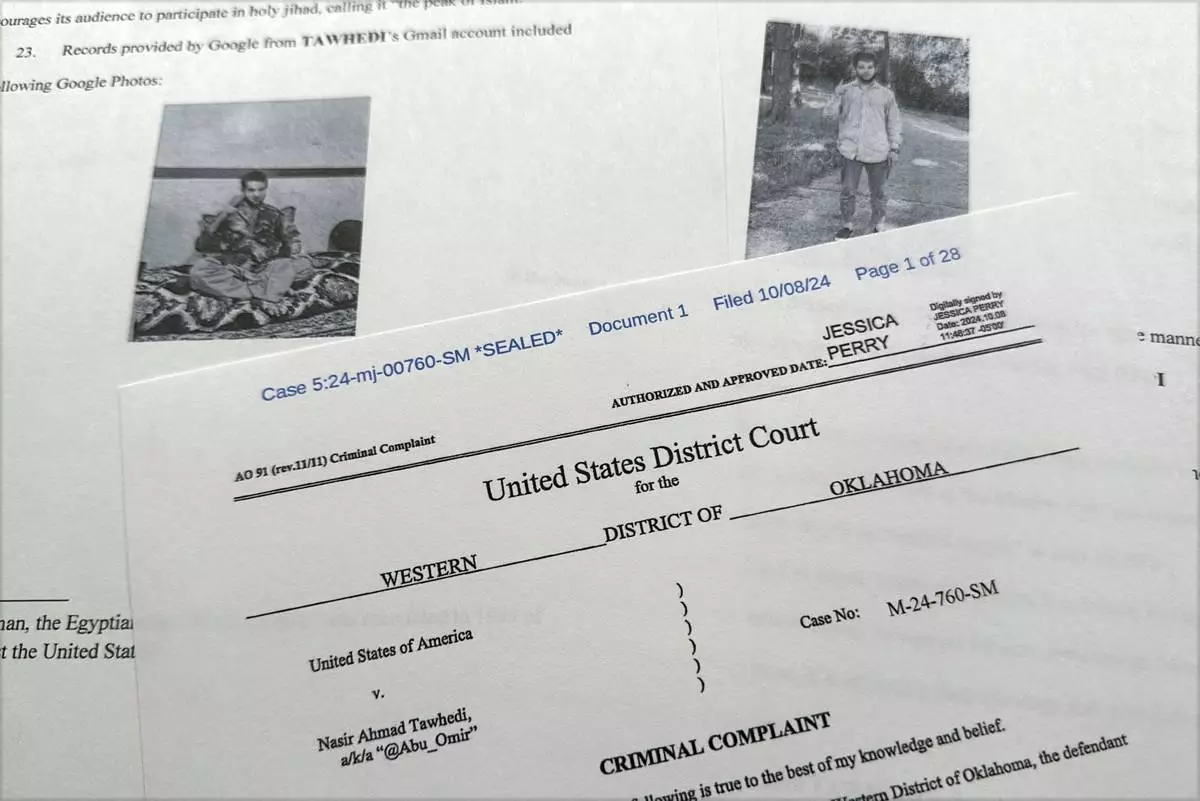
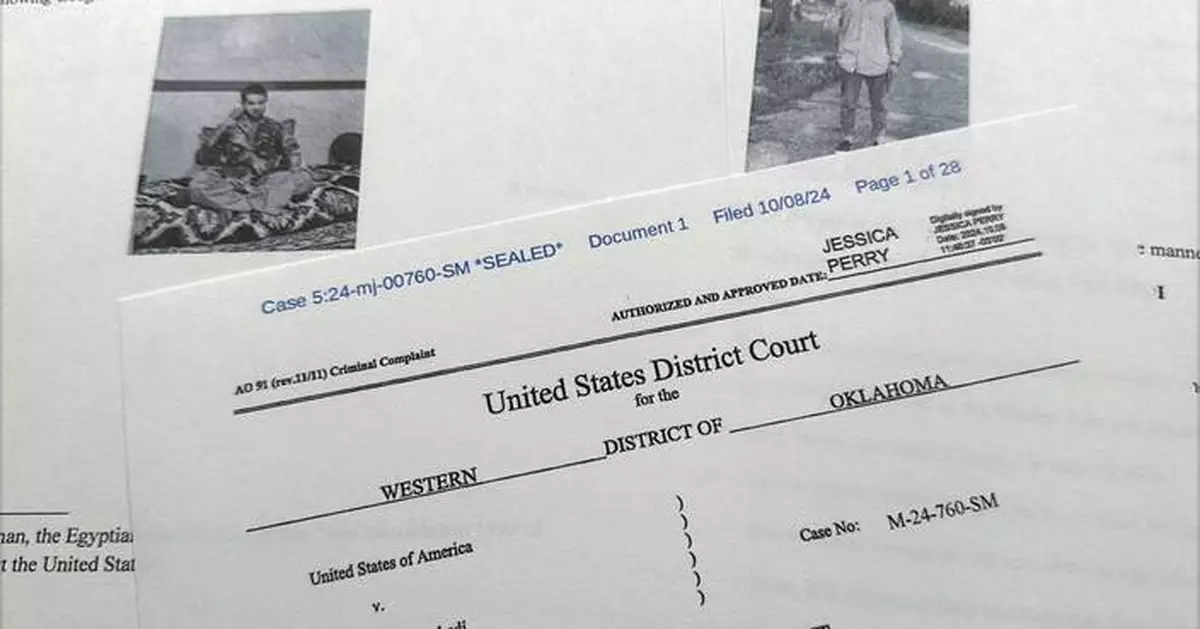
FILE - The criminal complaint, filed by the Justice Department, against Nasir Ahmad Tawhedi, 27,of Oklahoma City is photographed Tuesday, Oct. 8, after the FBI arrested the man who officials say was inspired by the Islamic State militant organization and was plotting an Election Day attack targeting large crowds in the U.S. (AP Photo/Jon Elswick, File)
ATLANTA (AP) — President Donald Trump is seeking more than $6.2 million in attorney fees and costs from the Fulton County District Attorney's office stemming from the election interference case brought against him and others that was recently dismissed.
Georgia state legislators last year passed a law that says that if a prosecutor is disqualified from a case because of their own improper conduct and the case is then dismissed, anyone charged in that case is entitled to request “all reasonable attorney's fees and costs incurred” in their defense. The judge overseeing the case then is responsible for reviewing the request and awarding the fees and costs, which are to be paid from the budget of the prosecutor's office.
Fulton County District Attorney Fani Willis and her office were removed from the case over an “appearance of impropriety” created by a romantic relationship she had with the special prosecutor she chose to lead the case. The prosecutor who took over the case late last year dismissed it in November.
Willis obtained an indictment against Trump and 18 others from a grand jury in August 2023, using the state’s anti-racketeering law to accuse them of participating in a wide-ranging scheme to illegally try to overturn Trump’s narrow 2020 presidential election loss to Democrat Joe Biden in Georgia. The alleged scheme included Trump’s call to Georgia Secretary of State Brad Raffensperger urging him to help find enough votes to beat Biden. Four people pleaded guilty in the months following the indictment.
“In accordance with Georgia law, President Trump has moved the Court to award reasonable attorney fees and costs incurred in his defense of the politically motivated, and now rightfully dismissed, case brought by disqualified DA Fani Willis,” Steve Sadow, Trump's lead attorney in Georgia, said in a statement.
A spokesperson for Willis declined to comment on Trump's filing. But last month, when another person charged in the case made a similar filing, her office filed a motion seeking to intervene and asking the judge to set a briefing and argument schedule to address any claims for fees and costs filed in the case.
Willis' motion raises concerns about the law passed last year that allowed Trump and others to seek to have their expenses paid.
“The statute raises grave separation-of-powers concerns by purporting to impose financial liability on a constitutional officer, twice elected by the citizens of Fulton County, for the lawful exercise of her core duties under the Georgia Constitution," her motion says.
Her motion also says the law violates due process by “retroactively imposing a novel fee-shifting scheme that creates substantial fiscal exposure for Fulton County taxpayers without notice, articulated standards, or any mechanism for affected persons to participate or respond.”
Her motion contends that the prosecution “was neither arbitrary nor political” and was based on an “exhaustive investigation spanning years." It notes that a special grand jury that reviewed evidence and testimony recommended charges and a regular grand jury issued the indictment.
Defense attorneys sought Willis’ removal after one of them revealed in January 2024 that Willis had engaged in a romantic relationship with Nathan Wade, the special prosecutor she had hired to lead the case. The defense attorneys said the relationship created a conflict of interest, alleging that Willis personally profited from the case when Wade used his earnings to pay for vacations the pair took.
During an extraordinary hearing the following month, Willis and Wade both testified about the intimate details of their personal relationship. They maintained that their romance didn’t begin until after Wade was hired and said that they split the costs for vacations and other outings.
The trial judge, Fulton County Superior Court Judge Scott McAfee, rebuked Willis, saying in an order in March 2024 that her actions showed a “tremendous lapse in judgment.” But he said he did not find a conflict of interest that would disqualify Willis. He ultimately ruled that Willis could remain on the case if Wade resigned, which the special prosecutor did hours later.
Defense attorneys appealed that ruling, and the Georgia Court of Appeals removed Willis from the case in December, citing an “appearance of impropriety.” The Georgia Supreme Court in September declined to hear Willis’ appeal.
It then fell to the nonpartisan Prosecuting Attorneys’ Council to find a new prosecutor. The agency's executive director, Pete Skandalakis, ended up taking on the case himself and dismissed it less than two weeks later.
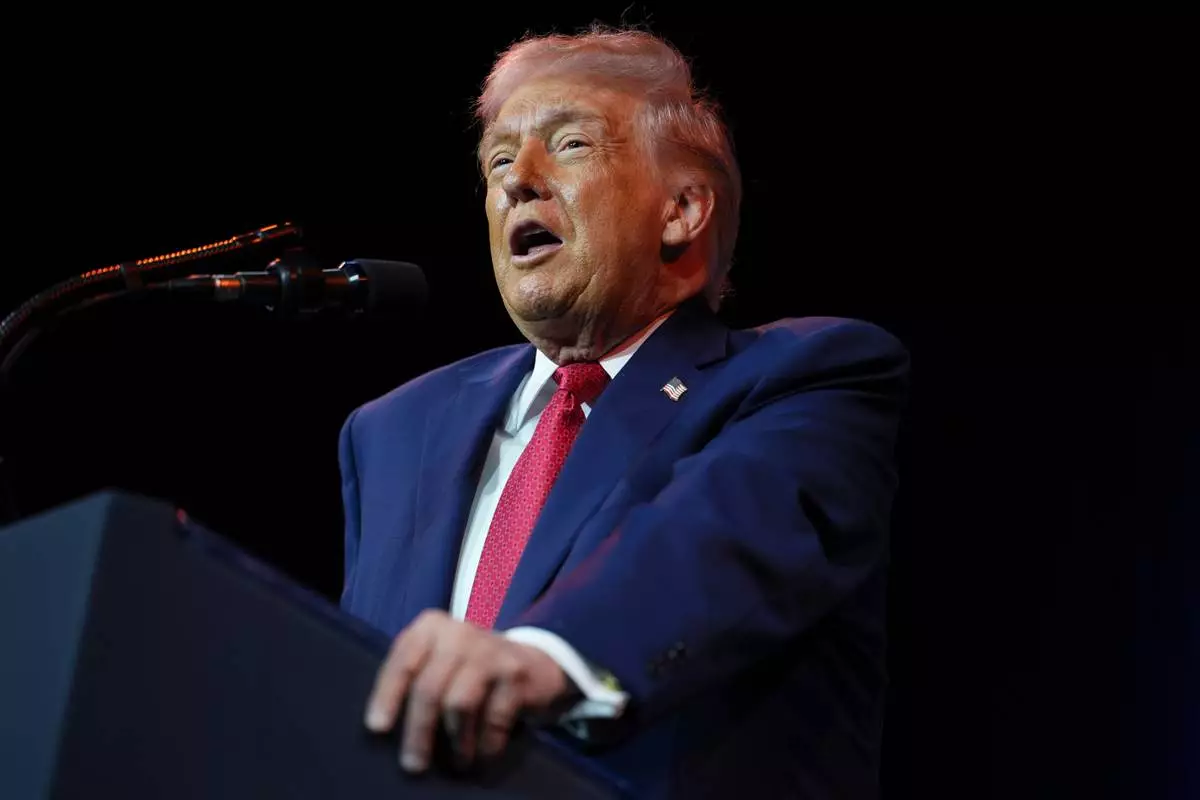
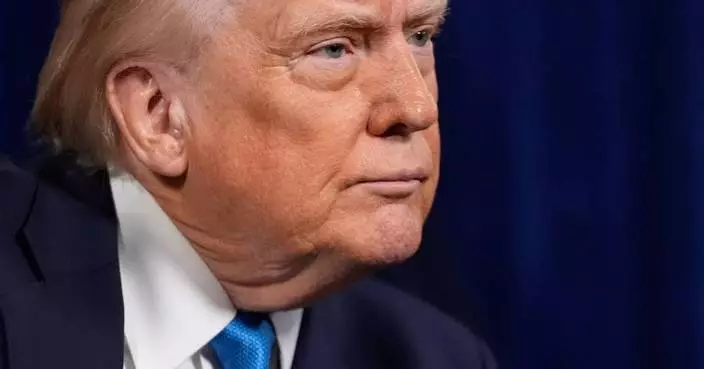
President Donald Trump speaks to House Republican lawmakers during their annual policy retreat, Tuesday, Jan. 6, 2026, in Washington. (AP Photo/Evan Vucci)