WASHINGTON (AP) — The Trump administration will withdraw from dozens of international organizations, including the U.N.'s population agency and the U.N. treaty that establishes international climate negotiations, as the U.S. further retreats from global cooperation.
President Donald Trump on Wednesday signed an executive order suspending U.S. support for 66 organizations, agencies, and commissions, following his administration’s review of participation in and funding for all international organizations, including those affiliated with the United Nations, according to a White House release.
Many of the targets are U.N.-related agencies, commissions and advisory panels that focus on climate, labor, migration and other issues the Trump administration has categorized as catering to diversity and “woke” initiatives. Other non-U.N. organizations on the list include the Partnership for Atlantic Cooperation, the International Institute for Democracy and Electoral Assistance, and the Global Counterterrorism Forum.
“The Trump Administration has found these institutions to be redundant in their scope, mismanaged, unnecessary, wasteful, poorly run, captured by the interests of actors advancing their own agendas contrary to our own, or a threat to our nation’s sovereignty, freedoms, and general prosperity,” Secretary of State Marco Rubio said in a statement.
Trump's decision to withdraw from organizations that foster cooperation among nations to address global challenges comes as his administration has launched military efforts or issued threats that have rattled allies and adversaries alike, including capturing autocratic Venezuelan leader Nicolás Maduro and indicating an intention to take over Greenland.
The administration previously suspended support for agencies like the World Health Organization, the U.N. agency for Palestinian refugees known as UNRWA, the U.N. Human Rights Council and the U.N. cultural agency UNESCO. It has taken a larger, à la carte approach to paying dues to the world body, picking which operations and agencies it believes align with Trump’s agenda and those that no longer serve U.S. interests.
“I think what we’re seeing is the crystallization of the U.S. approach to multilateralism, which is ‘my way or the highway,’” said Daniel Forti, head of U.N. affairs at the International Crisis Group. “It's a very clear vision of wanting international cooperation on Washington’s own terms.”
It has marked a major shift from how previous administrations — both Republican and Democratic — have dealt with the U.N., and it has forced the world body, already undergoing its own internal reckoning, to respond with a series of staffing and program cuts.
Many independent nongovernmental agencies — some that work with the United Nations — have cited many project closures because of the U.S. administration’s decision last year to slash foreign assistance through the U.S. Agency for International Development, or USAID.
Despite the massive shift, Trump administration officials say they see the potential of the U.N. and want to instead focus taxpayer money on expanding American influence in many of the standard-setting U.N. initiatives where there is competition with China, like the International Telecommunications Union, the International Maritime Organization and the International Labor Organization.
The withdrawal from the U.N. Framework Convention on Climate Change, or UNFCCC, is the latest effort by Trump and his allies to distance the U.S. from international organizations focused on climate and addressing climate change.
UNFCCC, the 1992 agreement between 198 countries to financially support climate change activities in developing countries, is the underlying treaty for the landmark Paris climate agreement. Trump — who calls climate change a hoax — withdrew from that agreement soon after reclaiming the White House.
Gina McCarthy, former White House National Climate Adviser, said being the only country in the world not part of the treaty is “shortsighted, embarrassing, and a foolish decision.”
“This Administration is forfeiting our country’s ability to influence trillions of dollars in investments, policies, and decisions that would have advanced our economy and protected us from costly disasters wreaking havoc on our country,” McCarthy, who co-chairs America Is All In, a coalition of climate-concerned U.S. states and cities, said in a statement.
Mainstream scientists say climate change is behind increasing instances of deadly and costly extreme weather, including flooding, droughts, wildfires, intense rainfall events and dangerous heat.
The U.S. withdrawal could hinder global efforts to curb greenhouse gases because it “gives other nations the excuse to delay their own actions and commitments,” said Stanford University climate scientist Rob Jackson, who chairs the Global Carbon Project, a group of scientists that tracks countries’ carbon dioxide emissions.
It will also be difficult to achieve meaningful progress on climate change without cooperation from the U.S., one of the world’s largest emitters and economies, experts said.
The U.N. Population Fund, the agency providing sexual and reproductive health worldwide, has long been a lightning rod for Republican opposition, and Trump cut funding for it during his first term. He and other GOP officials have accused the agency of participating in “coercive abortion practices” in countries like China.
When President Joe Biden took office in January 2021, he restored funding for the agency. A State Department review conducted the following year found no evidence to support GOP claims.
Other organizations and agencies that the U.S. will quit include the Carbon Free Energy Compact, the United Nations University, the International Cotton Advisory Committee, the International Tropical Timber Organization, the Partnership for Atlantic Cooperation, the Pan-American Institute for Geography and History, the International Federation of Arts Councils and Culture Agencies, and the International Lead and Zinc Study Group.
Amiri reported from the United Nations. Associated Press writer Tammy Webber reported from Fenton, Michigan.
This story has been updated to correct Daniel Forti's title at the International Crisis Group. It is head of U.N. affairs, not senior U.N. analyst.
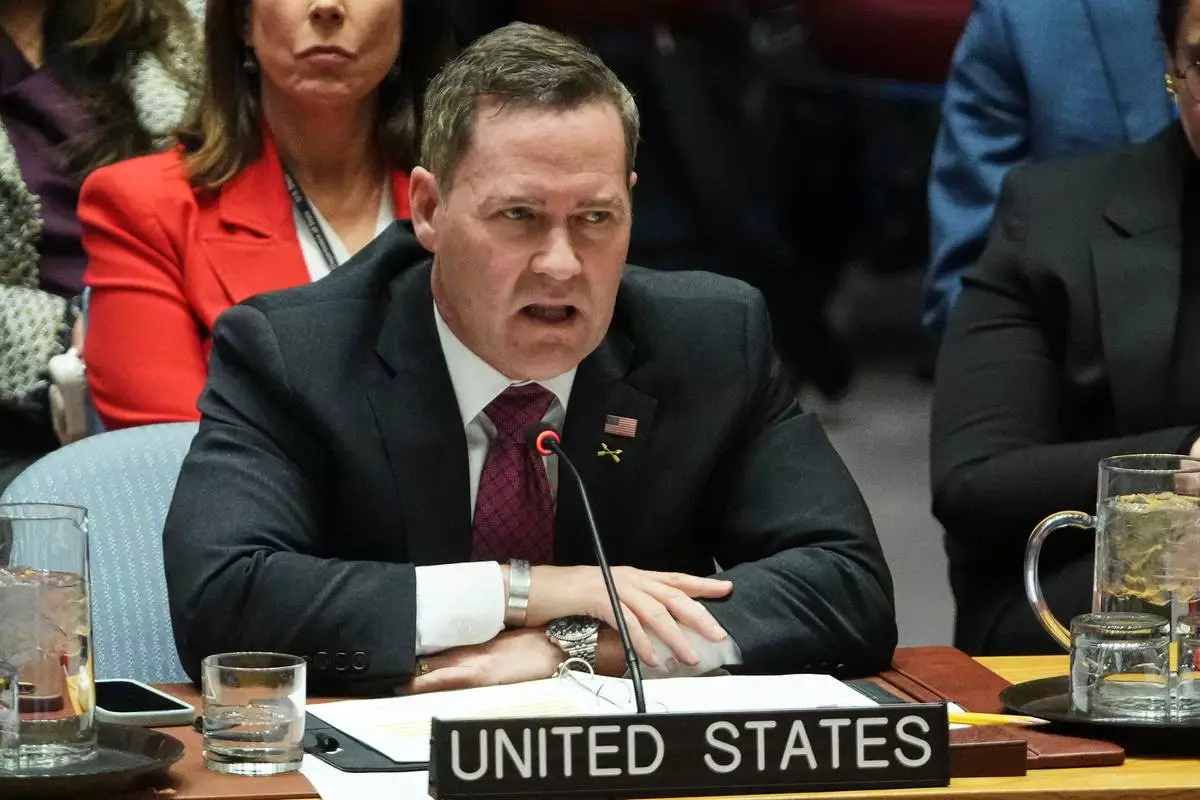
United States' Ambassador to the United Nations Michael Waltz addresses the Security Council Monday, Jan. 5, 2026 at U.N. headquarters. (AP Photo/Frank Franklin II)
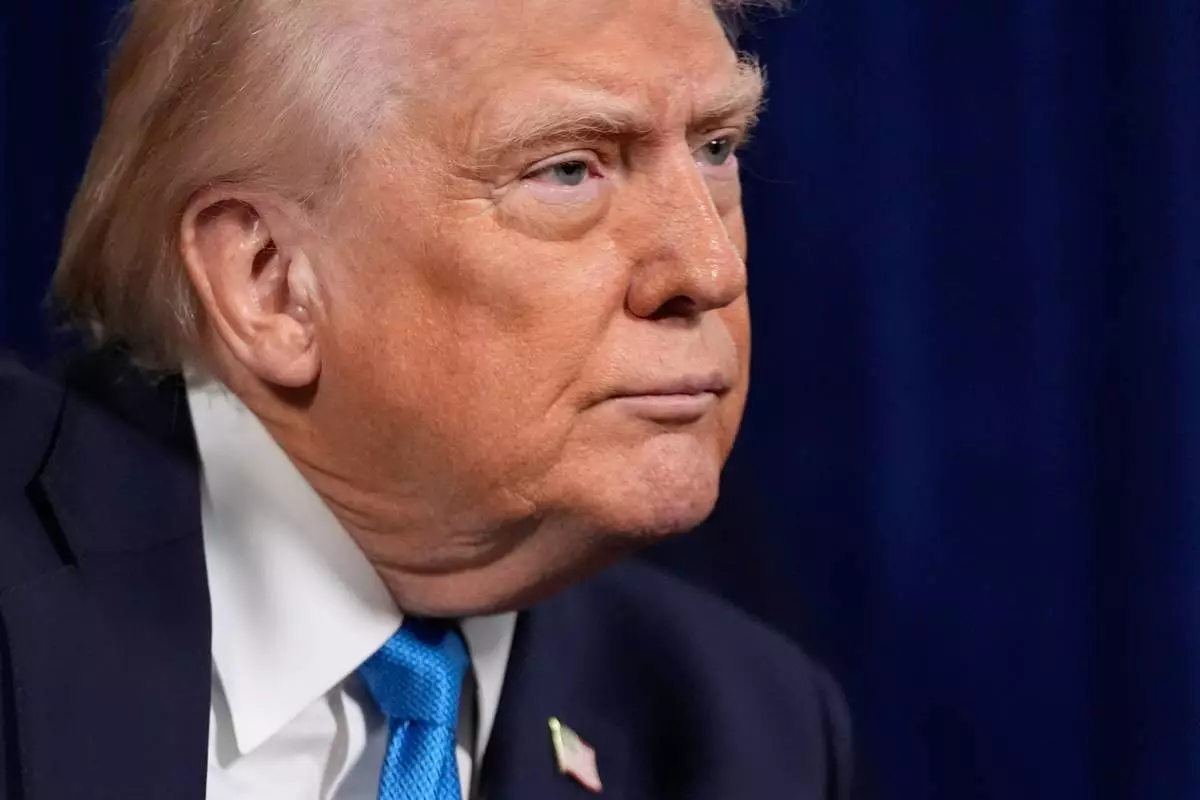
President Donald Trump listens to a question during a news conference at Mar-a-Lago, Saturday, Jan. 3, 2026, in Palm Beach, Fla. (AP Photo/Alex Brandon)