BARCELONA, Spain (AP) — Spain’s Catholic bishops agreed Thursday to let the Spanish government’s ombudsman have the final say in the church’s compensation of victims of sexual abuse by clergy members who have died or whose possible crimes are too old to be prosecuted.
The agreement, which envisages a one-year window for claims, marks a rare concession by the Catholic hierarchy. It is aimed at resolving disagreements between the left-wing government and church authorities over reparations after victims criticized the church’s original in-house compensation proposal.
The Spanish bishops conference said in a statement that the new agreement will allow victims who don’t want to seek help directly from the church to turn to the government and the state’s ombudsman, who has taken a lead role in shedding light on abuse. The ombudsman will evaluate the claims and ultimately will have the final say on any possible awards.
Spain’s Justice Minister Félix Bolaños said in a press conference in Madrid that “hundreds” of victims whose aggressors had passed away or were now very old could finally receive recognition of the abuse and receive economic reparations paid by the church.
“Today, we have paid a debt to the victims,” Bolaños said. “It is true that the State has acted late, but we are acting now. Yesterday, the victims couldn’t do anything because these crimes had proscribed.”
While church authorities in many Western European countries have created compensation plans for abuse victims, either run by the church or independent experts, the Spanish process is unusual because of the involvement of the state itself in the process.
In recent years, the once staunchly Catholic Spain has begun to reckon with a decades-long legacy of abuse by priests and cover-up by generations of bishops and religious superiors, mainly thanks to the initial reporting by newspaper El País.
Spain’s parliament tasked the Spain’s ombudsman to investigate and in 2023 the ombudsman delivered a damning 800-page report that investigated 487 known cases of sexual abuse and included a survey that calculated the number of possible victims could reach the hundreds of thousands.
Spain’s bishops rejected that estimate by the ombudsman, saying its own investigation had uncovered 728 sexual abusers within the church since 1945. It said that most of the crimes had occurred before 1990 and that 60% of the aggressors were now dead.
In 2024, the government announced its intention to force the church to compensate victims. That was followed a few months later by the bishops saying they were creating a special committee to hear from victims, assess their claims and ensure their “economic, spiritual and psychological” reparation.
But victims' groups were critical of the bishops' plan since it relied on them approaching the church and had no outside oversight.
On Thursday, Archbishop Luis Argüello, the president of the Spanish Episcopal Conference, acknowledged that some victims didn't feel comfortable approaching the church offices. Now, victims can turn to the government instead.
Under the new agreement, victims can approach Spain's Justice Ministry with their initial petition. The ministry will pass it on to the ombudsman, who will study it and propose a compensation package that the church’s committee will then assess. If no agreement can be reached with the church and the victim, the case will go to a joint committee with representatives of the church, the ombudsman's office and victims' associations. If that committee can’t agree, the ombudsman's decision will stand, Bolaños said.
The victims’ association Robbed Childhood said that it supported the arrangement, after it had criticized the church-only plan for lacking oversight.
“We consider it to be completely positive,” association spokesman Juan Cuatrecasas told The Associated Press. “We believe it was time for the victims whose cases had been proscribed to see the truth served.”
The window for filing claims will be open for one year. After that, the agreement can be extended for an additional year if needed, according to Bolaños.
In addition to victims' groups and the Spanish bishops, Bolaños thanked the work of late Pope Francis and Pope Leo XIV in uncovering abuse in the church.
Argüello said the church had already paid out 2 million euros ($2.3 million) in compensation after taking up petitions by more than a hundred victims since its special committee opened in 2024.
Payments to victims will be free of taxes in the new deal.
Only a handful of countries have had government-initiated or parliamentary inquiries into clergy sex abuse, although some independent groups have carried out their own investigations.
The issue of compensating victims of abuse has long vexed the church, with wide disparities in programs and payouts around the world. In the United States, where the abuse scandal erupted in 2002, litigation, settlements and abuse compensation programs have cost the church billions of dollars and led several dioceses to seek bankruptcy protection.
Elsewhere, church-run compensation programs have awarded smaller amounts to victims and paired financial reparations with services offering therapy and spiritual assistance. The French church, for example, paid out an average of about 35,000 euros ($41,000) to each of the 358 victims whose claims were received in 2023. Compensation awards were approved in 2024 for another 489 people, 88 of whom were given the maximum 60,000 euro ($70,000) claim, the church reported.
The Vatican’s child protection advisory board said in its report last year that the Catholic Church had a moral obligation to help victims heal, and that financial reparations for the abused, and tougher sanctions for the abusers and their enablers were essential remedies.
Nicole Winfield reported from Rome.

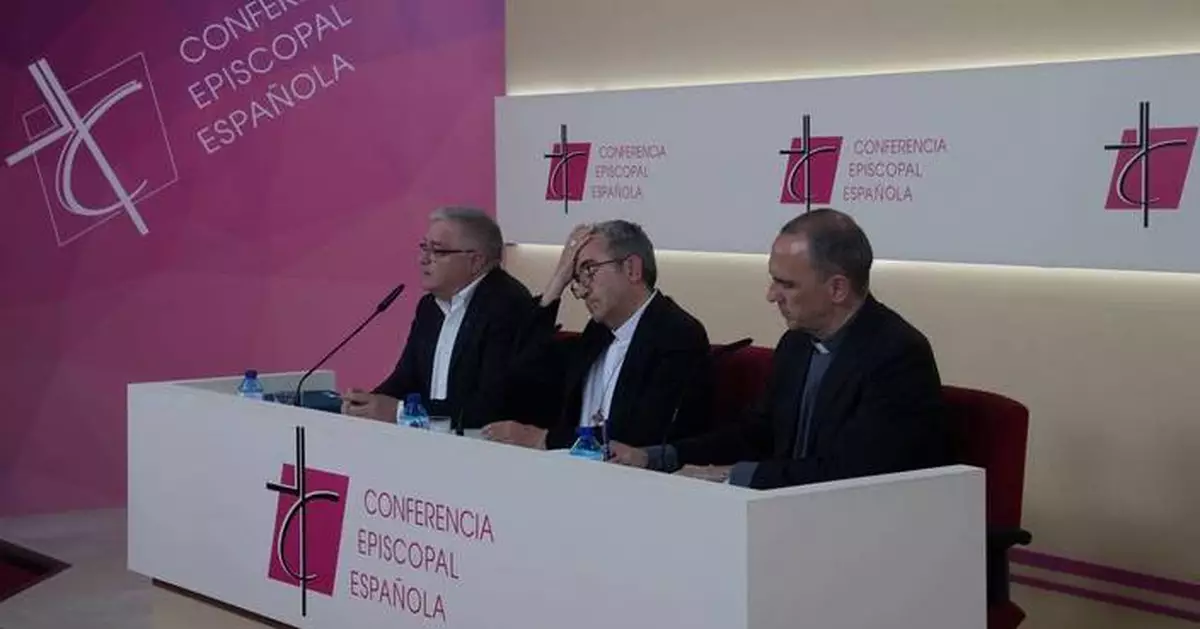
FILE - The president of the Spanish Episcopal Conference, Luis Arguello, centre and Jesus Diaz Sariego, President of Spain's Conference of Religious Orders, left, take part in a press conference in Madrid, Spain, Tuesday, July 9, 2024. (AP Photo/Paul White, File)
PORTLAND, Ore. (AP) — Federal immigration officers shot and wounded two people in a vehicle outside a hospital in Portland, Oregon, on Thursday, a day after an officer shot and killed a driver in Minnesota, authorities said.
The shooting drew hundreds of protesters to the U.S. Immigration and Customs Enforcement building Thursday night, and Oregon Attorney General Dan Rayfield vowed to investigate “whether any federal officer acted outside the scope of their lawful authority” and to refer criminal charges to the prosecutor's office if warranted.
The Department of Homeland Security described the vehicle's passenger as “a Venezuelan illegal alien affiliated with the transnational Tren de Aragua prostitution ring” who had been involved in a recent shooting in Portland. When agents identified themselves to the occupants during a “targeted vehicle stop” Thursday afternoon, the driver tried to run them over, the department said in a written statement.
“Fearing for his life and safety, an agent fired a defensive shot,” the statement said. “The driver drove off with the passenger, fleeing the scene.”
There was no immediate independent corroboration of that account or of any gang affiliation of the vehicle's occupants. During prior shootings involving agents involved in President Donald Trump's surge of immigration enforcement in U.S. cities, including Wednesday's shooting by an ICE officer in Minneapolis, video evidence cast doubt on the administration's descriptions of what prompted the shootings.
Trump and his allies have consistently blamed Tren de Aragua for being at the root of the violence and illicit drug dealing that plague some U.S. cities.
The shooting escalates tensions in an city that has long had a contentious relationship with President Donald Trump, including Trump’s recent, failed effort to deploy National Guard troops in the city. Trump’s decision to send militarized personnel into U.S. cities to conduct immigration enforcement drew long-running nightly protests outside the ICE building in Portland.
According to the the Portland Police bureau, officers initially responded to a report of a shooting outside Adventist Health hospital at about 2:18 p.m. Thursday.
A few minutes later, police received information that a man who had been shot was asking for help in a residential area a couple of miles away. Officers then responded there and found a man and a woman with gunshot wounds. Officers determined they were injured in the shooting with federal agents, police said.
Their conditions were not immediately known. Portland police said officers applied a tourniquet to one of the wounded. Council President Elana Pirtle-Guiney said during a Portland city council meeting that "as far as we know both of these individuals are still alive and we are hoping for more positive updates throughout the afternoon.”
At a news conference Thursday night, Portland Police Chief Bob Day said the FBI was leading the investigation and that he had no details about the events that led to the shooting.
Portland Mayor Keith Wilson and the city council called on ICE to end all operations in Oregon’s largest city until a full investigation is completed.
“We stand united as elected officials in saying that we cannot sit by while constitutional protections erode and bloodshed mounts,” a joint statement said. “Portland is not a ‘training ground’ for militarized agents, and the ‘full force’ threatened by the administration has deadly consequences.”
Wilson also suggested at a news conference that he didn't necessarily believe the federal government's account of the shooting: “There was a time we could take them at their word. That time is long past.”
Democratic State Sen. Kayse Jama, who lives near the shooting scene, said Oregon is a welcoming state — but he told federal agents to leave.
“You are not welcome,” Jama said. "You need to get the hell out of Oregon.”
The city officials said “federal militarization undermines effective, community‑based public safety, and it runs counter to the values that define our region. We’ll use every legal and legislative tool available to protect our residents’ civil and human rights.”
They urged residents to show up with “calm and purpose during this difficult time.”
Several dozen people gathered Thursday evening near the scene where Portland police found the wounded people.
“It’s just been chaos," said one, Anjalyssa Jones. "The community is trying to get answers.”
U.S. Sen. Jeff Merkley, an Oregon Democrat, urged any protesters to remain peaceful.
“Trump wants to generate riots,” he said in a post on the X social media platform. “Don’t take the bait.”
Johnson reported from Seattle. Associated Press reporter Audrey McAvoy in Honolulu contributed.
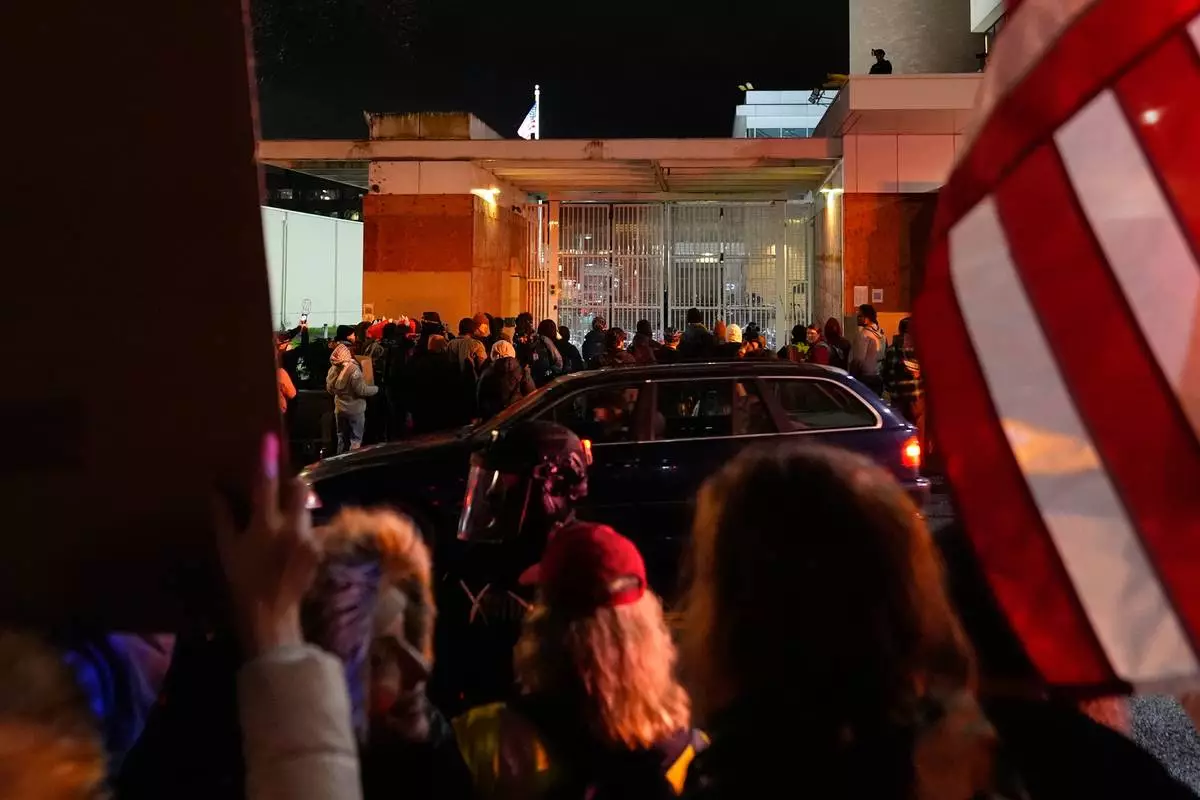
Protesters and law enforcement stand outside the U.S. Immigration and Customs Enforcement facility on Thursday, Jan. 8, 2026, in Portland, Ore. (AP Photo/Jenny Kane)
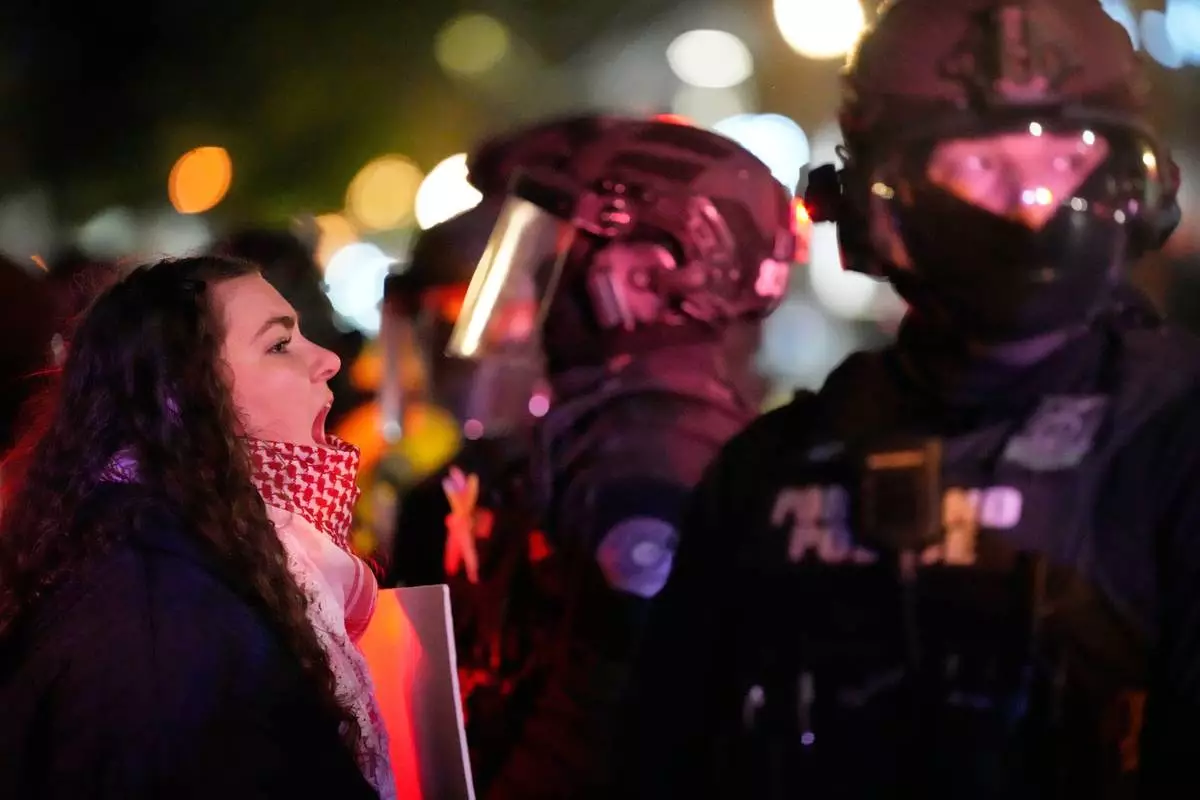
A protester yells at a Portland police officer outside the U.S. Immigration and Customs Enforcement facility on Thursday, Jan. 8, 2026, in Portland, Ore. (AP Photo/Jenny Kane)
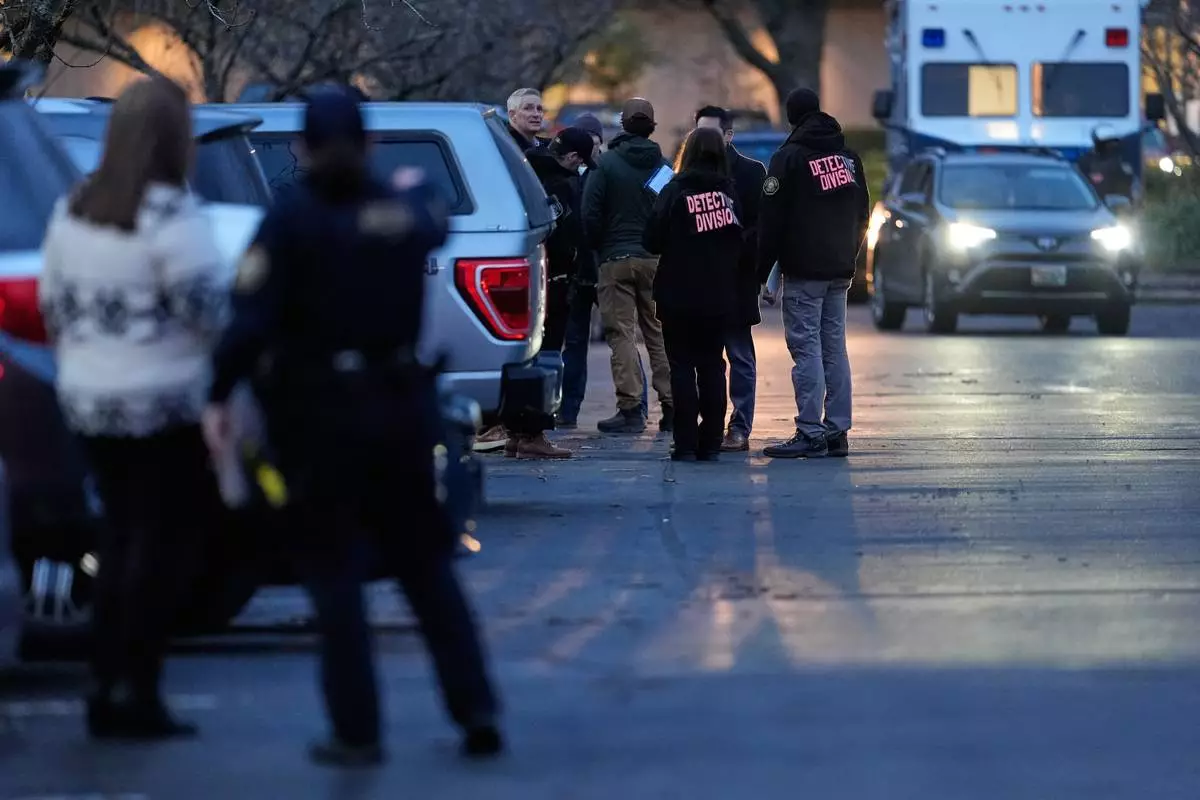
Law enforcement officials work the scene following reports that federal immigration officers shot and wounded people in Portland, Ore., Thursday, Jan. 8, 2026. (AP Photo/Jenny Kane)
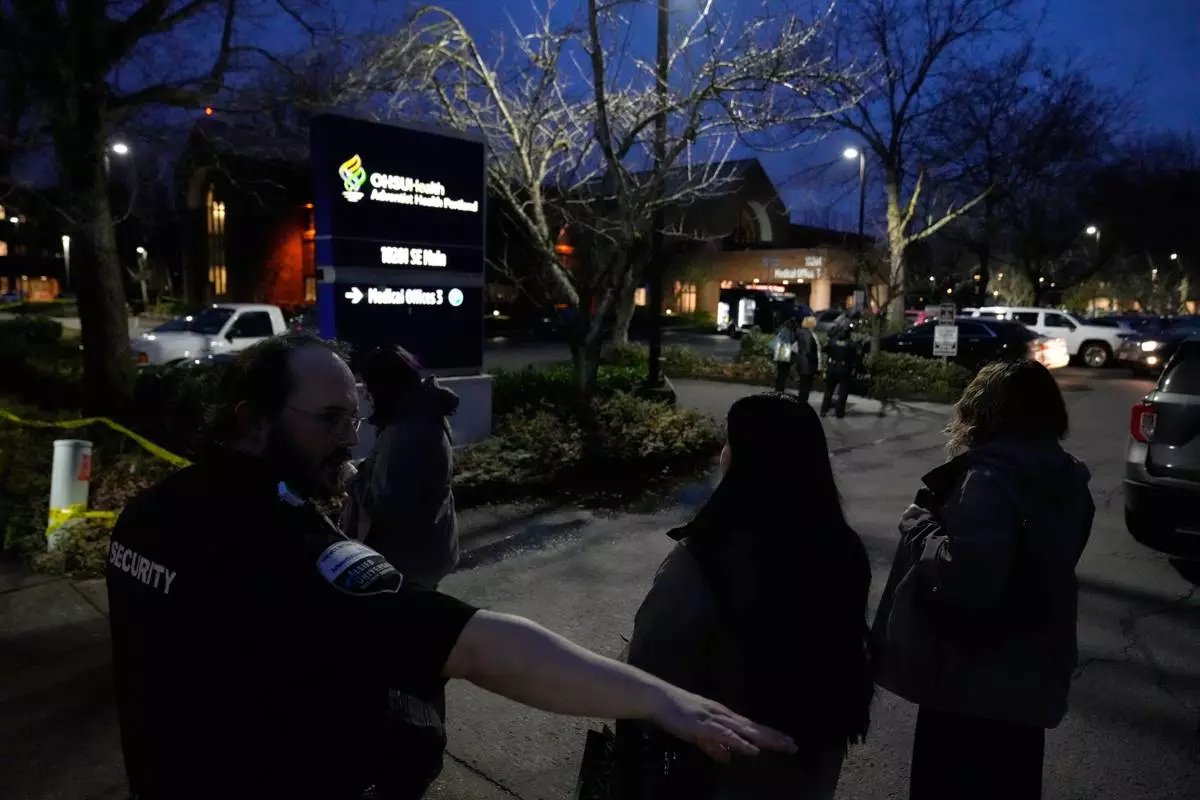
A security guard stands at the scene following reports that federal immigration officers shot and wounded people in Portland, Ore., Thursday, Jan. 8, 2026. (AP Photo/Jenny Kane)
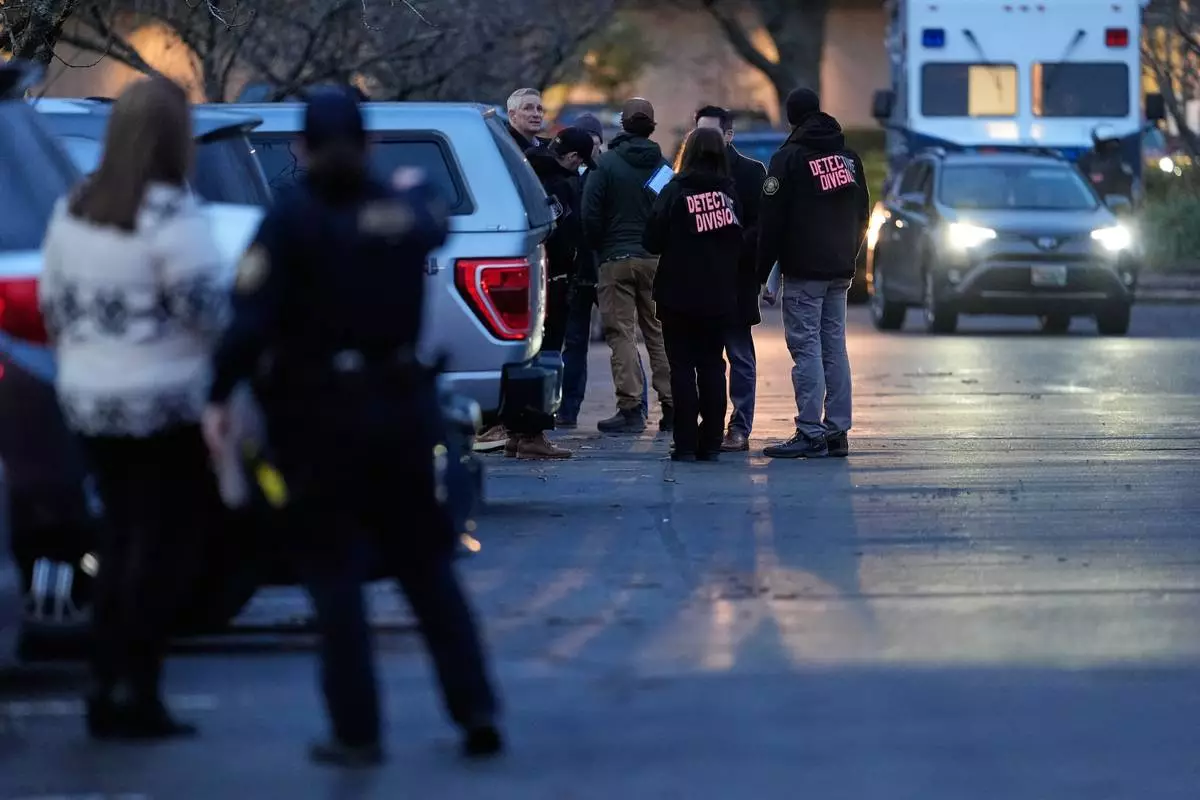
Law enforcement officials work the scene following reports that federal immigration officers shot and wounded people in Portland, Ore., Thursday, Jan. 8, 2026. (AP Photo/Jenny Kane)
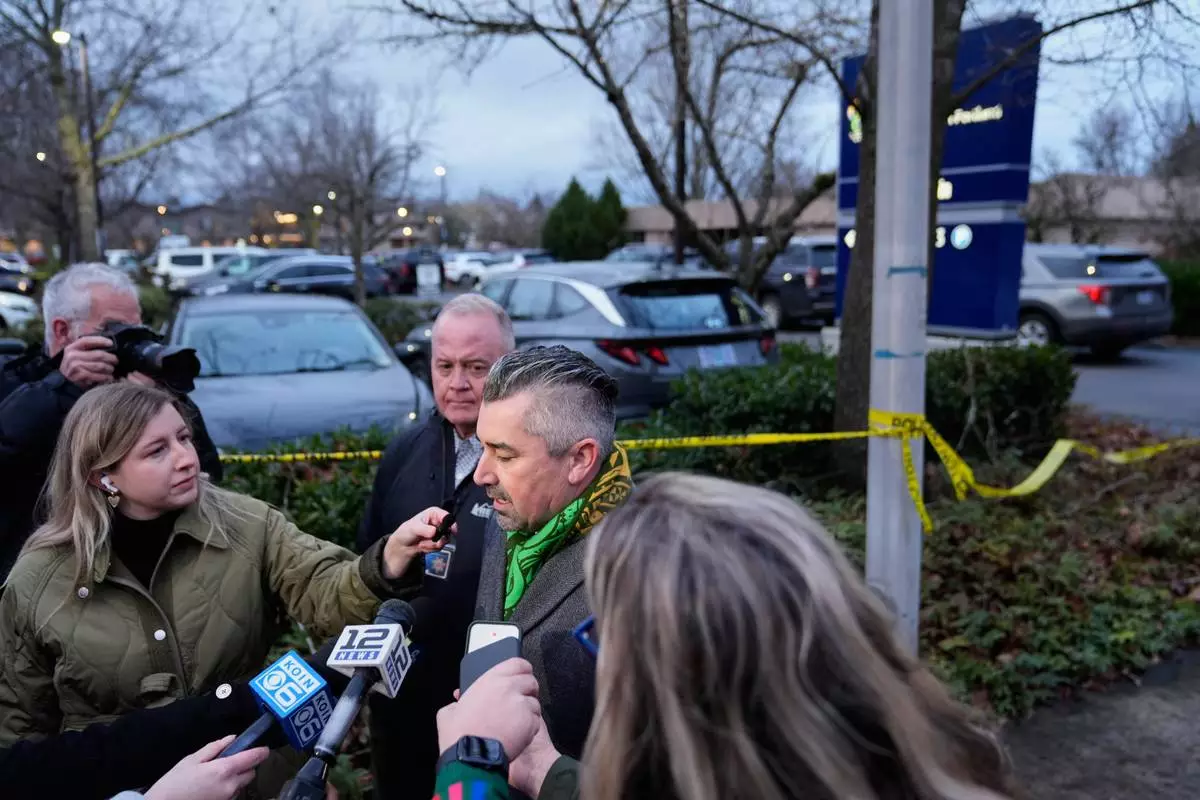
Multnomah County District Attorney Nathan Vasquez, center, speaks to the media following reports that federal immigration officers shot and wounded people in Portland, Ore., Thursday, Jan. 8, 2026. (AP Photo/Jenny Kane)
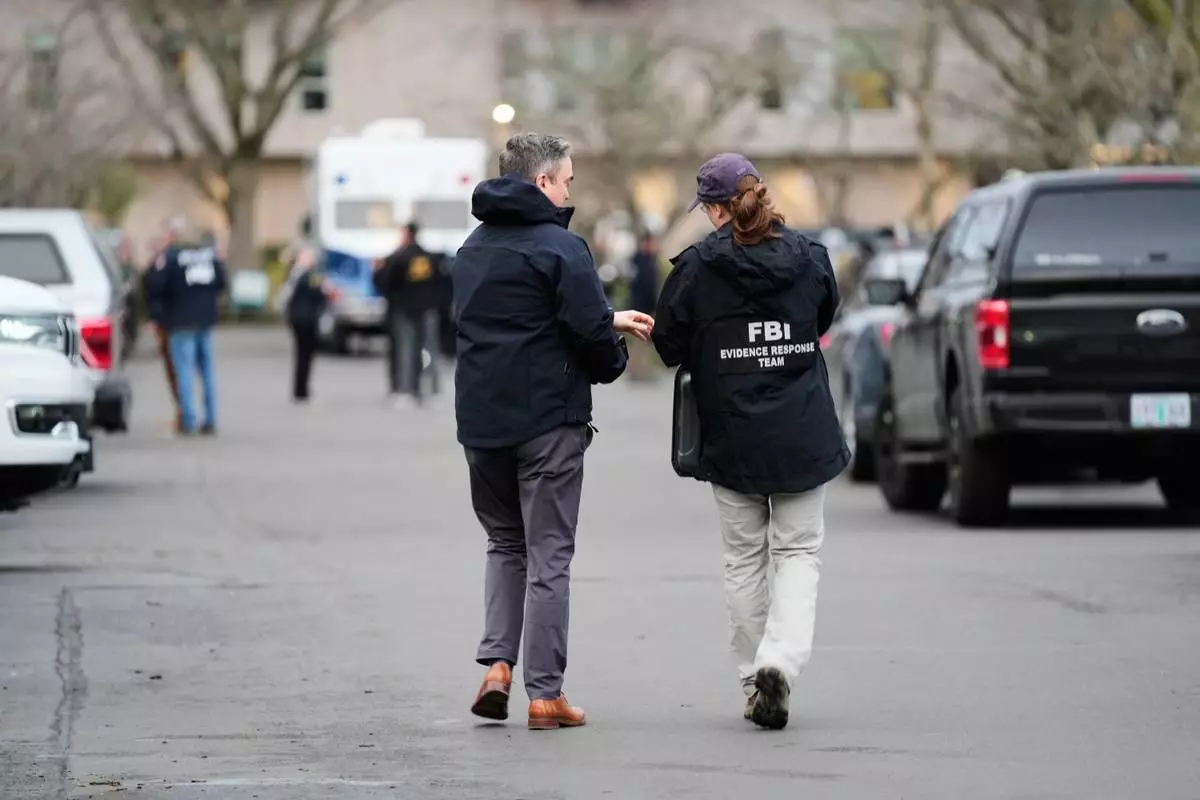
Law enforcement officials work the scene following reports that federal immigration officers shot and wounded people in Portland, Ore., Thursday, Jan. 8, 2026. (AP Photo/Jenny Kane)
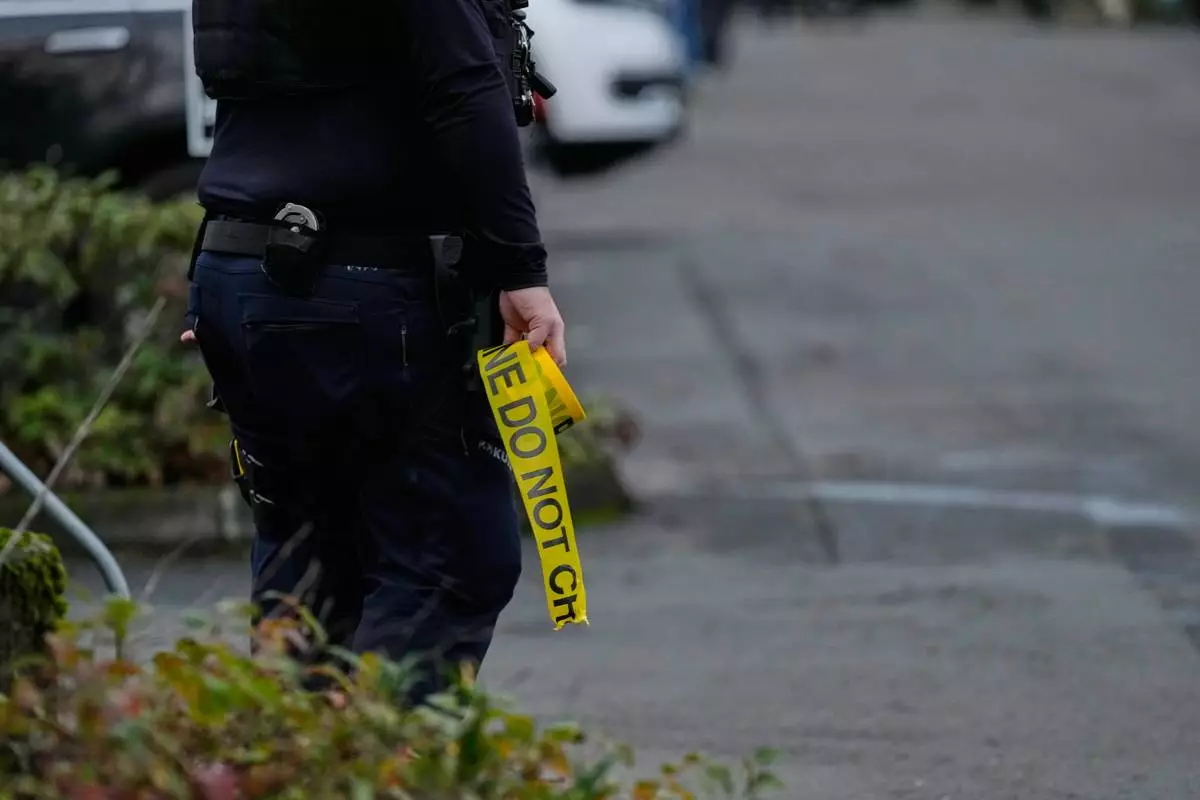
Law enforcement officials work the scene following reports that federal immigration officers shot and wounded people in Portland, Ore., Thursday, Jan. 8, 2026. (AP Photo/Jenny Kane)
FILE - The Department of Homeland Security (DHS) seal during a news conference June 28, 2019, in Washington. (AP Photo/Carolyn Kaster, File)