GLENDALE, Ariz. (AP) — Miami’s return to relevance was a long, winding road filled with more downs than ups.
Even when the Hurricanes rejoined the national conversation, they were doubted, told they didn’t belong.
Click to Gallery
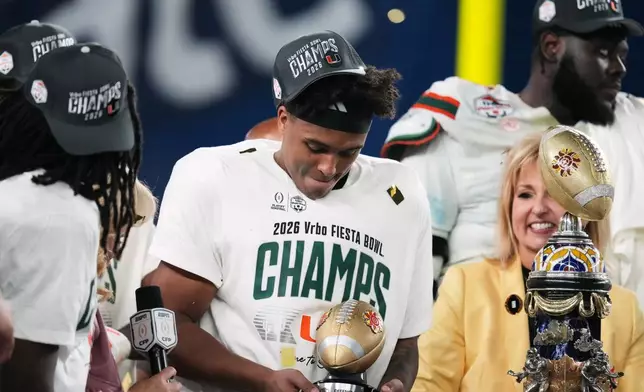
Miami defensive back Jakobe Thomas holds the defensive player of the game trophy after the Fiesta Bowl NCAA college football playoff semifinal game against Mississippi, Thursday, Jan. 8, 2026, in Glendale, Ariz. (AP Photo/Ross D. Franklin)
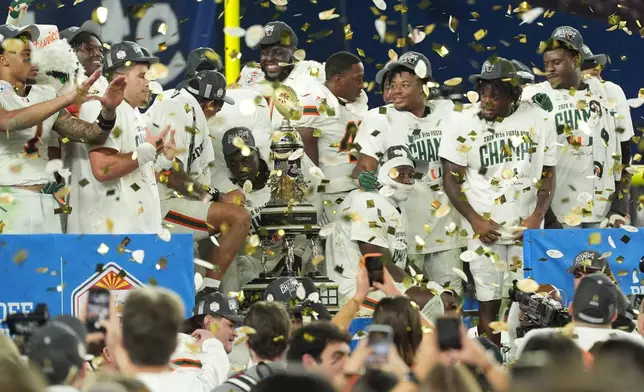
Miami players celebrate after winning the Fiesta Bowl NCAA college football playoff semifinal game against Mississippi, Thursday, Jan. 8, 2026, in Glendale, Ariz. (AP Photo/Ross D. Franklin)
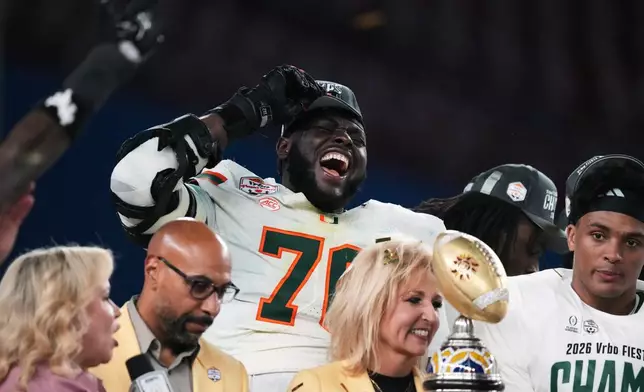
Miami offensive lineman Markel Bell celebrates after winning the Fiesta Bowl NCAA college football playoff semifinal game against Mississippi, Thursday, Jan. 8, 2026, in Glendale, Ariz. (AP Photo/Ross D. Franklin)
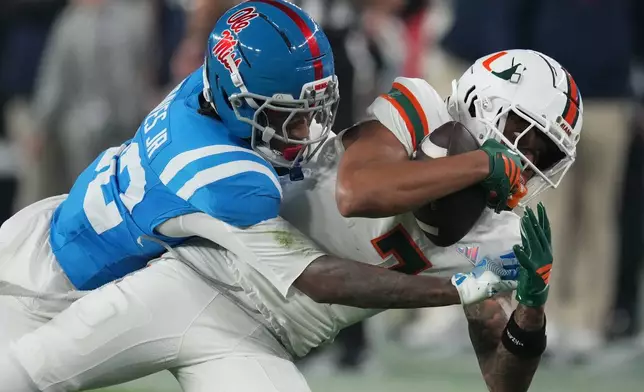
Miami wide receiver CJ Daniels (7) catches a pass while tackled by Mississippi cornerback Chris Graves Jr. (32) during the first half of the Fiesta Bowl NCAA college football playoff semifinal game, Thursday, Jan. 8, 2026, in Glendale, Ariz. (AP Photo/Ross D. Franklin)
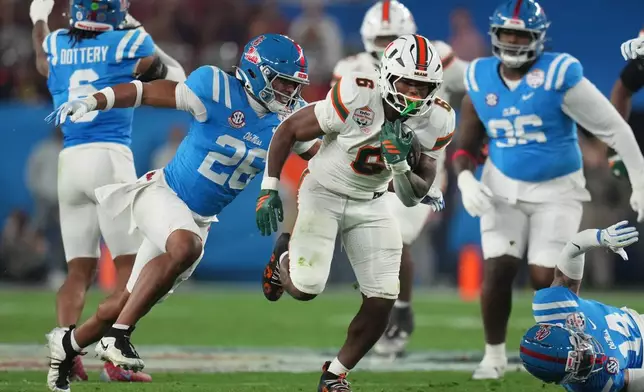
Miami running back Charmar Brown (6) runs the ball against Mississippi linebacker Tahj Chambers (26) during the first half of the Fiesta Bowl NCAA college football playoff semifinal game, Thursday, Jan. 8, 2026, in Glendale, Ariz. (AP Photo/Rick Scuteri)
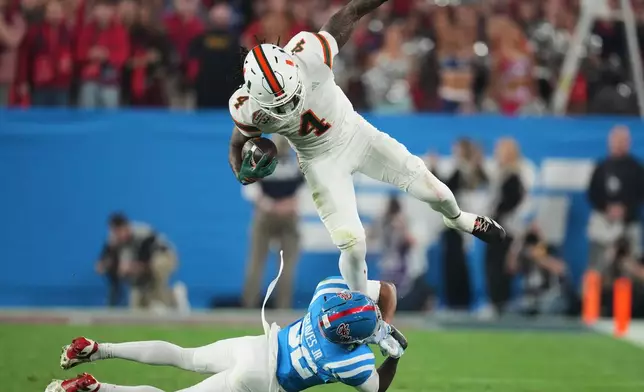
Mississippi cornerback Chris Graves Jr. (32) tackles Miami running back Mark Fletcher Jr. (4) during the first half of the Fiesta Bowl NCAA college football playoff semifinal game, Thursday, Jan. 8, 2026, in Glendale, Ariz. (AP Photo/Ross D. Franklin)
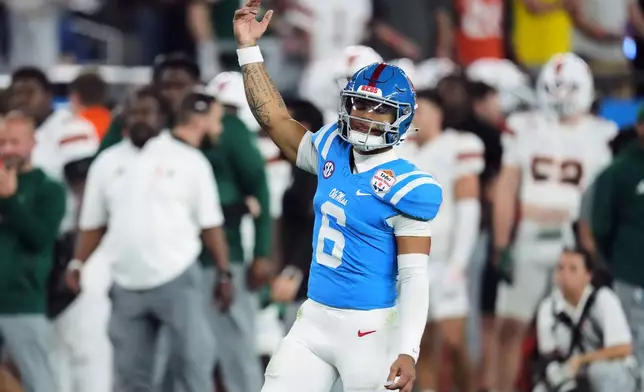
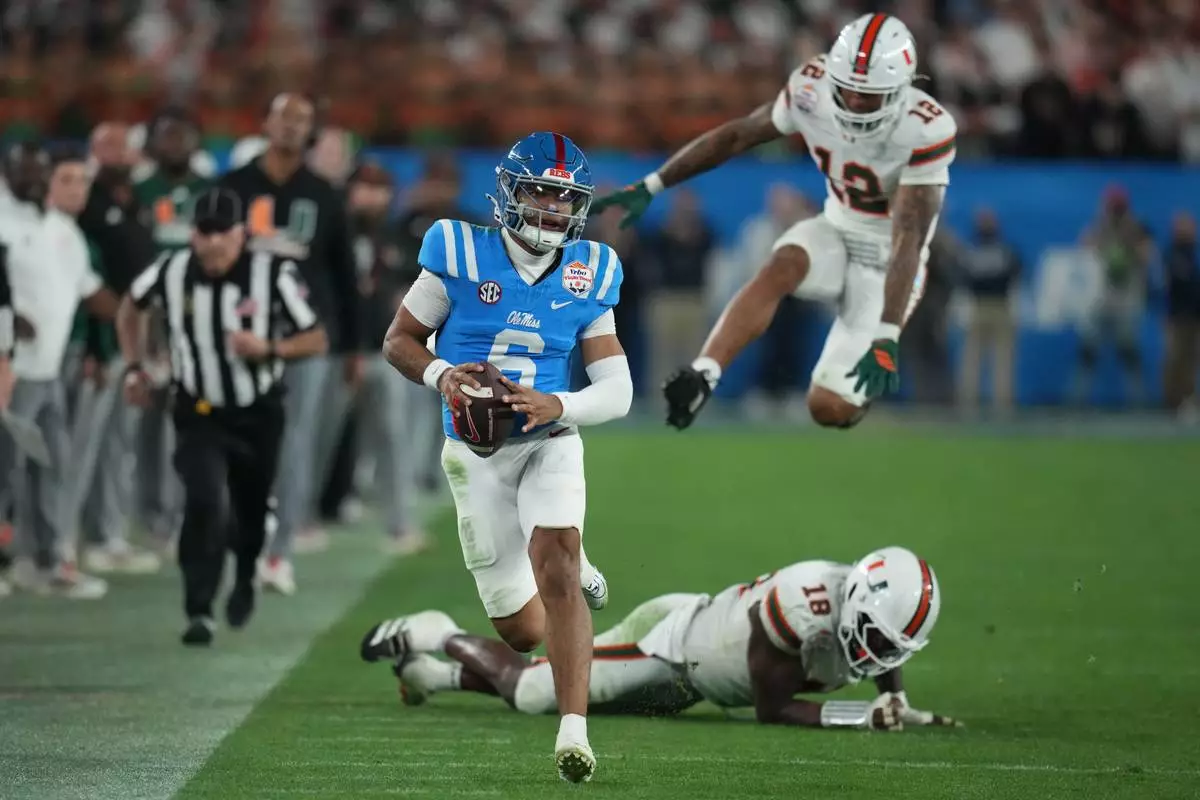
Mississippi quarterback Trinidad Chambliss (6) celebrates after a two-point conversion during the second half of the Fiesta Bowl NCAA college football playoff semifinal game against Miami, Thursday, Jan. 8, 2026, in Glendale, Ariz. (AP Photo/Ross D. Franklin)
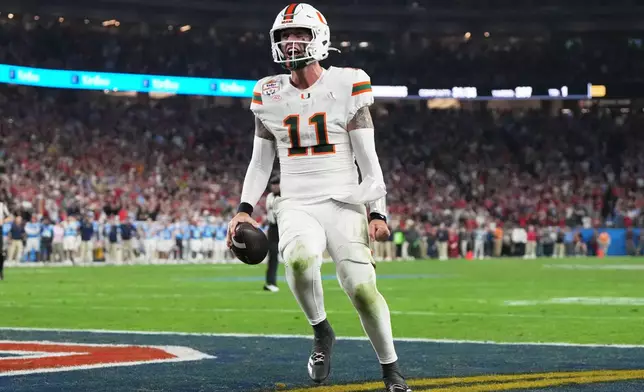
Miami quarterback Carson Beck scores a touchdown during the second half of the Fiesta Bowl NCAA college football playoff semifinal game against Mississippi, Thursday, Jan. 8, 2026, in Glendale, Ariz. (AP Photo/Rick Scuteri)
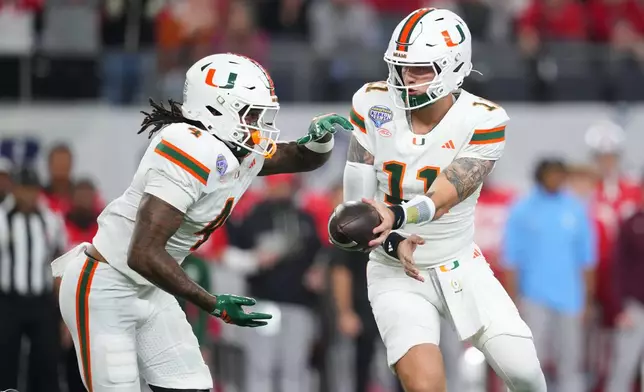
Miami quarterback Carson Beck, right, prepares to hand off to running back Mark Fletcher Jr. during the first half of the Cotton Bowl College Football Playoff quarterfinal game against Ohio State Wednesday, Dec. 31, 2025, in Arlington, Texas. (AP Photo/Julio Cortez)
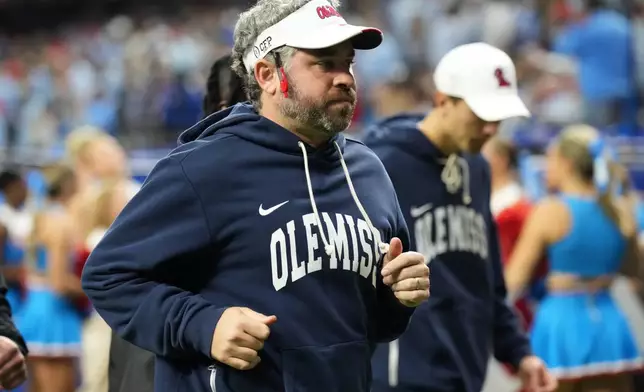
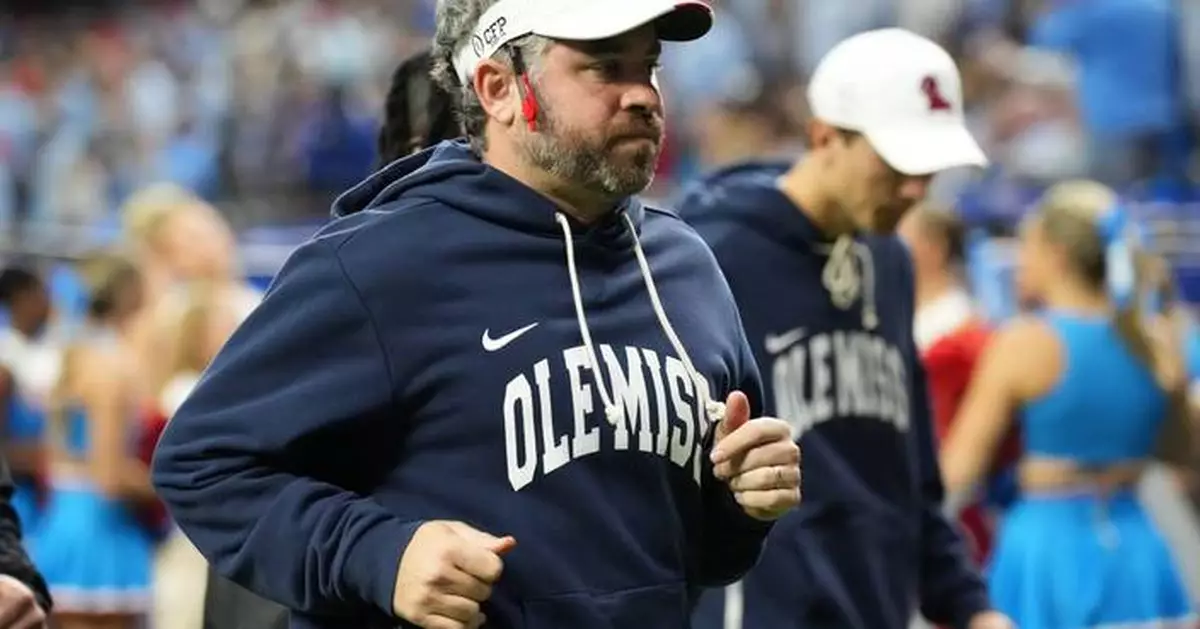
Mississippi head coach Pete Golding runs on the field at halftime during the Sugar Bowl NCAA college football playoff quarterfinal game against Georgia, Thursday, Jan. 1, 2026, in New Orleans. (AP Photo/Matthew Hinton)
Through it all, they kept chugging along — straight into the national championship game.
Carson Beck scrambled for a 3-yard touchdown with 18 seconds left, and Miami will head back home for a shot at its first national title since 2001 after beating Mississippi 31-27 in an exhilarating College Football Playoff semifinal at the Fiesta Bowl on Thursday night.
“We never flinched,” said Beck, who threw for 268 yards and two touchdowns with an interception. “In the face of adversity, when we had to respond, we responded.”
The 10th-ranked Hurricanes (13-2) didn’t play in the Atlantic Coast Conference title game and were a somewhat controversial CFP pick – at least outside of South Florida – yet proved they belong.
Miami held Texas A&M and reigning national champion Ohio State to a combined 17 points to reach the CFP semifinals. Then the Hurricanes shut down the high-scoring Rebels (13-2) for three quarters in the desert before pulling it out in a wild fourth.
Malachi Toney, hero of Miami's opening CFP win over Texas A&M, turned a screen pass into a 36-yard touchdown that put the Hurricanes up 24-19.
Trinidad Chambliss, a year removed from winning a Division II title at Ferris State, led the Rebels down the field and found Dae'Quan Wright for a 24-yard touchdown with 3:13 left.
Then it was Beck's turn.
He won a national title as a backup at Georgia before two productive seasons as the Bulldogs' starter. Beck kept the Hurricanes calm amid the storm, leading them down the field for the winning score — and a shot at a national title on their home field at Hard Rock Stadium.
Now 37-5 as a starter, Beck gets one more chance at glory against against top-ranked Indiana or No. 5 Oregon on Jan. 19 in the CFP championship game.
“He’s hungry, he’s driven, he’s a great human being, and all he wants to do is to see his teammates have success,” said Mario Cristobal, in his fourth season coaching his alma mater. “And that’s what we witnessed tonight.”
The sixth-seeded Rebels lost their coach before the playoff, but not their cool.
If anything, Lane Kiffin’s decision to bolt for LSU seemed to harden Ole Miss’ resolve, pushing the Rebels to the best season in school history — and within a game of their first national championship game.
“I will just remember how they embraced each other,” Ole Miss coach Pete Golding said. “There was a lot going on the last month. They're going to be talking about this for a long time.”
They sure will.
Ole Miss took the lead on Lucas Carneiro’s fourth field goal, from 21 yards, and seemed poised to continue its improbable run with Chambliss’ TD pass to Wright.
Even after Beck's touchdown, the Rebels still had a chance.
Chambliss completed two passes to get Ole Miss to the Miami 35 with 6 seconds left, offering a glimmer of hope.
The best season in Rebels history ended when Chambliss' heave to the end zone fell incomplete as time expired, but what a run it was.
“This team has just sacrificed a lot to get to this point,” said Chambliss, who threw for 277 yards and a touchdown. “This season’s been bumpy and there’s been a lot of things going on, and we just kept our focus. It’s been truly special.”
With Golding calling the shots after being promoted from defensive coordinator — and most of the assistants sticking around — the Rebels blew out Tulane to open the playoff and took down mighty Georgia in the CFP quarterfinals.
They faced a different kind of storm in the Hurricanes.
Miami has rekindled memories of its 2001 national championship team behind a defense that went from porous to nearly impenetrable in its first season under coordinator Corey Hetherman.
The Hurricanes walled up early in the Fiesta Bowl, holding Ole Miss to minus-1 yard.
One play revved up the Rebels and their rowdy fans.
Kewan Lacy, the nation’s third-leading rusher, burst through a hole up the middle for a 73-yard touchdown run on the first play of the second quarter — the longest run allowed by Miami’s defense since 2018.
The Hurricanes seemed content to grind away at the Rebels in small chunks offensively, setting up CharMar Brown’s 4-yard touchdown run and a field goal.
Miami unlocked the deep game just before halftime, taking advantage of a busted coverage for a 52-yard touchdown pass from Beck to Keelan Marion.
Carneiro made a 58-yard field goal just before halftime, had a 51-yarder bounce off the left upright and caromed in a 54-yarder off the same upright later in the third quarter.
The kicker's ups and downs mirrored the Rebels' night in the desert, one that ended with the Hurricanes heading home to play for a championship.
Get poll alerts and updates on the AP Top 25 throughout the season. Sign up here. AP college football: https://apnews.com/hub/ap-top-25-college-football-poll and https://apnews.com/hub/college-football
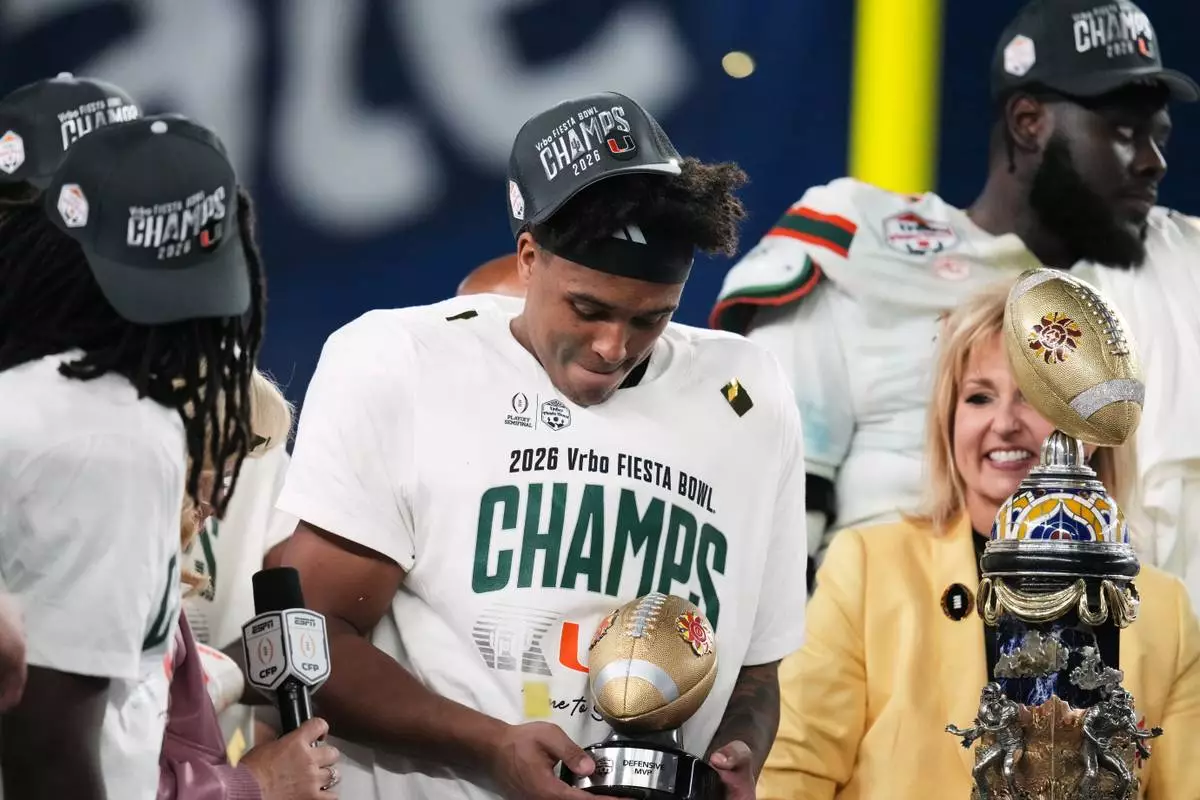
Miami defensive back Jakobe Thomas holds the defensive player of the game trophy after the Fiesta Bowl NCAA college football playoff semifinal game against Mississippi, Thursday, Jan. 8, 2026, in Glendale, Ariz. (AP Photo/Ross D. Franklin)
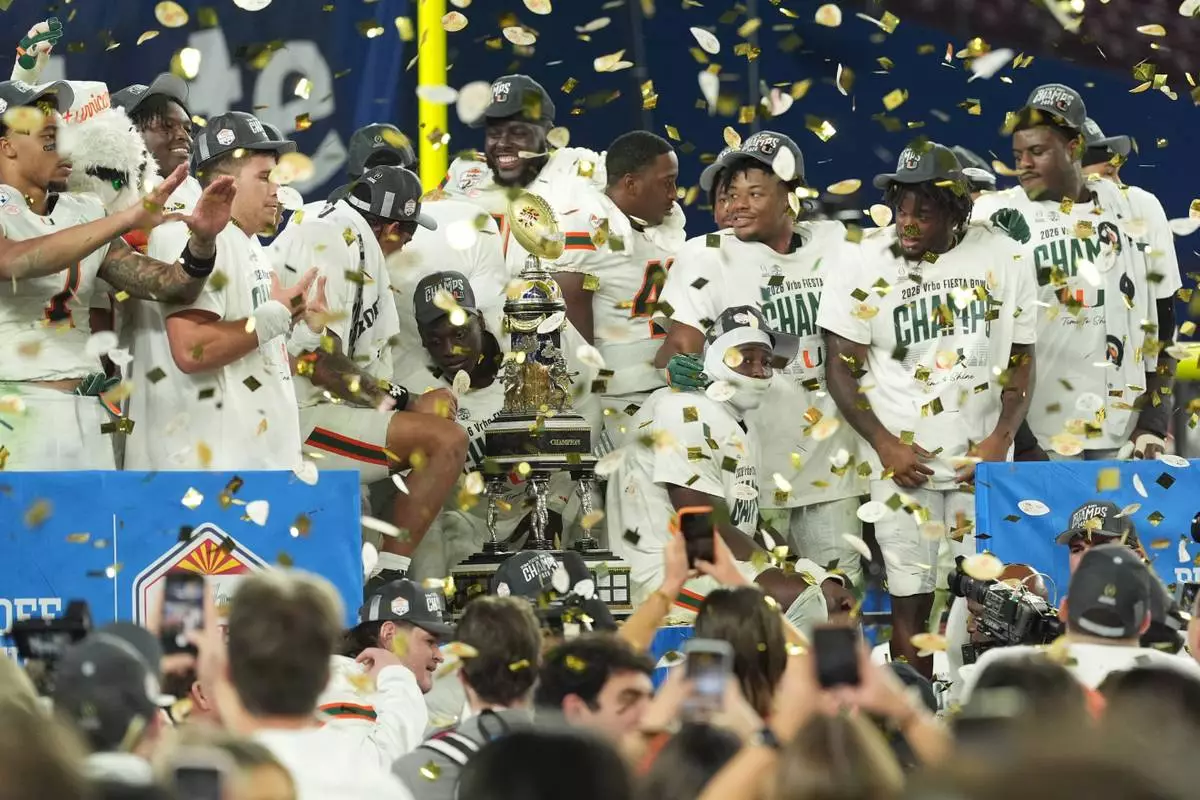
Miami players celebrate after winning the Fiesta Bowl NCAA college football playoff semifinal game against Mississippi, Thursday, Jan. 8, 2026, in Glendale, Ariz. (AP Photo/Ross D. Franklin)
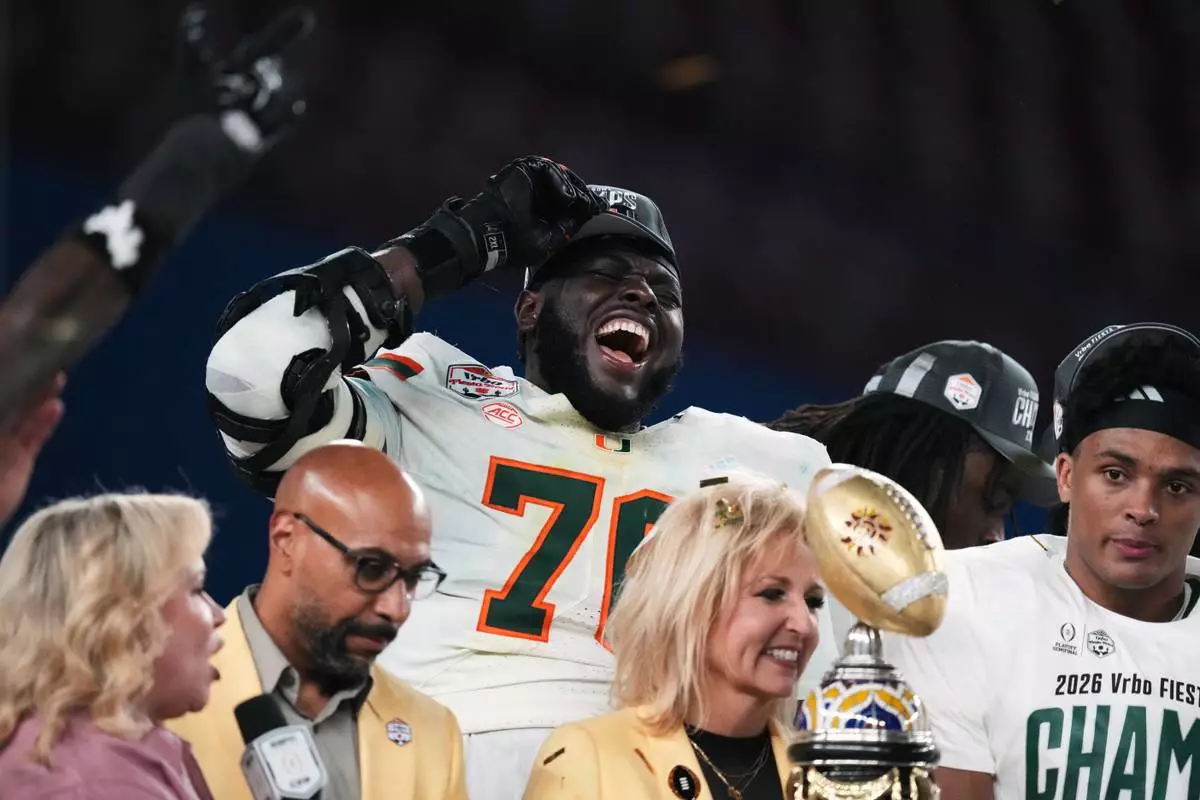
Miami offensive lineman Markel Bell celebrates after winning the Fiesta Bowl NCAA college football playoff semifinal game against Mississippi, Thursday, Jan. 8, 2026, in Glendale, Ariz. (AP Photo/Ross D. Franklin)
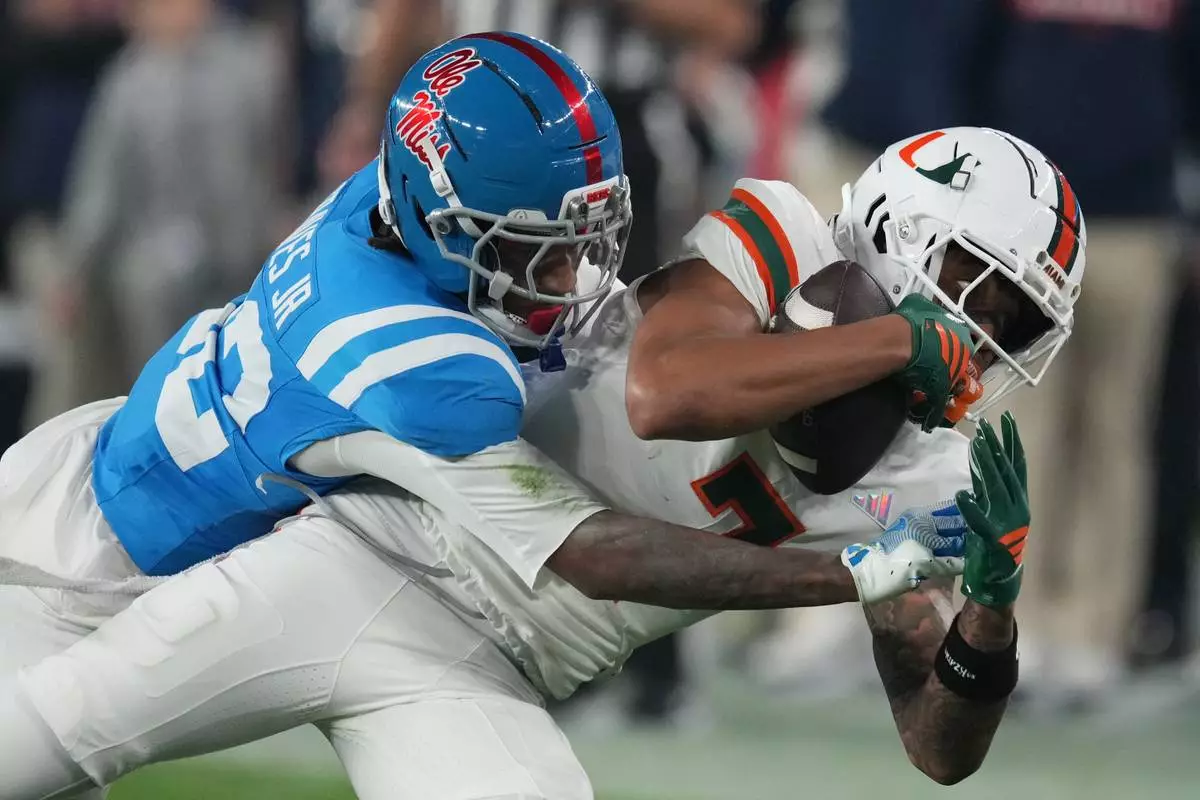
Miami wide receiver CJ Daniels (7) catches a pass while tackled by Mississippi cornerback Chris Graves Jr. (32) during the first half of the Fiesta Bowl NCAA college football playoff semifinal game, Thursday, Jan. 8, 2026, in Glendale, Ariz. (AP Photo/Ross D. Franklin)
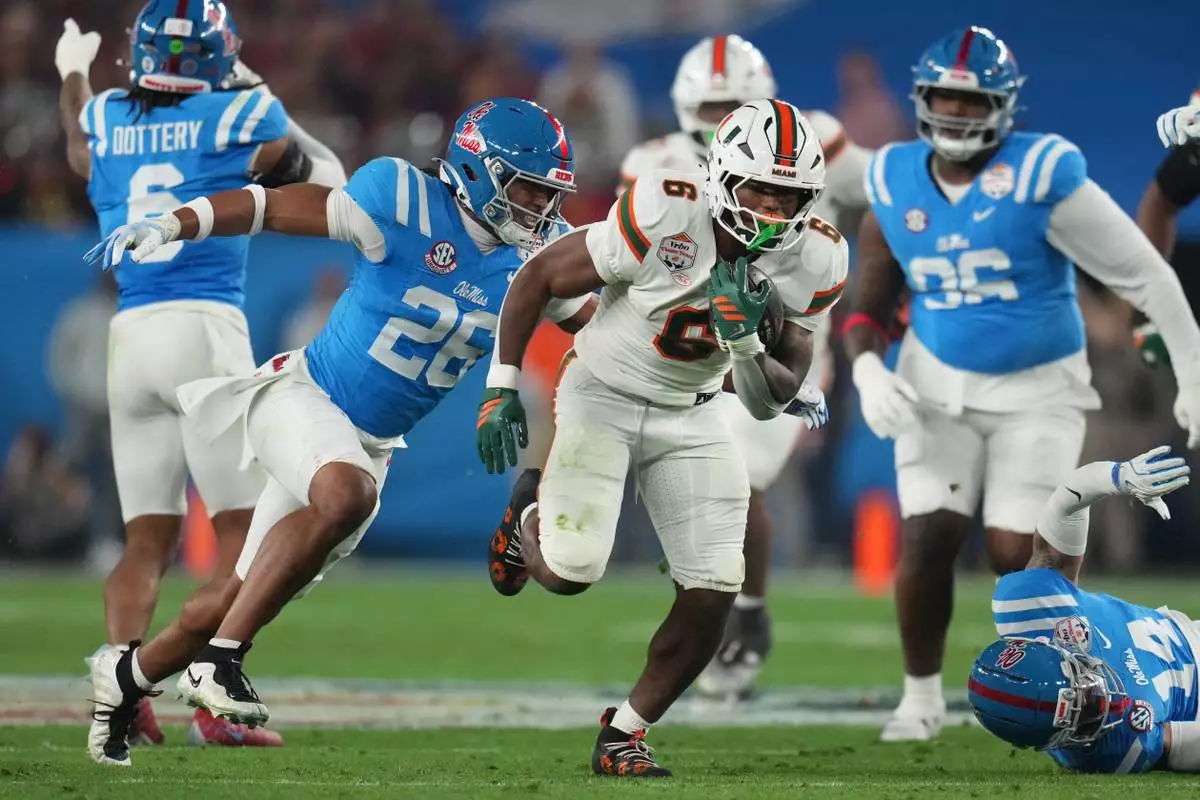
Miami running back Charmar Brown (6) runs the ball against Mississippi linebacker Tahj Chambers (26) during the first half of the Fiesta Bowl NCAA college football playoff semifinal game, Thursday, Jan. 8, 2026, in Glendale, Ariz. (AP Photo/Rick Scuteri)
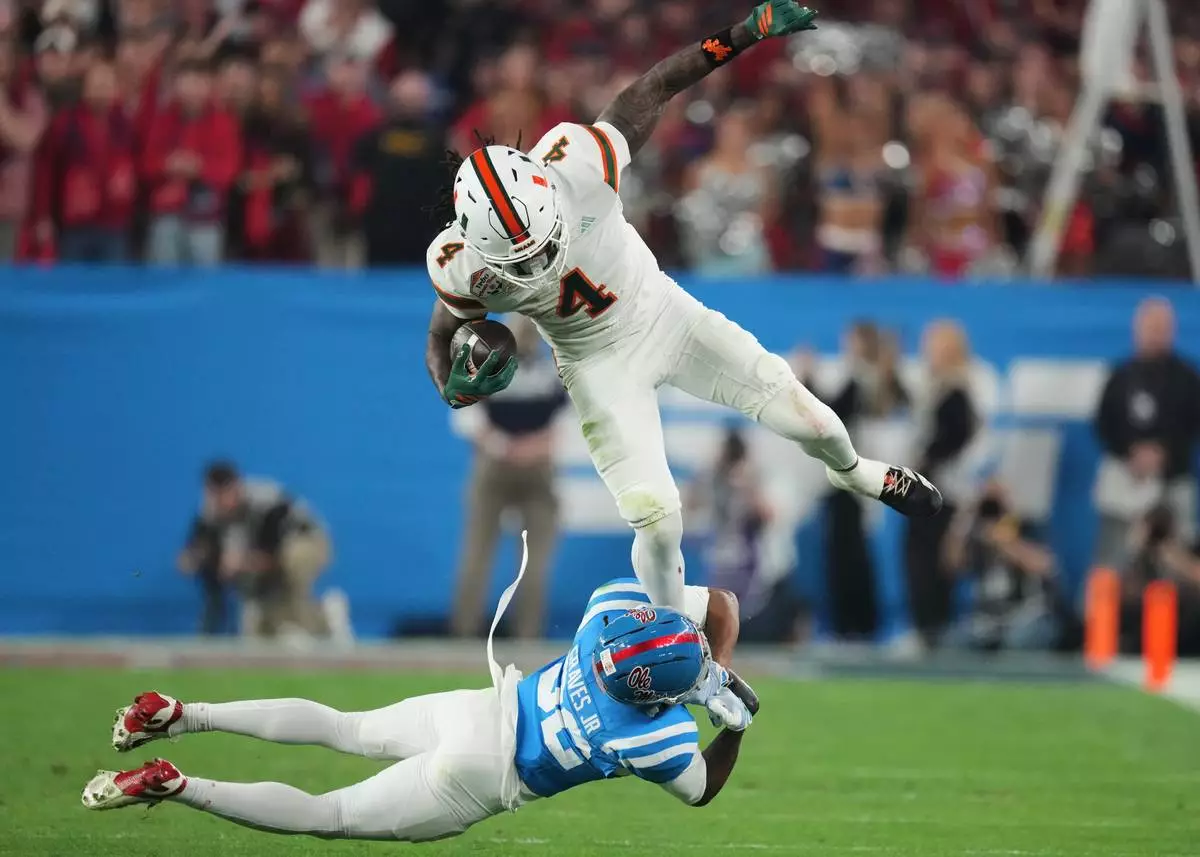
Mississippi cornerback Chris Graves Jr. (32) tackles Miami running back Mark Fletcher Jr. (4) during the first half of the Fiesta Bowl NCAA college football playoff semifinal game, Thursday, Jan. 8, 2026, in Glendale, Ariz. (AP Photo/Ross D. Franklin)
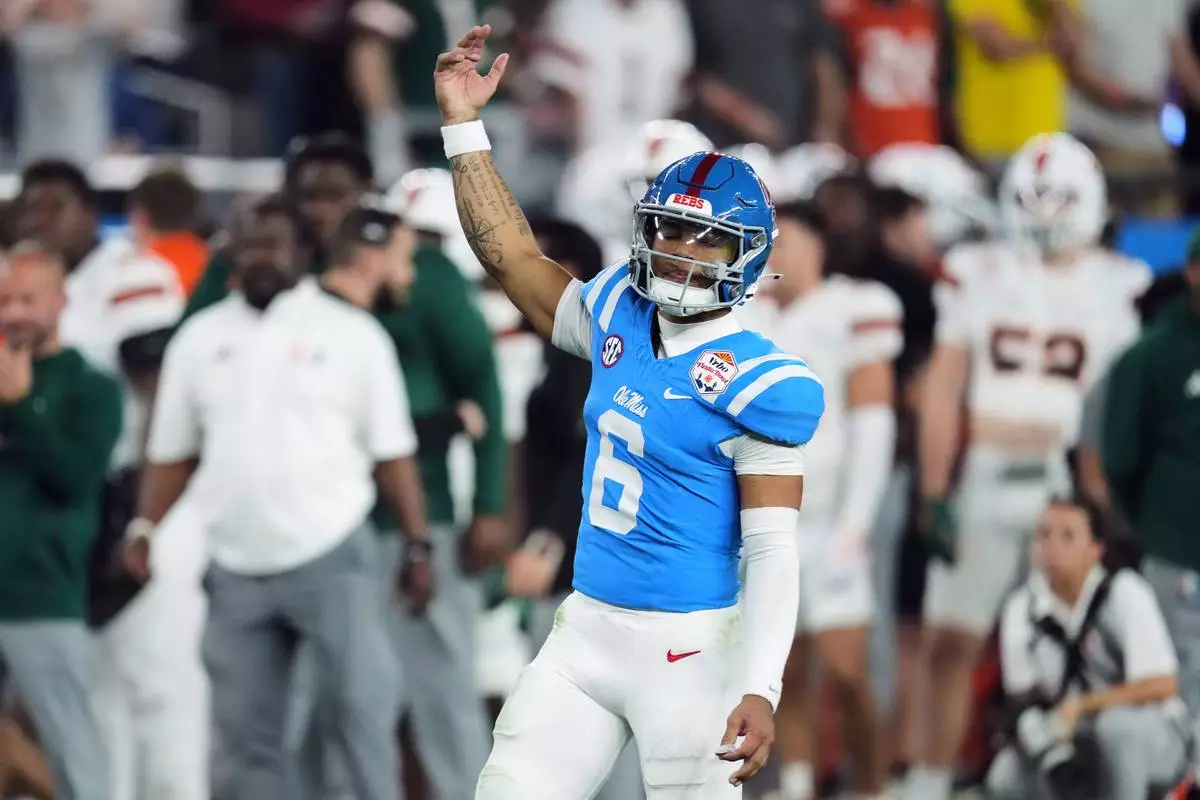
Mississippi quarterback Trinidad Chambliss (6) celebrates after a two-point conversion during the second half of the Fiesta Bowl NCAA college football playoff semifinal game against Miami, Thursday, Jan. 8, 2026, in Glendale, Ariz. (AP Photo/Ross D. Franklin)
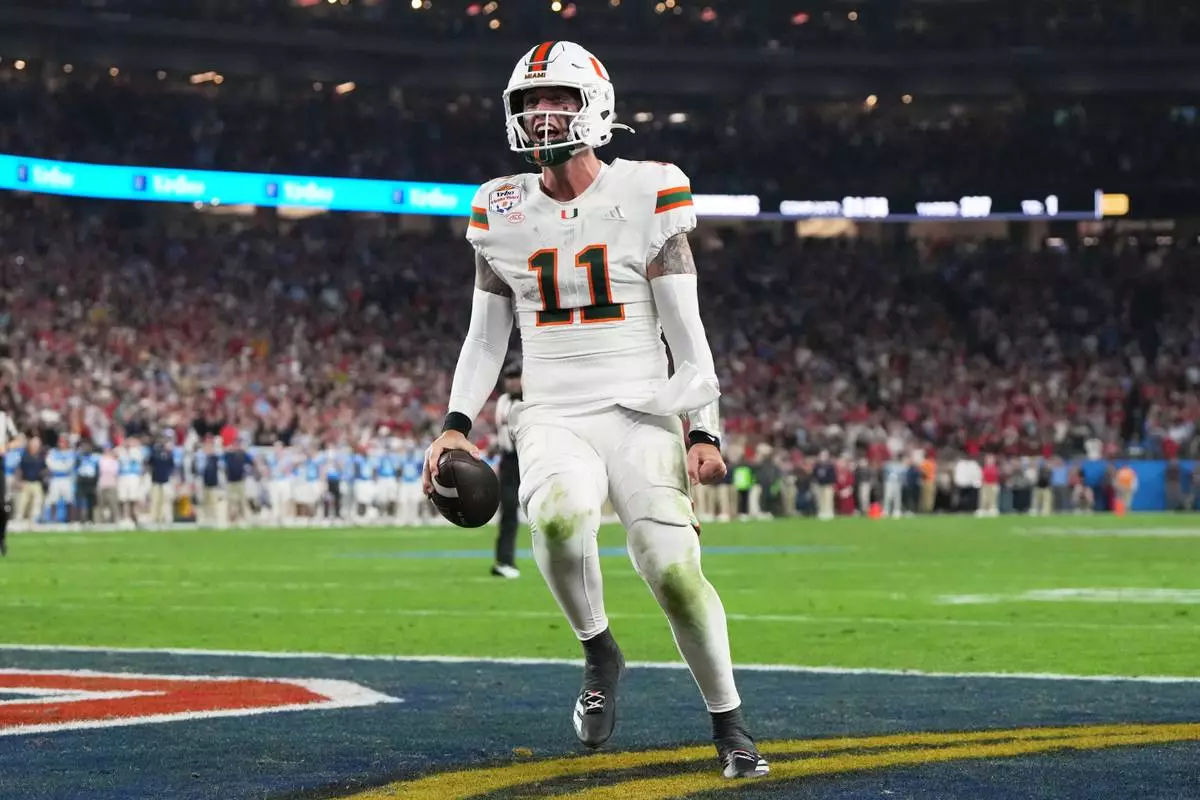
Miami quarterback Carson Beck scores a touchdown during the second half of the Fiesta Bowl NCAA college football playoff semifinal game against Mississippi, Thursday, Jan. 8, 2026, in Glendale, Ariz. (AP Photo/Rick Scuteri)
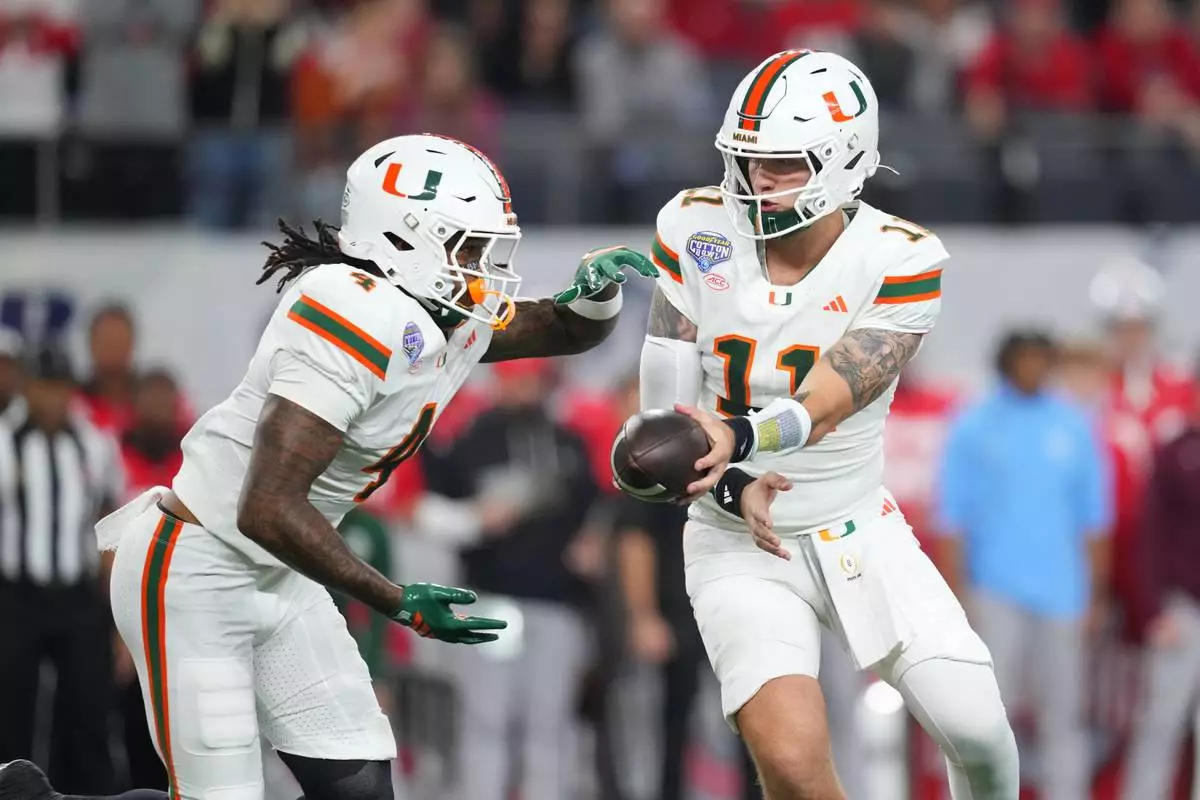
Miami quarterback Carson Beck, right, prepares to hand off to running back Mark Fletcher Jr. during the first half of the Cotton Bowl College Football Playoff quarterfinal game against Ohio State Wednesday, Dec. 31, 2025, in Arlington, Texas. (AP Photo/Julio Cortez)
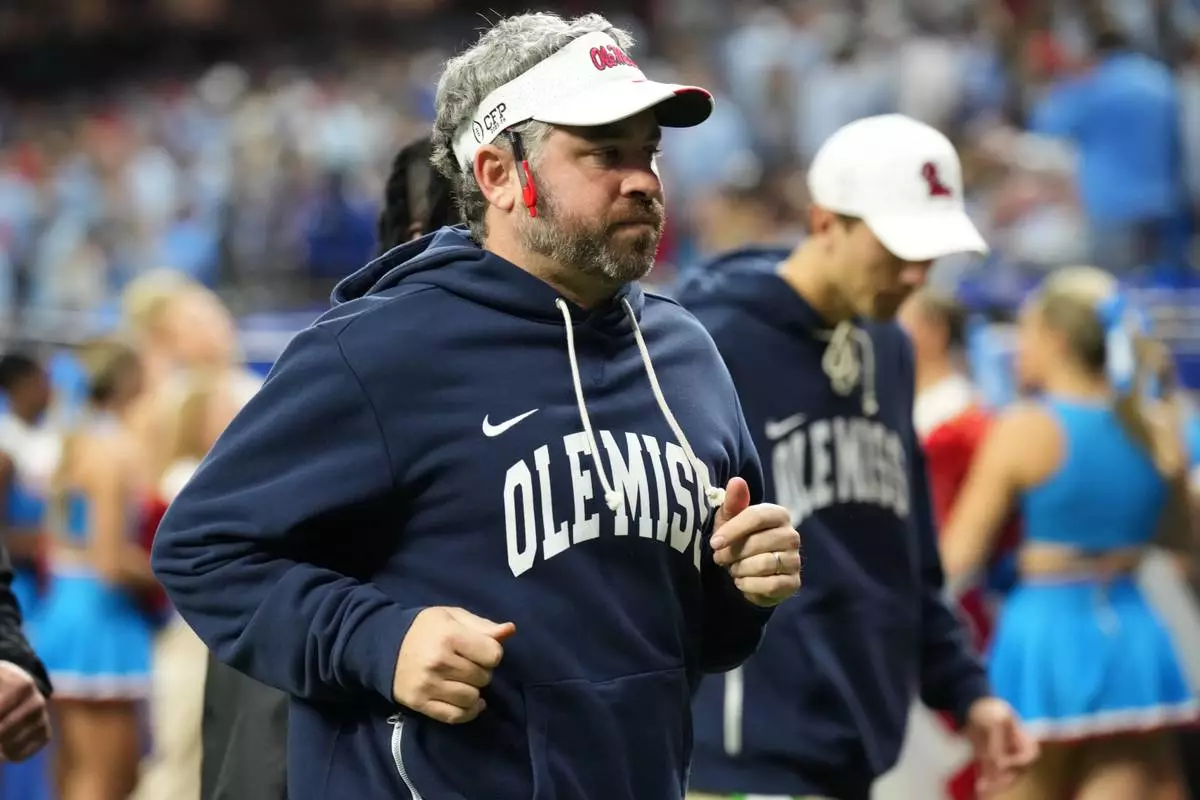
Mississippi head coach Pete Golding runs on the field at halftime during the Sugar Bowl NCAA college football playoff quarterfinal game against Georgia, Thursday, Jan. 1, 2026, in New Orleans. (AP Photo/Matthew Hinton)