LAS VEGAS (AP) — Health tech gadgets displayed at the annual CES trade show make a lot of promises. A smart scale promoted a healthier lifestyle by scanning your feet to track your heart health, and an egg-shaped hormone tracker uses AI to help you figure out the best time to conceive.
Tech and health experts, however, question the accuracy of products like these and warn of data privacy issues — especially as the federal government eases up on regulation.
The Food and Drug Administration announced during the show in Las Vegas that it will relax regulations on “low-risk” general wellness products such as heart monitors and wheelchairs. It's the latest step President Donald Trump's administration has taken to remove barriers for AI innovation and use. The White House repealed former President Joe Biden's executive order establishing guardrails around AI, and last month, the Department of Health and Human Services outlined its strategy to expand its use of AI.
Booths at the conference showcased new tech designed to help people living in rural areas with their health care needs amid doctor shortages, boost research into women’s health and make life easier for people with disabilities.
AI technologies have benefits in the over $4.3 trillion health care industry, according to Marschall Runge, professor of medical science at the University of Michigan. They’re good at analyzing medical imaging and can help streamline doctors’ busy schedules, Runge said, but they can also promote biases and “hallucinate,” providing incorrect information stated as fact.
“I would urge people not to think that the technology is the same as a well-resourced, thoughtful, research-driven medical professional,” said Cindy Cohn, executive director of the digital rights group Electronic Frontier Foundation.
Privacy protections like the Health Insurance Portability and Accountability Act do not cover information collected by consumer devices, and the companies could be using the data to train their AI mode ls, or selling it to other businesses, Cohn said.
With a lot of the gadgets at CES, it’s difficult to find out where your information is going, Cohn said.
“You have to dig down through the fine print to try to figure that out, and I just don’t think that’s fair or right for the people who might rely on it,” she said.
But the creators of the products say their innovations fill in health care gaps, and they maintain they protect their customers’ privacy.
Sylvia Kang, founder and CEO of Mira, said she created the egg-shaped hormone tracker because many of her friends were trying to conceive and realized they had no knowledge of their hormonal health. To use the “world’s mini hormone lab,” you dip a wand in urine, insert the wand into the monitor and look at the results on the app.
Kang said her company uses AI to analyze female hormone data and has one of the world’s biggest hormonal health banks. The data is stored on the cloud and is not shared with anyone, Kang said.
“There was no such thing before,” Kang said of her $250 product.
Many gadgets at CES focused on women’s health, which has been historically under-researched and underfunded. Before 1993, women were excluded from clinical trials, and there still is little research on areas like menopause.
While not every woman will have a baby, all women go through menopause, and “yet we know nothing about it,” said Amy Divaraniya, founder and CEO of the women’s health company Oova, during a session.
One gadget called Peri aims to better understand perimenopause — the transitional phase before menopause. The wearable device monitors hot flashes and night sweats and provides the data via an app.
Other products at CES were promoted as a way to increase accessibility to health information. The free medicine-focused AI chatbot called 0xmd helps improve access to medical information in areas with doctor shortages and provides a cost-effective alternative, said its founder and architect Allen Au. People can ask the chatbot questions about medicine, upload photos of a mole or rash, and submit their doctors’ notes for an easier-to-understand translation, Au said.
“At the end of the day, I don’t think we will replace doctors,” but it can give people a second opinion, Au said.
OpenAI announced on Wednesday its launch of ChatGPT Health, a similar platform.
Cohn remains skeptical of consumer tech. She said they can help prepare people to ask the right questions of their medical professional, but they’re not going to be a substitute for a doctor.
“People need to remember that these are just tools; they’re not oracles who are delivering truths,” she said.

An Ovul device is seen on display during the CES tech show Wednesday, Jan. 7, 2026, in Las Vegas. (AP Photo/Abbie Parr)

A Peri device is seen on display during the CES tech show Wednesday, Jan. 7, 2026, in Las Vegas. (AP Photo/Abbie Parr)
DUBAI, United Arab Emirates (AP) — Iran fired more missiles at Israel and Gulf Arab states Thursday, demonstrating Tehran’s continued ability to strike its neighbors even as U.S. President Donald Trump claimed the threat from the country was nearly eliminated.
Iran’s attacks on Gulf states along with its chokehold on the Strait of Hormuz have disrupted the world’s energy supplies with effects far beyond the Middle East. That has proved to be Iran’s greatest strategic advantage in the war. Britain held a call with nearly three dozen countries about how to reopen the strait once the fighting is over.
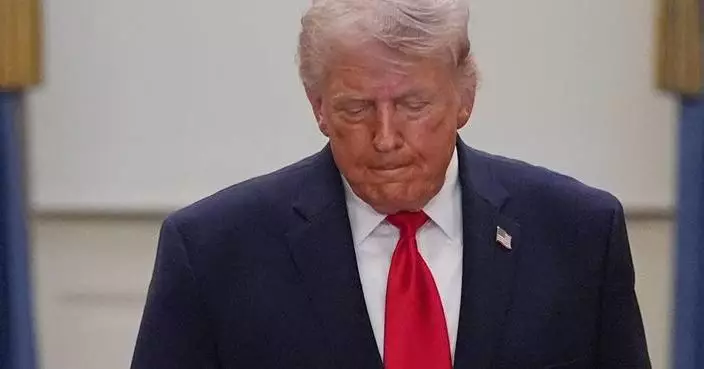
Trump has insisted the strait can be taken by force — but said it is not up to the U.S. to do that. In an address to the American people Wednesday night, he encouraged countries that depend on oil from Hormuz to “build some delayed courage” and go “take it.”
Before the U.S. and Israel started the war on Feb. 28 with strikes on Iran, the waterway was open to traffic and 20% of all traded oil passed through it.
Iran responded defiantly to Trump’s speech, in which the American president claimed U.S. military action had been so decisive that “one of the most powerful countries” is “really no longer a threat.”
A spokesman for Iran’s military, Lt. Col. Ebrahim Zolfaghari, insisted Thursday that Tehran maintains hidden stockpiles of arms, munitions and production facilities. He said facilities targeted so far by U.S. strikes are “insignificant.”
Just before Trump began his address — in which he said U.S. “core strategic objectives are nearing completion” — explosions were heard in Dubai as air defenses worked to intercept an Iranian missile barrage.
Less than a half-hour after the president was done, Israel said its military was also working to intercept incoming missiles. Sirens sounded in Bahrain, home to the U.S. Navy’s 5th Fleet, immediately after the speech.
Attacks continued across Iran on Thursday, with strikes reported in multiple cities.
Trump posted footage on social media showing what he said was the collapse of Iran's biggest bridge and threatening, “Much more to follow.”
Earlier Thursday, Iran state media reported that the B1 bridge, which was still under construction, was attacked. Two semiofficial news agencies reported that two people were killed. It was not immediately clear if the footage Trump shared was the B1 bridge, reportedly the tallest in the Middle East.
In a post on X that included a picture of what appeared to be the same bridge, Iran’s Foreign Minister Abbas Araghchi wrote, “Striking civilian infrastructure only conveys the defeat and moral collapse of an enemy in disarray.”
Even amid the conflict, families went to a park in Tehran to play games and grill food to mark the last day of Iranian New Year, or Nowruz.
In Lebanon — where Israel has launched a ground invasion against Iran-backed Hezbollah militants — Israeli strikes have killed 27 people in the past 24 hours, the Health Ministry said.
More than 1,900 people have been killed in Iran during the war, while 19 have been reported dead in Israel. More than two dozen people have died in Gulf states and the occupied West Bank, while 13 U.S. service members have been killed.
More than 1,300 people have been killed and more than 1 million displaced in Lebanon. Ten Israeli soldiers have also died there.
Iranian attacks on about two dozen commercial ships, and the threat of more, have halted nearly all traffic in the waterway that connects the Persian Gulf to the open ocean.
Since March 1, traffic through the strait has dropped 94% over the same period last year, according to the Lloyds List Intelligence shipping data firm. Two ships are confirmed to have paid a fee, the firm said, while others were allowed through based on agreements with their home governments.
Saudi Arabia piped about 1 billion barrels of oil away from the Strait of Hormuz in March, according to maritime data firm Kpler, while Iraq said Thursday that it had started to truck oil across Syria to avoid the strait.
The 35 countries that spoke Thursday, including all G7 industrialized democracies except the U.S., as well as the United Arab Emirates and Bahrain, signed a declaration last month demanding Iran stop blocking the strait.
Thursday’s talks were focused on political and diplomatic measures, but British Foreign Secretary Yvette Cooper said military planners from an unspecified number of countries will also plot ways to ensure security once fighting ends, including potential mine-clearing work and “reassurance” for commercial shipping.
No country appears willing to try to open the strait by force while the war is raging. French President Emmanuel Macron, while on a visit to South Korea, called a military operation to secure the waterway “unrealistic.”
But there is a concern that Iran might limit traffic through the waterway even after U.S. and Israeli attacks cease.
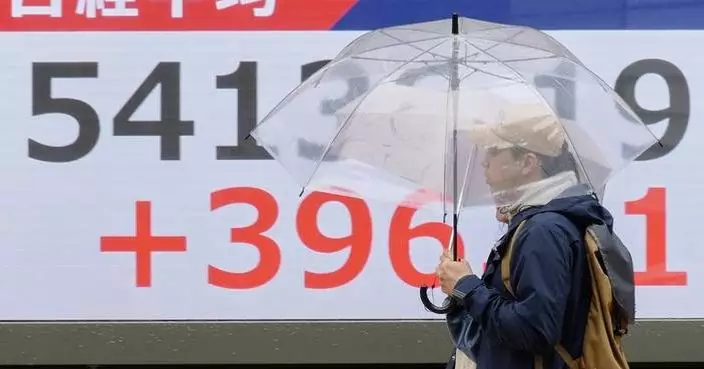
The conflict is driving up prices for oil and natural gas, roiling stock markets, pushing up the cost of gasoline and threatening to make a range of goods, including food, more expensive.
On Thursday, Brent crude, the international standard, rose again and was around $108, up about 50% from Feb. 28.
Though the oil and gas that typically transits the strait is primarily sold to Asian nations, Japan and South Korea were the only two countries from the region joining Thursday's call about the strait. The supply of jet fuel has also been interrupted, with consequences for travel worldwide.
Rising from Bangkok and Corder reported from The Hague, Netherlands. Associated Press writers Will Weissert in Washington and David McHugh in Frankfurt, Germany, and Toqa Ezzidin in Cairo contributed to this story.
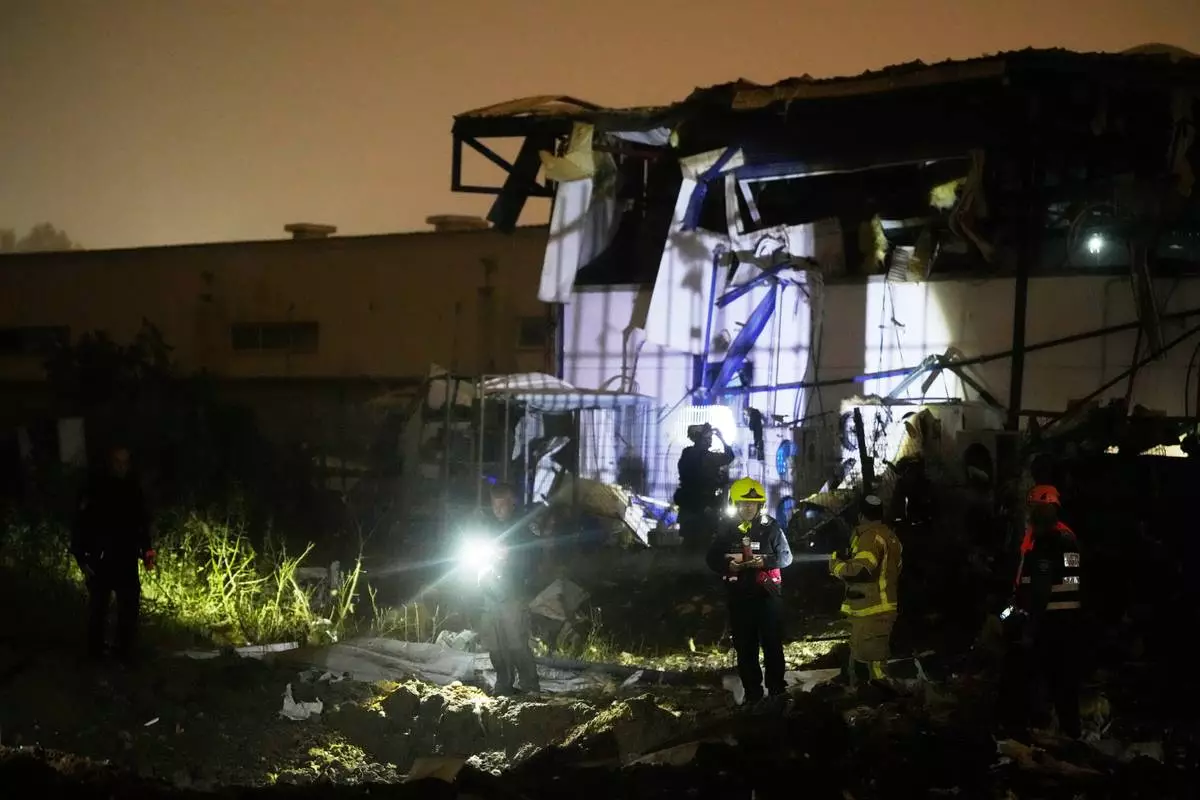
Israeli security forces and rescue teams inspect a site struck by an Iranian missile in Petah Tikva, Israel,Thursday, April 2, 2026. (AP Photo/Ohad Zwigenberg)
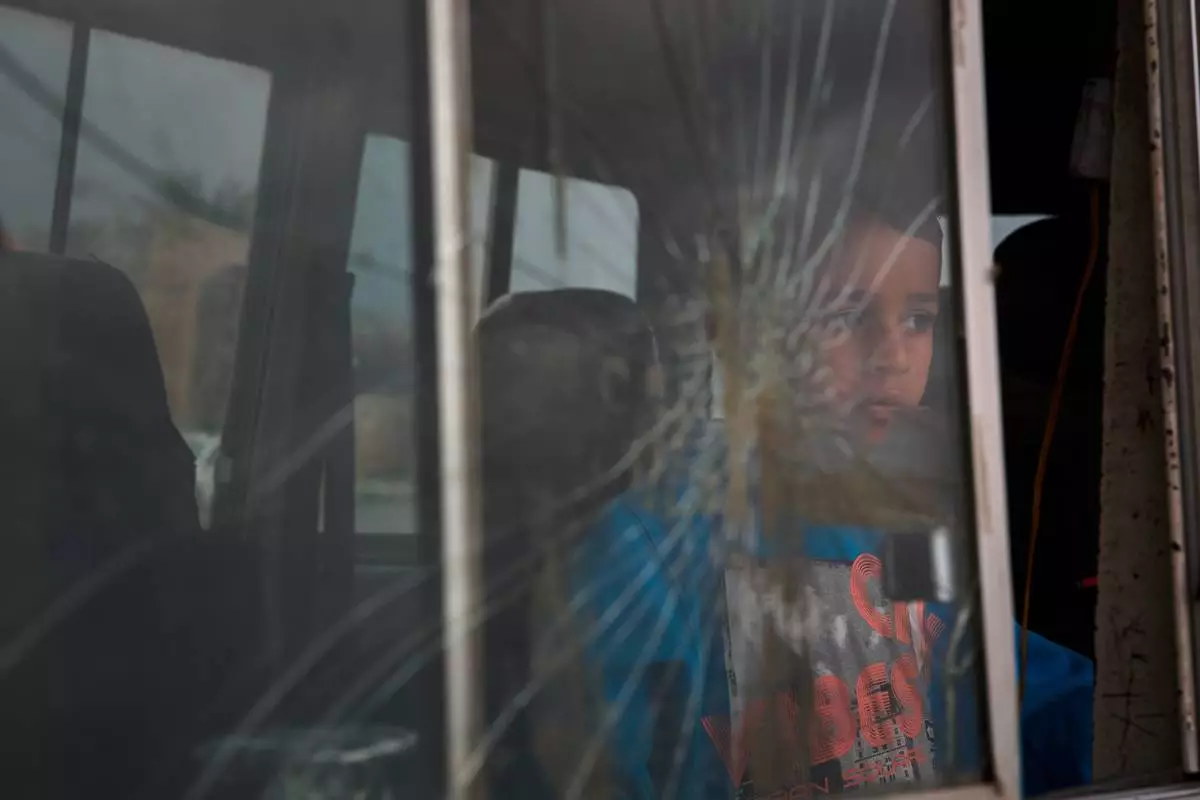
A boy who fled with his family following Israeli strikes in southern Lebanon sits inside the van they are using as shelter in Sidon, Lebanon, Thursday, April 2, 2026. (AP Photo/Emilio Morenatti)
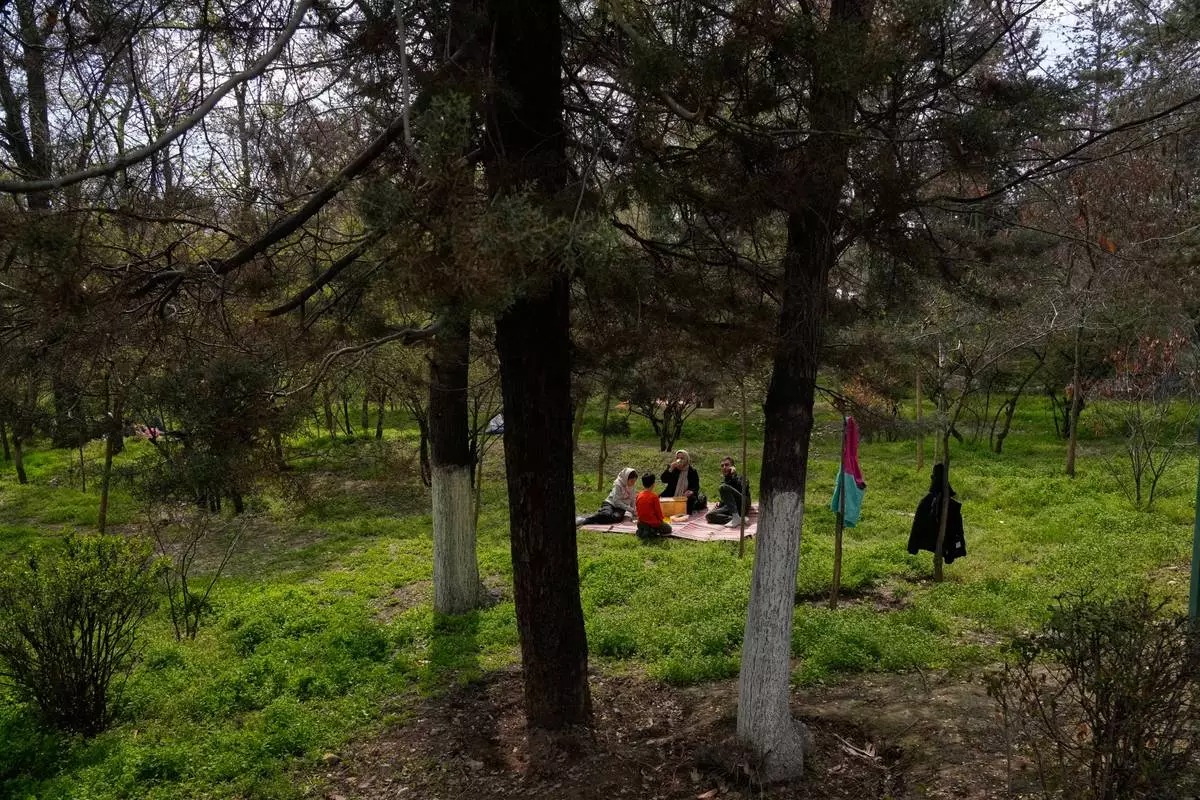
A family enjoys their time during the annual public picnic day, known as Sizdeh Bedar, an ancient tradition, marking the 13th and last day of Iranian New Year, or Nowruz, holidays, at Mellat park in Tehran, Iran, Thursday, April 2, 2026. (AP Photo/Vahid Salemi)
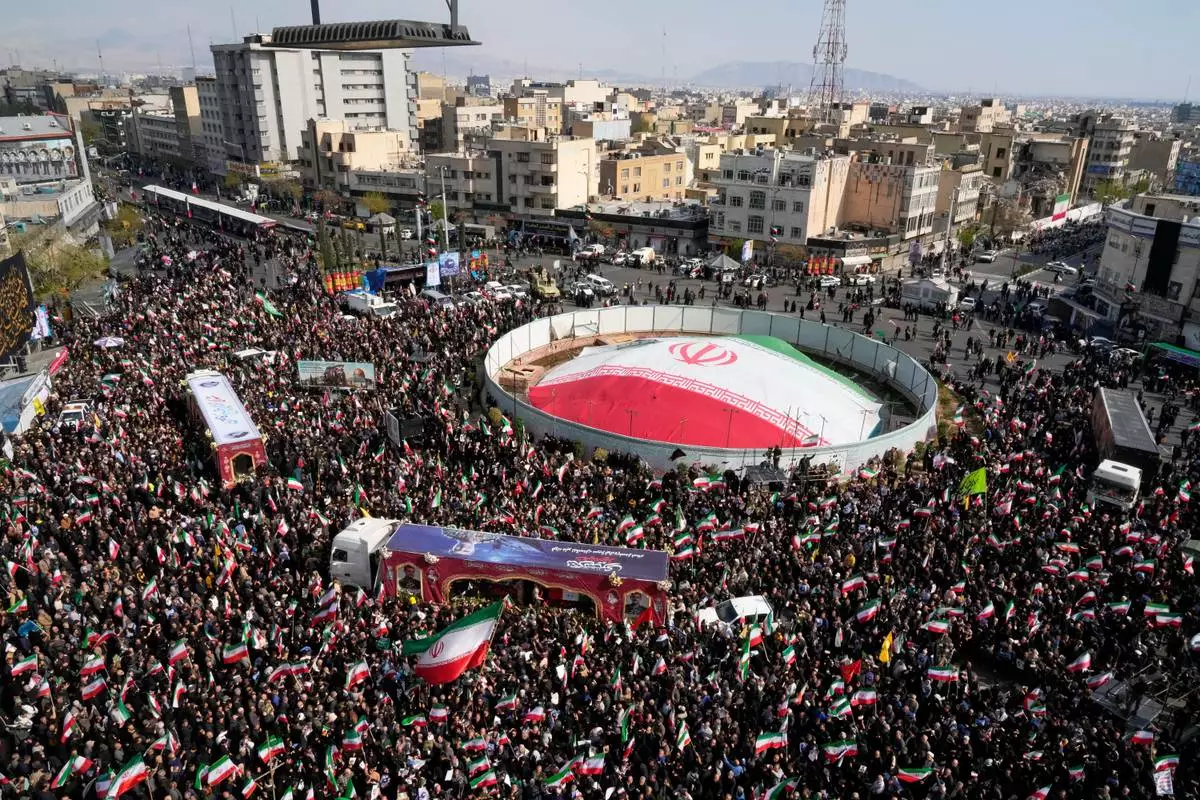
Mourners gather during a funeral procession for Alireza Tangsiri, head of Iran's Islamic Revolutionary Guard Corps Navy, and others killed in Israeli strikes in late March, in Tehran, Iran, Wednesday, April 1, 2026. (AP Photo/Vahid Salemi)
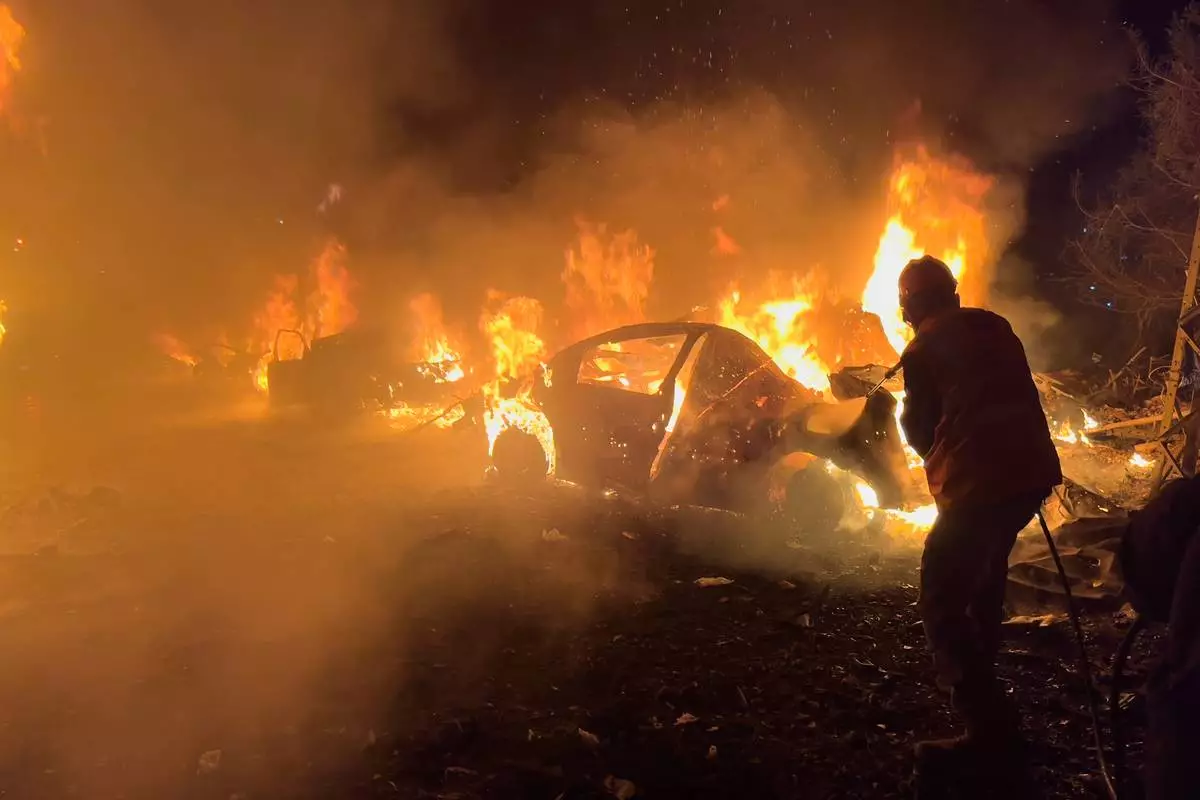
A firefighter extinguishes a car at the site of Israeli airstrikes, in Beirut, Lebanon, Wednesday, April 1, 2026. (AP Photo/Hussein Malla)
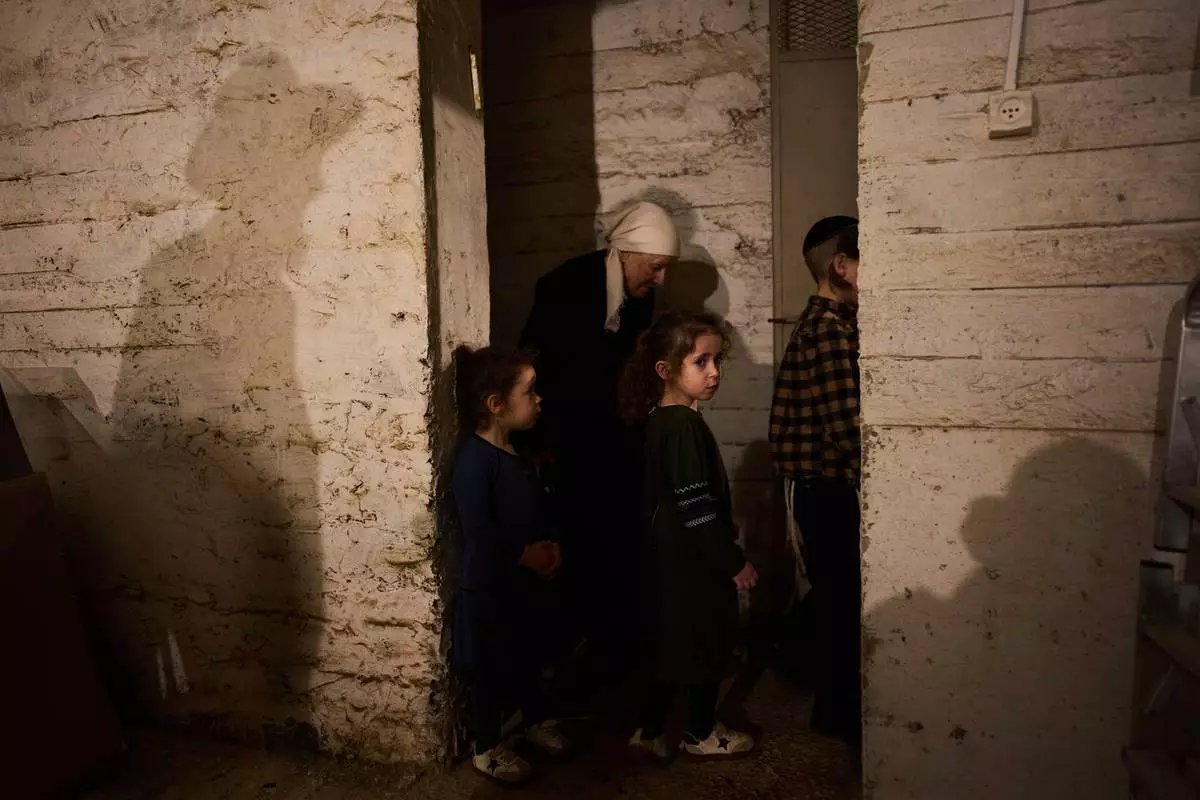
People take cover in a bomb shelter as air raid sirens warn of incoming Iranian missile strikes in Bnei Brak, Israel, Wednesday, April 1, 2026. (AP Photo/Oded Balilty)
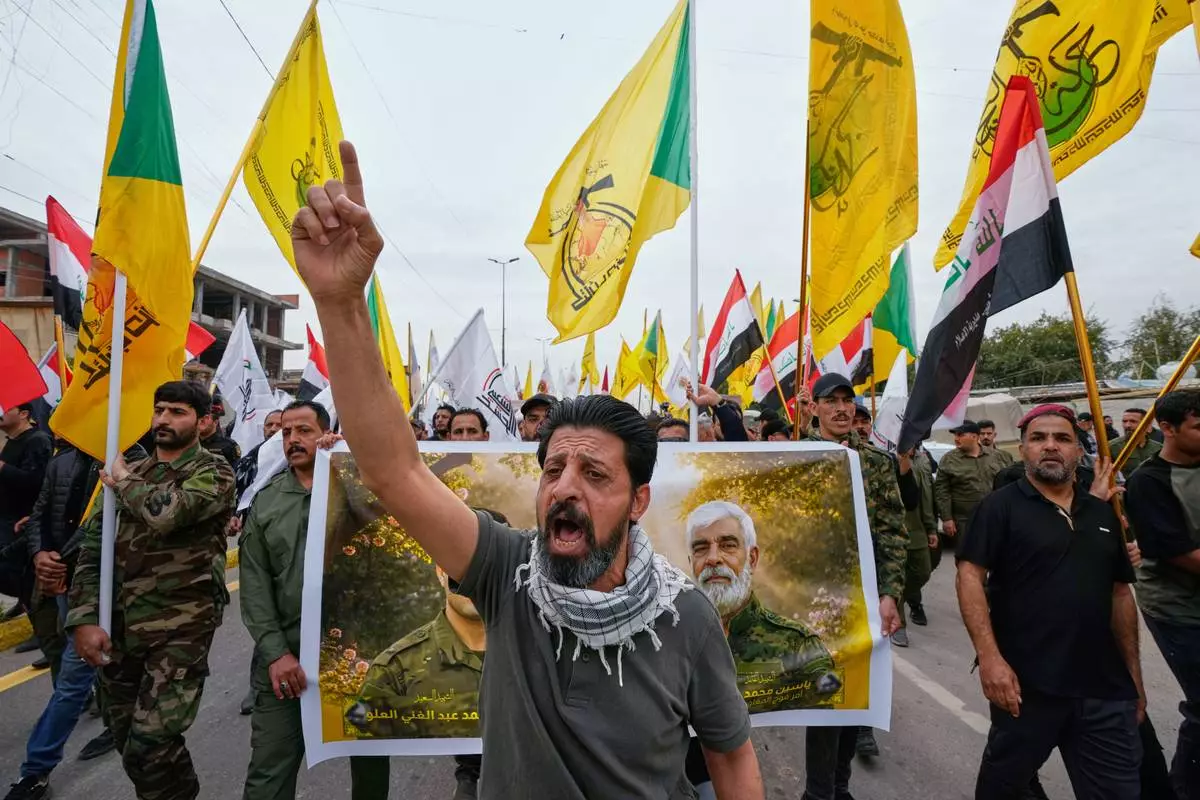
Members from the Popular Mobilization Forces attend a funeral of fighters who were killed in a U.S. airstrike, in Tal Afar, Nineveh province, north of Baghdad, Iraq, Thursday, April 2, 2026. (AP Photo/Hadi Mizban)
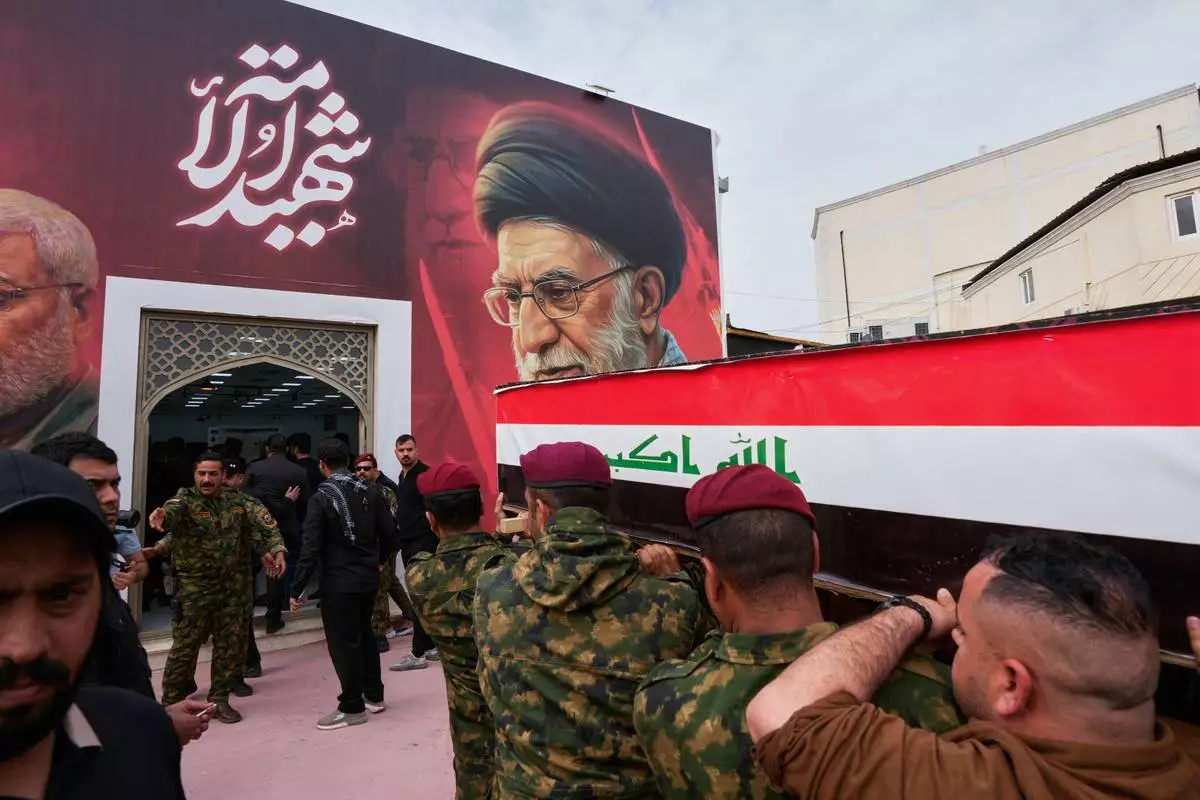
Members from the Popular Mobilization Forces attend a funeral of fighters who were killed in a U.S. airstrike, in Tal Afar, Nineveh province, north of Baghdad, Iraq, Thursday, April 2, 2026. (AP Photo/Hadi Mizban)
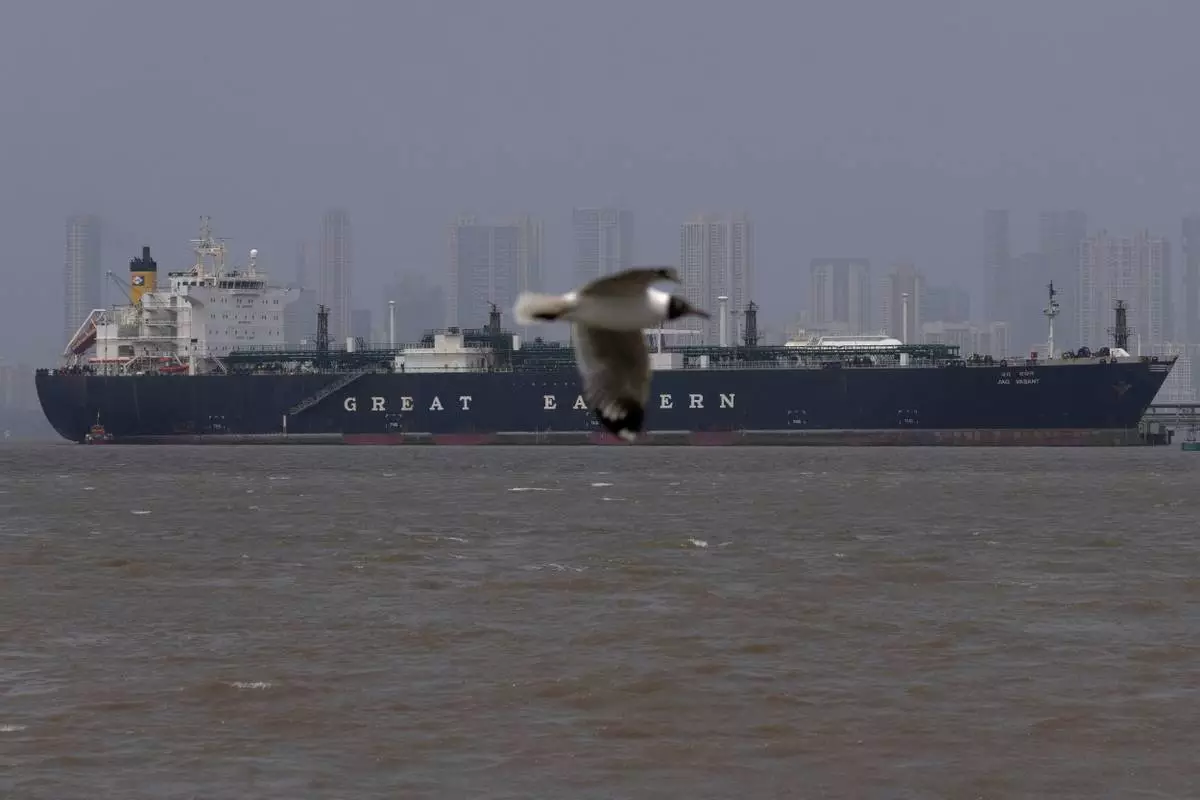
The Indian flagged LPG carrier Jag Vasant transporting liquefied petroleum gas, is seen at the Mumbai Port in Mumbai, India, after it arrived clearing the Strait of Hormuz, Wednesday, April 1, 2026. (AP Photo/Rafiq Maqbool)
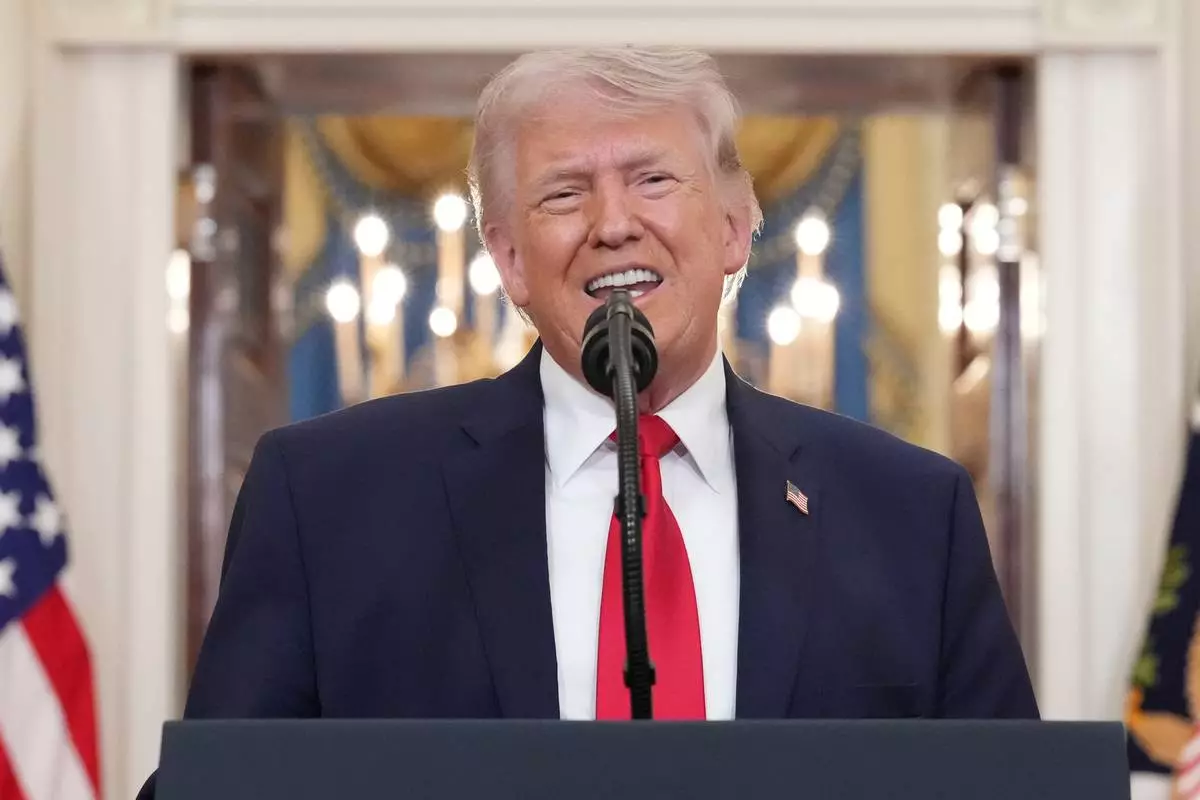
President Donald Trump speaks about the Iran war from the Cross Hall of the White House on Wednesday, April 1, 2026, in Washington. (AP Photo/Alex Brandon, Pool)
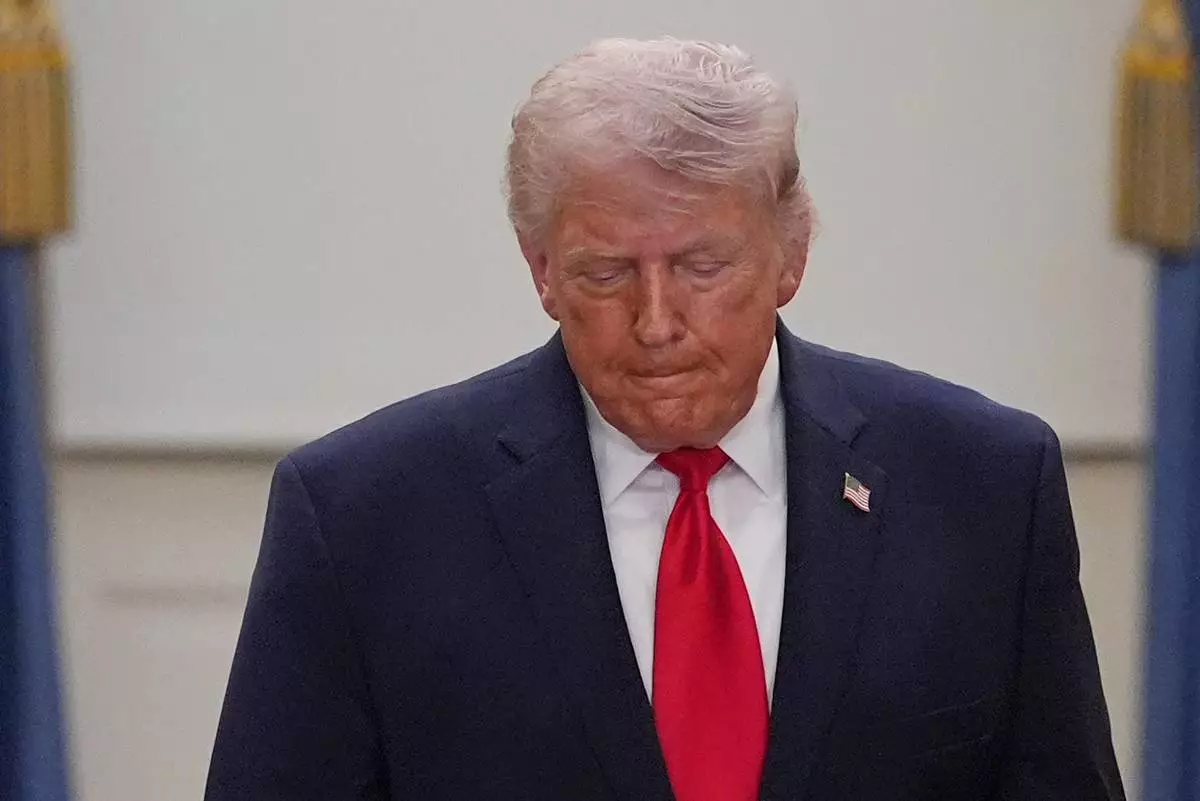
President Donald Trump walks from the Blue Room to speak about the Iran war from the Cross Hall of the White House on Wednesday, April 1, 2026, in Washington. (AP Photo/Alex Brandon, Pool)
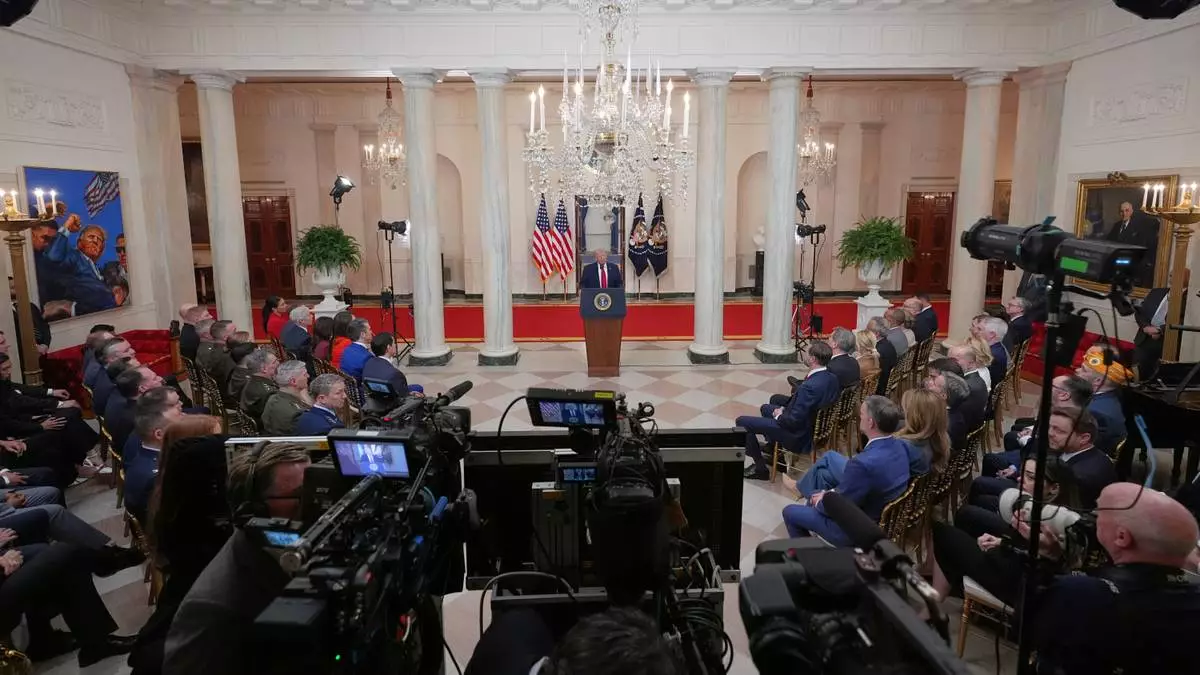
President Donald Trump speaks about the Iran war from the Cross Hall of the White House on Wednesday, April 1, 2026, in Washington. (AP Photo/Alex Brandon, Pool)
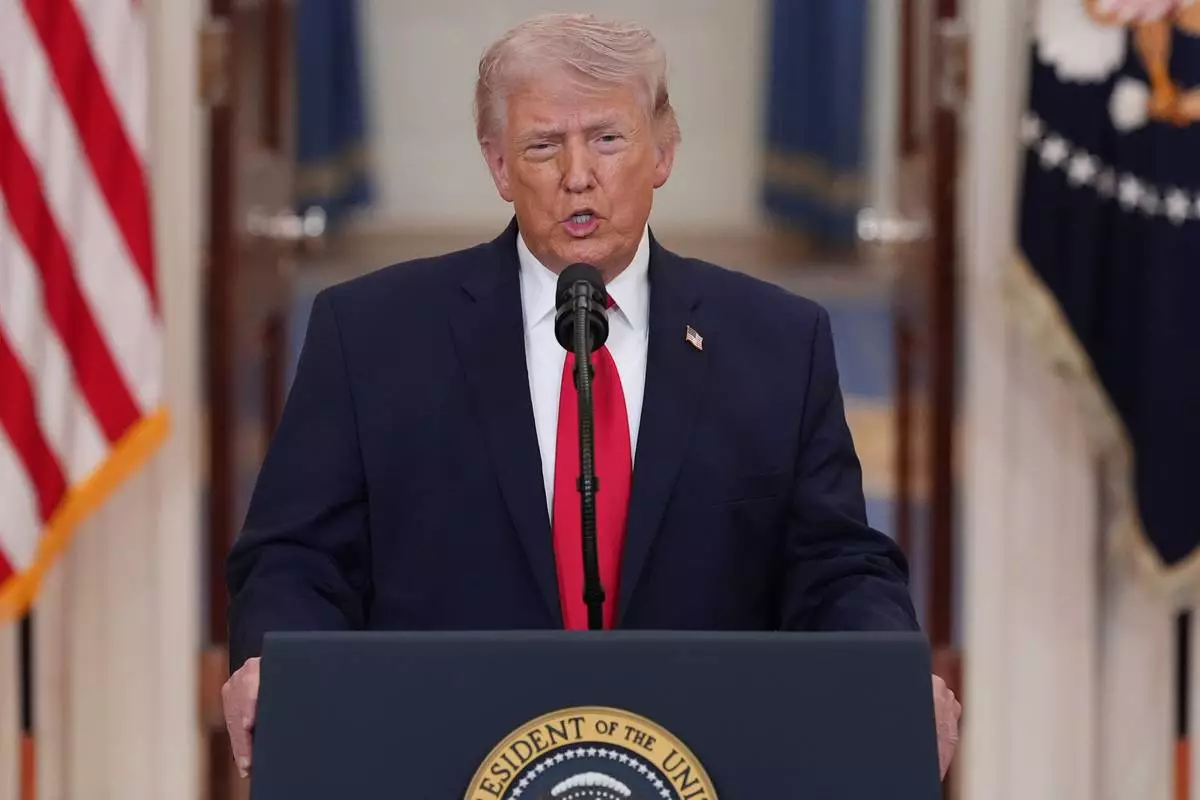
President Donald Trump speaks about the Iran war from the Cross Hall of the White House on Wednesday, April 1, 2026, in Washington. (AP Photo/Alex Brandon, Pool)