PHOENIX (AP) — The top elections official in one of the nation’s most pivotal swing counties is suing the Maricopa County governing board over allegations that it's attempting to gain more control over how elections are administered.
County Recorder Justin Heap filed a lawsuit Thursday in state court with the backing of America First Legal, a conservative public interest group founded by Stephen Miller, who is now the White House deputy chief of staff.
Heap, a former GOP state lawmaker who has questioned election administration in Arizona's most populous county, has been at odds with the Maricopa County Board of Supervisors for months over an agreement that would divide election operations between the two offices.
After taking office in January, Heap terminated a previous agreement that was reached between his predecessor and the board. He claimed in his lawsuit it would have restrained his power to run elections by reducing funding and IT resources for the recorder's office.
Last year's agreement also gave the board authority over early ballot processing, which drew criticism from Heap in his lawsuit.
Heap is asking the court to undo what the lawsuit calls “unlawful” actions by the board and to issue an order requiring the board to fund expenses he deems necessary.
“Despite their repeated misinformation and gaslighting of the public on these issues, defending the civil right to free, fair and honest elections for every Maricopa County voter isn’t simply my job as county recorder, it’s the right thing to do and a mission I’m fully committed to achieving,” Heap said in a statement Thursday.
The board's chair and vice chair have called the legal challenge frivolous, saying Heap is wasting taxpayer money by going to court.
Negotiations between the offices have been ongoing since the beginning of the year, and the board said in a statement that it appeared things were going well after a meeting in April. It was only weeks later, the board said, that Heap came back with what he called a final offer that included dozens of changes.
Heap claims in the lawsuit that the board rejected his proposed agreement in late May. In a statement, America First Legal says the board separately voted on a tentative budget that shifts Heap's key duties and underfunds the recorder's office.
“From day one, Recorder Heap has been making promises that the law doesn’t allow him to keep," Board Chairman Thomas Galvin said. "Arizona election statutes delineate election administration between county boards of supervisors and recorders to ensure there are checks and balances, and Recorder Heap clearly doesn’t understand the responsibilities of his position.”
Following President Donald Trump’s 2020 loss, Maricopa County became an epicenter for election conspiracy theories. Heap has stopped short of saying the 2020 and 2022 elections were stolen, but he has said the state’s practices for handling early ballots are insecure and has questioned how ballots are transported, handled and stored after they are submitted. Last year, Heap proposed an unsuccessful bill to remove Arizona from a multistate effort to maintain voter lists.
Heap's predecessor, Stephen Richer, was rebuked in some GOP circles for defending the legitimacy of the 2020 and 2022 elections, in which Democrats including former President Joe Biden and Gov. Katie Hobbs won by razor-thin margins. Trump won Arizona in 2024, along with the other battleground states.
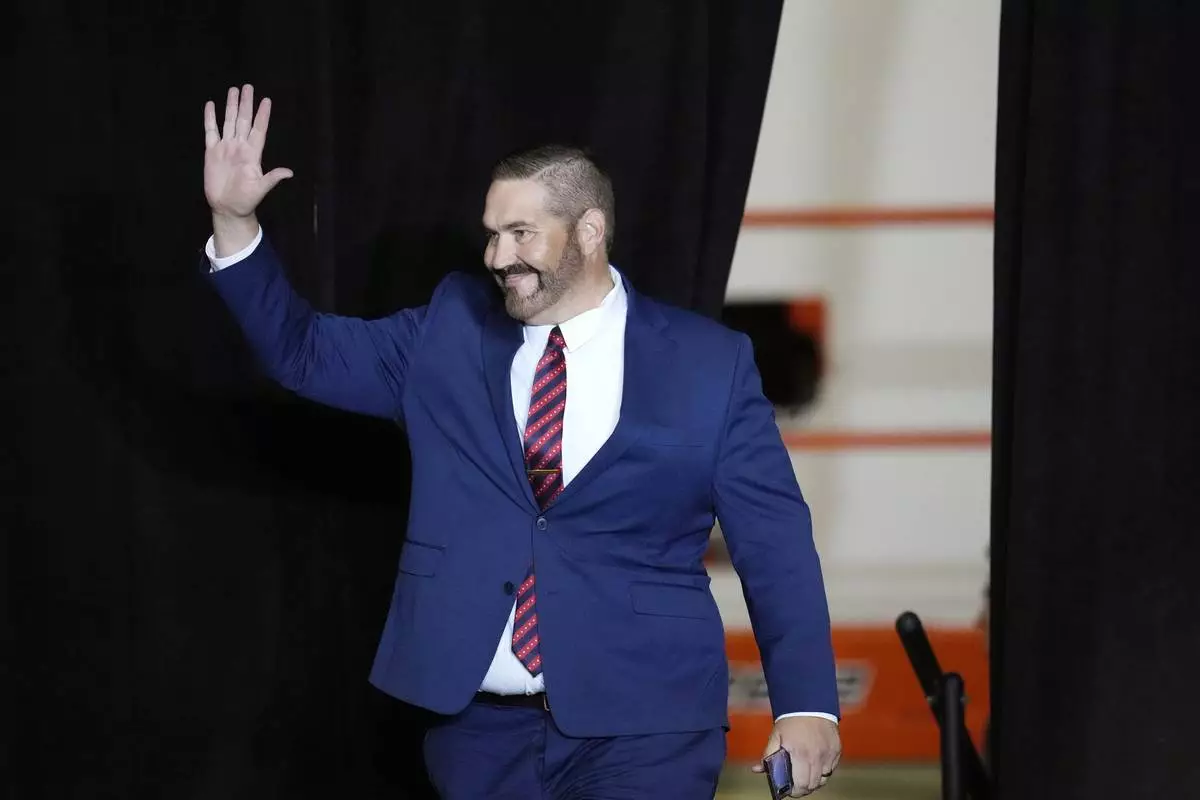
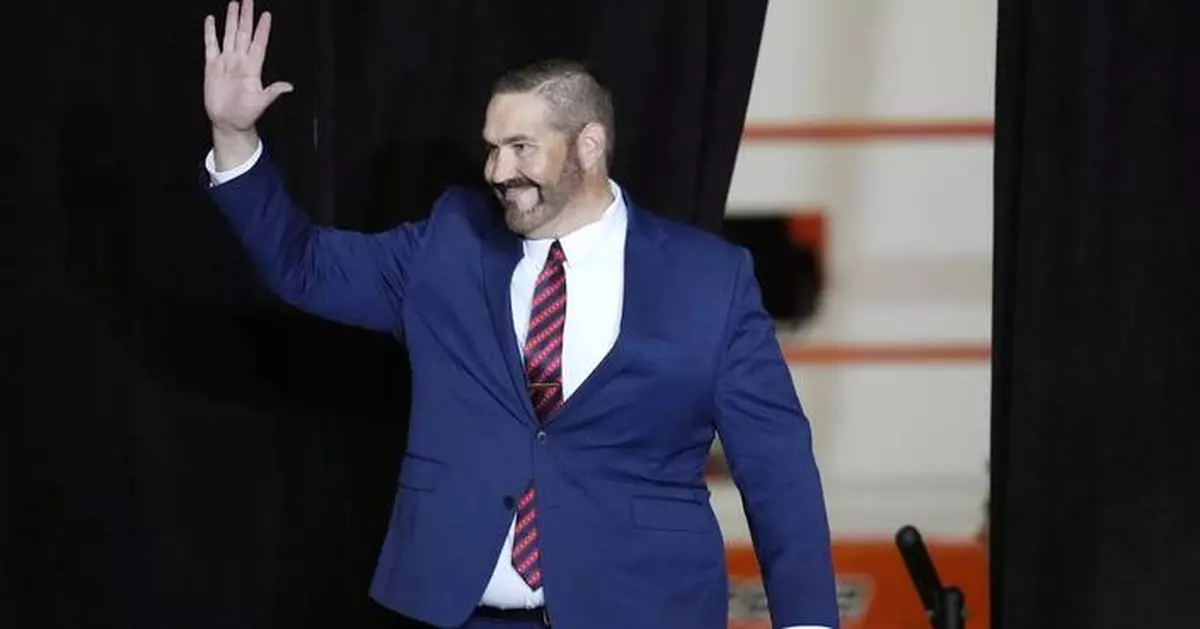
FILE - Maricopa County Recorder candidate and Arizona State Rep. Justin Heap, R-Phoenix, arrives on stage to speak during a campaign event Tuesday, Oct. 22, 2024, in Peoria, Ariz. (AP Photo/Ross D. Franklin, File)
WASHINGTON (AP) — Inflation likely remained elevated last month as the cost of electricity, groceries, and clothing may have jumped and continued to pressure consumers' wallets.
The Labor Department is expected to report that consumer prices rose 2.6% in December compared with a year earlier, according to economists' estimates compiled by data provider FactSet. The yearly rate would be down from 2.7% in November. Monthly prices, however, are expected to rise 0.3% in December, faster than is consistent with the Federal Reserve's 2% inflation goal.
The figures are harder to predict this month, however, because the six-week government shutdown last fall suspended the collection of price data used to compile the inflation rate. Some economists expect the December figures will show a bigger jump in inflation as the data collection process gets back to normal.
Core prices, which exclude the volatile food and energy categories, are also expected to rise 0.3% in December from the previous month, and 2.7% from a year earlier. The yearly core figure would be an increase from 2.6% in November.
In November, annual inflation fell from 3% in September to 2.7%, in part because of quirks in November's data. (The government never calculated a yearly figure for October). Most prices were collected in the second half of November, after the government reopened, when holiday discounts kicked in, which may have biased November inflation lower.
And since rental prices weren't fully collected in October, the agency that prepares the inflation reports used placeholder estimates that may have biased prices lower, economists said.
Inflation has come down significantly from the four-decade peak of 9.1% that it reached in June 2022, but it has been stubbornly close to 3% since late 2023. The cost of necessities such as groceries is about 25% higher than it was before the pandemic, and other necessities such as rent and clothing have also gotten more expensive, fueling dissatisfaction with the economy that both President Donald Trump and former President Joe Biden have sought to address, though with limited success.
The Federal Reserve has struggled to balance its goal of fighting inflation by keeping borrowing costs high, while also supporting hiring by cutting interest rates when unemployment worsens. As long as inflation remains above its target of 2%, the Fed will likely be reluctant to cut rates much more.
The Fed reduced its key rate by a quarter-point in December, but Chair Jerome Powell, at a press conference explaining its decision, said the Fed would probably hold off on further cuts to see how the economy evolves.
The 19 members of the Fed’s interest-rate setting committee have been sharply divided for months over whether to cut its rate further, or keep it at its curent level of about 3.6% to combat inflation.
Trump, meanwhile, has harshly criticized the Fed for not cutting its key short-term rate more sharply, a move he has said would reduce mortgage rates and the government's borrowing costs for its huge debt pile. Yet the Fed doesn't directly control mortgage rates, which are set by financial markets.
In a move that cast a shadow over the ability of the Fed to fight inflation in the future, the Department of Justice served the central bank last Friday with subpoenas related to Powell's congressional testimony in June about a $2.5 billion renovation of two Fed office buildings. Trump administration officials have suggested that Powell either lied about changes to the building or altered plans in ways that are inconsistent with those approved by planning commissions.
In a blunt response, Powell said Sunday those claims were “pretexts” for an effort by the White House to assert more control over the Fed.
“The threat of criminal charges is a consequence of the Federal Reserve setting interest rates based on our best assessment of what will serve the public, rather than following the preferences of the President,” Powell said. “This is about whether the Fed will be able to continue to set interest rates based on evidence and economic conditions—or whether instead monetary policy will be directed by political pressure or intimidation.”

FILE -American Giant clothing is displayed at the company's showroom in San Francisco, April 17, 2025. (AP Photo/Jeff Chiu, File)

FILE -A cashier rings up groceries in Dallas, Aug. 28, 2025. (AP Photo/LM Otero, File)