A former Shandong University student from Kazakhstsan, who is now a manager at a leading Chinese firm, believes the the Belt and Road Initiative (BRI) is a bridge fostering educational and cultural exchange, connecting her homeland to new opportunities in her second home.
As an international student from Kazakhstan, Kamila Karamanova began her journey in China in 2009 at Shandong University in Jinan City, east China's Shandong Province, where she pursued undergraduate studies. In 2013, she witnessed an iconic moment of President Xi Jinping's announcement at Nazarbayev University in Kazakhstan, outlining plans for the Silk Road Economic Belt to foster connectivity and strengthen people-to-people ties.
Inspired by the speech's vision, she decided not only to continue her graduate studies at Shandong University but also to make China her new home. After graduation, she becomes the manager of Shandong Silk Road Zhongheng Industrial Investment Group and lives in Jinan City.
"I feel safe here, like this is home. Jinan feels like home to me. Whenever I'm away, I always look forward to returning home to Jinan," she said.
She achieved her dream by sharing her journey at the Shanghai Cooperation Organization (SCO) Forum on People-to-People Friendship and the Forum on Friendship Cities in 2023.
"I attended the forum in a nongovernmental capacity, representing the voice of grassroots friendship," she said.
"The relationship between China and Kazakhstan stands as a model of good neighborliness and mutual benefit. With a deep commitment to the 'Shanghai Spirit,' I would like to act as an ambassador of friendship and peace, promoting closer connection and mutual understanding between the two peoples and passing the friendly bonds among commercial organizations and between the two peoples from generation to generation," she said at the forum two years ago.
"China, Kazakhstan, and the other Central Asian countries share comprehensive strategic partnerships, and our cooperation is progressing rapidly. My presence on such international platforms all comes in the context of the Belt and Road Initiative. This path, which has been traveled since ancient times, will continue into the future without interruption," she said.

Kazakh manager in China embraces BRI's path to educational, cultural exchange
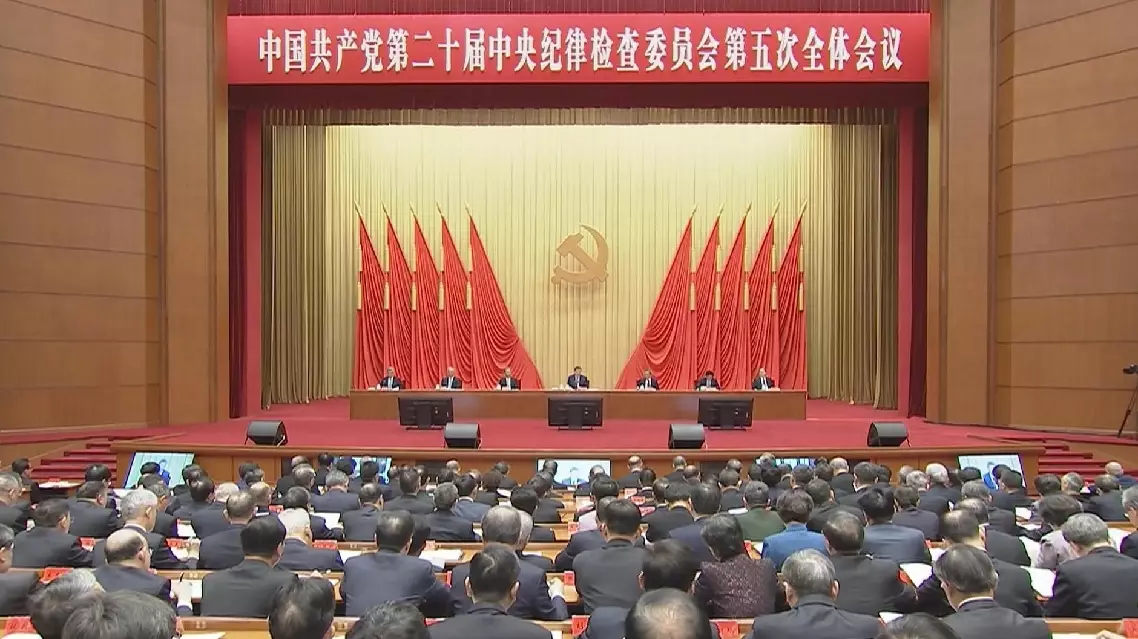
Xi Jinping, general secretary of the Communist Party of China (CPC) Central Committee, on Monday called for advancing full and rigorous Party self-governance with higher standards and more concrete measures.
Xi, also Chinese president and chairman of the Central Military Commission, made the remarks while addressing the fifth plenary session of the 20th CPC Central Commission for Discipline Inspection (CCDI) in Beijing.
Xi urged efforts to confine power to an institutional cage in a more well-conceived and effective manner, and press ahead with the anti-corruption fight with a clearer understanding and stronger resolve, thus providing a strong guarantee for achieving the goals and tasks of the 15th Five-Year Plan period (2026-2030).
Xi pointed out that in 2025, the CPC Central Committee had intensified efforts to improve Party conduct, uphold integrity and combat corruption, achieving notable results. Xi said efforts were made to maintain a tough stance against corruption and eradicate the breeding grounds and conditions for corruption.
Xi emphasized that implementing the major decisions and plans of the CPC Central Committee is a fundamental requirement for upholding its authority and its centralized, unified leadership.
Party organizations at all levels and Party members and officials should implement the decisions and plans of the Fourth Plenary Session of the 20th CPC Central Committee with concrete actions, he said.
Xi noted that confining power to an institutional cage is an important task in exercising full and rigorous Party self-governance.
He stressed that all are equal before the law and regulations, that compliance with them admits no privilege, and that enforcement of the law and regulations allows no exception.
Xi underscored that the fight against corruption is a major struggle that the Party cannot afford to lose, and must never lose.
He said that the current anti-corruption situation remains grave and complex, and that the task of eliminating the soil and conditions breeding corruption remains arduous. Xi added that it is essential to maintain a firm stance to leave corrupt officials with no place to hide.
Stressing the need to stay attuned to new trends and features of corruption, Xi urged efforts to innovate methods and approaches, promptly detect and accurately identify corrupt practices, and effectively address all forms of corruption, so as to continuously enhance the penetrating power of anti-corruption efforts.
He also urged strengthening coordination among all forms of oversight to advance integrated governance through whole-process collaboration, and called for sustained efforts to forge a loyal, upright and responsible disciplinary inspection and supervision force that dares to and is good at fighting against corruption.
Members of the Standing Committee of the Political Bureau of the CPC Central Committee Li Qiang, Zhao Leji, Wang Huning, Cai Qi and Ding Xuexiang attended the meeting.
Li Xi, a member of the Standing Committee of the Political Bureau of the CPC Central Committee and secretary of the CCDI, presided over the meeting. On Monday afternoon, on behalf of the standing committee of the CCDI, Li also delivered a work report.
Xi urges advancing Party self-governance with higher standards, more concrete measures