Skip to Content Facebook Feature Image

China successfully produces Yttrium-90 in commercial reactors

China

China

China

China successfully produces Yttrium-90 in commercial reactors

2025-06-15 14:21 Last Updated At:18:47

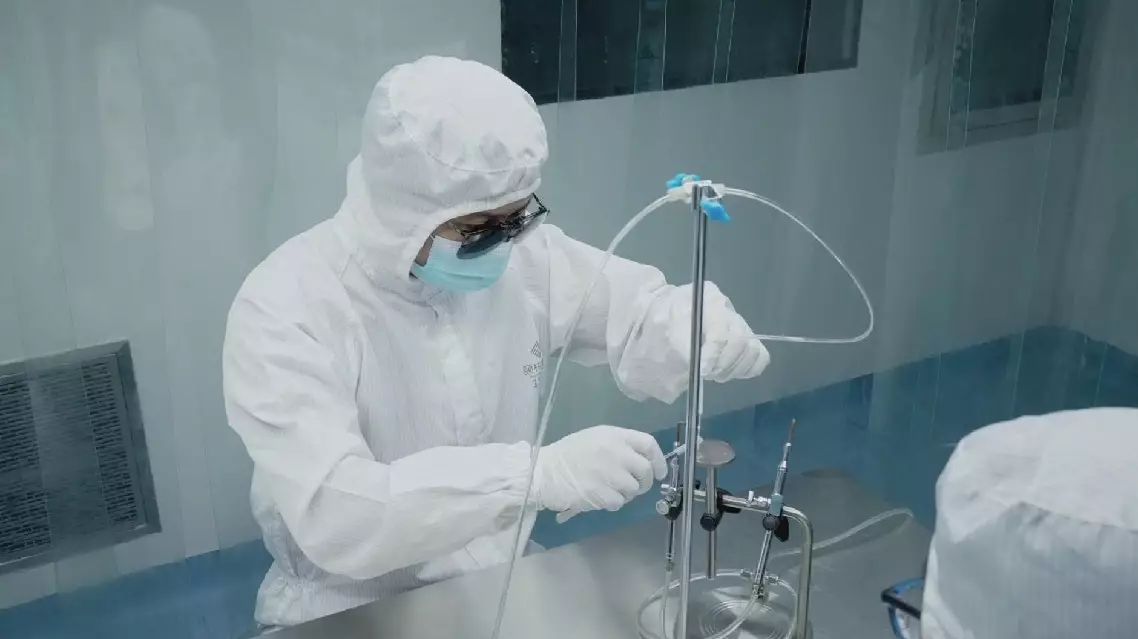
China has mastered the technology for producing Yttrium-90, an isotope used in radiation therapy, in commercial reactors, the China National Nuclear Corporation (CNNC) revealed on Sunday.

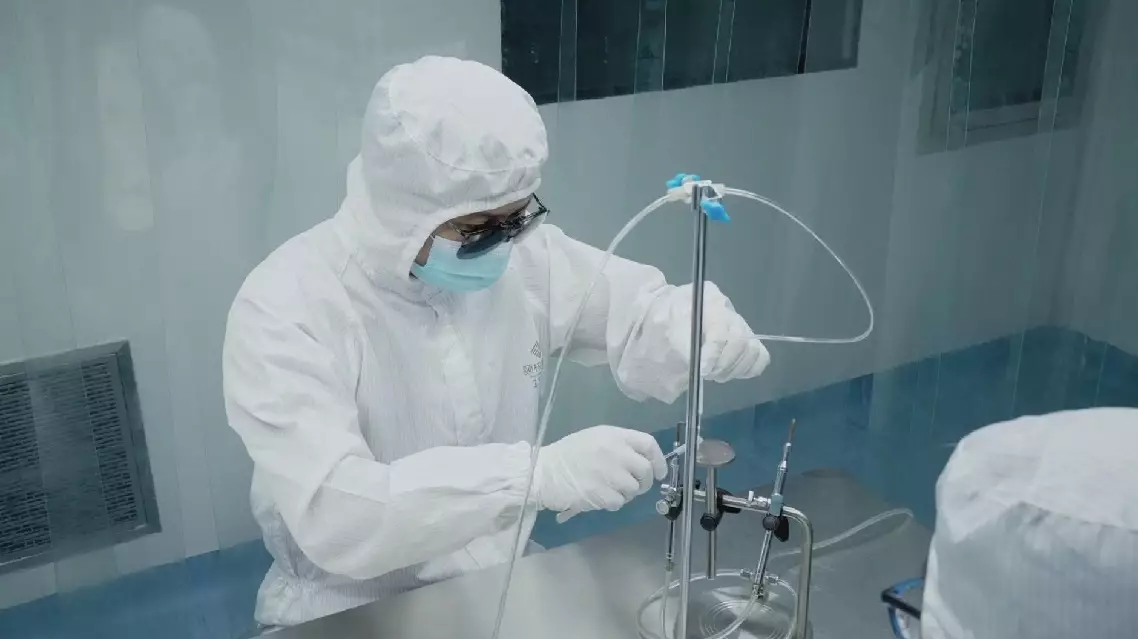
The Yttrium-90 glass microspheres irradiated in a reactor at the CNNC's Qinshan Nuclear Power Base in Zhejiang Province have passed all relevant tests, paving the way for mass production.

Yttrium-90 glass microspheres are mainly made from Yttrium-89, which turns into radioactive Yttrium-90 after absorbing neutrons in a nuclear reactor.

These microspheres are used as a radioactive drug that releases beta radiation. By using vascular intervention techniques, the Yttrium-90 microspheres are delivered to the liver's blood vessels to treat liver tumors, making it a minimally invasive procedure.

Experts revealed that once out of the reactor, the Yttrium-90 produced is to be thoroughly examined by researchers before entering the application stage.

The commercial heavy-water reactor at the Qinshan Nuclear Power Base offers unique advantages for producing Yttrium-90, according to engineers.

"The commercial heavy-water reactor has a relatively high neutron flux, and it is able to operate stably. The activation zone of the core is very big. Using this type of reactor to produce Yttrium-90 has significant benefits, such as the ability to increase production, reduce costs, and provide a consistent supply," said Li Shisheng, deputy chief engineer at the Qinshan Nuclear Power Base.
China successfully produces Yttrium-90 in commercial reactors
China successfully produces Yttrium-90 in commercial reactors

China successfully produces Yttrium-90 in commercial reactors

China successfully produces Yttrium-90 in commercial reactors
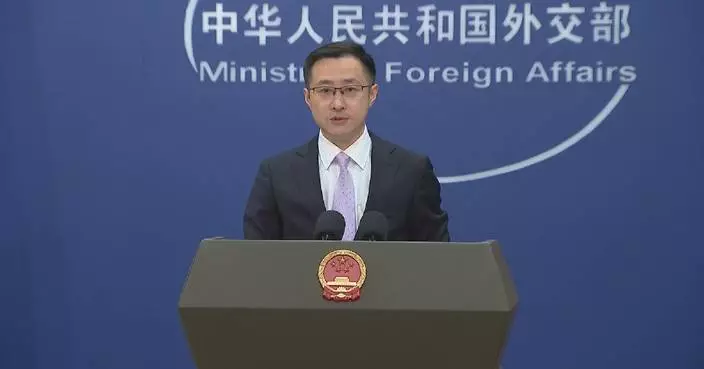
The statement of U.S. President Donald Trump highlighted the urgency for reforming global governance, according to a poll from China Global Television Network (CGTN) on Friday.

"I don't need international law," said Trump during an with The New York Times this week, days after the U.S. attack on Venezuela and the forcible seizure of President Nicolas Maduro. This statement perfectly captures Washington's unilateral and hegemonic trajectory. The New York Times observed that Trump's assessment of his own freedom to use any instrument of military, economic or political power to cement American supremacy was the most blunt acknowledgment yet of his world-view.

In a global public opinion poll conducted by CGTN, 93.5 percent of respondents expressed belief that the U.S., by pursuing unilateralism, has placed itself in opposition to the international community. Also, 91.7 percent think that reforming the global governance system is an urgent priority.

On Wednesday the U.S. announced its withdrawal from 66 international organizations, setting a new record for its retreat from multilateral commitments. These organizations span climate, energy, and global governance, among other fields. Trump argues that their operations run counter to U.S. national interests, sovereignty, and economic prosperity.

In response, 84.1 percent of respondents were not surprised by the U.S. move. Meanwhile, 88.9 percent viewed it as another radical step under the "America First" doctrine. In addition, 93 percent believed the U.S. approach of using international systems when beneficial and abandoning them when not severely undermines the existing international order and global fairness and justice. Also, 88.3 percent noted that the U.S. withdrawals once again expose it as an irresponsible major power, dealing a significant blow to its international reputation. Furthermore, 88.5 percent believe the U.S. withdrawals reflect its negative attitude toward global governance.

The recent episode of unilateral and bullying actions by the U.S. government has sparked widespread alarm and discontent within the international community. Washington's adherence to the law of the jungle where "might is right" is severely undermining the global governance system. In the poll, 89.9 percent of respondents agreed that multilateralism, based on coordination and cooperation, remains key to addressing current global governance challenges. Meanwhile, 94.4 percent believe it is crucial to advance the reform of the global governance system, uphold international rule of law, and enhance the effectiveness of multilateral mechanisms. Moreover, 90 percent think major powers should shoulder greater responsibility and play a more constructive role in promoting global governance reform.

The poll was conducted across CGTN platforms in English, Spanish, French, Arabic, and Russian languages, attracting 24,000 responses within 24 hours.

Trump says 'I don't need international law,' highlighting urgency for reforming global governance: CGTN poll

Trump says 'I don't need international law,' highlighting urgency for reforming global governance: CGTN poll

Recommended Articles