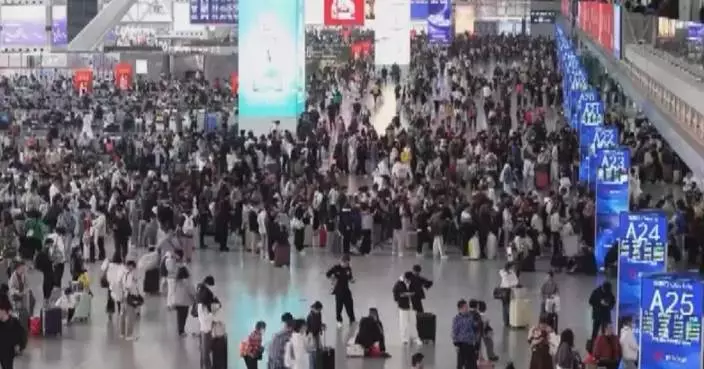
A large number of pro-government Iranians gathered in downtown Tehran on Saturday night to celebrate for Iran's immediate reaction to Israeli airstrikes.
The crowds, waving flags, flooded streets after Iran launched missiles in retaliation for Israel's deadly airstrikes conducted early Friday which targeted Tehran and several other cities.
One day after the Israeli airstrikes, Tehran has seen no rush to store up food or water, nor has there been a need for any emergency shelters.
The attacks resulted in the deaths of multiple senior military commanders, nuclear scientists, and dozens of civilians in Iran. Yet, many residents remained largely unfazed.
"We are not really scared. We are more worried for our children. We belong to a generation of war. We are not scared of such incidents," said Majid, a Tehran resident.
In response to Israeli airstrikes, Iran fired a barrage of missiles towards wide areas of northern Israel on Saturday. While intercepting the incoming missiles, the Israeli air force continued to conduct strikes on military targets in Tehran, according to Israel Defense Forces.
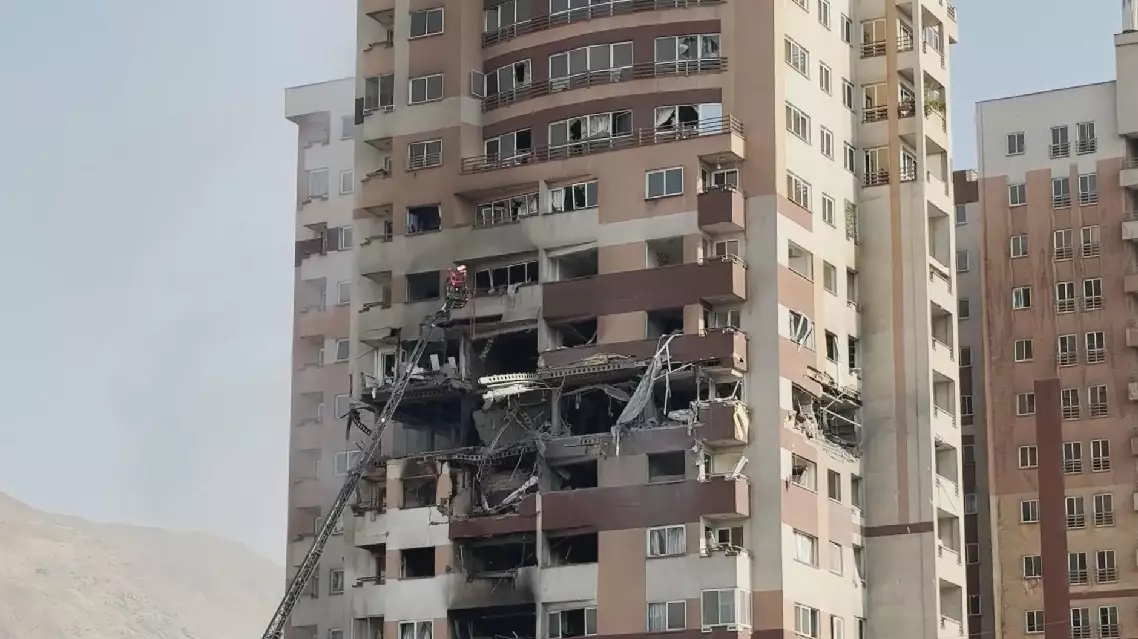
Iranians march in support of immediate response to Israeli airstrikes
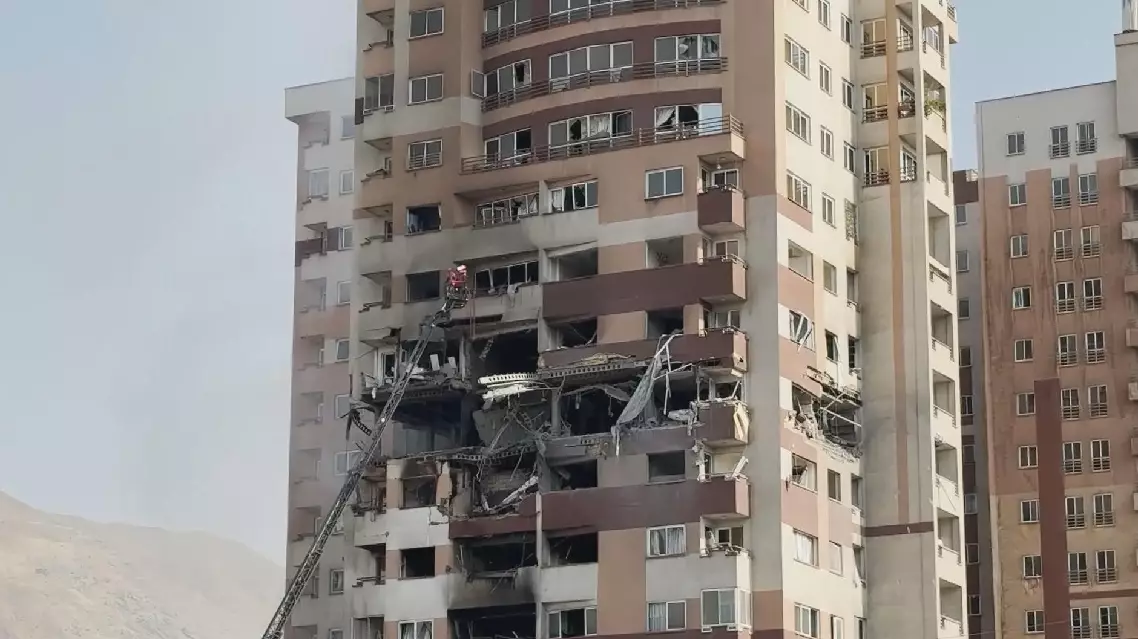
Iranians march in support of immediate response to Israeli airstrikes
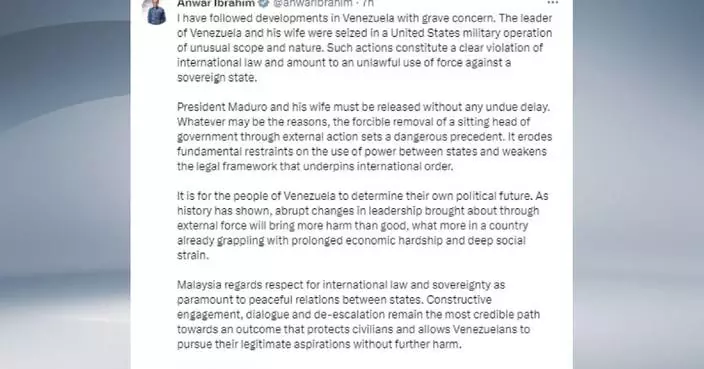
The United States cannot legitimize an operation that attacked Venezuela and captured its president, a Chinese scholar said Sunday.
On Saturday, the United States launched a large-scale strike on Venezuela, during which Venezuelan President Nicolas Maduro and his wife were 'captured and flown out of Venezuela' according to a post by U.S. President Donald Trump on his Truth Social account.
Teng Jianqun, director of the Center for Diplomatic Studies at Hunan Normal University, said in an interview with China Global Television Network (CGTN) that the aim of this operation is to take full control of Venezuela’s natural resources.
"I don't think the United States can legitimize this operation to take custody of the president of Venezuela. And also I don't think the United States can legitimize its any action in taking the oil reserves of that country. This is actually a very dangerous game played by the Trump administration. And of course, the United States would like to take full control of that country and to take full control of the natural resources, especially the large reserve of oil in Venezuela," said Teng.
Teng said Venezuela is not an isolated case but a common practice by the United States. The United States launched an invasion of Panama on Dec. 20, 1989, which continued until January 1990, with the stated objective of capturing Panamanian strongman Manuel Noriega on charges of drug trafficking and organized crime.
"We still remember the so-called sentence of the former president of Panama in the late 1980s. And this time, the president of Venezuela will be under some judicial condition (judicial proceedings) for the so-called drug trafficking and some other crimes. So I think this is not a single case for the Venezuela country, but also this is actually a practice by the United States -- to use force, to use so-called justice under law against any leaders in Latin America and the Caribbean waters," he said.
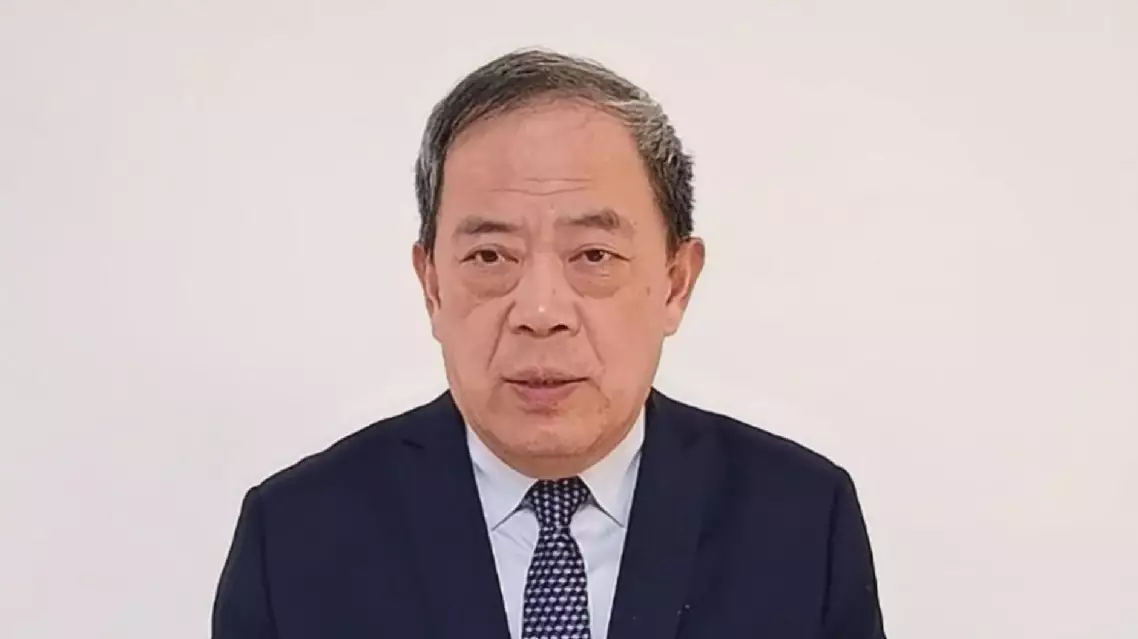
US cannot legitimize operation against Venezuela: Chinese scholar