WASHINGTON (AP) — President Donald Trump on Sunday directed federal immigration officials to prioritize deportations from Democratic-run cities, a move that comes after large protests erupted in Los Angeles and other major cities against the Trump administration’s immigration policies.
Trump in a social media posting called on U.S. Immigration and Customs Enforcement officials “to do all in their power to achieve the very important goal of delivering the single largest Mass Deportation Program in History.”
He added that to reach the goal officials ”must expand efforts to detain and deport Illegal Aliens in America’s largest Cities, such as Los Angeles, Chicago, and New York, where Millions upon Millions of Illegal Aliens reside.”
Trump's declaration comes after weeks of increased enforcement, and after Stephen Miller, White House deputy chief of staff and main architect of Trump’s immigration policies, said ICE officers would target at least 3,000 arrests a day, up from about 650 a day during the first five months of Trump’s second term.
At the same time, the Trump administration has directed immigration officers to pause arrests at farms, restaurants and hotels, after Trump expressed alarm about the impact aggressive enforcement is having on those industries, according to a U.S. official familiar with the matter who spoke only on condition of anonymity.
Protests over federal immigration enforcement raids have been flaring up around the country.
Opponents of Trump's immigration policies took to the streets as part of the “no kings” demonstrations Saturday that came as Trump held a massive parade in Washington for the 250th anniversary of the U.S. Army.
Saturday's protests were mostly peaceful.
But police in Los Angeles used tear gas and crowd-control munitions to clear out protesters after the event ended.
Officers in Portland, Oregon, also fired tear gas and projectiles to disperse a crowd that protested in front of a U.S. Immigration and Customs Enforcement building well into the evening.
Trump made the call for stepped up enforcement in Democratic-controlled cities on social media as he was making his way to the Group of Seven economic summit in Alberta, Canada.
He suggested to reporters as he departed the White House for the G7 on Sunday evening that his decision to deploy National Guard troops to Los Angeles was the reason the protests in that city went peacefully.
“If we didn’t have the National Guard on call and ready, they would rip Los Angeles apart,” Trump said.
The shift also come as Trump is grappling with the impact his mass deportation effort is having on key industries that rely on workers in the country illegally.
Trump posted on his Truth Social site Thursday that he heard from hotel, agriculture and leisure industries that his “very aggressive policy on immigration is taking very good, long time workers away from them” and promised that changes would be made .
That same day Tatum King, an official with ICE’s Homeland Security Investigations unit, wrote to regional leaders telling them to halt investigations of the agriculture industry, including meatpackers, as well as of restaurants and hotels, according to the U.S. official.
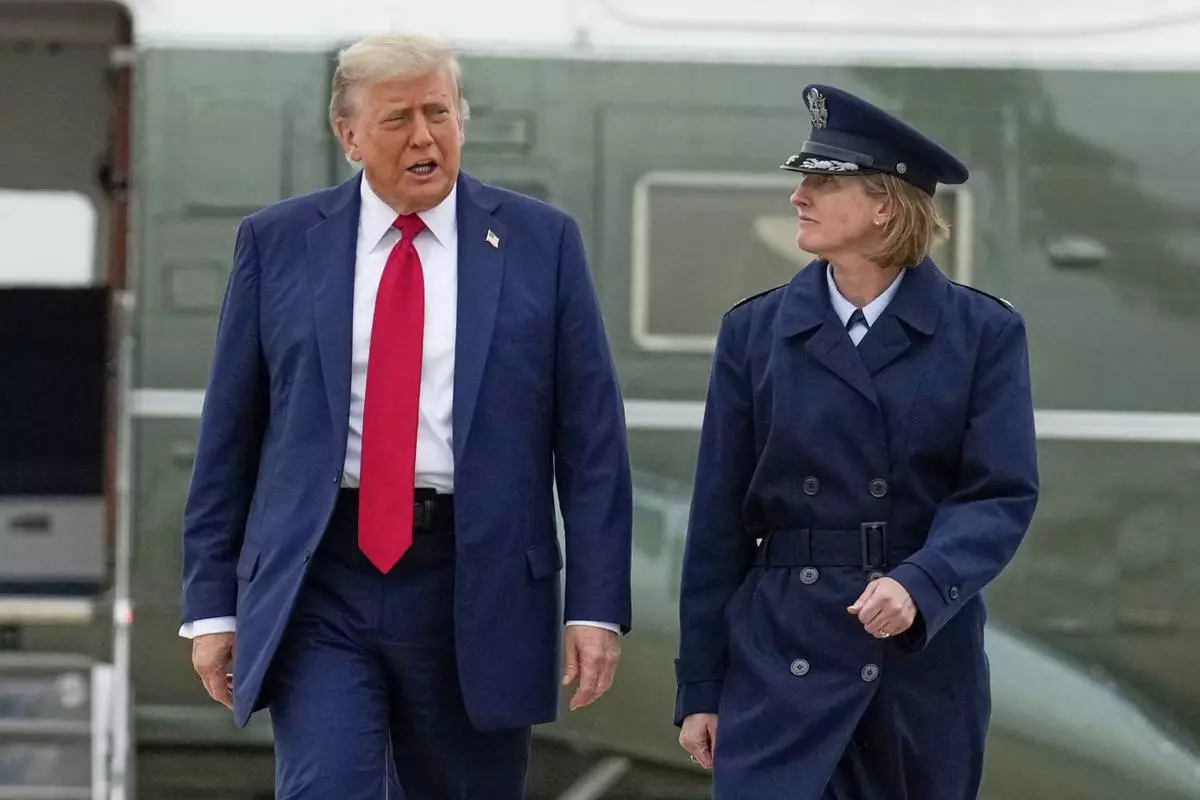
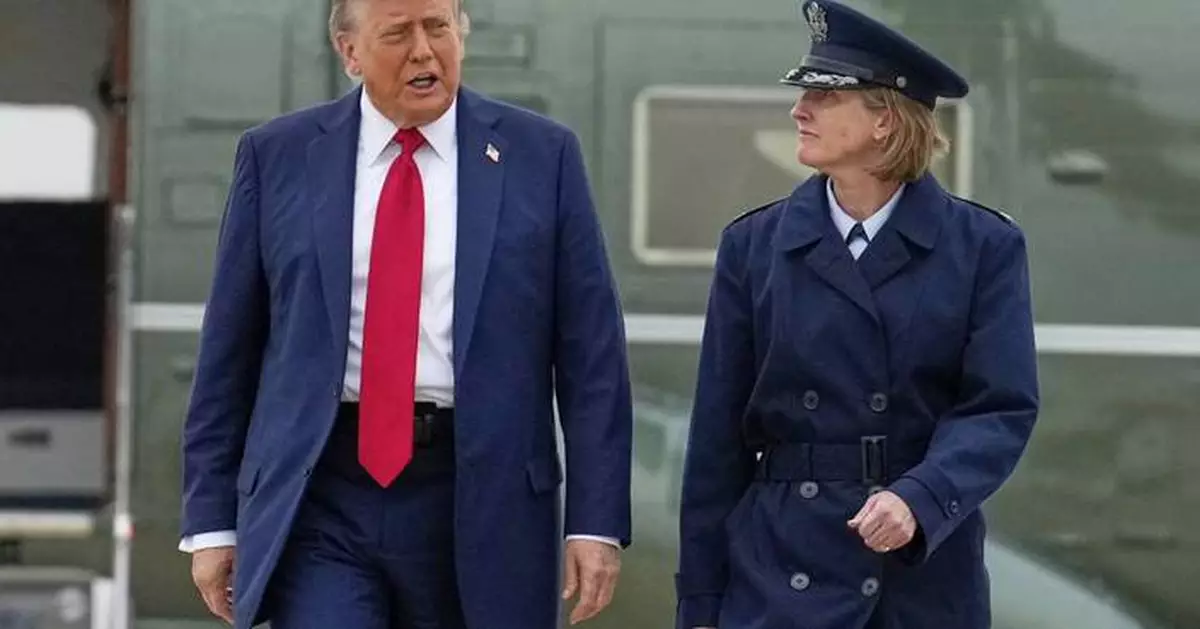
President Donald Trump, left, escorted by Air Force Col. Angela F. Ochoa, Commander, 89th Airlift Wing, walks from Marine One to board Air Force One, Sunday, June 15, 2025, at Joint Base Andrews, Md., for a trip to Canada to attend the G7 Summit. (AP Photo/Mark Schiefelbein)
PITTSBURGH (AP) — Lamar Jackson thought it was over. That the Baltimore Ravens' unwieldy season would end up in a familiar spot: the playoffs.
Then, rookie kicker Tyler Loop's potential game-winning field goal from 44 yards out drifted a little right. And then a little further right. And then a little further right still.
By the time it fluttered well wide of the goalposts, the playoffs were gone. So was Jackson's certainty after a 26-24 loss to Pittsburgh on Sunday night sent the Ravens into what could be a turbulent offseason.
“I'm definitely stunned, man,” Jackson said. “I thought we had it in the bag. ... I don't know what else we can do.”
Jackson, who never really seemed fully healthy during his eighth season as he battled one thing after another, did his part. The two-time NFL MVP passed for 238 yards and three touchdowns, including two long connections with Zay Flowers in the fourth quarter that put the Ravens (8-9) in front.
It just wasn't enough. Baltimore's defense, which played most of the second half without star safety Kyle Hamilton after Hamilton entered the concussion protocol, wilted against 42-year-old Steelers quarterback Aaron Rodgers.
Rodgers passed for a season-high 294 yards, including a 26-yard flip to a wide-open Calvin Austin with 55 seconds to go after a defender slipped, symbolic of a season in which Baltimore's defense only occasionally found its form.
Still, the Ravens had a chance when Jackson found Isaiah Likely for a 28-yard gain on fourth down from midfield. A couple of snaps later, the 24-year-old Loop walked on to try to lift Baltimore to its third straight division title.
Instead, the rookie said he “mishit” it. Whatever it was, it never threatened to sneak between the goalposts.
“It’s disappointing,” Loop said.
Loop was talking about the game. He might as well have been talking about his team's season.
The Ravens began 1-5 as Jackson dealt with injuries and the defense struggled to get stops. Baltimore found a way to briefly tie the Steelers for first in late November, only to then split its next four games, including a home loss to Pittsburgh.
Still, when Jackson and the Ravens walked onto the Acrisure Stadium turf on Sunday night in the 272nd and final game of the NFL regular season, Baltimore was confident. The Ravens drilled Pittsburgh in the opening round of the playoffs a year ago behind the ever-churning legs of running back Derrick Henry.
When Henry ripped off a gain of 40-plus yards on the game's first offensive snap, it looked like it was going to be more of the same. While Henry did rush for 126 yards and joined Hall of Famer Barry Sanders as the only running backs in NFL history to have five 1,500-yard seasons, he was less effective in the second half.
Even that first run was telling of what night it was going to be, as an illegal block by wide receiver Zay Flowers cost Baltimore some field position. The Ravens ended up scoring on the drive anyway, thanks to a 38-yard fourth-down flip from Jackson to a wide-open Devontez Walker, but it started a pattern that was hard to shake as several steps forward were met with one step back on a night the Ravens finished with nine penalties for 78 yards.
“We were having a lot of penalties, which kept stopping drives," Jackson said. “But I'm proud of my guys because we kept overcoming. We kept overcoming adversity and situations like this. Divisional games (can) be like that sometimes.”
Particularly when the Steelers are on the other side of the line of scrimmage. Pittsburgh has won 10 of the last 13 meetings. And while a handful of them have been in late-season matchups with the Ravens already assured of reaching the playoffs, the reality is the Steelers have been able to regularly do something that most others have not: found a way to beat Jackson.
“It comes down to situations like this,” Jackson said. “Two-point conversion one year. Field goal another year. And again this year. Just got to find a way to get that win here.”
And figure out who is going to be around to help get it.
Head coach John Harbaugh's 18th season in Baltimore ended with the Ravens missing the playoffs for just the second time in eight years. Jackson turns 29 this week and is still one of the most electric players in the league.
Yet Harbaugh and Jackson have yet to find a way to have that breakthrough season that Harbaugh enjoyed with Joe Flacco in 2013 when the Ravens won the Super Bowl.
There was hope when the season began that the roadblocks that have long been in the franchise's way — Kansas City and Patrick Mahomes chief among them — would be gone.
While the Ravens did get their way in a sense — the Chiefs will watch the playoffs from afar for the first time in a decade after a nightmarish season of their own — it never all came together.
Jackson declined to endorse Harbaugh returning for a 19th season, saying the loss was still too fresh to zoom out on what it might mean for the franchise going forward.
Harbaugh, for his part, certainly seems up for running it back in the fall.
“I love these guys,” he said afterward. “I love these guys.”
AP NFL: https://apnews.com/hub/nfl
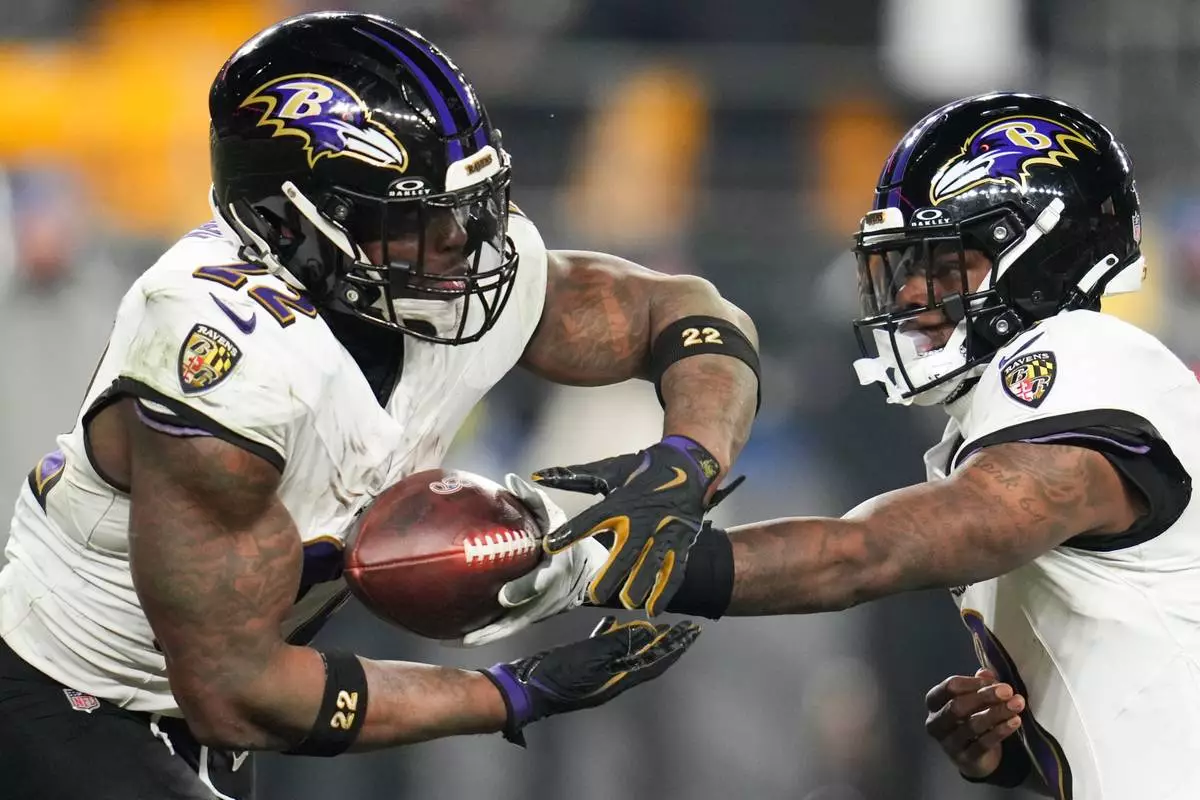
Baltimore Ravens quarterback Lamar Jackson, right, hands the ball off to running back Derrick Henry (22) during the first half of an NFL football game against the Pittsburgh Steelers, Sunday, Jan. 4, 2026, in Pittsburgh. (AP Photo/Gene J. Puskar)
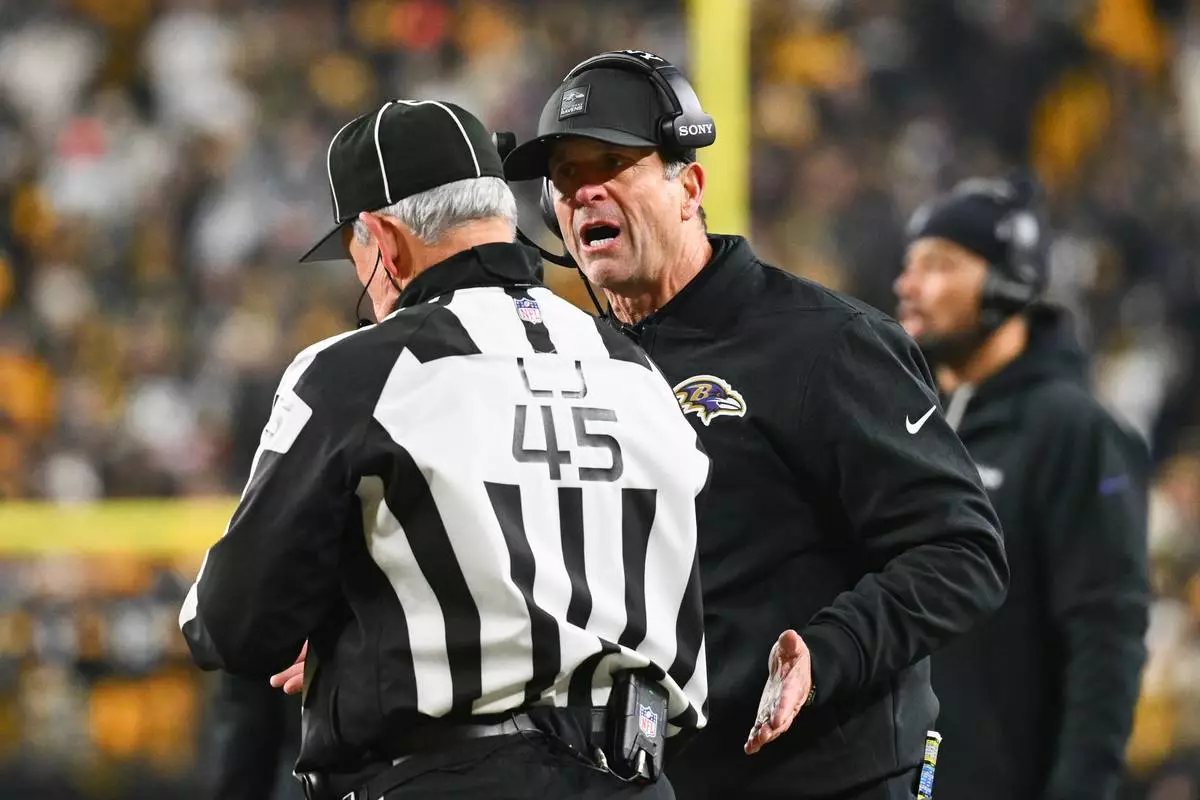
Baltimore Ravens head coach John Harbaugh talks with an offical during the second half of an NFL football game against the Pittsburgh Steelers, Sunday, Jan. 4, 2026, in Pittsburgh. (AP Photo/Justin Berl)
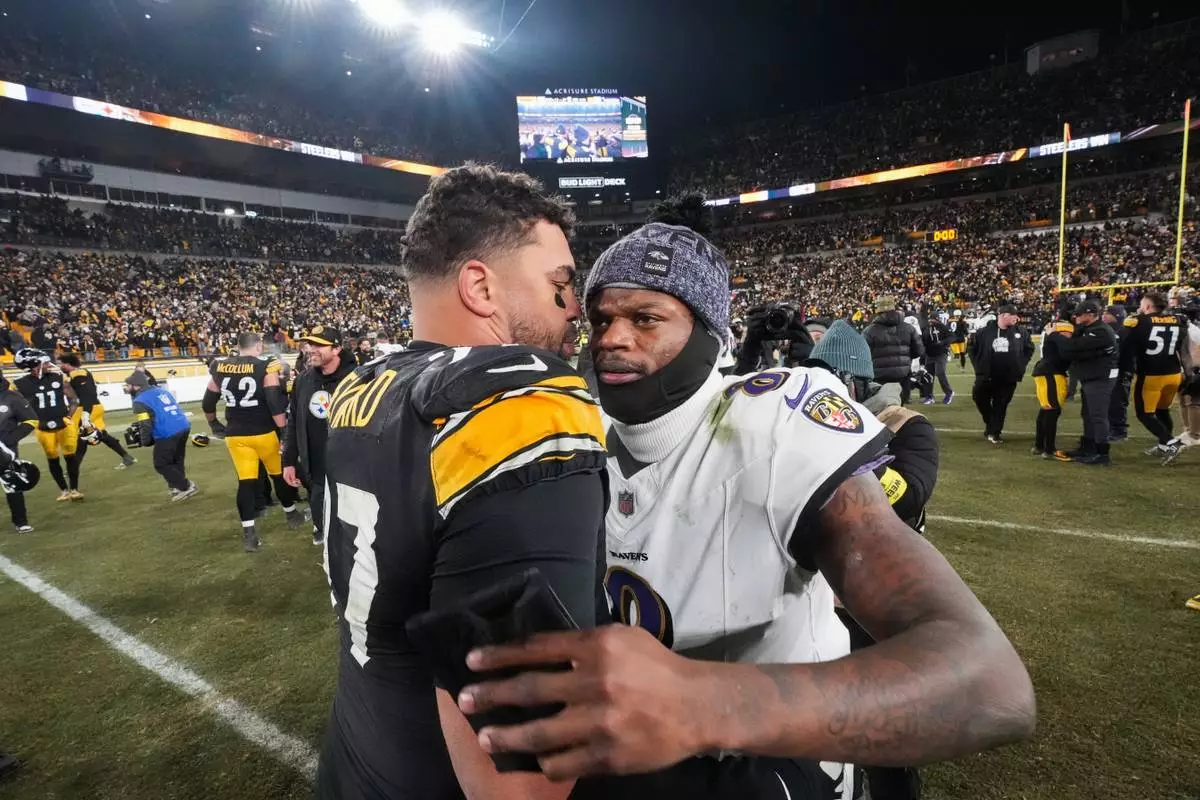
Pittsburgh Steelers defensive tackle Cameron Heyward, left, greets Baltimore Ravens quarterback Lamar Jackson (8) after an NFL football game Sunday, Jan. 4, 2026, in Pittsburgh. (AP Photo/Gene J. Puskar)
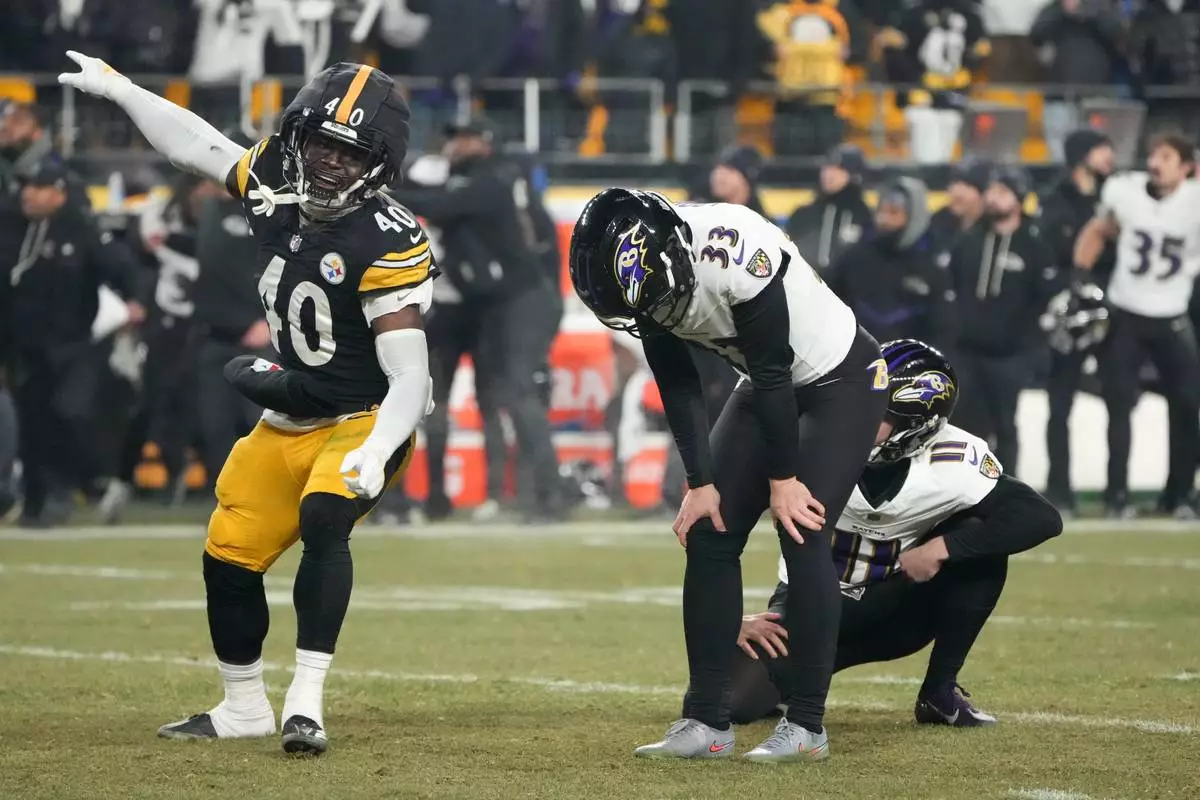
Pittsburgh Steelers safety Jabrill Peppers (40) reacts after Baltimore Ravens kicker Tyler Loop (33) missed a field goal attempt in the second half of an NFL football game against the Pittsburgh Steelers, Sunday, Jan. 4, 2026, in Pittsburgh. (AP Photo/Gene J. Puskar)