Malika, an overseas student who traveled 4,000 kilometers from her hometown in Kyrgyzstan to study in east China, said the country has already become her second home.
She is currently an international business student at Zhejiang University of Water Resources and Electric Power in Hangzhou, a city that captivated her with its vibrant innovation.
Malika said she chose Hangzhou partially because the place features innovations and rich culture for her.
"I want to learn a lot of new things because here they have a lot of innovations. When I came here, I saw the museum with water, with its history. And I said it's really cool," she said.
Another reason is the West Lake, which situated in the heart of Hangzhou. It's a celebrated natural and cultural heritage site, often dubbed as a "Heaven on Earth."
And water holds a special meaning for Malika, she said, noting that she was born and raised in the Issyk-Kul region, Kyrgyzstan's renowned natural wonder.
Studying far away in Hangzhou doesn't mean she's far from her heart's home, as the iconic West Lake offers her a profound sense of familiarity.
"When I sit here, I can see the water, the fresh air, the mountains, and there are a lot of green trees. It's similar with my country. Right now, I really can say that Hangzhou is my second home. Because when I go to travel, I always want to come back here," said Malika.
From the Issyk-Kul Lake to the West Lake, Malika now carries two homelands in her heart.
As she builds her future, she aspires to be a living bridge, connecting these two nations.

Overseas student from Kyrgyzstan expresses deep affection for China
Japanese citizens took to the streets of Tokyo's Shinjuku district on Saturday, voicing strong opposition to Prime Minister Sanae Takaichi's administration for lifting the ban on lethal weapons exports, advancing a "National Intelligence Agency" bill, and pushing for the revision of the country's postwar pacifist constitution.
On Tuesday, the Japanese government, led by Prime Minister Sanae Takaichi, officially revised the "three principles on transfer of defense equipment and technology" and their implementation guidelines.
The revisions scrap the restrictions that had limited arms exports to five non-combat categories, allow, in principle, the export of lethal weapons, permit transfers to nations engaged in active conflict under specified circumstances, and sideline parliament from the decision-making process, crossing a line that previous governments had at least nominally upheld.
"Allowing the export of lethal weapons and even attempting to possess nuclear arms, the Takaichi administration is leading Japan toward war, despite our postwar commitment of never starting a war again. Many people are worried. This must be stopped," said a protester.
The cornerstone of Japan's pacifist constitution is Article 9, which renounces the nation's right to engage in war or to resort to military force to resolve international conflicts. For decades, this article has been a fundamental constraint on Japan's military endeavors.
"I am firmly opposed to amending the Constitution. Takaichi claims 'the time has come,' but that's just her own decision. Without Article 9 of the Constitution, Japan could be swept into America's wars. That must not happen," said another participant.
"Japan once invaded other Asian countries and has maintained a pacifist constitution ever since. But now the government has arbitrarily decided to lift the ban on exporting lethal weapons without sufficient parliamentary debate. It's unacceptable," said another demonstrator.
"If we abandon our stance as a peaceful nation under the constitution, it would be absolutely intolerable. Thanks to Article 9, Japan hasn't waged war or been pulled into conflict. For Japan's place in the international community, Article 9 must not be changed," said another protester.
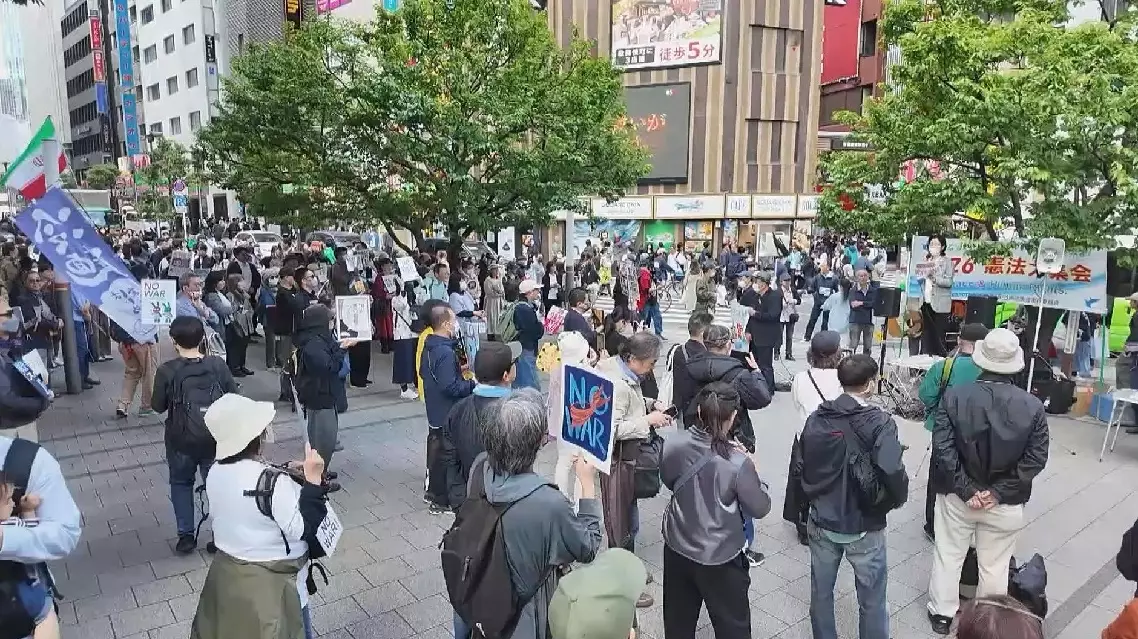
Tokyo protesters oppose Takaichi’s lethal weapons export, constitution revision plans
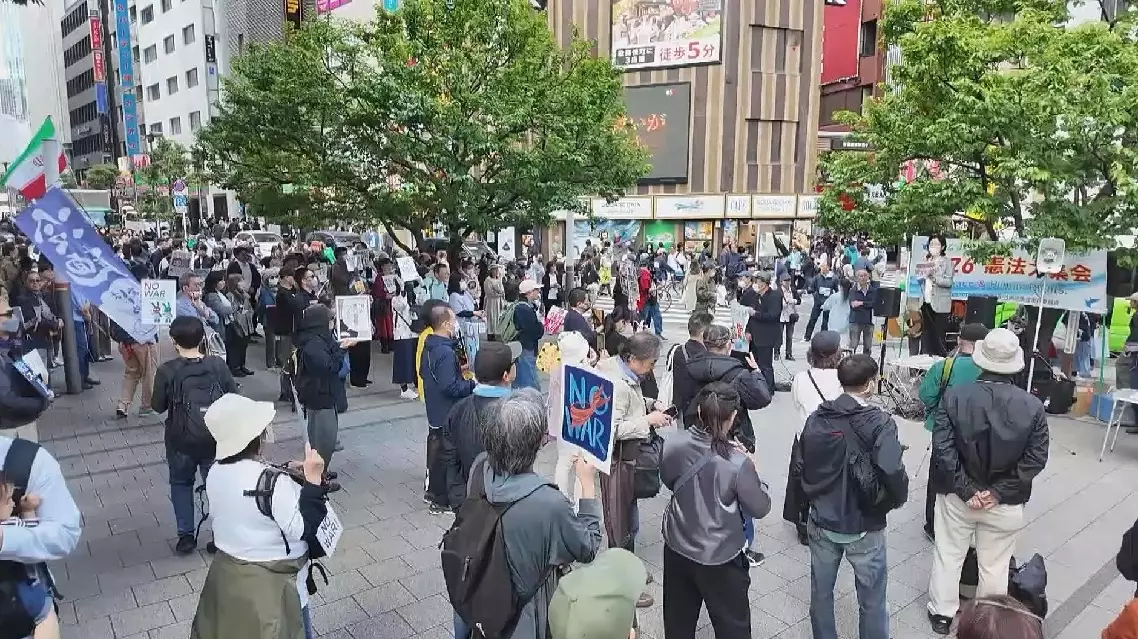
Tokyo protesters oppose Takaichi’s lethal weapons export, constitution revision plans