LITLINGTON, England--(BUSINESS WIRE)--Jun 16, 2025--
A recent research article supported by Cheyney Design and Development Ltd. presents a revolutionary theory on light. Dr. Dhiraj Sinha, a faculty member at Plaksha University, has published an article in Annals of Physics, a peer-reviewed journal from Elsevier, where his discovery on a critical link between the ideas of Maxwell and Einstein on light has been disclosed. It transforms a century-old scientific theory on the nature of light, while forging a vital link between classical and quantum theories of light. The study is derived from a prior article published in Physical Review Letters, where Dr. Sinha showed that electromagnetic radiation is generated under explicit symmetry breaking of the electrodynamic field. The research project, funded by Cheyney, presented an integrated theoretical framework on the generation of radiation, ranging from radio to optical frequencies.
This press release features multimedia. View the full release here: https://www.businesswire.com/news/home/20250609142601/en/
The nature of light has remained one of the most intriguing scientific challenges. Newton’s conjecture that light consists of particles was replaced by the wave theory of light pioneered by Young and Fresnel, which found additional support from Maxwell in 1865, who postulated that light is an electromagnetic wave. It was experimentally verified by Heinrich Hertz in 1887, but later experiments on the photoelectric effect where electrons are generated when light falls on a metal plate, led to new questions. Einstein’s heuristic argument that light consists of packets of energy or light quanta could explain the energy dependence of electrons on the frequency of light in the photoelectric effect. This led to the revolutionary perspective that light behaves like a wave in free space and like particles under interaction with matter.
Currently, the scientific establishment believes that light-matter interaction can only be explained by the concept of photons which has no direct theoretical links to Maxwell’s electromagnetic field theory. In the recent research article, Dr. Dhiraj Sinha has presented his discovery that photons directly emerge from Maxwell’s fields. He has used the Maxwell-Faraday equation to substantiate his point which says that the time varying magnetic field of electromagnetic radiation generates an electric potential defined by ds/dt where ds is the differential change in magnetic flux s of radiation over a differential change in time dt. Dr. Sinha argues that an electron of charge e is energised by the electric potential generated by light which is expressed as W=eds/dt. The frequency domain or phasor representation of electron’s energy is esw, where w is angular frequency of light. Dr. Sinha’s fundamental discovery is associated with correlating ‘ esw’ to Einstein’s expression on the energy of a photon ħw, where ħ is the reduced Planck’s constant. Thus, he has demonstrated that Faraday’s law of electromagnetic induction plays the central role in energising electrons from the changing magnetic flux of radiation field. This theoretical discovery by Dr. Sinha implies that photons are directly generated from Maxwell’s fields while assuming magnetic flux quantisation, which has been observed in superconducting loops as well as two-dimensional electron gas systems. Thus, light-matter interaction can be explained using Maxwell’s fields.
The idea has received strong support from a team of well-known physicists spanning many universities. Jorge Hirsch, professor of physics at University of California San Diego, wrote a letter of support for the editorial board members. Steven Verrall, former faculty member at University of Wisconsin-La Crosse, says, “Dr. Sinha provides a new semiclassical approach to modelling quantum systems. His unique approach may ultimately add valuable insights to the continued development of semiclassical effective field theories in low energy physics.” Lawrence Horwitz, professor emeritus at the University of Tel Aviv, notes, “This article is indeed a valuable contribution to the theory of photons and electrons.” Richard Muller, professor of physics at University of California Berkeley and Faculty Senior Scientist at Lawrence Berkeley National Laboratory, commented, “The ideas are intriguing and they address the most fundamental of the non-resolved issues of quantum physics including the particle/wave duality and the meaning of measurement.”
Dr. Sinha’s discovery provides a revolutionary structure towards integrating the principles of classical electromagnetism into modern photonic devices. It can have a transformational impact in optics, photonics and electronics. It implies that the devices like solar cells, lasers, light-emitting diodes, along with radio antennas which operate on the principle of Maxwell’s equations can be integrated on the same platform. The work offers a novel framework for one of the most radically transformative pathways towards their seamless integration.
Dr. Richard Parmee, founder of Cheyney Design and Development, stated, “Cheyney is proud to support Dr. Sinha’s pioneering work, which has the potential to transform our understanding of light and its applications. Our mission is to champion early-stage innovations that push the frontiers of knowledge, and this research exemplifies our vision of nurturing high-impact scientific advancements.”
Additional Information
1. Sinha, D. Electrodynamic excitation of electrons. Annals of Physics, 473, 169893 (2025).
2. Sinha, D., & Amaratunga, G. A. Electromagnetic radiation under explicit symmetry breaking. Physical Review Letters, 114, 147701 (2015).
About Cheyney Design & Development Ltd.
Cheyney Design & Development Ltd, Litlington, UK, founded by Dr. Richard Parmee, is at the forefront of innovations in X-ray inspection technology. Its patented, cutting-edge technology and advanced stochastic algorithms position it as technical leader in the X-ray inspection arena. Cheyney is dedicated to supporting early-stage innovations with transformative potential in science and engineering.

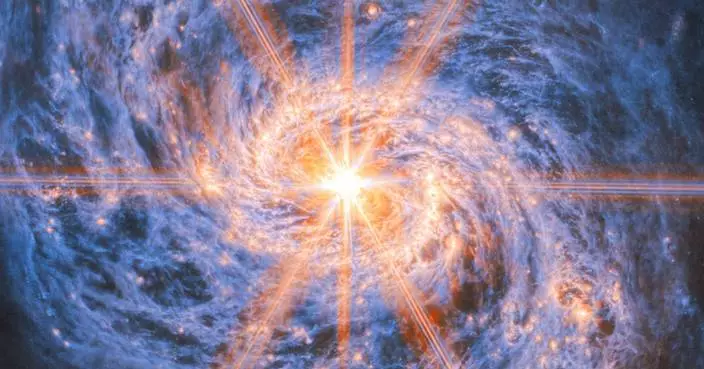
Electrons ejected under photoexcitation from a metallic surface