China Southern Airlines inaugurated the first direct flight connecting the Chinese and Tajik capitals on Monday, further improving travel efficiency and facilitating friendly exchanges and economic and trade cooperation between the two countries.
At 12:00 on Monday, flight CZ6051, carrying 173 passengers, departed Beijing Daxing International Airport for Dushanbe, the capital of Tajikistan, which marks the first direct flight between the two cities shortening the travel time to six to seven hours.
"I travel to Dushanbe about 10 times a year, and I booked the ticket on the very first day the flight was available. It's quite convenient and great. Previous flights to Dushanbe need to transfer in Urumqi late at night or early in the morning, so I think the scheduling of this new route is quite reasonable," said Feng, a passenger.
"I used to hear from my colleagues that their journey [to Dushanbe] took about a day and a half with a layover in Urumqi. Now, taking this flight from Beijing, it takes only about seven hours to get there, which is much more convenient," said Li, another passenger.
China Southern Airlines plans to operate this new route with two flights a week, on Tuesdays and Saturdays.
The outbound flight departs from Beijing Daxing airport at around 17:00 Beijing Time (09:00 GMT), and arrives at Dushanbe International Airport after an approximately seven-hour flight. The return flight departs Dushanbe airport at around 22:30 local time (17:30 GMT), and lands at Daxing airport about six hours later.
"Currently, passengers traveling to Dushanbe from Guangzhou, Hangzhou, Changsha and Wuhan can transfer at Beijing Daxing International Airport within three hours, while passengers from Shanghai and Hefei can make smooth connections within five hours. We will also encourage more tourists to visit Dushanbe, where they can appreciate the natural scenery and cultural charm of Tajikistan," said Hou Ming, general manager of China Southern Airlines' north China marketing center.
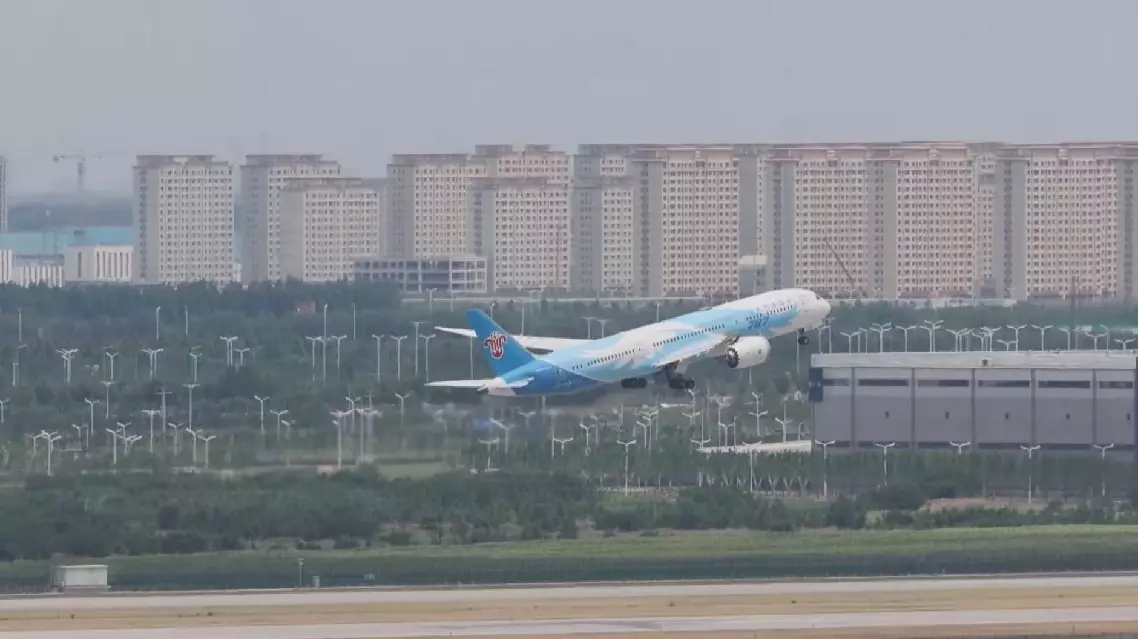
First Beijing-Dushanbe direct flight takes off from Daxing airport
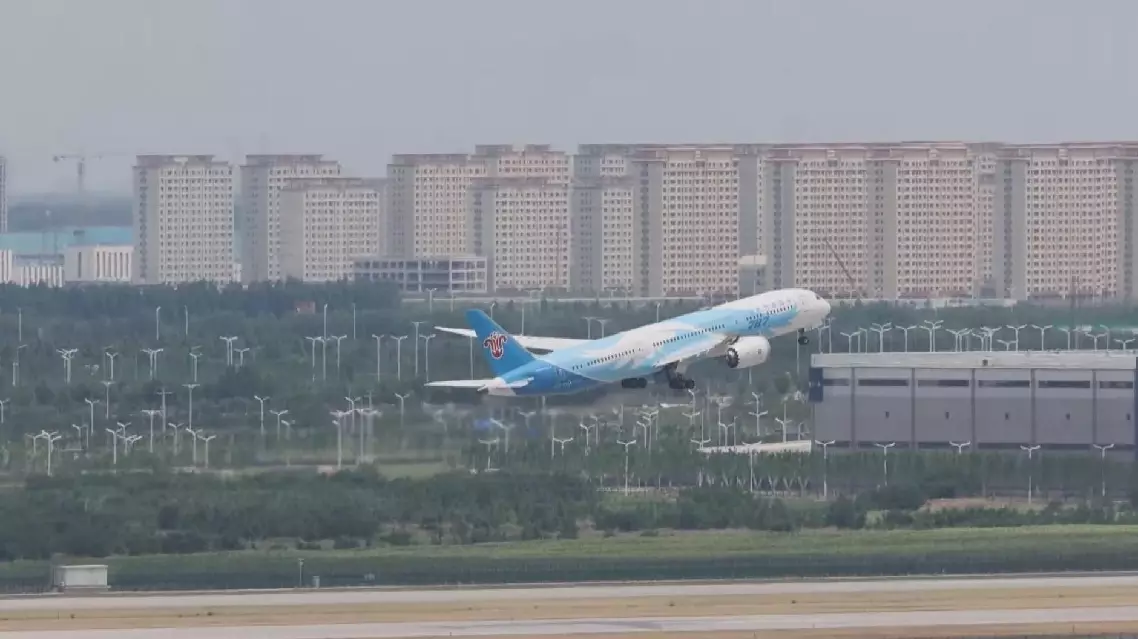
First Beijing-Dushanbe direct flight takes off from Daxing airport
Japanese Prime Minister Sanae Takaichi should apologize for and retreat her errouneous aggressive remarks on China's Taiwan region, as the rhetoric in her words could destabilize domestic society and harm Japan's relations with neighbors, Japanese scholars said recently.
Shinako Oyakawa, a lecturer at the Okinawa University who has long focused on security and peace issues, said that Takaichi' remarks are inflammatory, have seriously violated the spirit of Japan's pacifist constitution and caused harmful consequences for the public.
She said that Takaichi needs to issue a clear apology and formally retract her remarks.
Takaichi on November 7, 2025, made blatant and provocative remarks on Taiwan at the Diet, claiming that a Taiwan contingency could constitute a "survival-threatening situation" for Japan, and implying that Japan might invoke the so-called "right to collective self-defense" for armed intervention across the Taiwan Strait.
"She made such remarks in parliament, the kind of rhetoric commonly used by the 'internet right wing,' sounding exactly like what people in that circle would say. Such remarks give the impression that they are ready to go to the battlefield, even willing to start a war. This kind of rhetoric is extremely dangerous," said Oyakawa.
Oyakawa said that the remarks have caused significant losses and both ruling and opposition parties have oversimplified the issue.
"The remarks have already caused significant damage in various aspects. The relevant figures are still being tallied, and the extent of the damage is truly unimaginable. Both the ruling and opposition parties have oversimplified the issue; or, their attitudes have been ambiguous, out of fear of facing it. However, this is not an issue that can be easily glossed over. She must issue a clear apology and formally retract her remarks," Oyakawa said.
Japan's history education has long avoided or distorted accounts of its wars of aggression launched by Japan against Asian neighbors, leaving few with a true understanding of historical facts. This, Oyakawa said, has further accelerated the overall rightward shift in Japanese society.
"As the number of war survivors dwindles, the practice of distorting history in Japan is becoming increasingly rampant. Almost no one knows about the suffering endured by our Asian neighbors. What the Japanese exactly did abroad and what war responsibility Japan bears are completely absent from textbooks," said Oyakawa.
As an Okinawan, Oyakawa said she strongly feels the government's military buildup has brought fear and anxiety to residents.
"Fighter jets and helicopters fly overhead everyday, and the roar of military aircraft becomes routine. On average, Okinawa experiences several plane crashes or incidents of falling parts each year. The militarization of Okinawa is escalating, bringing fear and unease to residents. I think that this situation must be stopped from further worsening," said Oyakawa.
Koichi Nakano, professor of political science at Sophia University, also criticized Takaichi's leadership, saying her team showed little consideration for relations with China and her remarks damage Japan-China relations and undermine Japan's own economic and social stability.
Nakano also said that Japanese society faces a serious problem, as awareness about and reflection on Japan's wartime aggression continue to fade. He stressed that only by facing up to history and engaging with neighboring countries on equal terms can Japan lay the groundwork for rebuilding ties with China.
"Japan's biggest problem is that the recognition of history with China is gradually fading. The sentiment of reflecting on the aggression history and apologizing for it has not been fully passed down between generations. More and more people are unaware of the historical facts, believing that 'that's all in the past' and that no further apology or remorse is necessary. This is an extremely serious issue. (The Japanese government should) build friendly relations on an equal footing, conduct objective and accurate mutual evaluations of the past and present, and rebuild bilateral relations," said Nakano.
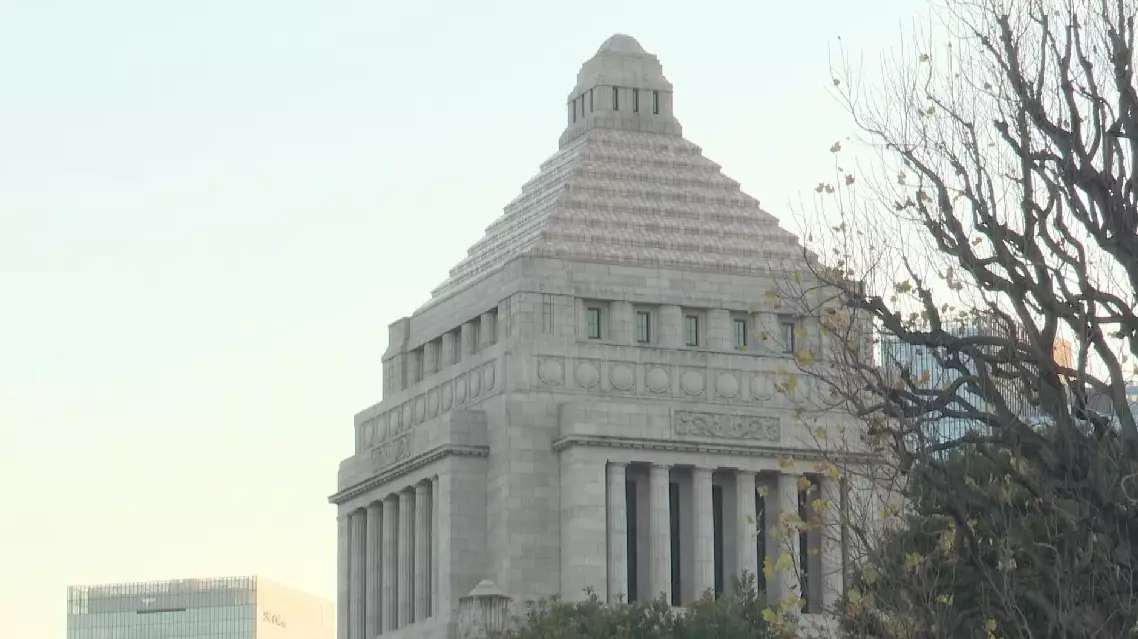
Japanese prime minister should apologize, retract erroneous remarks on Taiwan: Japanese scholars