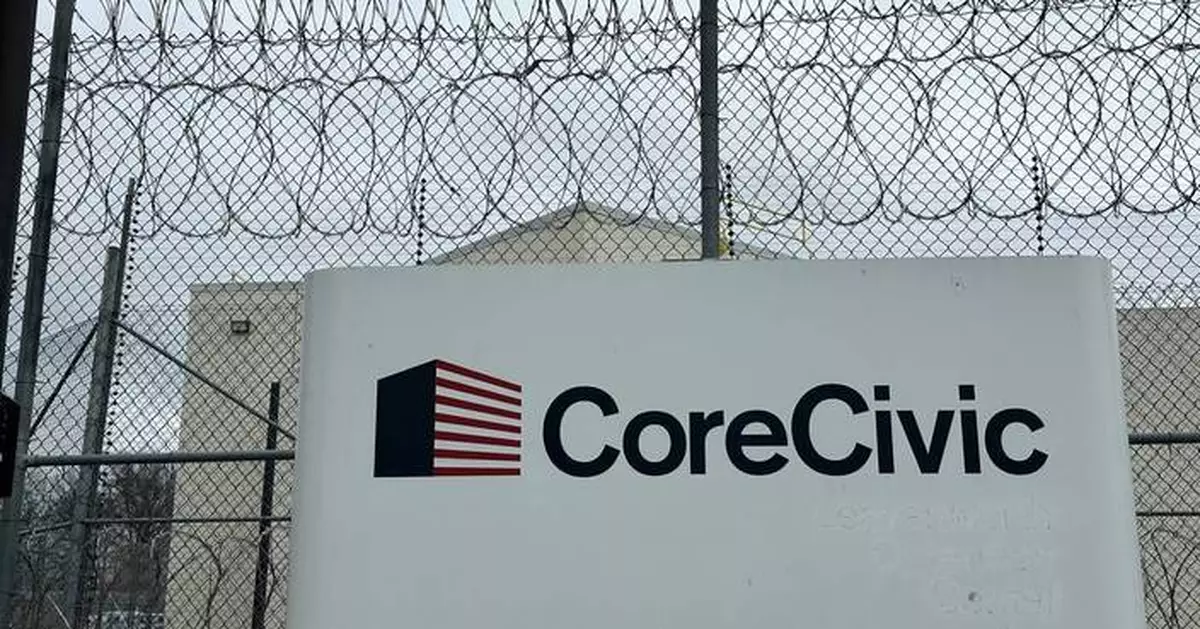
LEAVENWORTH, Kan. (AP) — Private prison operators are marketing their shuttered lockups to federal immigration officials as President Donald Trump pushes for mass deportations, with some facilities nabbing lucrative no-bid contracts.
When Trump, a Republican, took office, politically connected private-prison giants CoreCivic Inc. and The Geo Group Inc. had around 20 idle facilities, partially the result of sentencing reforms that reduced prison populations.
But the push to reopen them has been met with resistance in unexpected places like Leavenworth, Kansas, a town whose name alone evokes a short hand for serving hard time. The Leavenworth facility was mothballed in late 2021 after then-President Joe Biden, a Democrat, called on the U.S. Department of Justice to curb the use of private prisons.
Here’s a look at some of the takeaways from an Associated Press report about private prisons in the era of mass deportations.
The Trump administration wants to increase its budgeted capacity of about 41,000 beds for detaining migrants to at least 100,000 beds and maybe — if private prison executives’ predictions are accurate — more than 150,000.
That has a gallery of shuttered facilities — some with a history of issues — coming online near major immigrant population centers, from New York to Los Angeles, where Trump hopes to detain and deport millions of people.
With Congress weighing massive spending increases for deportations, the companies' stock and profit estimates have soared.
Just last week, Geo Group announced that ICE modified a contract for an existing detention center in southeastern Georgia so that the company could reopen an idle prison on adjacent land to hold 1,868 migrants.
“Never in our 42-year company history have we had so much activity and demand for our services as we are seeing right now,” said CoreCivic CEO Damon Hininger during an earnings call last month with shareholders.
But skeptical city officials in Leavenworth, a town of around 37,000 residents on the northwest fringe of the Kansas City metropolitan area, argue that CoreCivic needs a special use permit to reopen its facility. CoreCivic disagrees, saying that it doesn’t because it never abandoned the facility and that the permitting process would take too long. Leavenworth sued the company to force it to get one, and a state-court judge earlier this month issued an order requiring it.
The area’s politics and roots as a prison town might have been expected to help CoreCivic. Trump carried its county by more than 20 percentage points in each of his three campaigns for president. And in years past, the federal penitentiary housed gangsters Al Capone and Machine Gun Kelly — in a building so storied that it inspired the term “the big house.”
An attorney for the city, Joe Hatley, said the legal fight indicates how much ill will CoreCivic generated when it held criminal suspects there for trials in federal court for the U.S. Marshals Service.
“They just mismanaged it, and it caused the city all kinds of heartburn,” Hatley said.
Vacancies among correctional officers were as high as 23%, according to a Department of Justice report in 2017.
“It was just mayhem,” recalled William Rogers, who worked as a guard at the CoreCivic facility in Leavenworth from 2016 through 2020.
And the American Civil Liberties Union and federal public defenders detailed stabbings, suicides, a homicide and inmate rights violations in a 2021 letter to the White House. CoreCivic responded at the time that the claims were “false and defamatory.”
When Leavenworth sued CoreCivic, it opened its lawsuit with a quote from U.S. District Court Judge Julie Robinson — an appointee of President George W. Bush, a Republican — who said of the prison: “The only way I could describe it frankly, what’s going on at CoreCivic right now is it’s an absolute hell hole.”
The city’s lawsuit described detainees locked in showers as punishment. It said that sheets and towels from the facility clogged up the wastewater system and that CoreCivic impeded the city police force’s ability to investigate sexual assaults and other violent crimes.
The facility had no inmates when CoreCivic gave reporters a tour earlier this year, and it looked scrubbed top to bottom and the smell of disinfectant hung in the air.
When asked about the allegations of past problems, Misty Mackey, a longtime CoreCivic employee who was tapped to serve as warden there, apologized for past employees’ experiences and said the company officials “do our best to make sure that we learn from different situations.”
ICE declared a national emergency on the U.S. border with Mexico as part of its justification for authorizing nine five-year contracts for a combined 10,312 beds without “Full and Open Competition.”
Only three of the nine potential facilities were listed in ICE’s document: Leavenworth, a 2,560-bed CoreCivic-owned facility in California City, California, and an 1,800-bed Geo-owned prison in Baldwin, Michigan.
The agreement for the Leavenworth facility hasn’t been released, nor have documents for the other two sites. CoreCivic and Geo Group officials said last month on earnings calls that ICE used what are known as letter contracts, meant to speed things up when time is critical.
CoreCivic officials said ICE’s letter contracts provide initial funding to begin reopening facilities while the company negotiates a longer-term deal. The Leavenworth deal is worth $4.2 million a month to the company, it disclosed in a court filing.
Financial analysts on company earnings calls have been delighted. When CoreCivic announced its letter contracts, Joe Gomes, of the financial services firm Noble Capital Markets, responded with, “Great news.”
“Are you hiding any more of them on us?” he asked.
This story has been corrected to show the judge’s order requiring a permit for the Leavenworth facility was earlier this month, not last week.
Hanna reported from Topeka, Kan. Associated Press writers Joshua Goodman in Miami and Morgan Lee, in Santa Fe, N.M., contributed reporting.
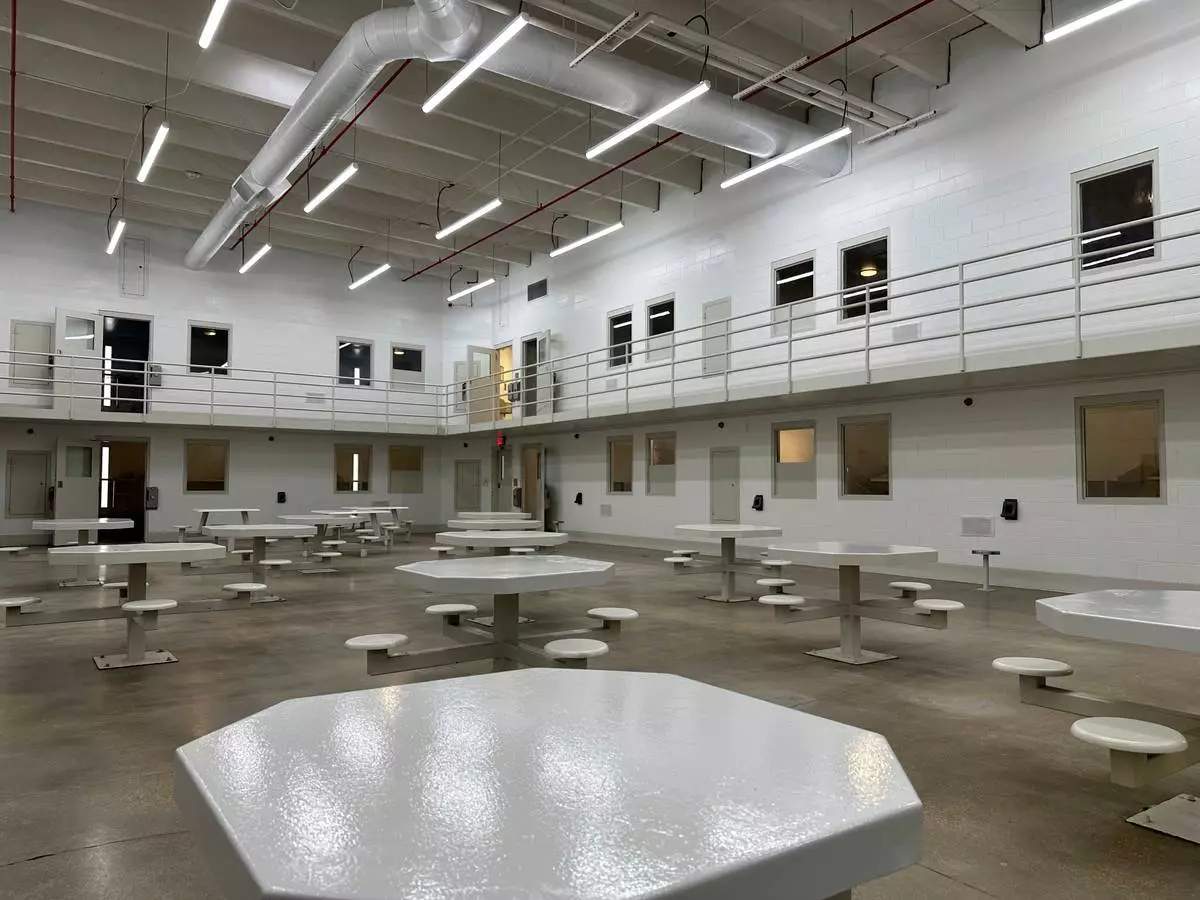
A judge has halted CoreCivic, on Wednesday, June 4, 2025, from housing immigrants facing possible deportation in a shuttered facility that the private prison operator now calls the Midwest Regional Reception Center, in Leavenworth, Kan., pictured Monday, March 3, 2025, unless it can get a permit from frustrated city officials. (AP Photo/Nick Ingram)
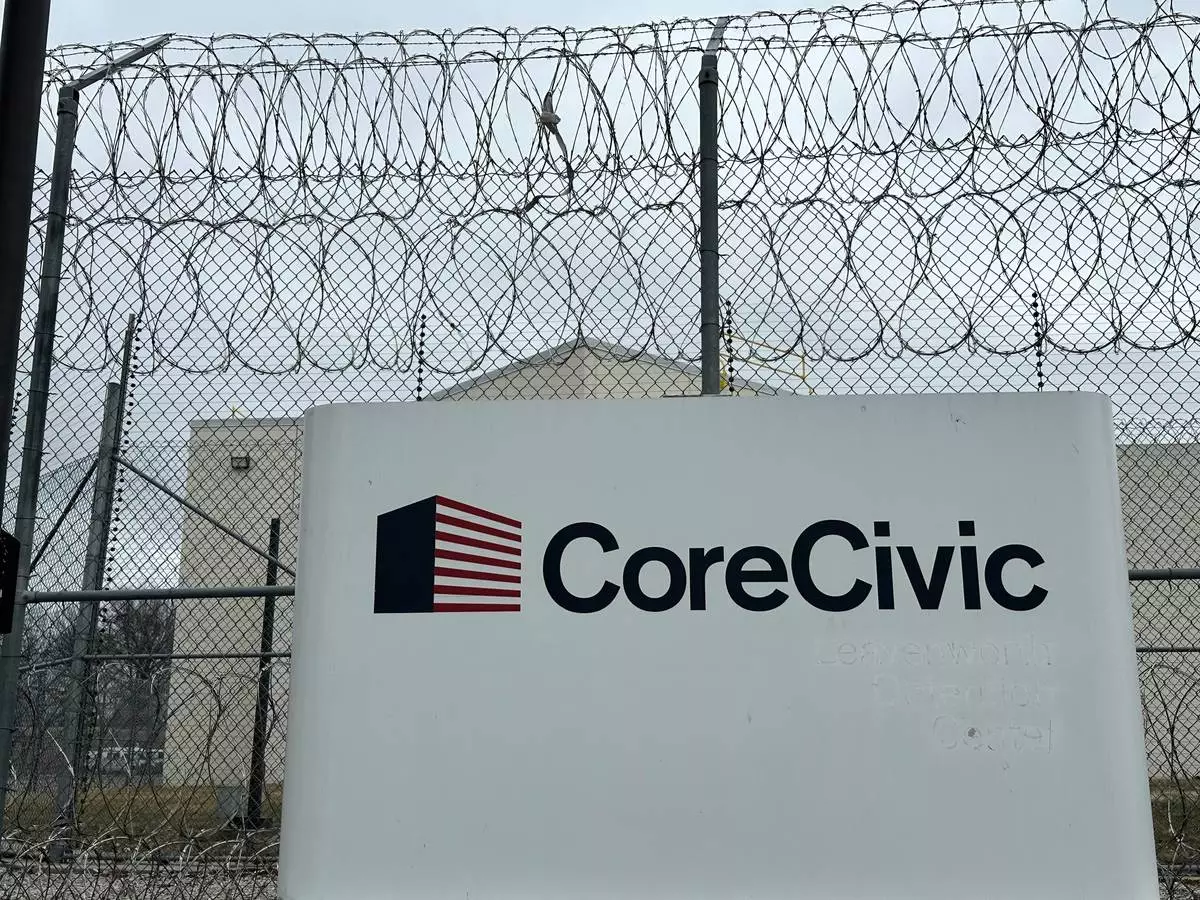
A judge has halted CoreCivic, on Wednesday, June 4, 2025, from housing immigrants facing possible deportation in a shuttered facility that the private prison operator now calls the Midwest Regional Reception Center, in Leavenworth, Kan., pictured Monday, March 3, 2025, unless it can get a permit from frustrated city officials. (AP Photo/Nick Ingram)