Skip to Content Facebook Feature Image

Deepgram Launches Voice Agent API: World’s Only Enterprise-Ready, Real-Time, and Cost-Effective Conversational AI API

News

Deepgram Launches Voice Agent API: World’s Only Enterprise-Ready, Real-Time, and Cost-Effective Conversational AI API
News

News

Deepgram Launches Voice Agent API: World’s Only Enterprise-Ready, Real-Time, and Cost-Effective Conversational AI API

2025-06-16 20:31 Last Updated At:20:51

SAN FRANCISCO--(BUSINESS WIRE)--Jun 16, 2025--

Deepgram, the leading voice AI platform for enterprise use cases, today announced the general availability (GA) of its Voice Agent API, a single, unified voice-to-voice interface that gives developers full control to build context-aware voice agents that power natural, responsive conversations. Combining speech-to-text, text-to-speech, and large language model (LLM) orchestration with contextualized conversational logic into a unified architecture, the Voice Agent API gives developers the choice of using Deepgram’s fully integrated stack (leveraging industry-leading Nova-3 STT and Aura-2 TTS models) or bringing their own LLM and TTS models. It delivers the simplicity developers love and the controllability enterprises need to deploy real-time, intelligent voice agents at scale. Today, companies like Aircall, Jack in the Box, StreamIt, and OpenPhone are building voice agents with Deepgram to save costs, reduce wait times, and increase customer loyalty.

This press release features multimedia. View the full release here: https://www.businesswire.com/news/home/20250616867923/en/

In today’s market, teams building voice agents are often forced to choose between two extremes: rigid, low-code platforms that lack customization, or DIY toolchains that require stitching together STT, TTS, and LLMs with significant engineering effort. Deepgram’s Voice Agent API eliminates this tradeoff by providing a unified API that simplifies development without sacrificing control. Developers can build faster with less complexity, while enterprises retain full control over orchestration, deployment, and model behavior, without compromising on performance or reliability.

“The future of customer engagement is voice-first,” said Scott Stephenson, CEO of Deepgram. “But most voice systems today are rigid, fragmented, or too slow. With our Voice Agent API, we’re giving developers a powerful yet simple interface to build conversational agents that feel natural, respond instantly, and scale across use cases without compromise.”

“We believe the future of customer communication is intelligent, seamless, and deeply human—and that’s the vision behind Aircall’s AI Voice Agent,” said Scott Chancellor, Chief Executive Officer of Aircall. “To bring it to life, we needed a partner who could match our ambition, and Deepgram delivered. Their advanced Voice Agent API enabled us to build fast without compromising accuracy or reliability. From managing mid-sentence interruptions to enabling natural, human-like conversations, their service performed with precision. Just as importantly, their collaborative approach helped us iterate quickly and push the boundaries of what voice intelligence can deliver in modern business communications.”

“We believe that integrating AI voice agents will be one of the most impactful initiatives for our business operations over the next five years, driving unparalleled efficiency and elevating the quality of our service,” said Doug Cook, CTO of Jack in the Box. “Deepgram is a leader in the industry and will be a strategic partner as we embark on this transformative journey.”

Developer Simplicity and Faster Time to Market

For teams taking the DIY route, the challenge isn’t just connecting models but also building and operating the entire runtime layer that makes real-time conversations work. Teams must manage live audio streaming, accurately detect when a user has finished speaking, coordinate model responses, handle mid-sentence interruptions, and maintain a natural conversational cadence. While some platforms offer partial orchestration features, most APIs do not provide a fully integrated runtime. As a result, developers are often left to manage streaming, session state, and coordination logic across fragmented services, which adds complexity and delays time to production.

Deepgram’s Voice Agent API removes this burden by providing a single, unified API that integrates speech-to-text, LLM reasoning, and text-to-speech with built-in support for real-time conversational dynamics. Capabilities such as barge-in handling and turn-taking prediction are model-driven and managed natively within the platform. This eliminates the need to stitch together multiple vendors or maintain custom orchestration, enabling faster prototyping, reduced complexity, and more time focused on building high-quality experiences.

In addition to the Voice Agent API, organizations seeking broader integrations can leverage Deepgram’s extensive partner ecosystem, including Kore.ai, OneReach.ai, Twilio and others, to access comprehensive conversational AI solutions and services powered by Deepgram APIs.

Maximum Control and Flexibility

While the Voice Agent API streamlines development, it also gives teams deep control over performance, behavior, and scalability in production. Built on Deepgram’s Enterprise Runtime and full model ownership across the entire voice AI stack, the platform enables model-level optimization at every layer of the interaction loop. This allows for precise tuning of latency, barge-in handling, turn-taking, and domain-specific behavior in ways not possible with disconnected components.

Key capabilities include:

“Deepgram gives us the flexibility to bring our own models, voices, and customize behavior while controlling how we build and orchestrate our voice agents,” said Harshal Jethwa, Engineering Manager at OpenPhone. “Their system seamlessly handles the complexity of real-time voice coordination, letting us focus on creating exactly the experience we want.”

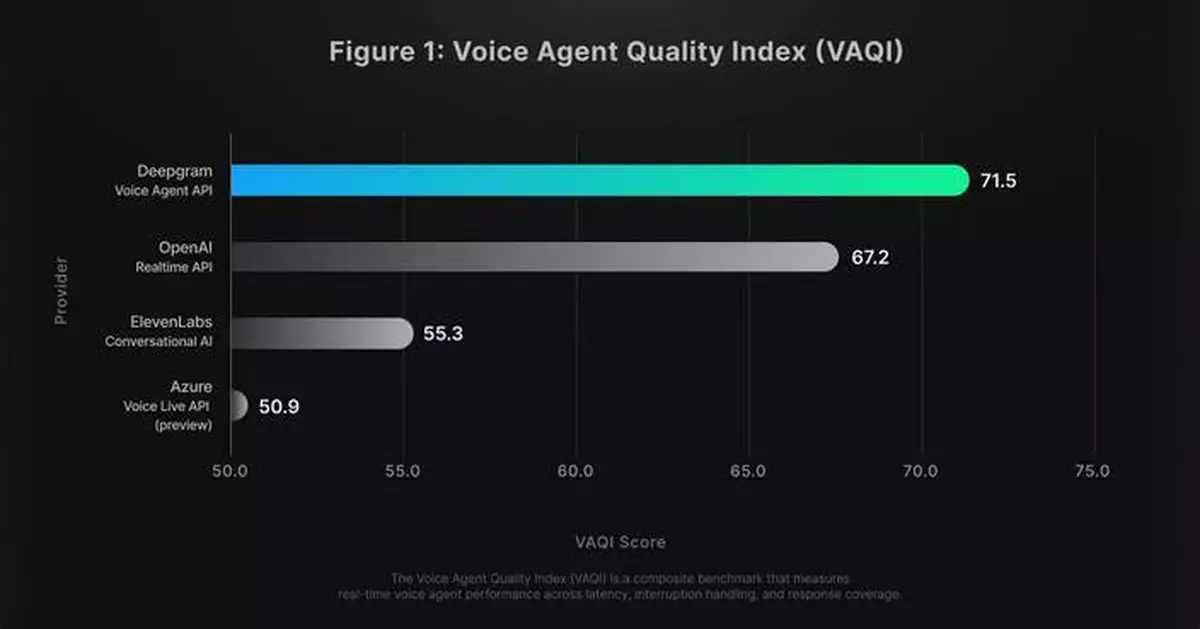
This tightly coordinated design translates directly into measurable performance gains. In recent benchmark testing using the Voice Agent Quality Index (VAQI), Deepgram achieved the highest overall score among all evaluated providers (see Figure 1). VAQI is a composite benchmark that measures the core elements of voice agent quality: latency (how quickly the agent responds), interruption rate (how often it cuts users off), and response coverage (how often it misses valid input).

Deepgram outperformed OpenAI by 6.4% and ElevenLabs by 29.3%, reflecting the advantage of its integrated architecture and model-driven turn-taking. The result is smooth, responsive conversations without missed inputs, premature responses, or unnatural delays.

Cost-Effectiveness at Scale

In addition to control and performance, the Voice Agent API is built for cost efficiency across large-scale deployments. When teams run entirely on Deepgram’s vertically integrated stack, pricing is fully consolidated at a flat rate of $4.50 per hour (see Figure 2). This provides predictable, all-in-one billing that simplifies planning and scales with usage. Deepgram’s vertically integrated runtime also delivers unmatched compute efficiency, optimizing every stage of the speech pipeline to minimize infrastructure costs while maintaining real-time responsiveness.

For teams that bring their own LLM or TTS models, Deepgram offers built-in rate reductions, enabling even lower total cost of ownership for production-scale deployments.

“Deepgram’s Voice Agent API stands out for its technical prowess, affordability, and flexibility, making it the smart bet for customer service voice AI,” said Bill French, Senior Solutions Engineer at StreamIt.

Start Building with the Voice Agent API

Experience how fast and flexible voice agents can be with Deepgram’s unified voice-to-voice API. Explore the API in our interactive playground, review documentation, or integrate in minutes using our SDK. New users receive $200 in free credits, enough to process over 40 hours of real-time voice agent usage. Start building natural, responsive conversations with infrastructure built for real-time performance and enterprise-scale.

Additional Resources:

About Deepgram

Deepgram is the leading voice AI platform for enterprise use cases, offering speech-to-text (STT), text-to-speech (TTS), and full speech-to-speech (STS) capabilities–all powered by our enterprise-grade runtime. 200,000+ developers build with Deepgram’s voice-native foundational models – accessed through cloud APIs or as self-hosted / on-premises APIs – due to our unmatched accuracy, low latency, and pricing. Customers include technology ISVs building voice products or platforms, co-sell partners working with large enterprises, and enterprises solving internal use cases. Having processed over 50,000 years of audio and transcribed over 1 trillion words, there is no organization in the world that understands voice better than Deepgram. To learn more, visit www.deepgram.com, read our developer docs, or follow @DeepgramAI on X and LinkedIn.
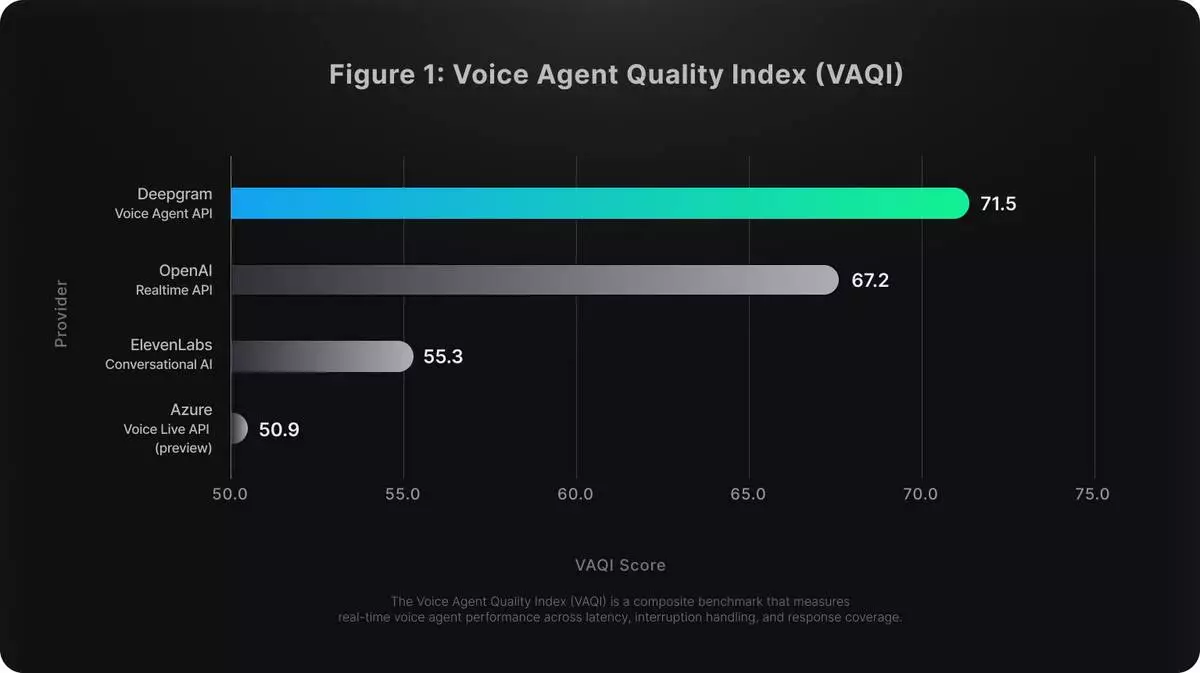
Figure 1


Figure 1

KOTZEBUE, Alaska (AP) — The low autumn light turned the tundra gold as James Schaeffer, 7, and his cousin Charles Gallahorn, 10, raced down a dirt path by the cemetery on the edge of town. Permafrost thaw had buckled the ground, tilting wooden cross grave markers sideways. The boys took turns smashing slabs of ice that had formed in puddles across the warped road.

Their great-grandfather, Roswell Schaeffer, 78, trailed behind. What was a playground to the kids was, for Schaeffer – an Inupiaq elder and prolific hunter – a reminder of what warming temperatures had undone: the stable ice he once hunted seals on, the permafrost cellars that kept food frozen all summer, the salmon runs and caribou migrations that once defined the seasons.

Now another pressure loomed. A 211-mile mining road that would cut through caribou and salmon habitat was approved by the Trump administration this fall, though the project still faces lawsuits and opposition from environmental and native groups. Schaeffer and other critics worry it could open the region to outside hunters and further devastate already declining herds. “If we lose our caribou – both from climate change and overhunting – we’ll never be the same,” he said. “We’re going to lose our culture totally.”

Still, Schaeffer insists on taking the next generation out on the land, even when the animals don’t come. It was late September and he and James would normally have been at their camp hunting caribou. But the herd has been migrating later each year and still hadn’t arrived – a pattern scientists link to climate change, mostly caused by the burning of oil, gas and coal. So instead of caribou, they scanned the tundra for swans, ptarmigan and ducks.

Caribou antlers are stacked outside Schaeffer's home. Traditional seal hooks and whale harpoons hang in his hunting shed. Inside, a photograph of him with a hunted beluga is mounted on the wall beside the head of a dall sheep and a traditional mask his daughter Aakatchaq made from caribou hide and lynx fur.

He got his first caribou at 14 and began taking his own children out at 7. James made his first caribou kill this past spring with a .22 rifle. He teaches James what his father taught him: that power comes from giving food and a hunter’s responsibility is to feed the elders.

“When you’re raised an Inupiaq, your whole being is to make sure the elders have food,” he said.

But even as he passes down those lessons, Schaeffer worries there won’t be enough to sustain the next generation – or to sustain him. “The reason I’ve been a successful hunter is the firm belief that, when I become old, people will feed me,” he said. “My great-grandson and my grandson are my future for food.”

These days, they’re eating less hunted food and relying more on farmed chicken and processed goods from the store. The caribou are fewer, the salmon scarcer, the storms more severe. Record rainfall battered Northwest Alaska this year, flooding Schaeffer’s backyard twice this fall alone. He worries about the toll on wildlife and whether his grandchildren will be able to live in Kotzebue as the changes accelerate.

“It’s kind of scary to think about what’s going to happen,” he said.

That afternoon, James ducked into the bed of Schaeffer’s truck and aimed into the water. He shot two ducks. Schaeffer helped him into waders – waterproof overalls – so they could collect them and bring them home for dinner, but the tide was too high. They had to turn back without collecting the ducks.

The changes weigh on others, too. Schaeffer’s friend, writer and commercial fisherman Seth Kantner grew up along the Kobuk River, where caribou once reliably crossed by the hundreds of thousands.

“I can hardly stand how lonely it feels without all the caribou that used to be here,” he said. “This road is the largest threat. But right beside it is climate change.”

Follow Annika Hammerschlag on Instagram @ahammergram.

The Associated Press receives support from the Walton Family Foundation for coverage of water and environmental policy. The AP is solely responsible for all content. For all of AP’s environmental coverage, visit https://apnews.com/hub/climate-and-environment

Roswell Schaeffer, an Inupiaq hunter and fisher, takes his great-grandson James Schaeffer, 7, and James' cousin Charles Gallahorn, 10, hunting in Kotzebue, Alaska, Friday, Sept. 26, 2025. (AP Photo/Annika Hammerschlag)

Roswell Schaeffer, an Inupiaq hunter and fisher, takes his great-grandson James Schaeffer, 7, and James' cousin Charles Gallahorn, 10, hunting in Kotzebue, Alaska, Friday, Sept. 26, 2025. (AP Photo/Annika Hammerschlag)

James Schaeffer, 7, plays with a slab of ice taken from a pond that formed on a warped road caused by thawing permafrost in Kotzebue, Alaska, Friday, Sept. 26, 2025. (AP Photo/Annika Hammerschlag)

James Schaeffer, 7, plays with a slab of ice taken from a pond that formed on a warped road caused by thawing permafrost in Kotzebue, Alaska, Friday, Sept. 26, 2025. (AP Photo/Annika Hammerschlag)

Charles Gallahorn, 10, plays with a slab of ice taken from a pond that formed on a warped road caused by thawing permafrost in Kotzebue, Alaska, Friday, Sept. 26, 2025. (AP Photo/Annika Hammerschlag)

Charles Gallahorn, 10, plays with a slab of ice taken from a pond that formed on a warped road caused by thawing permafrost in Kotzebue, Alaska, Friday, Sept. 26, 2025. (AP Photo/Annika Hammerschlag)

Charles Gallahorn, 10, plays with a slab of ice taken from a pond that formed on a warped road caused by thawing permafrost in Kotzebue, Alaska, Friday, Sept. 26, 2025. (AP Photo/Annika Hammerschlag)

Charles Gallahorn, 10, plays with a slab of ice taken from a pond that formed on a warped road caused by thawing permafrost in Kotzebue, Alaska, Friday, Sept. 26, 2025. (AP Photo/Annika Hammerschlag)

James Schaeffer, 7, looks out at a view of Kotzebue, Alaska, Friday, Sept. 26, 2025. (AP Photo/Annika Hammerschlag)

James Schaeffer, 7, looks out at a view of Kotzebue, Alaska, Friday, Sept. 26, 2025. (AP Photo/Annika Hammerschlag)

James Schaeffer, 7, plays on a road where thawing permafrost has caused the ground to warp in Kotzebue, Alaska, Friday, Sept. 26, 2025. (AP Photo/Annika Hammerschlag)

James Schaeffer, 7, plays on a road where thawing permafrost has caused the ground to warp in Kotzebue, Alaska, Friday, Sept. 26, 2025. (AP Photo/Annika Hammerschlag)

James Schaeffer, 7, plays on a road where thawing permafrost has caused the ground to warp in Kotzebue, Alaska, Friday, Sept. 26, 2025. (AP Photo/Annika Hammerschlag)

James Schaeffer, 7, plays on a road where thawing permafrost has caused the ground to warp in Kotzebue, Alaska, Friday, Sept. 26, 2025. (AP Photo/Annika Hammerschlag)

James Schaeffer, 7, hunts in Kotzebue, Alaska, Friday, Sept. 26, 2025. (AP Photo/Annika Hammerschlag)

James Schaeffer, 7, hunts in Kotzebue, Alaska, Friday, Sept. 26, 2025. (AP Photo/Annika Hammerschlag)

Roswell Schaeffer, an Inupiaq hunter and fisher, helps his great-grandson James Schaeffer, 7, into waders while hunting Friday, Sept. 26, 2025. (AP Photo/Annika Hammerschlag)

Roswell Schaeffer, an Inupiaq hunter and fisher, helps his great-grandson James Schaeffer, 7, into waders while hunting Friday, Sept. 26, 2025. (AP Photo/Annika Hammerschlag)

Roswell Schaeffer, an Inupiaq hunter and fisher, looks over caribou antlers from past hunts at his home in Kotzebue, Alaska, Friday, Sept. 26, 2025. (AP Photo/Annika Hammerschlag)

Roswell Schaeffer, an Inupiaq hunter and fisher, looks over caribou antlers from past hunts at his home in Kotzebue, Alaska, Friday, Sept. 26, 2025. (AP Photo/Annika Hammerschlag)

James Schaeffer, 7, hunts in Kotzebue, Alaska, Friday, Sept. 26, 2025. (AP Photo/Annika Hammerschlag)

James Schaeffer, 7, hunts in Kotzebue, Alaska, Friday, Sept. 26, 2025. (AP Photo/Annika Hammerschlag)

James Schaeffer, 7, runs through a cemetery where thawing permafrost has caused grave markers to tilt and the ground to warp in Kotzebue, Alaska, Friday, Sept. 26, 2025. (AP Photo/Annika Hammerschlag)

James Schaeffer, 7, runs through a cemetery where thawing permafrost has caused grave markers to tilt and the ground to warp in Kotzebue, Alaska, Friday, Sept. 26, 2025. (AP Photo/Annika Hammerschlag)

Roswell Schaeffer, an Inupiaq hunter and fisher, visits the cemetery where thawing permafrost has caused grave markers to tilt in Kotzebue, Alaska, Friday, Sept. 26, 2025. (AP Photo/Annika Hammerschlag)

Roswell Schaeffer, an Inupiaq hunter and fisher, visits the cemetery where thawing permafrost has caused grave markers to tilt in Kotzebue, Alaska, Friday, Sept. 26, 2025. (AP Photo/Annika Hammerschlag)

Roswell Schaeffer, an Inupiaq hunter and fisher, helps his great-grandson James Schaeffer, 7, scope ducks while hunting in Kotzebue, Alaska, Friday, Sept. 26, 2025. (AP Photo/Annika Hammerschlag)

Roswell Schaeffer, an Inupiaq hunter and fisher, helps his great-grandson James Schaeffer, 7, scope ducks while hunting in Kotzebue, Alaska, Friday, Sept. 26, 2025. (AP Photo/Annika Hammerschlag)

Recommended Articles