BOSTON (AP) — Nina Kuscsik, who campaigned for women's inclusion in long-distance running and then won the Boston Marathon the first year that they were officially allowed to enter into the race, has died. She was 86.
An obituary for the A.L. Jacobsen Funeral Home in Huntington Station, New York, said Kuscsik died June 8 of respiratory failure after a long battle with Alzheimer’s disease.
“Nina was more than a pioneer, determined women’s running advocate, and celebrated icon within the sport. To us, she was a friend who will always be remembered for her kindness, joyful laugh and smile,” the Boston Athletic Association said on Instagram.
“Nina held the distinct honor of winning the 1972 Boston Marathon, and recognized the platform that came with that triumphant moment, inspiring thousands of women to reach their own goals and finish lines in the decades since. The BAA extends heartfelt condolences to Nina’s family, friends, and all in the running community who were touched by her grace.”
According to the obituary, Kuscsik graduated from high school at 16, studied nursing for two years and received her license at 18 after petitioning to change a New York law that required nurses to be 21. She won state championships in speed skating, roller skating and cycling – all in the same year -- before turning to running when her bicycle broke.
She ran the Boston Marathon four times from 1968-71 — before women were officially welcomed, a period retroactively recognized as the Pioneer Era — and then won the first official women's race in 1972.
She was also the first woman to enter the New York race, in 1970, and was one of the “Six who Sat” – six women who refused to start the '72 New York City Marathon for 10 minutes to protest an Amateur Athletic Union rule that the women’s race had to be separate from the men’s. She won that year and the next year as well.
She later served on AAU and USA Track and Field committees drafting rules for women’s running. Kathrine Switzer, who entered the 1971 Boston Marathon using her initials and became the first woman to official compete, called Kuscsik “one of our greatest leaders.”
“Nina was not only a champion runner, but was instrumental in the official acceptance of women and distance running because she did years of tough work of changing rules, regulations and submitting medical evidence to prove women’s capability," said Switzer, who started alongside Kuscsik and six other women who met the qualifying time for the the 1972 Boston race.
“Eight of us registered, eight of us showed up, and all eight of us finished,” she said. “It was a stunning moment — and a blistering hot day — but appropriately enough, Nina won.”
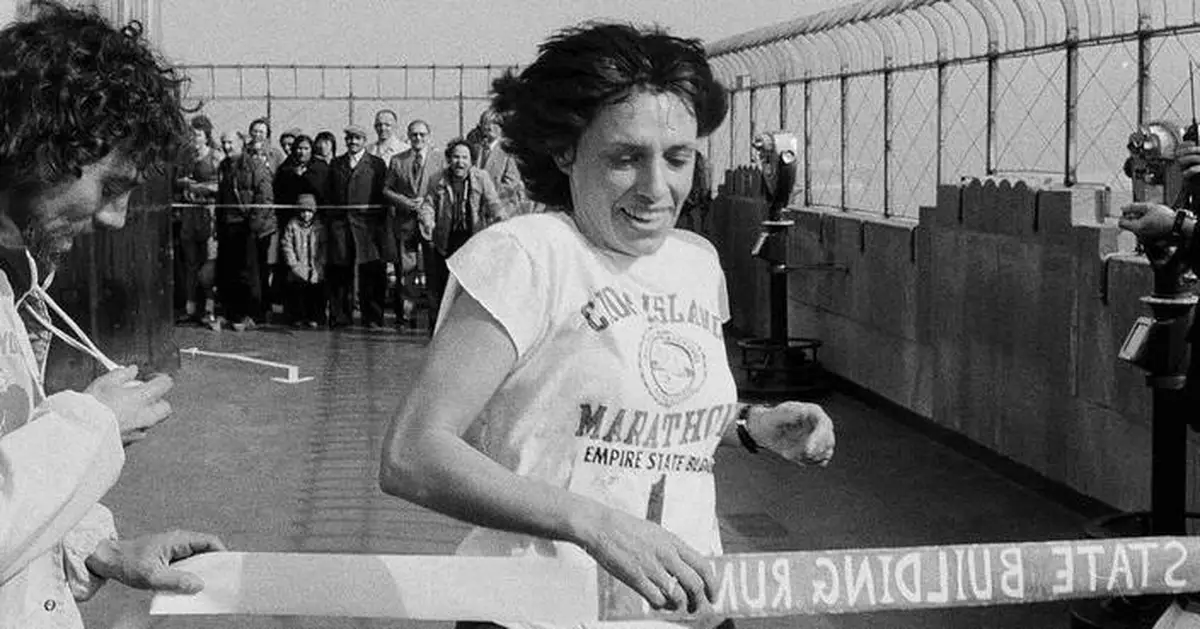
In addition to the more than 80 marathons she ran over her lifetime, Kuscsik set the American record for the 50-mile run in 1977 and won the Empire State Building Run-Up three straight years from 1979–81.
She was inducted into the Long Distance Running Hall of Fame in 1999.
AP sports: https://apnews.com/hub/sports

FILE - Nina Kuscsik of Huntington, N.Y., stands atop the Empire State Building in midtown New York City Thursday, Feb. 15, 1979, after becoming the first woman to complete the second Empire State Run-up. (AP Photo/Marty Lederhandler,File)
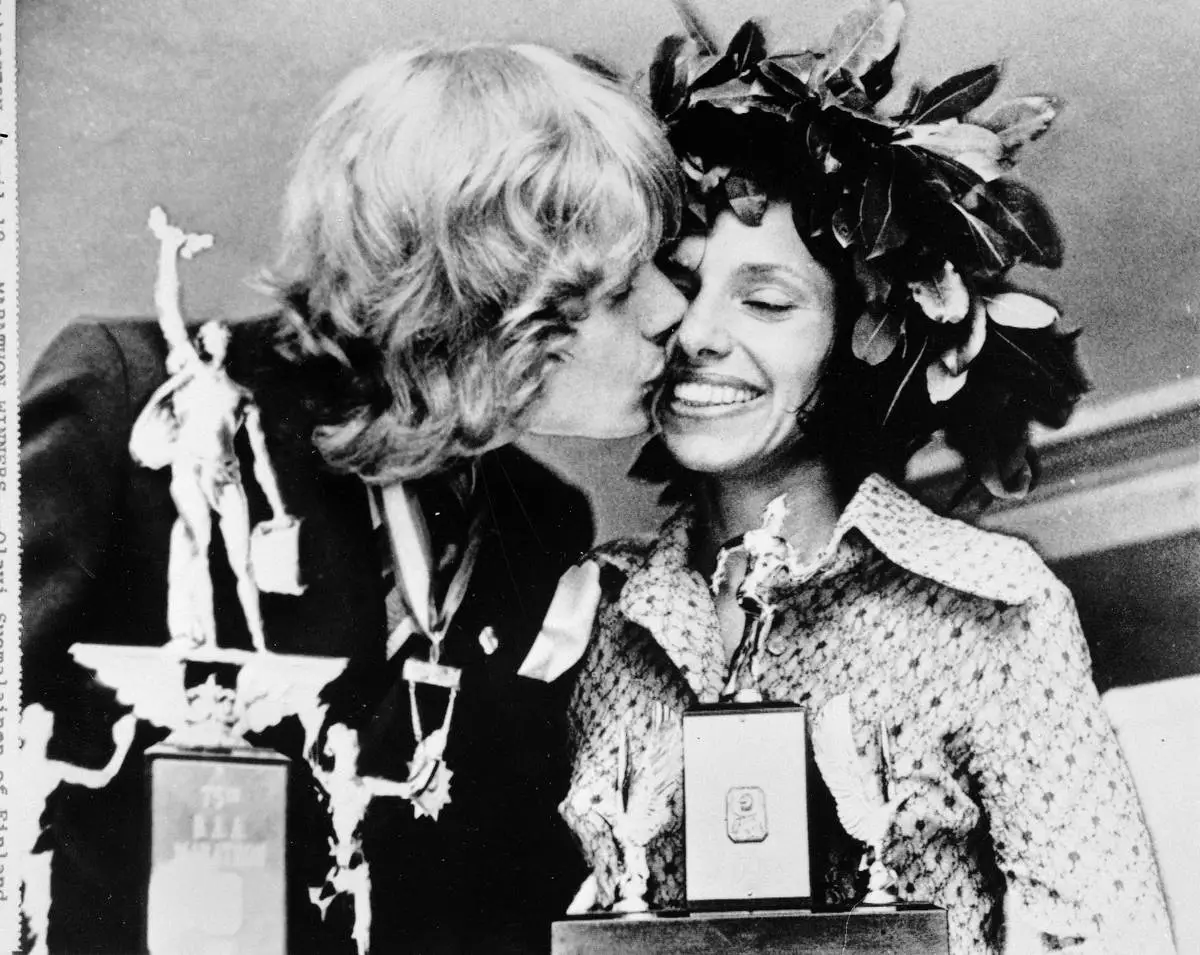
FILE - Olavi Suomalainen of Finland, winner of the men's division of the Boston A.A. Marathon April 17, 1972, kisses Nina Kuscsik of Long Island, N.Y., winner of the women's division, at the trophy presentation April 18, 1972. (AP Photo/File)

FILE - Nina Kuscsik, of Huntington, L.I., runs across finish line atop the Empire State Building Thursday, Feb. 14, 1980 in New York. (AP Photo/Ron Frehm,File)
KUALA LUMPUR, Malaysia (AP) — Malaysia and Indonesia have become the first countries to block Grok, the artificial intelligence chatbot developed by Elon Musk's company xAI, as concerns grew among global authorities that it was being misused to generate sexually explicit and nonconsensual images.
The moves reflect growing scrutiny of generative AI tools that can produce realistic images, sound and text and concern that existing safeguards are failing to prevent their abuse. The Grok chatbot, which is accessed through Musk’s social media platform X, has been criticized for generating manipulated images, including depictions of women in bikinis or sexually explicit poses, as well as images involving children.
Last week, Grok limited image generation and editing to paying users following a global backlash over sexualized deepfakes of people, but critics say it didn’t fully address the problem.
An emailed request for comment by The Associated Press to xAI resulted in an automated reply from the media support email address which stated, “Legacy Media Lies.” This was the same message received from a different email when asked for comment regarding the global backlash.
Regulators in the two Southeast Asian nations said that existing controls weren't preventing the creation and spread of fake pornographic content, particularly involving women and minors. Indonesia’s government temporarily blocked access to Grok on Saturday, followed by Malaysia on Sunday.
"The government sees nonconsensual sexual deepfakes as a serious violation of human rights, dignity and the safety of citizens in the digital space,” Indonesian Communication and Digital Affairs Minister Meutya Hafid said in a statement Saturday.
The ministry said the measure was intended to protect women, children and the broader community from fake pornographic content generated using AI.
Initial findings showed that Grok lacks effective safeguards to stop users from creating and distributing pornographic content based on real photos of Indonesian residents, Alexander Sabar, director-general of digital space supervision, said in a separate statement. He said that such practices risk violating privacy and image rights when photos are manipulated or shared without consent, causing psychological, social and reputational harm.
In Kuala Lumpur, the Malaysian Communications and Multimedia Commission ordered a temporary restriction on Grok on Sunday, after what it said was “repeated misuse” of the tool to generate obscene, sexually explicit and nonconsensual manipulated images, including content involving women and minors.
The regulator said that notices issued this month to X Corp. and xAI demanding stronger safeguards drew responses that relied mainly on user reporting mechanisms.
“The restriction is imposed as a preventive and proportionate measure while legal and regulatory processes are ongoing,” it said, adding that access will remain blocked until effective safeguards are put in place.
Launched in 2023, Grok is free to use on X. Users can ask it questions on the social media platform and tag posts they’ve directly created or replies to posts from other users. Last summer, the company added an image generator feature, Grok Imagine, that included a so-called spicy mode that can generate adult content.
The Southeast Asian restrictions come amid mounting scrutiny of Grok elsewhere, including in the European Union, the United Kingdom, India and France.
On Monday, the U.K.'s media regulator said that it launched a formal investigation into whether Grok “complied with its duties to protect people in the U.K. from content that is illegal.”
The regulator, Ofcom, said that Grok-generated images of children being sexualized or people being undressed may amount to pornography or child sexual abuse material.
“The content created and shared using Grok in recent days has been deeply disturbing," Technology Secretary Liz Kendall said.
Edna Tarigan reported from Jakarta, Indonesia.

FILE - Workers install lighting on an "X" sign atop the company headquarters, formerly known as Twitter, in downtown San Francisco, July 28, 2023. (AP Photo/Noah Berger, File)

FILE - Elon Musk listens as President Donald Trump speaks during a news conference in the Oval Office of the White House, May 30, 2025, in Washington. (AP Photo/Evan Vucci, File)