ZIONSVILLE, Ind.--(BUSINESS WIRE)--Jun 17, 2025--
Delaware Life Insurance Company (“Delaware Life”), a Group 1001 company, announced today the launch of Target Income Choice™, a new fixed index annuity (FIA) available through the bank and broker-dealer channels. It provides a combination of guaranteed lifetime income, growth potential, and downside protection to further protect customers from rising inflation and market volatility.
This press release features multimedia. View the full release here: https://www.businesswire.com/news/home/20250617798817/en/
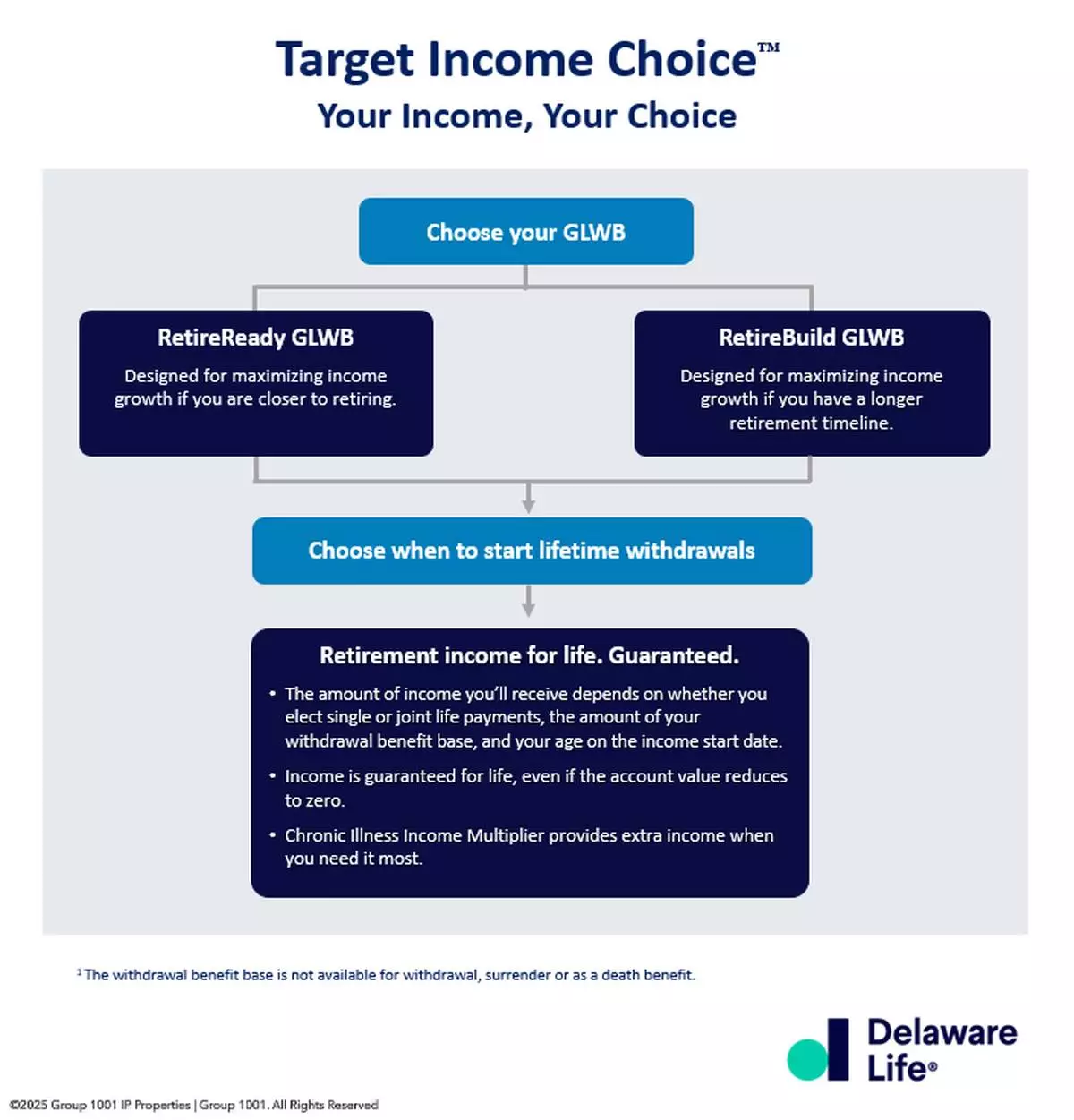
Target Income Choice™, an enhanced version of one of Delaware Life’s core FIAs, Target Income 10 ®, empowers customers to personalize how they accumulate income for retirement, aligning with their unique financial goals and timelines.
Target Income Choice™ features include:
With an emphasis on a flexible design, Target Income Choice™ offers customers a pro-rated roll-up bonus credit to their withdrawal benefit base. This allows income to accumulate from the income start date and the ability to add money at any time 3.
“Delaware Life is continuously reviewing its products to help ensure they meet both the needs of our financial professionals and the customers they serve,” said Dale Uthoff, Chief Product Officer of Group 1001. “The enhancements offered with Target Income Choice™ provide retirees and near-retirees with solutions that can help protect their retirement savings while offering growth potential.”
Amid increasing longevity, market volatility, and inflationary pressures, Target Income Choice™ is a strategic tool for building income plans.
“Backed by Delaware Life’s nearly 30 years of innovation, Target Income Choice™ empowers advisors to deliver clarity and confidence, helping ensure customers can achieve guaranteed, sustainable income and financial peace of mind,” said Colin Lake, President & CEO of Delaware Life Marketing. “Target Income Choice™ can provide substantial value to bank and broker-dealer advisors in effectively serving their customers’ financial objectives.”
For more information about how Target Income Choice™ can help address the needs of today’s retirees, visit our website.
About Delaware Life Insurance Company
Delaware Life is an insurance and annuity company that empowers financial professionals with a wide array of customizable solutions. A subsidiary of Group 1001 Insurance Holdings, LLC, our focus is to deliver a seamless experience for advisors. We understand how important it is to find the right fit for every client, every situation, and every individual need. We’re passionate about equipping you with annuities that give your customers peace of mind and a successful future—allowing them to plan with confidence for whatever’s next.
About Group 1001
Group 1001 Insurance Holdings, LLC (“Group 1001”) is a collective that empowers companies to create positive growth. Our insurance and annuities are easy to understand and accessible to all. Our online investing platform gives individuals control over their savings. Our technology and innovation help companies succeed. And our strategic partnerships bring people together through education and sports.
As of December 31, 2024, Group 1001 had more than 1,500 employees and combined assets under management of approximately $67.8 billion and currently provides over 496,000 active annuity contracts and life insurance policies. It comprises the following brands: Delaware Life, Gainbridge ®, Clear Spring Life and Annuity Company, Clear Spring Property and Casualty Group, Clear Spring Health, and the RVI Group, among others.
Target Income Choice™
HAVANA (AP) — Trumpets and drums played solemnly at Havana's airport Thursday as white-gloved Cuban soldiers marched out of a plane carrying urns with remains of the 32 Cuban officers killed during a stunning U.S. attack on Venezuela.
Nearby, thousands of Cubans lined one of Havana’s most iconic streets to await the bodies as the island remained under threat by the administration of U.S. President Donald Trump.
The soldiers' shoes clacked as they marched stiff-legged into the headquarters of the Ministry of the Armed Forces and placed the urns on a long table next to the pictures of those killed. Tens of thousands of people paid their respects, saluting the urns or holding their hand over their heart, many of them drenched from standing outside in a heavy downpour.
Thursday’s mass funeral was only one of a handful that the Cuban government has organized over the past half-century.
The soldiers were part of the security detail of Venezuelan President Nicolás Maduro during the Jan. 3 raid on his residence to seize the former leader and bring him to the U.S. to face drug trafficking charges.
State television also showed images of what it said were more than a dozen wounded combatants from the raid, accompanied by Cuban Foreign Minister Bruno Rodríguez after arriving Wednesday night from Venezuela. A man identified in state media as Col. Pedro Domínguez attended Thursday's ceremony in a wheelchair.
He said it was a “disproportionate attack” that killed 11 colleagues around him as they slept. Domínguez said he was committed to doing “whatever it takes to defend this people and to remain united in the face of threats from the United States.”
Tensions between Cuba and the U.S. have spiked, with Trump recently demanding that the Caribbean country make a deal with him before it is “too late.” He did not explain what kind of deal.
Trump also has said that Cuba will no longer live off Venezuela's money and oil. Experts warn that the abrupt end of oil shipments could be catastrophic for Cuba, which is already struggling with serious blackouts and a crumbling power grid.
Officials unfurled a massive flag at Havana's airport as President Miguel Díaz-Canel, clad in military garb, stood silent next to former President Raúl Castro, with what appeared to be the relatives of those killed looking on nearby.
Cuban Interior Minister Lázaro Alberto Álvarez Casas called the slain soldiers “heroes” of an anti-imperialist struggle spanning both Cuba and Venezuela. In an apparent reference to the U.S., he said the “enemy” speaks of “high-precision operations, of troops, of elites, of supremacy.
“We, on the other hand, speak of faces, of families who have lost a father, a son, a husband, a brother,” Álvarez said.
The events demonstrate that “imperialism may possess more sophisticated weapons; it may have immense material wealth; it may buy the minds of the wavering; but there is one thing it will never be able to buy: the dignity of the Cuban people,” he said.
Carmen Gómez, a 58-year-old industrial designer, was among the thousands of Cubans who lined a street where motorcycles and military vehicles thundered by with the remains of those killed.
“They are people willing to defend their principles and values, and we must pay tribute to them,” Gómez said. “It’s because of the sense of patriotism that Cubans have, and that will always unite us.”
The 32 military personnel ranged in age from 26 to 60 and were part of protection agreements between the two countries.
Officials in Cuba have said they expect a massive demonstration Friday across from the U.S. Embassy to protest the deaths.
“People are upset and hurt ... many do believe that the dead are martyrs” of a historic struggle against the United States, analyst and former diplomat Carlos Alzugaray told The Associated Press.
In October 1976, then-President Fidel Castro led a massive demonstration to bid farewell to the 73 people killed in the bombing of a civilian flight financed by anti-revolutionary leaders in the U.S. Most of the victims were Cuban athletes.
In December 1989, officials organized a ceremony to honor the more than 2,000 Cuban combatants who died in Angola during Cuba’s participation in a war that defeated the South African army.
In October 1997, memorial services were held following the arrival of the remains of guerrilla commander Ernesto “Che” Guevara and six of his comrades, who died in 1967.
The latest mass burial is critical to honor those slain, said José Luis Piñeiro, a 60-year-old doctor who lived for four years in Venezuela.
“I don’t think Trump is crazy enough to come and enter a country like this, ours, and if he does, he’s going to have to take an aspirin or some painkiller to avoid the headache he’s going to get,” Piñeiro said. “These were 32 heroes who fought him. Can you imagine an entire nation? He’s going to lose.”
The remains arrived a day after the U.S. announced $3 million in additional aid to help the island recover from the catastrophic Hurricane Melissa. The first flight took off on Wednesday, and a second flight was scheduled for Friday. A commercial vessel also will deliver food and other supplies.
Cuba had said on Wednesday that any contributions will be channeled through the government.
But U.S. State Department foreign assistance official Jeremy Lewin said Thursday that the U.S. was working with Cuba’s Catholic Church to distribute aid, as part of Washington's efforts to give assistance directly to the Cuban people.
“There’s nothing political about cans of tuna and rice and beans and pasta,” he said Thursday, warning that the Cuban government should not intervene or divert supplies. “We will be watching, and we will hold them accountable.”
Lewin said the Cuban government has a choice to: “Step down or better provide towards people.” Lewin added that “if there was no regime,” the U.S. would provide “billions and billions of dollars” in assistance, as well as investment and development: “That’s what lies on the other side of the regime for the Cuban people.”
Rodríguez, the Cuban foreign minister, said the U.S. government was “exploiting what appears to be a humanitarian gesture for opportunistic and politically manipulative purposes.”
Coto contributed from San Juan, Puerto Rico.
Follow AP’s coverage of Latin America and the Caribbean at https://apnews.com/hub/latin-america
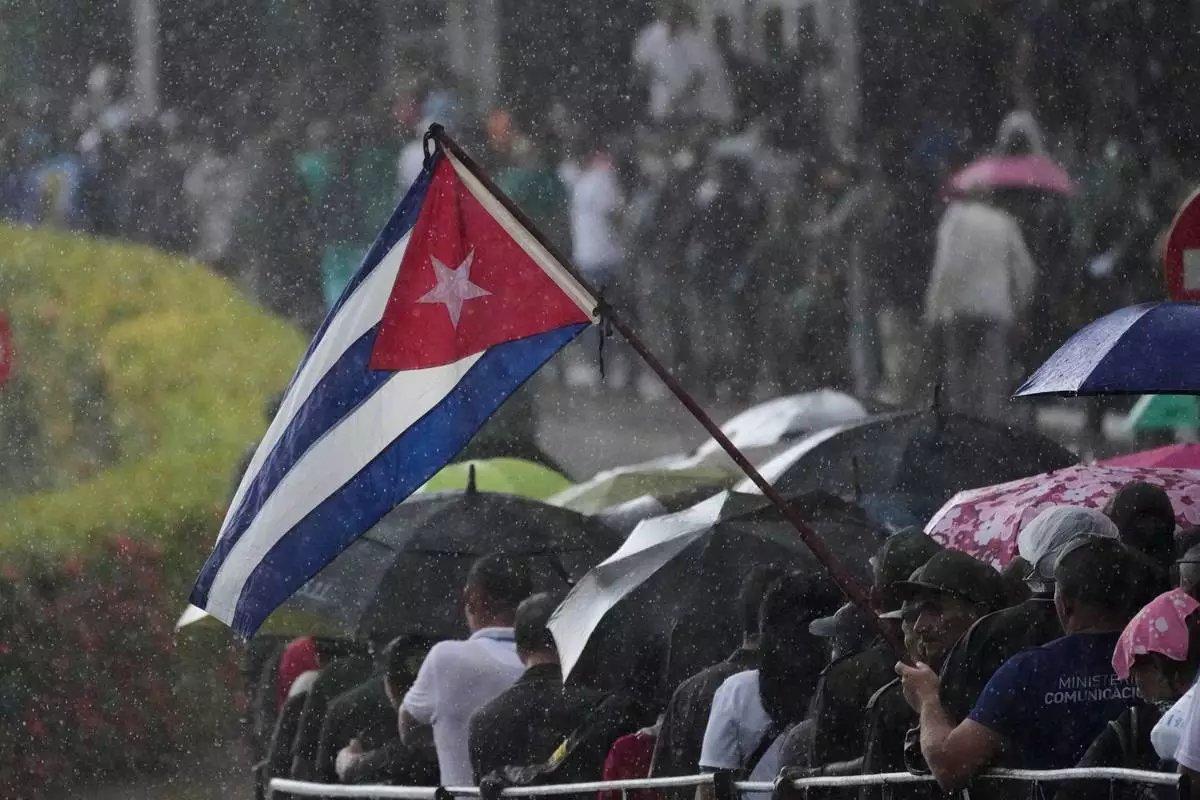
People line up outside the Ministry of the Revolutionary Armed Forces where the remains are on display of the Cuban officers who were killed during the U.S. operation in Venezuela that captured President Nicolas Maduro, as it sprinkles rain in Havana, Cuba, Thursday, Jan. 15, 2026. (AP Photo/Ramon Espinosa)
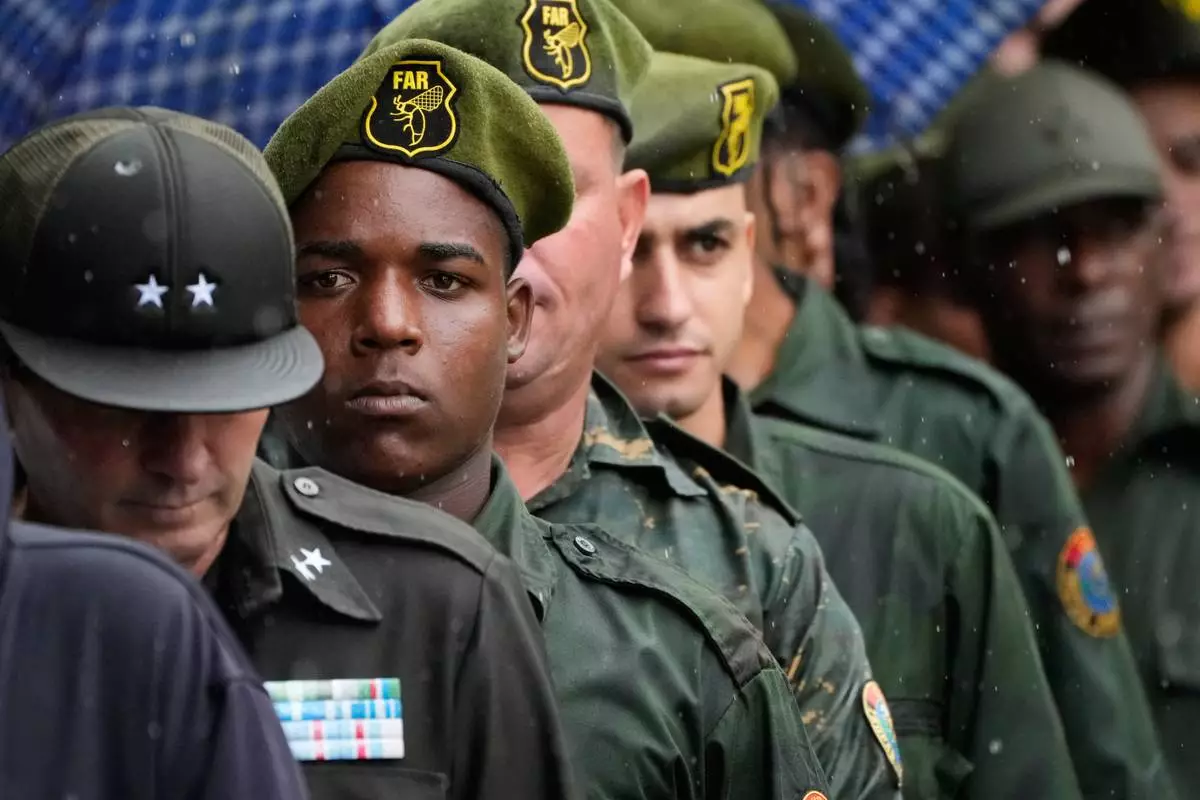
Military members line up outside the Ministry of the Revolutionary Armed Forces where the urns containing the remains of Cuban officers, killed during the U.S. operation in Venezuela that captured President Nicolas Maduro, are on display in Havana, Cuba, Thursday, Jan. 15, 2026. (AP Photo/Ramon Espinosa)
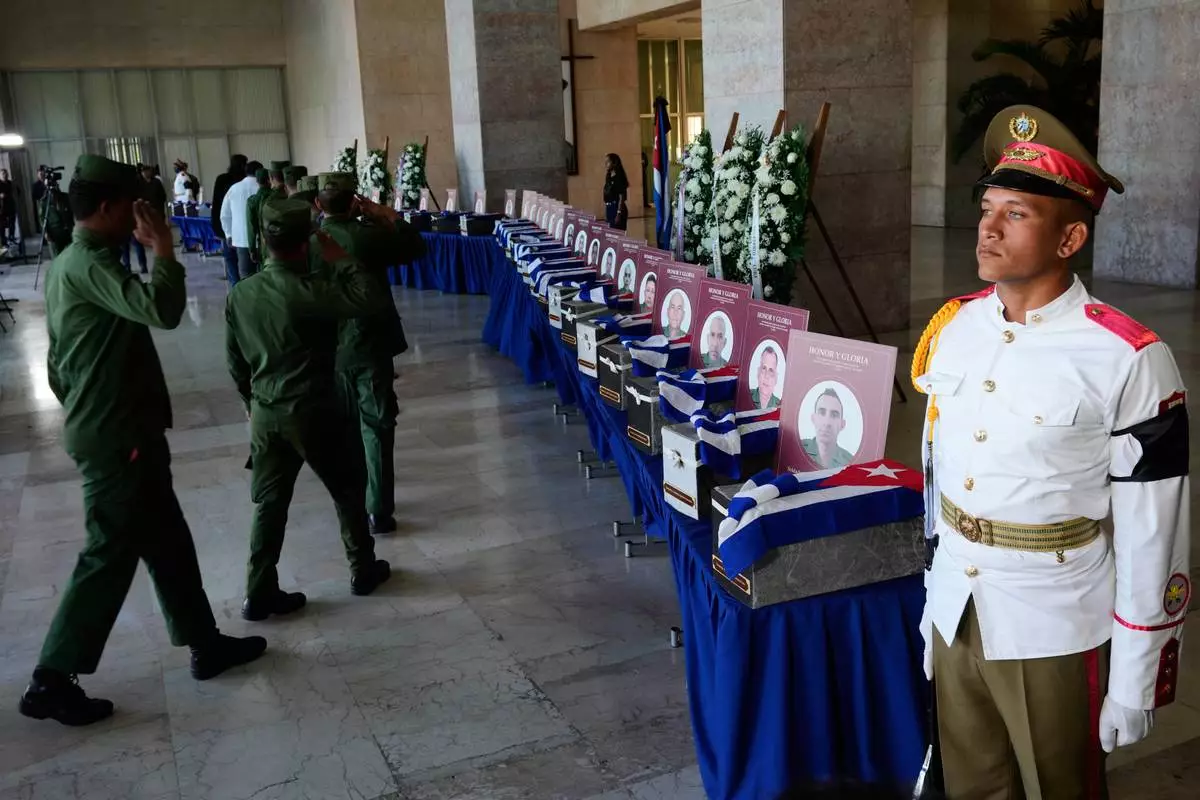
Military members pay their last respects to Cuban officers who were killed during the U.S. operation in Venezuela that captured Venezuelan President Nicolas Maduro, at the Ministry of the Revolutionary Armed Forces where the urns containing the remains are displayed during a ceremony in Havana, Cuba, Thursday, Jan. 15, 2026. (AP Photo/Ramon Espinosa)
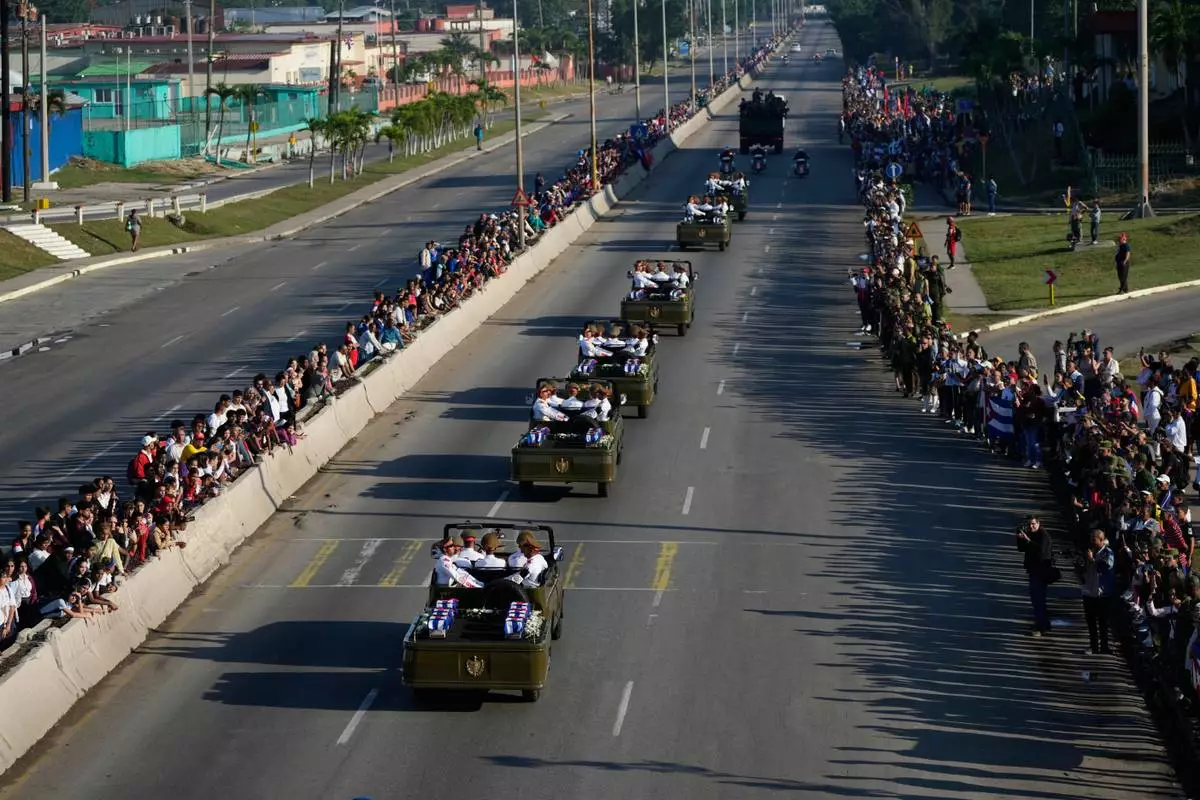
A motorcade transports urns containing the remains of Cuban officers, who were killed during the U.S. operation in Venezuela that captured Venezuelan President Nicolas Maduro, through Havana, Cuba, Thursday, Jan. 15, 2026. (AP Photo/Ramon Espinosa)
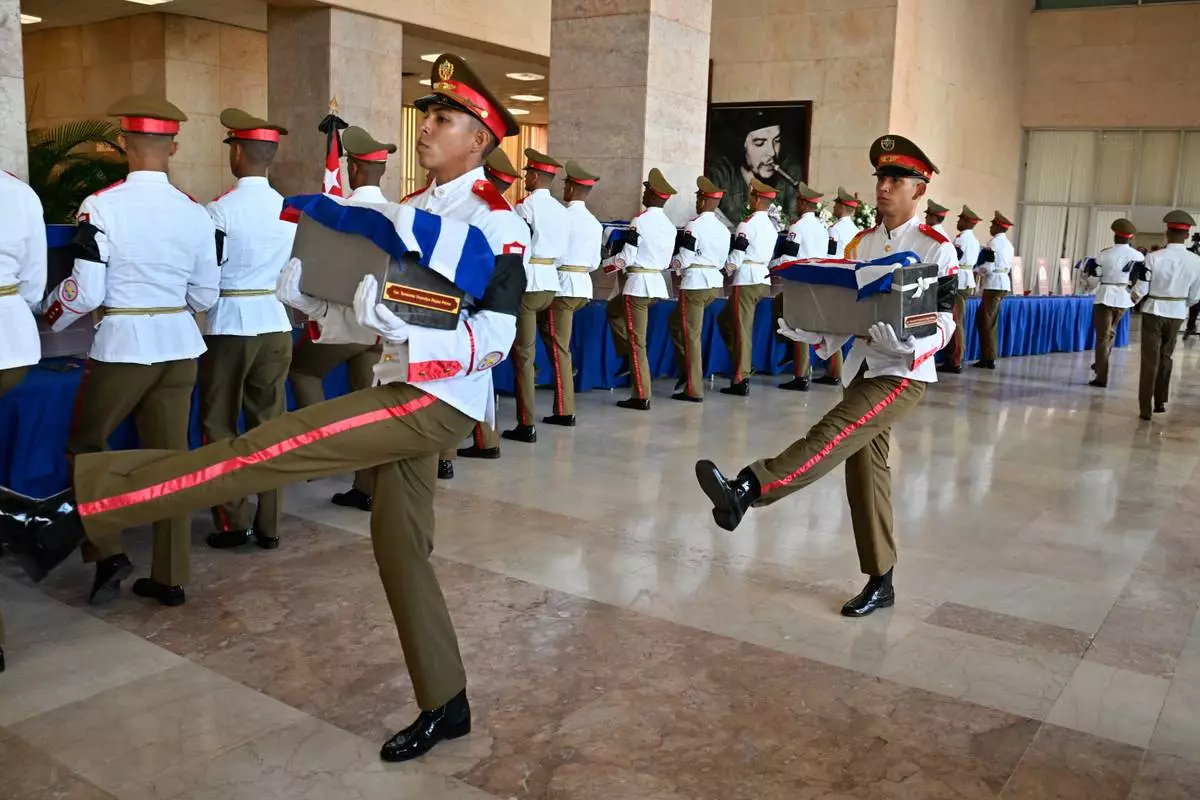
Soldiers carry urns containing the remains of Cuban officers, who were killed during the U.S. operation in Venezuela that captured Venezuelan President Nicolas Maduro, at the Ministry of the Revolutionary Armed Forces in Havana, Cuba, Thursday, Jan. 15, 2026. (Adalberto Roque /Pool Photo via AP)
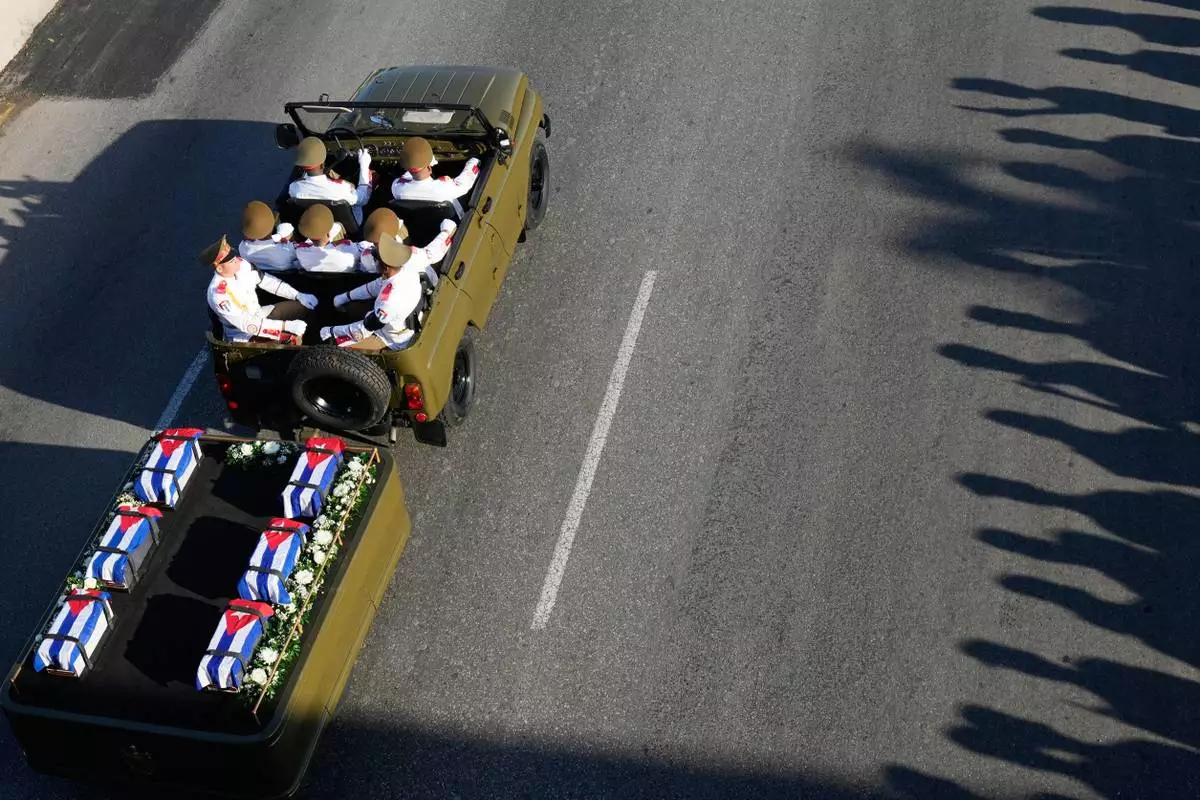
A motorcade transports urns containing the remains of Cuban officers, who were killed during the U.S. operation in Venezuela that captured Venezuelan President Nicolas Maduro, through Havana, Cuba, Thursday, Jan. 15, 2026. (AP Photo/Ramon Espinosa)
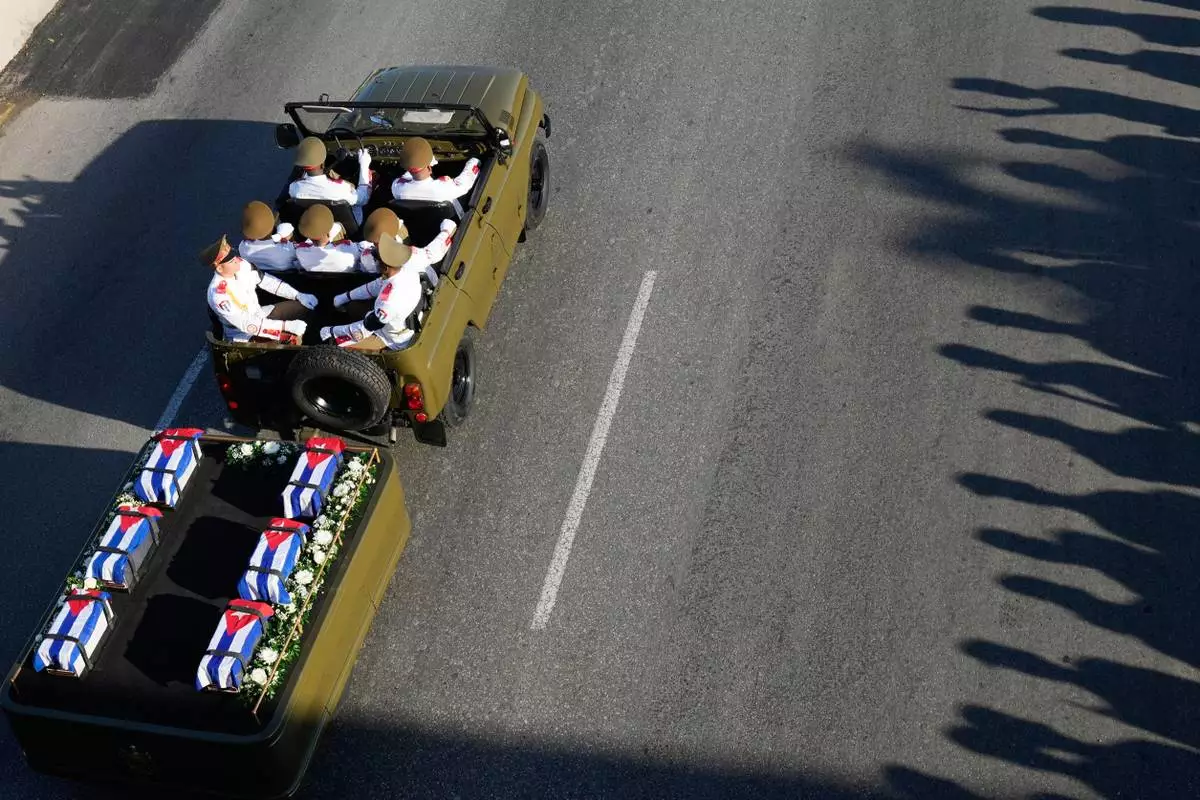
A motorcade transports urns containing the remains of Cuban officers, who were killed during the U.S. operation in Venezuela that captured Venezuelan President Nicolas Maduro, through Havana, Cuba, Thursday, Jan. 15, 2026. (AP Photo/Ramon Espinosa)
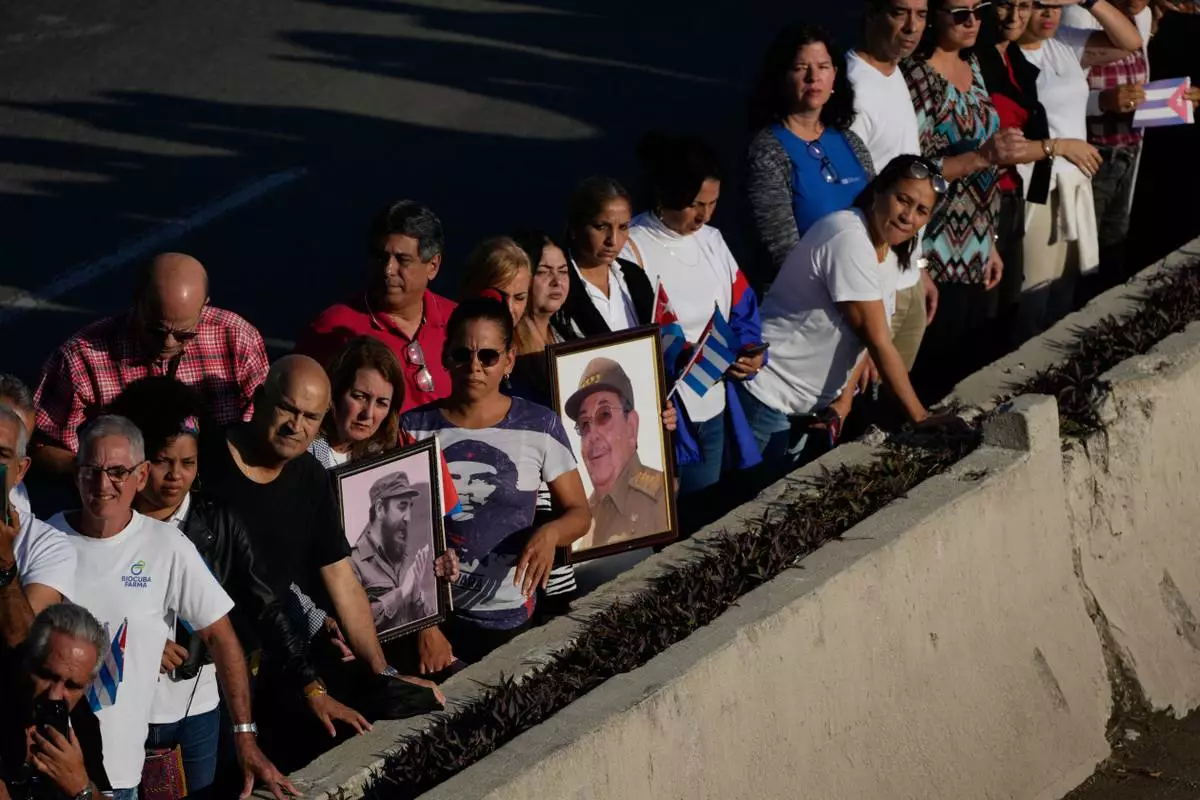
People line the streets of Havana, Cuba, Thursday, Jan. 15, 2026, to watch the motorcade carrying urns containing the remains of Cuban officers killed during the U.S. operation in Venezuela that captured Venezuelan President Nicolas Maduro. (AP Photo/Ramon Espinosa)
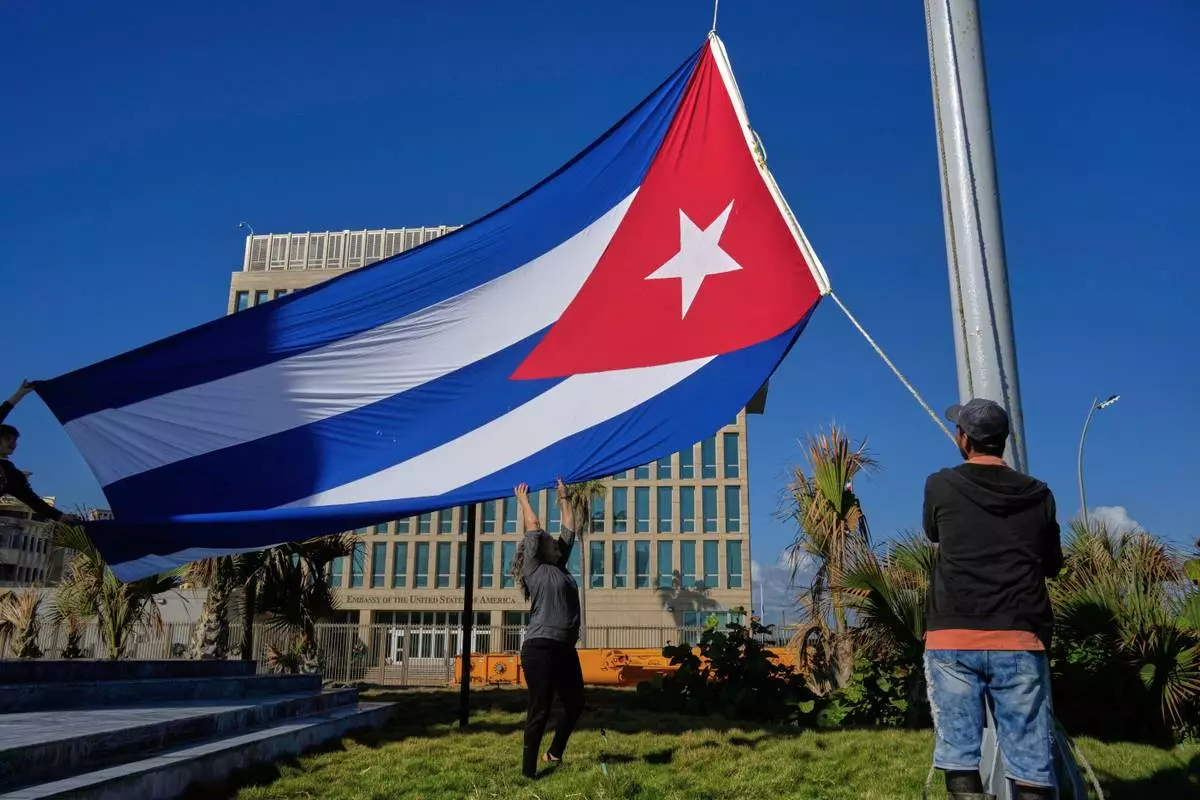
Workers fly the Cuban flag at half-staff at the Anti-Imperialist Tribune near the U.S. Embassy in Havana, Cuba, Monday, Jan. 5, 2026, in memory of Cubans who died two days before in Caracas, Venezuela during the capture of Venezuelan President Nicolas Maduro by U.S. forces. (AP Photo/Ramon Espinosa)