WASHINGTON (AP) — The U.S. is shifting military aircraft and warships into and around the Middle East to protect Israel from Iranian attacks as President Donald Trump warns Tehran to step back from the conflict.
Trump's social media posts saying his patience with Iran was “wearing thin" have raised the possibility of deepening U.S. involvement, perhaps by using the bunker-busting bomb to strike a key Iranian nuclear site built deep underground in the mountains.
Click to Gallery
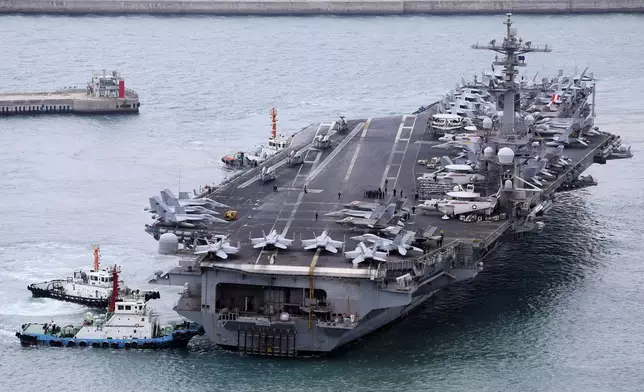
FILE - The USS Carl Vinson aircraft carrier is escorted into a navy port in Busan, South Korea, March 2, 2025. (Son Hyung-ju/Yonhap via AP, File)
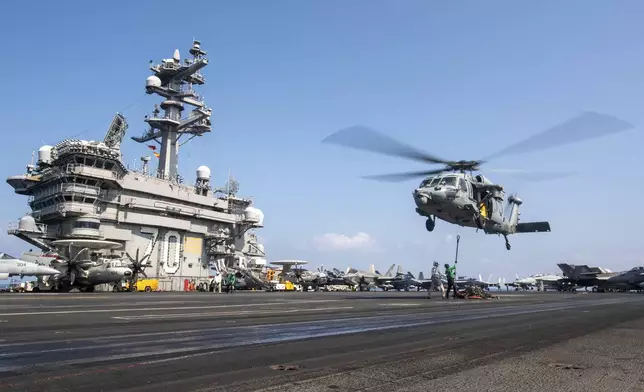
FILE - This photograph released by the U.S. Navy shows a MH-60S Sea Hawk helicopter hovering over the USS Carl Vinson aircraft carrier while operating in the Middle East April 12, 2025. (Petty Officer 3rd Class Nathan Jordan/U.S. Navy via AP, File)

Secretary of Defense Pete Hegseth fields questions on the Pentagon budget from the House Armed Services Committee, at the Capitol in Washington, Thursday, June 12, 2025. (AP Photo/J. Scott Applewhite)
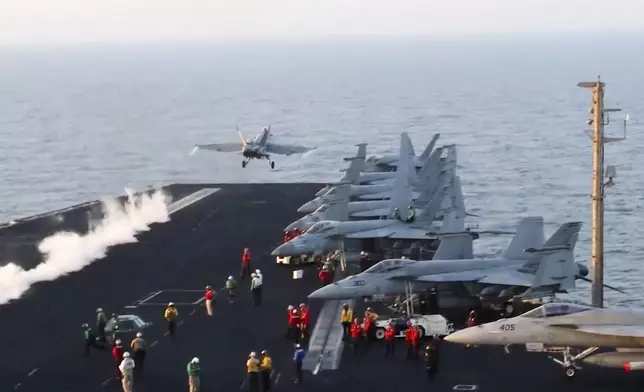
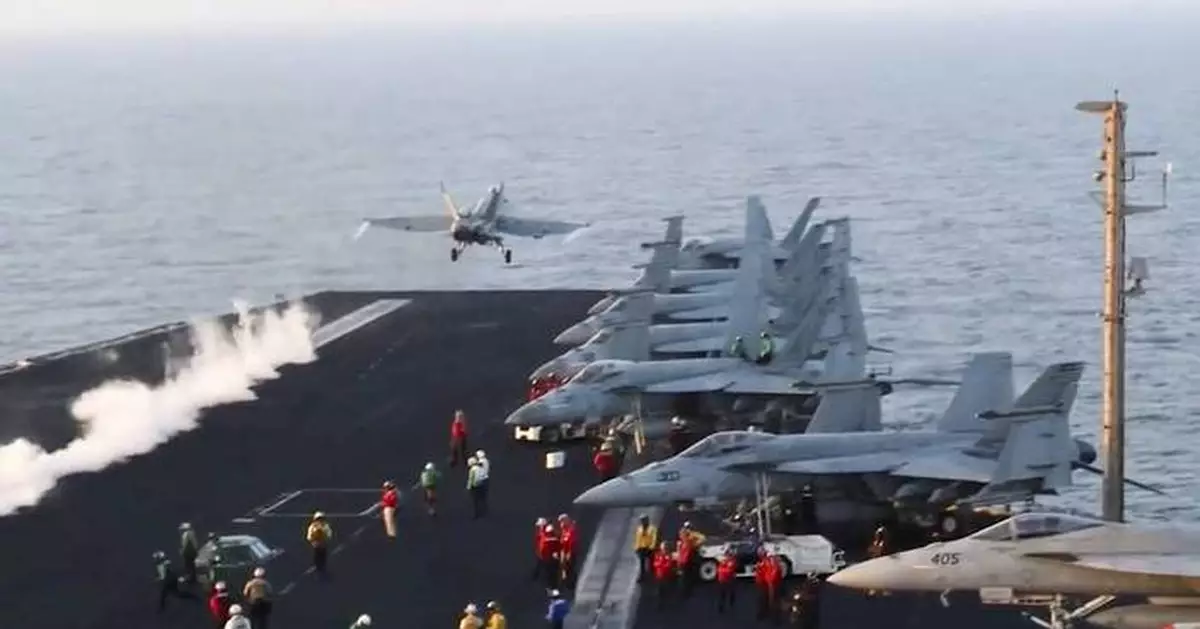
FILE - This image taken from video provided by the U.S. Navy shows an aircraft launching from the USS Harry S. Truman in the Red Sea before airstrikes in Sanaa, Yemen, March 15, 2025. (U.S. Navy via AP, File)
Israel doesn't have the massive munition it would take to destroy the Fordo nuclear fuel enrichment plant, or the aircraft needed to deliver it. Only the U.S. does.
As America's national security leaders discuss the next steps, the Pentagon has moved to ensure that its troops and bases in the region are protected.
Here’s a look at the U.S. military presence in the Middle East:
In a social media post, Trump warned that “we now have complete and total control of the skies over Iran.”
U.S. officials insisted as of Tuesday that the American military has not taken any offensive actions against Iran, only defensive strikes to take out incoming Iranian missiles to protect Israel.
Additional U.S. fighter jets and refueling tankers have been deployed to the region, but officials have declined to provide specific numbers. Fighter jets have joined in launching strikes to defend Israel, but officials said Tuesday that no American aircraft were over Iran.
Aurora Intel, a group that reviews open source information in real time in the Middle East, said the U.S. Air Force had put additional refueling aircraft and fighter jets in strategic locations across Europe, including England, Spain, Germany and Greece. The information was obtained from public aviation tracking websites.
On Tuesday, the U.S. relocated a dozen F-16s from a base in Italy to Prince Sultan, in Saudi Arabia, Aurora Intel said.
U.S. fighter jets have been patrolling the skies around the Middle East to protect personnel and installations, and bases in the region are on heightened alert and are taking additional security precautions, the officials said. The officials spoke on condition of anonymity to discuss military operations.
Defense Secretary Pete Hegseth has not provided any details, but said on Fox News Channel late Monday that the military movements were to “ensure that our people are safe.”
American warships also are shooting down Iranian ballistic missiles targeting Israel, with the USS The Sullivans and the USS Arleigh Burke launching strikes over the weekend.
The Sullivans has been joined in the Eastern Mediterranean this week by the USS Thomas Hudner to continue those defense strikes, while the Arleigh Burke has moved away from the area, according to a U.S. official.
The USS Carl Vinson aircraft carrier is in the Arabian Sea with the four warships in its strike group. They are not participating in the defense of Israel. But they are positioned to provide security for U.S. troops and bases along the Gulf of Oman and the Persian Gulf.
The USS Nimitz has been long scheduled to take over for the Carl Vinson and is heading west from the Indo-Pacific region toward the Middle East. The official said it is slated to arrive by the end of the month, and the two carriers would likely overlap at least for a short time before the Vinson heads home to San Diego.
The USS Gerald R. Ford is sailing for the European theater of command in a week as well. While the deployment was already scheduled and was not in response to the conflict, the presence of the aircraft carrier, with its accompanying warships, will give the president the option of a third carrier group in the region if needed.
There also are destroyers in the Red Sea, and others are based in the Western Mediterranean and participating in exercises in the Baltic Sea.
The forces in the region have been taking precautionary measures for days, including having military dependents voluntarily leave bases, in anticipation of potential strikes and to protect personnel in case of a large-scale response from Tehran.
Officials said they were not aware of many families actually leaving.
Typically around 30,000 troops are based in the Middle East, and about 40,000 troops are in the region now, according to a U.S. official.
That number surged as high as 43,000 last October in response to heightened tensions between Israel and Iran as well as continuous attacks on commercial and military ships in the Red Sea by the Iranian-backed Houthis in Yemen.
The Air Force's B-2 Spirit stealth bomber is the only aircraft that can carry the 30,000-pound GBU-57 Massive Ordnance Penetrator, known as the bunker buster.
The powerful bomb uses its weight and sheer kinetic force to reach deeply buried targets — and then explode.
There are currently no B-2 bombers in the Middle East region, although there are B-52 bombers based at Diego Garcia, and they can deliver smaller munitions.
If tapped for use, the B-2 bombers would have to make the 30-hour round trip from Whiteman Air Force Base in Missouri, refueling multiple times.
AP writer Sam Mednick in Tel Aviv, Israel, and Tara Copp in Washington contributed to this report.
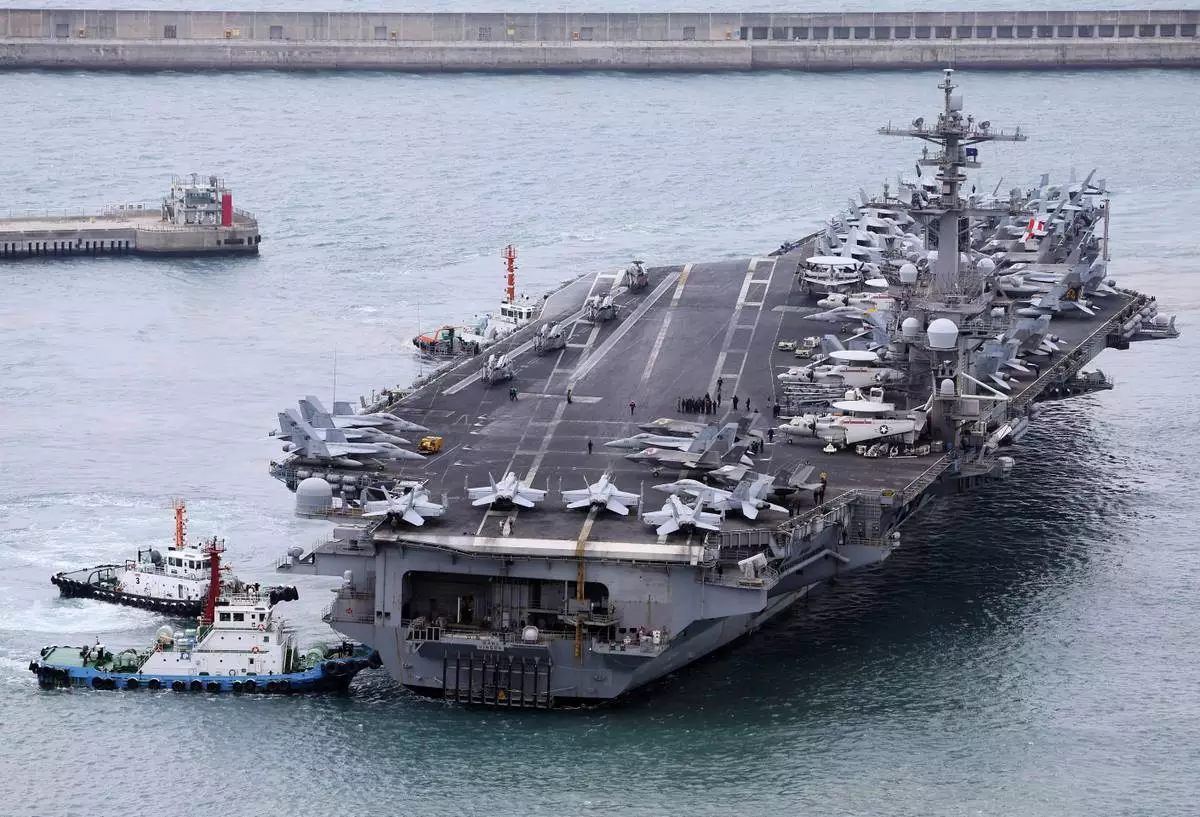
FILE - The USS Carl Vinson aircraft carrier is escorted into a navy port in Busan, South Korea, March 2, 2025. (Son Hyung-ju/Yonhap via AP, File)
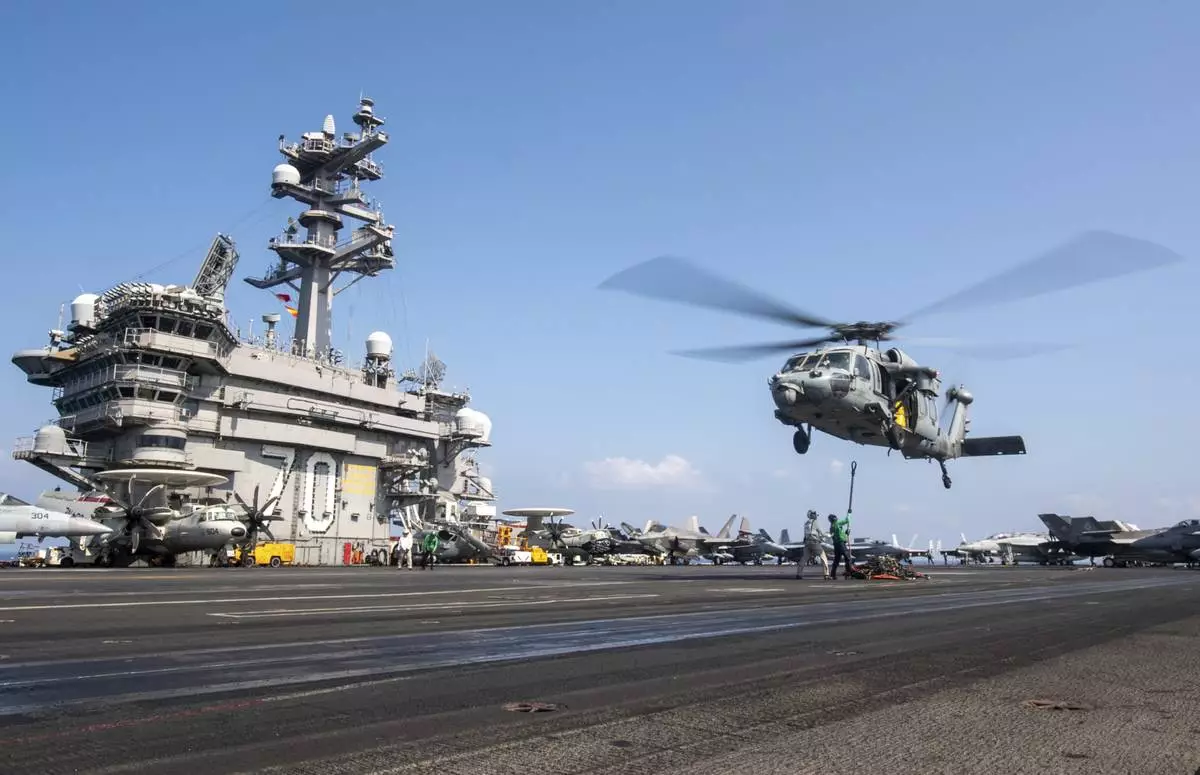
FILE - This photograph released by the U.S. Navy shows a MH-60S Sea Hawk helicopter hovering over the USS Carl Vinson aircraft carrier while operating in the Middle East April 12, 2025. (Petty Officer 3rd Class Nathan Jordan/U.S. Navy via AP, File)

Secretary of Defense Pete Hegseth fields questions on the Pentagon budget from the House Armed Services Committee, at the Capitol in Washington, Thursday, June 12, 2025. (AP Photo/J. Scott Applewhite)
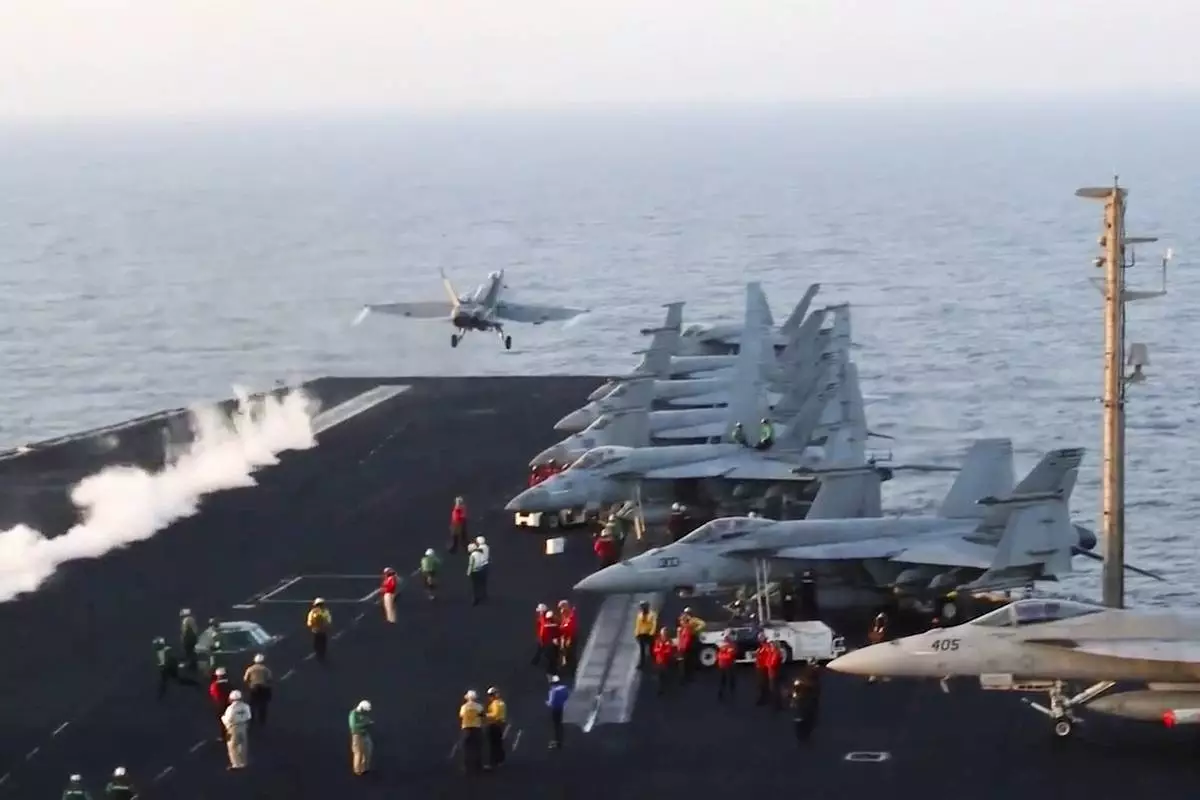
FILE - This image taken from video provided by the U.S. Navy shows an aircraft launching from the USS Harry S. Truman in the Red Sea before airstrikes in Sanaa, Yemen, March 15, 2025. (U.S. Navy via AP, File)