Skip to Content Facebook Feature Image

US resumes visas for foreign students but demands access to social media accounts

News

US resumes visas for foreign students but demands access to social media accounts
News

News

US resumes visas for foreign students but demands access to social media accounts

2025-06-19 11:22 Last Updated At:11:31

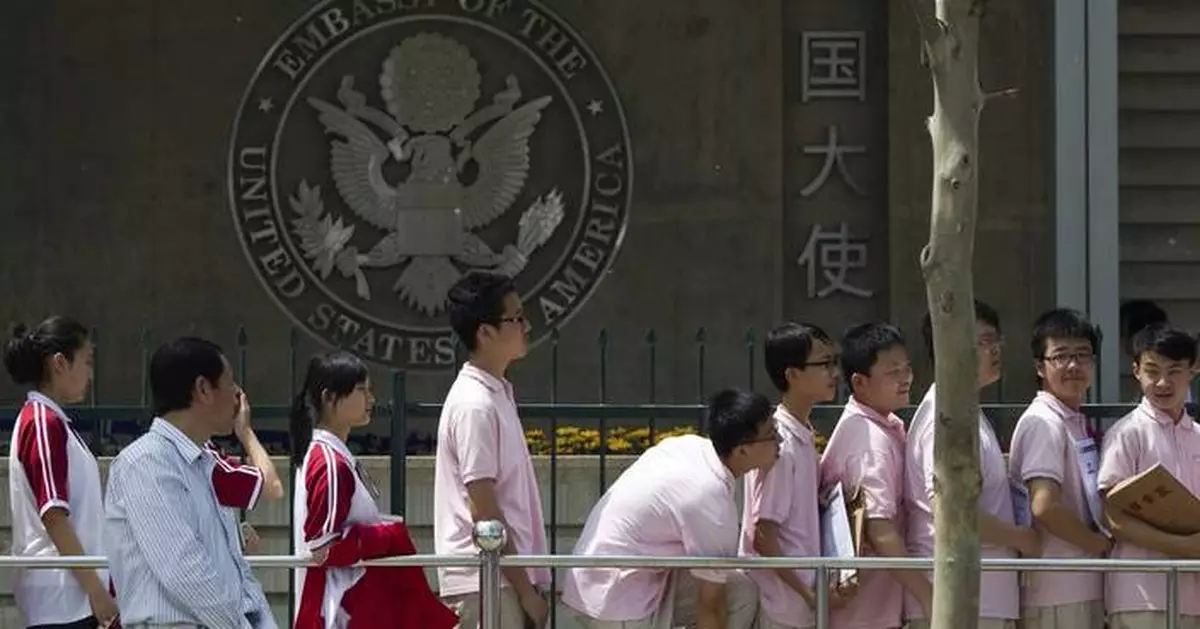
WASHINGTON (AP) — The U.S. State Department said Wednesday it is restarting the suspended process for foreigners applying for student visas but all applicants will now be required to unlock their social media accounts for government review.

The department said consular officers will be on the lookout for posts and messages that could be deemed hostile to the United States, its government, culture, institutions or founding principles.

In a notice made public Wednesday, the department said it had rescinded its May suspension of student visa processing but said new applicants who refuse to set their social media accounts to “public” and allow them to be reviewed may be rejected. It said a refusal to do so could be a sign they are trying to evade the requirement or hide their online activity.

The Trump administration last month temporarily halted the scheduling of new visa interviews for foreign students hoping to study in the U.S. while preparing to expand the screening of their activity on social media, officials said.

Students around the world have been waiting anxiously for U.S. consulates to reopen appointments for visa interviews, as the window left to book their travel and make housing arrangements narrows ahead of the start of the school year.

On Wednesday afternoon, a 27-year-old Ph.D. student in Toronto was able to secure an appointment for a visa interview next week. The student, a Chinese national, hopes to travel to the U.S. for a research internship that would start in late July. “I’m really relieved,” said the student, who spoke on condition of being identified only by his surname, Chen, because he was concerned about being targeted. “I’ve been refreshing the website couple of times every day.”

Students from China, India, Mexico and the Philippines have posted on social media sites that they have been monitoring visa booking websites and closely watching press briefings of the State Department to get any indication of when appointment scheduling might resume.

In reopening the visa process, the State Department also told consulates to prioritize students hoping to enroll at colleges where foreigners make up less than 15% of the student body, a U.S. official familiar with the matter said. The official spoke on condition of anonymity to detail information that has not been made public.

Foreign students make up more than 15% of the total student body at almost 200 U.S. universities, according to an Associated Press analysis of federal education data from 2023. Most are private universities, including all eight Ivy League schools. But that criteria also includes 26 public universities, including the University of Illinois and Pennsylvania State University. Looking only at undergraduate students, foreign students make up more than 15% of the population at about 100 universities, almost all of them private.

International students in the U.S. have been facing increased scrutiny on several fronts. In the spring, the Trump administration revoked permission to study in the U.S. for thousands of students, including some involved only in traffic offenses, before abruptly reversing course. The government also expanded the grounds on which foreign students can have their legal status terminated.

As part of a pressure campaign targeting Harvard University, the Trump administration has moved to block foreign students from attending the Ivy League school, which counts on international students for tuition dollars and a quarter of its enrollment. Trump has said Harvard should cap its foreign enrollment at 15%.

This latest move to vet students' social media, the State Department said Wednesday, "will ensure we are properly screening every single person attempting to visit our country.”

In internal guidance sent to consular officers, the department said they should be looking for “any indications of hostility toward the citizens, culture, government, institutions, or founding principles of the United States.”

Jameel Jaffer, executive director at the Knight First Amendment Institute at Columbia University, said the new policy evokes the ideological vetting of the Cold War, when prominent artists and intellectuals were excluded from the U.S.

“This policy makes a censor of every consular officer, and it will inevitably chill legitimate political speech both inside and outside the United States," Jaffer said.

The Trump administration also has called for 36 countries to commit to improving vetting of travelers or face a ban on their citizens visiting the United States. A weekend diplomatic cable sent by the State Department says the countries have 60 days to address U.S. concerns or risk being added to a travel ban that now includes 12 nations.

AP Education Writer Collin Binkley contributed to this report.
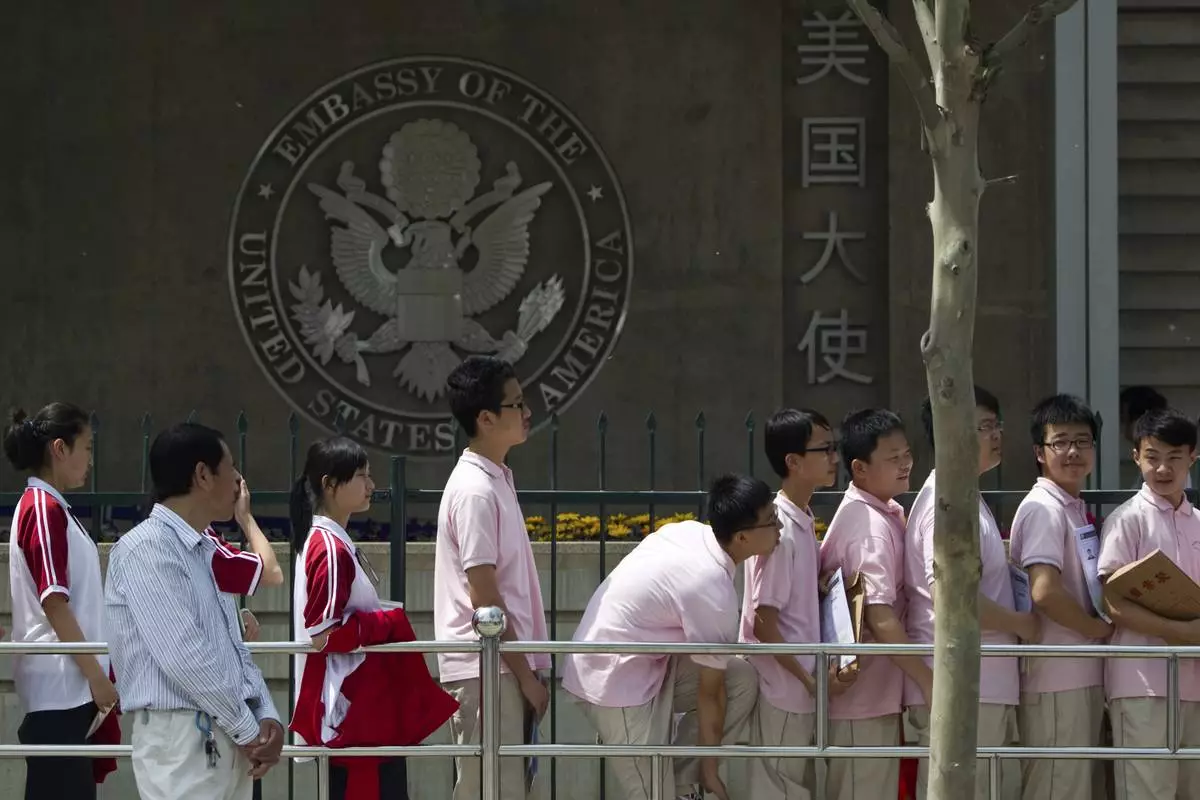
FILE - Chinese students wait outside the U.S. Embassy for their visa application interviews, in Beijing on May 2, 2012. (AP Photo/Alexander F. Yuan, File)
FILE - Chinese students wait outside the U.S. Embassy for their visa application interviews, in Beijing on May 2, 2012. (AP Photo/Alexander F. Yuan, File)
WASHINGTON (AP) — President Donald Trump is meeting with oil executives at the White House on Friday in hopes of securing $100 billion in investments to revive Venezuela’s ability to fully tap into its expansive reserves of petroleum — a plan that rides on their comfort in making commitments in a country plagued by instability, inflation and uncertainty.

Since the U.S. military raid to capture former Venezuelan leader Nicolás Maduro on Saturday, Trump has quickly pivoted to portraying the move as a newfound economic opportunity for the U.S., seizing tankers carrying Venezuelan oil, saying the U.S. is taking over the sales of 30 million to 50 million barrels of previously sanctioned Venezuelan oil and will be controlling sales worldwide indefinitely.

On Friday, U.S. forces seized their fifth tanker over the past month that has been linked to Venezuelan oil. The action reflected the determination of the U.S. to fully control the exporting, refining and production of Venezuelan petroleum, a sign of the Trump administration's plans for ongoing involvement in the sector as it seeks commitments from private companies.

It's all part of a broader push by Trump to keep gasoline prices low. At a time when many Americans are concerned about affordability, the incursion in Venezuela melds Trump’s assertive use of presidential powers with an optical spectacle meant to convince Americans that he can bring down energy prices.

The meeting, set for 2:30 p.m. EST, will be open to the news media, according to an update to the president's daily schedule. “At least 100 Billion Dollars will be invested by BIG OIL, all of whom I will be meeting with today at The White House,” Trump said Friday in a pre-dawn social media post.

Trump is set to meet with executives from 17 oil companies, according to the White House. Among the companies attending are Chevron, which still operates in Venezuela, and ExxonMobil and ConocoPhillips, which both had oil projects in the country that were lost as part of a 2007 nationalization of private businesses under Maduro’s predecessor, Hugo Chávez.

The president is meeting with a wide swath of domestic and international companies with interests ranging from construction to the commodity markets. Other companies slated to be at the meeting include Halliburton, Valero, Marathon, Shell, Singapore-based Trafigura, Italy-based Eni and Spain-based Repsol.

Large U.S. oil companies have so far largely refrained from affirming investments in Venezuela as contracts and guarantees need to be in place. Trump has suggested on social media that America would help to backstop any investments.

Venezuela’s oil production has slumped below one million barrels a day. Part of Trump's challenge to turn that around will be to convince oil companies that his administration has a stable relationship with Venezuela’s interim President Delcy Rodríguez, as well as protections for companies entering the market.

Secretary of State Marco Rubio, Energy Secretary Chris Wright and Interior Secretary Doug Burgum are slated to attend the oil executives meeting, according to the White House.

Meanwhile, the United States and Venezuelan governments said Friday they were exploring the possibility of r estoring diplomatic relations between the two countries, and that a delegation from the Trump administration arrived to the South American nation on Friday.

The small team of U.S. diplomats and diplomatic security officials traveled to Venezuela to make a preliminary assessment about the potential re-opening of the U.S. Embassy in Caracas, the State Department said in a statement.

Trump also announced on Friday he’d meet with President Gustavo Petro in early February, but called on the Colombian leader to make quick progress on stemming flow of cocaine into the U.S.

Trump, following the ouster of Maduro, had made vague threats to take similar action against Petro. Trump abruptly changed his tone Wednesday about his Colombian counterpart after a friendly phone call in which he invited Petro to visit the White House.

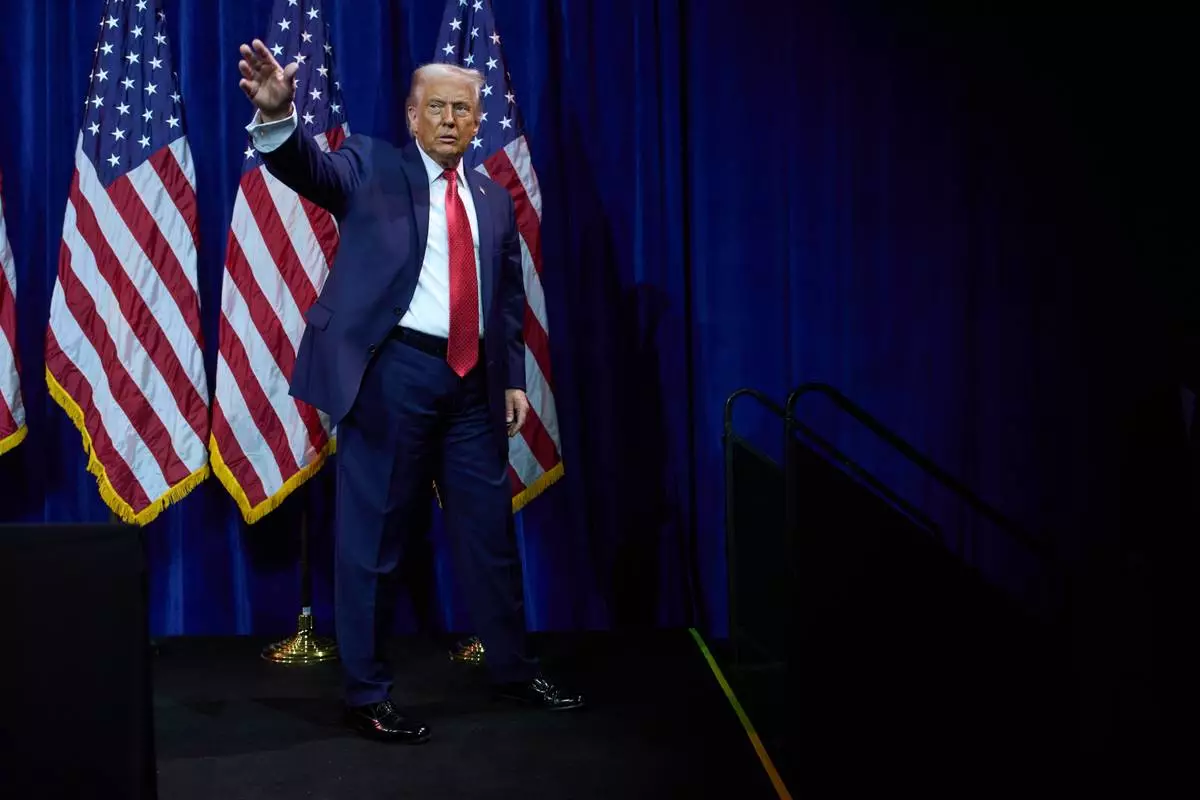
President Donald Trump waves as he walks off stage after speaking to House Republican lawmakers during their annual policy retreat, Tuesday, Jan. 6, 2026, in Washington. (AP Photo/Evan Vucci)

President Donald Trump waves as he walks off stage after speaking to House Republican lawmakers during their annual policy retreat, Tuesday, Jan. 6, 2026, in Washington. (AP Photo/Evan Vucci)

Recommended Articles