WASHINGTON (AP) — Humans are on track to release so much greenhouse gas in less than three years that a key threshold for limiting global warming will be nearly unavoidable, according to a study to be released Thursday.
The report predicts that society will have emitted enough carbon dioxide by early 2028 that crossing an important long-term temperature boundary will be more likely than not. The scientists calculate that by that point there will be enough of the heat-trapping gas in the atmosphere to create a 50-50 chance or greater that the world will be locked in to 1.5 degrees Celsius (2.7 degrees Fahrenheit) of long-term warming since preindustrial times. That level of gas accumulation, which comes from the burning of fuels like gasoline, oil and coal, is sooner than the same group of 60 international scientists calculated in a study last year.
“Things aren’t just getting worse. They’re getting worse faster,” said study co-author Zeke Hausfather of the tech firm Stripe and the climate monitoring group Berkeley Earth. “We’re actively moving in the wrong direction in a critical period of time that we would need to meet our most ambitious climate goals. Some reports, there’s a silver lining. I don’t think there really is one in this one.”
That 1.5 goal, first set in the 2015 Paris agreement, has been a cornerstone of international efforts to curb worsening climate change. Scientists say crossing that limit would mean worse heat waves and droughts, bigger storms and sea-level rise that could imperil small island nations. Over the last 150 years, scientists have established a direct correlation between the release of certain levels of carbon dioxide, along with other greenhouse gases like methane, and specific increases in global temperatures.
In Thursday's Indicators of Global Climate Change report, researchers calculated that society can spew only 143 billion more tons (130 billion metric tons) of carbon dioxide before the 1.5 limit becomes technically inevitable. The world is producing 46 billion tons (42 billion metric tons) a year, so that inevitability should hit around February 2028 because the report is measured from the start of this year, the scientists wrote. The world now stands at about 1.24 degrees Celsius (2.23 degrees Fahrenheit) of long-term warming since preindustrial times, the report said.
The report, which was published in the journal Earth System Science Data, shows that the rate of human-caused warming per decade has increased to nearly half a degree (0.27 degrees Celsius) per decade, Hausfather said. And the imbalance between the heat Earth absorbs from the sun and the amount it radiates out to space, a key climate change signal, is accelerating, the report said.
“It's quite a depressing picture unfortunately, where if you look across the indicators, we find that records are really being broken everywhere,” said lead author Piers Forster, director of the Priestley Centre for Climate Futures at the University of Leeds in England. “I can't conceive of a situation where we can really avoid passing 1.5 degrees of very long-term temperature change.”
The increase in emissions from fossil-fuel burning is the main driver. But reduced particle pollution, which includes soot and smog, is another factor because those particles had a cooling effect that masked even more warming from appearing, scientists said. Changes in clouds also factor in. That all shows up in Earth’s energy imbalance, which is now 25% higher than it was just a decade or so ago, Forster said.
Earth’s energy imbalance “is the most important measure of the amount of heat being trapped in the system,” Hausfather said.
Earth keeps absorbing more and more heat than it releases. “It is very clearly accelerating. It’s worrisome,” he said.
The planet temporarily passed the key 1.5 limit last year. The world hit 1.52 degrees Celsius (2.74 degrees Fahrenheit) of warming since preindustrial times for an entire year in 2024, but the Paris threshold is meant to be measured over a longer period, usually considered 20 years. Still, the globe could reach that long-term threshold in the next few years even if individual years haven't consistently hit that mark, because of how the Earth's carbon cycle works.
That 1.5 is “a clear limit, a political limit for which countries have decided that beyond which the impact of climate change would be unacceptable to their societies,” said study co-author Joeri Rogelj, a climate scientist at Imperial College London.
The mark is so important because once it is crossed, many small island nations could eventually disappear because of sea level rise, and scientific evidence shows that the impacts become particularly extreme beyond that level, especially hurting poor and vulnerable populations, he said. He added that efforts to curb emissions and the impacts of climate change must continue even if the 1.5 degree threshold is exceeded.
Crossing the threshold "means increasingly more frequent and severe climate extremes of the type we are now seeing all too often in the U.S. and around the world — unprecedented heat waves, extreme hot drought, extreme rainfall events, and bigger storms,” said University of Michigan environment school dean Jonathan Overpeck, who wasn't part of the study.
Andrew Dessler, a Texas A&M University climate scientist who wasn't part of the study, said the 1.5 goal was aspirational and not realistic, so people shouldn’t focus on that particular threshold.
“Missing it does not mean the end of the world,” Dessler said in an email, though he agreed that “each tenth of a degree of warming will bring increasingly worse impacts.”
The Associated Press’ climate and environmental coverage receives financial support from multiple private foundations. AP is solely responsible for all content. Find AP’s standards for working with philanthropies, a list of supporters and funded coverage areas at AP.org.
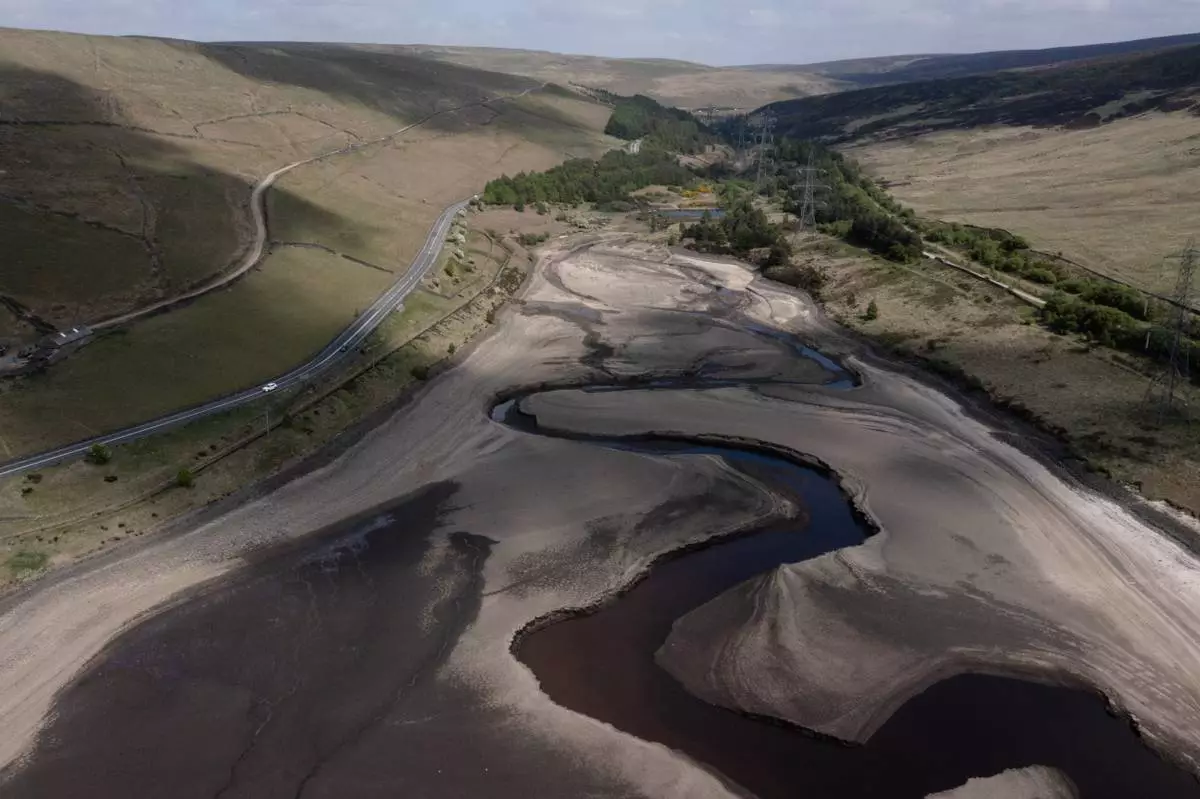
FILE - Low water levels are visible at Woodhead Reservoir in Derbyshire as the area experiences a significant drought, in Woodhead, England, Monday, May 19, 2025. (AP Photo/Jon Super, File)
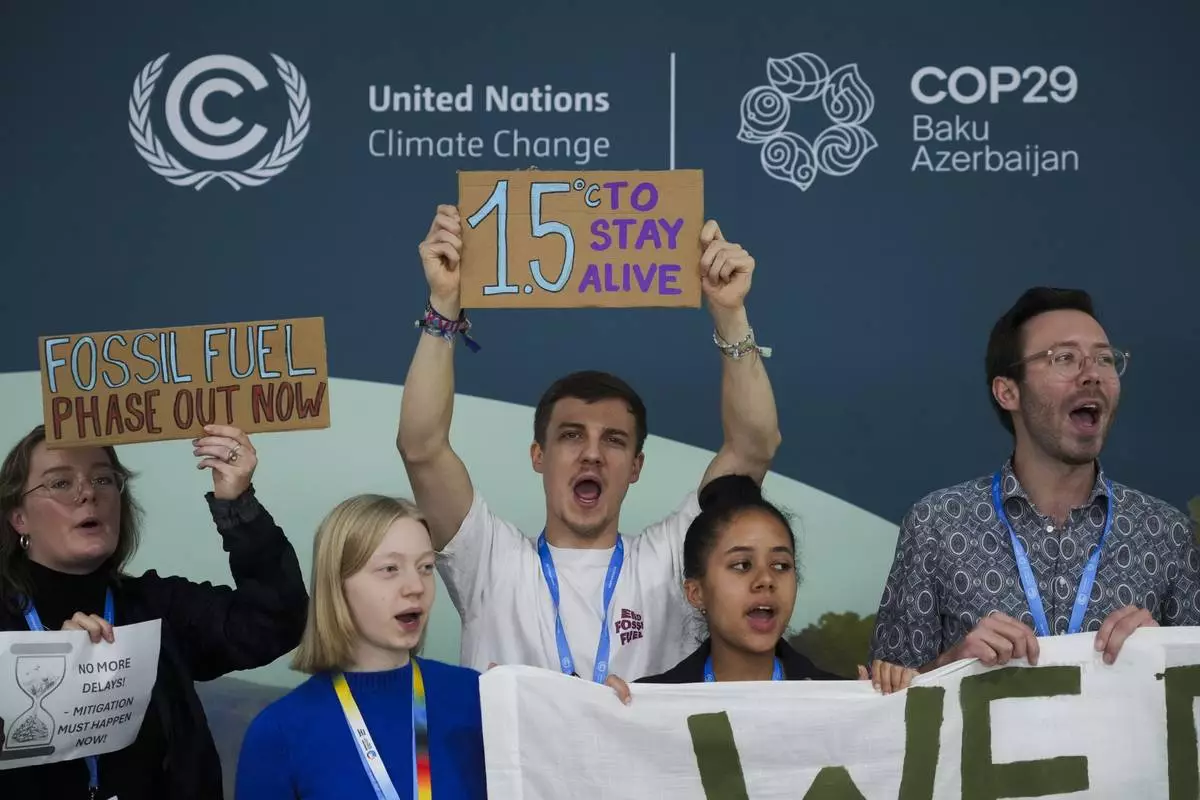
FILE - Activists participate in a demonstration for phasing out fossil fuels at the COP29 U.N. Climate Summit, Nov. 19, 2024, in Baku, Azerbaijan. (AP Photo/Sergei Grits, File)
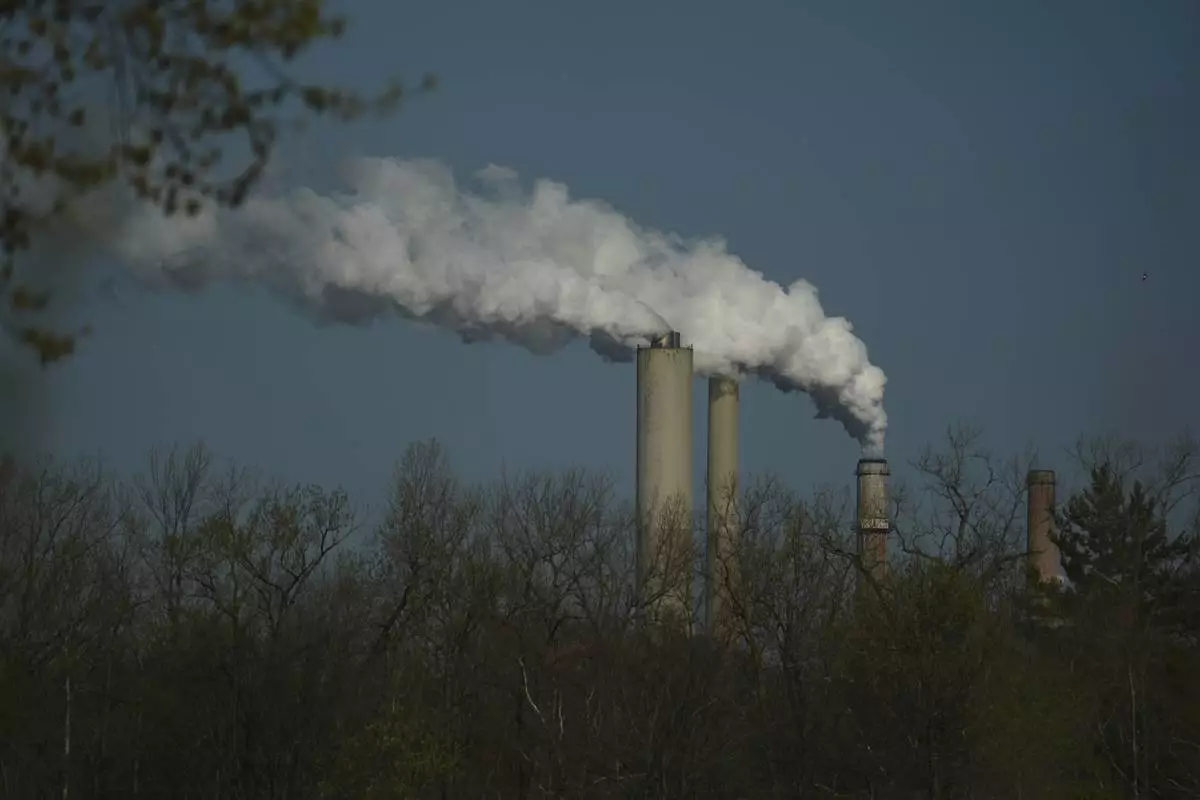
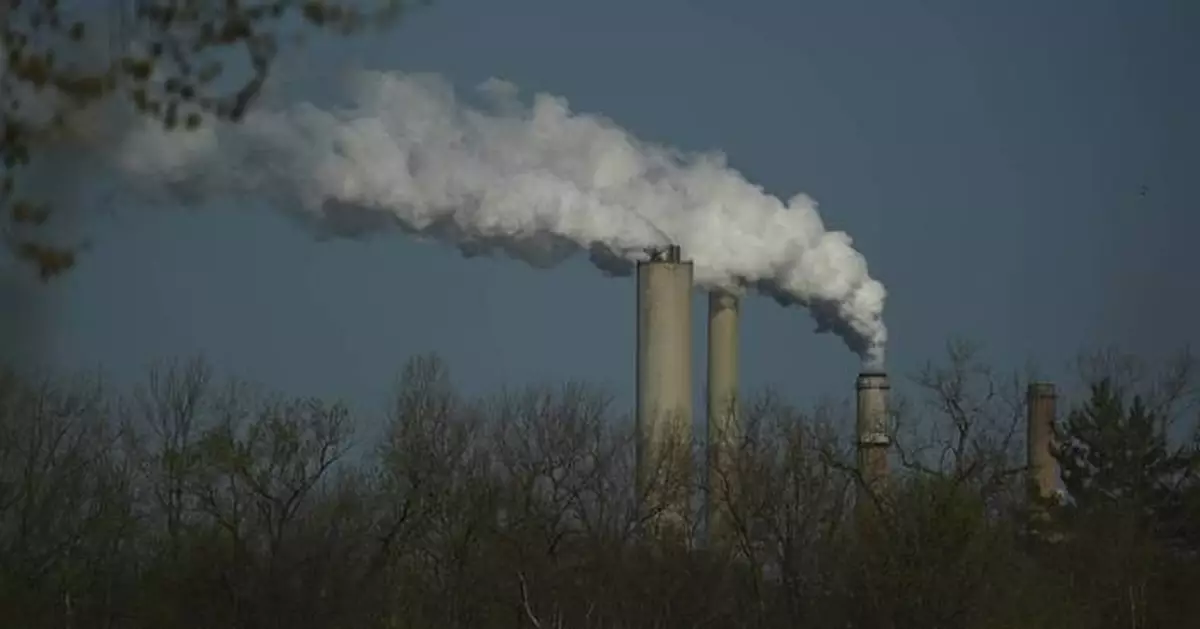
FILE - The Gibson Power Plant operates April 10, 2025, in Princeton, Ind. (AP Photo/Joshua A. Bickel, File)

DUBAI, United Arab Emirates (AP) — Widening protests in Iran sparked by the Islamic Republic's ailing economy are putting new pressure on its theocracy.
Tehran is still reeling from a 12-day war launched by Israel in June that saw the United States bomb nuclear sites in Iran. Economic pressure, which has intensified since September when the United Nations reimposed sanctions on the country over its atomic program, has put Iran's rial currency into a free fall, now trading at some 1.4 million to $1.
Meanwhile, Iran's self-described “Axis of Resistance” — a coalition of countries and militant groups backed by Tehran — has been decimated in the years since the start of the Israel-Hamas war in 2023.
A threat by U.S. President Donald Trump warning Iran that if Tehran “violently kills peaceful protesters” the U.S. “will come to their rescue," has taken on new meaning after American troops captured Venezuelan President Nicolás Maduro, a longtime ally of Tehran. Iran has installed a banner in Tehran warning the United States and Israel that their soldiers could be killed if they take military action there.
Here's what to know about the protests and the challenges facing Iran's government.
Demonstrations have reached over 170 locations in 25 of Iran’s 31 provinces, the U.S.-based Human Rights Activists News Agency reported early Sunday. The death toll had reached at least 15 killed, it added, with more than 580 arrests. The group, which relies on an activist network inside of Iran for its reporting, has been accurate in past unrest.
Understanding the scale of the protests has been difficult. Iranian state media has provided little information about the demonstrations. Online videos offer only brief, shaky glimpses of people in the streets or the sound of gunfire. Journalists in general in Iran also face limits on reporting such as requiring permission to travel around the country, as well as the threat of harassment or arrest by authorities.
But the protests do not appear to be stopping, even after Supreme Leader Ayatollah Ali Khamenei on Saturday said “rioters must be put in their place.”
The collapse of the rial has led to a widening economic crisis in Iran. Prices are up on meat, rice and other staples of the Iranian dinner table. The nation has been struggling with an annual inflation rate of some 40%.
In December, Iran introduced a new pricing tier for its nationally subsidized gasoline, raising the price of some of the world’s cheapest gas and further pressuring the population. Tehran may seek steeper price increases in the future, as the government now will review prices every three months.
The protests began first with merchants in Tehran before spreading. While initially focused on economic issues, the demonstrations soon saw protesters chanting anti-government statements as well. Anger has been simmering over the years, particularly after the 2022 death of 22-year-old Mahsa Amini in police custody that triggered nationwide demonstrations.
Iran's “Axis of Resistance," which grew in prominence in the years after the 2003 U.S.-led invasion and subsequent occupation of Iraq, is reeling.
Israel has crushed Hamas in the devastating war in the Gaza Strip. Hezbollah, the Shiite militant group in Lebanon, has seen its top leadership killed by Israel and has been struggling since. A lightning offensive in December 2024 overthrew Iran’s longtime stalwart ally and client in Syria, President Bashar Assad, after years of war there. Yemen's Iranian-backed Houthi rebels also have been pounded by Israeli and U.S. airstrikes.
Now Venezuelan ally Maduro is in U.S. custody. Iran’s Foreign Ministry has condemned the “illegal U.S. attack against Venezuela." U.S. Defense Secretary Pete Hegseth likened the attack to the U.S. strikes in Iran last year, saying that “Maduro had his chance, just like Iran had their chance.” He added that adversaries of the U.S. should “remain on notice” that “America can project our will anywhere, anytime.”
China meanwhile has remained a major buyer of Iranian crude oil, but hasn't provided overt military support. Neither has Russia, which has relied on Iranian drones in its war on Ukraine.
Iran has insisted for decades that its nuclear program is peaceful. However, its officials have increasingly threatened to pursue a nuclear weapon. Iran had been enriching uranium to near weapons-grade levels prior to the U.S. attack in June, making it the only country in the world without a nuclear weapons program to do so.
Tehran also increasingly cut back its cooperation with the International Atomic Energy Agency, the U.N.'s nuclear watchdog, as tensions increased over its nuclear program in recent years. The IAEA's director-general has warned Iran could build as many as 10 nuclear bombs, should it decide to weaponize its program.
U.S. intelligence agencies have assessed that Iran has yet to begin a weapons program, but has “undertaken activities that better position it to produce a nuclear device, if it chooses to do so.”
Iran recently said it was no longer enriching uranium at any site in the country, trying to signal to the West that it remains open to potential negotiations over its atomic program to ease sanctions. But there's been no significant talks in the months since the June war.
Iran decades ago was one of the United States’ top allies in the Mideast under Shah Mohammad Reza Pahlavi, who purchased American military weapons and allowed CIA technicians to run secret listening posts monitoring the neighboring Soviet Union. The CIA fomented a 1953 coup that cemented the shah’s rule.
But in January 1979, the shah, fatally ill with cancer, fled Iran as mass demonstrations swelled against his rule. Then came the Islamic Revolution led by Ayatollah Ruhollah Khomeini, which created Iran’s theocratic government.
Later that year, university students overran the U.S. Embassy in Tehran, seeking the shah’s extradition and sparking the 444-day hostage crisis that saw diplomatic relations between Iran and the U.S. severed.
During the Iran-Iraq war of the 1980s, the U.S. backed Saddam Hussein. During that conflict, the U.S. launched a one-day assault that crippled Iran at sea as part of the so-called “Tanker War,” and later shot down an Iranian commercial airliner that the U.S. military said it mistook for a warplane.
Iran and the U.S. have seesawed between enmity and grudging diplomacy in the years since, and relations peaked with the 2015 nuclear deal, which saw Iran greatly limit its program in exchange for the lifting of sanctions. But Trump unilaterally withdrew America from the accord in 2018, sparking tensions in the Mideast that intensified after Hamas' Oct. 7, 2023, attack on Israel.
FILE - An Iranian security official in protective clothing walks through part of the Uranium Conversion Facility just outside the Iranian city of Isfahan, on March 30, 2005. (AP Photo/Vahid Salemi, File)
FILE - A customer shops at a supermarket at a shopping mall in northern Tehran, on Sept. 28, 2025. (AP Photo/Vahid Salemi, File)
FILE - Current and pre-revolution Iranian banknotes are displayed by a street money exchanger at Ferdowsi square, Tehran's go-to venue for foreign currency exchange, in downtown Tehran, Iran, on Aug. 28, 2025. (AP Photo/Vahid Salemi, File)
FILE - People cross the Enqelab-e-Eslami (Islamic Revolution) street in Tehran, Iran, on Sept. 27, 2025. (AP Photo/Vahid Salemi, File)
FILE - Protesters march on a bridge in Tehran, Iran, on Dec. 29, 2025. (Fars News Agency via AP, File)
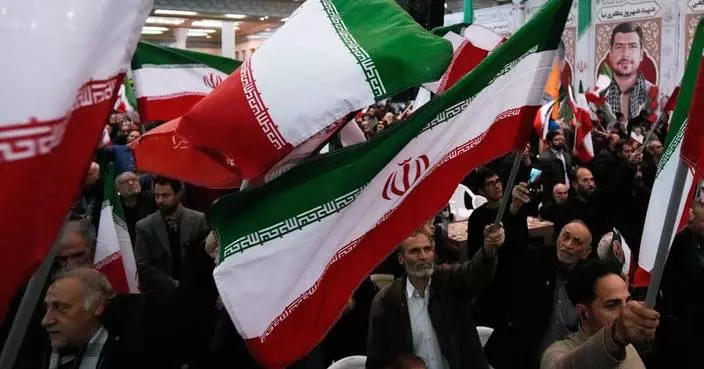
People wave national flags during a ceremony commemorating the death anniversary of the late commander of the Iran's Revolutionary Guard expeditionary Quds Force, Gen. Qassem Soleimani, who was killed in a U.S. drone attack in 2020 in Iraq, at the Imam Khomeini grand mosque in Tehran, Iran, Thursday, Jan. 1, 2026. (AP Photo/Vahid Salemi)