LONDON--(BUSINESS WIRE)--Jun 19, 2025--
New analysis from Omdia’s quarterly small medium display market tracker reveals shipment will decline by 10% quarter-on-quarter (QoQ) and 6% year-on-year in 2Q25. This downturn is due to business and inventory adjustments among small medium display application device makers, particularly smartwatch and smartphone makers. Tariff risks previously prompted these manufacturers to aggressively build up panel inventories in 4Q24 through 1Q25. However, as tariffs concerns eased in 2Q25, device makers have become more cautious with their purchasing plan, leading to reduced panel shipments.
This press release features multimedia. View the full release here: https://www.businesswire.com/news/home/20250618242100/en/
According to Omdia’s Small Medium Display Market Tracker, small medium display shipments (all displays for under 9-inches) reached 1,048 million units in 1Q25. Of these shipments, AMOLED panels (Active Matrix OLED) accounted for 612 million units, representing 58% market share. Small medium AMOLED panels were primarily shipped for smartphone and smartwatch applications, with smaller volumes going to automotive and game applications. Strong shipments in 1Q25 were driven by inventory build-up efforts and tariff risk management by small medium display applications brands and OEMs, as well as high-capacity utilization among AMOLED panel makers. While smartphones remained exempt from reciprocal tariffs in 1Q25, smartphones made in China faced a 20% tariff when imported to the US. Given that 80% of Apple’s iPhones were assembled in China and 34% of iPhones were shipped to the US, panel inventory preparation of potential tariffs was particularly prominent. Additionally, China’s special consumer electronics subsidy stimulated robust domestic smartphone purchases during the same period.
However, small medium display shipments are expected to decline to 942 million units in 2Q25 due to ongoing inventory adjustments. AMOLED shipments will account for 551 million units maintaining a 58% market share. Mobile phone displays including OEM cell and smart watch display will experience the sharpest declines dropping 14% and 18% QoQ respectively. In contrast, amusement displays will grow significantly by over 100% QoQ due to the launch of new mobile game consoles.
“The small medium display market is traditionally seasonal with the strongest growth typically occurring in the second half of the year. However, the 10% QoQ decline in 2Q25 clearly demonstrates the unique impact of tariff risks and inventory adjustments,” said David Hsieh, Senior Director for Display research in Omdia. “Meanwhile, AMOLED panels have maintained a stable share of 58% of total small medium display shipments, putting increased pressure on , particularly LTPS TFT LCD fab, to sustain their business over the long term. By contrast, shipments of a-Si TFT LCD panels for entry level mobile phones have been stable, encouraging more China LCD makers to produce small medium a-Si TFT LCD panels in their Gen8.5 and Gen8.6 LCD Fabs.” We anticipate a return to growth in 3Q25 due to the continued diversification of the small medium display market beyond smartphones into a wider variety of device and applications.”
ABOUT OMDIA
Omdia, part of Informa TechTarget, Inc. (Nasdaq: TTGT), is a technology research and advisory group. Our deep knowledge of tech markets combined with our actionable insights empower organizations to make smart growth decisions.

Small medium display shipment (million units) and quarterly growth (percentage)
KOTZEBUE, Alaska (AP) — The low autumn light turned the tundra gold as James Schaeffer, 7, and his cousin Charles Gallahorn, 10, raced down a dirt path by the cemetery on the edge of town. Permafrost thaw had buckled the ground, tilting wooden cross grave markers sideways. The boys took turns smashing slabs of ice that had formed in puddles across the warped road.
Their great-grandfather, Roswell Schaeffer, 78, trailed behind. What was a playground to the kids was, for Schaeffer – an Inupiaq elder and prolific hunter – a reminder of what warming temperatures had undone: the stable ice he once hunted seals on, the permafrost cellars that kept food frozen all summer, the salmon runs and caribou migrations that once defined the seasons.
Now another pressure loomed. A 211-mile mining road that would cut through caribou and salmon habitat was approved by the Trump administration this fall, though the project still faces lawsuits and opposition from environmental and native groups. Schaeffer and other critics worry it could open the region to outside hunters and further devastate already declining herds. “If we lose our caribou – both from climate change and overhunting – we’ll never be the same,” he said. “We’re going to lose our culture totally.”
Still, Schaeffer insists on taking the next generation out on the land, even when the animals don’t come. It was late September and he and James would normally have been at their camp hunting caribou. But the herd has been migrating later each year and still hadn’t arrived – a pattern scientists link to climate change, mostly caused by the burning of oil, gas and coal. So instead of caribou, they scanned the tundra for swans, ptarmigan and ducks.
Caribou antlers are stacked outside Schaeffer's home. Traditional seal hooks and whale harpoons hang in his hunting shed. Inside, a photograph of him with a hunted beluga is mounted on the wall beside the head of a dall sheep and a traditional mask his daughter Aakatchaq made from caribou hide and lynx fur.
He got his first caribou at 14 and began taking his own children out at 7. James made his first caribou kill this past spring with a .22 rifle. He teaches James what his father taught him: that power comes from giving food and a hunter’s responsibility is to feed the elders.
“When you’re raised an Inupiaq, your whole being is to make sure the elders have food,” he said.
But even as he passes down those lessons, Schaeffer worries there won’t be enough to sustain the next generation – or to sustain him. “The reason I’ve been a successful hunter is the firm belief that, when I become old, people will feed me,” he said. “My great-grandson and my grandson are my future for food.”
These days, they’re eating less hunted food and relying more on farmed chicken and processed goods from the store. The caribou are fewer, the salmon scarcer, the storms more severe. Record rainfall battered Northwest Alaska this year, flooding Schaeffer’s backyard twice this fall alone. He worries about the toll on wildlife and whether his grandchildren will be able to live in Kotzebue as the changes accelerate.
“It’s kind of scary to think about what’s going to happen,” he said.
That afternoon, James ducked into the bed of Schaeffer’s truck and aimed into the water. He shot two ducks. Schaeffer helped him into waders – waterproof overalls – so they could collect them and bring them home for dinner, but the tide was too high. They had to turn back without collecting the ducks.
The changes weigh on others, too. Schaeffer’s friend, writer and commercial fisherman Seth Kantner grew up along the Kobuk River, where caribou once reliably crossed by the hundreds of thousands.
“I can hardly stand how lonely it feels without all the caribou that used to be here,” he said. “This road is the largest threat. But right beside it is climate change.”
Follow Annika Hammerschlag on Instagram @ahammergram.
The Associated Press receives support from the Walton Family Foundation for coverage of water and environmental policy. The AP is solely responsible for all content. For all of AP’s environmental coverage, visit https://apnews.com/hub/climate-and-environment
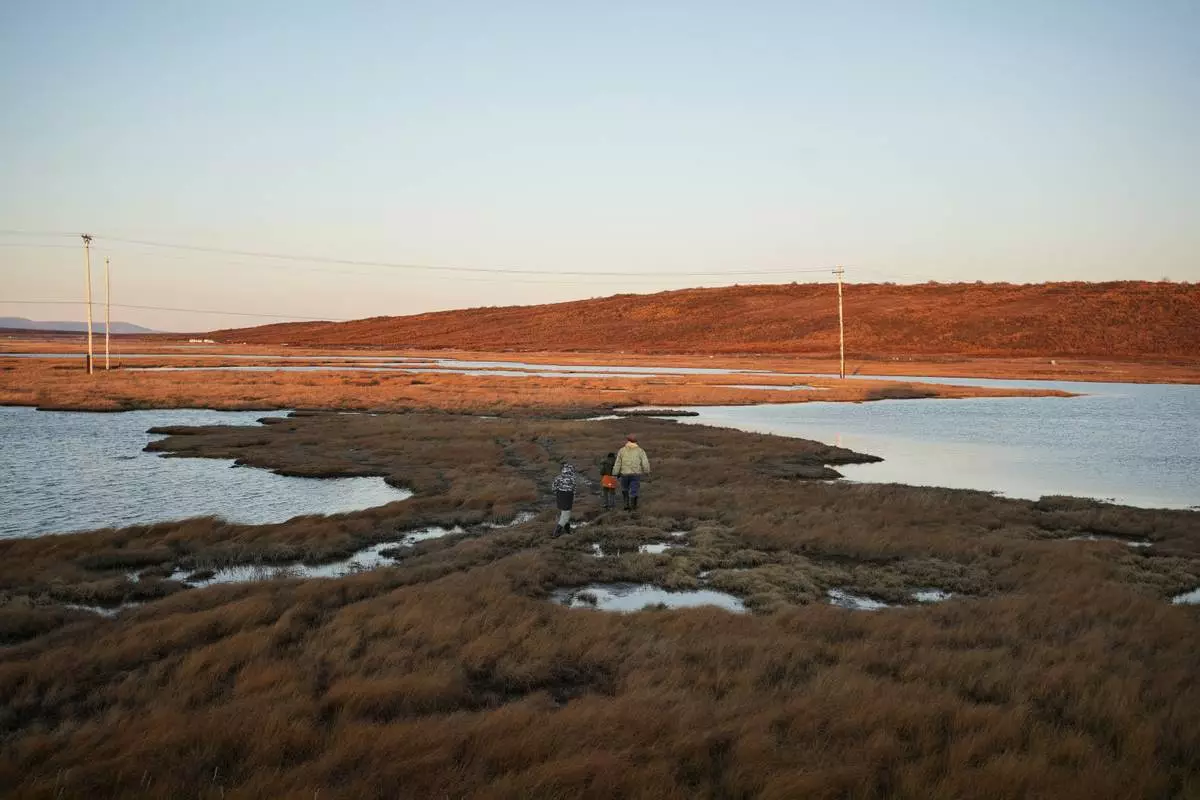
Roswell Schaeffer, an Inupiaq hunter and fisher, takes his great-grandson James Schaeffer, 7, and James' cousin Charles Gallahorn, 10, hunting in Kotzebue, Alaska, Friday, Sept. 26, 2025. (AP Photo/Annika Hammerschlag)
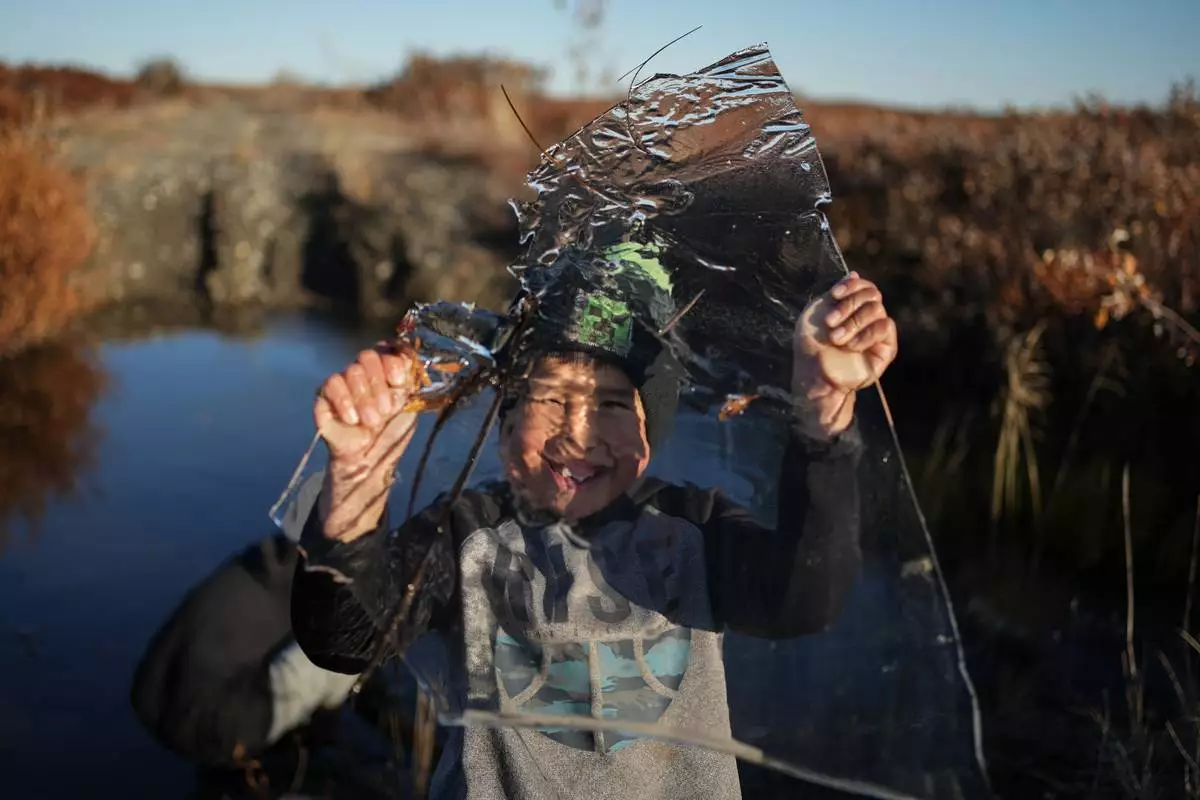
James Schaeffer, 7, plays with a slab of ice taken from a pond that formed on a warped road caused by thawing permafrost in Kotzebue, Alaska, Friday, Sept. 26, 2025. (AP Photo/Annika Hammerschlag)
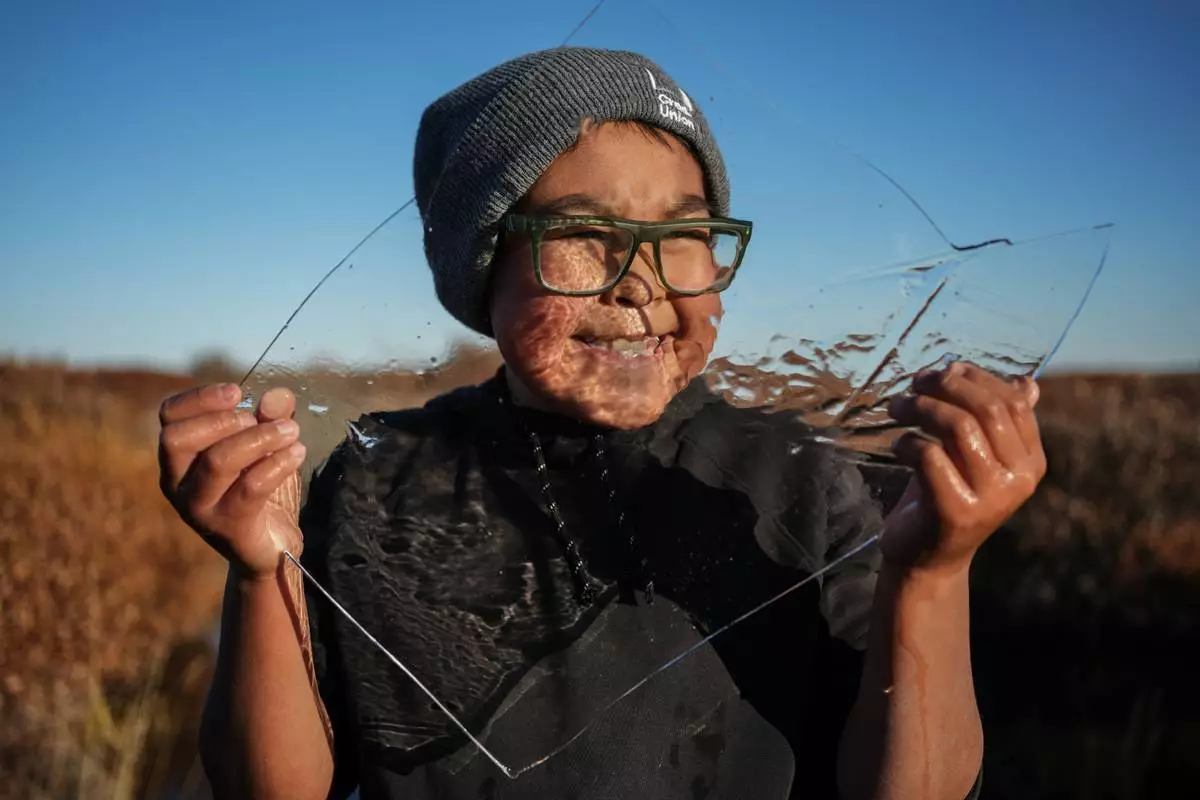
Charles Gallahorn, 10, plays with a slab of ice taken from a pond that formed on a warped road caused by thawing permafrost in Kotzebue, Alaska, Friday, Sept. 26, 2025. (AP Photo/Annika Hammerschlag)
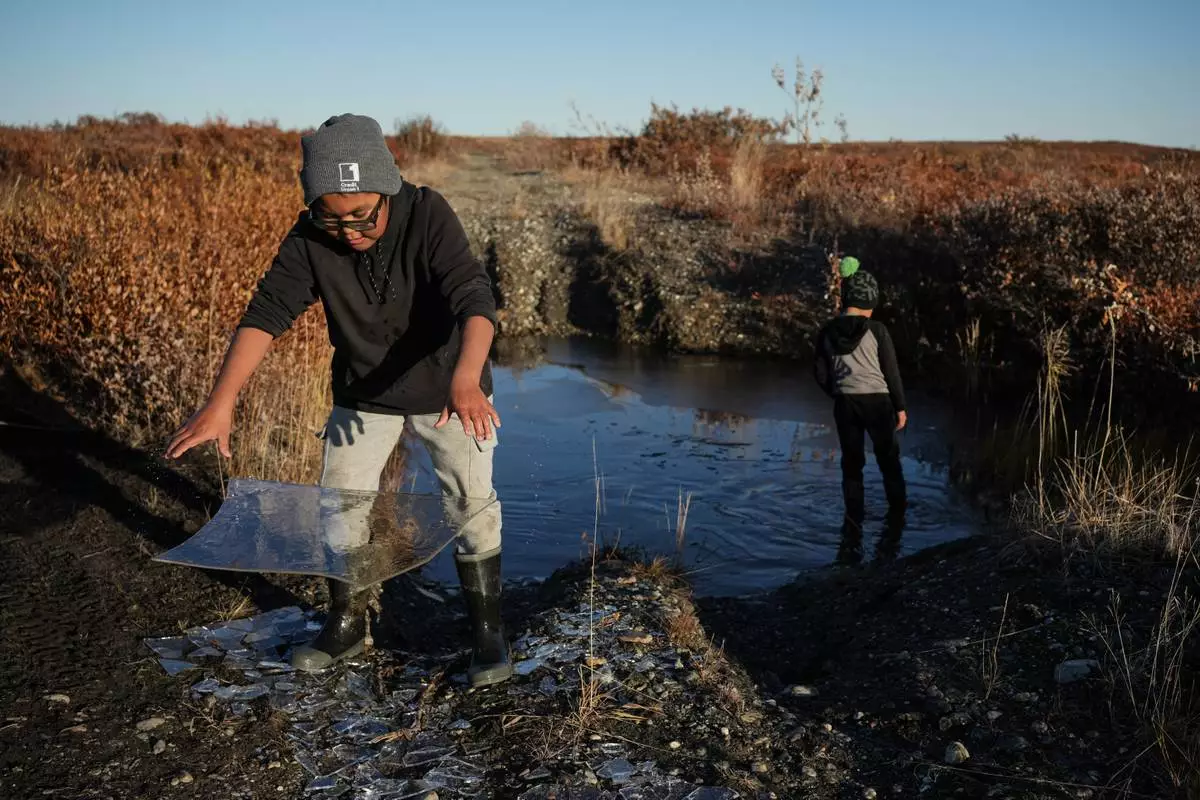
Charles Gallahorn, 10, plays with a slab of ice taken from a pond that formed on a warped road caused by thawing permafrost in Kotzebue, Alaska, Friday, Sept. 26, 2025. (AP Photo/Annika Hammerschlag)
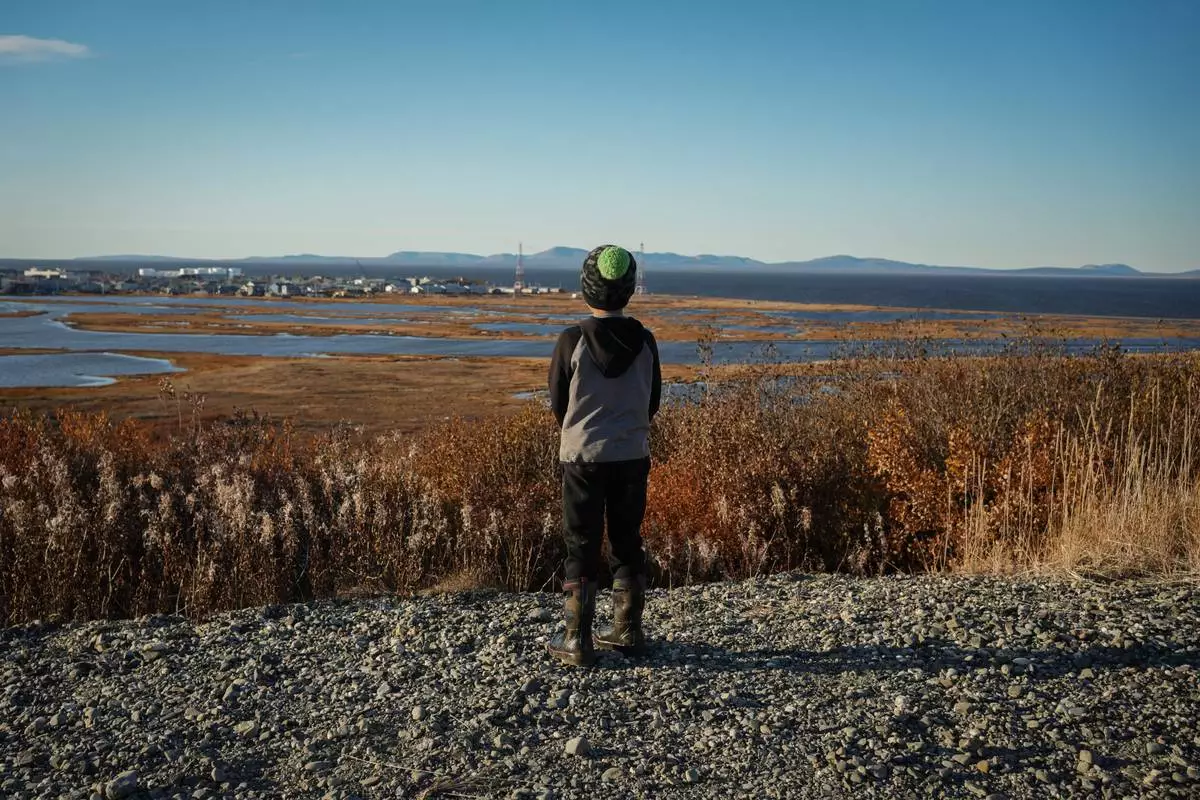
James Schaeffer, 7, looks out at a view of Kotzebue, Alaska, Friday, Sept. 26, 2025. (AP Photo/Annika Hammerschlag)
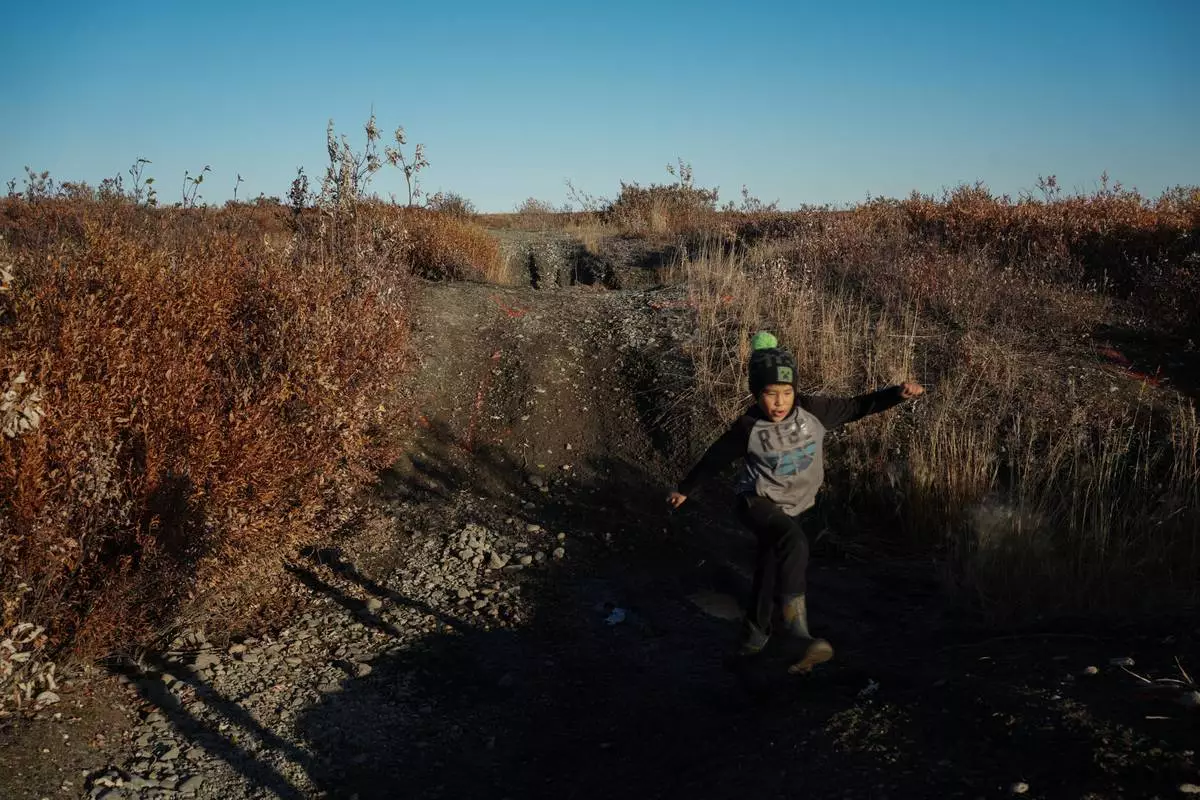
James Schaeffer, 7, plays on a road where thawing permafrost has caused the ground to warp in Kotzebue, Alaska, Friday, Sept. 26, 2025. (AP Photo/Annika Hammerschlag)
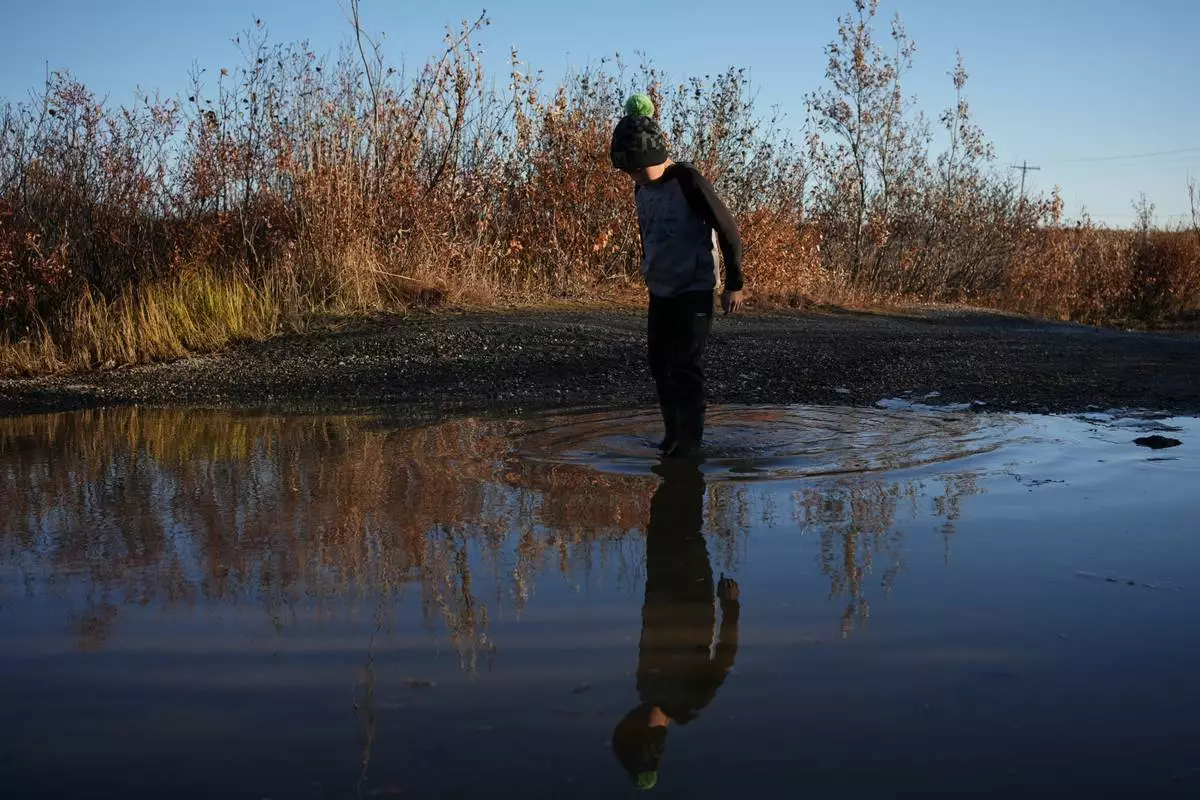
James Schaeffer, 7, plays on a road where thawing permafrost has caused the ground to warp in Kotzebue, Alaska, Friday, Sept. 26, 2025. (AP Photo/Annika Hammerschlag)
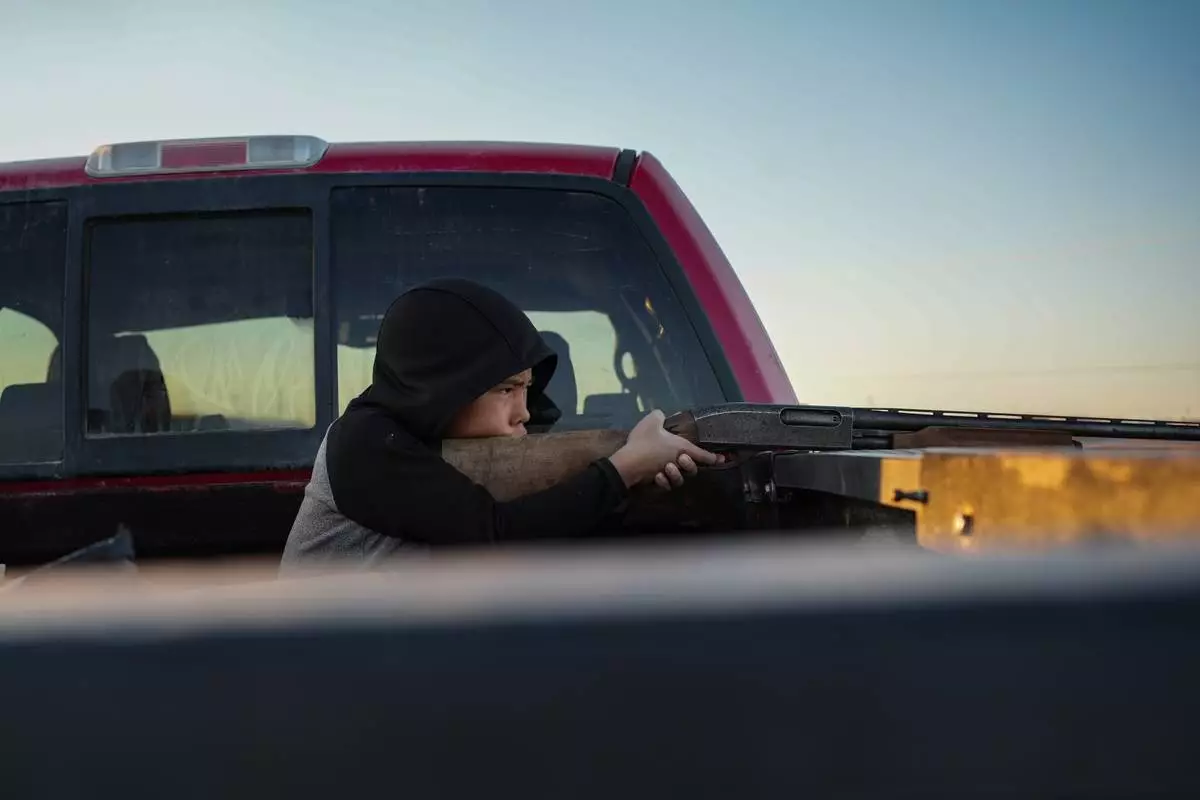
James Schaeffer, 7, hunts in Kotzebue, Alaska, Friday, Sept. 26, 2025. (AP Photo/Annika Hammerschlag)
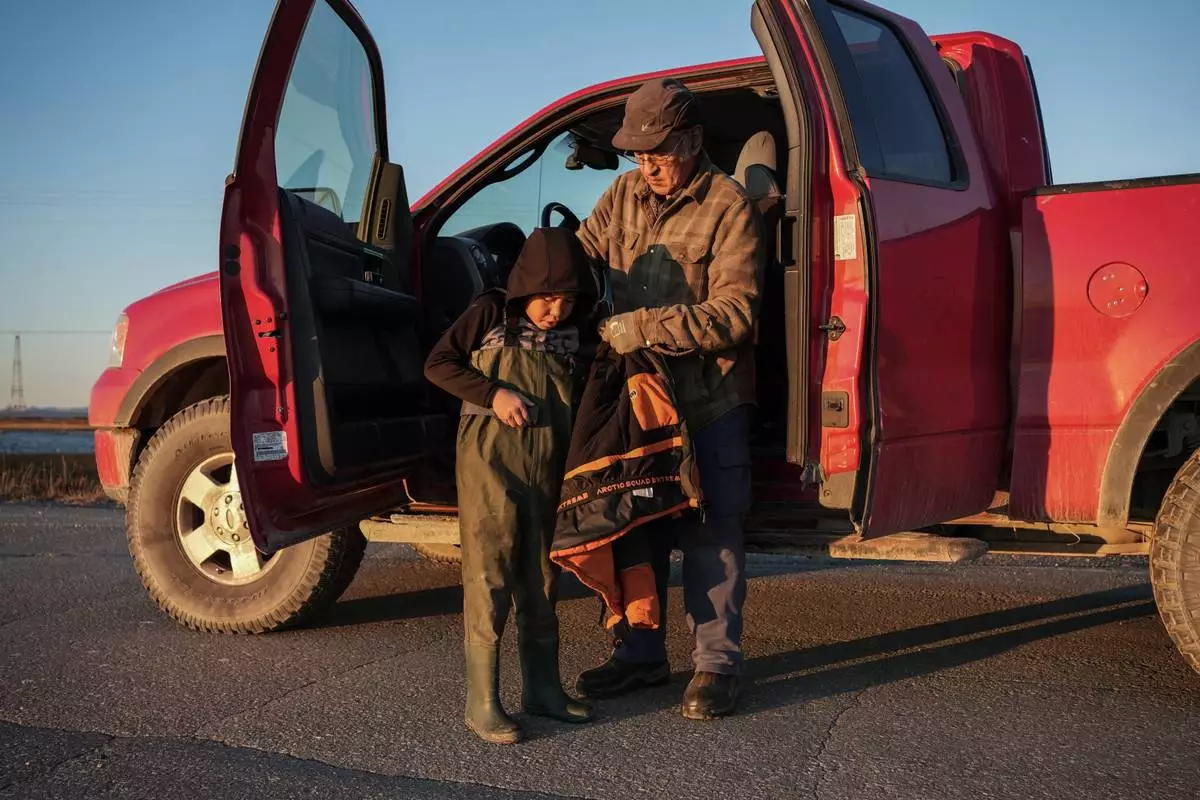
Roswell Schaeffer, an Inupiaq hunter and fisher, helps his great-grandson James Schaeffer, 7, into waders while hunting Friday, Sept. 26, 2025. (AP Photo/Annika Hammerschlag)
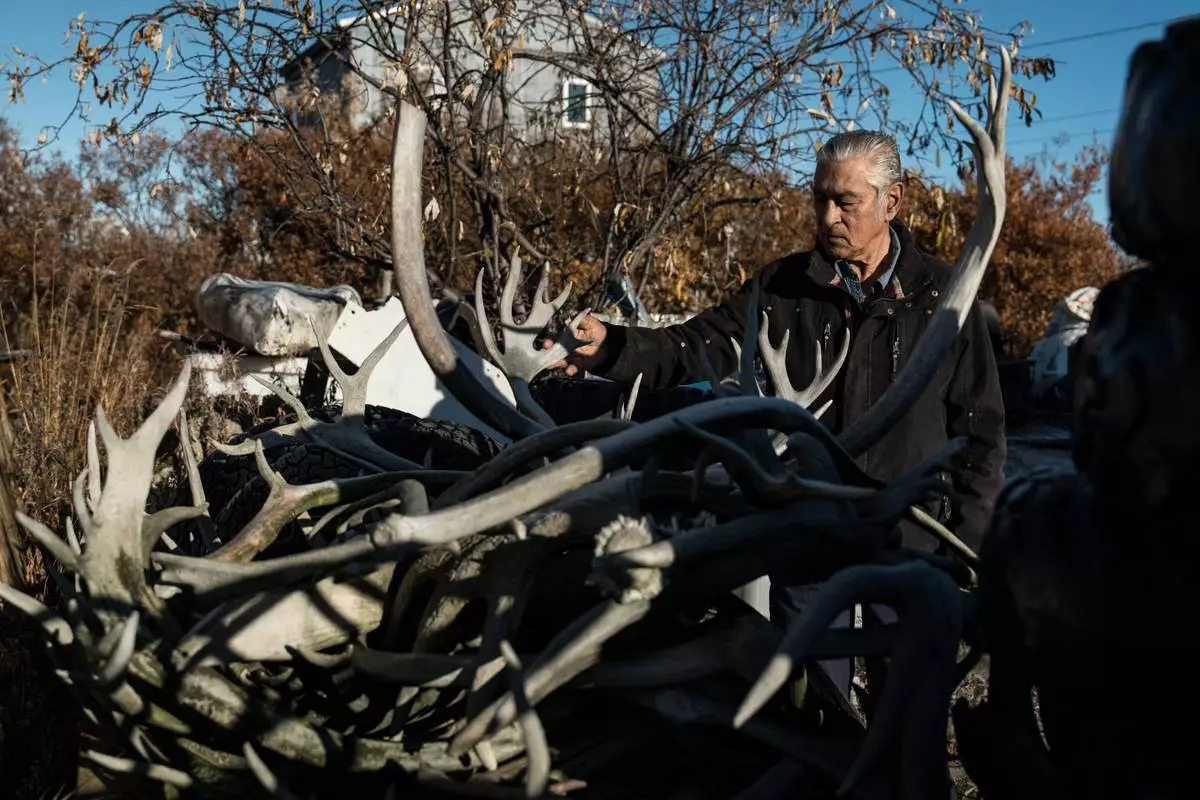
Roswell Schaeffer, an Inupiaq hunter and fisher, looks over caribou antlers from past hunts at his home in Kotzebue, Alaska, Friday, Sept. 26, 2025. (AP Photo/Annika Hammerschlag)
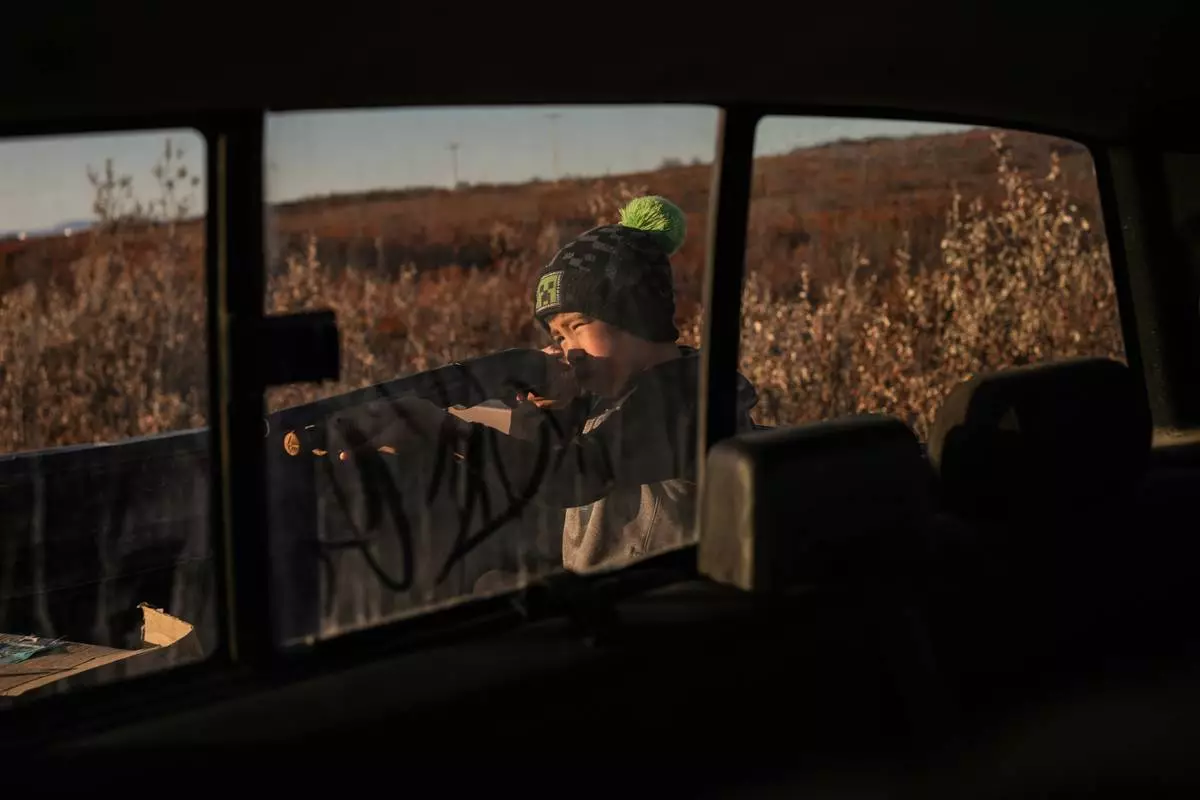
James Schaeffer, 7, hunts in Kotzebue, Alaska, Friday, Sept. 26, 2025. (AP Photo/Annika Hammerschlag)
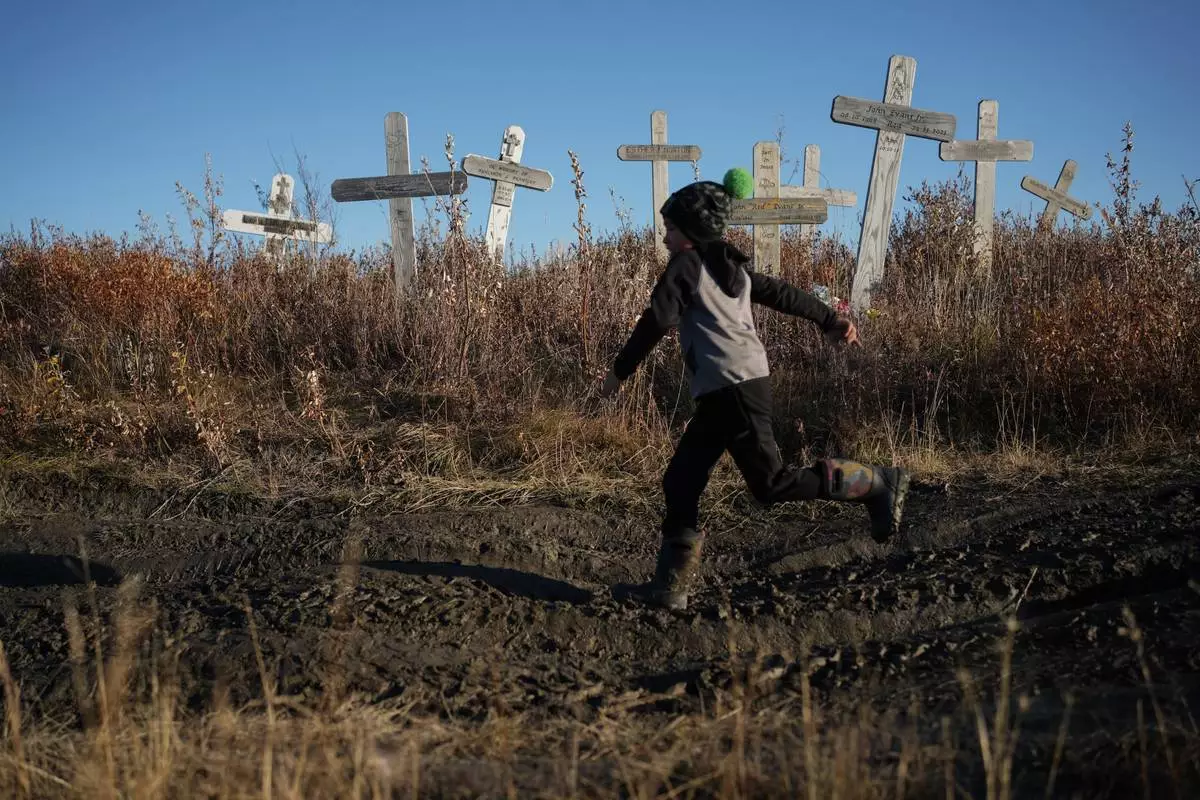
James Schaeffer, 7, runs through a cemetery where thawing permafrost has caused grave markers to tilt and the ground to warp in Kotzebue, Alaska, Friday, Sept. 26, 2025. (AP Photo/Annika Hammerschlag)
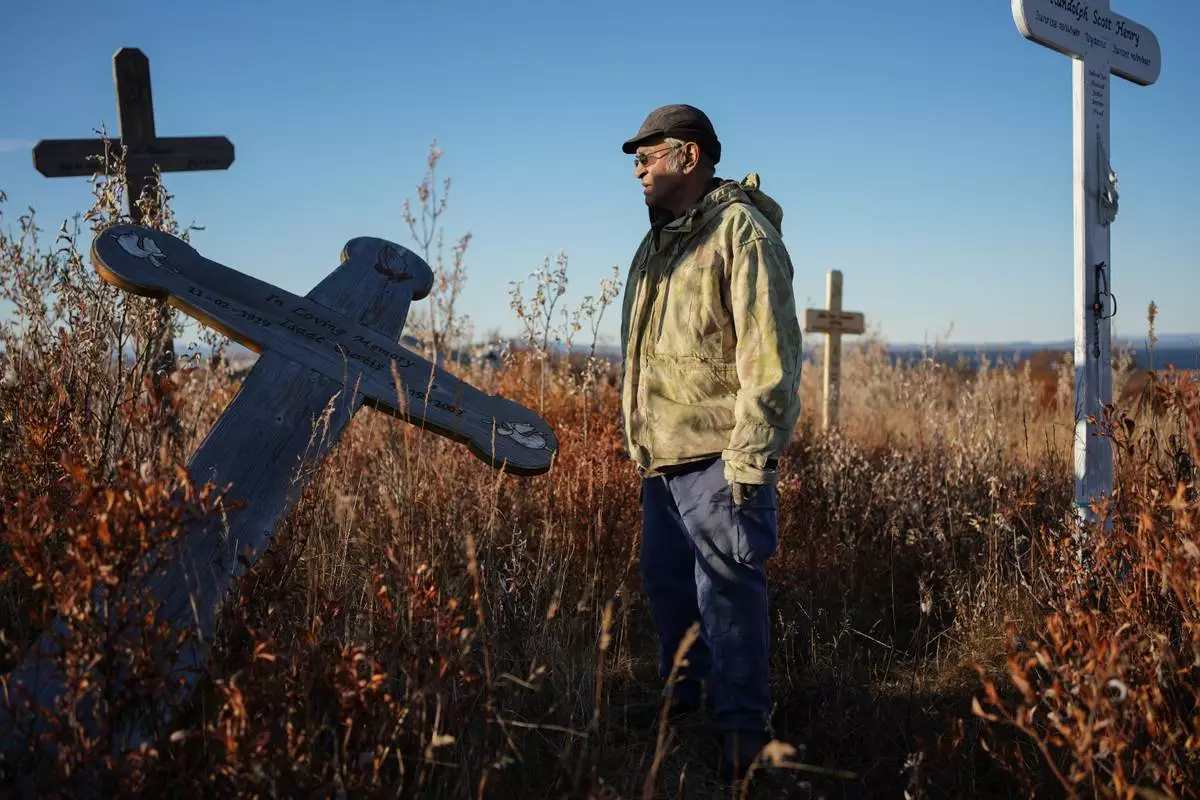
Roswell Schaeffer, an Inupiaq hunter and fisher, visits the cemetery where thawing permafrost has caused grave markers to tilt in Kotzebue, Alaska, Friday, Sept. 26, 2025. (AP Photo/Annika Hammerschlag)
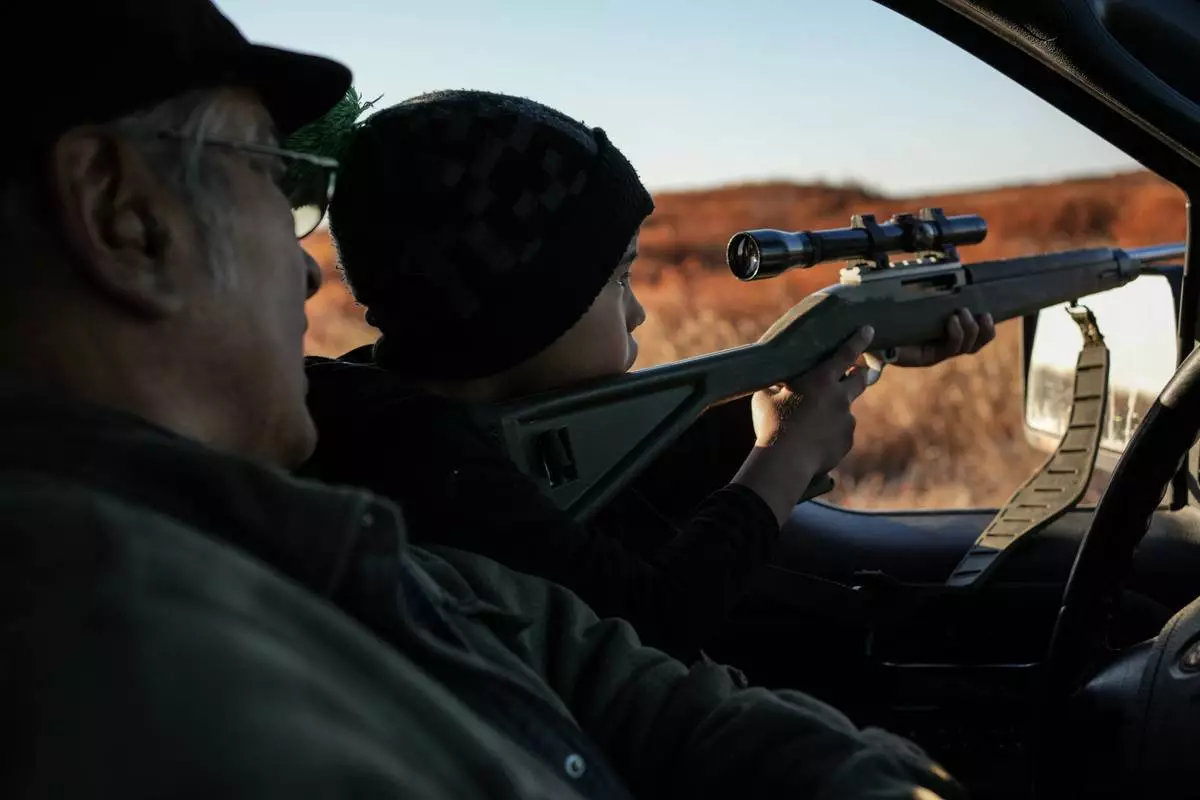
Roswell Schaeffer, an Inupiaq hunter and fisher, helps his great-grandson James Schaeffer, 7, scope ducks while hunting in Kotzebue, Alaska, Friday, Sept. 26, 2025. (AP Photo/Annika Hammerschlag)