KAILUA-KONA, Hawaii--(BUSINESS WIRE)--Jun 19, 2025--
A new conversation in sun care is emerging — one that goes beyond the surface and into the science of supporting skin from within with microalgae. Nutrex Hawaii, a wholly owned subsidiary of Cyanotech Corporation and producer of BioAstin Hawaiian Astaxanthin, is leading that evolution with more than 40 years of natural microalgae cultivation, research, and innovation on Hawaii’s Kona Coast.
This press release features multimedia. View the full release here: https://www.businesswire.com/news/home/20250618933084/en/
“For years, public health guidance has focused on external protection — sunscreen, shade, hats, protective clothing, and sunglasses. That’s smart and we agree. Everyone on our Hawaiian farm follows these practices,” said Collette Kakuk, Chief Strategic Officer at Nutrex Hawaii. “But science has evolved — and so has our understanding of skin support from within.”
The Science Behind the Shield.
BioAstin Hawaiian Astaxanthin is one of nature’s most powerful antioxidants and works in two ways to help protect skin under the sun:
With only 6–12mg daily (one small softgel), BioAstin® Hawaiian Astaxanthin® builds resilience and provides antioxidant support from within ☨ after about 3 to 4 weeks.
Not a Sunscreen Replacement — A Sun Care Reinforcement
Skin cancer is on the rise globally, with the United States consistently ranking among the highest reported cases. According to National Cancer Institute estimates, there were 100,640 new cases of skin melanomas and 8,290 related deaths in the United States in 2024. The American Academy of Dermatology Association estimates that one in five Americans will develop skin cancer in their lifetime. Finally, according to the Skin Cancer Foundation, about 90 percent of nonmelanoma skin cancers are associated with exposure to ultraviolet (UV) radiation from the sun.
The following have long been advocated for with regard to sun safety:
BioAstin® doesn’t aim to replace these measures — but to reinforce them. “Internal support fills a critical gap in modern sun care,” said Kakuk. “It’s not a replacement for sunscreen, but a crucial internal layer of adjunctive UV and sun support for responsible sun care — especially given how sunscreen is used in the real world: it sweats off, washes off, gets missed in spots, or isn’t reapplied as often as it should be.”
More Than Skin Deep: Full-Body Support for Life Under the Sun
As an antioxidant 6,000x stronger than Vitamin C — BioAstin® helps provide internal support against UV and sun exposure ☨ — it’s also one of the rare natural antioxidants capable of crossing both the blood-brain and blood-retinal barriers, entering deep into the mitochondria, our cellular engines where energy is produced and oxidative damage is most critical.
This extraordinary bioactivity supports a wide range of clinically documented benefits for full-body wellness, including eye, skin, joint, heart, and brain health ☨, as well as post-exercise recovery ☨ and cellular support ☨.
“Here in Hawaii, we’ve long known BioAstin® provides powerful internal antioxidant support. From beach goers, lifeguards, surfers, and tourists to outdoor workers and healthy agers, we’re proud to expand the sun care conversation with superior microalgae that supports the body in much the same way it functions in nature,” said Kakuk.
Nature’s Blueprint for Sun Defense: Biomimicry in Action
In the natural world, the freshwater microalga Haematococcus pluvialis faces harsh environmental stress, including intense UV radiation from the sun. To survive, it produces high levels of astaxanthin, a powerful red carotenoid antioxidant, to form a protective barrier against UV damage and oxidation.
This same mechanism is what makes astaxanthin so extraordinary for humans. The way astaxanthin protects microalgae from UV-induced stress in nature is the same way it works within the human body — helping to support skin from within. It’s a striking example of biomimicry, where nature’s survival strategies are mirrored in how it functions in the body.
“In nature, this unique microalgae survives intense UV stress by producing astaxanthin — a powerful antioxidant and striking example of biomimicry,” said Dr. Gerry Cysewski, PhD, Founder and Chief Scientific Officer of Nutrex Hawaii. “I’ve spent my career studying and cultivating these remarkable organisms because of their unique biochemical properties and continually unfolding potential. Supporting our bodies under the sun with the same molecule nature uses to protect its own life forms isn’t just smart science — it’s common sense.”
BioAstin harnesses this biological brilliance with natural astaxanthin farm grown outdoors — never synthetic or bio-identical versions produced in labs under LED lights. BioAstin is cultivated in sustainable, open-air ponds on Hawaii’s Kona Coast, where intense natural sunlight triggers the microalga’s defense response to produce astaxanthin.
A Legacy Rooted in Science, Sustainability, and Hawaii
Nutrex Hawaii is one of Hawaii’s longest-standing farm-based supplement brands, having sustainably cultivated microalgae on the Kona Coast for over 40 years. Every harvest is traceable, rigorously tested, and grown with care using sustainable aquaculture practices in one of the world’s sunniest climates.
See Where It’s Grown – Video Link
Fly over the Kona Hawaii FarmNavigate tohttps://youtu.be/L-JwDj_Ym1E?si=gPM82mTqp0RNKMZU
About Nutrex Hawaii: For over 40 years, Nutrex Hawaii has sustainably cultivated microalgae to support health and wellness. Grown on a purpose-built 96-acre farm on the pristine Kona Coast of Hawaii, its flagship products— BioAstin® Hawaiian Astaxanthin® and Hawaiian Spirulina Pacifica® —are trusted worldwide. Nutrex Hawaii products are distributed across the United States and internationally through natural and specialty retailers, healthcare professionals, and e-commerce platforms including Amazon.com and nutrex-hawaii.com.
☨These statements have not been evaluated by the Food and Drug Administration. This product is not intended to diagnose, treat, cure or prevent any disease.
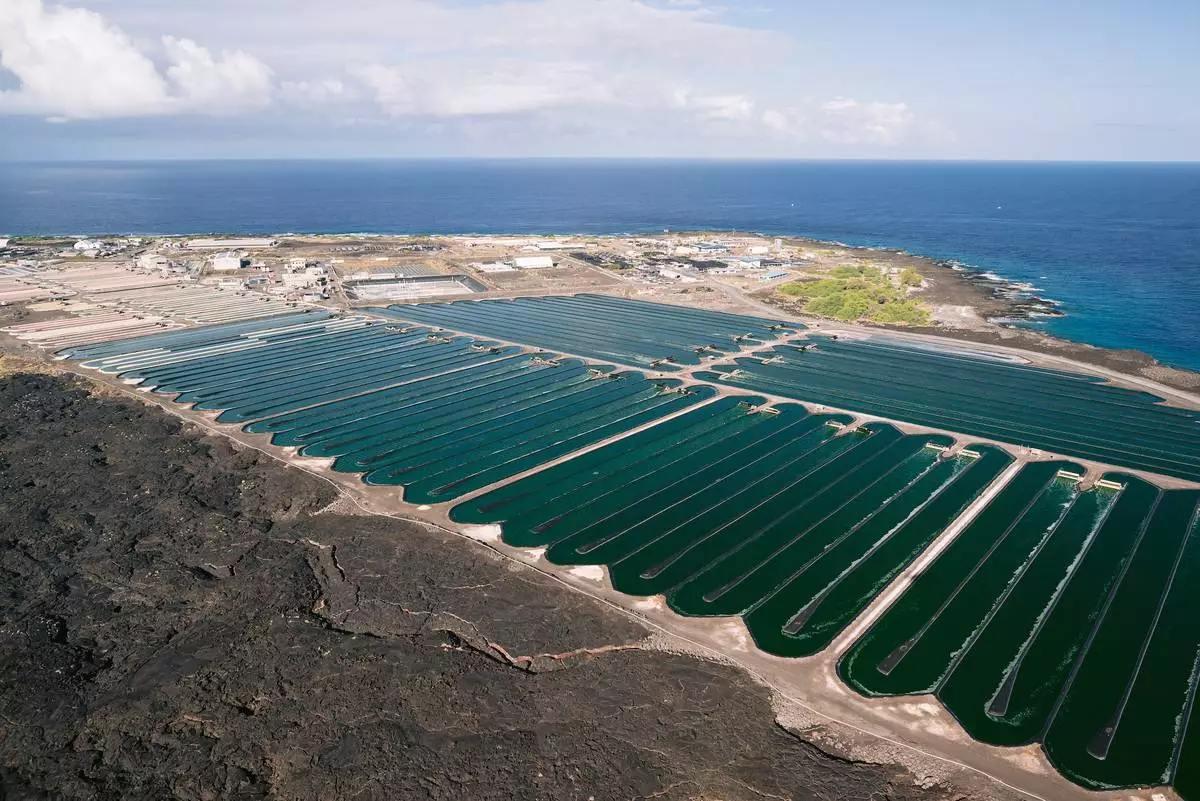
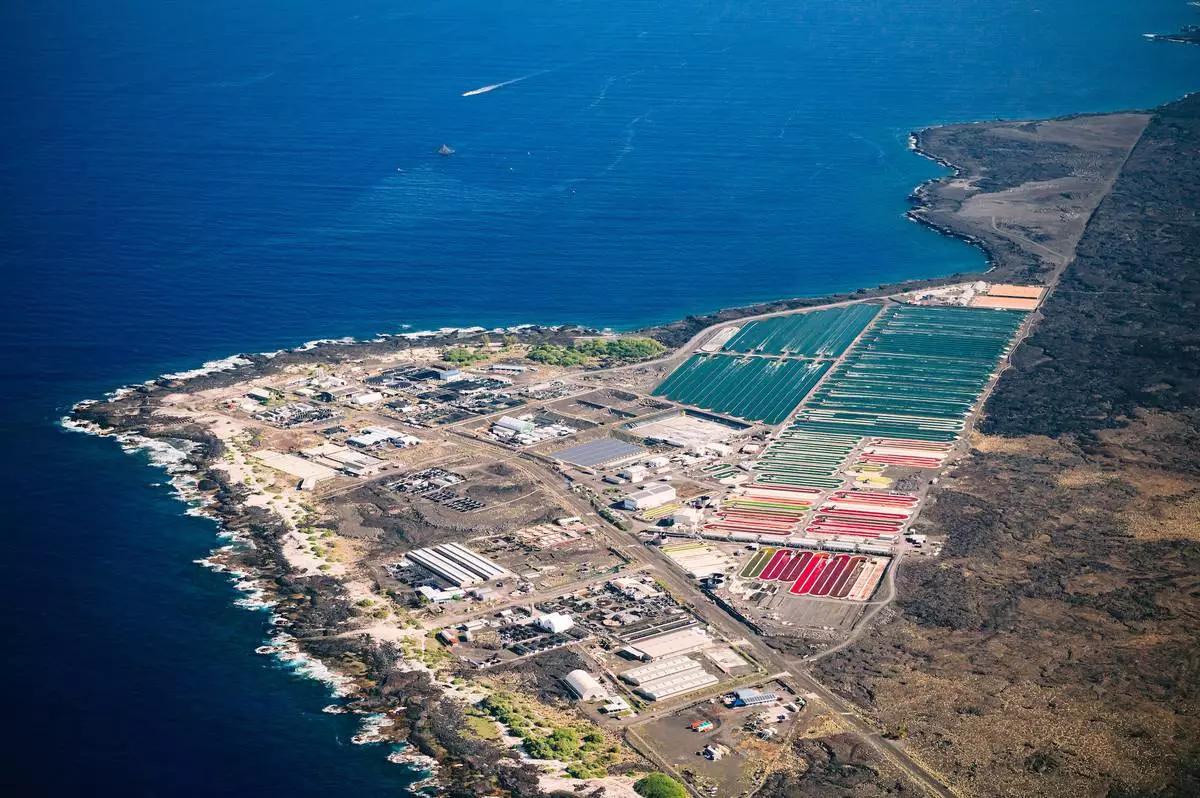
Aerial view of the Kailua-Kona coastline and Hawaiian farm where BioAstin Hawaiian Astaxanthin is grown adjacent to a clear blue ocean surrounding the land, showcasing a pure, transparent growing region.
Wide aerial view of the 96-acre Hawaiian farm where BioAstin® Hawaiian Astaxanthin® is grown.
LOS GATOS, Calif. (AP) — Like many retirement communities, The Terraces serves as a tranquil refuge for a nucleus of older people who no longer can travel to faraway places or engaging in bold adventures.
But they can still be thrust back to their days of wanderlust and thrill-seeking whenever caretakers at the community in Los Gatos, California, schedule a date for residents — many of whom are in their 80s and 90s — to take turns donning virtual reality headsets.
Within a matter of minutes, the headsets can transport them to Europe, immerse them in the ocean depths or soar them on breathtaking hang-gliding expeditions while they sit by each other. The selection of VR programming was curated by Rendever, a company that has turned a sometimes isolating form of technology into a catalyst for better cognition and social connections in 800 retirement communities in the United States and Canada.
A group of The Terraces residents who participated in a VR session earlier this year found themselves paddling their arms alongside their chairs as they swam with a pod of dolphins while watching one of Rendever's 3D programs. “We got to go underwater and didn't even have to hold our breath!” exclaimed 81-year-old Ginny Baird following the virtual submersion.
During a session featuring a virtual ride in a hot-air balloon, one resident gasped, “Oh my God!” Another shuddered, “It's hard to watch!”
The Rendever technology can also be used to virtually take older adults back to the places where they grew up as children. For some, it will be the first time they've seen their hometowns in decades.
A virtual trip to her childhood neighborhood in New York City's Queens borough helped sell Sue Livingstone, 84, on the merits of the VR technology even though she still is able to get out more often than many residents of The Terraces, which is located in Silicon Valley about 55 miles south of San Francisco.
“It isn't just about being able to see it again, it's about all the memories that it brings back,” Livingstone said. “There are a few people living here who never really leave their comfort zones. But if you could entice them to come down to try out a headset, they might find that they really enjoy it.”
Adrian Marshall, The Terraces' community life director, said that once word about a VR experience spreads from one resident to another, more of the uninitiated typically become curious enough to try it out — even if it means missing out on playing Mexican Train, a dominoes-like board game that's popular in the community.
“It turns into a conversation starter for them. It really does connect people,” Marshall said of Rendever's VR programming. “It helps create a human bridge that makes them realize they share certain similarities and interests. It turns the artificial world into reality.”
Rendever, a privately owned company based in Somerville, Massachusetts, hopes to build upon its senior living platform with a recent grant from the National Institutes of Health that will provide nearly $4.5 million to study ways to reduce social isolation among seniors living at home and their caregivers.
Some studies have found VR programming presented in a limited viewing format can help older people maintain and improve cognitive functions, burnish memories and foster social connections with their families and fellow residents of care facilities. Experts say the technology may be useful as an addition to and not a replacement for other activities.
“There is always a risk of too much screen time," Katherine “Kate” Dupuis, a neuropsychologist and professor who studies aging issues at Sheridan College in Canada, said. “But if you use it cautiously, with meaning and purpose, it can be very helpful. It can be an opportunity for the elderly to engage with someone and share a sense of wonder.”
VR headsets may be an easier way for older people to interact with technology instead of fumbling around with a smartphone or another device that requires navigating buttons or other mechanisms, said Pallabi Bhowmick, a researcher at the University of Illinois Urbana-Champaign who is examining the use of VR with older adults.
“The stereotypes that older adults aren’t willing to try new technology needs to change because they are willing and want to adapt to technologies that are meaningful to them,” Bhowmick said. "Besides helping them to relieve stress, be entertained and connect with other people, there is an intergenerational aspect that might help them build their relationships with younger people who find out they use VR and say, ‘Grandpa is cool!’"
Rendever CEO Kyle Rand's interest in helping his own grandmother deal with the emotional and mental challenges of aging pushed him down a path that led him to cofound the company in 2016 after studying neuroengineering at Duke University.
“What really fascinates me about humans is just how much our brain depends on social connection and how much we learn from others,” Rand said. “A group of elderly residents who don't really know each other that well can come together, spend 30 minutes in a VR experience together and then find themselves sitting down to have lunch together while continuing a conversation about the experience.”
It's a large enough market that another VR specialist, Dallas-based Mynd Immersive, competes against Rendever with services tailored for senior living communities.
Besides helping create social connections, the VR programming from both Rendever and Mynd has been employed as a possible tool for potentially slowing down the deleterious effects of dementia. That's how another Silicon Valley retirement village, the Forum, sometimes uses the technology.
Bob Rogallo, a Forum resident with dementia that has rendered him speechless, seemed to be enjoying taking a virtual hike through Glacier National Park in Montana as he nodded and smiled while celebrating his 83rd birthday with his wife of 61 years.
Sallie Rogallo, who doesn't have dementia, said the experience brought back fond memories of the couple's visits to the same park during the more than 30 years they spent cruising around the U.S. in their recreational vehicle.
“It made me wish I was 30 years younger so I could do it again,” she said of the virtual visit to Glacier. “This lets you get out of the same environment and either go to a new place or visit places where you have been.”
In another session at the Forum, 93-year-old Almut Schultz laughed with delight while viewing a virtual classical music performance at the Red Rocks Amphitheatre in Colorado and later seemed to want to play with a puppy frolicking around in her VR headset.
“That was quite a session we had there,” Schultz said with a big grin after she took off her headset and returned to reality.
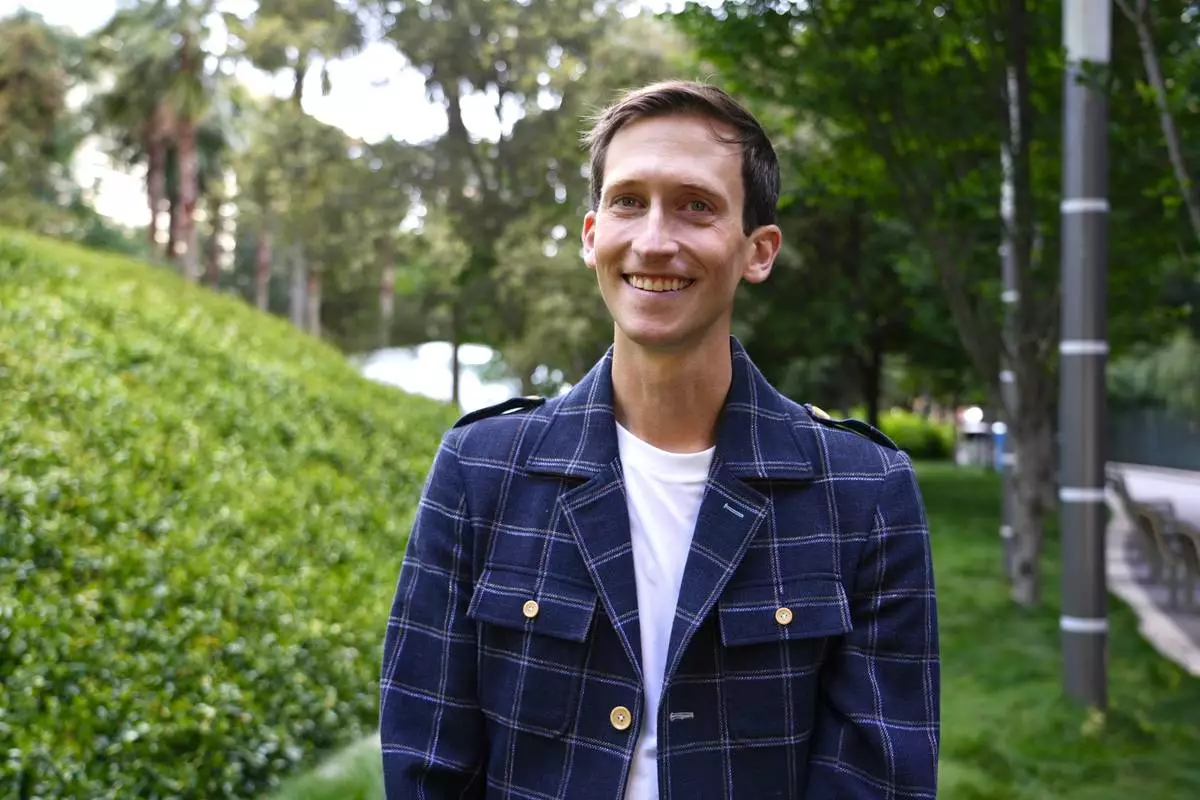
Rendever CEO Kyle Rand is pictured at Salesforce Park in San Francisco on June 27, 2025. (AP Photo/Terry Chea)
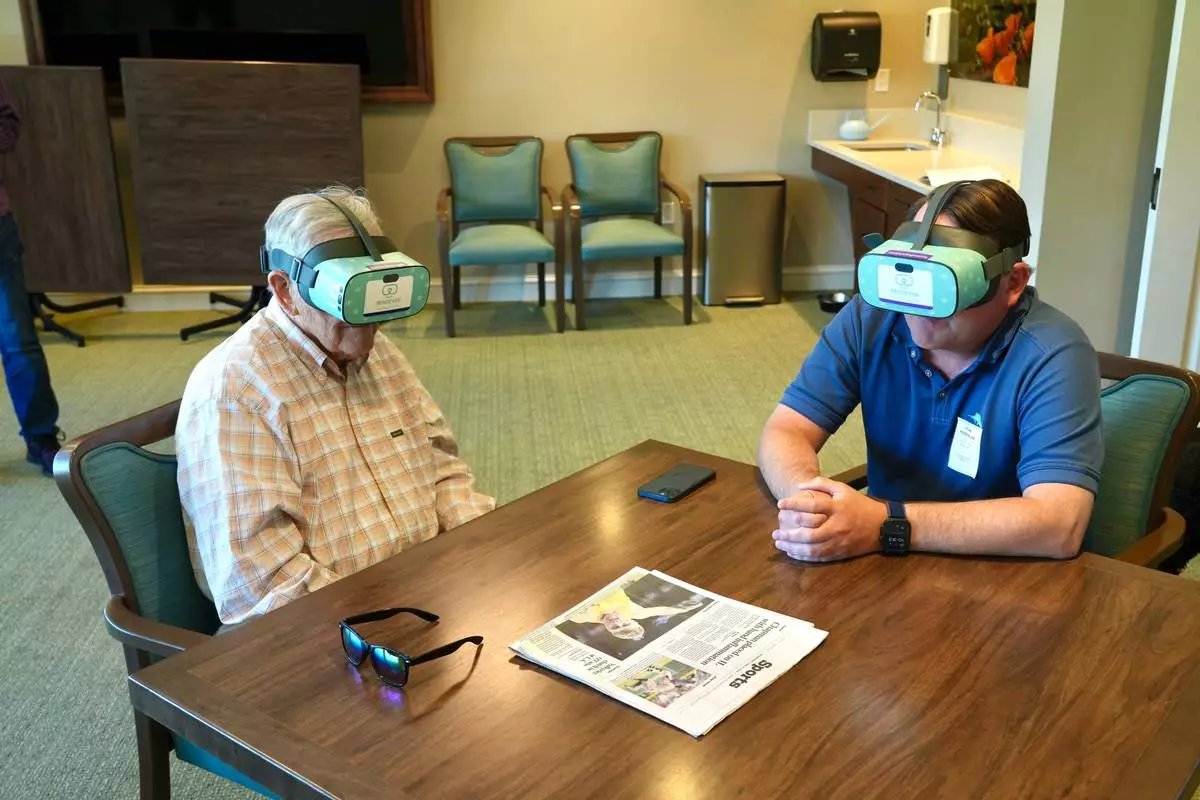
Jim Holtshouse and his son, Mike Holtshouse, watch video through Rendever virtual-reality headsets at the Forum at Rancho San Antonio retirement community in Cupertino, Calif. on June 11, 2025. (AP Photo/Terry Chea)
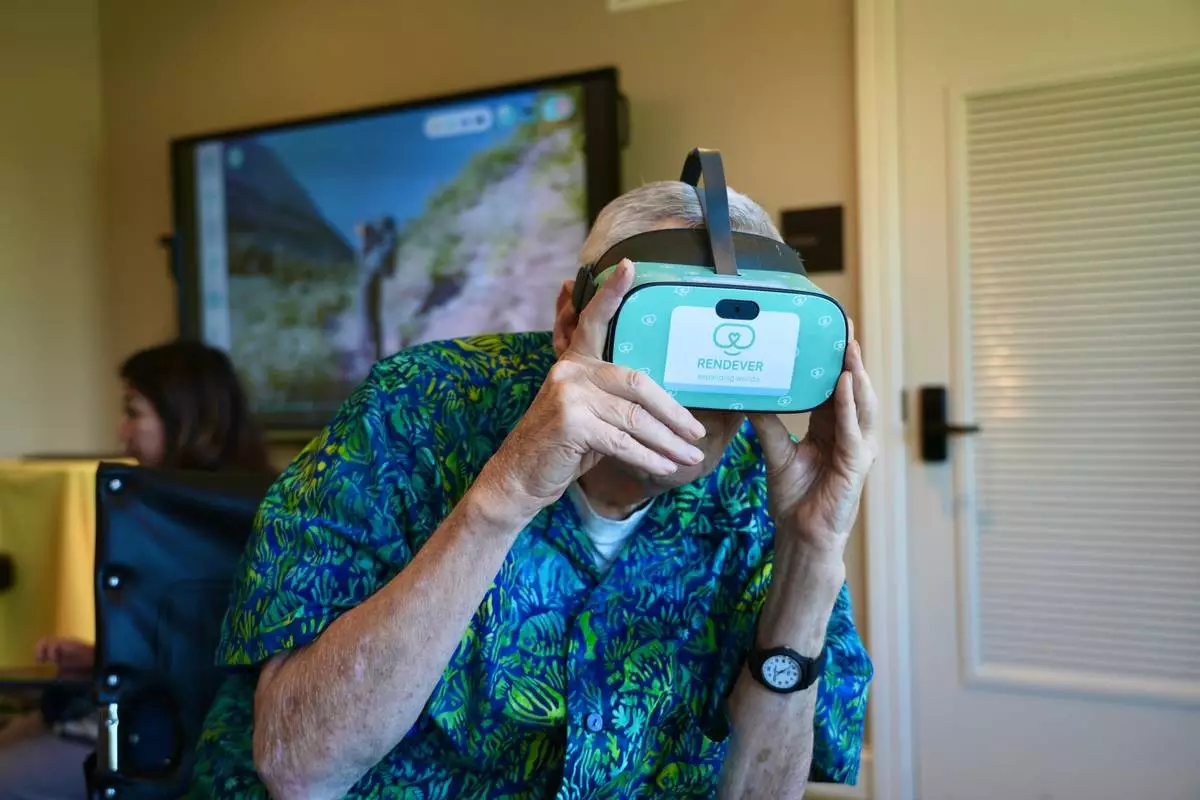
Bob Rogallo watches video through a Rendever virtual-reality headset at the Forum at Rancho San Antonio retirement community in Cupertino, Calif. on June 11, 2025. (AP Photo/Terry Chea)
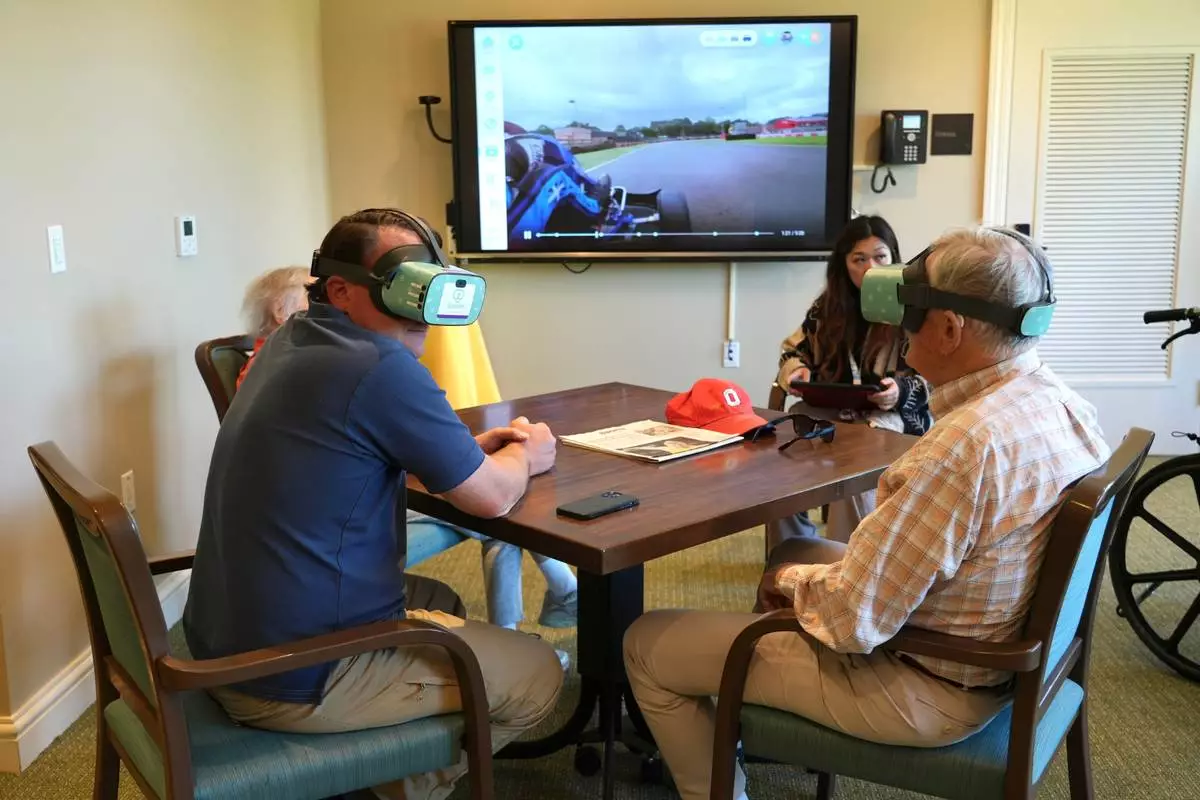
Mike Holtshouse and his father, Jim Holtshouse, watch video through Rendever virtual-reality headsets at the Forum at Rancho San Antonio retirement community in Cupertino, Calif. on June 11, 2025. (AP Photo/Terry Chea)
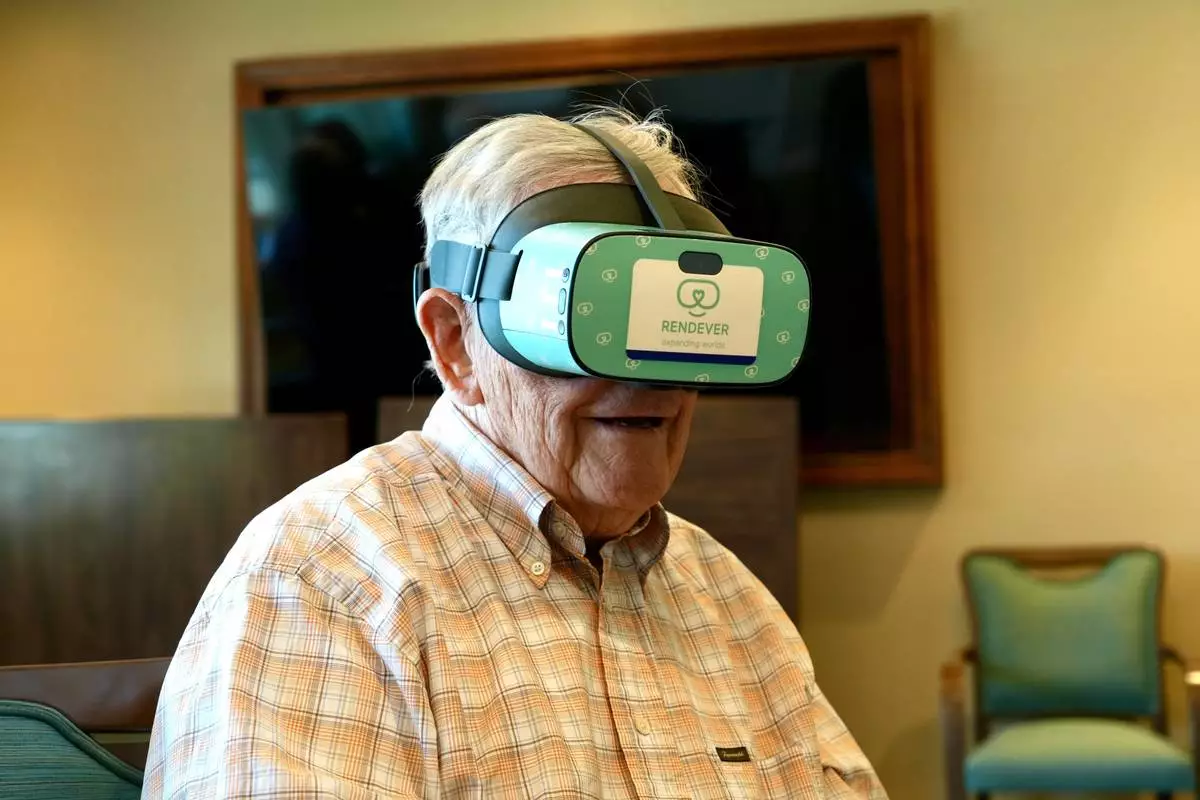
Jim Holtshouse watches video through a Rendever virtual-reality headset at the Forum at Rancho San Antonio retirement community in Cupertino, Calif. on June 11, 2025. (AP Photo/Terry Chea)