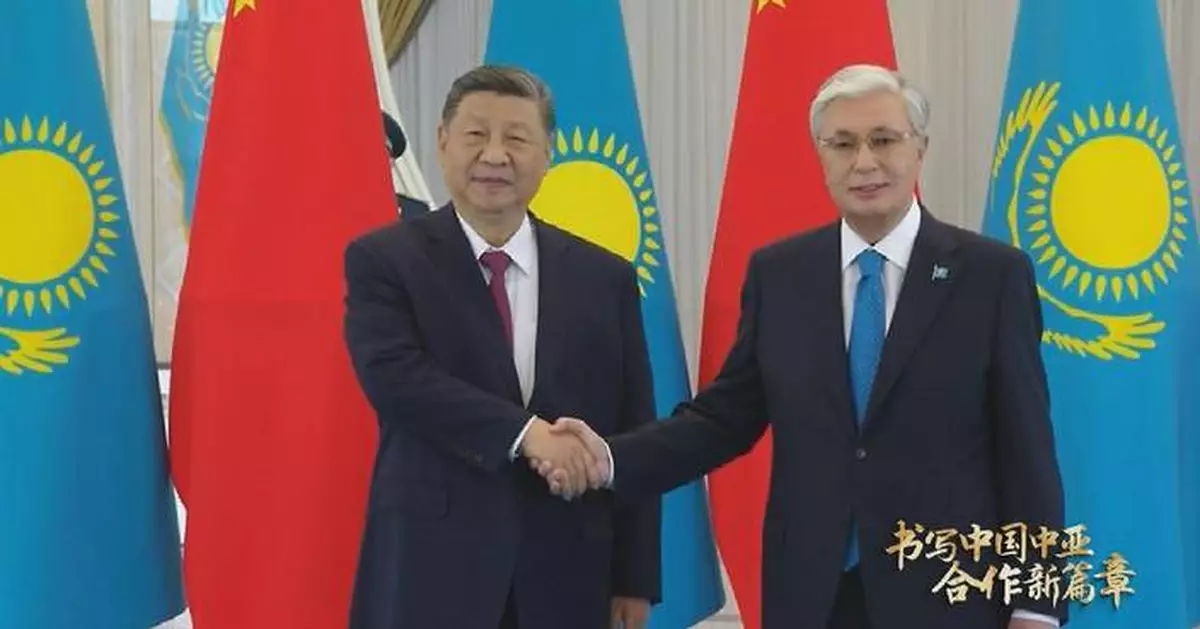
Chinese President Xi Jinping's attendance at the second China-Central Asia Summit has opened a new chapter of cooperation between China and the five Central Asian countries.
President Xi concluded his three-day trip to Astana, the capital of Kazakhstan, on Wednesday after attending the second China-Central Asia Summit.
This marked Xi's sixth visit to Kazakhstan, and he was welcomed by Kazakh President Kassym-Jomart Tokayev at the airport.
A short while later in the airport's VIP lounge, the two heads of state enjoyed a series of cultural performances by Kazakh teenagers and children.
A group of three young Kazakhs recited a poem in the Chinese language which they had specially prepared to welcome Xi to Kazakhstan.
"China and Kazakhstan, neighbors near, like kin with mountains and rivers dear. Together we fulfill dreams of yore, with flowers of cooperation in spring's store. Our friendship binds heart to heart, and the Silk Road shines, never to part. We help each other through and through, and peace and happiness ever new," said the children as they delivered the short poem.
On the sidelines of the summit, Xi held separate bilateral meetings with the leaders of the five Central Asian countries, with a focus on the high-quality development of the Belt and Road Initiative (BRI).
Xi met with Kazakh President Tokayev on Monday.
"Dear President Tokayev, my old friend. I am ready to work with you to steadfastly strengthen the China-Kazakhstan friendship, advance all-round cooperation with concerted efforts, and contribute more to regional and global peace and development through the stability and positive energy of our bilateral relations," said Xi at the meeting.
"Your Excellency, Mr. President, in Kazakhstan, you are widely regarded as a great statesman and a wise leader, and enjoy high prestige in the international community. China is a friendly neighbor and a time-tested reliable strategic partner of Kazakhstan," said Tokayev.
The two leaders agreed that China and Kazakhstan should work together to advance comprehensive cooperation while both countries are at crucial stages of their respective development and revitalization.
Xi made a four-point proposal in this regard: First, high-level strategic mutual trust should guide the development of bilateral relations; second, high-quality Belt and Road cooperation should be used to improve bilateral cooperation; Third, comprehensive security cooperation should be carried out to safeguard peace and stability of the two countries; and fourth, diversified people-to-people exchanges should be carried out to solidify the foundation of China-Kazakhstan friendship.
Following their talks, the two heads of state jointly witnessed the exchange of over ten cooperation documents between the two sides.
During his visit to Astana, Xi also held separate meetings with the leaders of Kyrgyzstan, Tajikistan, Turkmenistan, and Uzbekistan on Tuesday, yielding substantive outcomes.
"Over the past more than 30 years since the establishment of diplomatic ties, China and Central Asian countries have achieved steady progress in their relations. From proposing the initiative of the Silk Road Economic Belt to establishing a demonstration zone for high-quality BRI cooperation, and strengthening the China-Central Asia mechanism, China and Central Asian countries have set a benchmark for regional cooperation. Under the strategic guidance of head-of-state diplomacy, China and the five Central Asian countries have forged comprehensive strategic partnerships, established partnerships for BRI cooperation, and joined hands in building bilateral and regional communities with a shared future. These fully demonstrate the firm resolve of both sides to move forward together and jointly create a better future," said Ding Xiaoxing, director of the Institute of Eurasian Studies at China Institutes of Contemporary International Relations.
Xi once noted that China and the Central Asian countries share common goals. In half a decade, the relations between China and Central Asian countries have witnessed remarkable progress -- from a proposal to the establishment of the China-Central Asia mechanism in 2020, to its upgrading to the head-of-state level in 2022, and finally to its official institutionalization at the inaugural China-Central Asia Summit in 2023.
Amidst the current global landscape marked by transformations unseen in a century and growing risks and challenges, the convening of the second China-Central Asia Summit carried particularly profound significance.
In his opening remarks at the start of the summit, Kazakh President Tokayev welcomed Xi in Chinese.
"First, I want to express our heartfelt gratitude to Mr. Xi Jinping, President of the People's Republic of China and our esteemed friend, for your visit to Kazakhstan and participation in this summit," said Tokayev.
"During our meeting in Xi'an two years ago, we jointly outlined the Xi'an Vision for China-Central Asia cooperation. Our cooperation is rooted in more than 2,000 years of friendly exchanges, cemented by solidarity and mutual trust cultivated through more than three decades of diplomatic ties, and taken forward via openness and win-win cooperation of the new era," said Xi while delivering a keynote speech at the summit.
The second China-Central Asia Summit produced a raft of consensuses across areas ranging from security and trade to regional development.
A prominent highlight of this summit was Xi's announcement of the China-Central Asia Spirit, which comprises practicing mutual respect and treating each other as equals, seeking to deepen mutual trust and enhancing mutual support, pursuing mutual benefit and win-win cooperation and striving for common development, and helping each other in times of need and standing together through thick and thin.
"We should act on the China-Central Asia Spirit, enhance cooperation with renewed vigor and more practical measures, promote high-quality development of the BRI, and forge ahead toward our goal of a community with a shared future for the region," said Xi.
At the summit, the six countries agreed to designate 2025 and 2026 as the Years of High-Quality Development of China-Central Asia Cooperation.
They also agreed to focus their cooperation on smooth trade, industrial investment, connectivity, green mining, agricultural modernization and personnel exchanges.
Another key outcome of the summit is the signing of an action plan for high-quality Belt and Road cooperation.
Moreover, Xi and the leaders of the five Central Asian countries witnessed the inauguration of three China-Central Asia cooperation centers and a trade platform, namely the China-Central Asia poverty reduction cooperation center, the China-Central Asia education exchange cooperation center, the China-Central Asia desertification prevention and control cooperation center, as well as the China-Central Asia smooth trade cooperation platform.
Leaders from the five Central Asian countries commended the remarkable progress made by China under Xi's leadership, expressing appreciation to China for carrying out comprehensive cooperation with Central Asian countries and bringing them valuable development opportunities.
In addition, a treaty on eternal good-neighborliness, friendship and cooperation was signed by the heads of state of the six countries to enshrine the principle of everlasting friendship in the form of law, which demonstrates that political mutual trust between China and Central Asian countries has reached a new height. During the summit, the six countries also issued the Astana Declaration, agreeing to build an even closer China-Central Asia community with a shared future.
It was also decided at the summit that China will host the third China-Central Asia Summit in 2027.
After Xi concluded his visit, Chinese Foreign Minister Wang Yi briefed reporters on Xi's trip.
Wang, also a member of the Political Bureau of the Communist Party of China Central Committee, said Xi attended more than 10 bilateral and multilateral events in less than 48 hours in Astana, during which he renewed traditional friendship, discussed ways of promoting cooperation, and drew the blueprint for development with the heads of state of the five Central Asian countries.
In Astana, Xi and the Central Asian leaders have achieved more than 100 cooperation outcomes, Wang said.
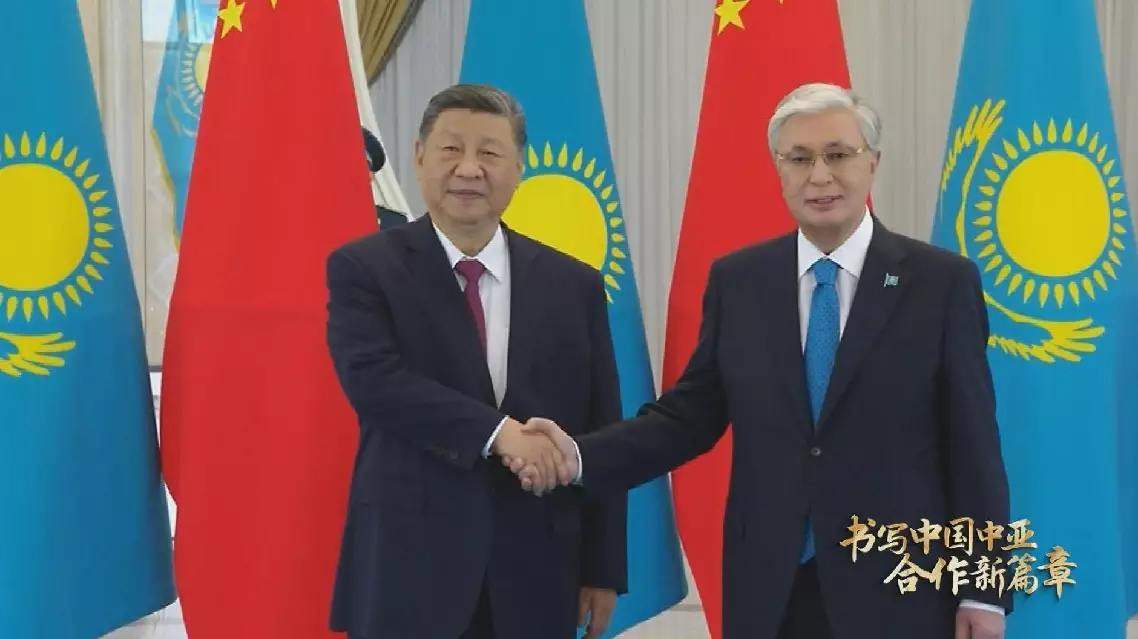
Xi's attendance at second China-Central Asia Summit opens new chapter of cooperation