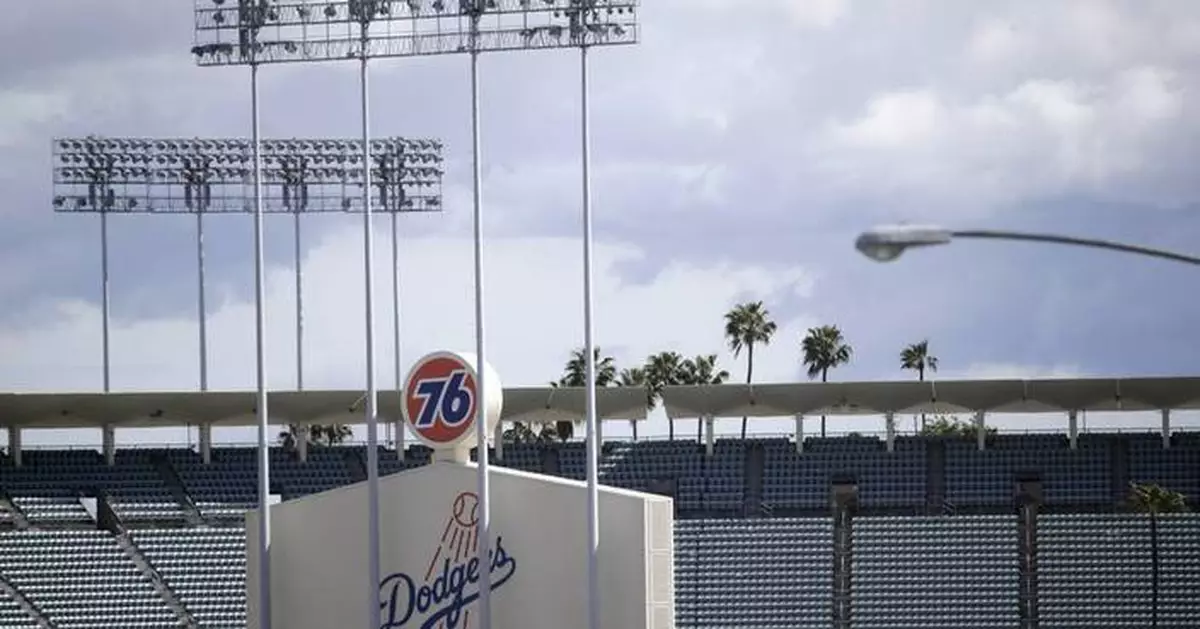
LOS ANGELES (AP) — The Los Angeles Dodgers organization said Thursday that it asked federal immigration agents to leave the Dodger Stadium grounds after they arrived at a parking lot near one of the gates.
Dozens of federal agents with their faces covered arrived in SUVs and cargo vans to a lot near the stadium’s Gate E entrance. A group of protesters carrying signs against U.S. Immigration and Customs Enforcement started amassing shortly after, local media reported.
“This morning, ICE agents came to Dodger Stadium and requested permission to access the parking lots. They were denied entry to the grounds by the organization,” the team said in a statement posted on X.
U.S. Immigration and Customs Enforcement posted on X that its agents were never there.
Tricia McLaughlin, a spokesperson for the Department of Homeland Security, said the agents were with Customs and Border Protection and that they were not trying to enter the stadium.
“This had nothing to do with the Dodgers. (Customs and Border Protection) vehicles were in the stadium parking lot very briefly, unrelated to any operation or enforcement," she said in an email.
The team said the game against the San Diego Padres later Thursday will be played as planned.
Television cameras showed about four agents remained at the lot Thursday afternoon while officers with the Los Angeles Police Department stood between them and dozens of protesters, some carrying signs that read “I Like My Ice Crushed” and chanting “ICE out of LA!”
Councilmember Eunisses Hernandez arrived at the stadium and said she had been in communication with Dodger officials and the mayor’s office.
“We’ve been in communication with the mayor’s office, with the Dodgers, with Dodgers security, about seeing if they can get them moved off their private property,” she told KABC-TV. “Public property is different. Private property -- businesses and corporations have the power to say, ‘Not on my property,’ And so we’re waiting to see that movement happen here.”
Protests began June 6 after federal immigration raids arrested dozens of workers in Los Angeles. Protesters blocked a major freeway and set cars on fire the following days, and police responded with tear gas, rubber bullets and flash-bang grenades.
The team has yet to make a statement regarding the arrests and raids. The Dodgers’ heavily Latino fan base has been pushing for the team to make a public statement and ignited a debate online about its stance on the immigration crackdown happening in Los Angeles.
The Dodgers had been expected to issue a statement of support toward Los Angeles-area communities affected by immigration enforcement, but no statement had been released by 5 p.m. Thursday.
“Because of the events earlier today, we continue to work with groups that were involved with our programs,” Dodgers President Stan Kasten told a small group of reporters. “But we are going to have to delay today’s announcement while we firm up some more details.”
The Trump administration has activated more than 4,000 National Guard members and 700 Marines over the objections of city and state leaders. Dozens of troops now guard federal buildings and protect federal agents making arrests.
The demonstrations have been mostly concentrated downtown in the city of around 4 million people. Thousands of people have peacefully rallied outside City Hall and hundreds more protested outside a federal complex that includes a detention center where some immigrants are being held following workplace raids.
Rodriguez reported from San Francisco.
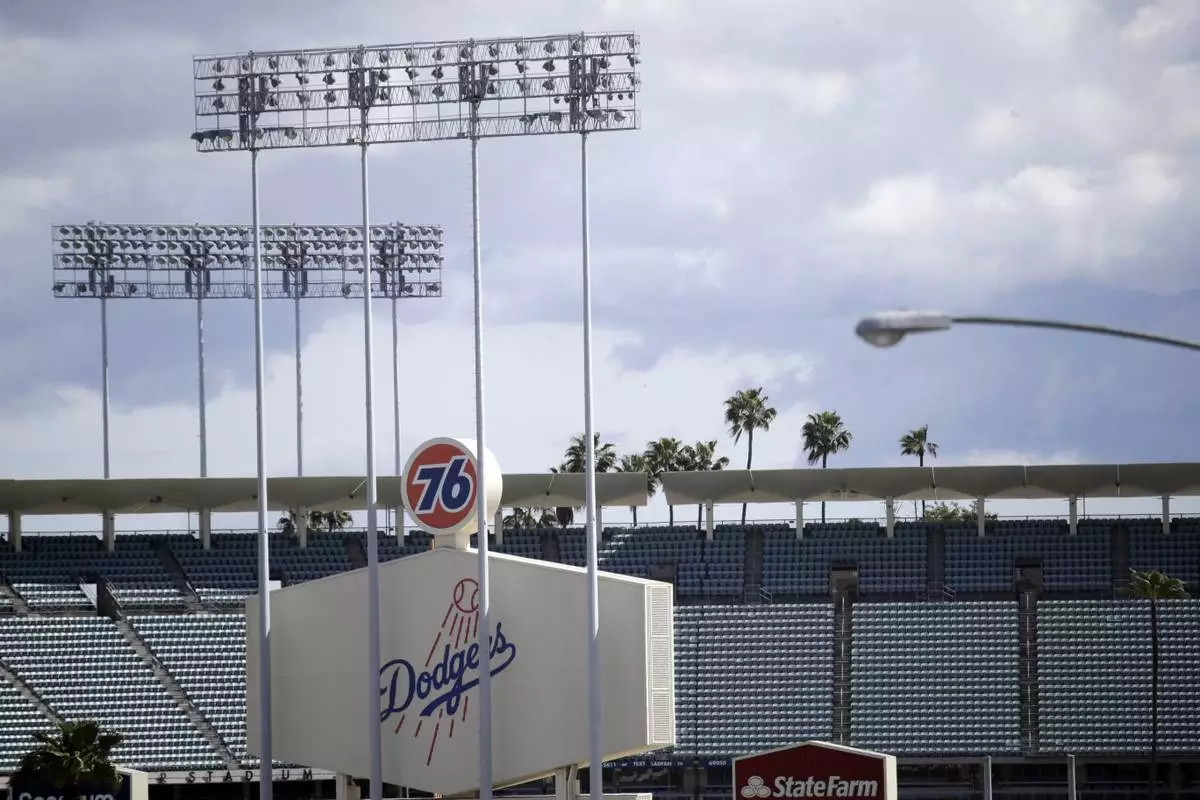
FILE - The exterior of Dodgers Stadium, home of the Los Angeles Dodgers is seen in Los Angeles on March 25, 2020. (AP Photo/Marcio Jose Sanchez, File)
SEOUL, South Korea (AP) — Ahn Sung-ki, one of South Korean cinema’s biggest stars whose prolific 60-year career and positive, gentle public image earned him the nickname “The Nation’s Actor,” died Monday. He was 74.
Ahn, who had suffered blood cancer for years, was pronounced dead at Seoul's Soonchunhyang University Hospital, his agency, the Artist Company, and hospital officials said.
“We feel deep sorrow at the sudden, sad news, pray for the eternal rest of the deceased and offer our heartfelt condolences to his bereaved family members," the Artist Company said in a statement.
President Lee Jae Myung issued a condolence message saying Ahn provided many people with comfort, joy and time for reflection. “I already miss his warm smile and gentle voice,” Lee wrote on Facebook.
Born to a filmmaker in the southeastern city of Daegu in 1952, Ahn made his debut as a child actor in the movie “The Twilight Train” in 1957. He subsequently appeared in about 70 movies as a child actor before he left the film industry to live an ordinary life.
In 1970, Ahn entered Seoul’s Hankuk University of Foreign Studies as a Vietnamese major. Ahn said he graduated with top honors but failed to land jobs at big companies, who likely saw his Vietnamese major largely useless after a communist victory in the Vietnam War in 1975.
Ahn returned to the film industry in 1977 believing he could still excel in acting. In 1980, he rose to fame for his lead role in Lee Jang-ho’s “Good, Windy Days,” a hit coming-of-age movie about the struggle of working-class men from rural areas during the country’s rapid rise. Ahn won the best new actor award in the prestigious Grand Bell Awards, the Korean version of the Academy Awards.
He later starred in a series of highly successful and critically acclaimed movies, sweeping best actor awards and becoming arguably the country’s most popular actor in much of the 1980-90s.
Some of his memorable roles included a Buddhist monk in 1981’s “Mandara,” a beggar in 1984’s “Whale Hunting,” a Vietnam War veteran-turned-novelist in 1992’s “White Badge,” a corrupt police officer in 1993’s “Two Cops,” a murderer in 1999’s “No Where To Hide,” a special forces trainer in 2003’s “Silmido” and a devoted celebrity manager in 2006’s “Radio Star.”
Ahn had collected dozens of trophies in major movie awards in South Korea, including winning the Grand Bell Awards for best actor five times, an achievement no other South Korean actors have matched yet.
Ahn built up an image as a humble, trustworthy and family-oriented celebrity who avoided major scandals and maintained a quiet, stable personal life. Past public surveys chose Ahn as South Korea’s most beloved actor and deserving of the nickname “The Nation’s Actor.”
Ahn said he earlier felt confined with his “The Nation's Actor” labeling but eventually thought that led him down the right path. In recent years, local media has given other stars similar honorable nicknames, but Ahn was apparently the first South Korean actor who was dubbed “The Nation's Actor.”
“I felt I should do something that could match that title. But I think that has eventually guided me on a good direction,” Ahn said in an interview with Yonhap news agency in 2023.
In media interviews, Ahn couldn’t choose what his favorite movie was, but said that his role as a dedicated, hardworking manger for a washed-up rock singer played by Park Jung-hoon resembled himself in real life the most.
Ahn was also known for his reluctance to do love scenes. He said said he was too shy to act romantic scenes and sometimes asked directors to skip steamy scenes if they were only meant to add spice to movies.
“I don’t do well on acting like looking at someone who I don’t love with loving eyes and kissing really romantically. I feel shy and can’t express such emotions well,” Ahn said in an interview with the Shindonga magazine in 2007. “Simply, I’m clumsy on that. So I couldn’t star in such movies a lot. But ultimately, that was a right choice for me.”
Ahn is survived by his wife and their two sons. A mourning station at a Seoul hospital was to run until Friday.
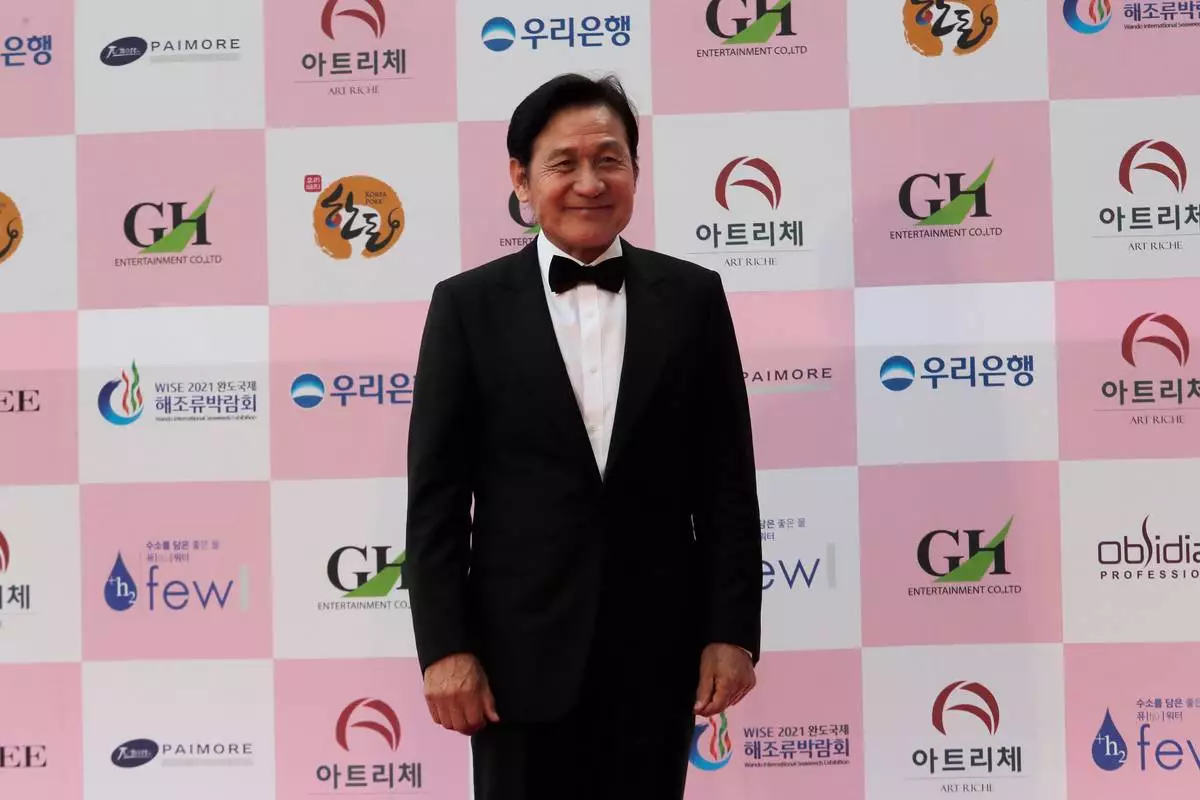
FILE - South Korean actor Ahn Sung-ki smiles for a photo on the red carpet at the 56th Daejong Film Awards ceremony in Seoul, South Korea, June 3, 2020. (AP Photo/Ahn Young-joon, File)

FILE - South Korean actor Ahn Sung-ki attends an event as part of the 11th Pusan International Film Festival in Busan, South Korea, Oct. 13, 2006. (AP Photo/Kin Cheung, File)