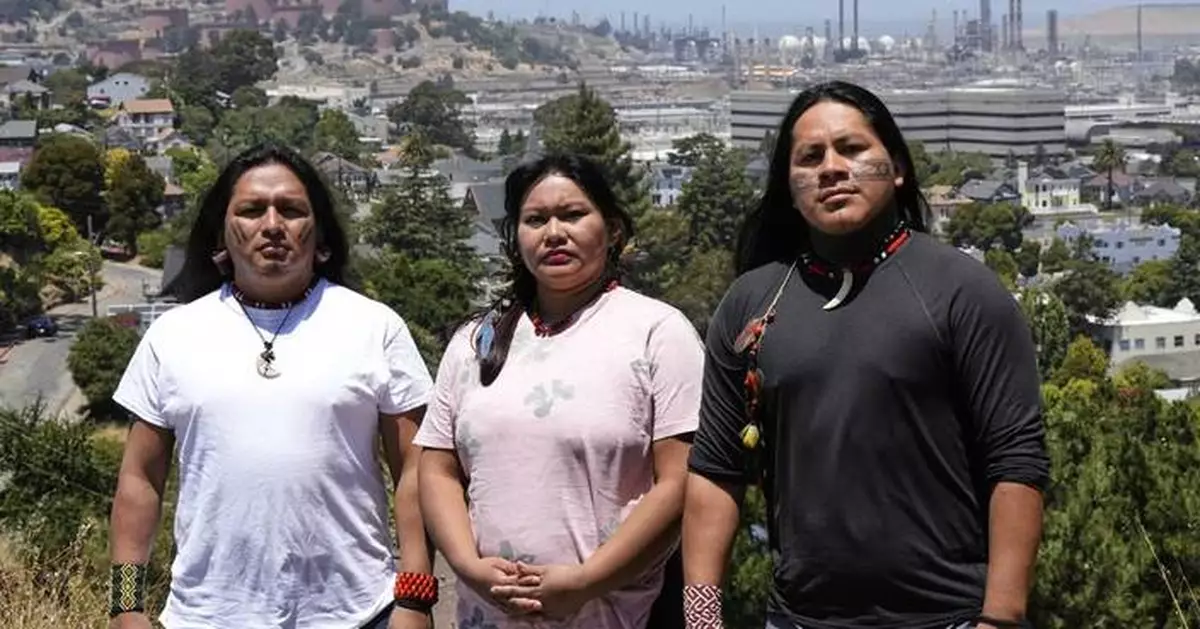
RICHMOND, California (AP) — An oil tanker sat docked at Chevron’s sprawling refinery in Richmond on Thursday — a visible link between California’s appetite for Amazon crude and the remote rainforest territories where it’s extracted. Just offshore, bundled in puffy jackets against the Bay wind, Indigenous leaders from Ecuador’s Amazon paddled kayaks through choppy waters, calling attention to the oil expansion threatening their lands.
Their visit to California helped prompt the state Senate to introduce a landmark resolution urging officials to examine the state’s role in importing crude from the Amazon. The move comes as Ecuador’s government prepares to auction off 14 new oil blocks — covering more than 2 million hectares of rainforest, much of it Indigenous territory — in a 2026 bidding round known as “Sur Oriente.”
Click to Gallery
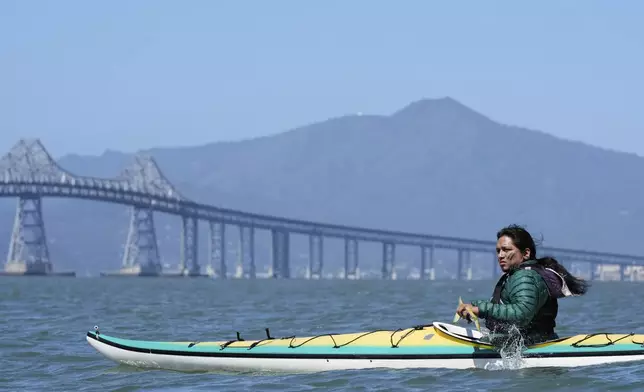
Juan Bay, president of the Waorani people of Ecuador, kayaks in the San Francisco Bay toward the Chevron Long Wharf, Thursday, June 19, 2025, in Richmond, Calif. (AP Photo/Godofredo A. Vásquez)
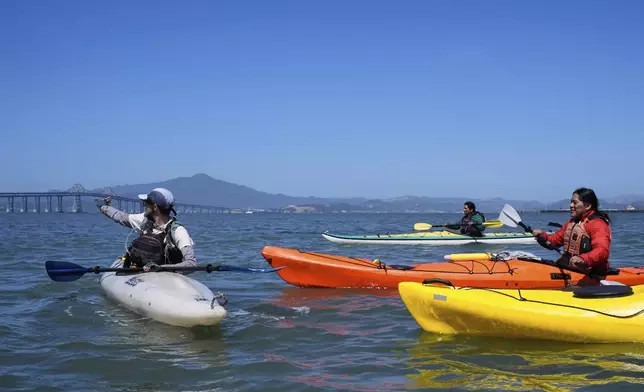
Casey Stewart, left, directs a delegation of Indigenous leaders from Ecuador on a path to kayak and see the Chevron Long Wharf, Thursday, June 19, 2025, in Richmond, Calif. (AP Photo/Godofredo A. Vásquez)
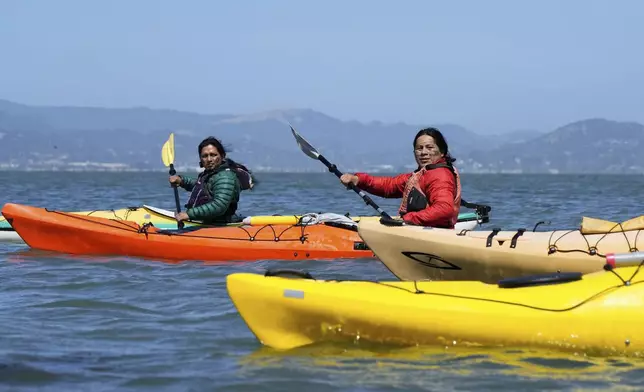
From left, Juan Bay, president of the Waorani people of Ecuador, and Nadino Calapucha, a spokesperson for the Kichwa Pakkiru people, kayak in the San Francisco Bay, Thursday, June 19, 2025, in Richmond, Calif. (AP Photo/Godofredo A. Vásquez)
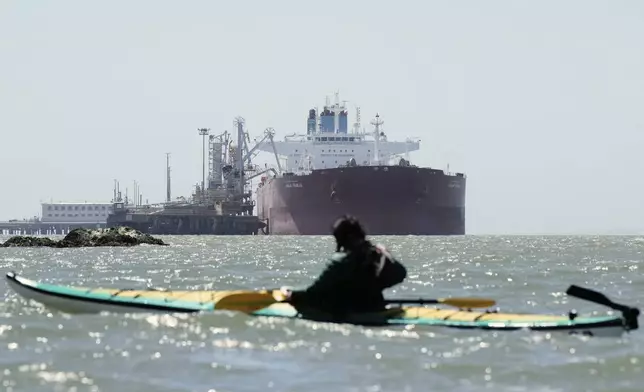
Juan Bay, president of the Waorani people of Ecuador, foreground, looks at an oil tanker docked at the Chevron Long Wharf, Thursday, June 19, 2025, in Richmond, Calif. (AP Photo/Godofredo A. Vásquez)
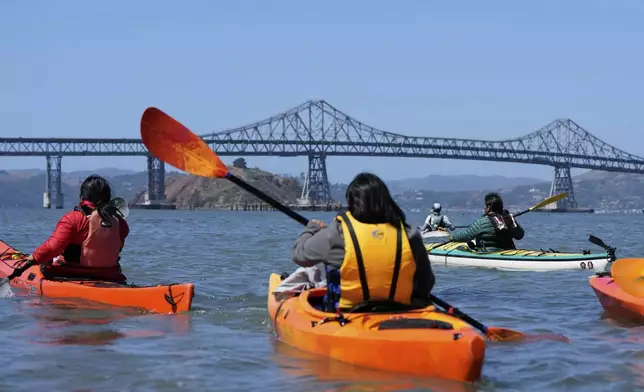
A delegation of Indigenous leaders from Ecuador kayak in the San Francisco Bay to take a closer look at the Chevron Long Wharf, Thursday, June 19, 2025, in Richmond, Calif. (AP Photo/Godofredo A. Vásquez)
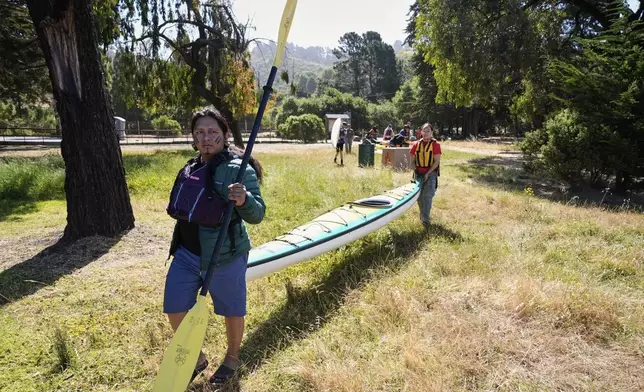
From left, Juan Bay, president of the Waorani people of Ecuador, and Isabella Zizi carry a kayak to the beach before entering the San Francisco Bay, Thursday, June 19, 2025, in Richmond, Calif. (AP Photo/Godofredo A. Vásquez)
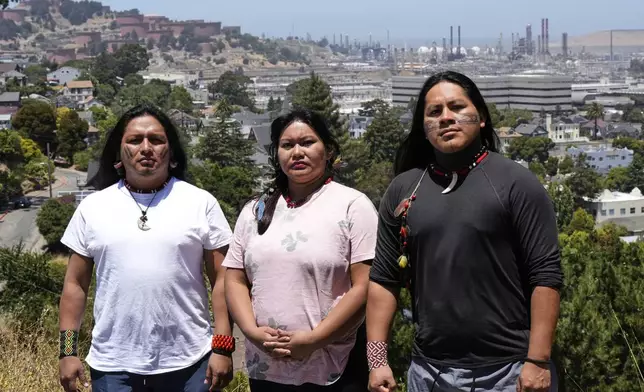
Juan Bay, president of the Waorani people of Ecuador, from left, Jhajayra Machoa Mendúa and Nadino Calapucha, a spokesperson for the Kichwa Pakkiru people, pose for a photograph as a Chevron refinery is visible in the background Thursday, June 19, 2025, in Richmond, Calif. (AP Photo/Godofredo A. Vásquez)
The Indigenous leaders say the move goes against the spirit of a national referendum in which Ecuadorians voted to leave crude oil permanently underground in Yasuni National Park.
The preservation push in Ecuador comes as another South American country that includes part of the Amazon rainforest, Brazil, is moving ahead with plans to further develop oil resources. On Tuesday, Brazil auctioned off several land and offshore potential oil sites near the Amazon River as it aims to expand production in untapped regions despite protests from environmental and Indigenous groups.
Juan Bay, president of the Waorani people of Ecuador, said that his delegation's coming to California was “important so that our voices, our stance, and our struggle can be elevated” and urged Californians to reexamine the source of their crude from the Amazon — ”from Waorani Indigenous territory."
On Thursday, the Indigenous delegation joined local Californians in Richmond for a kayaking trip near a Chevron refinery, sharing stories about the Amazon and perspectives on climate threats.
For Nadino Calapucha, a spokesperson for the Kichwa Pakkiru people, the visit to California’s Bay Area was deeply moving. Spotting seals in the water and a bird’s nest nearby felt ¨like a gesture of solidarity from nature itself," he told The Associated Press on a kayak.
“It was as if the animals were welcoming us,” he said.
The connection between the Amazon and California — both facing environmental threats — was palpable, Calapucha said.
“Being here with our brothers and sisters, with the local communities also fighting — in the end, we feel that the struggle is the same,” he said.
California is the largest global consumer of Amazon oil, with much of it refined and used in the state as fuel. Ecuador is the region’s top producer of onshore crude.
Bay highlighted a March 2025 ruling by the Inter-American Court of Human Rights, which found that Ecuador had violated the rights of the area's Indigenous groups by allowing oil operations in and around a site known as Block 43.
The court ordered the government to halt extraction in protected areas and uphold the 2023 referendum banning drilling in Yasuni National Park, where the country's largest crude reserve lies, estimated at around 1.7 billion barrels.
Bay appealed to the California government to reconsider if it “should continue receiving crude from the Amazon” — or continue to be "complicit in the violation of rights" happening on Indigenous territory.
State Senator Josh Becker, who introduced the new resolution, praised the visiting leaders for defending both their land and the global climate.
“Their communities are on the front lines asserting their rights and resisting oil extraction," Becker said on the Senate floor on Monday. “They are defenders of a living rainforest that stores carbon, regulates the global climate, and sustains life.”
Long criticized by environmental justice advocates, the refinery has processed millions of barrels of Amazon crude, fueling concerns over pollution, public health, and the state’s role in rainforest destruction.
The delegation also helped launch a new report by Amazon Watch, an Oakland-based non-profit dedicated to the protection of the Amazon Basin, which outlines the climate, legal and financial risks of operating in Indigenous territories without consent.
Kevin Koenig, Amazon Watch’s director for climate, energy and extraction industry, said the impacts of Amazon crude extend far beyond Ecuador. He joined the Ecuadorian delegation on the kayaking trip on Thursday.
“The Golden State, if it wants to be a climate leader, needs to take action," he told AP. “California has an addiction to Amazon crude.”
Californians need to "recognize their responsibility and their complicity in driving demand for Amazon crude and the impact that that is having on Indigenous people, on their rights, on the biodiversity and the climate,” he added.
California’s future is closely tied to the Amazon’s — the state relies on the rainforest’s role in climate regulation and rainfall, Koenig said, warning that continued Amazon crude imports contribute to the very destruction increasing California’s vulnerability to drought and wildfires.
He said environmental and public health damage tied to oil drilling is not confined to South America.
“We’re seeing the same impacts from the oil well to the wheel here in California, where communities are suffering from contamination, health impacts, dirty water,” he said. “It’s time that California lead an energy transition."
California, one of the world’s largest economies and a major importer of Amazon crude, must take stronger climate action, Koenig added and called on the state to phase out its reliance on oil linked to deforestation, human rights abuses, pollution, and climate damage.
The resolution commends the Indigenous communities of Ecuador for their struggle in defending the rainforest and Indigenous rights.
It also marks the first time California would examine how its energy consumption may contribute to the region’s deforestation and cultural loss. The resolution is expected to be up for a vote within a few weeks, according to Koenig.
Follow Steven Grattan on X: @sjgrattan
The Associated Press’ climate and environmental coverage receives financial support from multiple private foundations. AP is solely responsible for all content. Find AP’s standards for working with philanthropies, a list of supporters and funded coverage areas at AP.org.
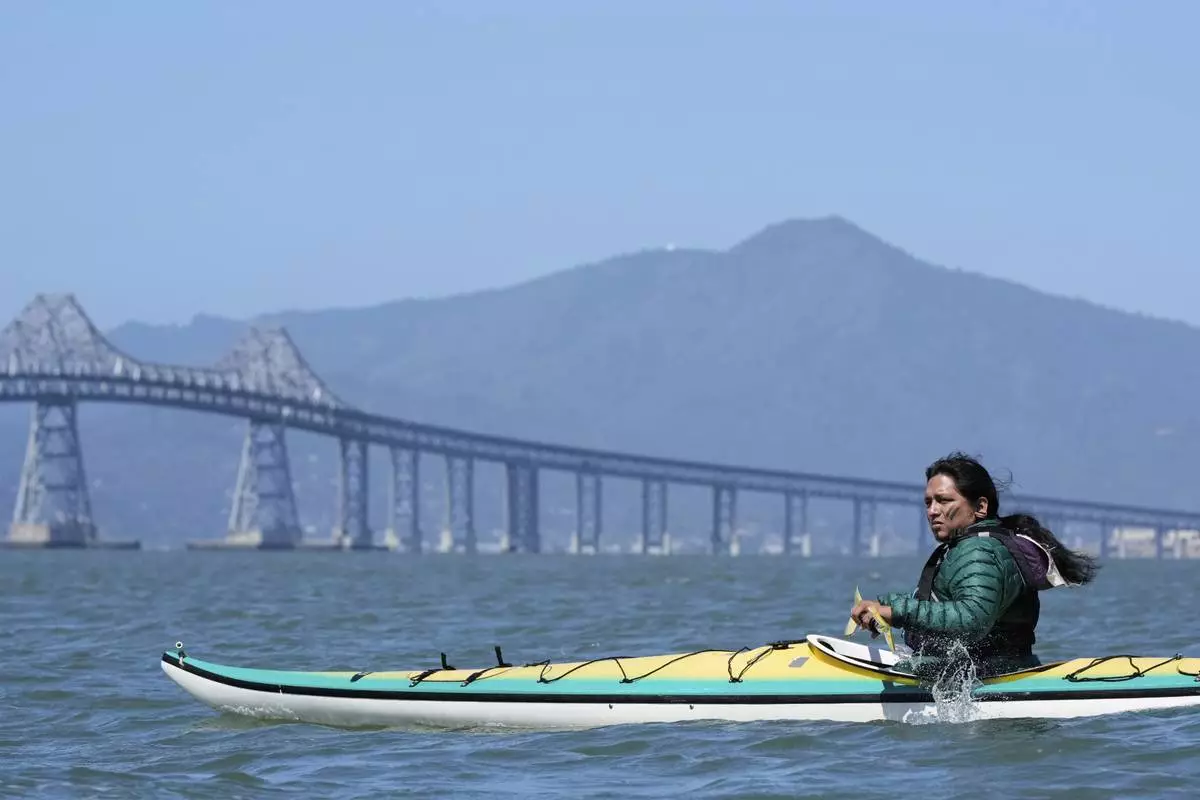
Juan Bay, president of the Waorani people of Ecuador, kayaks in the San Francisco Bay toward the Chevron Long Wharf, Thursday, June 19, 2025, in Richmond, Calif. (AP Photo/Godofredo A. Vásquez)
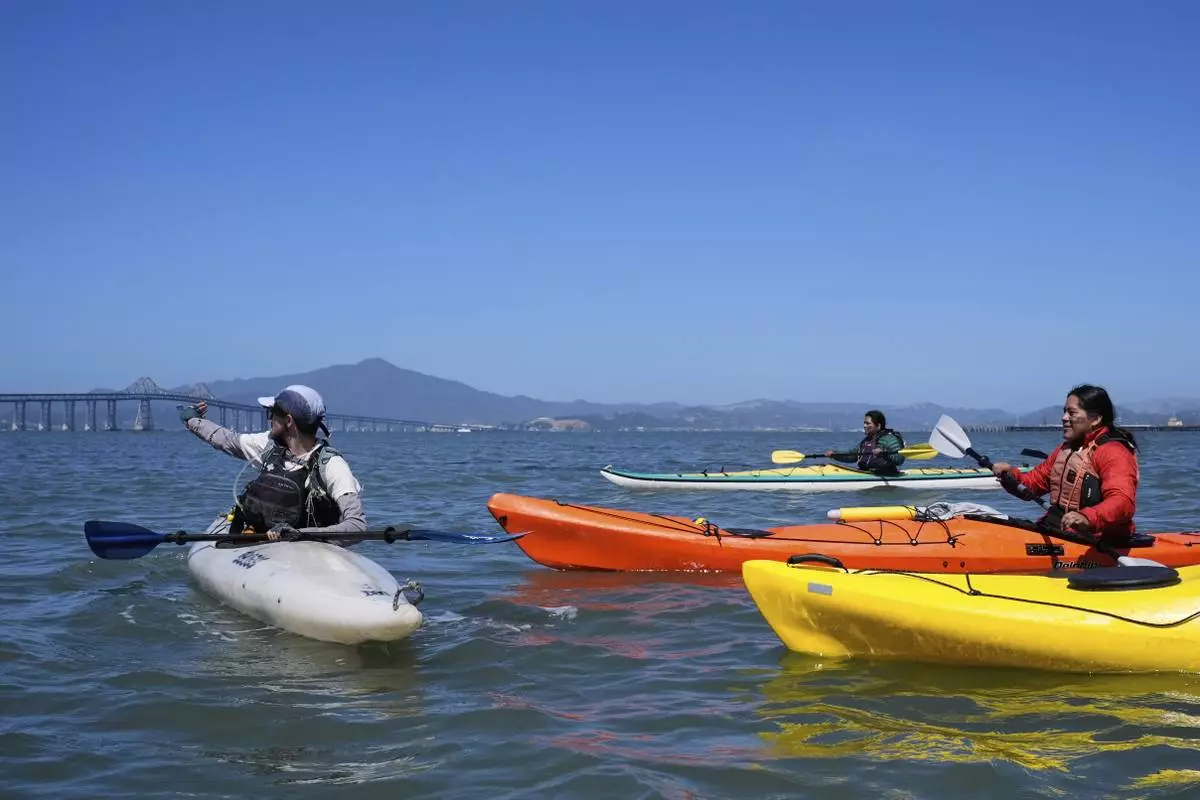
Casey Stewart, left, directs a delegation of Indigenous leaders from Ecuador on a path to kayak and see the Chevron Long Wharf, Thursday, June 19, 2025, in Richmond, Calif. (AP Photo/Godofredo A. Vásquez)
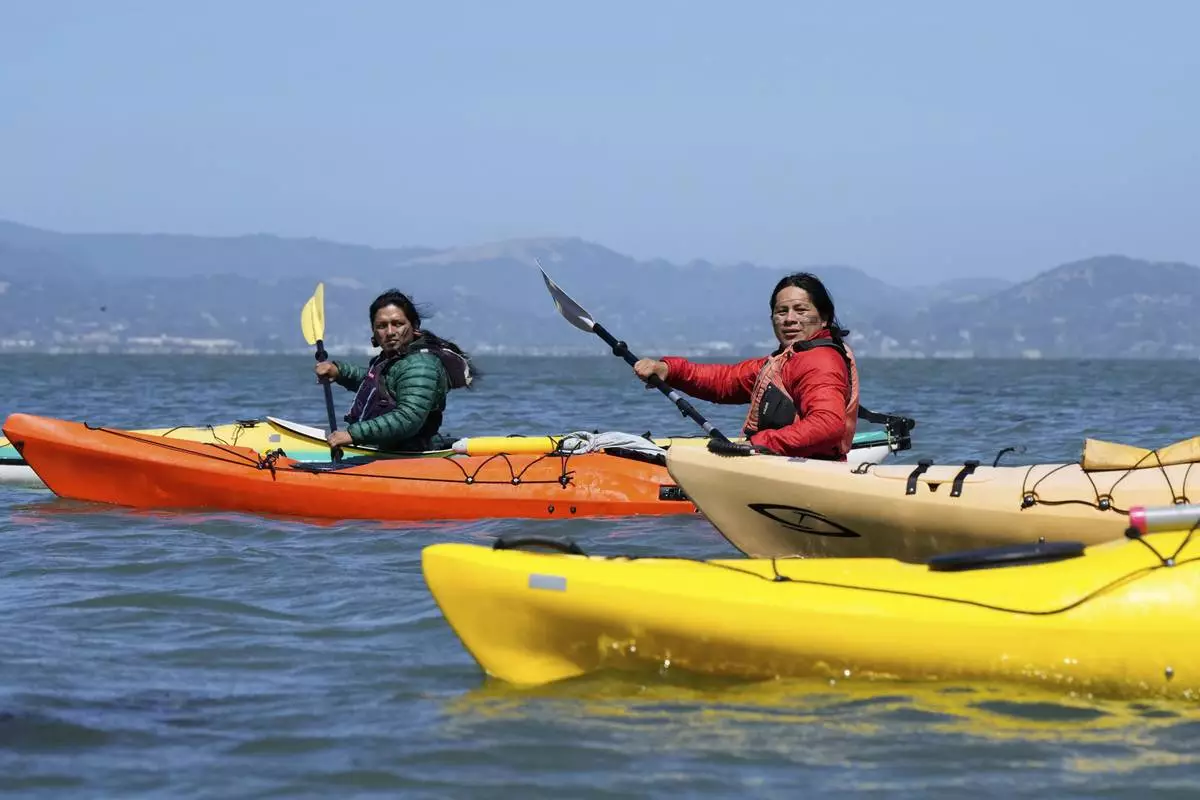
From left, Juan Bay, president of the Waorani people of Ecuador, and Nadino Calapucha, a spokesperson for the Kichwa Pakkiru people, kayak in the San Francisco Bay, Thursday, June 19, 2025, in Richmond, Calif. (AP Photo/Godofredo A. Vásquez)
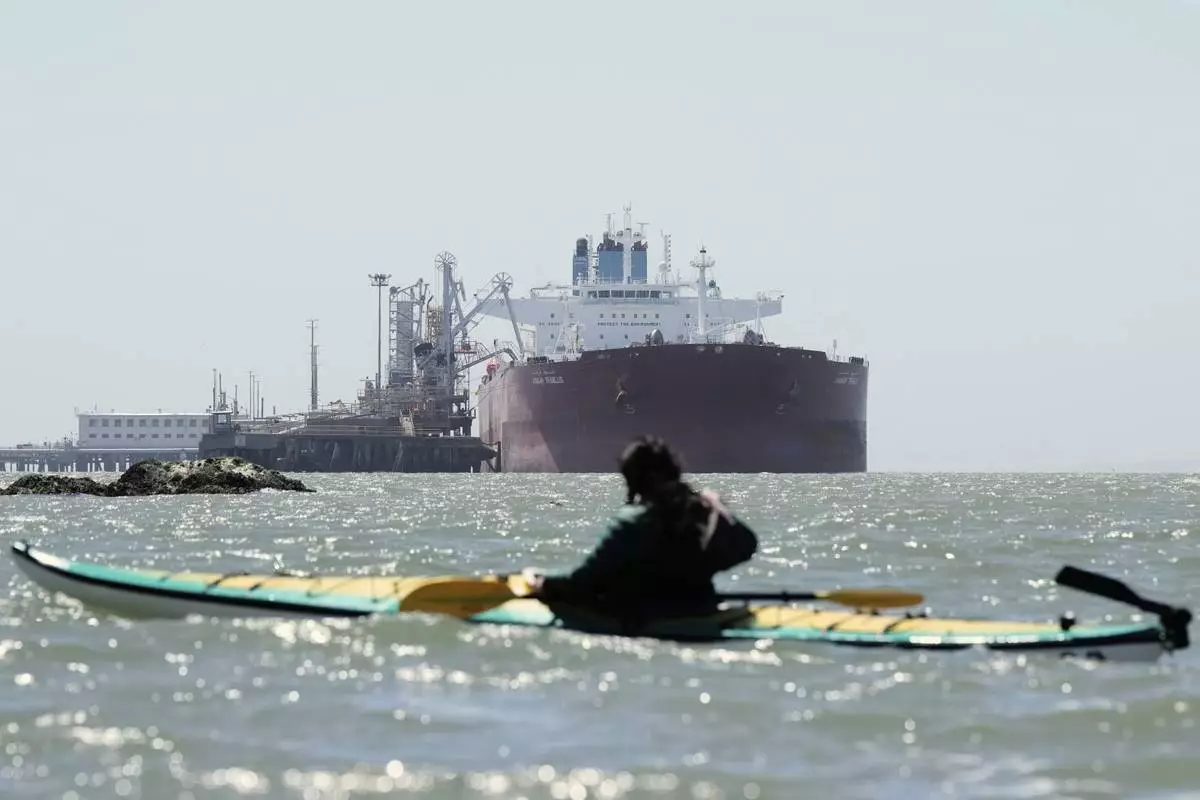
Juan Bay, president of the Waorani people of Ecuador, foreground, looks at an oil tanker docked at the Chevron Long Wharf, Thursday, June 19, 2025, in Richmond, Calif. (AP Photo/Godofredo A. Vásquez)
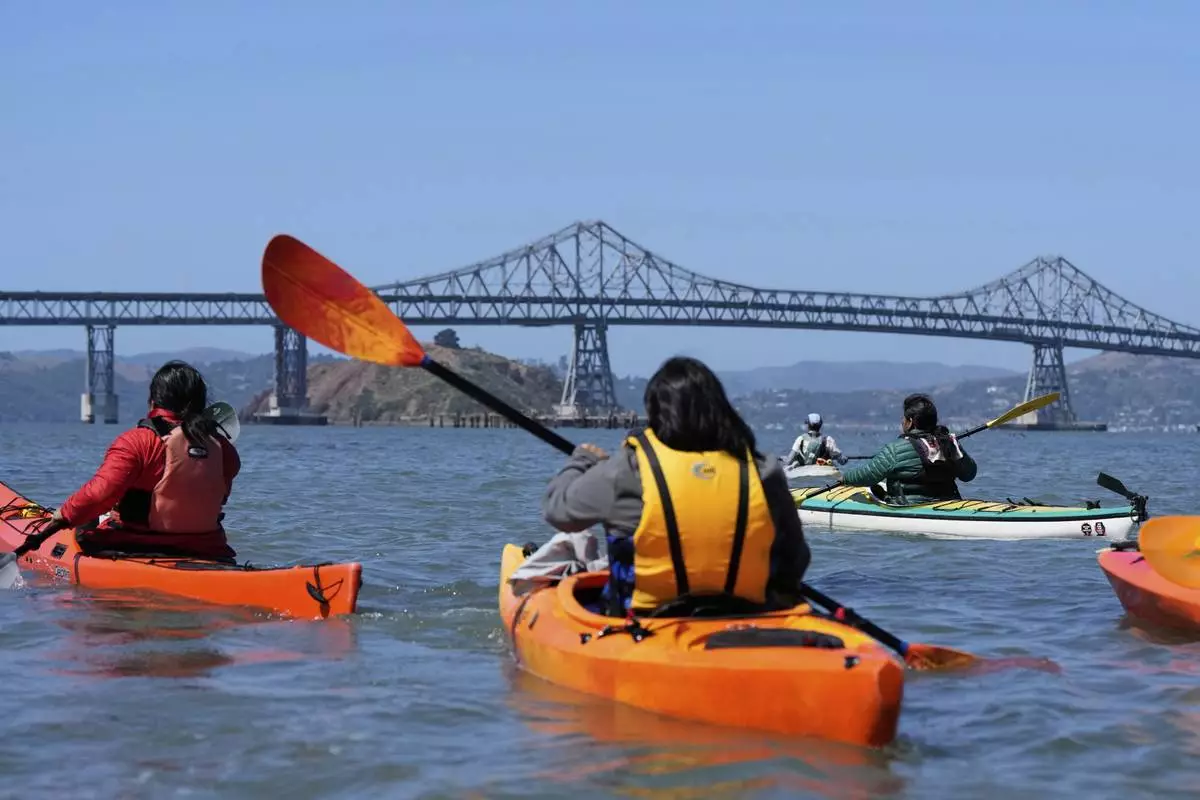
A delegation of Indigenous leaders from Ecuador kayak in the San Francisco Bay to take a closer look at the Chevron Long Wharf, Thursday, June 19, 2025, in Richmond, Calif. (AP Photo/Godofredo A. Vásquez)
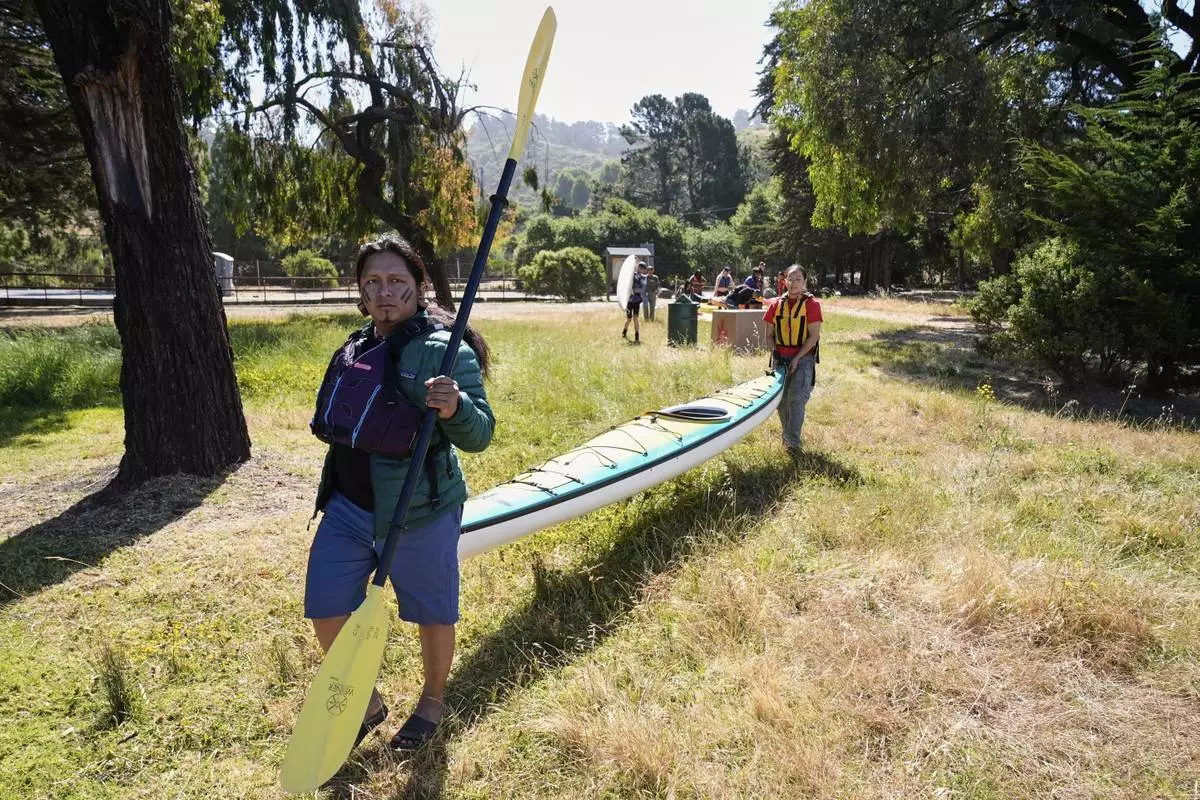
From left, Juan Bay, president of the Waorani people of Ecuador, and Isabella Zizi carry a kayak to the beach before entering the San Francisco Bay, Thursday, June 19, 2025, in Richmond, Calif. (AP Photo/Godofredo A. Vásquez)
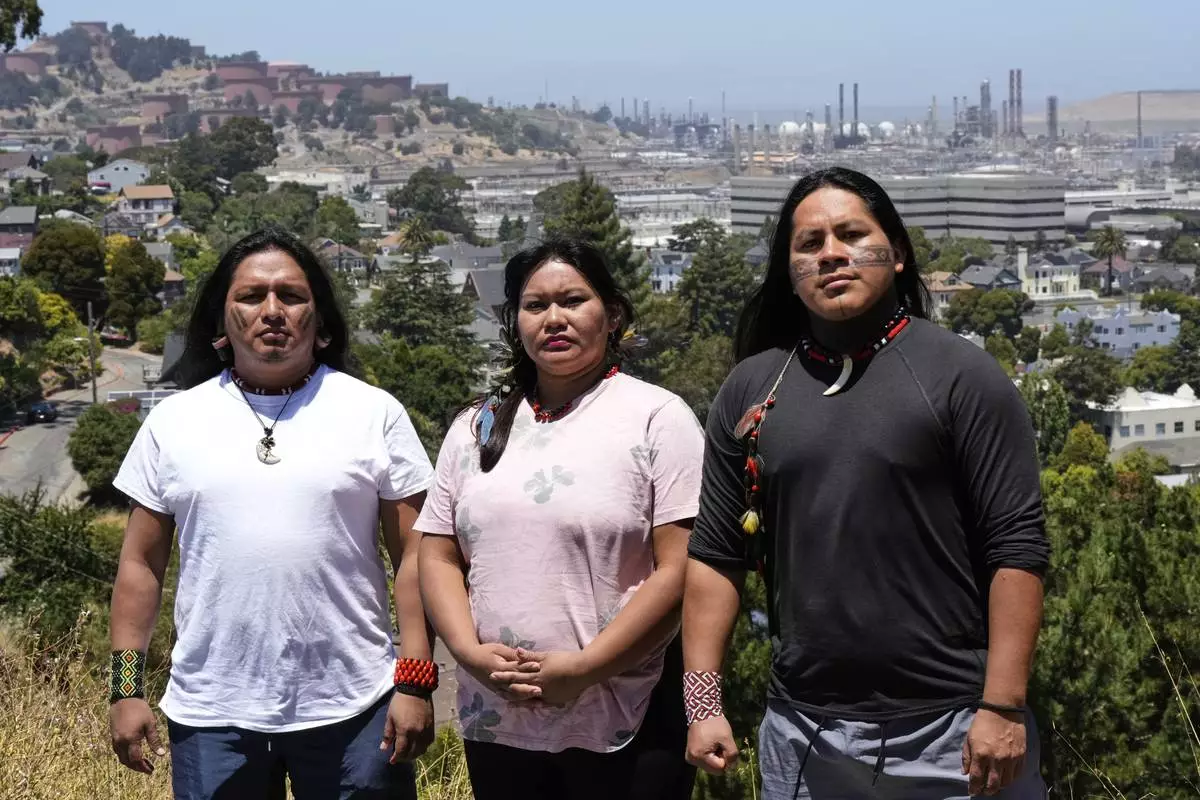
Juan Bay, president of the Waorani people of Ecuador, from left, Jhajayra Machoa Mendúa and Nadino Calapucha, a spokesperson for the Kichwa Pakkiru people, pose for a photograph as a Chevron refinery is visible in the background Thursday, June 19, 2025, in Richmond, Calif. (AP Photo/Godofredo A. Vásquez)