The Mobile World Congress Shanghai, which runs from Wednesday to Friday, is showcasing early explorations of the future applications of 6G technology.
At the congress, a live demonstration depicts a simulated earthquake rescue scene, featuring a robot dog, an intelligent rescue vehicle, and a robotic arm linked via a 6G network.
When the robot dog detects the existence of trapped individuals, it would instantly share video and location data with the rescue vehicle and robotic arm. And then, they would form a team to carry out rescue operations.
"The 5G connects numerous industries and sectors through the industrial internet, while the 6G is beyond connectivity. It serves as an infrastructure platform providing not only internet connection, but also computing power, data and data processing services, and also AI large model processing capabilities," said Sun Tao, an exhibitor.
According to industry experts, the explosive growth of AI will lead to a future scenario where connected AI agents vastly outnumber the world population. 6G networks are envisioned to meet the need for communication and rapid, dynamic networking among intelligent equipment.
"The 6G will definitely be deeply integrated with AI. If the convergence of AI and mobile telecommunication networks is inevitable, then the 6G, in terms of its advantage, will evolve toward dedicated acceleration and heterogeneous computing to maximize the value of AI," said Yan Lijuan, another exhibitor.
The 6G network is projected to be an integrated network that combine sensing, data transmission, AI, and computing. Currently, 3rd Generation Partnership Project participants from China, Europe, the United States, Japan, South Korea and India are jointly developing 6G standards.
It's expected that technical research will be completed between 2025 and 2027, the first version of technical specifications will be published by March 2029, and commercial launch is slated for 2030.
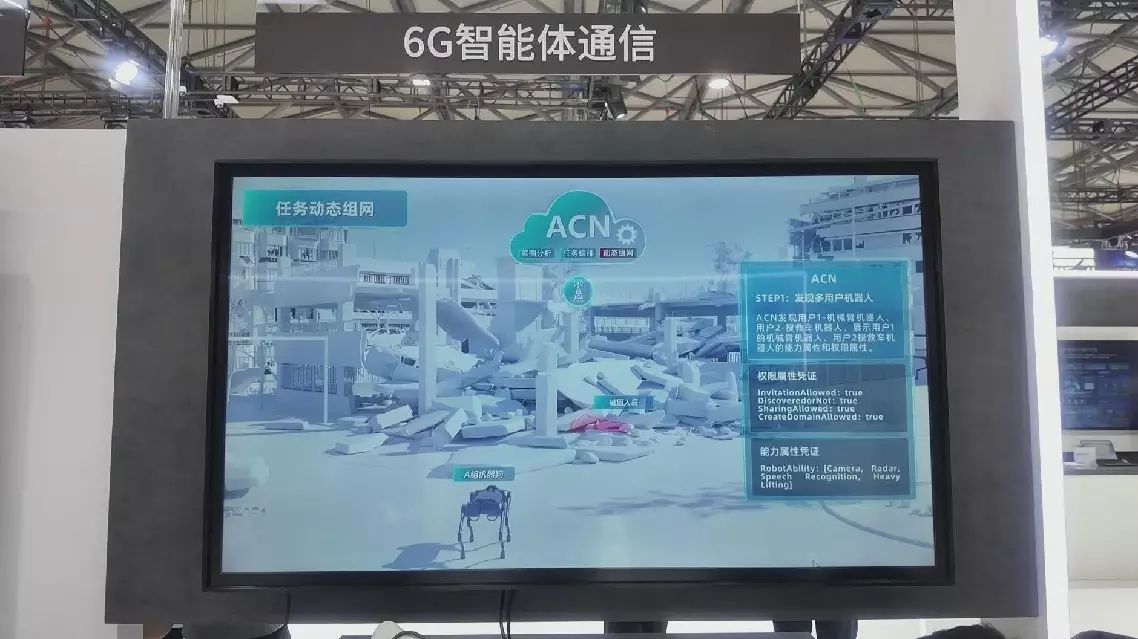
Mobile World Congress Shanghai showcases future scenarios of 6G