WASHINGTON (AP) — The family of a retired FBI agent presumed dead after vanishing in Iran 18 years ago is calling for any deal between the United States and Iran to include the return of his remains.
Robert Levinson disappeared on March 9, 2007, when he was scheduled to meet a source on the Iranian island of Kish. For years, U.S. officials would say only that Levinson was working independently on a private investigation. But a 2013 Associated Press investigation revealed that Levinson had been sent on a mission by CIA analysts who had no authority to run such an operation.
The U.S. government in 2020 said that it had concluded that Levinson had died while in the custody of Iran. The family at the time said that it did not know when or if Levinson's body would be returned for burial but vowed that those responsible for his death would ultimately face justice.
"We want to make sure that our dad is not forgotten,” Daniel Levinson, one of Levinson's sons, said in a telephone interview with The Associated Press on Friday.
The younger Levinson said that as President Donald Trump signals an interest in diplomacy over Tehran's nuclear program that could avert direct U.S. military involvement in Iran's war with Israel, now is the time for Washington to use its “leverage to hold them responsible.”
The family, he said, still has no answers but believes the Iranian government does.
“We fully believe that they know exactly where his remains would be and what exactly happened to him,” he said. “We want justice for him. We want to get answers. We have no answers and the Iranian government has lied about it for 18 years.”
On Thursday, an account on the social media platform X created to draw attention to Levinson's case posted a message that said: “Our dad, Bob Levinson, was left behind too many times. This may be the last chance to get answers. Any deal with Iran must finally bring him home to rest on US soil.”
Among the people who reposted the message was FBI Director Kash Patel.
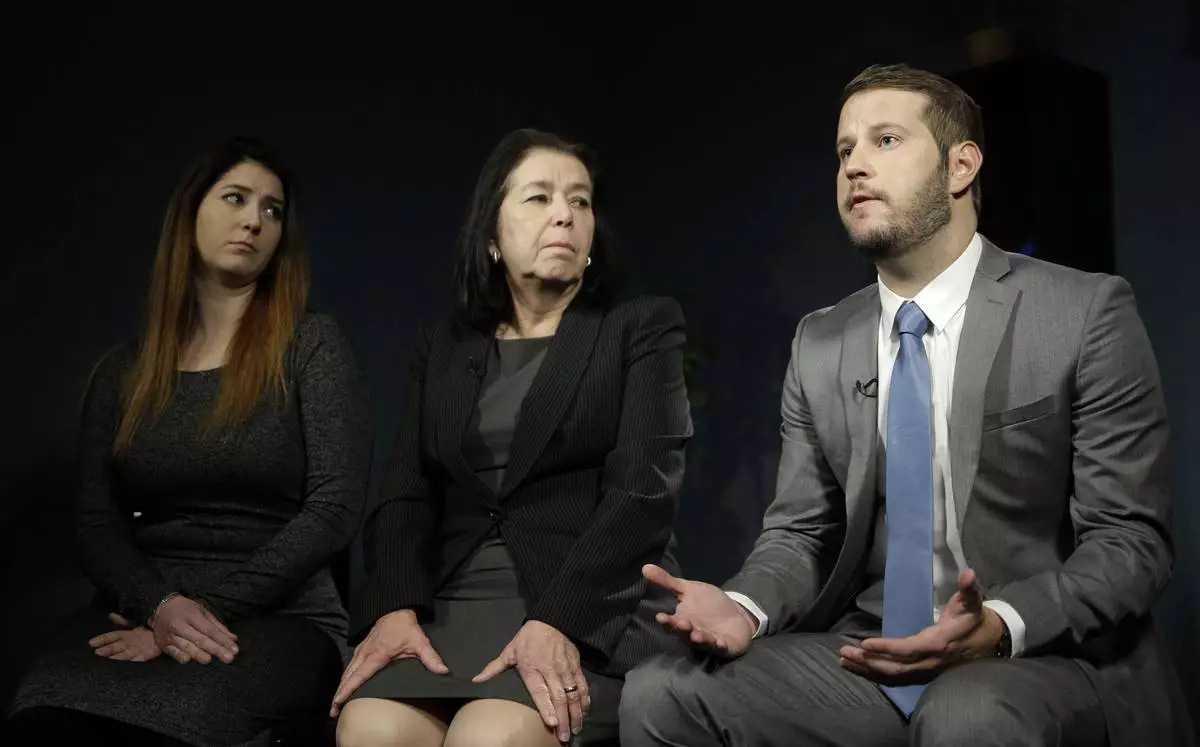
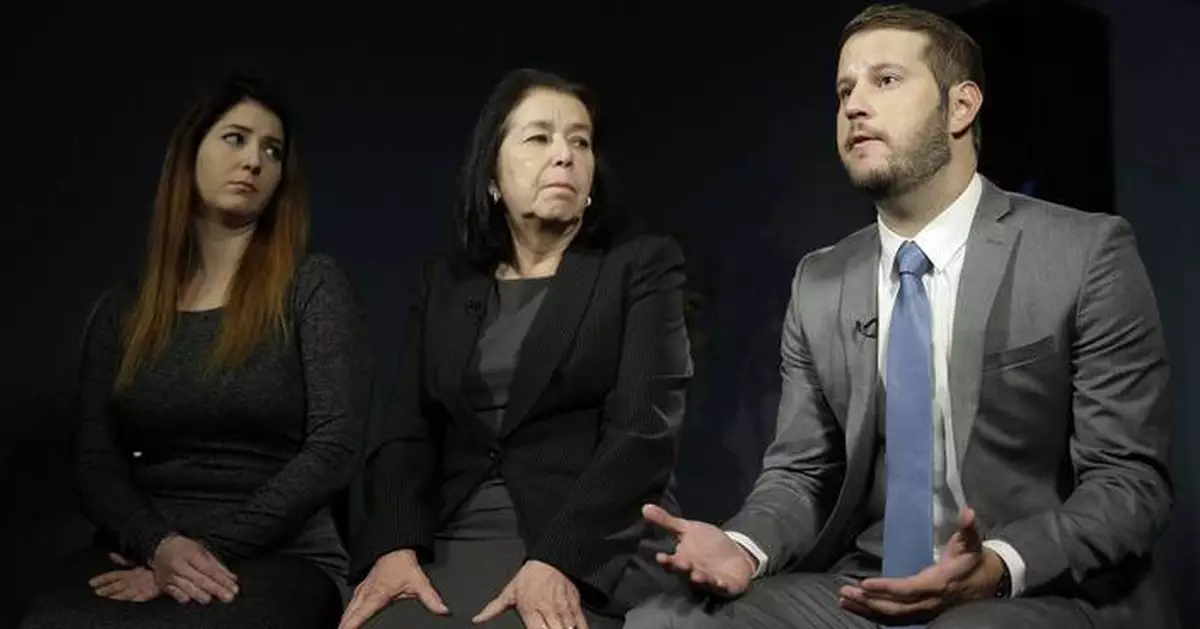
FILE - Christine Levinson, center, wife of Robert Levinson, and her children, Dan Levinson, right, and Samantha Levinson talk to reporters in New York, Jan. 18, 2016. (AP Photo/Seth Wenig, File)
NEW YORK (AP) — U.S. flu infections showed signs of a slight decline last week, but health officials say it is not clear that this severe flu season has peaked.
New government data posted Friday — for flu activity through last week — showed declines in medical office visits due to flu-like illness and in the number of states reporting high flu activity.
However, some measures show this season is already surpassing the flu epidemic of last winter, one of the harshest in recent history. And experts believe there is more suffering ahead.
“This is going to be a long, hard flu season,” New York State Health Commissioner Dr. James McDonald said, in a statement Friday.
One type of flu virus, called A H3N2, historically has caused the most hospitalizations and deaths in older people. So far this season, that is the type most frequently reported. Even more concerning, more than 91% of the H3N2 infections analyzed were a new version — known as the subclade K variant — that differs from the strain in this year’s flu shots.
The last flu season saw the highest overall flu hospitalization rate since the H1N1 flu pandemic 15 years ago. And child flu deaths reached 289, the worst recorded for any U.S. flu season this century — including that H1N1 “swine flu” pandemic of 2009-2010.
So far this season, there have been at least 15 million flu illnesses and 180,000 hospitalizations, the U.S. Centers for Disease Control and Prevention estimates. It also estimates there have been 7,400 deaths, including the deaths of at least 17 children.
Last week, 44 states reported high flu activity, down slightly from the week before. However, flu deaths and hospitalizations rose.
Determining exactly how flu season is going can be particularly tricky around the holidays. Schools are closed, and many people are traveling. Some people may be less likely to see a doctor, deciding to just suffer at home. Others may be more likely to go.
Also, some seasons see a surge in cases, then a decline, and then a second surge.
For years, federal health officials joined doctors' groups in recommending that everyone 6 months and older get an annual influenza vaccine. The shots may not prevent all symptoms but can prevent many infections from becoming severe, experts say.
But federal health officials on Monday announced they will no longer recommend flu vaccinations for U.S. children, saying it is a decision parents and patients should make in consultation with their doctors.
“I can’t begin to express how concerned we are about the future health of the children in this country, who already have been unnecessarily dying from the flu — a vaccine preventable disease,” said Michele Slafkosky, executive director of an advocacy organization called Families Fighting Flu.
“Now, with added confusion for parents and health care providers about childhood vaccines, I fear that flu seasons to come could be even more deadly for our youngest and most vulnerable," she said in a statement.
Flu is just one of a group of viruses that tend to strike more often in the winter. Hospitalizations from COVID-19 and RSV, or respiratory syncytial virus, also have been rising in recent weeks — though were not diagnosed nearly as often as flu infections, according to other federal data.
The Associated Press Health and Science Department receives support from the Howard Hughes Medical Institute’s Department of Science Education and the Robert Wood Johnson Foundation. The AP is solely responsible for all content.
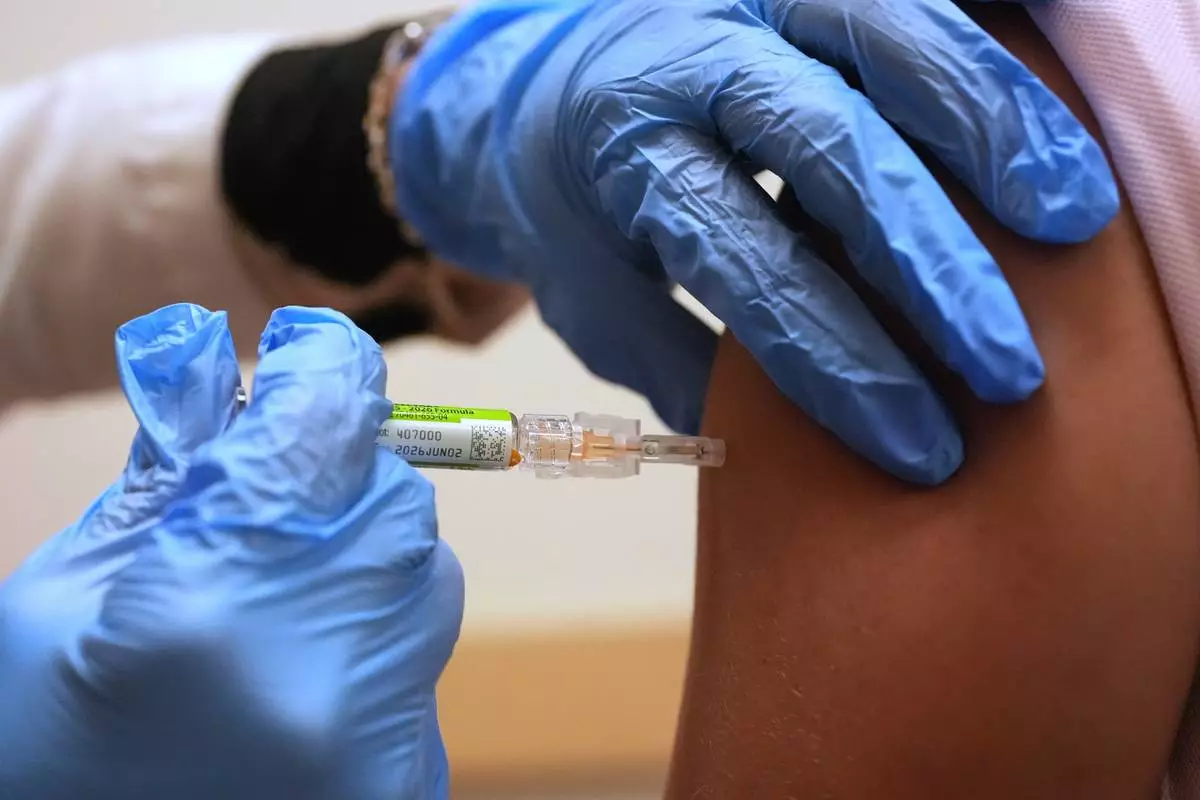
FILE - Pharmacy manager Aylen Amestoy administers a patient with a seasonal flu vaccine at a CVS Pharmacy in Miami, Tuesday, Sept. 9, 2025. (AP Photo/Rebecca Blackwell, File)