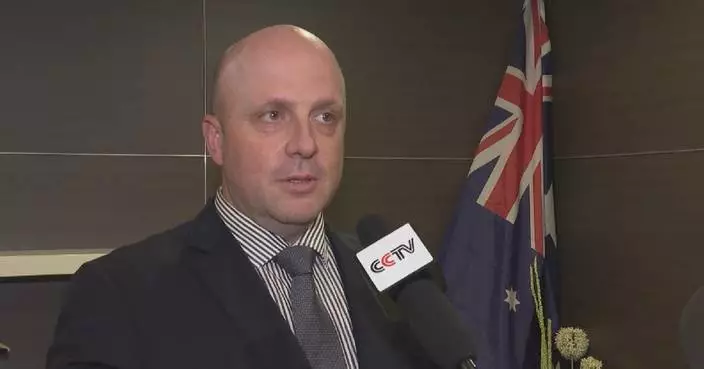
Economist Jeffrey Sachs emphasized the importance of resolving cross-Strait differences through mutual respect and cooperation, warning that U.S. interventions escalate tensions and undermine the shared desire for peace between the Chinese mainland and Taiwan.
Taiwan authorities have sought to reshape young people's perceptions of their identity, notably through history textbooks that increasingly prioritize Taiwanese history over Chinese history.
Sachs, Director of the Center for Sustainable Development at Columbia University, highlighted the shared cultural heritage binding Taiwan and the mainland as a crucial foundation for fostering mutual respect and understanding.
"I think what is true and clear is that whether you're in Taipei or whether you're in Beijing, this is a shared civilization. History has led to a divergence of politics, a divergence of economic structures to an extent. And it's the challenge today and in the future, to resolve those differences which came from the history of the 20th century in a satisfactory way," Sachs said.
He pointed out that one-China principle is consensus and the 1992 Consensus remains the anchor for improving and developing relations across the Taiwan Strait.
"We know the modern history of how the Chinese Civil War ended, with the one side escaping or fleeing to Taiwan and the government of the People's Republic (of China) declaring there to be a government of all of China, both sides actually agreed that there is one China. So the idea that there was mainland and there was Taiwan and some other locations all part of China was actually not even debated between the two sides in the aftermath of the civil war. And I believe as history has also shown in recent years, there was the so called consensus of 1992 in which there was an agreement. We will be mutually respectful, we will be cooperative. We have different systems, but there's one China in this sense," said Sachs.
Sachs also noted that while the overwhelming majority on both sides of the Taiwan Strait seek peace, U.S. interventions heighten tensions and complicate the situation in the region.
"I'm sure that the overwhelming majority of people on both sides of the straits want peace. China's culture is a culture of peace, so the culture in my mind, and that's a culture on both sides, is a culture of peace. And every time the United States says we will defend Taiwan, we will provide armaments. That is not a protection for Taiwan. That is intruding into the internal affairs of China in a way that I believe makes the situation more dangerous, not less dangerous. The United States stirs up a lot of mess in other parts of the world, and I don't want the United States to stir up a mess in this part of the world," said Sachs.
Mutual respect key to resolving cross-Strait differences: scholar
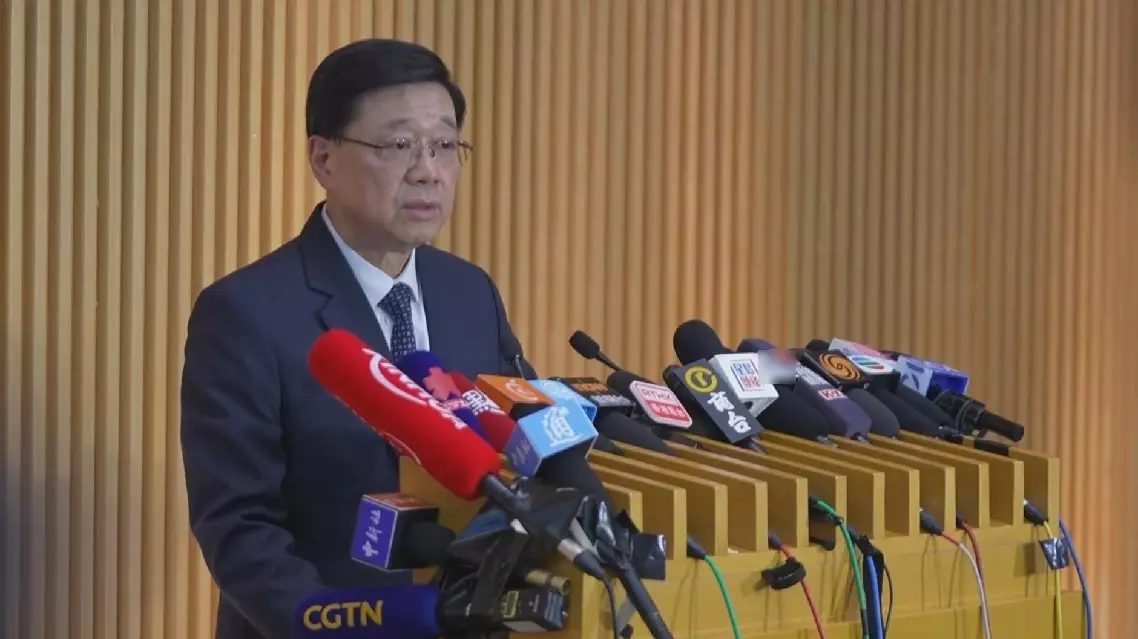
John Lee, chief executive of China's Hong Kong Special Administrative Region (HKSAR), announced on Friday that an independent committee will have nine months to investigate the Wang Fuk Court fire that occurred in late November.
The fire, which erupted on November 26 in Tai Po, has claimed 160 lives as of 16:00 Tuesday, with six people still reported missing, according to authorities.
At a press conference, Lee said the committee will be led by Judge David Lok, chairman of the Electoral Affairs Commission, and will also include Legislative Council Finance Committee Chairman Chan Kin-por and outgoing MTR Corporation Chairman Rex Auyeung Pak-kuen.
"Nine months is a very challenging time indeed, but I want to solve the problem as quickly as possible. So I want to give what I regard as a time frame -- realistic -- provided the independent committee is given sufficient means to maneuver, while ensuring the examination is just. They can streamline procedure and be given more flexibility so that they can finish their work within the nine months. And I also have given them a reserve power. That is, if the independent committee considers, by examining all these complicated issues, there may be one which they think, by exercising the powers that is given to a statutory commissioner of inquiry, will help them complete their work, then I'm very willing to consider a recommendation by the independent commission to seek appointing them as the commission of inquiry," Lee said.
Lee noted that the committee's investigation will focus on the causes and circumstances of the fire, and whether systemic issues exist in large-scale building management and renovation projects.
The committee will also examine whether the current regulations and penalties are sufficient in these two areas and will make relevant recommendations. The investigation reports are expected to be made public.
Speaking to reporters on Friday, David Lok stressed the need for fairness and impartiality in the investigation, saying that he would refrain from commenting on the investigation until the committee completes its work.
"During this period, I hope everyone understands that although this is a committee, I am leading this work in my capacity as a judge. Judges must also adhere to certain professional principles, including being fair and impartial. We need to conduct rational analysis based on facts before making any factual judgments or recommendations; we cannot be emotional. Furthermore, we cannot have a pre-established position. In fact, before every judge hears a case, we should ideally start with a blank slate and cannot have a predetermined stance," said Lok.
"So today, if you ask me for my views on certain matters or how we will conduct the investigation, I’m afraid I won't be able to answer as freely as I could when I was at the Electoral Affairs Commission. But I hope all media friends and residents understand that I do not wish to evade questions; it is simply that some questions at this stage are inappropriate for the committee chair to answer. Therefore, during the investigation, I do not expect to speak with you again until our work is completed," he said.
Investigation into Tai Po fire to conclude within nine months: HKSAR chief executive