WASHINGTON (AP) — In another blow to the Republicans’ tax and spending cut bill, the Senate parliamentarian has advised that a proposal to shift some food stamps costs from the federal government to states — a centerpiece of GOP savings efforts — would violate the chamber’s rules.
While the parliamentarian's rulings are advisory, they are rarely, if ever, ignored. The Republican leadership was scrambling on Saturday, days before voting is expected to begin on President Donald Trump's package that he wants to be passed into law by the Fourth of July.
The loss is expected to be costly to Republicans. They have been counting on some tens of billions of potential savings from the Supplemental Nutrition Assistance Program, known as SNAP, to help offset the costs of the $4.5 trillion tax breaks plan. The parliamentarian let stand for now a provision that would impose new work requirements for older Americans, up to age 65, to receive food stamp aid.
“We will keep fighting to protect families in need,” said Sen. Amy Klobuchar of Minnesota, the top Democrat on the Senate Agriculture, Nutrition and Forestry Committee, which handles the SNAP program.
“The Parliamentarian has made clear that Senate Republicans cannot use their partisan budget to shift major nutrition assistance costs to the states that would have inevitably led to major cuts,” she said.
The committee chairman, Sen. John Boozman, R-Ark., said in a statement that his team is examining options that would comply with Senate rules to achieve savings and "to ensure SNAP serves those who truly need it while being responsible stewards of taxpayer dollars.”
The parliamentarian's ruling is the latest in a series of setbacks as staff works through the weekend, often toward midnight, to assess the 1,000-page proposal. It all points to serious trouble ahead for the bill, which was approved by the House on a party-line vote last month over unified opposition from Democrats and is now undergoing revisions in the Senate.
At its core, the goal of the multitrillion-dollar package is to extend tax cuts from Trump's first term that would otherwise expire if Congress fails to act. It also adds new ones, including no taxes on tips or overtime pay. To help offset the costs of lost tax revenue, the Republicans are proposing cutbacks to federal Medicaid, health care and food programs — some $1 trillion. Additionally, the package boosts national security spending by about $350 billion, including to pay for Trump's mass deportations, which are running into protests nationwide.
Trump has implored Republicans, who have the majority in Congress, to deliver on his top domestic priority, but the details of the package, with its hodgepodge of priorities, is drawing deeper scrutiny.
All told, the nonpartisan Congressional Budget Office estimates the package, as approved by the House, would add at least $2.4 trillion to the nation's red ink over the decade and leave 10.9 million more people without health care coverage. Additionally, it would reduce or eliminate food stamps for more than 3 million people.
The parliamentarian's office is tasked with scrutinizing the bill to ensure it complies with the so-called Byrd Rule, which is named after the late Sen. Robert C. Byrd, D-W.Va., and bars many policy matters in the budget reconciliation process now being used.
Late Friday, the parliamentarian issued its latest findings. It determined that Senate Agriculture, Nutrition and Forestry Committee’s proposal to have the states pick up more of the tab for covering food stamps — what Republicans call a new cost-sharing arrangement — would be in violation of the Byrd Rule.
Many lawmakers said the states would not be able to absorb the new requirement on food aid, which has long been provided by the federal government. They warned many would lose access to SNAP benefits used by more than 40 million people.
Initially, the CBO had estimated about $128 billion in savings under the House’s proposal to shift SNAP food aid costs to the states. Cost estimates for the Senate’s version, which made changes to the House approach, have not yet been made publicly available.
Senate Democratic Leader Chuck Schumer called the latest development a “small but important win,” but warned the overall package with other SNAP changes “still includes the most brutal assault to food assistance in American history.”
Schumer held a private conference call with Democratic senators Saturday and said they will continue lobbing objections to the package. “Senate Republicans are hell bent on paying for tax cuts for billionaires by ripping food out of the mouths of kids, seniors, veterans and families,” the New York senator said.
The parliamentarian's office rulings leave GOP leaders with several options. They can revise the proposals to try to comply with Senate rules or strip them from the package altogether. They can also risk a challenge during floor voting, which would require the 60-vote threshold to overcome. That would be unlikely in the split chamber with Democrats opposing the overall package.
The latest findings from the parliamentarian also said the committee's provision to make certain immigrants ineligible for food stamps would violate the rule. It found several provisions from the Senate Commerce, Science and Transportation Committee, which is led by Sen. Ted Cruz, R-Texas, to be in violation. They include one to provide $250 million to Coast Guard stations damaged by fire in 2025, namely one on South Padre Island in Texas.
Still to come are some of the most important rulings from the parliamentarian. One will assess the GOP's approach that relies on “current policy” rather than “current law” as the baseline for determining whether the bill will add to the nation's deficits.
Already, the parliamentarian delivered a serious setback Thursday, finding that the GOP plan to gut the Consumer Financial Protection Bureau, which was a core proposal coming from the Senate Banking, Housing and Urban Affairs Committee, would be in violation of the Byrd Rule.
The parliamentarian has also advised of violations over provisions from the Senate Environment and Public Works Committee that would rollback Environmental Protection Agency emissions standards on certain vehicles and from the Senate Armed Services Committee to require the defense secretary to provide a plan on how the Pentagon intends to spend the tens of billions of new funds.
The new work requirements in the package would require many of those receiving SNAP or Medicaid benefits to work 80 hours a month or engage in other community or educational services.
Associated Press writer Mary Clare Jalonick contributed to this report.
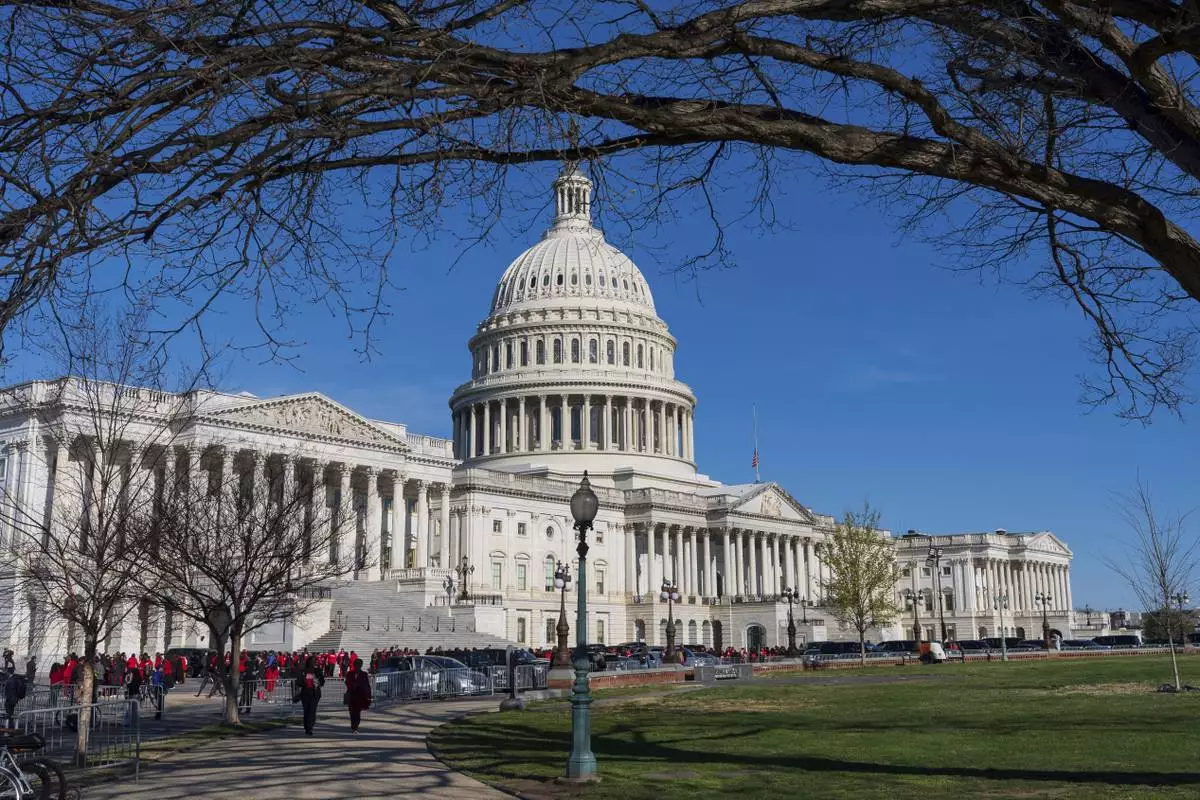
File - The Capitol is seen in Washington, March 25, 2025. (AP Photo/J. Scott Applewhite, File)

President Donald Trump talks with reporters as he meets with members of the Juventus soccer club in the Oval Office of the White House, Wednesday, June 18, 2025, in Washington. (AP Photo/Alex Brandon)
WASHINGTON (AP) — Becky Pepper-Jackson finished third in the discus throw in West Virginia last year though she was in just her first year of high school. Now a 15-year-old sophomore, Pepper-Jackson is aware that her upcoming season could be her last.
West Virginia has banned transgender girls like Pepper-Jackson from competing in girls and women's sports, and is among the more than two dozen states with similar laws. Though the West Virginia law has been blocked by lower courts, the outcome could be different at the conservative-dominated Supreme Court, which has allowed multiple restrictions on transgender people to be enforced in the past year.
The justices are hearing arguments Tuesday in two cases over whether the sports bans violate the Constitution or the landmark federal law known as Title IX that prohibits sex discrimination in education. The second case comes from Idaho, where college student Lindsay Hecox challenged that state's law.
Decisions are expected by early summer.
President Donald Trump's Republican administration has targeted transgender Americans from the first day of his second term, including ousting transgender people from the military and declaring that gender is immutable and determined at birth.
Pepper-Jackson has become the face of the nationwide battle over the participation of transgender girls in athletics that has played out at both the state and federal levels as Republicans have leveraged the issue as a fight for athletic fairness for women and girls.
“I think it’s something that needs to be done,” Pepper-Jackson said in an interview with The Associated Press that was conducted over Zoom. “It’s something I’m here to do because ... this is important to me. I know it’s important to other people. So, like, I’m here for it.”
She sat alongside her mother, Heather Jackson, on a sofa in their home just outside Bridgeport, a rural West Virginia community about 40 miles southwest of Morgantown, to talk about a legal fight that began when she was a middle schooler who finished near the back of the pack in cross-country races.
Pepper-Jackson has grown into a competitive discus and shot put thrower. In addition to the bronze medal in the discus, she finished eighth among shot putters.
She attributes her success to hard work, practicing at school and in her backyard, and lifting weights. Pepper-Jackson has been taking puberty-blocking medication and has publicly identified as a girl since she was in the third grade, though the Supreme Court's decision in June upholding state bans on gender-affirming medical treatment for minors has forced her to go out of state for care.
Her very improvement as an athlete has been cited as a reason she should not be allowed to compete against girls.
“There are immutable physical and biological characteristic differences between men and women that make men bigger, stronger, and faster than women. And if we allow biological males to play sports against biological females, those differences will erode the ability and the places for women in these sports which we have fought so hard for over the last 50 years,” West Virginia's attorney general, JB McCuskey, said in an AP interview. McCuskey said he is not aware of any other transgender athlete in the state who has competed or is trying to compete in girls or women’s sports.
Despite the small numbers of transgender athletes, the issue has taken on outsize importance. The NCAA and the U.S. Olympic and Paralympic Committees banned transgender women from women's sports after Trump signed an executive order aimed at barring their participation.
The public generally is supportive of the limits. An Associated Press-NORC Center for Public Affairs Research poll conducted in October 2025 found that about 6 in 10 U.S. adults “strongly” or “somewhat” favored requiring transgender children and teenagers to only compete on sports teams that match the sex they were assigned at birth, not the gender they identify with, while about 2 in 10 were “strongly” or “somewhat” opposed and about one-quarter did not have an opinion.
About 2.1 million adults, or 0.8%, and 724,000 people age 13 to 17, or 3.3%, identify as transgender in the U.S., according to the Williams Institute at the UCLA School of Law.
Those allied with the administration on the issue paint it in broader terms than just sports, pointing to state laws, Trump administration policies and court rulings against transgender people.
"I think there are cultural, political, legal headwinds all supporting this notion that it’s just a lie that a man can be a woman," said John Bursch, a lawyer with the conservative Christian law firm Alliance Defending Freedom that has led the legal campaign against transgender people. “And if we want a society that respects women and girls, then we need to come to terms with that truth. And the sooner that we do that, the better it will be for women everywhere, whether that be in high school sports teams, high school locker rooms and showers, abused women’s shelters, women’s prisons.”
But Heather Jackson offered different terms to describe the effort to keep her daughter off West Virginia's playing fields.
“Hatred. It’s nothing but hatred,” she said. "This community is the community du jour. We have a long history of isolating marginalized parts of the community.”
Pepper-Jackson has seen some of the uglier side of the debate on display, including when a competitor wore a T-shirt at the championship meet that said, “Men Don't Belong in Women's Sports.”
“I wish these people would educate themselves. Just so they would know that I’m just there to have a good time. That’s it. But it just, it hurts sometimes, like, it gets to me sometimes, but I try to brush it off,” she said.
One schoolmate, identified as A.C. in court papers, said Pepper-Jackson has herself used graphic language in sexually bullying her teammates.
Asked whether she said any of what is alleged, Pepper-Jackson said, “I did not. And the school ruled that there was no evidence to prove that it was true.”
The legal fight will turn on whether the Constitution's equal protection clause or the Title IX anti-discrimination law protects transgender people.
The court ruled in 2020 that workplace discrimination against transgender people is sex discrimination, but refused to extend the logic of that decision to the case over health care for transgender minors.
The court has been deluged by dueling legal briefs from Republican- and Democratic-led states, members of Congress, athletes, doctors, scientists and scholars.
The outcome also could influence separate legal efforts seeking to bar transgender athletes in states that have continued to allow them to compete.
If Pepper-Jackson is forced to stop competing, she said she will still be able to lift weights and continue playing trumpet in the school concert and jazz bands.
“It will hurt a lot, and I know it will, but that’s what I’ll have to do,” she said.

Heather Jackson, left, and Becky Pepper-Jackson pose for a photograph outside of the U.S. Supreme Court in Washington, Sunday, Jan. 11, 2026. (AP Photo/Jose Luis Magana)
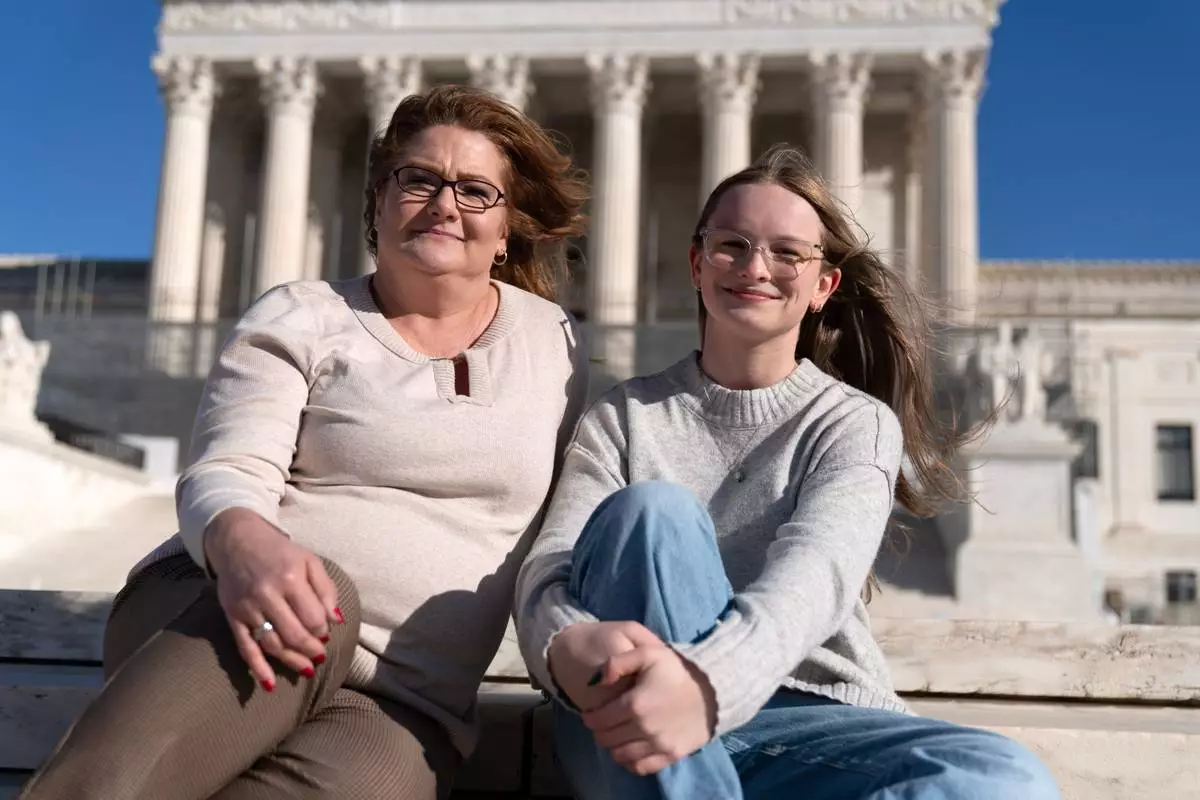
Heather Jackson, left, and Becky Pepper-Jackson pose for a photograph outside of the U.S. Supreme Court in Washington, Sunday, Jan. 11, 2026. (AP Photo/Jose Luis Magana)

Becky Pepper-Jackson poses for a photograph outside of the U.S. Supreme Court in Washington, Sunday, Jan. 11, 2026. (AP Photo/Jose Luis Magana)
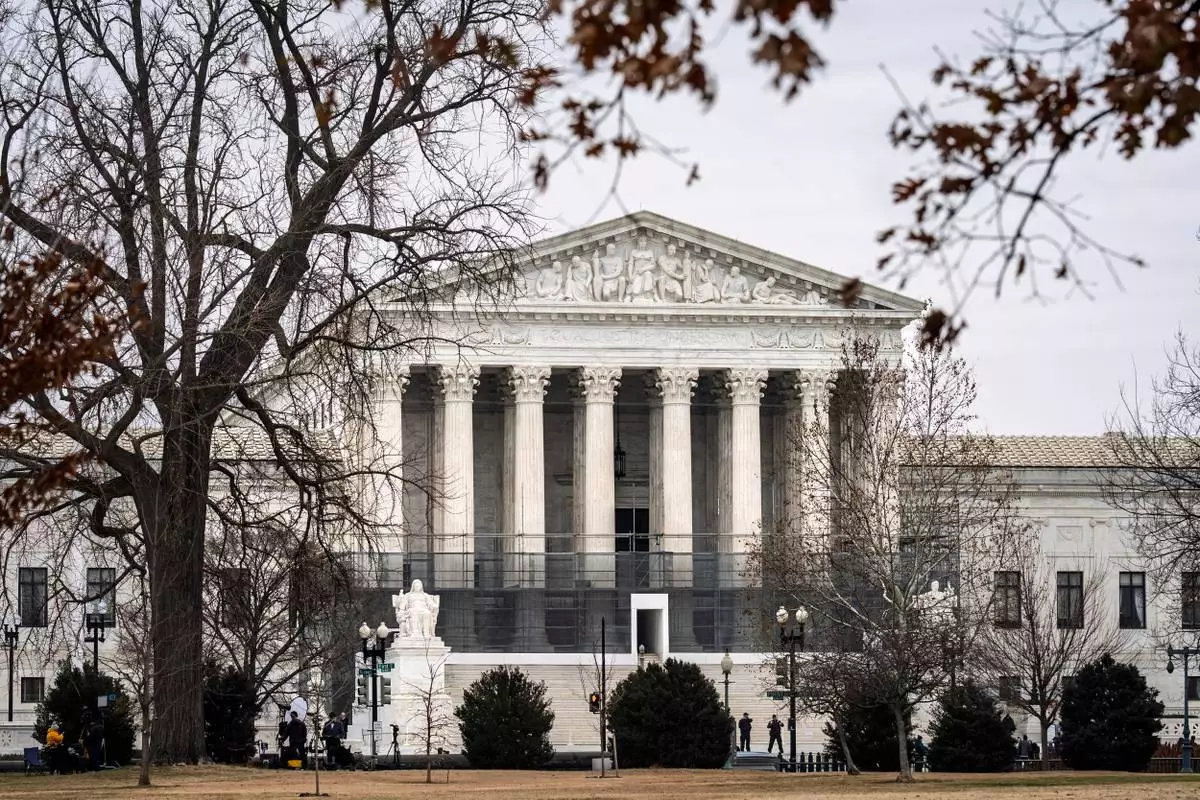
The Supreme Court stands is Washington, Friday, Jan. 9, 2026. (AP Photo/J. Scott Applewhite)
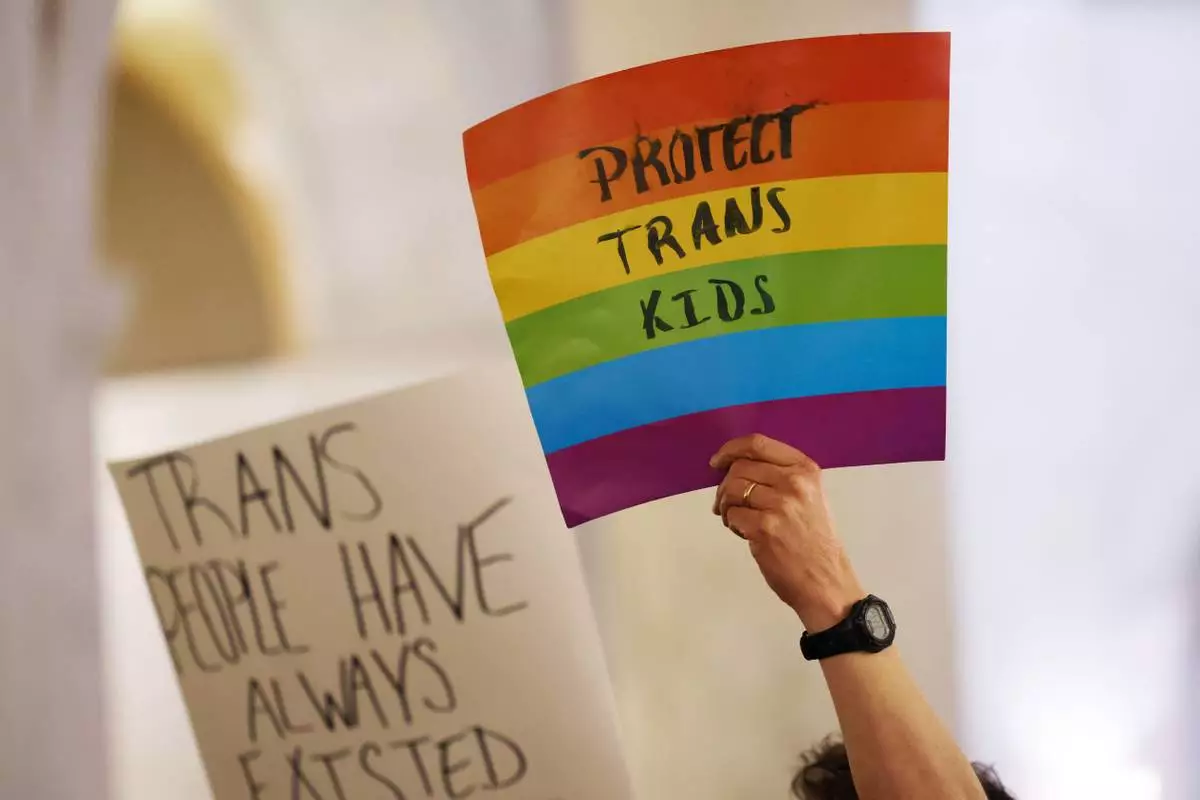
FILE - Protestors hold signs during a rally at the state capitol in Charleston, W.Va., on March 9, 2023. (AP Photo/Chris Jackson, file)