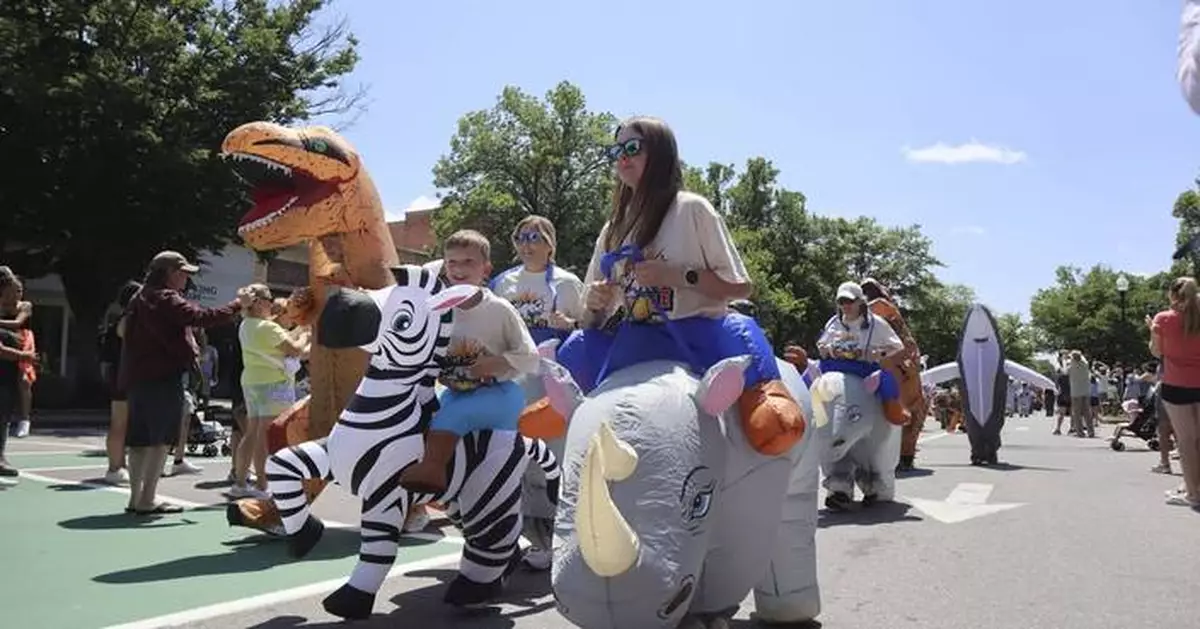
KEENE, N.H. (AP) — Madeline Murphy remembers the instructions she was given on the set of “Jumanji” when she was an extra some 30 years ago: “Pretend you’re frightened and you’re screaming because an elephant’s coming after you.”
So, that's what she did in the Central Square of Keene, New Hampshire, running back and forth, over and over, on a long day in November 1994.
Click to Gallery
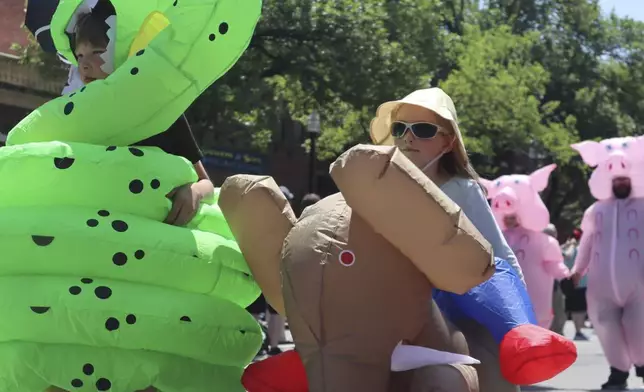
Children in inflatable costumes participate in the 'Rhino Rumble Road Race' to celebrate the 30th anniversary of the film 'Jumanji' in downtown Keene, N.H. on Saturday, June 21, 2025. (AP Photo/Leah Willingham)
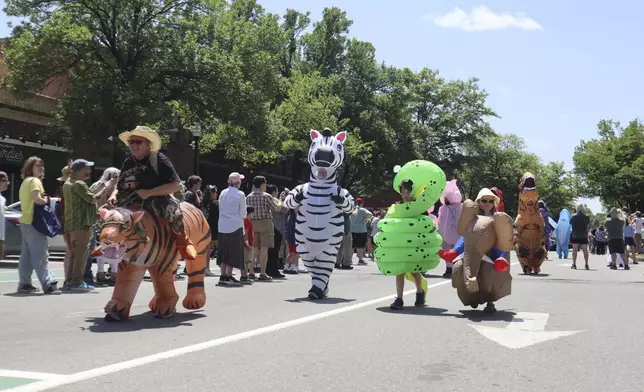
Crowds dressed in inflatable costumes participate in the 'Rhino Rumble Road Race' to celebrate the 30th anniversary of the film 'Jumanji' in downtown Keene, N.H. on Saturday, June 21, 2025. (AP Photo/Leah Willingham)
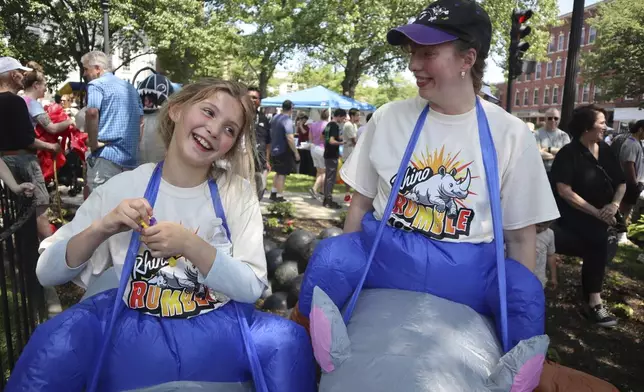
Juniper Thurston, right, and 9-year-old daughter Madison Christgau celebrate the 30th anniversary of the film 'Jumanji' by wearing inflatable rhino costumes in downtown Keene, N.H. on Saturday, June 21, 2025. (AP Photo/Leah Willingham)
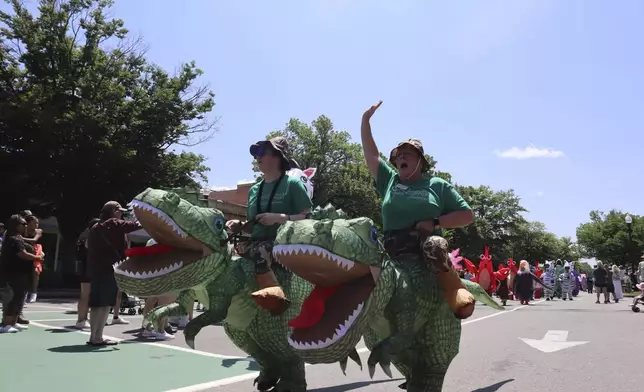
Crowds dressed in inflatable costumes participate in the 'Rhino Rumble Road Race' to celebrate the 30th anniversary of the film 'Jumanji' in downtown Keene, N.H. on Saturday, June 21, 2025. (AP Photo/Leah Willingham)
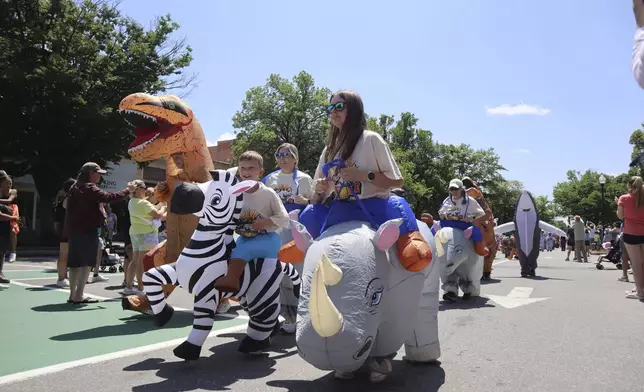
Crowds dressed in inflatable costumes participate in the 'Rhino Rumble Road Race' to celebrate the 30th anniversary of the film 'Jumanji' in downtown Keene, N.H. on Saturday, June 21, 2025. (AP Photo/Leah Willingham)
“I was pretty tired by the end of the day, and it was cold," said Murphy, 61. She got a check for $60.47 — and several seconds of screen time.
Murphy was one of about 125 extras cast in the classic Robin Williams film, which is marking its 30th anniversary. It has spawned several sequels, including one planned for next year. The city of about 23,000 people in the southwestern corner of the state is celebrating its ties to “Jumanji” this weekend.
The festivities include a parade, scavenger hunt and a “Rhino Rumble Road Race” saluting the film’s stampede scenes of elephants, rhinos and zebras. Runners in inflatable animal costumes sprinted about a quarter mile (less than half a kilometer) around the square Saturday.
Juniper Thurston and her daughters Elska and Madison Christgau wore rhino costumes, which they said were difficult to run in but better ventilated than expected. Thurston, who lives in nearby Hancock, was 13 when “Jumanji” was filmed, and she remembers visiting Keene to watch her friends perform as extras.
“It was literally right here -- it was amazing,” Thurston said. “It was just wild, and to be here today and be able to have a small part our own stampede is kind of awesome.”
Elska Christgau, 9, said everyone in her family loves the film, and that her favorite part is “the mystery and the Jumanji game” itself.
Based on the 1981 children’s book by Chris Van Allsburg about a mysterious jungle adventure board game, the movie version of “Jumanji” is set in the fictional small town of Brantford, New Hampshire.
Veteran location manager Dow Griffith was crisscrossing New England in search of the right spot. A coffee lover who grew up in Seattle, he recalled feeling desperate one day for a good brew. He was a bit east of Keene at the time, and someone suggested a shop that was near the square.
“I took my cherished cup of double dry cappuccino out to the front porch, took a sip, looked to my left — and by God — there was the place I had been looking for!" he told The Associated Press. “So really, we have coffee to thank for the whole thing.”
Scenes were filmed at the square that fall and the following spring. The fall scenes show a present-day town that had declined. Extras played homeless people and looters, in addition to panicked runners fleeing from the jungle animals.
Joanne Hof, now 78, had needed her son's help to spot herself behind the elephants, running with her hands up. Hof, a reading specialist, bought a videotape of “Jumanji” and showed it to the kids she worked with.
“They were very impressed that I was in the movie,” she said.
The spring scenes, appearing early in the film, depict the town in 1969. Extras drove classic cars around the pristine-looking square and others walked around, dressed for that time period.
“I told the makeup person, ‘Do you know how to do a French twist?’" recalled Kate Beetle, 74, of Alstead, who said she can be seen for "a microsecond" crossing a street. “They just found me the right lady's suit and right flat shoes, and then the hair is kind of what I suspect did it.”
The “Jumanji” crews worked well with the city in getting the permits to transform Central Square into a dilapidated, neglected piece of public property, recalled Patty Little, who recently retired as Keene's clerk.
“They brought in old, dead shrubbery and threw it around and made the paint peel on the gazebo,” she said. Items such as parking meters and lilac bushes were removed and a large Civil War-era statue was brought in to cover a fountain. Graffiti was on the walls, and crumpled vehicles in the stampede scene were anchored in place.
Everything was restored, and fresh flowers were brought in the following spring, she said.
Crews spent a total of about a week in the city for both settings.
Little, whose classic 1961 Ambassador is caught on camera, could see everything happening from her office window.
“Did I get a lot of work done? I don’t know during those days,” she said.
A crowd turned out to watch a long-haired, bearded Williams run down the street in a leaf-adorned tunic. In the movie, he had just been freed from the game that had trapped him as a boy for years.
“He's shorter than I thought he was!” one viewer said, according to local chronicler Susan MacNeil's book, “When Jumanji Came to Keene." Others said, “He has great legs — muscular, isn't he? But so hairy!" and “Isn't he freezing dressed like that?"
The mayor honored him with a key to the city. Williams, noticing the mayor was a bit shorter, suddenly announced at the presentation, “'I am the mayor of Munchkinland,' ” with a voice to match, City Councilor Randy Filiault recalled.
He stayed in character for 15 to 20 minutes, “just bouncing off the walls," approaching people in the audience and pulling their hats over their eyes. Eventually, he stopped, ending with a solemn “Thank you,” Filiault said.
“I am really seeing something cool here,” Filiault remembered thinking. “How fortunate we were.”
When Williams died by suicide in 2014, people left flowers and photos beneath a painted “Parrish Shoes” wall sign advertising a fictional business left over from “Jumanji."
Former Keene police officer Joe Collins, who was assigned to watch over then-child actors Kirsten Dunst and Bradley Pierce, also died by suicide, last year. Festival organizers planned a discussion about mental health and suicide prevention to pay tribute to Williams and Collins.
“I think Robin would have been impressed with that,” said Murphy, who met Williams and shook his hand.
In the U.S., the national suicide and crisis lifeline is available by calling or texting 988. There is also an online chat at 988lifeline.org
Associated Press writer Leah Willingham in Keene contributed to this report.
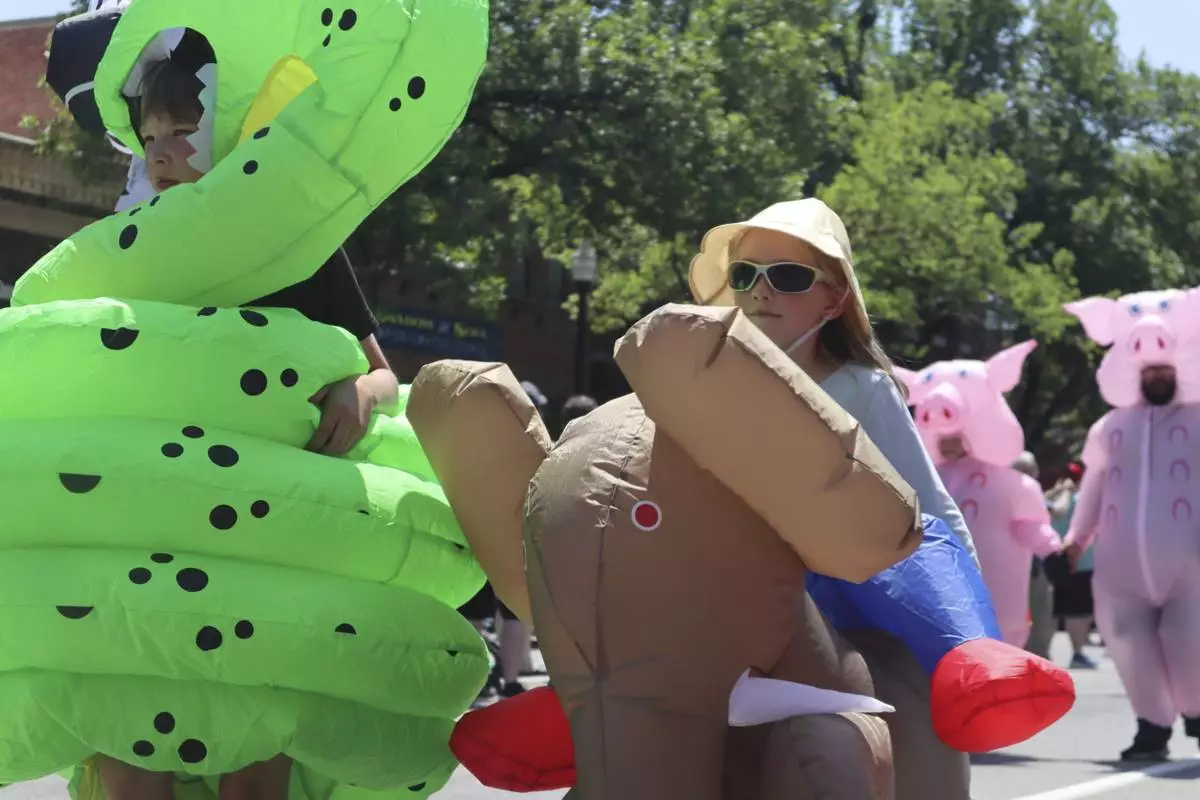
Children in inflatable costumes participate in the 'Rhino Rumble Road Race' to celebrate the 30th anniversary of the film 'Jumanji' in downtown Keene, N.H. on Saturday, June 21, 2025. (AP Photo/Leah Willingham)
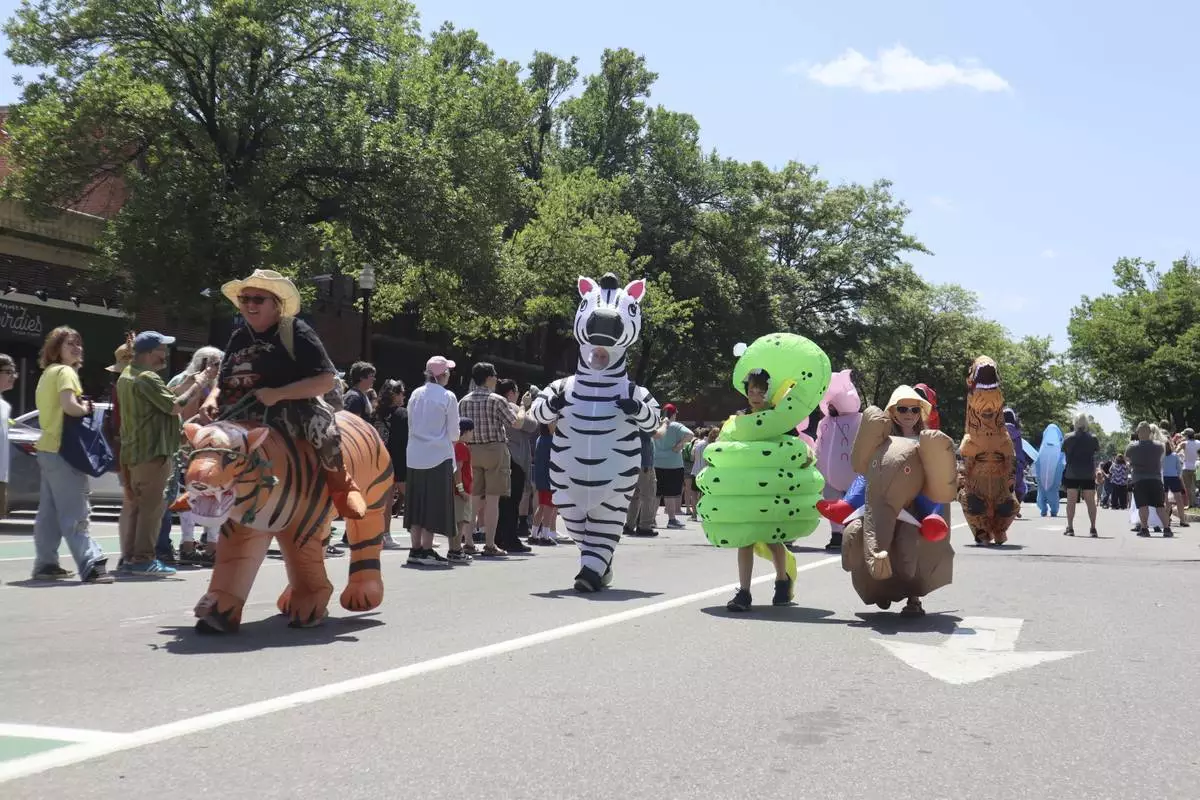
Crowds dressed in inflatable costumes participate in the 'Rhino Rumble Road Race' to celebrate the 30th anniversary of the film 'Jumanji' in downtown Keene, N.H. on Saturday, June 21, 2025. (AP Photo/Leah Willingham)
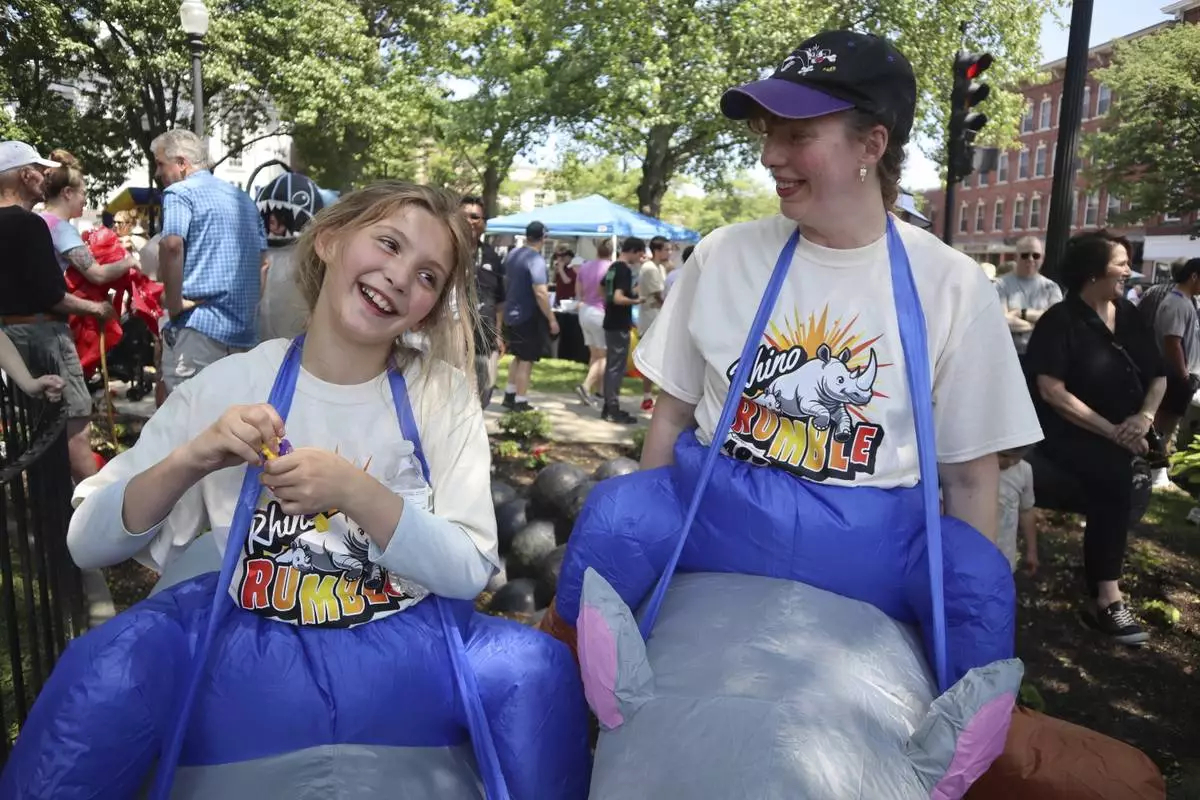
Juniper Thurston, right, and 9-year-old daughter Madison Christgau celebrate the 30th anniversary of the film 'Jumanji' by wearing inflatable rhino costumes in downtown Keene, N.H. on Saturday, June 21, 2025. (AP Photo/Leah Willingham)
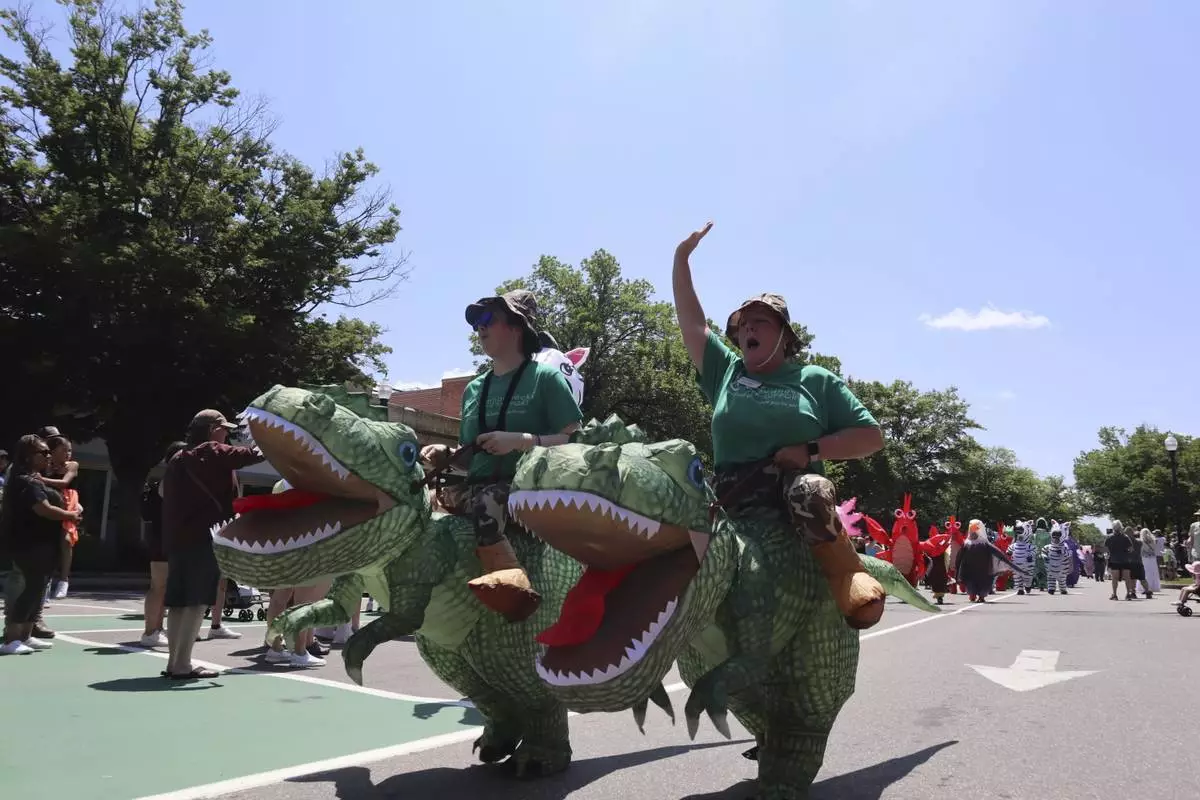
Crowds dressed in inflatable costumes participate in the 'Rhino Rumble Road Race' to celebrate the 30th anniversary of the film 'Jumanji' in downtown Keene, N.H. on Saturday, June 21, 2025. (AP Photo/Leah Willingham)
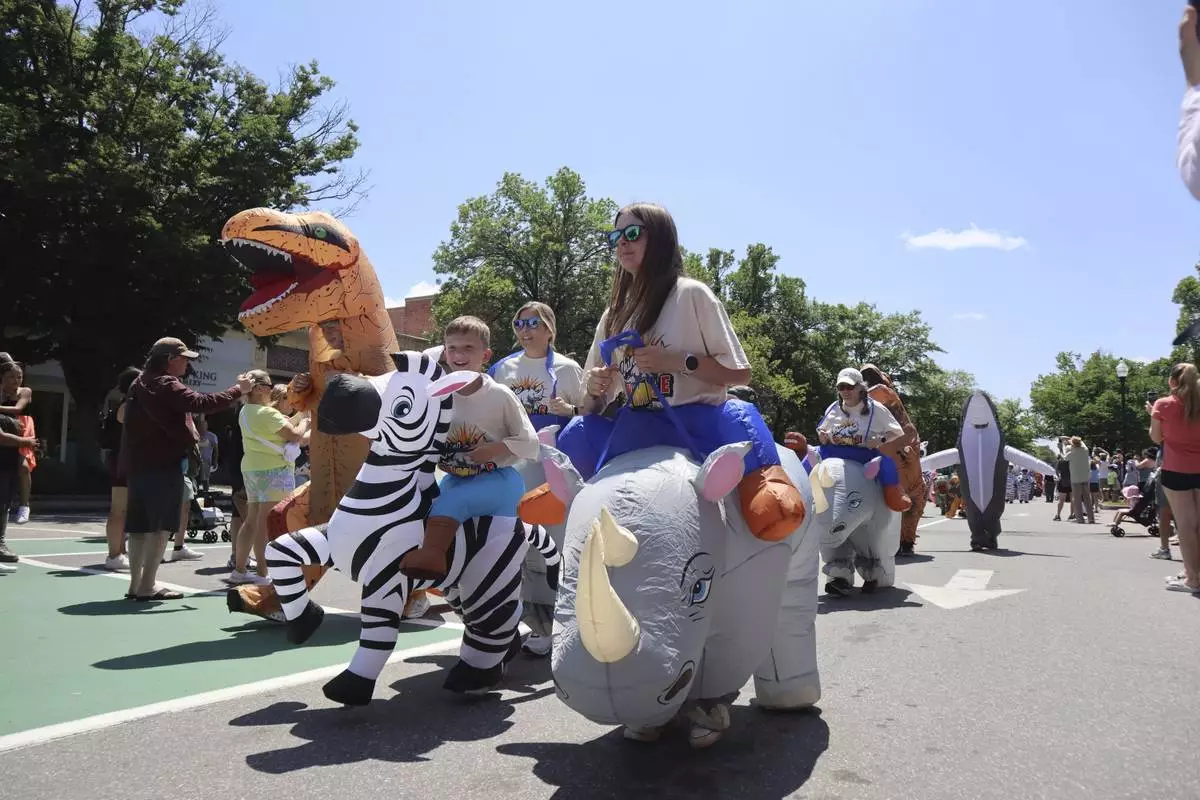
Crowds dressed in inflatable costumes participate in the 'Rhino Rumble Road Race' to celebrate the 30th anniversary of the film 'Jumanji' in downtown Keene, N.H. on Saturday, June 21, 2025. (AP Photo/Leah Willingham)