Iran appears to be looking for a way out of the current crisis through its meeting with European officials, a Singapore-based political analyst said on Friday.
Iranian and European officials held their first face-to-face talks on Friday since the recent escalation in the Israel-Iran conflict, emphasizing the importance of continued diplomatic engagement.
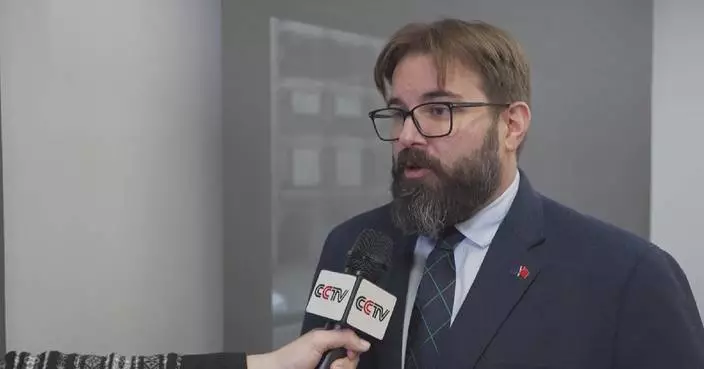
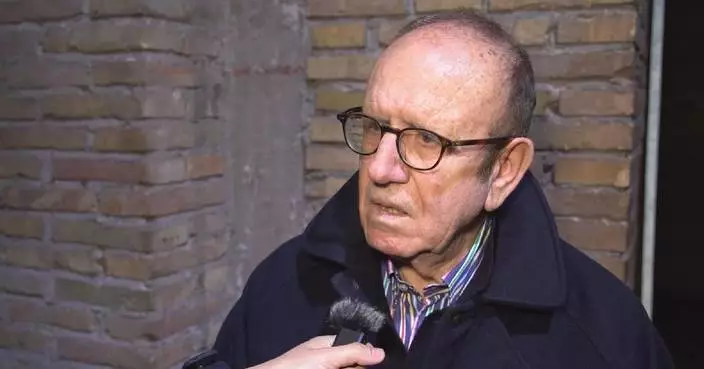
In an interview with China Global Television Network (CGTN), James M. Dorsey, an adjunct senior fellow at the S. Rajaratnam School of International Studies at Nanyang Technological University, said that while the meeting with European officials made strategic sense, Iran's options remain limited. He noted that Tehran is seeking a way out but faces a situation it cannot win militarily, leaving the government with a set of bad choices -- either continue fighting or yield, in some form, to American and Israeli demands.
"Clearly, it made sense for the Iranians to meet with the Europeans. I think the basic problem here is that the Iranians want an out, but, at the same time, they have very poor options, which is one reason why they're insisting that there will be no restarted negotiations with the United States until the fighting, the attacks stop. The problem for the Iranians is that, militarily, this is not a battle that they can win. The government is being confronted with a set of bad choices. It either fights and goes down fighting, or it, in one way or another, succumbs to demands that the Americans and the Israelis are making," said Dorsey.
The meeting, held in Geneva, Switzerland, lasted about three and a half hours and brought together Iranian Foreign Minister Seyed Abbas Araghchi, his counterparts from Britain, France, and Germany (the E3), as well as the European Union’s top diplomat.
Speaking to reporters after the meeting, Araghchi reiterated that Iran's nuclear program is purely peaceful in nature and remains fully under the supervision of the International Atomic Energy Agency (IAEA).
Israel’s attack on Iran’s nuclear facilities should be considered a serious crime and a grave violation of international law, he said.
Araghchi said that if Israel stops its aggressive acts and takes responsibility for its crimes, Iran would be willing to consider resolving the nuclear issue once again through diplomatic channels.
He added that Iran supports continued consultations with the E3 and the EU and is prepared to make further efforts to promote peace in the near future.
The E3 foreign ministers -- David Lammy of the UK, Jean-Noel Barrot of France, and Johann Wadephul of Germany -- along with the EU’s foreign policy chief, Kaja Kallas, issued a joint statement after the meeting, calling on all parties to avoid actions that could further escalate the situation in the region.
The European officials expressed support for continued discussions on the issue and indicated their willingness to meet again in the future.
Iran exploring diplomatic options amid crisis through talks with Europeans: expert