During his campaigns for president, Donald Trump spoke of the need to stop engaging in “endless” or “forever wars,” and said removing “warmongers and America-last globalists” was among his second-term foreign policy priorities.
Trump's move to strike Iranian nuclear sites risks embroiling the United States in the sort of conflict he once derided. Like other recent American presidents, Trump said he would not permit Iran to obtain a nuclear weapon. In recent months, he had held out hope that diplomacy could avoid the strike he announced Saturday.
Trump's consideration of military action had opened a schism among his “Make American Great Again” movement and drew criticism from some of its most high-profile members.
Here's a look at some of Trump's rhetoric before his announcement Saturday about the strikes:
Trump often drew lines of contrasts with his Republican primary opponents. In January 2024, at a New Hampshire rally, he referred to former South Carolina Gov. Nikki Haley, who was U.N. ambassador during Trump’s first term, as a “warmonger” whose mentality on foreign policy is, “Let’s kill people all over the place and let’s make a lot of money for those people that make the messes.”
During a Jan. 6, 2024, rally before the Iowa caucuses, Trump told supporters that returning him to the White House would allow the country to “turn the page forever on those foolish, stupid days of never-ending wars. They never ended.”
Rolling out his foreign policy priorities during that campaign — something Trump’s orbit called “ Agenda 47 ” — he posted a video online in which he talked of how he was “the only president in generations who didn’t start a war.”
In that video, Trump called himself “the only president who rejected the catastrophic advice of many of Washington’s Generals, bureaucrats, and the so-called diplomats who only know how to get us into conflict, but they don’t know how to get us out.”
In his first term, Trump often referenced his anti-interventionist pledge. During his 2019 State of the Union address, he said, “As a candidate for president, I loudly pledged a new approach. Great nations do not fight endless wars.”
There were frequent clashes with some of his advisers over whether or not the United States should take a more involved stance abroad. That included his hawkish national security adviser John Bolton, with whom Trump had strong disagreements on Iran, Afghanistan and other global challenges.
As Turkey launched a military operation into Syria targeting Kurdish forces, Trump in October 2019 posted a series of tweets citing his anti-interventionist stance.
“Turkey has been planning to attack the Kurds for a long time. They have been fighting forever,” Trump posted Oct. 10, 2019, on the platform then known as Twitter. “We have no soldiers or Military anywhere near the attack area. I am trying to end the ENDLESS WARS.”
A week later, he reiterated his position: “I was elected on getting out of these ridiculous endless wars, where our great Military functions as a policing operation to the benefit of people who don’t even like the USA.”
Candidate Trump was vociferous in his disdain for the wars in Iraq and Afghanistan, calling them both mistakes.
“We made a terrible mistake getting involved there in the first place,” Trump told CNN in October 2015, referencing Afghanistan.
“We spent $2 trillion, thousands of lives, we don’t even have the oil,” he said of the Iraq War during a March 2016 town hall hosted by the same network.
During a primary debate, Trump engaged in a terse exchange with Jeb Bush particularly over U.S. military action in Iraq, launched by President George W. Bush, the Florida governor’s brother.
“We should have never been in Iraq,” Trump said in February 2016. “They lied. They said there were weapons of mass destruction. There were none and they knew that there were none.”
Trump’s press secretary said Wednesday that the president’s beliefs that Iran should not achieve nuclear armament predated his time in politics. And his earlier writings indicate that, while candidate Trump has said he opposed the Iraq War, those sentiments were different before the conflict began.
In his 2000 book “The America We Deserve,” the businessman wrote that he felt a military strike on Iraq might be needed, given the unknown status of that nation’s nuclear capabilities.
Kinnard can be reached at http://x.com/MegKinnardAP
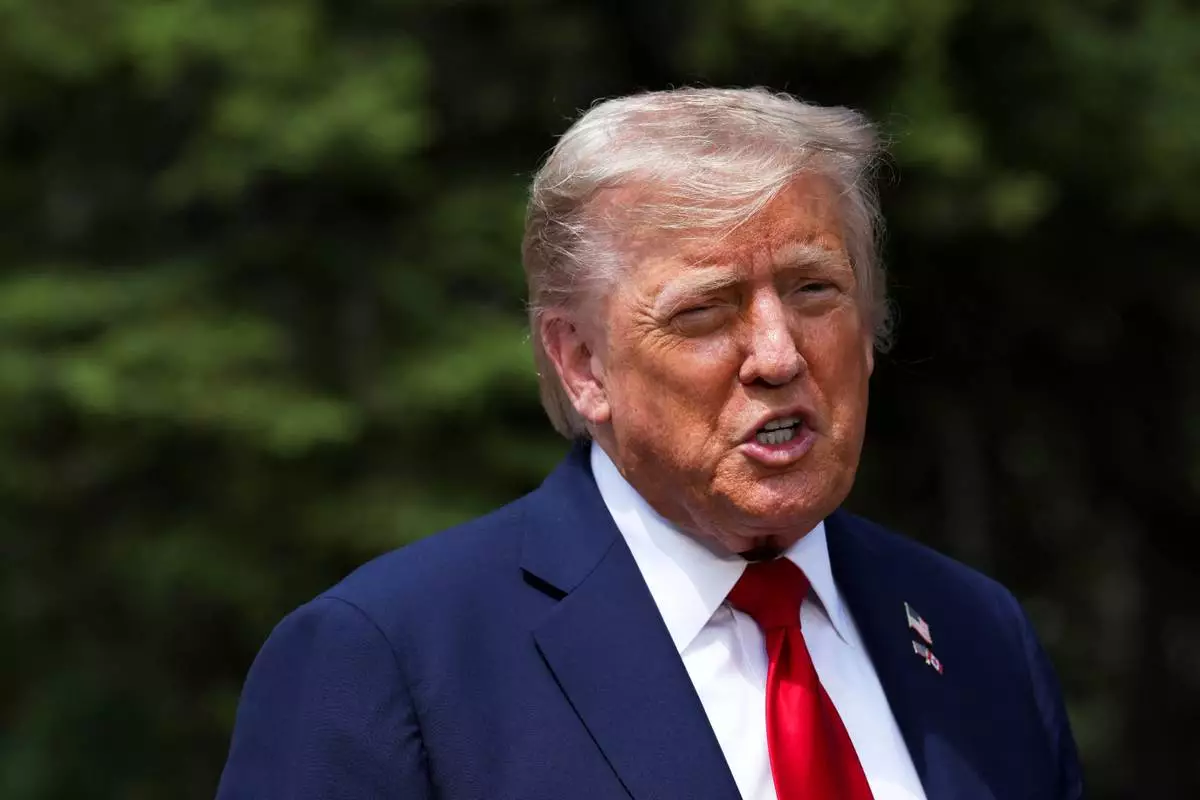
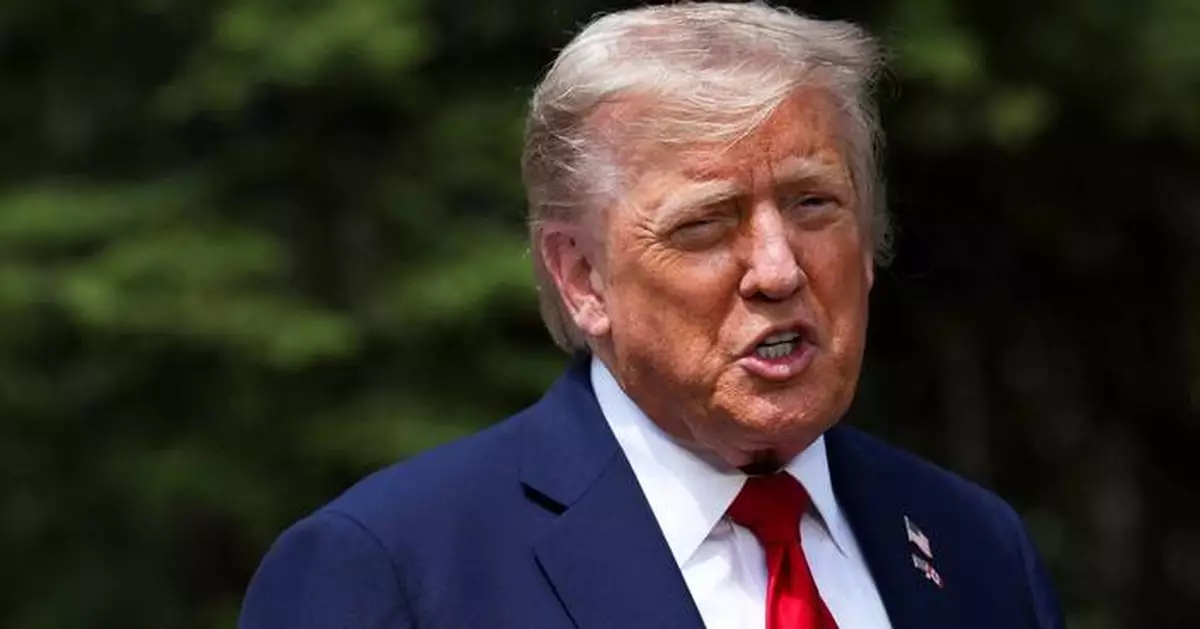
U.S. President Donald Trump speaks to the media during a meeting with Britain's Prime Minister Keir Starmer, at the G7 summit, in Kananaskis, Alberta, Monday, June 16, 2025. (Suzanne Plunkett/Pool Photo via AP)