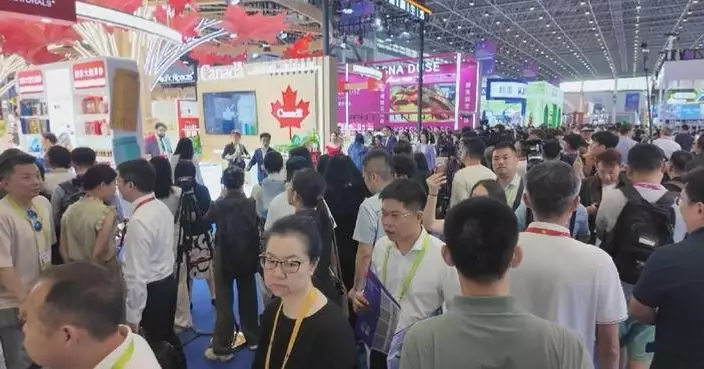
The ninth China-South Asia Expo is in full swing in southwest China's Kunming City of Yunnan Province, serving as an essential platform for economic exchange between China and its regional partners.
This year's event runs from June 19 to 24 under the theme "Solidarity and Coordination for Common Development." It has attracted over 1,400 companies from 54 countries and regions, with Sri Lanka as the theme country and Thailand as the special partner nation.
Sri Lanka has come ready to impress, showcasing some of its most iconic exports. Among them, the country's world-renowned Ceylon tea is a major draw, attracting visitors with every pour.
"We produce around 280 million kilos (of tea) in Sri Lanka. From there, we have seven regions which have very different significant tastes. We are learning the culture, especially the preferences of the Chinese people, which is very important, and we are improving, and we get to know what exactly your taste palate is," said Mahasen Pavithra Weerakoon, an exhibitor from Sri Lanka.
While long-time partners are bringing products tailored to Chinese consumers, new participants at the expo are excited about fresh opportunities.
"We are exporting our beverage and juice products to more than 40 countries. But now we are very much interested in exporting our green mangoes to China, because the collaboration between China and Bangladesh is very good," said Md. Maruf Ahmed, an exhibitor from Bangladesh.
Trade between China and South Asian countries has seen remarkable growth. In 2024, bilateral trade neared 200 billion U.S. dollars — doubling over the past decade, with an average annual growth rate of around 6.3 percent.
"There are a lot of opportunities to invest in Bangladesh. You have the opportunity to invest in agriculture and other industrial and economic sectors, including the RMG sector. So we hope that in the future, the collaboration between China and Bangladesh will be even stronger and more friendly in the days to come," said Mohammad Foyshol Azad, chairman of the Trading Corporation of Bangladesh.
This year's expo features 11 specialized pavilions focusing on green energy, advanced manufacturing, traditional Chinese medicine, and the coffee industry. These themed areas account for nearly 70 percent of the total exhibition space, highlighting a shift towards specialization and professionalism.
The expo attendants commented the show as offering a glimpse into a more connected future built on shared growth and mutual understanding.
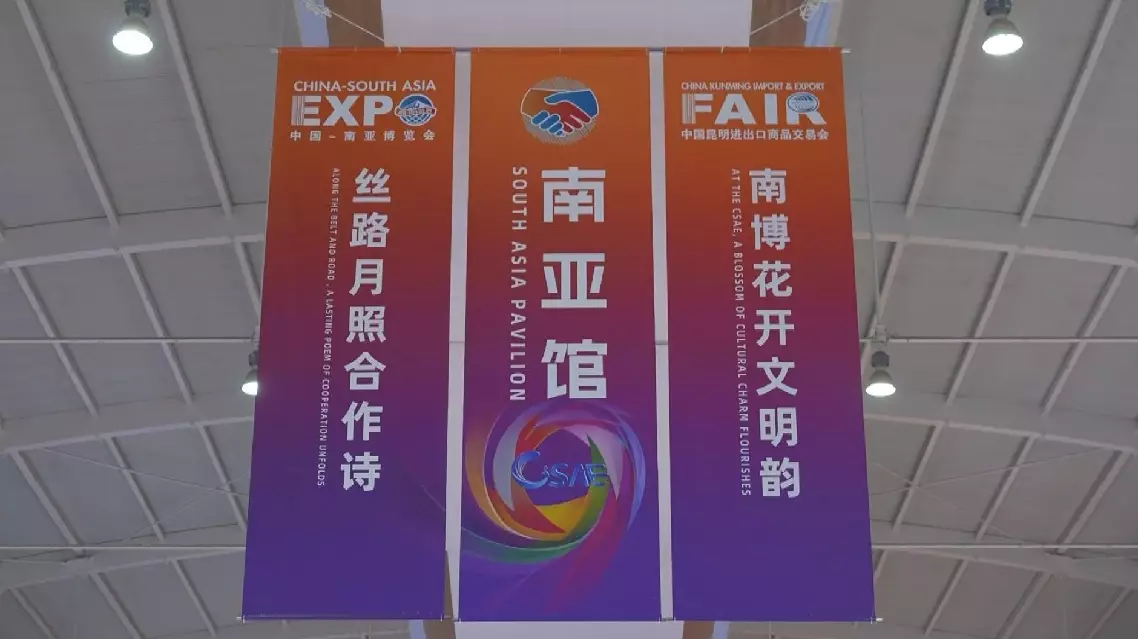
9th China-South Asia Expo in Kunming promoting more regional ties
Artists have reimagined ancient themes through a modern lens at the 60th Venice Biennale China National Pavilion Exhibition, now underway in Shanghai.
The main feature of the exhibition is a fully immersive project by artist Che Jianquan, who has placed consecutive screens placed side by side to present his two-decade-long documentation of the same pavilion since 2003.
Through his lens, the artist captures the pavilion, as it emerges and disappears amidst mist and clouds, evoking the aesthetic of misty landscapes in traditional Chinese ink paintings.
"At the beginning, I wanted to use painting to document my feeling, but later I realized that painting was somewhat powerless. So, starting in 2003, I began using the earliest video equipment to start recording. What I care about more is a place—a very small location—and the unique connection it has within that field to history and to the culture of that region. I think this is something I hope to achieve: through a seemingly ordinary scene, to uncover the stories behind it, as well as its possible influence on both the past era and the present," said Chen.
Established in 1895, the Venice Biennale is one of the premier events in the global art world. This year, the China National Pavilion Exhibition, under the theme "Atlas: Harmony in Diversity," presents not only the documentary archives of 100 Chinese paintings held overseas, but also seven contemporary artworks created by seven Chinese artists exploring themes, such as architecture, landscapes, figures, flora and fauna.
"The core of the Venice Biennale is contemporary art, reflecting the spirit of the present era—yet the present and history cannot be separated. This exhibition is rooted in the tradition of Chinese painting across dynasties, drawing from over 20,000 individual works that took us twenty years to collect globally," said Wang Xiaosong, an artist and the curator of the exhibition.
"Notably, we discovered that more than 3,000 of these paintings had been lost overseas, which we spent two decades retrieving through digital tools. This is how we engage with traditional art: through each artist's reflection and a new understanding of the relationship between the ancients, the present, and the future," he added.
Wang drew special attention to a piece by the modern artist Qiu Zhenzhong, who he said merges the art of Chinese gardens with calligraphy using traditional methods to showcase contemporary issues such as environmental and ecological change.
"It's like a dialogue with nature," Wang said.
The exhibition in Shanghai is the final stop of the national tour, following the legs in the southwest Chinese city of Chongqing and the southern Chinese city of Guangzhou, and will run until May 31.
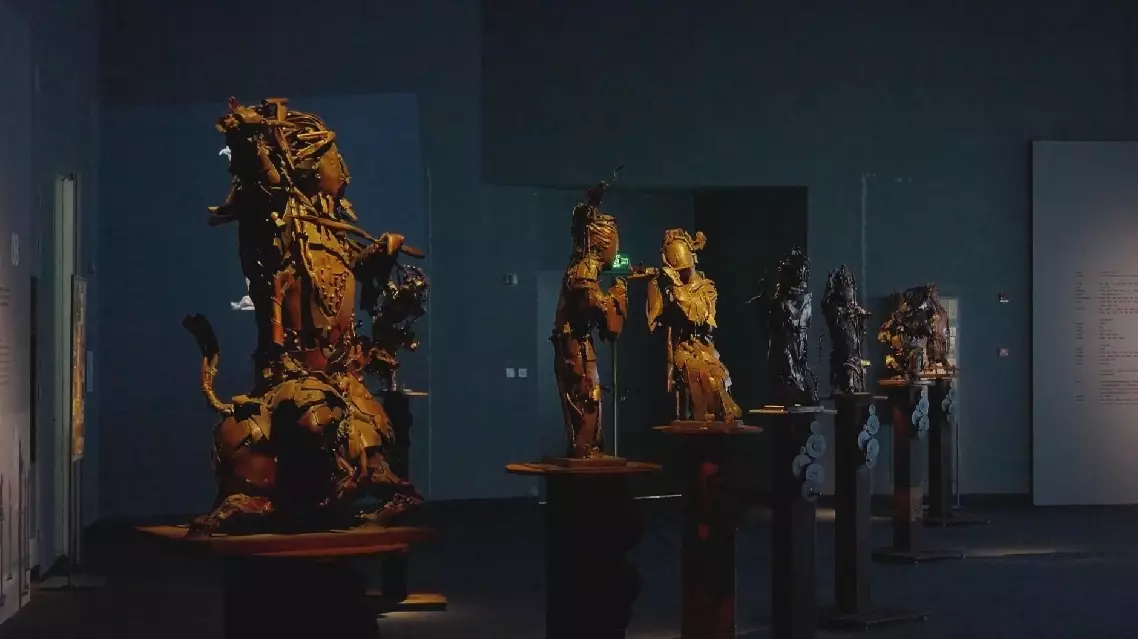
Exhibition in Shanghai bridges contemporary art with centuries of Chinese artistic tradition