Skip to Content Facebook Feature Image

Monumental Energy Announces Completion of Workover and Resumption of Commercial Production at the Copper Moki-2 Oil and Gas Well in New Zealand

News

Monumental Energy Announces Completion of Workover and Resumption of Commercial Production at the Copper Moki-2 Oil and Gas Well in New Zealand
News

News

Monumental Energy Announces Completion of Workover and Resumption of Commercial Production at the Copper Moki-2 Oil and Gas Well in New Zealand

2025-06-23 15:05 Last Updated At:15:20

VANCOUVER, British Columbia--(BUSINESS WIRE)--Jun 23, 2025--

Monumental Energy Corp. (“ Monumental ” or the “ Company ”) (TSX-V: MNRG; FSE: ZA6; OTCQB: MNMRF) is pleased to announce the successful workover and resumption of commercial production at the Copper Moki-2 (CM-2) well, located in the Taranaki Basin, New Zealand.

This press release features multimedia. View the full release here: https://www.businesswire.com/news/home/20250623737780/en/

The primary objective of the CM-2 workover was to restore oil and associated gas production from the Mt. Messenger sands and to address flow restrictions identified during prior operations. Additionally, the program included perforating and testing previously untapped hydrocarbon zones.

At CM-2, three new intervals have been perforated, which are expected to contribute to significant flush production rates and increase overall output. Early indications confirm the new pump is functioning as expected, with approximately 300 barrels of brine—previously used to maintain pressure—successfully pumped out of the well.

The Copper Moki-1 (CM-1) workover is expected to take approximately 10 days. If successful, the well will be placed on continuous production alongside CM-2. Monumental Energy and NZEC anticipate significant flush production rates from both wells.

At the time of the original drill program at Copper Moki, New Zealand faced a gas surplus, and the field remained isolated from the gas network. Today, the field has been fully integrated into the gas infrastructure, presenting a meaningful revenue opportunity that was previously unavailable.

CM-1 and CM-2 were originally shut-in due to mechanical issues over time, rather than any reservoir-related concerns. The wells required only standard maintenance, and equipment upgrades to resume production. In late 2024, Monumental Energy entered into an agreement with NZEC to bring the wells back online, as NZEC shifted its focus to a gas storage business model. Under the terms of the agreement, Monumental Energy will receive a 25% royalty on all oil and gas production from the Copper Moki site, following full recovery of its 75% initial capital contribution.

Oil produced in the Taranaki Basin typically receives a modest discount to Brent Crude (USD $77.39 as of June 20), while natural gas sells at a premium, with current prices ranging between USD $11.00 and $15.00 per MCF—significantly higher than North American market levels.

Cumulative production data, measured in barrels of oil equivalent (BOE), will be released in the coming weeks.

Max Sali, Vice President of Corporate Development and Director, commented:“The Copper Moki wells have demonstrated exceptional reservoir performance, with cumulative production approaching one million barrels of oil to date. The successful recompletion of CM-2—including the perforation of three new intervals—is expected to significantly enhance output. We anticipate strong flush volumes and reservoir recharge, further validating the productivity of the Mt. Messenger formation. This positions us for meaningful near-term cash flow while supporting the long-term value proposition for our shareholders.”

About Monumental Energy Corp.

Monumental Energy Corp. is an exploration company focused on the acquisition, exploration, and development of properties in the critical and clean energy sector, as well as investing in oil and gas projects. The Company owns securities of New Zealand Energy Corp. and entered into a call option and royalty agreement on the Copper Moki wells with New Zealand Energy Corp. The Company also has an option to acquire a 75% interest and title to the Laguna cesium-lithium brine project located in Chile. The Company holds a 2% net smelter return royalty on Summit Nanotech’s share of any future lithium production from the Salar de Turi Project.

On behalf of the Board of Directors,

/s/ “Michelle DeCecco”
Michelle DeCecco, CEO

Neither the TSX Venture Exchange nor its Regulation Services Provider (as that term is defined in the policies of the TSX Venture Exchange) accepts responsibility for the adequacy or accuracy of this news release.

Forward Looking Information

This news release contains “forward‐looking information or statements” within the meaning of applicable securities laws, which may include, without limitation, completing the Copper Moki 1 & 2 workovers and the expected results, the expected timeline to complete the workovers of Copper Moki 1 & 2 wells, and commencement of production of CM 1 & 2, potential oil and gas transactions, other statements relating to the technical, financial and business prospects of the Company, its projects, its goals and other matters. All statements in this news release, other than statements of historical facts, that address events or developments that the Company expects to occur, are forward-looking statements. Although the Company believes the expectations expressed in such forward-looking statements are based on reasonable assumptions, such statements are not guarantees of future performance and actual results may differ materially from those in the forward-looking statements. Such statements are based on numerous assumptions regarding present and future business strategies and the environment in which the Company will operate in the future, including the price of metals and the price of oil and gas, the ability to achieve its goals, that general business and economic conditions will not change in a material adverse manner and that financing will be available if and when needed and on reasonable terms. Such forward-looking information reflects the Company’s views with respect to future events and is subject to risks, uncertainties and assumptions, including the risks and uncertainties relating to the interpretation of exploration results, risks related to the inherent uncertainty of exploration and cost estimates and the potential for unexpected costs and expenses and those other risks filed under the Company’s profile on SEDAR+ at www.sedarplus.ca. While such estimates and assumptions are considered reasonable by the management of the Company, they are inherently subject to significant business, economic, competitive and regulatory uncertainties and risks. Factors that could cause actual results to differ materially from those in forward looking statements include, but are not limited to, continued availability of capital and financing and general economic, market or business conditions, failure to secure personnel and equipment for work programs, adverse weather and climate conditions, risks relating to unanticipated operational difficulties (including failure of equipment or processes to operate in accordance with specifications or expectations, cost escalation, unavailability of materials and equipment, government action or delays in the receipt of government approvals, industrial disturbances or other job action, and unanticipated events related to health, safety and environmental matters), risks relating to inaccurate geological assumptions, failure to maintain or obtain all necessary government permits, approvals and authorizations, failure to obtain or maintain surface access agreements or understandings from local communities, land owners or Indigenous groups, fluctuation in exchange rates, the impact of viruses and diseases on the Company’s ability to operate, capital market conditions, restriction on labour and international travel and supply chains, decrease in the price of lithium, cesium and other metals, decrease in the price of oil and gas, loss of key employees, consultants, or directors, failure to maintain or obtain community acceptance (including from the Indigenous communities), increase in costs, litigation, and failure of counterparties to perform their contractual obligations. The Company does not undertake to update forward‐looking statements or forward‐looking information, except as required by law.
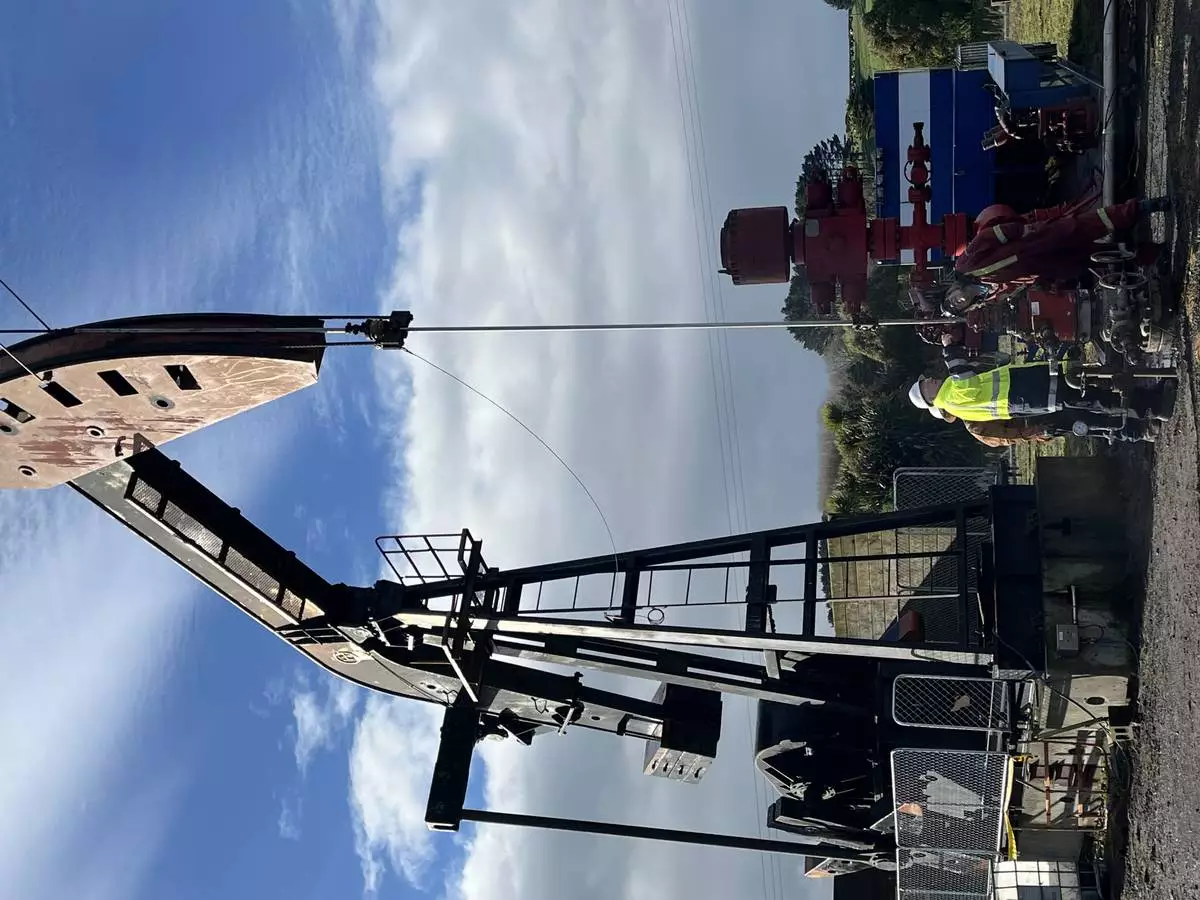
Copper Moki-2 well in production


Copper Moki-2 well in production

WASHINGTON (AP) — Becky Pepper-Jackson finished third in the discus throw in West Virginia last year though she was in just her first year of high school. Now a 15-year-old sophomore, Pepper-Jackson is aware that her upcoming season could be her last.

West Virginia has banned transgender girls like Pepper-Jackson from competing in girls and women's sports, and is among the more than two dozen states with similar laws. Though the West Virginia law has been blocked by lower courts, the outcome could be different at the conservative-dominated Supreme Court, which has allowed multiple restrictions on transgender people to be enforced in the past year.

The justices are hearing arguments Tuesday in two cases over whether the sports bans violate the Constitution or the landmark federal law known as Title IX that prohibits sex discrimination in education. The second case comes from Idaho, where college student Lindsay Hecox challenged that state's law.

Decisions are expected by early summer.

President Donald Trump's Republican administration has targeted transgender Americans from the first day of his second term, including ousting transgender people from the military and declaring that gender is immutable and determined at birth.

Pepper-Jackson has become the face of the nationwide battle over the participation of transgender girls in athletics that has played out at both the state and federal levels as Republicans have leveraged the issue as a fight for athletic fairness for women and girls.

“I think it’s something that needs to be done,” Pepper-Jackson said in an interview with The Associated Press that was conducted over Zoom. “It’s something I’m here to do because ... this is important to me. I know it’s important to other people. So, like, I’m here for it.”

She sat alongside her mother, Heather Jackson, on a sofa in their home just outside Bridgeport, a rural West Virginia community about 40 miles southwest of Morgantown, to talk about a legal fight that began when she was a middle schooler who finished near the back of the pack in cross-country races.

Pepper-Jackson has grown into a competitive discus and shot put thrower. In addition to the bronze medal in the discus, she finished eighth among shot putters.

She attributes her success to hard work, practicing at school and in her backyard, and lifting weights. Pepper-Jackson has been taking puberty-blocking medication and has publicly identified as a girl since she was in the third grade, though the Supreme Court's decision in June upholding state bans on gender-affirming medical treatment for minors has forced her to go out of state for care.

Her very improvement as an athlete has been cited as a reason she should not be allowed to compete against girls.

“There are immutable physical and biological characteristic differences between men and women that make men bigger, stronger, and faster than women. And if we allow biological males to play sports against biological females, those differences will erode the ability and the places for women in these sports which we have fought so hard for over the last 50 years,” West Virginia's attorney general, JB McCuskey, said in an AP interview. McCuskey said he is not aware of any other transgender athlete in the state who has competed or is trying to compete in girls or women’s sports.

Despite the small numbers of transgender athletes, the issue has taken on outsize importance. The NCAA and the U.S. Olympic and Paralympic Committees banned transgender women from women's sports after Trump signed an executive order aimed at barring their participation.

The public generally is supportive of the limits. An Associated Press-NORC Center for Public Affairs Research poll conducted in October 2025 found that about 6 in 10 U.S. adults “strongly” or “somewhat” favored requiring transgender children and teenagers to only compete on sports teams that match the sex they were assigned at birth, not the gender they identify with, while about 2 in 10 were “strongly” or “somewhat” opposed and about one-quarter did not have an opinion.

About 2.1 million adults, or 0.8%, and 724,000 people age 13 to 17, or 3.3%, identify as transgender in the U.S., according to the Williams Institute at the UCLA School of Law.

Those allied with the administration on the issue paint it in broader terms than just sports, pointing to state laws, Trump administration policies and court rulings against transgender people.

"I think there are cultural, political, legal headwinds all supporting this notion that it’s just a lie that a man can be a woman," said John Bursch, a lawyer with the conservative Christian law firm Alliance Defending Freedom that has led the legal campaign against transgender people. “And if we want a society that respects women and girls, then we need to come to terms with that truth. And the sooner that we do that, the better it will be for women everywhere, whether that be in high school sports teams, high school locker rooms and showers, abused women’s shelters, women’s prisons.”

But Heather Jackson offered different terms to describe the effort to keep her daughter off West Virginia's playing fields.

“Hatred. It’s nothing but hatred,” she said. "This community is the community du jour. We have a long history of isolating marginalized parts of the community.”

Pepper-Jackson has seen some of the uglier side of the debate on display, including when a competitor wore a T-shirt at the championship meet that said, “Men Don't Belong in Women's Sports.”

“I wish these people would educate themselves. Just so they would know that I’m just there to have a good time. That’s it. But it just, it hurts sometimes, like, it gets to me sometimes, but I try to brush it off,” she said.

One schoolmate, identified as A.C. in court papers, said Pepper-Jackson has herself used graphic language in sexually bullying her teammates.

Asked whether she said any of what is alleged, Pepper-Jackson said, “I did not. And the school ruled that there was no evidence to prove that it was true.”

The legal fight will turn on whether the Constitution's equal protection clause or the Title IX anti-discrimination law protects transgender people.

The court ruled in 2020 that workplace discrimination against transgender people is sex discrimination, but refused to extend the logic of that decision to the case over health care for transgender minors.

The court has been deluged by dueling legal briefs from Republican- and Democratic-led states, members of Congress, athletes, doctors, scientists and scholars.

The outcome also could influence separate legal efforts seeking to bar transgender athletes in states that have continued to allow them to compete.

If Pepper-Jackson is forced to stop competing, she said she will still be able to lift weights and continue playing trumpet in the school concert and jazz bands.

“It will hurt a lot, and I know it will, but that’s what I’ll have to do,” she said.

Heather Jackson, left, and Becky Pepper-Jackson pose for a photograph outside of the U.S. Supreme Court in Washington, Sunday, Jan. 11, 2026. (AP Photo/Jose Luis Magana)

Heather Jackson, left, and Becky Pepper-Jackson pose for a photograph outside of the U.S. Supreme Court in Washington, Sunday, Jan. 11, 2026. (AP Photo/Jose Luis Magana)

Heather Jackson, left, and Becky Pepper-Jackson pose for a photograph outside of the U.S. Supreme Court in Washington, Sunday, Jan. 11, 2026. (AP Photo/Jose Luis Magana)

Heather Jackson, left, and Becky Pepper-Jackson pose for a photograph outside of the U.S. Supreme Court in Washington, Sunday, Jan. 11, 2026. (AP Photo/Jose Luis Magana)

Becky Pepper-Jackson poses for a photograph outside of the U.S. Supreme Court in Washington, Sunday, Jan. 11, 2026. (AP Photo/Jose Luis Magana)

Becky Pepper-Jackson poses for a photograph outside of the U.S. Supreme Court in Washington, Sunday, Jan. 11, 2026. (AP Photo/Jose Luis Magana)

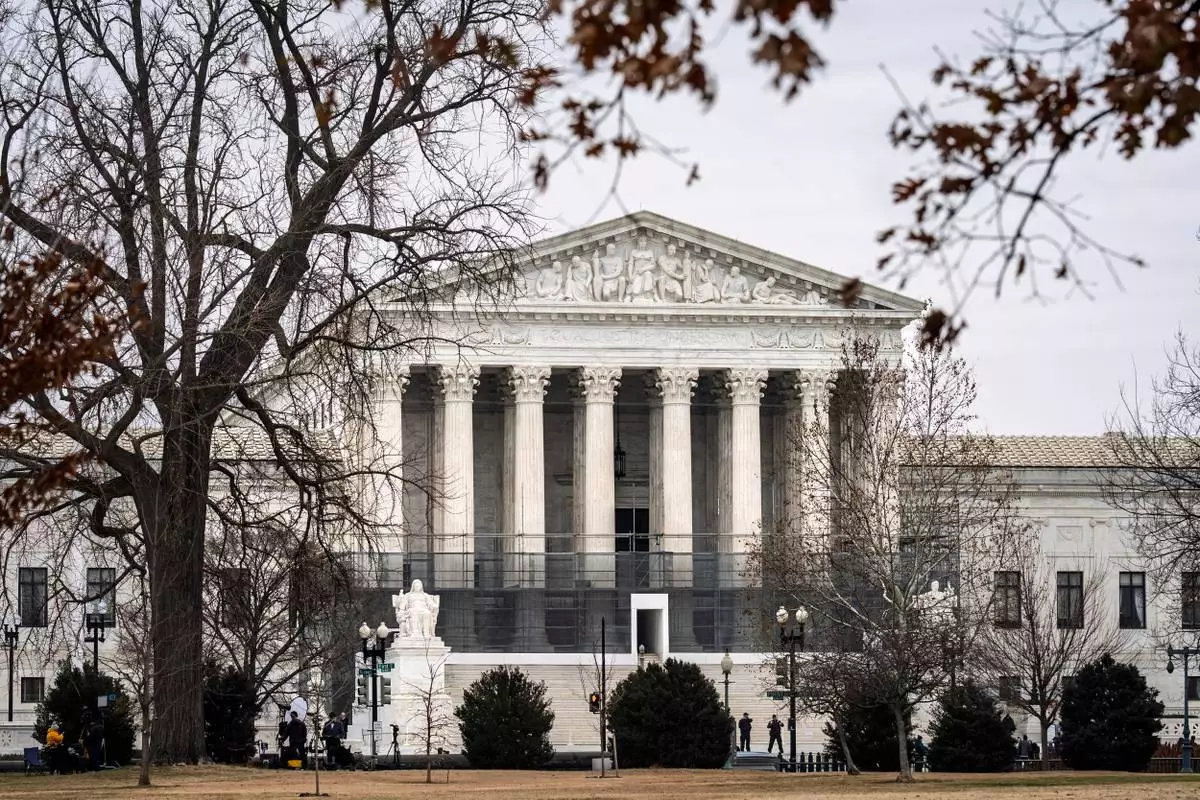
The Supreme Court stands is Washington, Friday, Jan. 9, 2026. (AP Photo/J. Scott Applewhite)

The Supreme Court stands is Washington, Friday, Jan. 9, 2026. (AP Photo/J. Scott Applewhite)

FILE - Protestors hold signs during a rally at the state capitol in Charleston, W.Va., on March 9, 2023. (AP Photo/Chris Jackson, file)

FILE - Protestors hold signs during a rally at the state capitol in Charleston, W.Va., on March 9, 2023. (AP Photo/Chris Jackson, file)

Recommended Articles