CHICAGO (AP) — Three dozen police captains pair off in a Chicago conference room to play a game: They must start a sentence with the last word their partner used.
Many exchanges are nonsensical, full of one-upmanship using difficult words and laughter. But the improvisation game eventually makes sense.
Click to Gallery
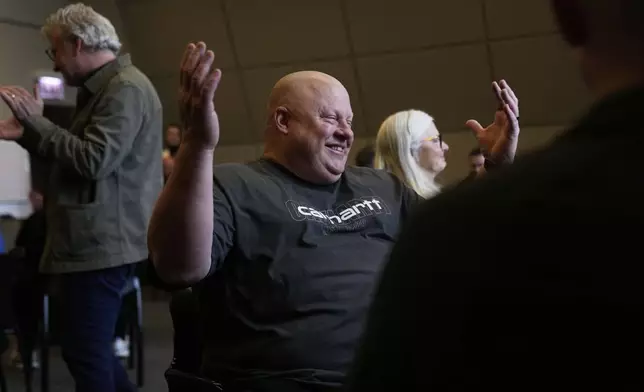
San Jose Police Department Capt. Stephen Donohue participates in an improvisational exercise lead by The Second City instructors during a University of Chicago Crime Lab class that is part of the Policing Leadership Academy program, on April 11, 2025, in Chicago. (AP Photo/Erin Hooley)
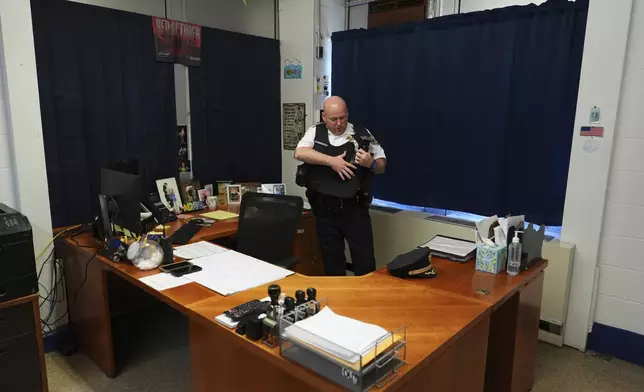
Philadelphia police captain Louis Higginson puts on his equipment, on April 28, 2025, in Philadelphia. (AP Photo/Matt Slocum)
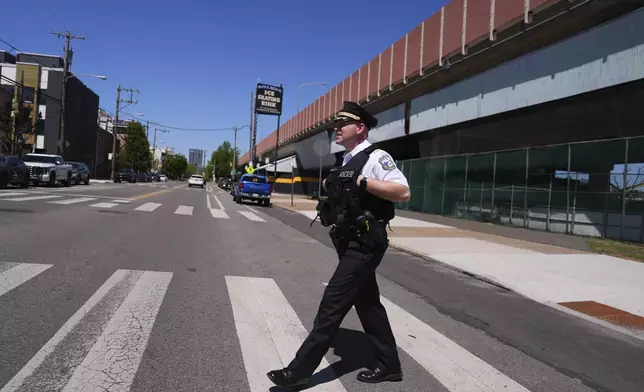
Philadelphia police captain Louis Higginson crosses a street after placing advisory flyers on automobiles, on April 28, 2025, in Philadelphia. (AP Photo/Matt Slocum)
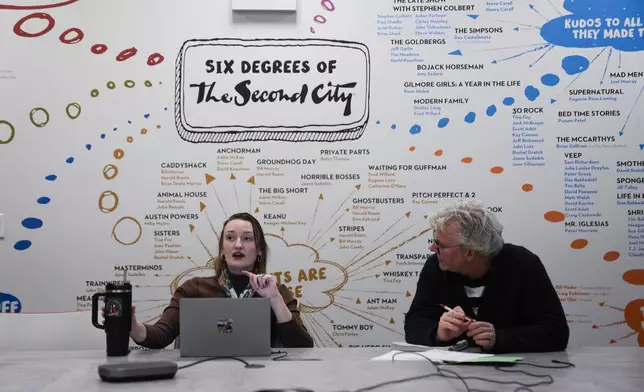
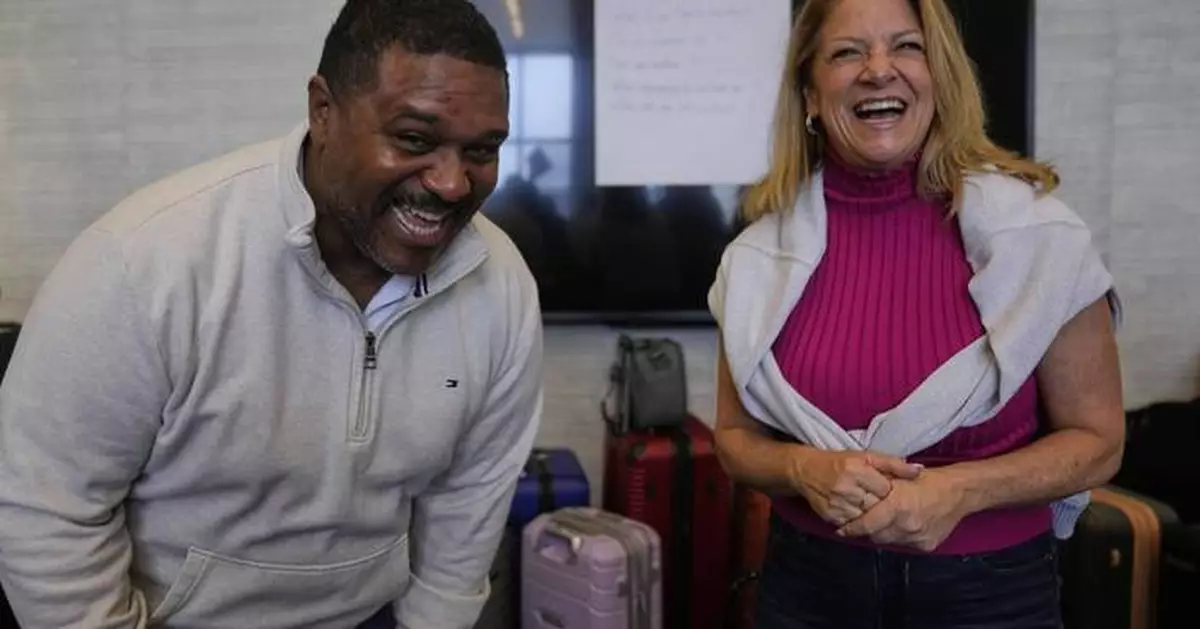
Strategic Client Partner Tree Branch, left, and Vice President, Creative Strategy, Innovation and Business Development Kelly Leonard talk during a planning meeting at The Second City improvisational comedy space, on March 26, 2025, in Chicago. (AP Photo/Erin Hooley)
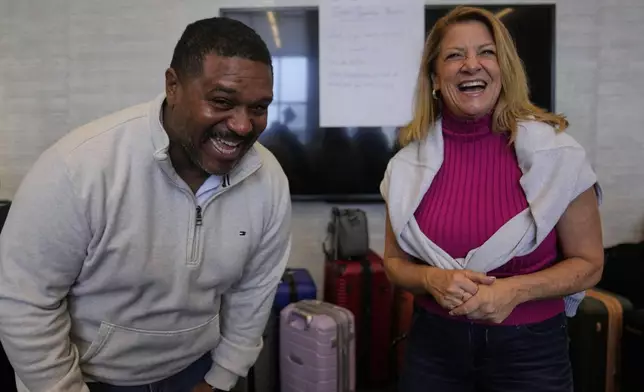
Rocky Mount Police Department Capt. James Staten, left, and Luann Pannell, director of instructional design and academic innovation with the Policing Leadership Academy, participate in an improvisational exercise lead by The Second City instructors during a Univeristy of Chicago Crime Lab class that is part of the Leadership program, on April 11, 2025, in Chicago. (AP Photo/Erin Hooley)
“What we are trying to do, is get you to listen to the end of the sentence,” says Kelly Leonard, wrapping up the improvisational exercise. “If my arm was a sentence, when do most people stop listening? Always the elbow! But then you're missing everything that goes after... and sometimes that's critical information.”
The police captains who have flown in from departments across the country nod. “I definitely do that," some call out.
Officials at the University of Chicago Crime Lab's Policing Leadership Academy brought members of The Second City, Chicago's storied improv theater, to teach police leaders the more diverse skills found in improv exercises — like thinking on your feet, reserving judgment and fully listening.
The academy, a workshop taught over five months, tackles some serious topics like to make data-driven decisions or how to help officers handle on-the-job trauma.
“We call it yoga for social skills,” said Leonard, the vice president of Creative Strategy, Innovation and Business Development at The Second City.
The skills might not apply to all policing situations in the field, but being a better listener or learning to take a breath before responding can make for better leaders, according to Tree Branch, a strategic client partner at The Second City Works.
The creation of improv and of The Second City is rooted in social work. Both trace their beginnings to Viola Spolin, who created some of the exercises still used in improv while she was a resettlement worker in the 1920s helping immigrant children and local Chicago children connect. Spolin was also the mother of Second City cofounder, Paul Sills.
The Policing Leadership Academy's creators believe those skills can also help meet their goals to increase community engagement, improve officer morale and ultimately reduce violent crime.
“We are trying to make the case that you can do all three things," without compromising one over the other, said Kim Smith, director of programs at the Crime Lab.
The academy is focused on working with leaders from departments dealing with high levels of community gun violence and pays for them to fly to Chicago one week a month to attend the five-month training.
Crime Lab researchers found that district and precinct captains have the largest potential impact on their colleagues, despite often receiving little leadership training for the job. A precinct could have high marks for morale, community relationships, or be making a dent in crime numbers, but if the captain changes, those gains could plummet, researchers found, even if the community, the officers and everything else stayed the same.
Professors, researchers and police leaders teach courses on topics like developing transparent policing cultures, using and collecting data, managing stress and building community partnerships. So far, about 130 police leaders from about 70 departments including tribal police departments and even a police inspector from Toronto have participated.
Capt. Louis Higginson with the Philadelphia Police Department said the academy provided a much broader training than the two weeks of police job training he got before being promoted to captain a little more than a year ago.
“The big thing for me was thinking about the things we allow to happen because they’ve been that way before us,” he said. “And the ways we can change the culture of our district by changing the thinking around why we do things.”
He said he did some of the improv exercises with his wife and daughters when he returned home and it opened up communication in a way he hadn’t expected.
“I think it opened their eyes, like it did for me,” Higginson said.
Albuquerque Police Department Commander Ray Del Greco said he’s still thinking more about how he communicates weeks after the improv class.
“When people talk to you and come to have you help solve their issues, to be able to push your ego out and worry less about your own agenda and listen, that’s an understanding of leadership,” Del Greco said. “To me that was the most valuable class we had.”
Academy leaders stressed the learning doesn't stop at graduation. They create communication channels so classmates can continue to support each other, they encourage captains to put on trainings with their departments, and participants are required to implement a capstone project that lasts well past the last day of class and addresses a real problem in their district or department.
Many of the projects implement programs to address specific crimes, like involving the community in programs to prevent car thefts or piloting drones as first responders. One previous graduate created a partnership with community groups to increase community pride and reduce gun violence by reducing quality of life issues like littering, overgrown lots and graffiti.
Stephen Donohue, a San Jose Police Department captain and recent academy graduate, is creating an early intervention system focusing on officer wellness. A typical system might flag citizen complaints or driving accidents, but Donohue's program gathers input from supervisors and peers to flag when an officer is taking on too much on-duty trauma, such as multiple murders or shooting investigations within a short time.
“It's a Venn diagram between training, wellness and internal affairs," he said. "And we can help them, we can lessen use-of-force complaints and allegations, offer better training and improve services put out by the department.”
The trainers hope in a few years more captains and officers will be saying “yes and” during improv classes. They are keeping tabs through a randomized control study on how well the overall training works. And with that evidence they hope funders, police departments or other universities will help expand the trainings to more departments.
“We want there to be rigorously tested scientific evidence behind this,” said Academy Executive Director Meredith Stricker. “We work to design a curriculum to ultimately make better leaders and better policing. The participants definitely talk about the improv class as one of their favorites. We hope all of it will work in tandem.”
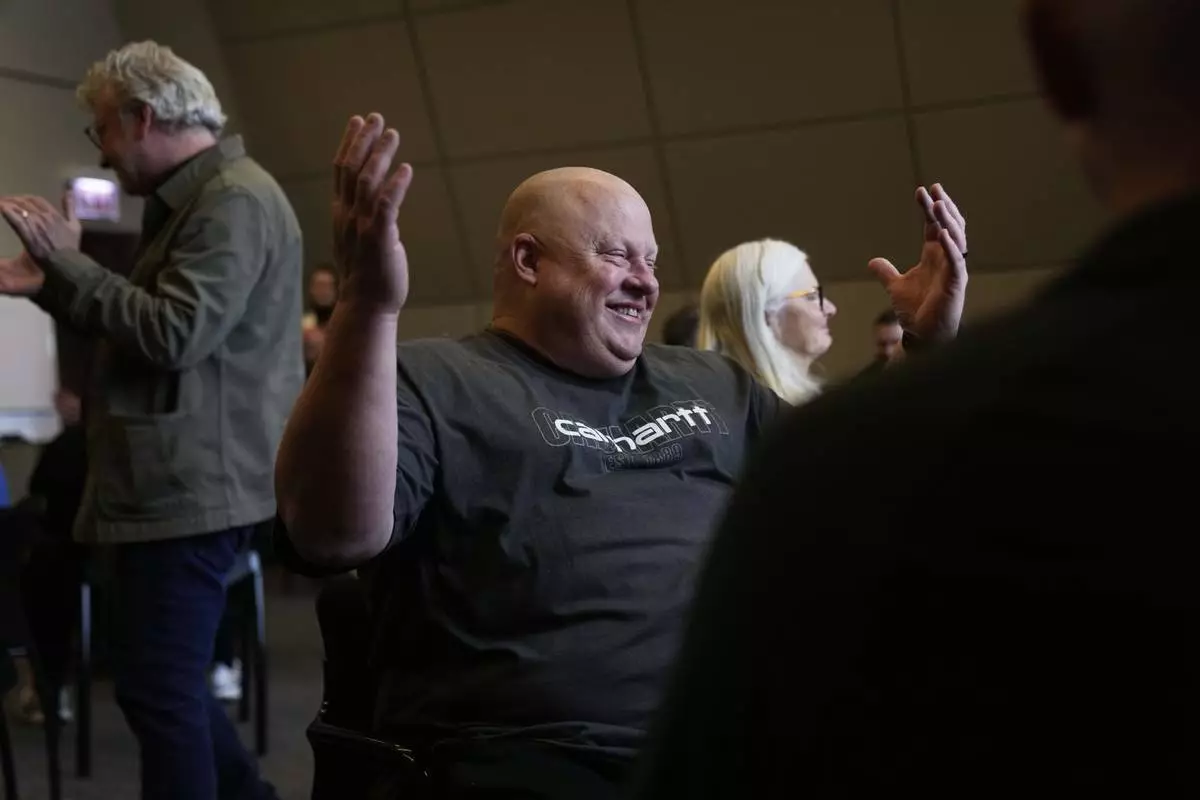
San Jose Police Department Capt. Stephen Donohue participates in an improvisational exercise lead by The Second City instructors during a University of Chicago Crime Lab class that is part of the Policing Leadership Academy program, on April 11, 2025, in Chicago. (AP Photo/Erin Hooley)
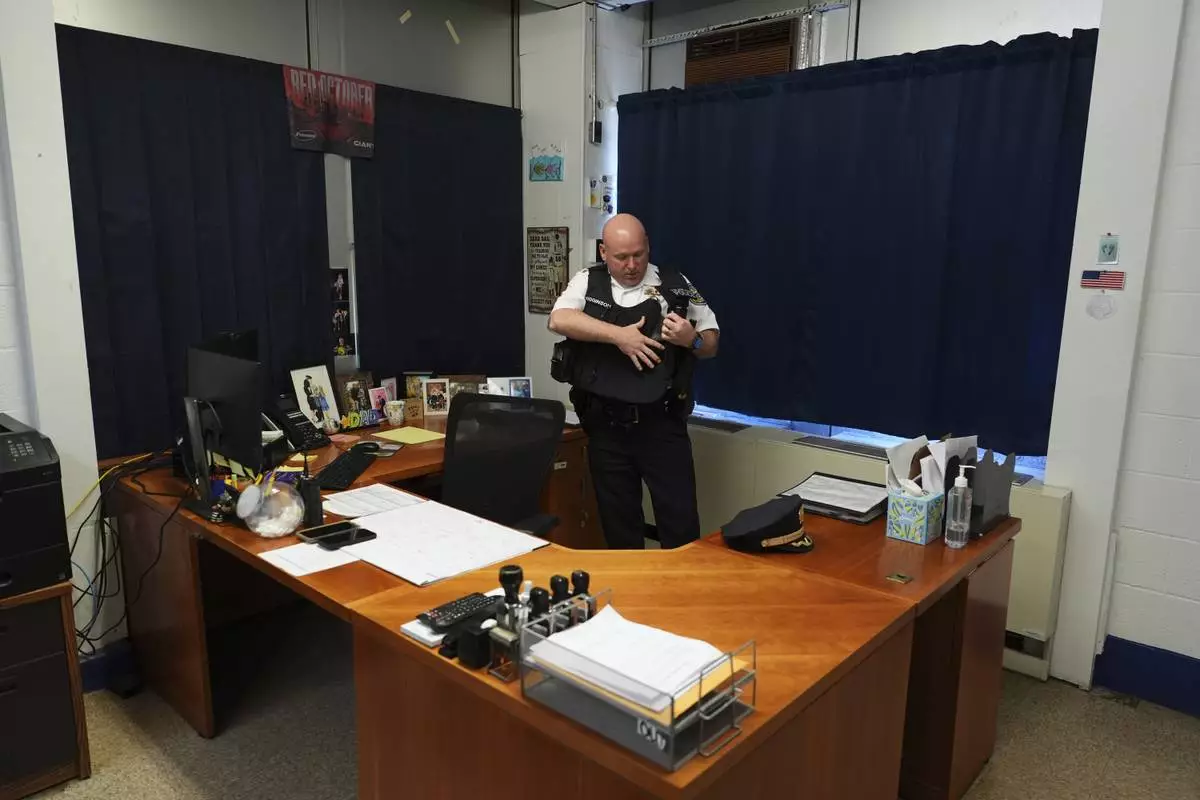
Philadelphia police captain Louis Higginson puts on his equipment, on April 28, 2025, in Philadelphia. (AP Photo/Matt Slocum)
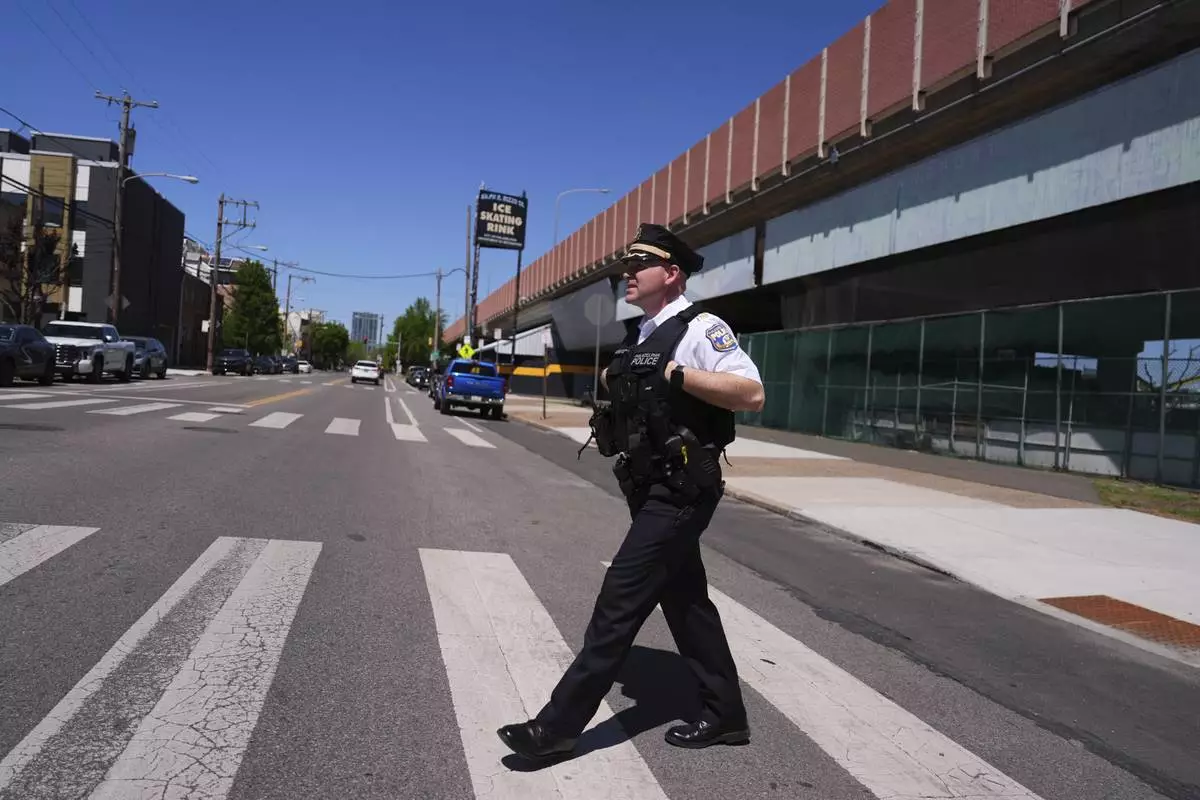
Philadelphia police captain Louis Higginson crosses a street after placing advisory flyers on automobiles, on April 28, 2025, in Philadelphia. (AP Photo/Matt Slocum)
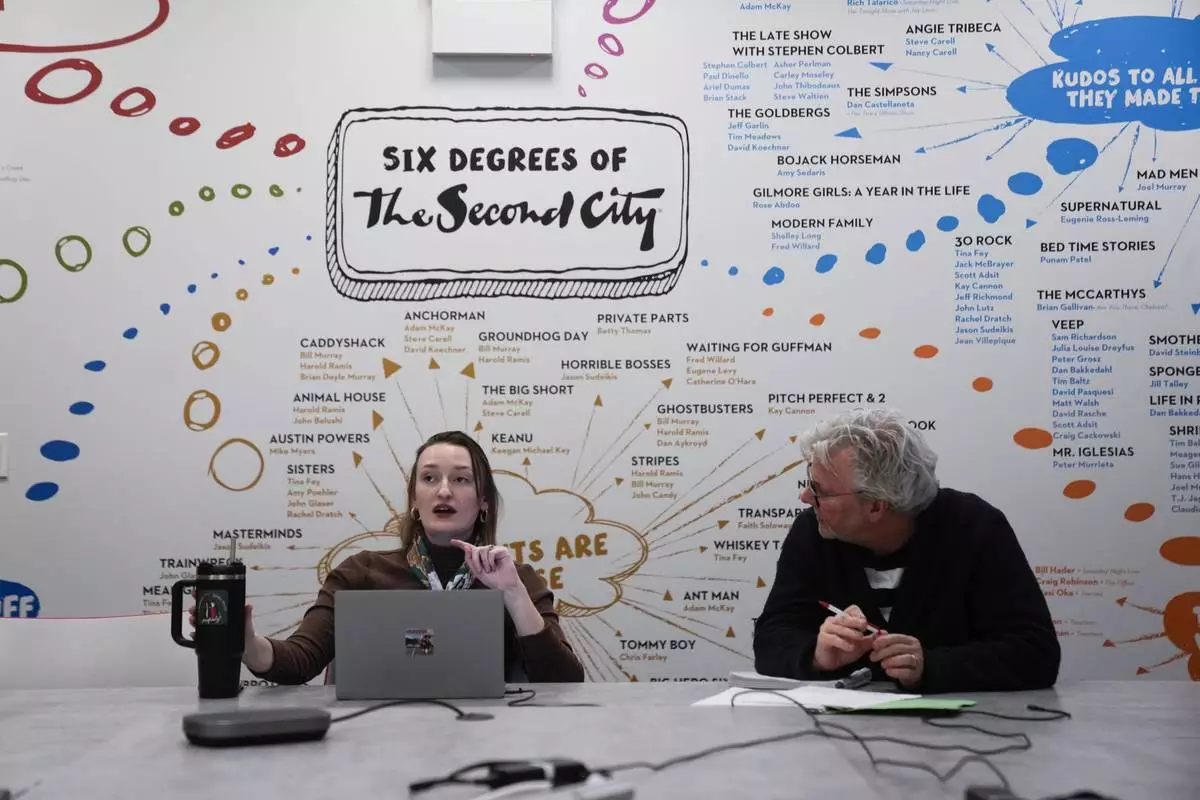
Strategic Client Partner Tree Branch, left, and Vice President, Creative Strategy, Innovation and Business Development Kelly Leonard talk during a planning meeting at The Second City improvisational comedy space, on March 26, 2025, in Chicago. (AP Photo/Erin Hooley)
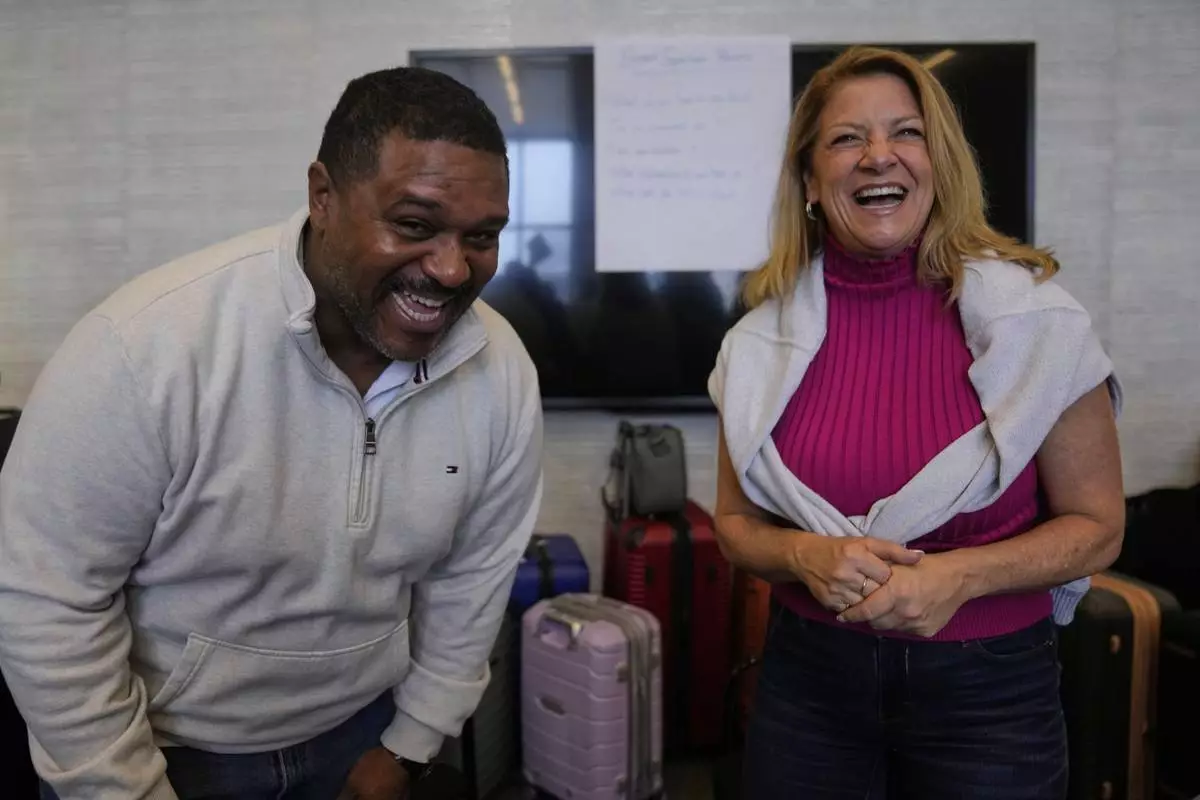
Rocky Mount Police Department Capt. James Staten, left, and Luann Pannell, director of instructional design and academic innovation with the Policing Leadership Academy, participate in an improvisational exercise lead by The Second City instructors during a Univeristy of Chicago Crime Lab class that is part of the Leadership program, on April 11, 2025, in Chicago. (AP Photo/Erin Hooley)