Skip to Content Facebook Feature Image

Running a low-turnout Georgia runoff election could cost $100 per vote

News

Running a low-turnout Georgia runoff election could cost $100 per vote
News

News

Running a low-turnout Georgia runoff election could cost $100 per vote

2025-06-24 06:12 Last Updated At:06:21

ATLANTA (AP) — Miller County Election Supervisor Jerry Calhoun says he's not sure anyone will vote in an upcoming Democratic primary runoff.

After all, the southwest Georgia county only recorded one vote in the June 17 Democratic primary for the state Public Service Commission among candidates Keisha Waites, Peter Hubbard and Robert Jones.

Two other Democratic ballots weren't counted, probably because voters chose Daniel Blackman, who had been disqualified. Turnout wasn't much higher among Republicans, with 40 votes cast in Commissioner Tim Echols' victory over challenger Lee Muns.

“I’m going to tell you the truth, I’m worried about it for the runoff, but there’s nothing I can do about it," Calhoun said of the July 15 Democratic runoff between Waites and Hubbard.

Statewide turnout for the primary on June 17 reached just 2.8% of Georgia's 7.4 million active registered voters. That includes more than 15,000 people who likely voted for Blackman and didn't have their votes counted.

But the Democratic runoff might struggle to reach 1% turnout statewide. And counties could spend $10 million statewide to hold the election, based on a sampling of some county spending. That could be more than $100 per vote.

People who want to change Georgia's runoff system say this election shows how the state spends money only to have decisions made by a fraction of people who voted the first time.

“It’s a terrible waste of resources," said state Rep. Saira Draper, an Atlanta Democrat.

But key Republicans are opposed to two methods used elsewhere — letting someone win without a majority or using ranked choice voting to determine a majority. In the meantime, some Republican-dominated counties are using a state law to reduce the number of polling places for the runoff.

In many states, finishing first is enough to win, even if it’s far short of a majority. Georgia is one of only nine states, mostly in the South, that require runoffs. And it’s one of only two states, along with Mississippi, that demand a runoff if no candidate wins a general election majority after a partisan primary.

Historians say runoffs were created in part to make it harder for Black candidates to win office, giving white voters a chance to unify around a candidate.

Georgia legislators in 1995 lowered the threshold to avoid a runoff, requiring a candidate to a earn only a 45% plurality. Republicans changed the threshold back to a majority after a GOP candidate lost a 1996 Senate race.

Draper introduced a bill in 2023 to lower the threshold back to 45%, but it went nowhere. House Governmental Affairs Committee Chair Victor Anderson, a Cornelia Republican, is among many who believes a majority is an important electoral mandate.

“To actually win an election you should receive, in one form or fashion, at least 50% plus one of the vote. And so I am not in favor of a plurality system," said Anderson, whose committee oversees election legislation.

Another option would be letting voters rank their choices and determining the winner using second or third choices. That's the system New York City voters are using to elect a mayor.

Scot Turner, a former Republican state representative who champions that system, said turnout is typically lower for runoffs, silencing voters who don't return. He said ranked choice voting would broaden participation, ensure a majority chooses the winner and save money.

“It’s a tweak of our existing system that maximizes turnout and lowers cost,” Turner said. “Because we see these massive drop-offs in turnout for runoffs, those are disenfranchised voters. Their votes are tossed as if they never were cast.”

Georgia issues ranked-choice ballots to military and overseas voters. But many Republicans oppose expansion, with the Georgia Senate passing bills to ban its further use.

What some counties are doing is limiting the number of polling places for the runoff.

State law allows a county to open only one polling place for a primary runoff if fewer than 1% of a county's registered voters cast ballots in the initial primary. That's likely to apply to some Republican-dominated counties. A few rural counties, including Miller County, already operate only one voting location.

Cherokee County, with nearly 208,000 active voters, announced Friday that it would open only one polling place after fewer than 2,000 people cast ballots in the Democratic primary. Elections Director Anne Dover said the decision would cut the cost of the runoff in half, saving about $70,000.

Travis Doss, president of the Georgia Association of Voter Registration and Election Officials, said Friday that as many as 20 counties are considering that option.
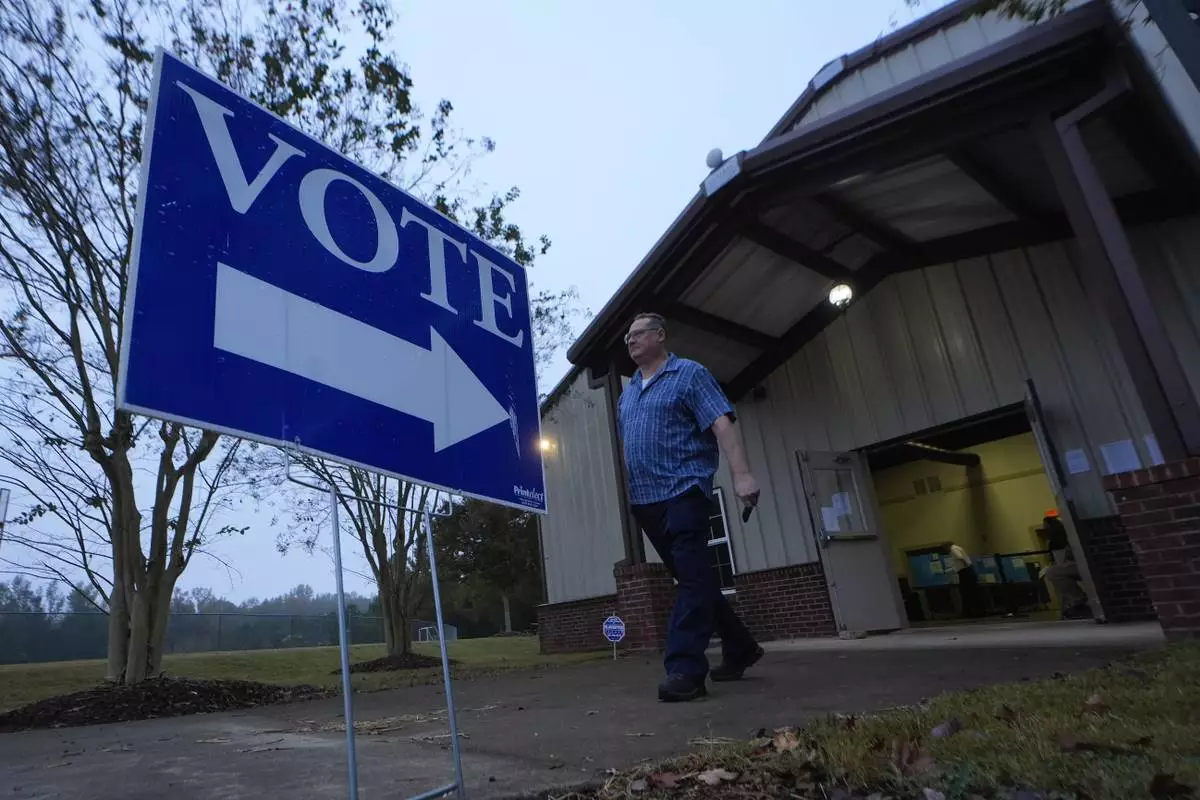
FILE - A voter leaves a polling location after voting Tuesday, Nov. 5, 2024 in Rutledge, Ga. (AP Photo/John Bazemore, File)
FILE - A voter leaves a polling location after voting Tuesday, Nov. 5, 2024 in Rutledge, Ga. (AP Photo/John Bazemore, File)
DEIR AL BALAH (AP) — Israeli strikes across Gaza have killed at least 13 people, according to health officials, as U.S. President Donald Trump was expected to announce his Board of Peace to oversee the fragile ceasefire.

Health officials and family members said at least one child was among the dead in northern Gaza following several strikes there as well as east of Gaza City.

Israel's army said Friday that it struck Hamas infrastructure and fighters in southern and northern Gaza in response to a failed projectile launched by militants from the Gaza City area.

The phased ceasefire between Israel and Hamas remains in its initial stage as efforts continue to recover the remains of the final Israeli hostage in Gaza.

Officials say that Trump is expected to announce next week his appointments to his Board of Peace, which he has said he will head, marking an important step forward for his Middle East peace plan. The process has moved slowly since a ceasefire between Israel and Hamas took effect nearly three months ago.

The U.S. official and another official spoke on condition of anonymity pending a formal announcement.

Israeli Prime Minister Benjamin Netanyahu said Thursday that Bulgarian diplomat Nickolay Mladenov would be the board's “designated” director-general. Mladenov is a former Bulgarian defense and foreign minister who served as the U.N. envoy to Iraq before being appointed as the U.N. Mideast peace envoy from 2015-2020. During that time, he had good working relations with Israel and frequently worked to ease Israel-Hamas tensions.

Under Trump’s plan, the board would supervise a new technocratic Palestinian government, the disarmament of Hamas, the deployment of an international security force, additional pullbacks of Israeli troops and reconstruction. The U.S. has reported little progress on any of these fronts so far.

On Thursday, Egyptian and European Union leaders met in Cairo and urged the deployment of the international stabilization force. EU foreign policy chief Kaja Kallas said that Hamas still refused to disarm and called the situation “extremely severe."

Israel and Hamas have accused each other of violating the ceasefire, which took effect on Oct. 10. Continued Israeli strikes in Gaza have killed more than 400 Palestinians, according to local health officials.

The Israeli military says any actions since the ceasefire began have been in response to violations of the agreement.

The strikes Thursday killed an 11-year-old girl who dreamed of becoming a doctor, a teenage girl and two boys in a tent camp, according to relatives and health officials. At least a dozen others were injured, hospital officials said.

Israel’s military said on Thursday that it wasn't aware of any strike-related casualties in northern Gaza’s Jabaliya area, where 11-year-old Hamsa Housou was killed, and didn't immediately comment on the other deaths that were reported that day.

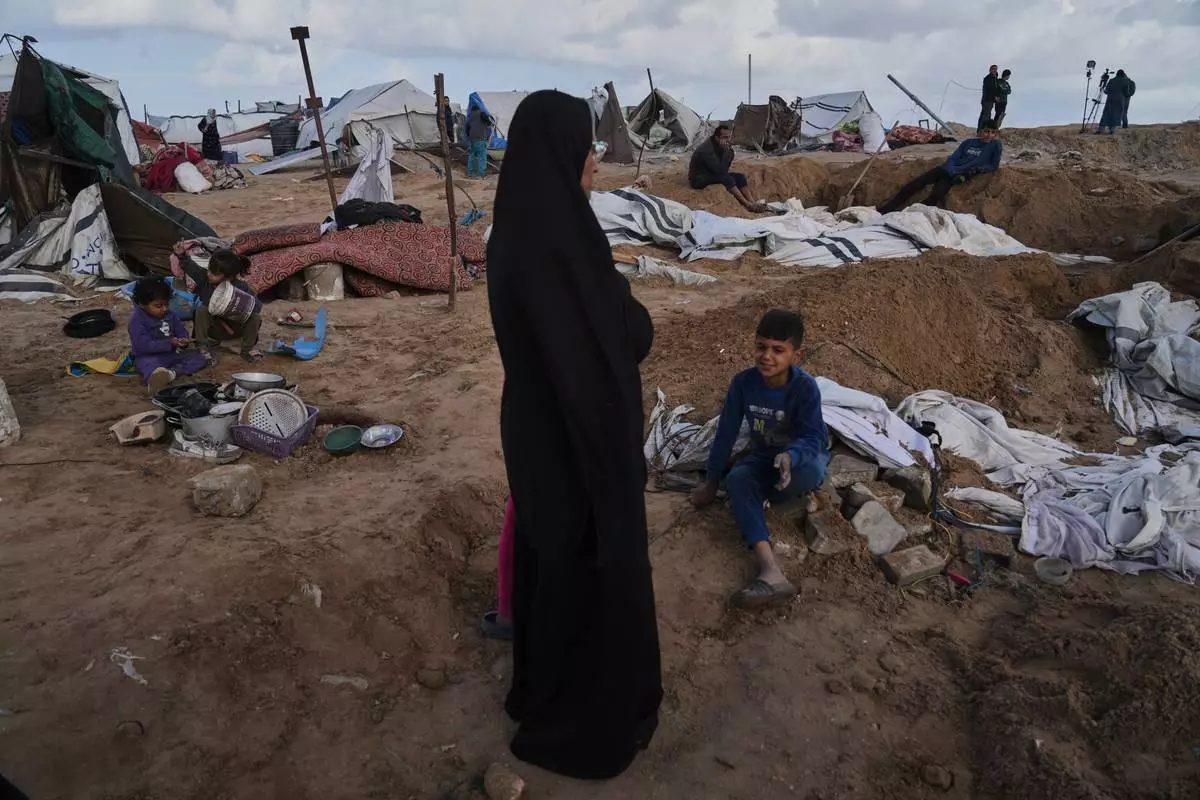
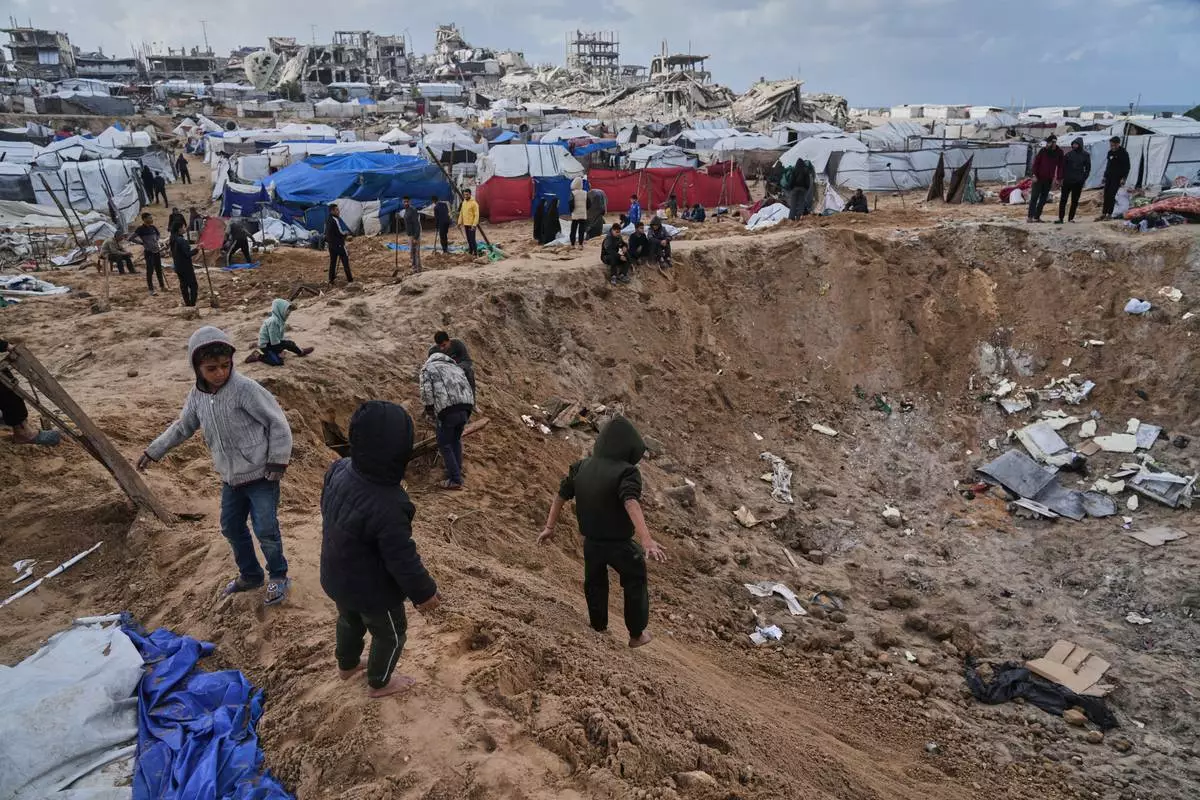
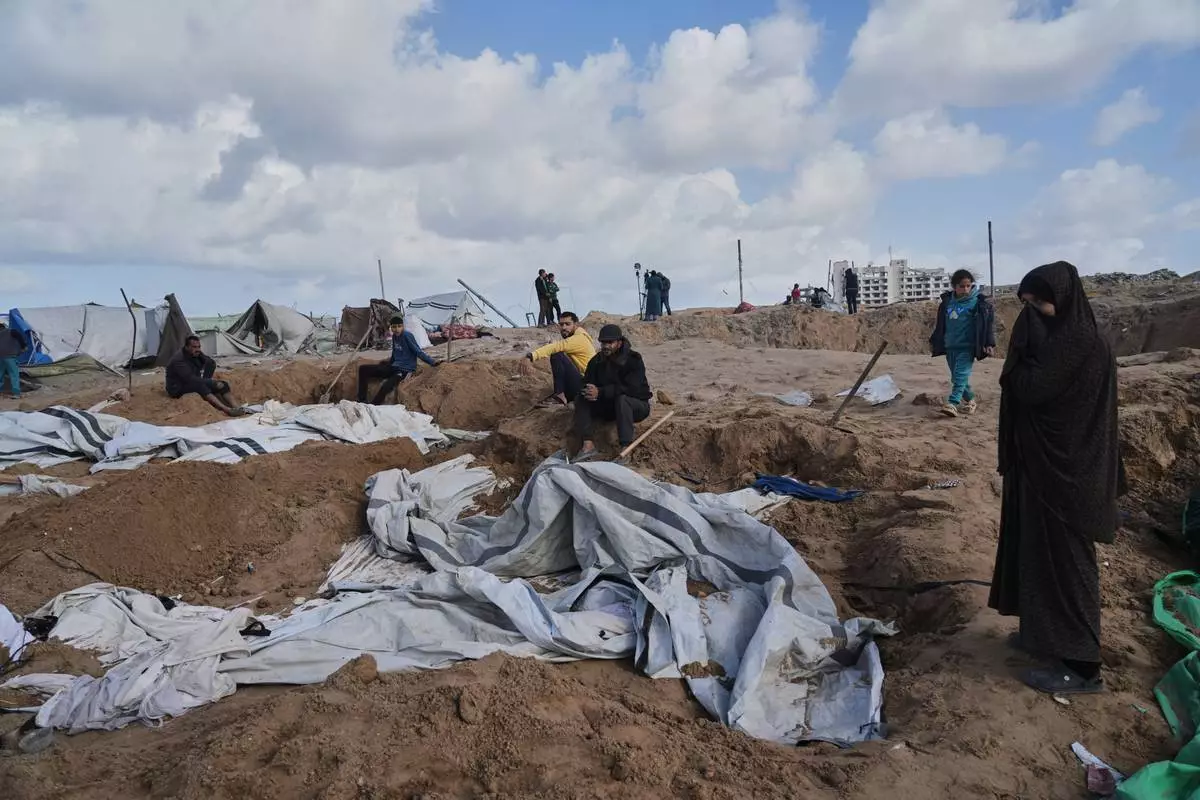
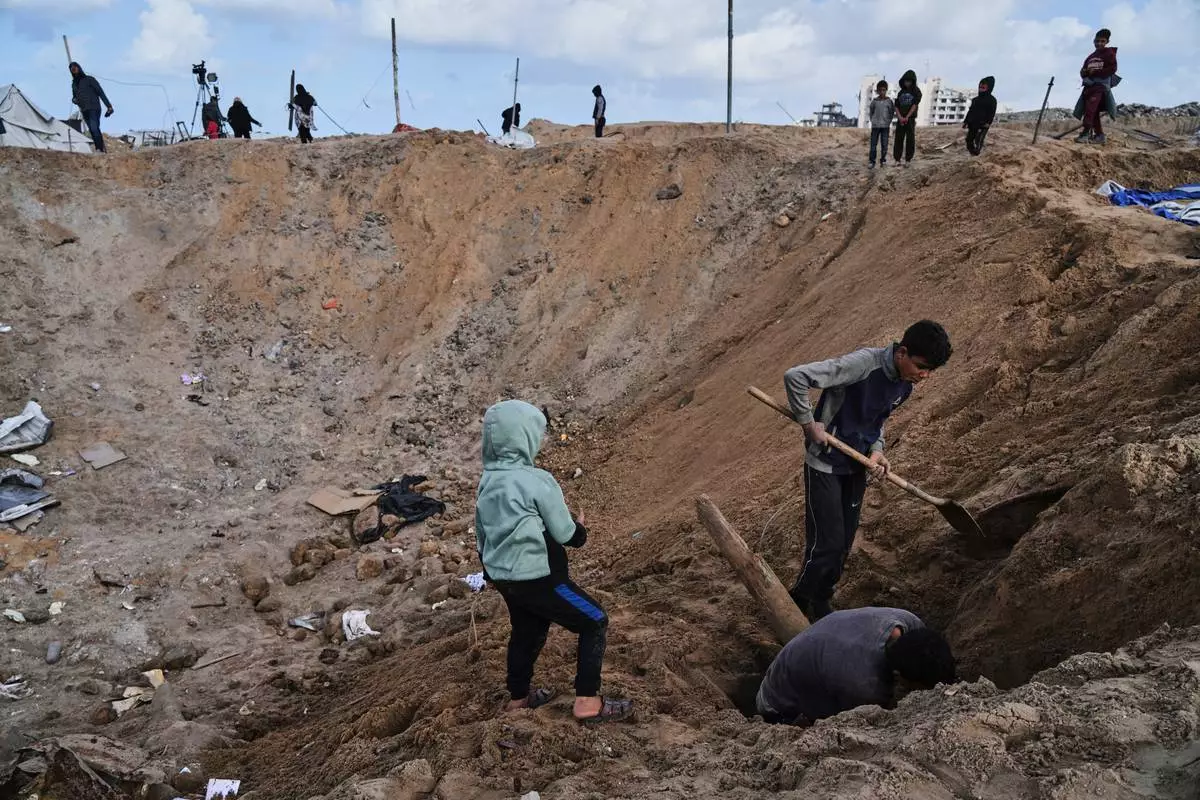
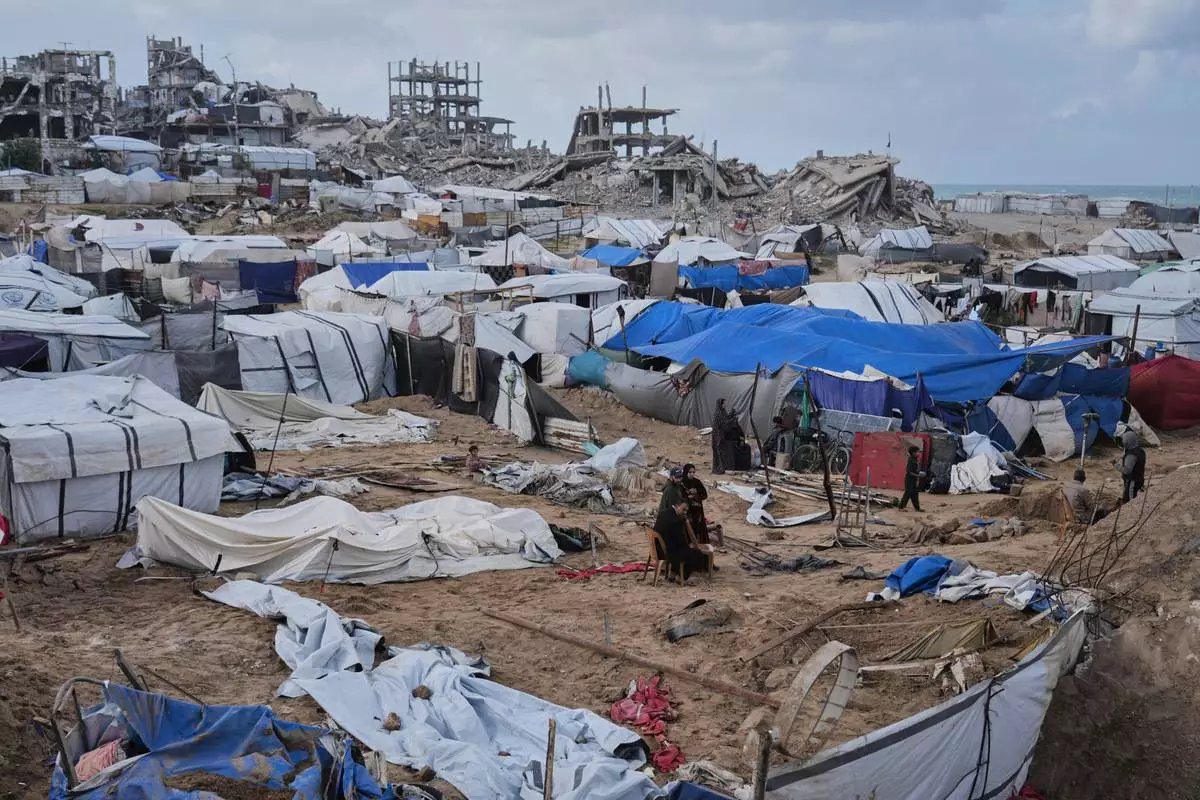
Palestinians inspect the damage at a displacement camp following an Israeli strike in Gaza City, Friday, Jan. 9, 2026. (AP Photo/Jehad Alshrafi)

Palestinians inspect the damage at a displacement camp following an Israeli strike in Gaza City, Friday, Jan. 9, 2026. (AP Photo/Jehad Alshrafi)

Palestinians inspect the damage at a displacement camp following an Israeli strike in Gaza City, Friday, Jan. 9, 2026. (AP Photo/Jehad Alshrafi)

Palestinians inspect the damage at a displacement camp following an Israeli strike in Gaza City, Friday, Jan. 9, 2026. (AP Photo/Jehad Alshrafi)

Palestinians inspect damaged tents at a displacement camp following an Israeli strike in Gaza City, Friday, Jan. 9, 2026. (AP Photo/Jehad Alshrafi)

Palestinians inspect damaged tents at a displacement camp following an Israeli strike in Gaza City, Friday, Jan. 9, 2026. (AP Photo/Jehad Alshrafi)

Palestinians inspect the damage at a displacement camp following an Israeli strike in Gaza City, Friday, Jan. 9, 2026. (AP Photo/Jehad Alshrafi)

Palestinians inspect the damage at a displacement camp following an Israeli strike in Gaza City, Friday, Jan. 9, 2026. (AP Photo/Jehad Alshrafi)

Palestinians inspect the damage at a displacement camp following an Israeli strike in Gaza City, Friday, Jan. 9, 2026. (AP Photo/Jehad Alshrafi)

Palestinians inspect the damage at a displacement camp following an Israeli strike in Gaza City, Friday, Jan. 9, 2026. (AP Photo/Jehad Alshrafi)

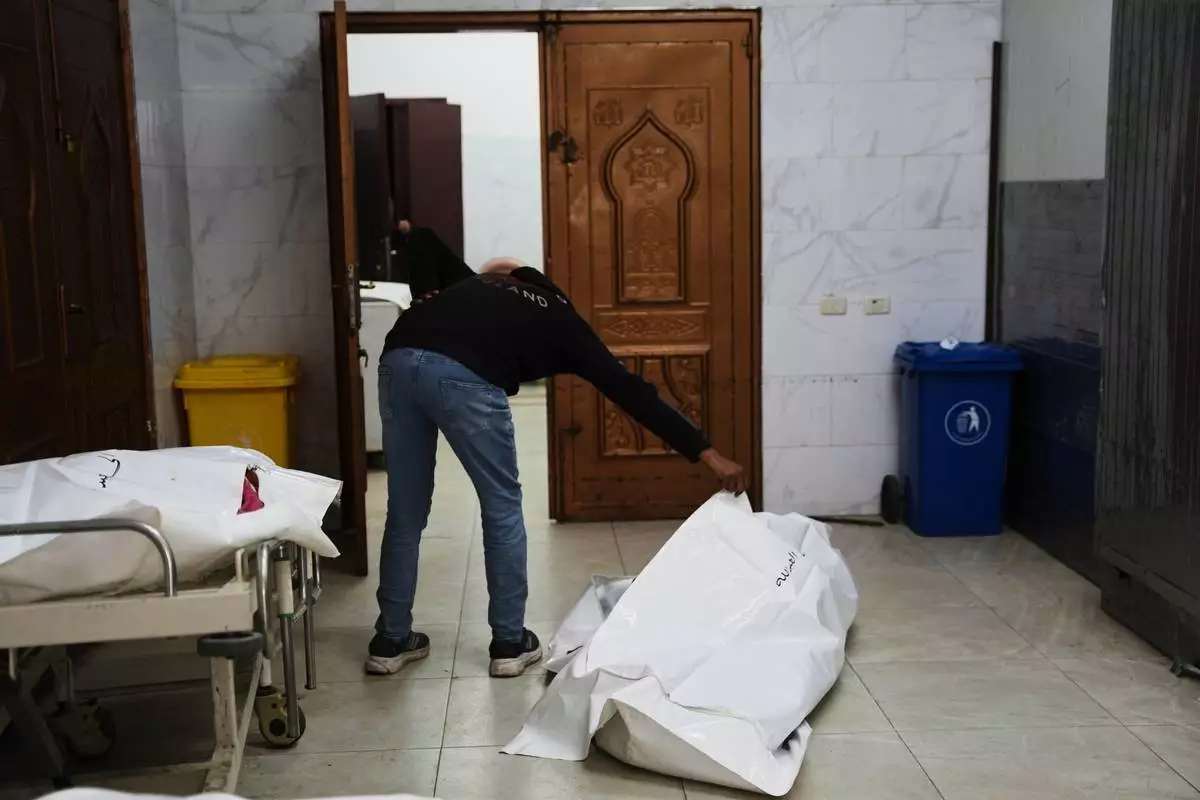
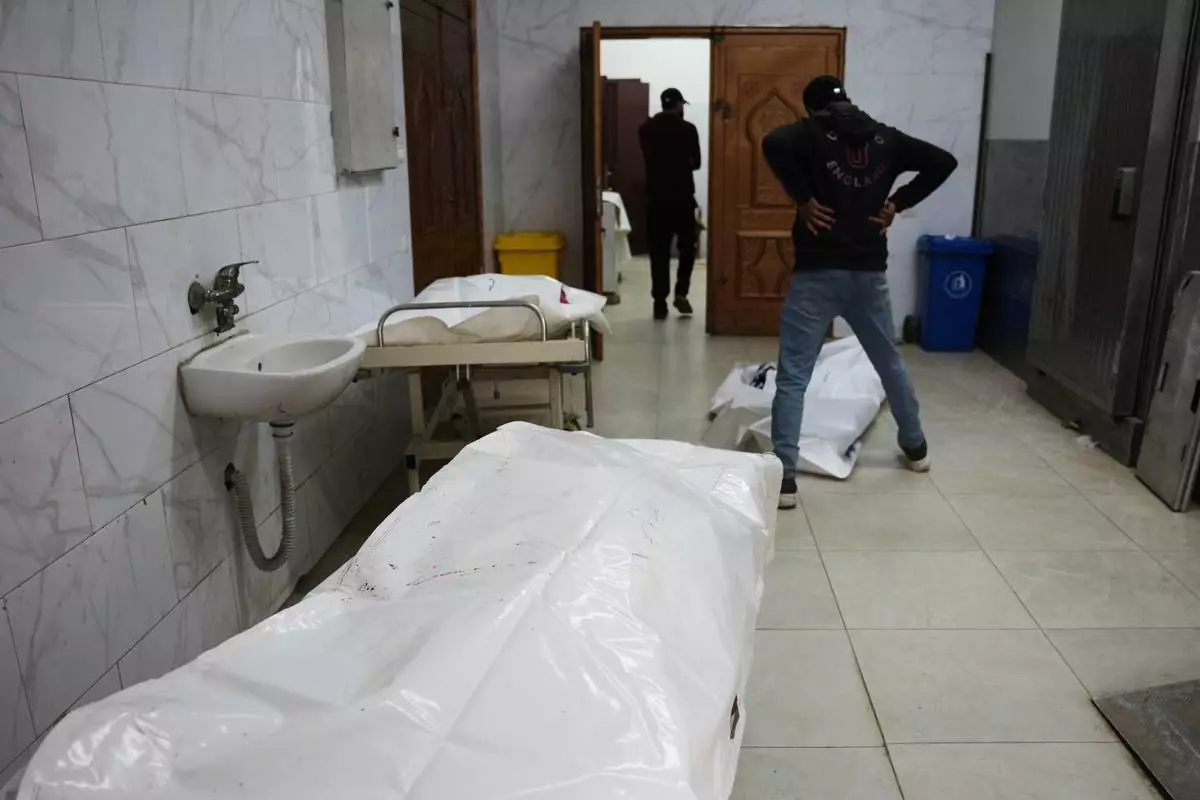
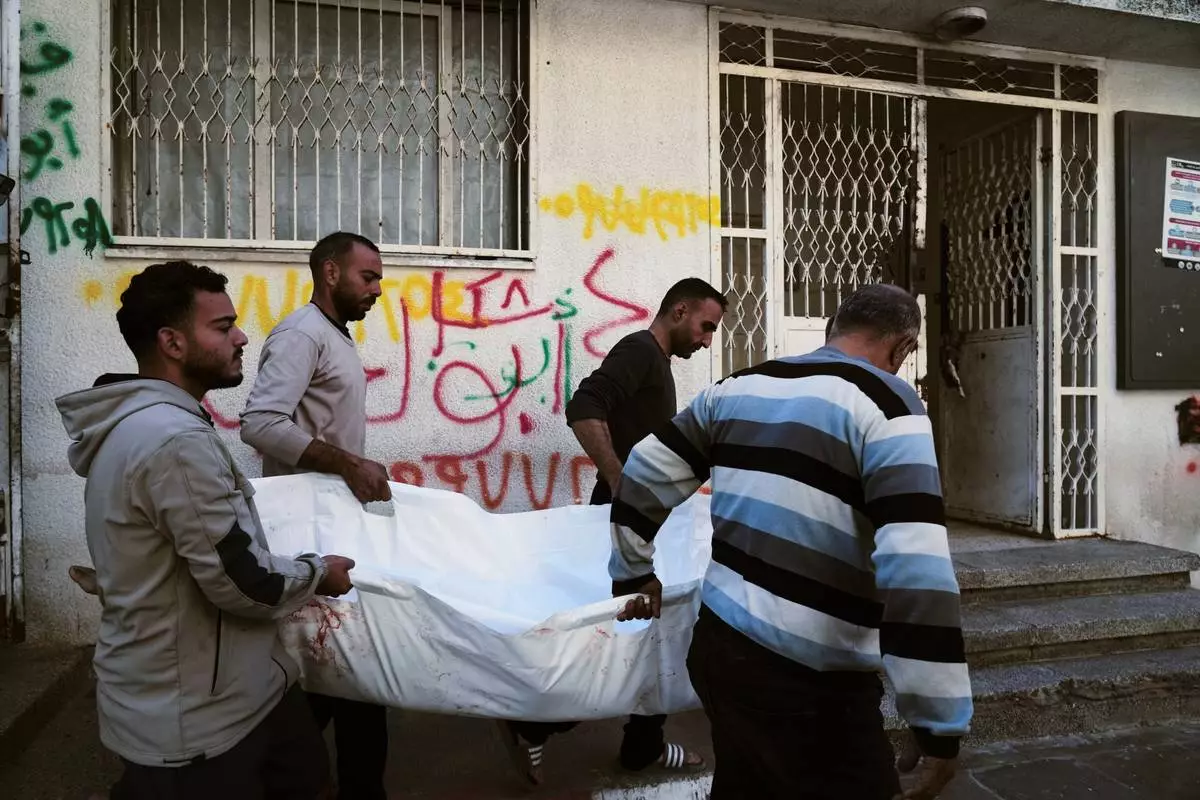
The bodies of Palestinians killed in an Israeli army strike are brought to the morgue at Nasser Hospital in Khan Younis, in the Gaza Strip, Thursday, Jan. 8, 2026. (AP Photo/Abdel Kareem Hana)

The bodies of Palestinians killed in an Israeli army strike are brought to the morgue at Nasser Hospital in Khan Younis, in the Gaza Strip, Thursday, Jan. 8, 2026. (AP Photo/Abdel Kareem Hana)

The bodies of Palestinians killed in an Israeli army strike are brought to the morgue at Nasser Hospital in Khan Younis, in the Gaza Strip, Thursday, Jan. 8, 2026. (AP Photo/Abdel Kareem Hana)

The bodies of Palestinians killed in an Israeli army strike are brought to the morgue at Nasser Hospital in Khan Younis, in the Gaza Strip, Thursday, Jan. 8, 2026. (AP Photo/Abdel Kareem Hana)

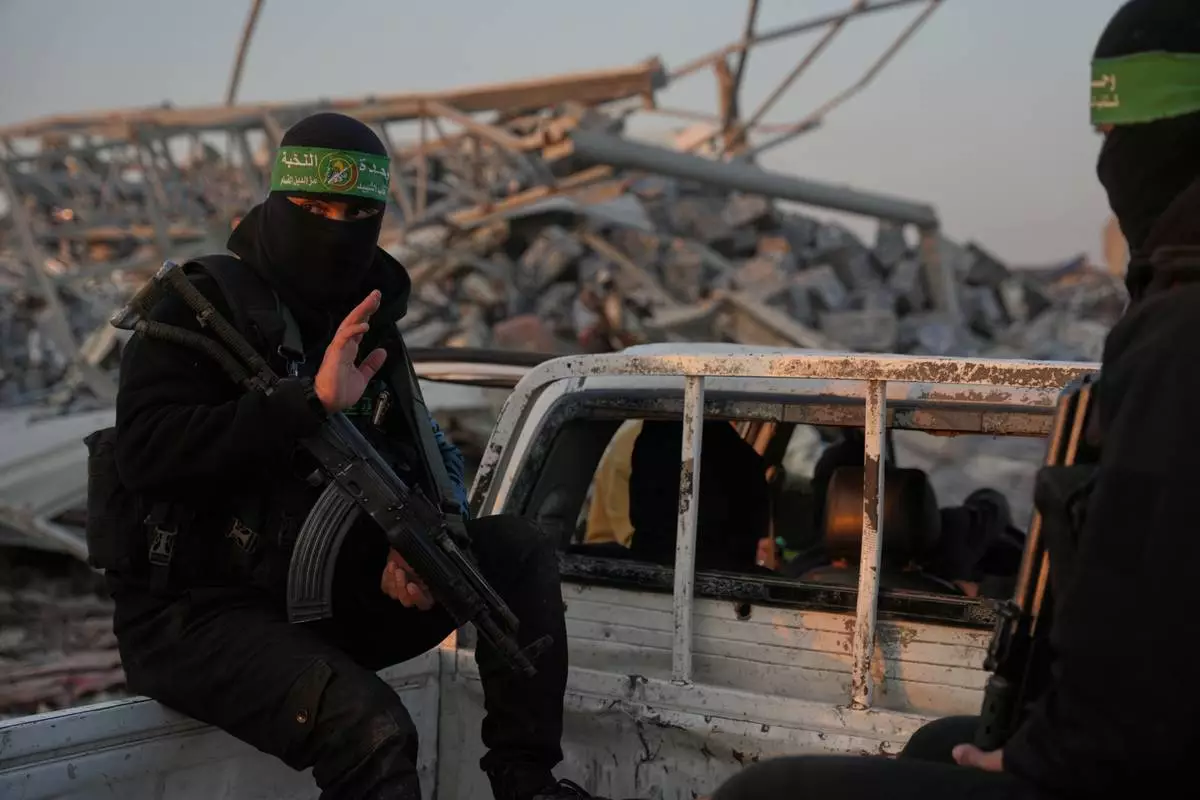
Hamas militants search for the remains of Israeli hostage in Zeitoun neighborhood of Gaza City, Wednesday, Jan. 7, 2026. (AP Photo/Abdel Kareem Hana)

Hamas militants search for the remains of Israeli hostage in Zeitoun neighborhood of Gaza City, Wednesday, Jan. 7, 2026. (AP Photo/Abdel Kareem Hana)

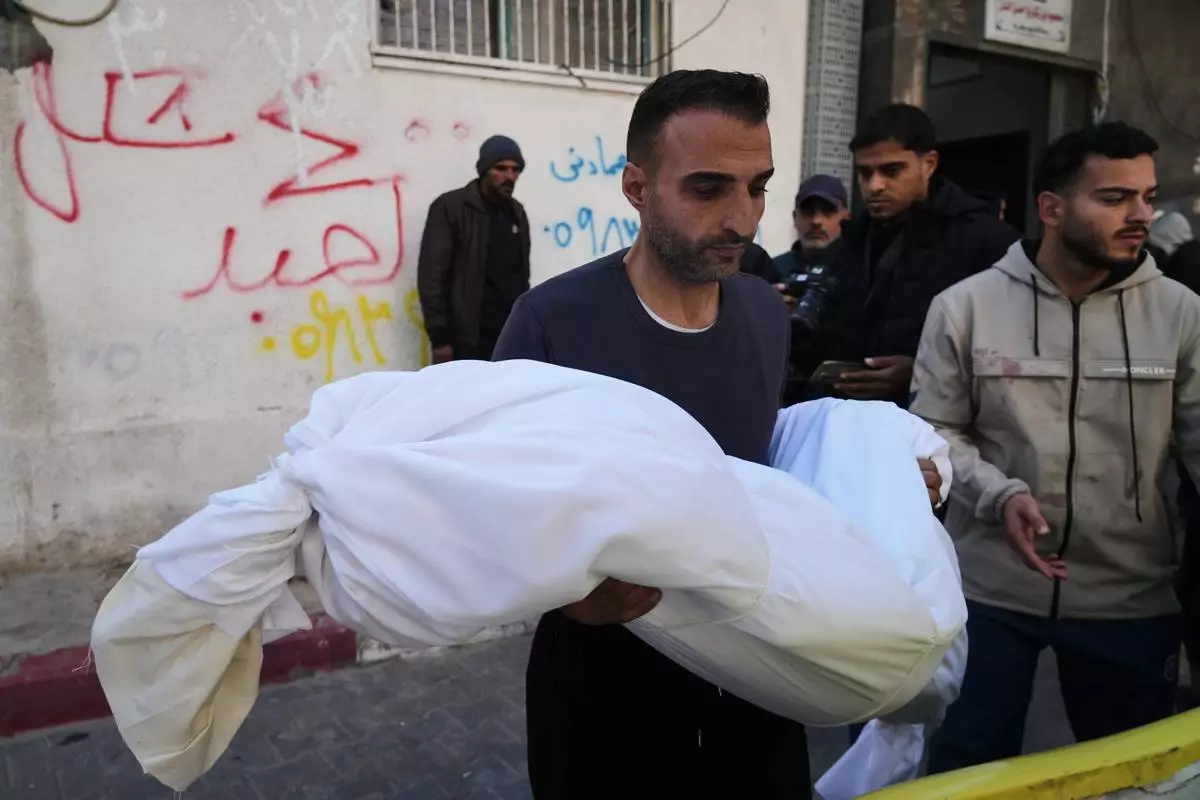
The body of 11-year-old Palestinian girl Hamsa Hosou, killed by Israeli fire in Jabalia, is brought to Shifa Hospital in Gaza City Thursday, Jan. 8, 2026. (AP Photo/Jehad Alshrafi)

The body of 11-year-old Palestinian girl Hamsa Hosou, killed by Israeli fire in Jabalia, is brought to Shifa Hospital in Gaza City Thursday, Jan. 8, 2026. (AP Photo/Jehad Alshrafi)

The body of 11-year-old Palestinian girl Hamsa Hosou, killed by Israeli fire in Jabalia, is brought to Shifa Hospital in Gaza City Thursday, Jan. 8, 2026. (AP Photo/Jehad Alshrafi)

The body of 11-year-old Palestinian girl Hamsa Hosou, killed by Israeli fire in Jabalia, is brought to Shifa Hospital in Gaza City Thursday, Jan. 8, 2026. (AP Photo/Jehad Alshrafi)

Recommended Articles