The United Nations Refugee Agency (UNHCR) has warned that the number of internally displaced persons (IDPs) in the Philippines, which has approached 9 million due to natural disasters and internal conflicts, will continue to grow without long-term solutions and legal protection for the displaced.
The Global Report on Internal Displacement 2025 released by the Internal Displacement Monitoring Center in May shows some 8.996 million Filipinos have been internally displaced nationwide, with many of them forced to leave home because of natural disasters.
The village of Sitio Nabong in Calumpit, Bulacan Province has been dealing with floodwater for more than a decade. What was once a street full of children has become a river, with families paddling through the remains of their submerged homes.
Sonny Mercado grew up in this community. The house that he inherited from his parents is now almost entirely underwater. The floods have overwhelmed the fields he once cultivated, so he now works in construction and drives a tuk-tuk to support his family.
To try to stay in place, the family has reinforced what is left of their house with wood, bamboo, and salvaged roofing.
"When the floodwaters rise higher than usual, we go into town, either to a relative's house or we rent a place temporarily. I have three daughters. They struggle just to get by, and they cannot go to school. We cannot stay here because when the water rises, there is no place to sleep," Mercado told China Global Television Network (CGTN).
Financial hardship prevents Mercado from buying a piece of land or a house on higher ground and he regularly has to move his family, depending on the flood conditions.
UNHCR has classified Mercado as one of a growing number of IDPs, who have been forced to move within their own country because of the worsening climate crisis.
Climate displacement is now a reality for millions in the Southeastern Asian country, according to the UN agency.
"From 2023 to 2024, the number of IDPs surge by 246-percent increase. That's 2.6 million in 2023 and it became 9 million in 2024," said Corazon Lagamayo, a UNHCR assistant protection officer.
Although UNHCR and the Philippine Social Welfare Department are assisting displaced families, support remains limited. There is still no national law that guarantees the rights of IDPs.
A bill currently under consideration by the Senate aims to change the situation by establishing a legal framework for shelter, aid and long-term protection.
Climate change is exacerbating the problem of displacement worldwide. The World Bank has warned that this could force 216 million people across six world regions to move within their countries by 2050.
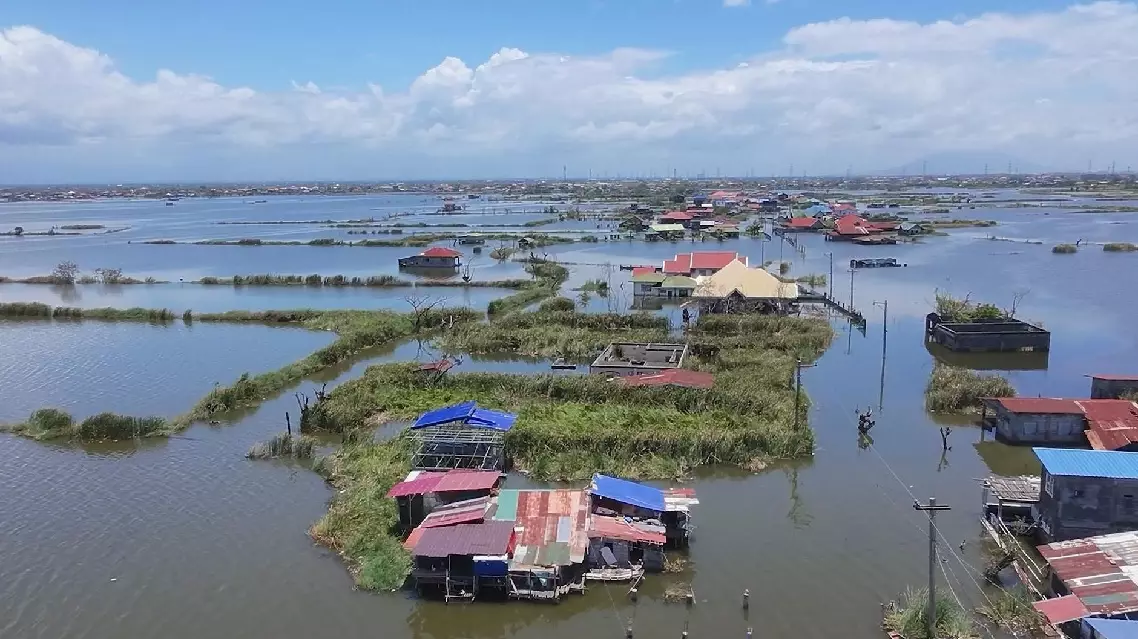
UNHCR warns of worsening displacement in Philippines due to climate crisis