
PARIS (AP) — Israel's tally of the war damage it wrought on Iran includes the targeted killings of at least 14 scientists, an unprecedented attack on the brains behind Iran's nuclear program that outside experts say can only set it back, not stop it.
In an interview with The Associated Press, Israel’s ambassador to France said the killings will make it “almost" impossible for Iran to build weapons from whatever nuclear infrastructure and material may have survived nearly two weeks of Israeli airstrikes and massive bunker-busting bombs dropped by U.S. stealth bombers.
“The fact that the whole group disappeared is basically throwing back the program by a number of years, by quite a number of years," Ambassador Joshua Zarka said.
But nuclear analysts say Iran has other scientists who can take their place. European governments say that military force alone cannot eradicate Iran's nuclear know-how, which is why they want a negotiated solution to put concerns about the Iranian program to rest.
“Strikes cannot destroy the knowledge Iran has acquired over several decades, nor any regime ambition to deploy that knowledge to build a nuclear weapon," U.K. Foreign Secretary David Lammy told lawmakers in the House of Commons.
Iran has long maintained that its nuclear program was peaceful, and U.S. intelligence agencies have assessed that Tehran is not actively pursuing a bomb. However, Israeli leaders have argued that Iran could quickly assemble a nuclear weapon.
Here's a closer look at the killings:
Zarka told AP that Israeli strikes killed at least 14 physicists and nuclear engineers, top Iranian scientific leaders who “basically had everything in their mind.”
They were killed “not because of the fact that they knew physics, but because of the fight that they were personally involved in, the creation and the fabrication and the production of (a) nuclear weapon," he said.
Nine of them were killed in Israel's opening wave of attacks on June 13, the Israeli military said. It said they “possessed decades of accumulated experience in the development of nuclear weapons” and included specialists in chemistry, materials and explosives as well as physicists.
Zarka spoke Monday to the AP. On Tuesday, Iran state TV reported the death of another Iranian nuclear scientist, Mohammad Reza Sedighi Saber, in an Israeli strike, after he'd survived an earlier attack that killed his 17-year-old son on June 13.
Experts say that decades of Iranian work on nuclear energy — and, Western powers allege, nuclear weapons — has given the country reserves of know-how and scientists who could continue any work toward building warheads to fit on Iran's ballistic missiles.
“Blueprints will be around and, you know, the next generation of Ph.D. students will be able to figure it out," said Mark Fitzpatrick, who specialized in nuclear non-proliferation as a former U.S. diplomat. Bombing nuclear facilities "or killing the people will set it back some period of time. Doing both will set it back further, but it will be reconstituted.”
“They have substitutes in maybe the next league down, and they’re not as highly qualified, but they will get the job done eventually,” said Fitzpatrick, now an analyst at the International Institute for Strategic Studies, a London think tank.
How quickly nuclear work could resume will in part depend on whether Israeli and U.S. strikes destroyed Iran’s stock of enriched uranium and equipment needed to make it sufficiently potent for possible weapons use.
“The key element is the material. So once you have the material, then the rest is reasonably well-known,” said Pavel Podvig, a Geneva-based analyst who specializes in Russia's nuclear arsenal. He said killing scientists may have been intended “to scare people so they don’t go work on these programs.”
“Then the questions are, ‘Where do you stop?’ I mean you start killing, like, students who study physics?" he asked. “This is a very slippery slope.”
The Israeli ambassador said: “I do think that people that will be asked to be part of a future nuclear weapon program in Iran will think twice about it.”
Israel is widely believed to be the only Middle Eastern country with nuclear weapons, which it has never acknowledged.
Israel has long been suspected of killing Iranian nuclear scientists but previously didn't claim responsibility as it did this time.
In 2020, Iran blamed Israel for killing its top nuclear scientist, Mohsen Fakhrizadeh, with a remote-controlled machine gun.
“It delayed the program but they still have a program. So it doesn't work,” said Paris-based analyst Lova Rinel, with the Foundation for Strategic Research think tank. “It's more symbolic than strategic.”
Without saying that Israel killed Fakhrizadeh, the Israeli ambassador said “Iran would have had a bomb a long time ago” were it not for repeated setbacks to its nuclear program — some of which Iran attributed to Israeli sabotage.
“They have not reached the bomb yet,” Zarka said. “Every one of these accidents has postponed a little bit the program.”
International humanitarian law bans the intentional killing of civilians and non-combatants. But legal scholars say those restrictions might not apply to nuclear scientists if they were part of the Iranian armed forces or directly participating in hostilities.
“My own take: These scientists were working for a rogue regime that has consistently called for the elimination of Israel, helping it to develop weapons that will allow that threat to take place. As such, they are legitimate targets,” said Steven R. David, a professor of political science at Johns Hopkins University.
He said Nazi German and Japanese leaders who fought Allied nations during World War II “would not have hesitated to kill the scientists working on the Manhattan Project” that fathered the world's first atomic weapons.
Laurie Blank, a specialist in humanitarian law at Emory Law School, said it's too early to say whether Israel's decapitation campaign was legal.
“As external observers, we don’t have all the relevant facts about the nature of the scientists’ role and activities or the intelligence that Israel has,” she said by email to AP. “As a result, it is not possible to make any definitive conclusions.”
Zarka, the ambassador, distinguished between civilian nuclear research and the scientists targeted by Israel.
“It’s one thing to learn physics and to know exactly how a nucleus of an atom works and what is uranium,” he said.
But turning uranium into warheads that fit onto missiles is “not that simple,” he said. ”These people had the know-how of doing it, and were developing the know-how of doing it further. And this is why they were eliminated.”
Associated Press writer Jill Lawless in London contributed to this report.

In this photo released on Monday, June 23, 2025, by Iranian army press service, Iran's army commander-in-chief Gen. Amir Hatami, center, Admiral Mahmoud Mousavi, right, and Admiral Habibollah Sayyari attend a meeting in Zolfaghar central headquarters, Iran. (Iranian Army Press Service via AP)
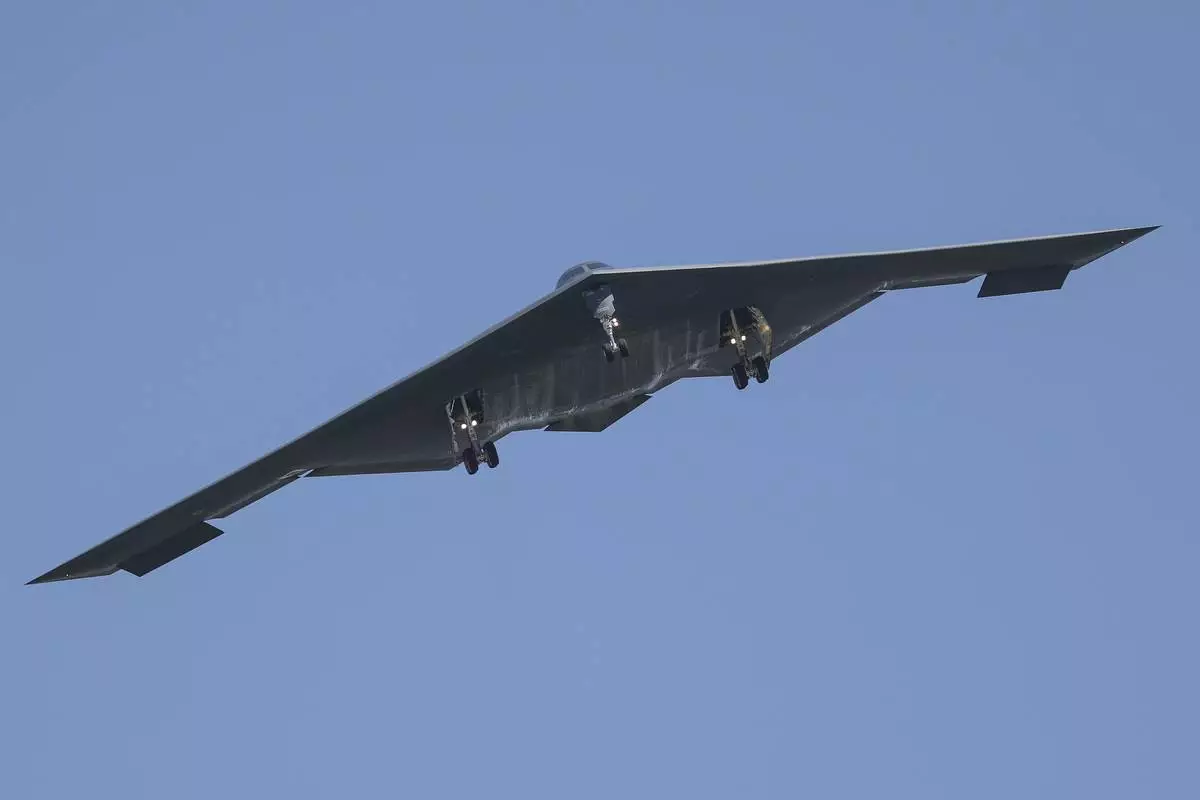
A B-2 bomber arrives at Whiteman Air Force Base Mo., Sunday, June 22, 2025. (AP Photo/David Smith)