Skip to Content Facebook Feature Image

Zohran Mamdani chose a Quran full of symbolism for his mayoral oath

News

Zohran Mamdani chose a Quran full of symbolism for his mayoral oath
News

News

Zohran Mamdani chose a Quran full of symbolism for his mayoral oath

2026-01-01 06:33 Last Updated At:12:47

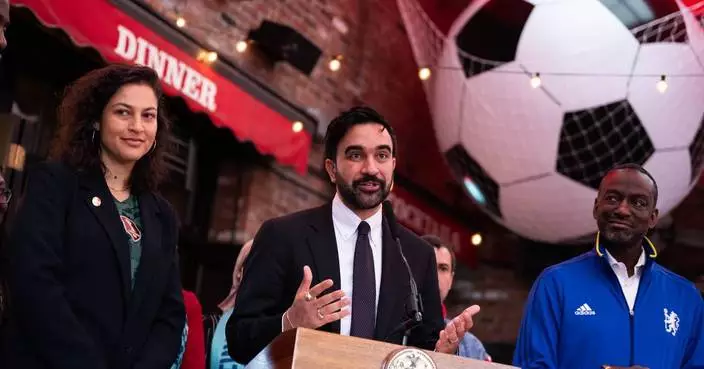
NEW YORK (AP) — Incoming Mayor Zohran Mamdani will take his midnight oath of office on a centuries-old Quran, marking the first time a mayor of New York City uses Islam’s holy text to be sworn in and underscoring a series of historic firsts for the city.

When the 34-year-old Democrat becomes mayor in a long-closed subway station beneath City Hall, he'll be the first Muslim, first South Asian and first African-born person to hold that position.

More Images
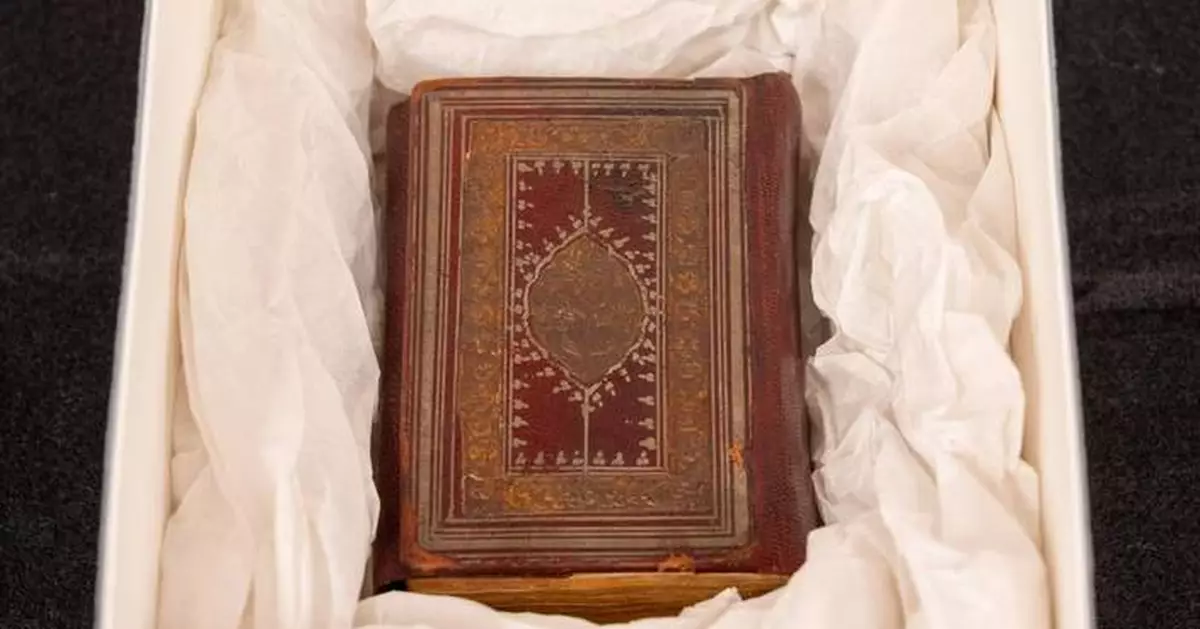
This photo provided by The New York Public Library shows the Schomburg Quran on Dec. 16, 2025 in New York. (Jonathan Blanc/The New York Public Library via AP)
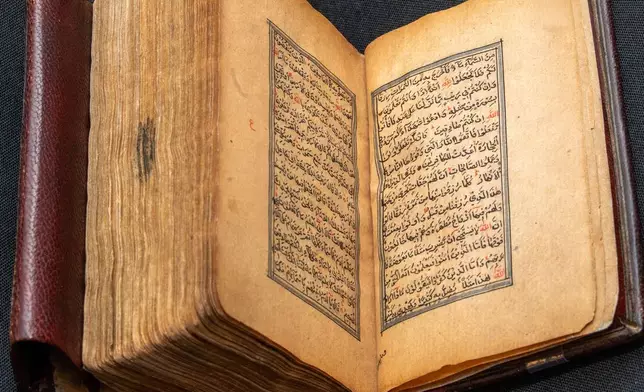
This photo provided by The New York Public Library shows the Schomburg Quran on Dec. 16, 2025 in New York. (Jonathan Blanc/The New York Public Library via AP)
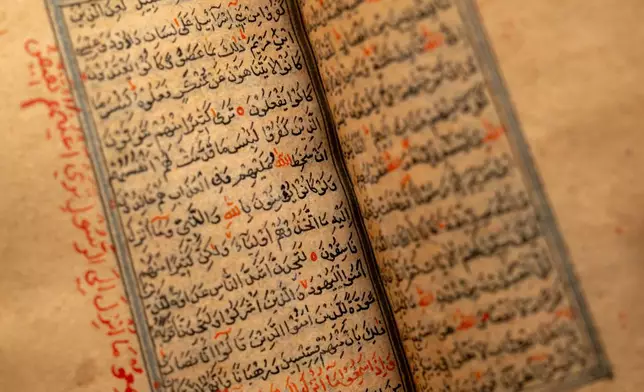
This photo provided by The New York Public Library shows the Schomburg Quran on Dec. 16, 2025 in New York. (Jonathan Blanc/The New York Public Library via AP)

This photo provided by The New York Public Library shows the Schomburg Quran on Dec. 16, 2025 in New York. (Jonathan Blanc/The New York Public Library via AP)

This photo provided by The New York Public Library shows the Schomburg Quran on Dec. 16, 2025 in New York. (Jonathan Blanc/The New York Public Library via AP)

This photo provided by The New York Public Library shows the Schomburg Quran on Dec. 16, 2025 in New York. (Jonathan Blanc/The New York Public Library via AP)

This photo provided by The New York Public Library shows the Schomburg Quran on Dec. 16, 2025 in New York. (Jonathan Blanc/The New York Public Library via AP)

This photo provided by The New York Public Library shows the Schomburg Quran on Dec. 16, 2025 in New York. (Jonathan Blanc/The New York Public Library via AP)

These milestones — as well as the historical Quran he will use for the ceremony — reflect the longstanding and vibrant Muslim residents of the nation's most populous city, according to a scholar who helped Mamdani’s wife, Rama Duwaji, select one of the books.

Most of Mamdani's predecessors were sworn in on a Bible, although the oath to uphold the federal, state and city constitutions does not require the use of any religious text.

And while he has focused heavily on the issue of affordability during his campaign, Mamdani was outspoken about his Muslim faith. He frequently appeared at mosques across the five boroughs as he built a base of support that included many first-time South Asian and Muslim voters.

Mamdani will place his hand on two Qurans during the subway ceremony: his grandfather's Quran and a pocket-sized version that dates back to the late 18th or early 19th century. It is part of the collection at the New York Public Library’s Schomburg Center for Research in Black Culture.

That copy of the Quran symbolizes the diversity and reach of the city's Muslims, said Hiba Abid, the library's curator for Middle Eastern and Islamic Studies.

“It’s a small Quran, but it brings together elements of faith and identity in New York City history,” Abid said.

For a subsequent swearing-in ceremony at City Hall on the first day of the year, Mamdani will use both his grandfather's and grandmother's Qurans. The campaign hasn't offered more details on those heirlooms.

The manuscript was acquired by Arturo Schomburg, a Black Puerto Rican historian whose collection documented the global contributions of people of African descent. While it is unclear how Schomburg came into possession of the Quran, scholars believe it reflected his interest in the historical relationship between Islam and Black cultures in the United States and across Africa.

Unlike ornate religious manuscripts associated with royalty or elites, the copy of the Quran that Mamdani will use is modest in design. It has a deep red binding with a simple floral medallion and is written in black and red ink. The script is plain and readable, suggesting it was created for everyday use rather than ceremonial display.

Those features indicate the manuscript was intended for ordinary readers, Abid said, a quality she described as central to its meaning.

“The importance of this Quran lies not in luxury, but in accessibility,” she said.

Because the manuscript is undated and unsigned, scholars relied on its binding and script to estimate when it was produced, placing it sometime in the late 18th or early 19th century during the Ottoman period in a region that includes what is now Syria, Lebanon, Israel, the Palestinian territories and Jordan.

Abid said the manuscript’s journey to New York mirrors Mamdani’s own layered background. Mamdani is a South Asian New Yorker who was born in Uganda, while Duwaji is American-Syrian.

The meteoric rise of a Muslim democratic socialist also brought a surge of Islamophobic rhetoric, amplified by national attention on the race.

In an emotional speech days before the election, Mamdani said the hostility had only strengthened his resolve to be visible about his faith.

“I will not change who I am, how I eat, or the faith that I’m proud to call my own,” he said. “I will no longer look for myself in the shadows. I will find myself in the light.”

The decision to use a Quran has drawn fresh criticism from some conservatives. U.S. Sen. Tommy Tuberville of Alabama wrote on social media, “The enemy is inside the gates,” in response to a news article about Mamdani’s inauguration. The Council on American-Islamic Relations, a civil-rights group, has designated Tuberville as an anti-Muslim extremist based on past statements.

Such backlash is not new. In 2006, Keith Ellison, the first Muslim elected to Congress, faced condemnation from conservatives after he chose to use a Quran for his ceremonial oath.

Following the inauguration, the Quran will go on public display at the New York Public Library. Abid said she hopes attention surrounding the ceremony — whether supportive or critical — will prompt more people to explore the library’s collections documenting Islamic life in New York, ranging from early 20th century Armenian and Arabic music recorded in the city to firsthand accounts of Islamophobia after the Sept. 11 attacks.

“This manuscript was meant to be used by ordinary readers when it was produced,” Abid said. “Today it lives in a public library where anyone can encounter it.”

Associated Press writers Jake Offenhartz in New York and Kim Chandler in Montgomery, Alabama, contributed.

This photo provided by The New York Public Library shows the Schomburg Quran on Dec. 16, 2025 in New York. (Jonathan Blanc/The New York Public Library via AP)

This photo provided by The New York Public Library shows the Schomburg Quran on Dec. 16, 2025 in New York. (Jonathan Blanc/The New York Public Library via AP)
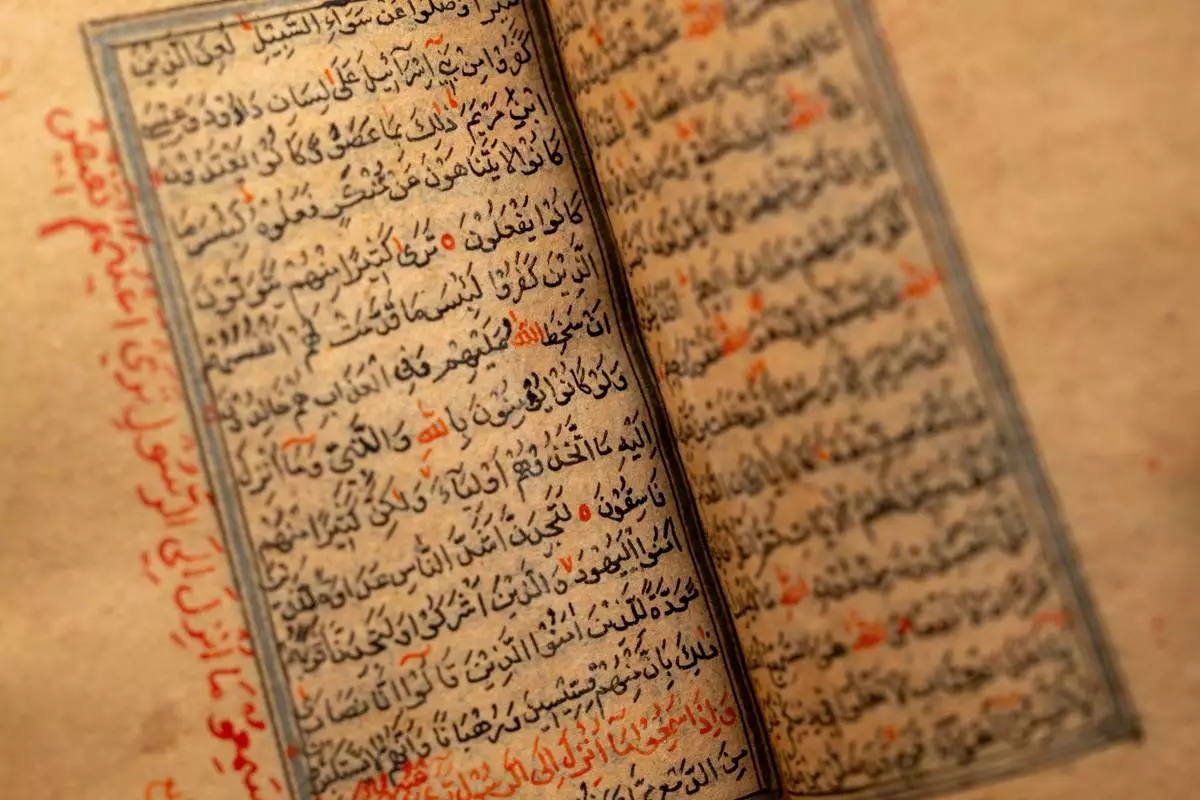
This photo provided by The New York Public Library shows the Schomburg Quran on Dec. 16, 2025 in New York. (Jonathan Blanc/The New York Public Library via AP)

This photo provided by The New York Public Library shows the Schomburg Quran on Dec. 16, 2025 in New York. (Jonathan Blanc/The New York Public Library via AP)
This photo provided by The New York Public Library shows the Schomburg Quran on Dec. 16, 2025 in New York. (Jonathan Blanc/The New York Public Library via AP)
This photo provided by The New York Public Library shows the Schomburg Quran on Dec. 16, 2025 in New York. (Jonathan Blanc/The New York Public Library via AP)
This photo provided by The New York Public Library shows the Schomburg Quran on Dec. 16, 2025 in New York. (Jonathan Blanc/The New York Public Library via AP)

This photo provided by The New York Public Library shows the Schomburg Quran on Dec. 16, 2025 in New York. (Jonathan Blanc/The New York Public Library via AP)
NEW YORK (AP) — Kamala Harris “wrote off rural America" during the 2024 presidential campaign and failed to attack Donald Trump with sufficient “negative firepower," according to a long-awaited post-election autopsy released on Thursday by the Democratic National Committee.

The committee's chair, Ken Martin, shared the 192-page report only after facing intense internal pressure from frustrated Democratic operatives concerned with his leadership. Martin had originally promised to release the autopsy, only to keep it under wraps for months because he was concerned it would be a distraction ahead of the midterms as Democrats mobilize to take back control of Congress.

On Tuesday, Martin apologized for his handling of the situation and conceded that the report was withheld because it “was not ready for primetime."

Although the autopsy criticizes Democrats' focus on “identity politics,” it sidesteps some of the most controversial elements of the 2024 campaign. The report does not address former President Joe Biden’s decision to seek reelection, the rushed selection of Harris to replace him on the ticket or the party's acrimonious divide over the war in Gaza.

“I am not proud of this product; it does not meet my standards, and it won’t meet your standards,” Martin wrote in an essay on Substack on Thursday. “I don’t endorse what’s in this report, or what’s left out of it. I could not in good faith put the DNC’s stamp of approval on it. But transparency is paramount.”

A spokesperson for Harris did not immediately respond to a request for comment.

The initial reaction from Democratic operatives was a mix of bafflement and anger over Martin's handling of the situation.

“Why not say this in 2024, or bring in more people to finish it, instead of turning this into the dumbest media cycle for 7-8 months?” Democratic strategist Steve Schale wrote on social media.

The postelection report, which was authored by Democratic consultant Paul Rivera, calls for “a renewed focus on the voters of Middle America and the South, who have come to believe they are not included in the Democratic vision of a stronger and more dynamic America for everyone.”

“Millions of Americans are suffering from poor access to healthcare, manufacturing and job losses, and a failing infrastructure, yet continue to be persuaded to vote against their best interests because they do not see themselves reflected in the America of the Democratic Party,” the report says.

The autopsy points to a reduction in support and training for Democratic state parties, voter registration shifts and “a persistent inability or unwillingness to listen to all voters.”

Thursday's release comes as Martin confronts a crisis of confidence among party officials who are increasingly concerned about the health of their political machine barely a year into his term. Some Democratic operatives have had informal discussions about recruiting a new chair, even though most believe that Martin’s job wasn't in serious jeopardy ahead of the midterm elections.

The report found that Harris and her allies failed to focus enough on Trump's negatives, especially his felony convictions. This was part of a broader criticism that Democrats' messaging is too focused on reason and winning arguments, “even in cycles when the electorate is defined by rage.”

“There was a decision in the 2024 Democratic leadership not to engage in negative advertising at the scale required,” the report states. “The Trump campaign and supportive Super PACs went full throttle against Vice President Harris, but there was not sufficient or similar negative firepower directed at Trump by Democrats.”

The report continues: “It was essential to prosecute a more effective case as to why Trump should have been disqualified from ever again taking office. The grounds were there, but the messaging did not make the case.”

Trump's attack on Harris' transgender policies were cited as a key contrast.

Specifically, the report suggested the Democratic nominee was “boxed” in by the Trump campaign's “very effective” ad that highlighted Harris' previous statement of support for taxpayer-funded gender-affirming surgeries for prison inmates.

Democratic pollsters believed that “if the Vice President would not change her position – and she did not – then there was nothing which would have worked as a response," the report said.

The report criticized Harris' outreach to key segments of America while condemning the party's focus on “identity politics.”

“Harris wrote off rural America, assuming urban/suburban margins would compensate. The math doesn’t work,” the report says. “You can’t lose rural areas by overwhelming margins and make it up elsewhere when rural voters are a significant share of the electorate. If Democrats are to reclaim leadership in the Heartland or the South, candidates must perform well in rural turf. Show up, listen, and then do it again.”

The report also references Democrats' underperformance with male voters of color.

“Male voters require direct engagement. The gender gap can be narrowed. Deploy male messengers, address economic concerns, and don’t assume identity politics will hold male voters of color,” it says.

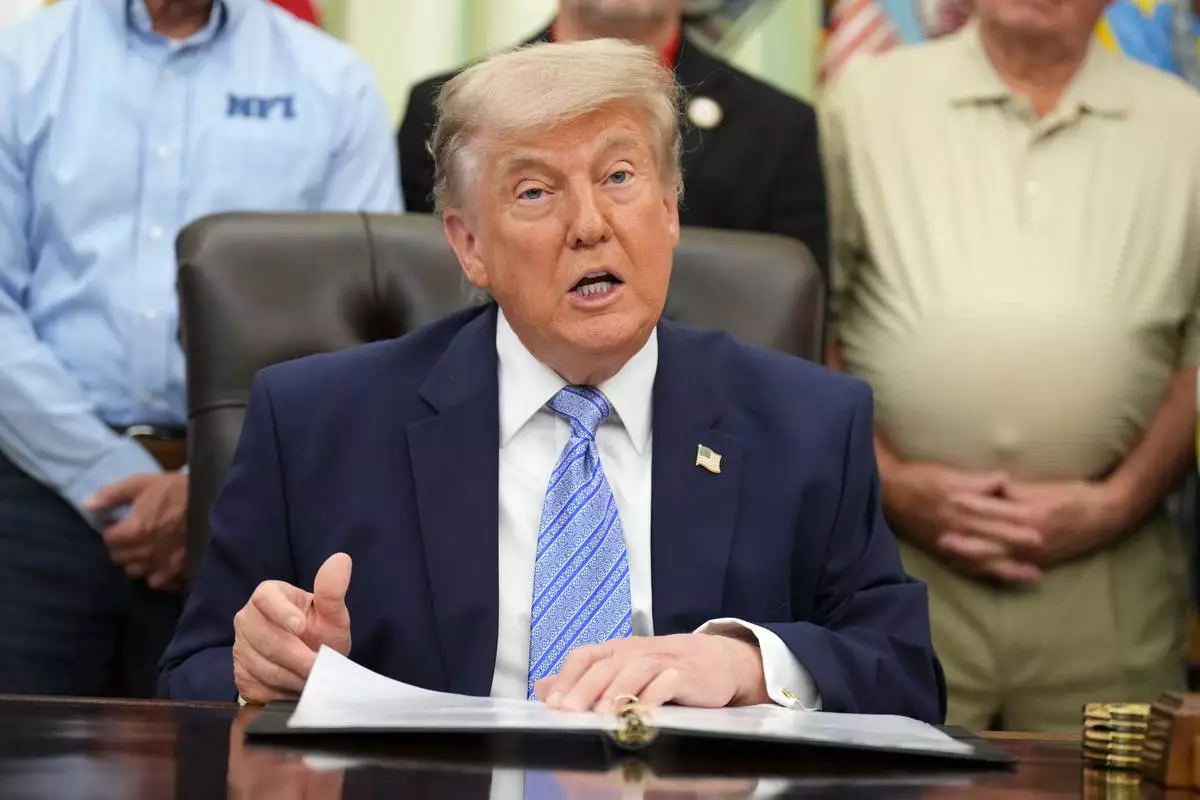
President Donald Trump speaks during an event about loosening a federal refrigerant rule, in the Oval Office at the White House, Thursday, May 21, 2026, in Washington. (AP Photo/Jacquelyn Martin)

President Donald Trump speaks during an event about loosening a federal refrigerant rule, in the Oval Office at the White House, Thursday, May 21, 2026, in Washington. (AP Photo/Jacquelyn Martin)

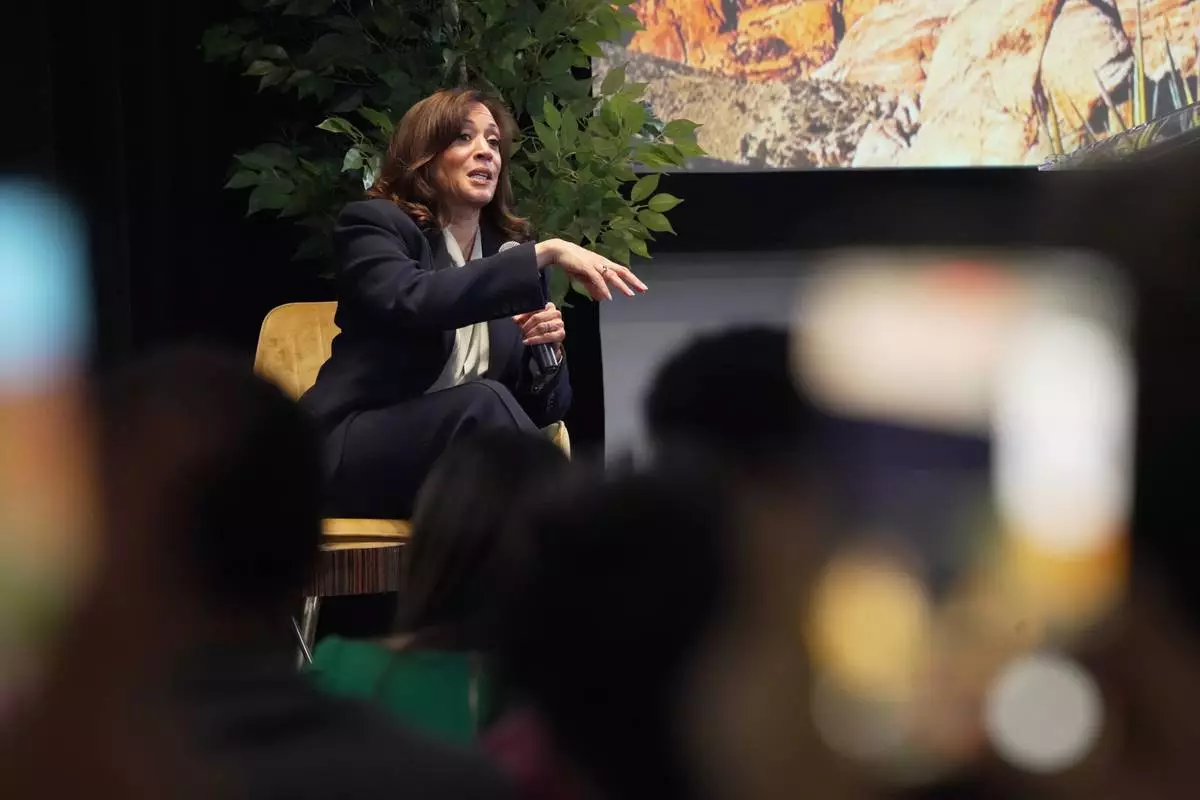
Former Vice President Kamala Harris speaks during a fireside chat on Thursday, May 7, 2026, in Las Vegas. (AP Photo/Ty ONeil)

Former Vice President Kamala Harris speaks during a fireside chat on Thursday, May 7, 2026, in Las Vegas. (AP Photo/Ty ONeil)

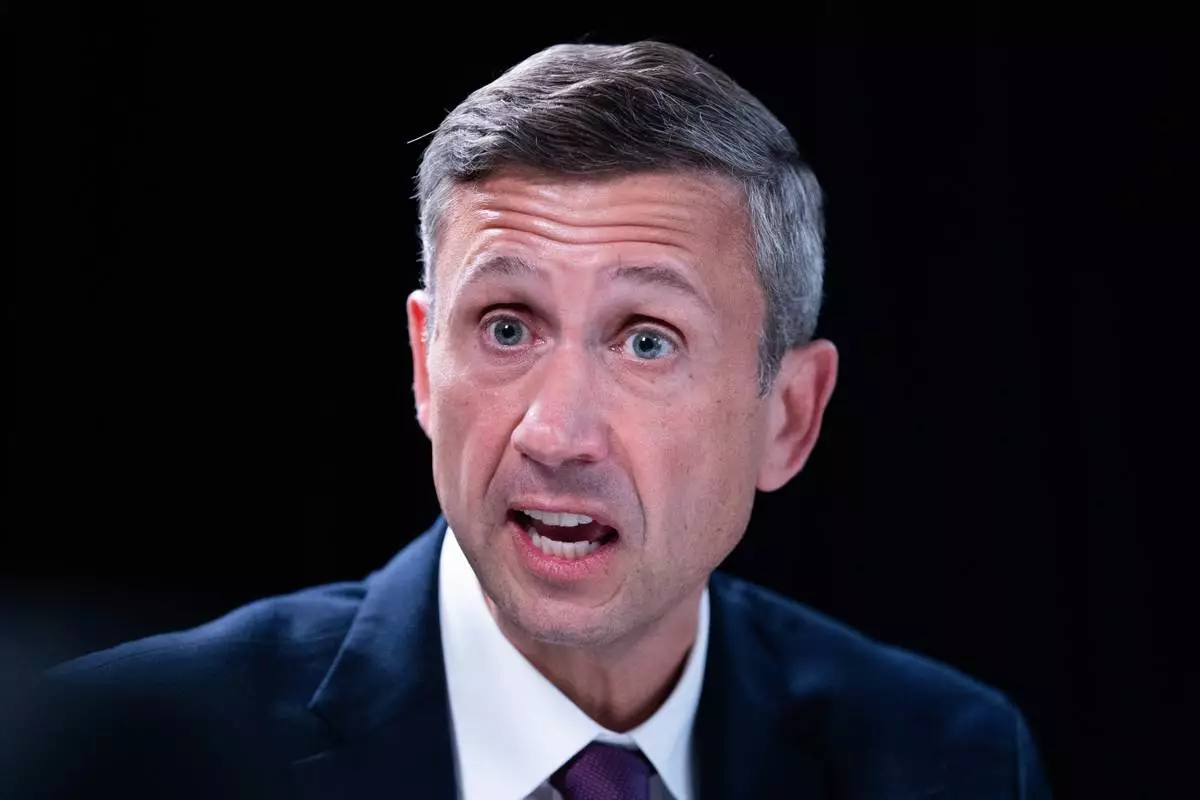
FILE - Democratic National Committee chair Ken Martin speaks during an interview with The Associated Press at DNC headquarters, Jan. 12, 2026, in Washington. (AP Photo/Allison Robbert, File)

FILE - Democratic National Committee chair Ken Martin speaks during an interview with The Associated Press at DNC headquarters, Jan. 12, 2026, in Washington. (AP Photo/Allison Robbert, File)

Recommended Articles