WASHINGTON--(BUSINESS WIRE)--Jun 25, 2025--
TrustPoint, a pioneer in next-generation space-based positioning and navigation solutions, is proud to announce the successful launch and first contact of its third free-flying satellite, Time Flies, aboard the latest rideshare launch out of Vandenberg Space Force Base on Monday. This milestone strengthens TrustPoint’s leadership in delivering innovative Positioning, Navigation, and Timing (PNT) services from Low Earth Orbit (LEO).
This press release features multimedia. View the full release here: https://www.businesswire.com/news/home/20250625377848/en/
Time Flies, TrustPoint’s third satellite launch in two years, integrates substantial technological advancements, including increased power and autonomy. These innovations enhance the company's compact C-band payload, supporting demonstrations and further advancing field testing of TrustPoint-enabled receivers currently in development by the company's growing portfolio of product partners.
"With the successful launch and first contact of Time Flies, TrustPoint continues to prove that a commercial GPS alternative from LEO is not only possible, it’s here," said Patrick Shannon, Founder and CEO of TrustPoint. "As global demand for alternative and complementary PNT systems accelerates, TrustPoint is uniquely positioned to unlock significant market potential. By addressing pressing customer needs from Low Earth Orbit, we’re paving the way for substantial value creation for our commercial partners and investors."
Building on the successes of earlier missions ( It’s About Time and Time We’ll Tell ), Time Flies underscores TrustPoint’s focus on performance and autonomy to meet commercial and national security requirements. The mission is supported by an all-U.S. team, showcasing the collaboration and expertise driving TrustPoint’s initiatives.
"TrustPoint was founded to enable new applications and address new threats," said Chris DeMay, Founder and COO of TrustPoint. “From program kickoff to first telemetry, the Time Flies mission has been executed flawlessly, validating our technical foundation and reinforcing our ability to respond to global needs for GPS resilience and national security.”
About TrustPoint, Inc.
TrustPoint is developing a revolutionary commercial GPS service, leveraging their C-band LEO satellite constellation. The TrustPoint system has been developed from the ground up to achieve the high performance, security, and availability required for autonomous navigation, critical infrastructure, and national security. Learn more at www.trustpointgps.com.
Twitter - @TrustPointGPS
LinkedIn - https://www.linkedin.com/company/trustpointgps/

Mission Patch for TrustPoint's Third Satellite - Time Flies
Spanish star Jon Rahm won't be part of the next version of LIV Golf, dealing a setback to the beleaguered circuit as it tries to emerge from bankruptcy and forge a new path without the financial muscle of Saudi Arabia's sovereign wealth fund.
John Beck, the attorney Rahm hired for LIV's bankruptcy proceedings, said during a Wednesday hearing in the U.S. Bankruptcy Court of New Jersey that Rahm reviewed the proposed terms of LIV 2.0 and decided he would not be participating in 2027.
Rahm, a Masters and U.S. Open champion and the last player to be No. 1 in the world before Scottie Scheffler, was among the biggest and most stunning acquisitions by LIV Golf at the end of 2023 when he was the reigning Masters champion.
Rahm had said in May he has several years left on his contract. His signing bonus, never confirmed, was reported to be in the $300 million range.
While the hearing was confirmation he wants out of LIV — he had not answered questions directly most of the summer — the decision was not surprising.
The court earlier this week allowed Sergio Garcia to end his contract when the 46-year-old Spaniard and former Masters champion asked for clarification on his status. Garcia was among the first to defect to LIV in 2022.
Still to come was formal separation from LIV Golf and word on where Rahm would play next. The PGA Tour has said it would not hold conversations with any LIV player still legally under contract. Beck declined to comment when reached by phone.
PGA Tour CEO Brian Rolapp brought back five-time major champion Brooks Koepka with heavy financial stipulations at the start of this year, after Koepka negotiated an end to his LIV contract. Rolapp offered the deal to three other major champions, including Rahm, giving them a two-week deadline to decide. None took the offer.
Two months later, the Public Investment Fund of Saudi Arabia said it would no longer bankroll the rival league after the 2026 season.
The PGA Tour did not immediately comment on Rahm’s decision.
Rahm's plans were revealed two days after BC Partners Credit announced an initial investment payment to LIV Golf 2.0, which still requires approval, that would allow the league to move forward with a team-focused theme in which players would be equity owners.
Part of LIV's amended restructuring support agreement extended the deadline for players who decide whether they want to stick around for LIV 2.0.
LIV Golf CEO Scott O'Neil had said Monday: "We believe deeply in the future of this league and in the opportunity to build something distinctive alongside our players. We’re delivering on our major milestones, and while there is still work ahead, today marks meaningful progress toward a player-owned, team-focused, truly global league that complements the wider game and creates new opportunities for players, fans, partners and the next generation of golfers.”
Rahm was the individual points champion each of the last three years, when the prize money was $20 million for individual competition and bonuses were awarded for the points race. His total earnings from LIV over the last three years topped $100 million.
Rahm withdrew this week from the Spanish Open because his wife, Kelley, is home in Arizona expecting their fourth child. He remains a European tour member and plans to play in Abu Dhabi and Dubai at the end of the year.
The PGA Tour typically bans players for one year after their last LIV event, though it made an exception for Koepka. Bryson DeChambeau, among those who filed an antitrust lawsuit against the tour when LIV began, has not indicated any desire to return.
Rolapp has consistently said he wants what's best for the PGA Tour, and Rahm is LIV's best player as a former No. 1. He is still at No. 15 despite limited access to world ranking points.
See AP’s full golf coverage here

FILE - Captain Jon Rahm of Legion XIII celebrates after putting on the 18th hole green during the final round of HSBC LIV Golf Hong Kong at Hong Kong Golf Club Fanling, Sunday, March 8, 2026 in Hong Kong. (Mike Stobe/LIV Golf via AP, File)
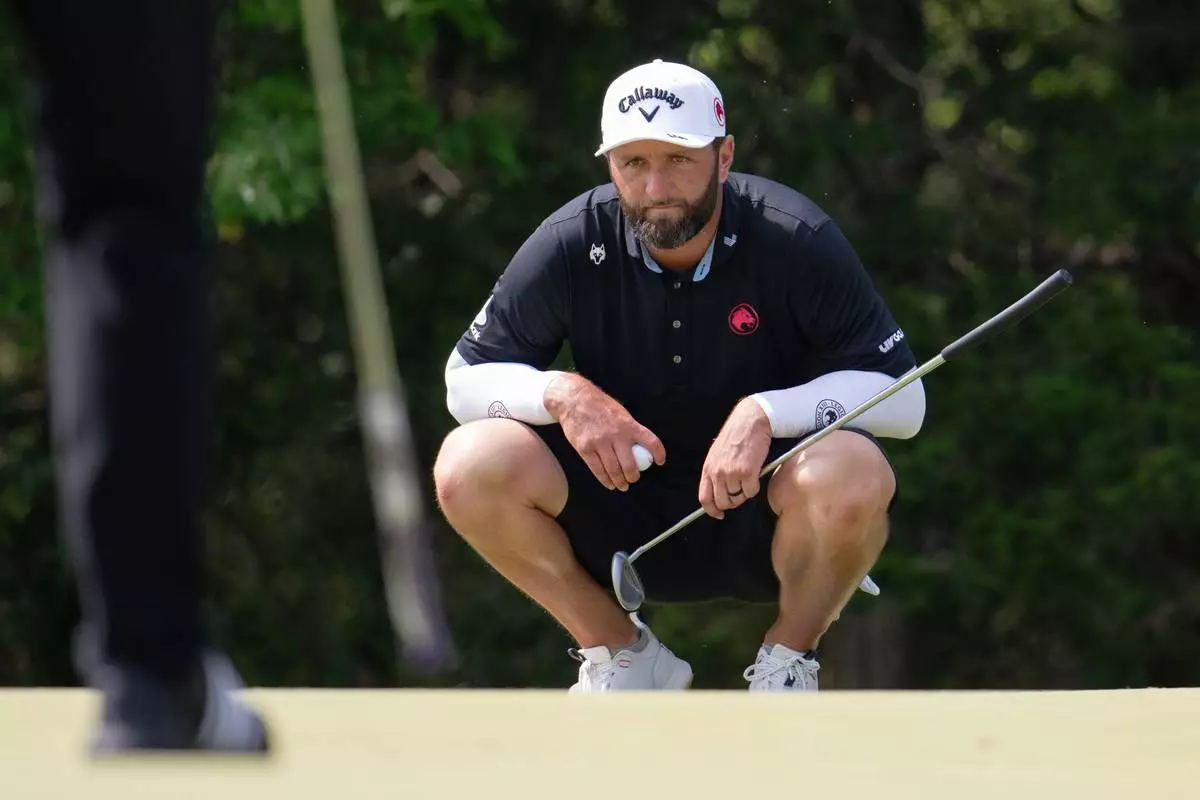
FILE - Captain Jon Rahm of Legion XIII reads his putt during the final round of LIV Golf Bedminster at Trump National Golf Club on Sunday, Aug. 9, 2026 in Bedminster, N.J. (Montana Pritchard/LIV Golf, File)