NHL teams for the first time in a non-pandemic environment will not be gathering in one place for the draft, and the mind-boggling logistics of decentralizing the annual event are right up Steve Mayer's alley.
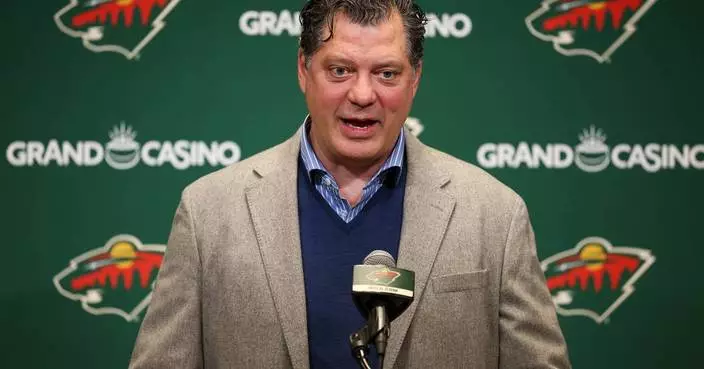
The league's president of content and events has masterminded how to put on outdoor games, All-Star weekends, the Stanley Cup Final in a bubble and last year's draft at the Sphere. Holding a smaller get-together at the Peacock Theater in Los Angeles with similar pageantry and coordination between 32 teams spread across North America has become his department's next big challenge.
“We thought this would be simpler, and it’s actually become way more complicated,” Mayer said Tuesday from LA. "Everything has to be spot on. It was so much easier when you can look at table No. 6 and they were making their pick and it was easy. I just think this is way more complicated than it had been in the past.”
Commissioner Gary Bettman will be on site, along with nearly 100 of the top prospects, 32 of whom will be selected in the first round Friday night and the others expected to hear their names called Saturday when the draft resumes.
Then there are 90-plus remote cameras for the draft rooms in the various markets — including the Philadelphia Flyers setup down the shore in Atlantic City — and the guest selectors who will be announcing the picks, such as Jeremy Jackson and Marguerite Moreau of "Mighty Ducks” movie fame for the Anaheim Ducks.
There won't be a crowd of more than 100,000 fans in attendance like the NFL draft, though the NHL is hoping to put on a different kind of spectacle that translates well to TV. That includes a virtual environment a player will walk into and be able to interact with the staff of the team that just picked him.
“They’re going to have a back-and-forth interaction with the kid they just drafted (and) the kid will have an opportunity to say a few words back at this group, which will be captured for television and it will be quite unique,” Mayer said. “That moment in that environment ... is what I think will set us apart from the NBA and Major League Baseball and the NFL, to an extent.”
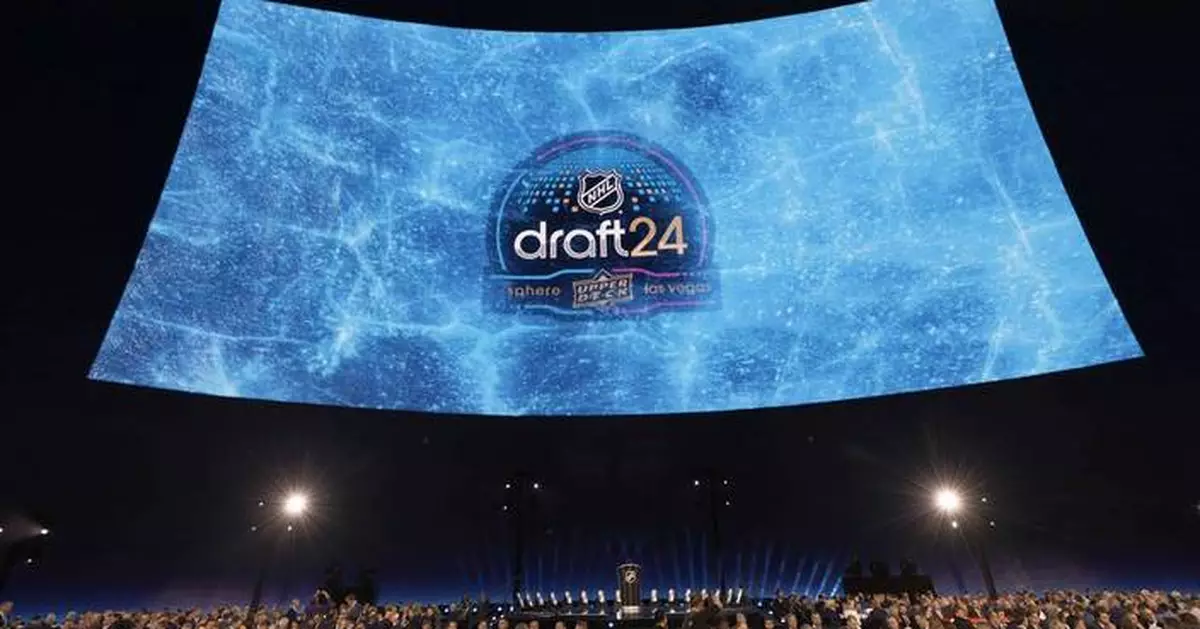
The NHL also gave itself a tough act to follow with the spectacle at the Sphere last year. That was a celebration of the last in-person draft (or so everyone thought) for a while, and the venue on the Las Vegas Strip stood out as the star.
This is nothing like a sequel, but some of the graphics that debuted in the Sphere will be back.
“We’re taking some of those same elements, as you’ll see, to give our environment depth,” Mayer said. "On television, I think it’ll look spectacular. Whether it’s decentralized, centralized, we don’t care. Just tell us what we need to do, and as an event team we’re willing and ready to pull it off.”
Pull it off now. But for how long?
Bettman has repeatedly said teams — not the league office — asked and then voted for the draft to be decentralized. There's some regret about that, so decentralizing may be a one-off, one-year thing.
“If after this experience the clubs say, ‘You know what, on second thought let’s go back to the old format,’ we’ll do that,” Bettman said in Edmonton at the final. “What we do will be totally in response to what the clubs tell us they want.”
Club officials aren't quite sure what they want. This will be Washington Capitals assistant general manager Ross Mahoney's 28th NHL draft, and he compares it to the virtual ones in 2020 and '21.
“It gives you more freedom to talk," Mahoney said. "When you’re on the draft floor, the next table’s right here with scouts on other teams and that, so I guess it gives us a lot more freedom to speak freely and talk about things. But yeah we’ll have a better idea after Saturday.”
Mathieu Darche, GM of the New York Islanders who have the No. 1 pick, enjoys being on the draft floor with everyone in the same city. Maybe he'll get his wish next year, but he's fine with this as he runs a team for the first time.
“I’m comfortable with both situations,” Darche said. "Whatever the league decides, I’ll be doing my job.”
AP NHL: https://apnews.com/hub/nhl

Swedish teammates Victor Eklund, left, and Anton Frondell address reporters while attending the NHL pre-draft combine in Buffalo, N.Y., June 6, 2025. The two played together for Djurgarden, in Sweden Tier 2 pro league, and both projected to be first-round picks in the NHL draft this weekend. (AP Photo/John Wawrow)
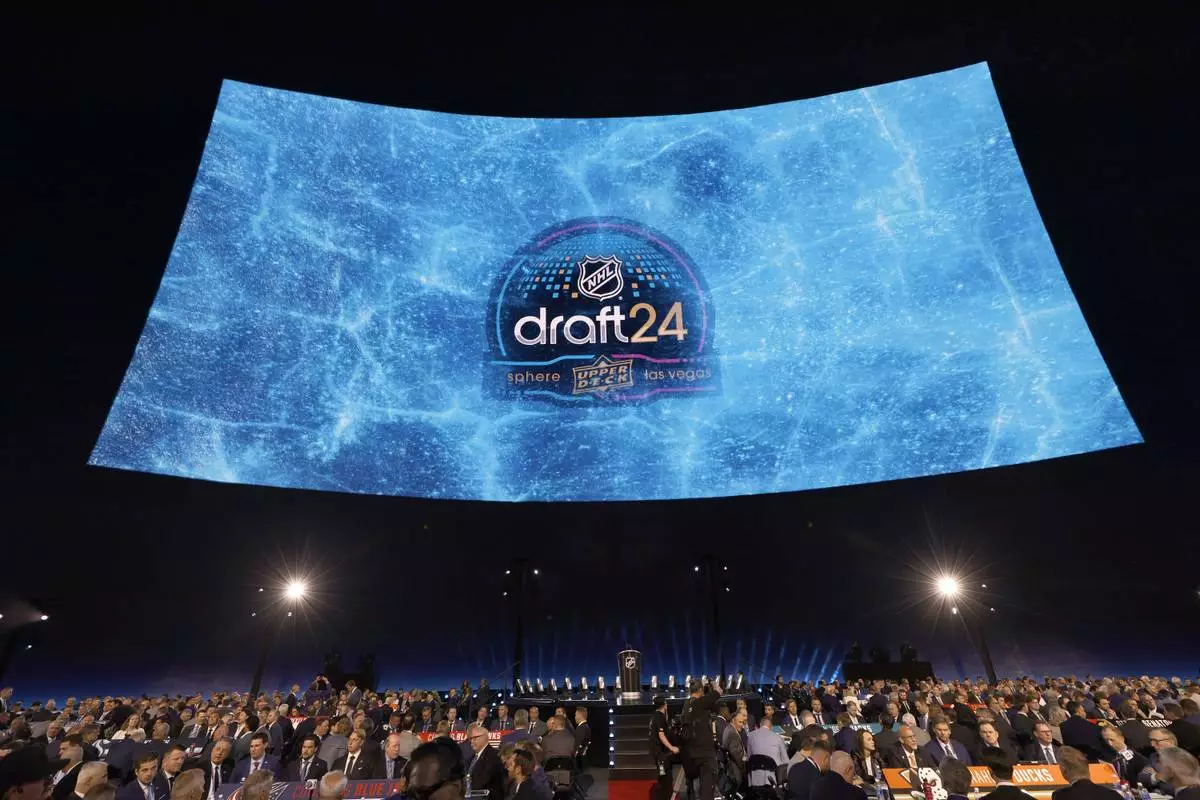
FILE - A screen is seen before the NHL hockey draft Friday, June 28, 2024, at the Sphere in Las Vegas. (AP Photo/Steve Marcus, file)
Uvira, CONGO (AP) — A climate of fear reigned Saturday in Uvira, a strategic city in eastern Congo, days after it fell to the Rwanda -backed M23 group, as fighting in the region escalated despite a U.S. mediated peace deal.
The Associated Press gained rare access to the city, which was the Congo government’s last major foothold in South Kivu province after the provincial capital of Bukavu fell to the rebels in February. Its capture allows the rebels to consolidate a broad corridor of influence across the east.
M23 said it took control of Uvira earlier this week, following a rapid offensive launched at the start of the month. Along with the more than 400 people killed, about 200,000 have been displaced, regional officials say.
On Saturday, the situation in Uvira still had not returned to normal. There was absolute silence and no traffic, apart from military jeeps circulating on the empty streets. The banks were closed and people have not resumed their jobs — only a few dared to go out during the day, and no one ventured outside after sunset, with armed M23 fighters patrolling the city.
“Some people left the city, but we stayed," Maria Esther, a 45-year-old mother of 10, told AP. “But the situation hasn’t returned to normal, we haven’t resumed our usual activities because there’s no money circulating.”
Joli Bulambo, another resident of Uvira, said: “People thought that the situation that had happened in Goma with the deaths would be the same here in Uvira, but fortunately, there were not many deaths because God helped."
The rebels’ latest offensive comes despite a U.S.-mediated peace agreement signed last week by the Congolese and Rwandan presidents in Washington.
The United States accused Rwanda of violating the agreement by backing a deadly new rebel offensive in the mineral-rich eastern Congo, and warned that the Trump administration will take action against “spoilers” of the deal.
The accord didn’t include the rebel group, which is negotiating separately with Congo and agreed earlier this year to a ceasefire that both sides accuse the other of violating. However, it obliges Rwanda to halt support for armed groups like M23 and work to end hostilities.
Marco Rubio, U.S. Secretary of State, said on X on Saturday: “Rwanda’s actions in eastern DRC are a clear violation of the Washington Accords signed by President Trump, and the United States will take action to ensure promises made to the President are kept.”
There was no immediate reaction from Rwanda.
The rebels’ advance pushed the conflict to the doorstep of neighboring Burundi, which has maintained troops in eastern Congo for years, heightening fears of a broader regional spillover.
More than 100 armed groups are vying for a foothold in mineral-rich eastern Congo, near the border with Rwanda, most prominently M23. The conflict has created one of the world’s most significant humanitarian crises, with more than 7 million people displaced, according to the U.N. agency for refugees.
Local U.N. partners report that more than 200,000 people have been displaced across the province since Dec. 2. Civilians also have crossed into Burundi, and there have been reports of shells falling in the town of Rugombo, on the Burundian side of the border, raising concerns about the conflict spilling over into Burundian territory.
Congo, the U.S. and U.N. experts accuse Rwanda of backing M23, which has grown from hundreds of members in 2021 to around 6,500 fighters, according to the U.N.
Congo’s Foreign Minister Thérèse Kayikwamba Wagner on Friday accused Rwanda of trampling on the peace agreement, which she described as bringing “hope of a historic turning point.”
She warned, however, that the “entire process … is at stake,” and urged the Security Council to impose sanctions against military and political leaders responsible for the attacks, ban mineral exports from Rwanda and prohibit it from contributing troops to U.N. peacekeeping missions.
“Rwanda continues to benefit, especially financially but also in terms of reputation, from its status as a troop-contributing country to peacekeeping missions,” Wagner told AP.
Bertrand Bisimwa, deputy coordinator of the AFC/M23 rebel movement told AP in an exclusive interview Friday that peace commitments have remained largely theoretical. “Regardless of the ceasefire agreements we sign and the mutual commitments we make, nothing is implemented on the ground,” he said.
Asked about the expansion of M23 operations toward the Uvira region, Bisimwa said the region was a long-standing hot spot of ethnic tensions and violence. “For a long time, people were attacked and killed because of their community affiliation,” he said.
On Friday, Rwanda’s Foreign Minister Olivier Nduhungirehe told diplomats that Congo had declared it would continue fighting in M23 recaptured territories and it was only after M23 retaliated that the international community “suddenly woke up.”
“The DRC has openly declared that it would not observe any ceasefire and would instead continue fighting to recapture territories held by the AFC/M23, even as the peace process unfolded," he said.
While Rwanda denies the claim that it backs M23, it acknowledged last year that it has troops and missile systems in eastern Congo, allegedly to safeguard its security. U.N. experts estimate there are up to 4,000 Rwandan forces in Congo.
Associated Press writers Ruth Alonga in Goma, Congo, and Evelyne Musambi in Nairobi, Kenya, contributed to this report.
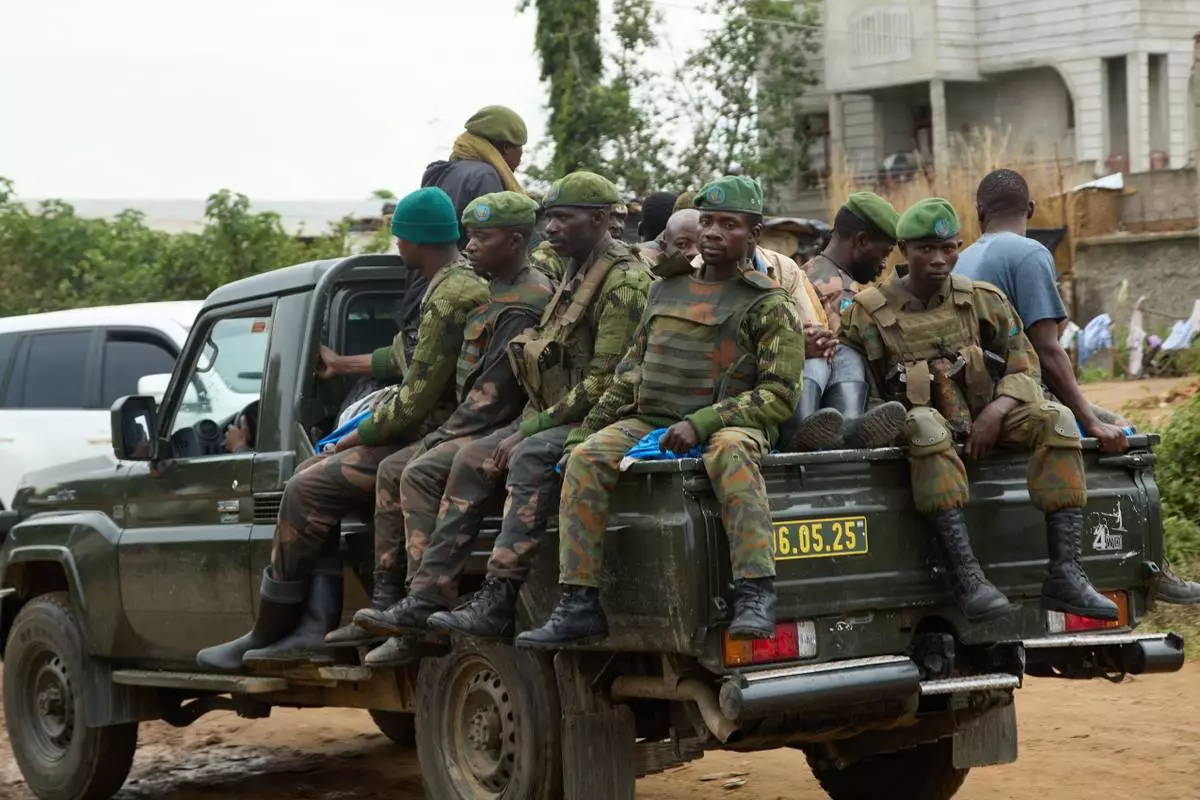
Soldiers patrol as thousands of people fleeing fighting in Congo's South Kivu province arrive in Cibitoke, Kansega, Burundi, Thursday, Dec. 11, 2025. (AP Photo/Berthier Mugiraneza)
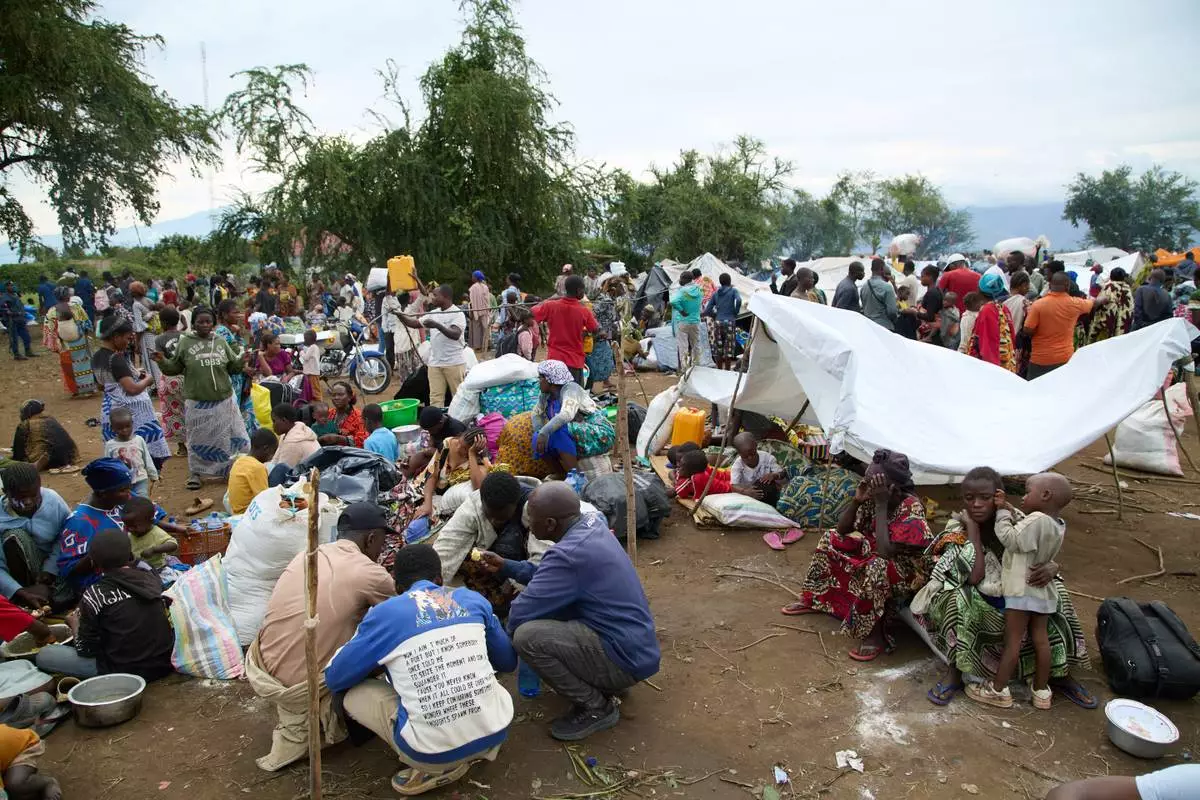
Internally displaced people (IDPs) fleeing fighting in Congo's South Kivu province arrive in Cibitoke, Kansega, Burundi, Thursday, Dec. 11, 2025. (AP Photo/Berthier Mugiraneza)
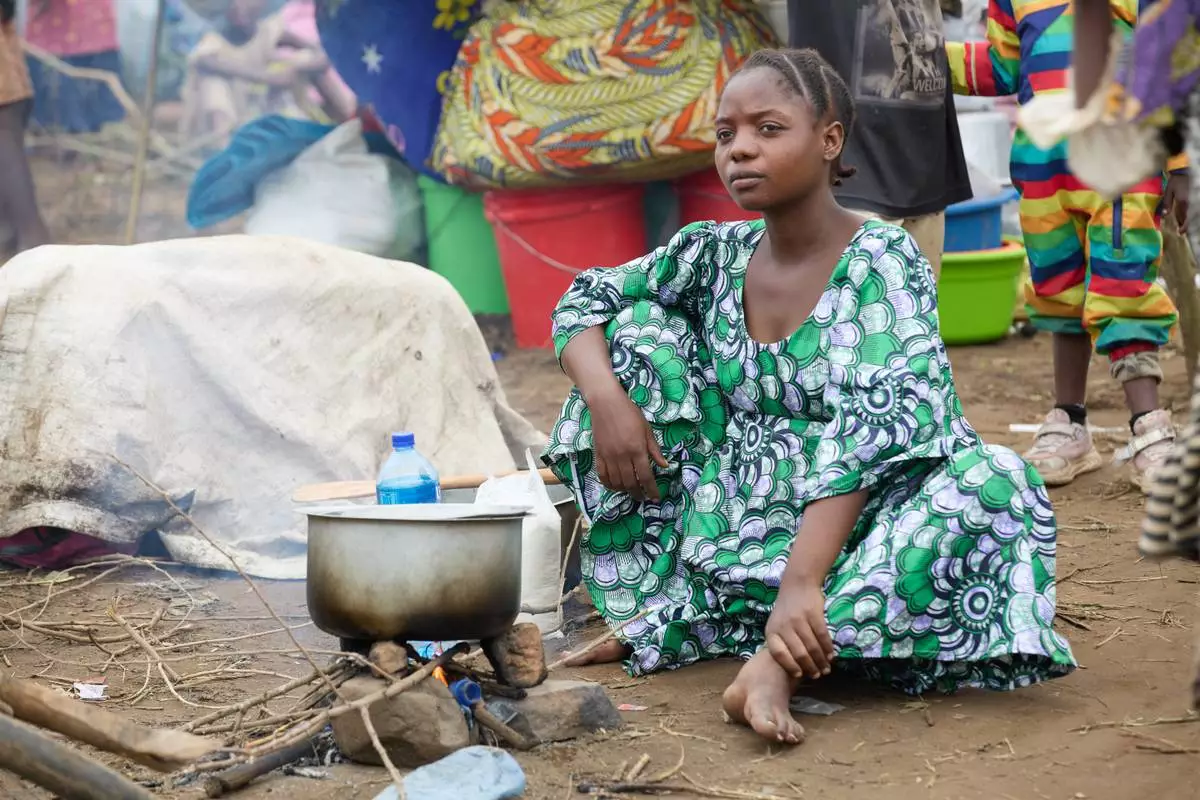
Internally displaced people (IDPs) who fled fighting in Congo's South Kivu province prepare a meal in Cibitoke, Kansega, Burundi, Thursday, Dec. 11, 2025. (AP Photo/Berthier Mugiraneza)
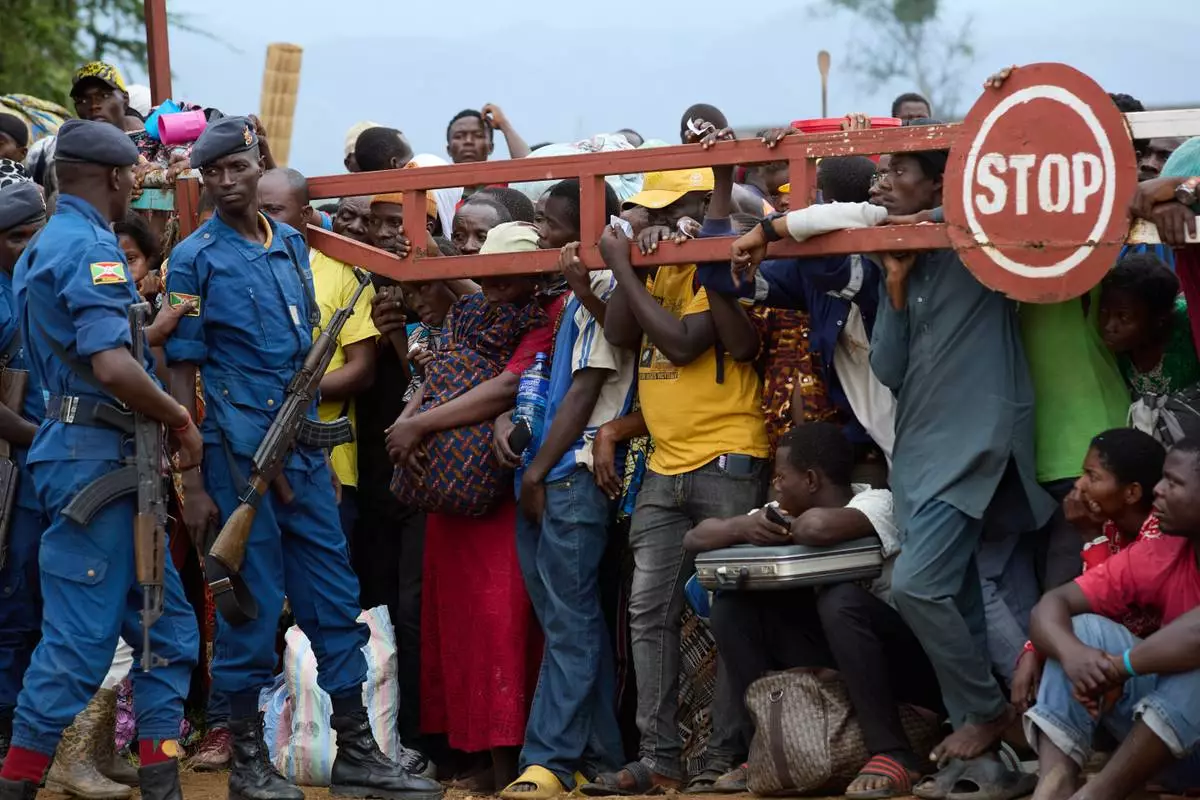
Internally displaced people (IDPs) fleeing fighting in Congo's South Kivu province arrive in Cibitoke, Kansega, Burundi, Thursday, Dec. 11, 2025. (AP Photo/Berthier Mugiraneza)
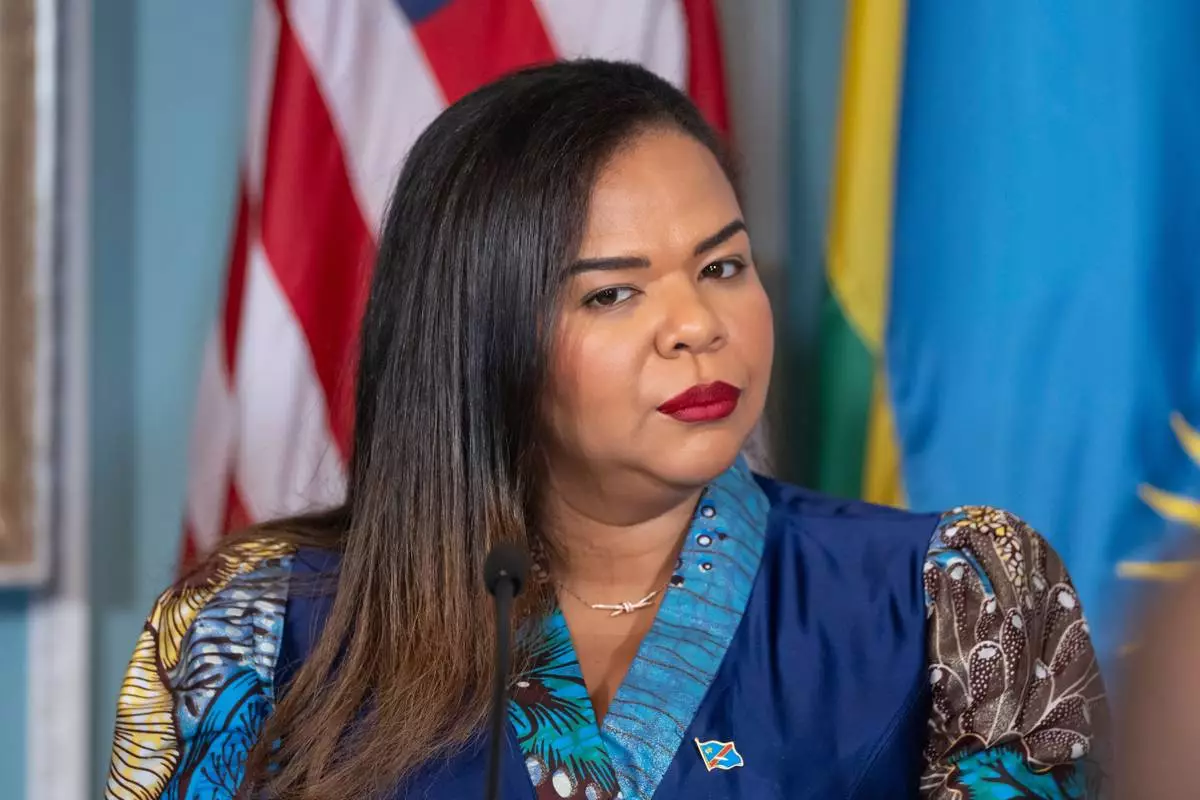
FILE - Democratic Republic of the Congo's Foreign Minister Therese Kayikwamba Wagner attends a signing ceremony for a peace agreement between Rwanda and the Democratic Republic of the Congo at the State Departmentin Washington, June 27, 2025. (AP Pho to/Mark Schiefelbein, File)