PORTLAND, Ore. (AP) — Oregon lawmakers have voted to repeal the state's contentous wildfire hazard map, which subjected homeowners in certain areas at high risk of wildfires to stricter building codes and requirements to reduce vegetation on their properties.
The measure passed the state House with just one vote against Tuesday, after passing the state Senate unanimously in April. Republicans had called for the map's repeal throughout the legislative session and accused Democrats of stalling it. The bill now heads to Democratic Gov. Tina Kotek.
“Despite an incredibly frustrating political process, we appreciate the members who have chosen to do the right thing in repealing these maps," Republican House Minority Leader Christine Drazan said.
She added in her statement that the maps had created “chaos” in rural areas.
An updated version of the state-developed maps released earlier this year created new rules for those living in the most fire-prone areas that also border wildlands such as forests or grasslands. The building and so-called defensible space provisions impacted 6% of the state’s roughly 1.9 million tax lots, a reduction from an earlier version developed in 2022 but retracted after homeowners raised concerns that it would increase insurance premiums.
The building codes were set to require new construction in high hazard areas in the so-called wildland-urban interface to have fire-resistant features, and to apply to existing homes if certain upgrades were made.
The bill passed by the Legislature revokes those defensible space and building code requirements, instead directing state agencies to create model codes that local governments can choose to adopt.
The two maps showing wildfire hazard levels and the wildland-urban interface were released by the Oregon Department of Forestry and developed by Oregon State University scientists.
Under a state law passed in 2023, insurers cannot use a wildfire hazard map produced by a state agency to cancel or decline to renew a homeowner insurance policy, or to increase premiums. But many who opposed the maps said they were flawed and placed burdens on homeowners.
Experts who worked on the maps said they were an important step in identifying and protecting fire-prone areas as the state continues to contend with record-breaking wildfires. Oregon's wildfire season last year was a record in terms of cost and acres burned, and wind-fueled blazes over Labor Day weekend in 2020 killed nine people and destroyed thousands of homes.
California, Arizona and New Mexico have had wildfire hazard maps for years. Last year, lawmakers in Washington state ordered the creation of a statewide wildfire risk map, and in 2023, Colorado passed a law establishing a wildfire resiliency code board.
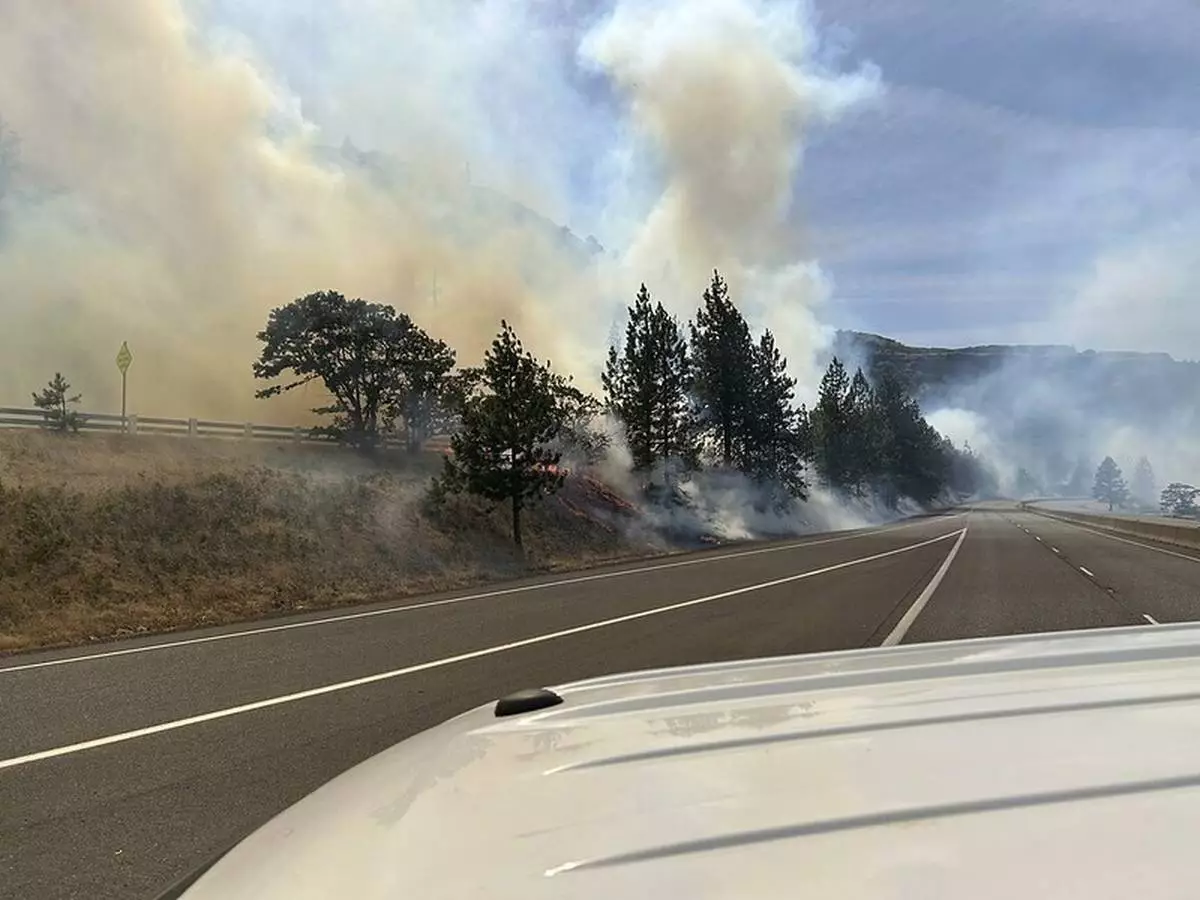
A photo provided by the Oregon Department of Transportation shows a wildfire burning in the median of Interstate 84 as the blaze shut down the highway between Hood River and The Dalles, in Ore. on Wednesday, June 11, 2025. (Oregon Department of Transportation via AP)
NEW YORK (AP) — U.S. flu infections showed signs of a slight decline last week, but health officials say it is not clear that this severe flu season has peaked.
New government data posted Friday — for flu activity through last week — showed declines in medical office visits due to flu-like illness and in the number of states reporting high flu activity.
However, some measures show this season is already surpassing the flu epidemic of last winter, one of the harshest in recent history. And experts believe there is more suffering ahead.
“This is going to be a long, hard flu season,” New York State Health Commissioner Dr. James McDonald said, in a statement Friday.
One type of flu virus, called A H3N2, historically has caused the most hospitalizations and deaths in older people. So far this season, that is the type most frequently reported. Even more concerning, more than 91% of the H3N2 infections analyzed were a new version — known as the subclade K variant — that differs from the strain in this year’s flu shots.
The last flu season saw the highest overall flu hospitalization rate since the H1N1 flu pandemic 15 years ago. And child flu deaths reached 289, the worst recorded for any U.S. flu season this century — including that H1N1 “swine flu” pandemic of 2009-2010.
So far this season, there have been at least 15 million flu illnesses and 180,000 hospitalizations, the U.S. Centers for Disease Control and Prevention estimates. It also estimates there have been 7,400 deaths, including the deaths of at least 17 children.
Last week, 44 states reported high flu activity, down slightly from the week before. However, flu deaths and hospitalizations rose.
Determining exactly how flu season is going can be particularly tricky around the holidays. Schools are closed, and many people are traveling. Some people may be less likely to see a doctor, deciding to just suffer at home. Others may be more likely to go.
Also, some seasons see a surge in cases, then a decline, and then a second surge.
For years, federal health officials joined doctors' groups in recommending that everyone 6 months and older get an annual influenza vaccine. The shots may not prevent all symptoms but can prevent many infections from becoming severe, experts say.
But federal health officials on Monday announced they will no longer recommend flu vaccinations for U.S. children, saying it is a decision parents and patients should make in consultation with their doctors.
“I can’t begin to express how concerned we are about the future health of the children in this country, who already have been unnecessarily dying from the flu — a vaccine preventable disease,” said Michele Slafkosky, executive director of an advocacy organization called Families Fighting Flu.
“Now, with added confusion for parents and health care providers about childhood vaccines, I fear that flu seasons to come could be even more deadly for our youngest and most vulnerable," she said in a statement.
Flu is just one of a group of viruses that tend to strike more often in the winter. Hospitalizations from COVID-19 and RSV, or respiratory syncytial virus, also have been rising in recent weeks — though were not diagnosed nearly as often as flu infections, according to other federal data.
The Associated Press Health and Science Department receives support from the Howard Hughes Medical Institute’s Department of Science Education and the Robert Wood Johnson Foundation. The AP is solely responsible for all content.
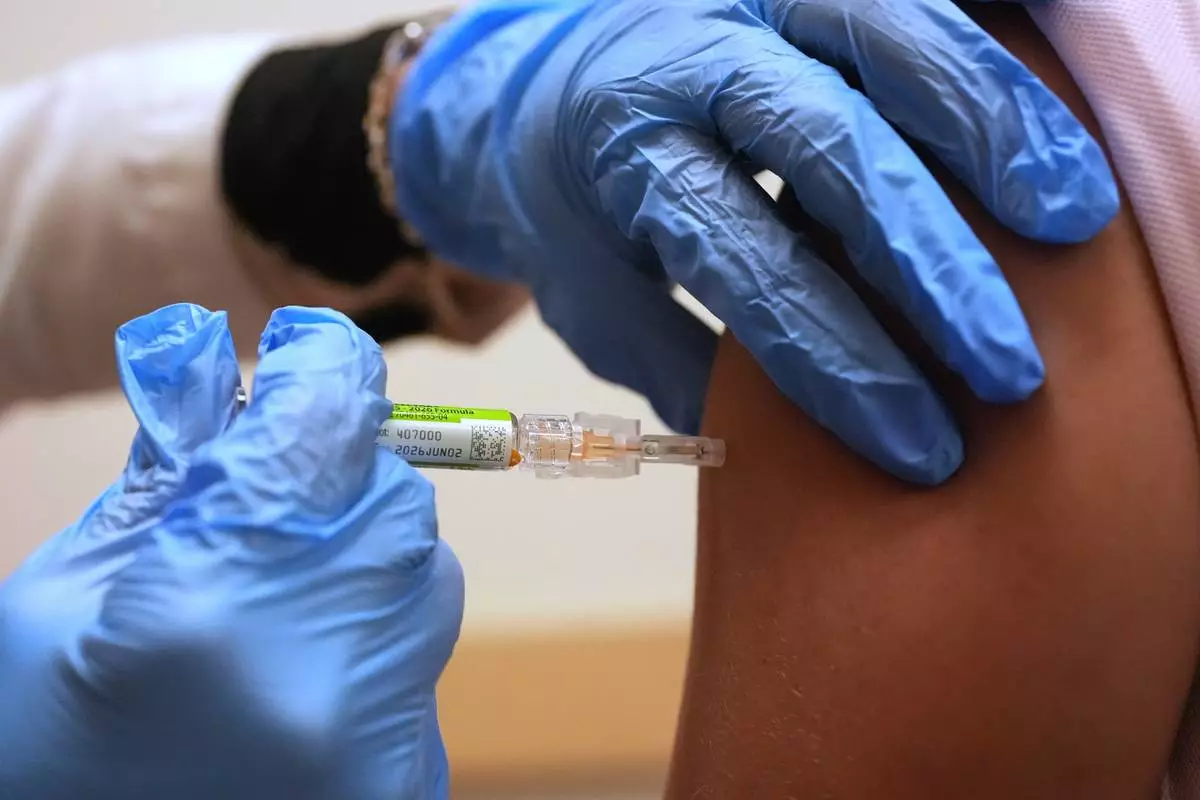
FILE - Pharmacy manager Aylen Amestoy administers a patient with a seasonal flu vaccine at a CVS Pharmacy in Miami, Tuesday, Sept. 9, 2025. (AP Photo/Rebecca Blackwell, File)