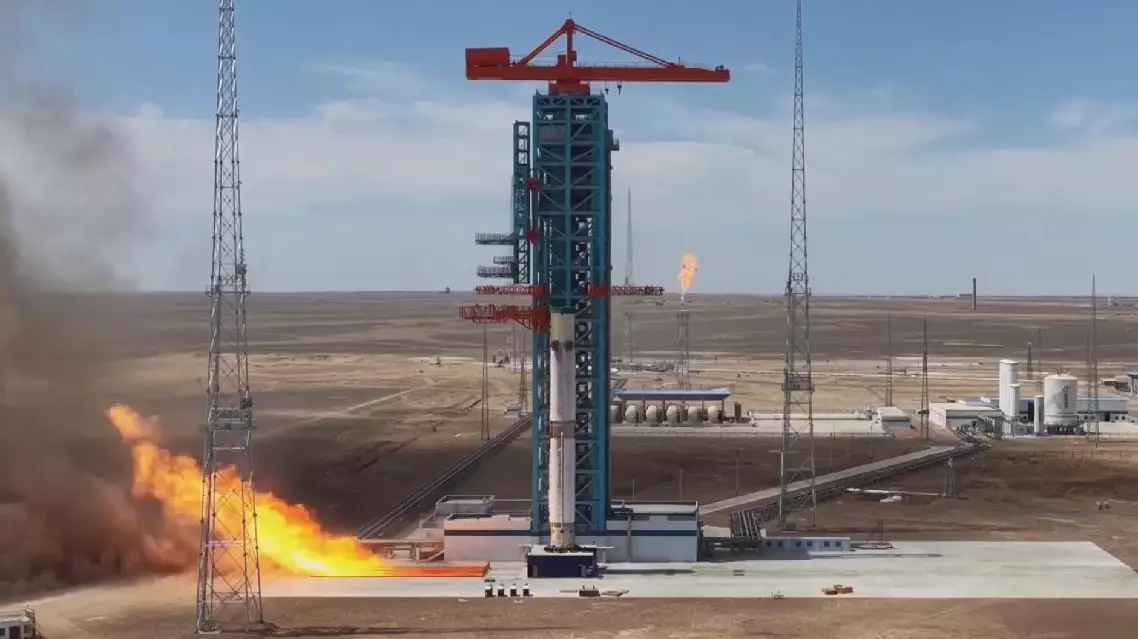
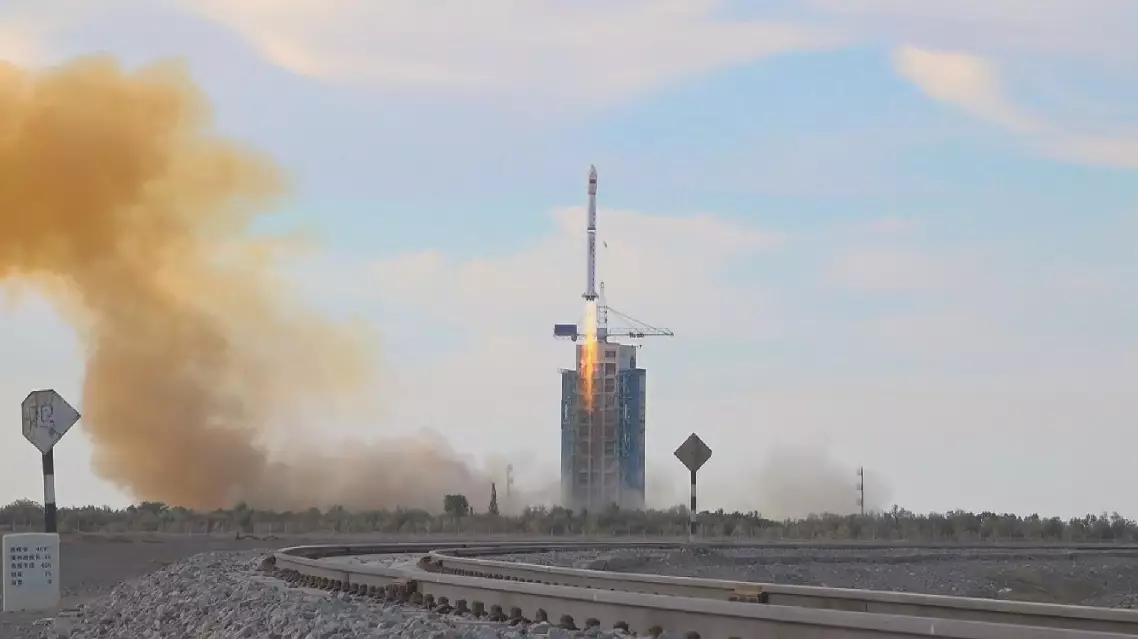
China's independently developed Zhuque-3 reusable rocket has completed ground tests on its systems and will take its maiden flight in the fourth quarter of the year, aiming to become the country's first vertically recoverable liquid-fueled rocket, according to the rocket's developer LandSpace.
With a diameter of 4.5 meters and a total length of around 66 meters, the Zhuque-3 rocket can carry up to 18 satellites per launch.
Equipped with landing legs and grid fins for controlled descent, the rocket is designed to vertically recover its most expensive component–the first stage, which accounts for 70 percent of the total rocket cost.
As its first stage is designed to be reused at least 20 times, the rocket has the potential to reduce launch costs by 80 to 90 percent compared with single-use rockets.
Powered by a parallel cluster of nine liquid oxygen-methane engines, the first-stage can achieve meter-level landing precision, as five of the engines are capable of gimballing.
In addition, these engines a combined thrust of more than 7,500 kilonewtons, setting a new record for Chinese commercial liquid-fueled rockets.
Last Friday, LandSpace conducted a crucial ground ignition test of the first-stage propulsion system at the Dongfeng commercial space innovation pilot zone near the Jiuquan Satellite Launch Center in northwest China.
The 45-second test utilized a first-stage structure that is consistent with the technical status of the Zhuque-3's maiden flight mission and validated the compatibility among all major subsystems, according to LandSpace.
LandSpace is a leading Chinese private space company. Its Zhuque-2 is the first methane-fueled rocket to be launched into rocket.
The successful Zhuque-3 development marks a significant stride in the pursuit of low-cost, high-frequency, and large-capacity space launches for China's private space industry.
China’s reusable rocket Zhuque-3 to take maiden flight this year
As the five-day May Day Holiday continues, the ongoing Shanghai International Flower Show is taking place not only in botanical gardens but also in major shopping centers and commercial districts across the city, enhancing the experiences of shoppers and visitors and fostering emotional resonance.
In Pudong, eight shopping malls have joined forces to create a "flower district," with artful floral installations displayed along sidewalks and storefronts. The flowers have been carefully integrated with individual shops and urban spaces, creating immersive designs tailored for each location.
"We designed nearly 40 floral displays, each themed to match the brands involved. For example, this Thai restaurant features Southeast Asian plants to highlight its identity," said Ye Zhenjing, deputy general manager of Shanghai Lujiazui Commercial Management Co., Ltd.
All around, playful flower sculptures have become selfie hotspots for shoppers of all ages, encouraging exploration.
"Adults need to relieve stress and rediscover childhood happiness, too. This year, our theme is animals. So both kids and grown-ups can share in the joy," said Ye.
"It definitely lifts your mood and makes visiting more fun. If this kind of event is happening, I'm more likely to come to malls like this," said a Shanghai shopper surnamed Zhou.
These vibrant displays are not limited to Pudong. For the first time, the Shanghai International Flower Show has expanded beyond botanical gardens to all 16 districts. In Huangpu, traditional shop windows have been transformed into urban flower showcases, while in Jing'an, a five-meter-tall floral puppy installation is trending on social media, drawing visitors and their pets for photos.
"In the past, professional flower shows were only in parks, but now they are in commercial districts. With the arrival of spring, shopping among the flowers is even more delightful," said Liu Min, deputy director of Shanghai Municipal Commission of Commerce.
This year's Labor Day holiday runs for five consecutive days, from May 1 to May 5.
Shanghai Int'l Flower Show uplifts city shopping experience during Labor Day holiday