A surge in cross-border travel has swept through the Zhuhai Port of the Hong Kong–Zhuhai–Macao Bridge in south China during the five-day May Day holiday starting from Friday, as growing numbers of residents from the special administrative regions of Hong Kong and Macao head to the mainland for leisure and tourism.
Since April 29, or Wednesday, the border inspection station of the Hong Kong-Zhuhai-Macao Bridge has recorded 226,000 passenger trips and 52,000 vehicle crossings as of 16:00 on Friday. The current flow is primarily inbound, with many travelers choosing to enter the mainland ahead of the official holiday rush.
According to data from the border inspection station of the Hong Kong-Zhuhai-Macao Bridge, the holiday traffic has been predominantly inbound. The port officially entered its peak period on Wednesday, with daily passenger flow averaging around 80,000 people, a 10-percent increase compared to pre-holiday levels. This year's travel boom has come from sharp increase in family tours and parent-child tours.
"Today is the [first day of] May Day holiday, and I'm traveling with my family to Nansha [in Guangzhou] and Zhuhai," said a tourist from Hong Kong.
In addition to Guangdong Province, many other places near Guangdong on the mainland are also among the tourism options of people from Hong Kong and Macao.
"The number of residents from Hong Kong and Macao embarking on in-depth and long-distance tours to provinces on the mainland has seen a significant rise. We've seen an increase of about 20 percent compared to previous periods, with destinations like Yunnan, Sichuan and Guizhou emerging as popular choices," said Bao Haiyang, a customs officer with the border inspection station of the Hong Kong-Zhuhai-Macao Bridge.
According to authorities with the border inspection station of the Hong Kong-Zhuhai-Macao Bridge, the vehicle traffic is projected to hit its peak on May 3, or Sunday, with an estimated 28,000 vehicles expected to cross in a single day.
To cope with the high traffic volume, the border inspection station has implemented a specialized operational plan to manage the traffic influx and ensure a smooth and efficient travel experience for everyone.
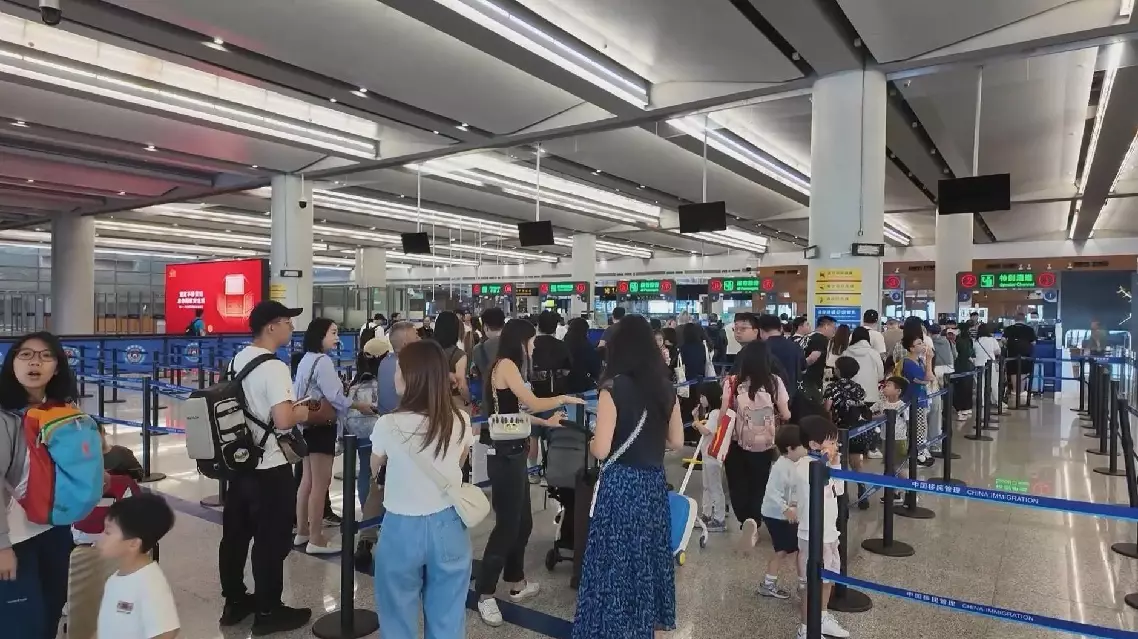
Holiday travel surges as Hong Kong, Macao residents flock north during May Day holiday
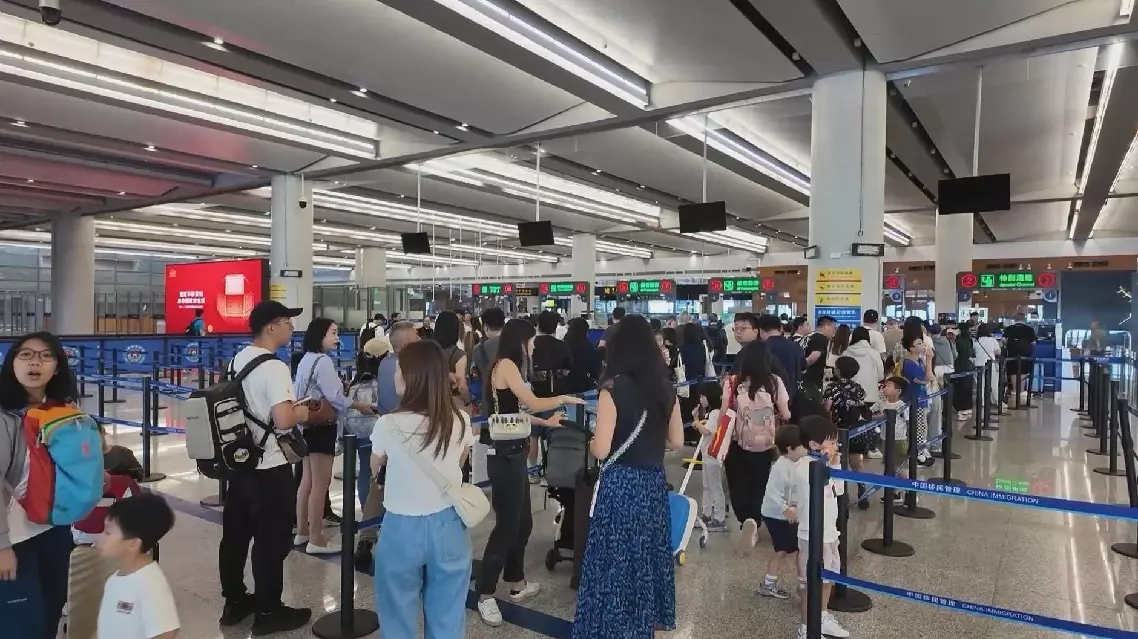
Holiday travel surges as Hong Kong, Macao residents flock north during May Day holiday
Armed police officers and soldiers, in coordination with multiple professional rescue forces, are conducting in-depth search and rescue operations for missing people in the core disaster zone in Mingkeng Village of east China's Jiangxi Province.
At around 07:00 on Tuesday, the rescue headquarters integrated 12 professional teams, including the armed police, public security, and the fire department, to launch a search-and-rescue operation for missing persons in the hardest-hit area of the Shixia group of Mingkeng Village.
As of 18:00 on Tuesday, the mudslide that occurred in the early hours of Saturday has killed 12 people, including one newly identified missing person found in subsequent searches. At present, one person remains unaccounted for, and rescue forces are intensifying their search and rescue efforts.
Meanwhile, the Ji'an Detachment of the Jiangxi Armed Police Force deployed officers and soldiers to extend rescue efforts to surrounding disaster-affected townships.
On Tuesday morning, rescuers split into multiple teams and rushed to several villages in Zuo'an Township and Tanghu Township of Suichuan County to urgently evacuate the trapped residents.
Trapped in mountainous areas, villagers faced destroyed access roads and mountain paths that became slippery and impassable after days of heavy rainfall; most stranded residents were elderly people with limited mobility. The armed police officers and soldiers conducted door-to-door checks and carried the trapped residents on their backs, successfully evacuating all of them to safe zones.
"All village roads are completely impassable. The local residents here are all left-behind elderly people and children, and it is extremely difficult to complete the evacuation relying solely on the strength of the town government officials. This time, we are deeply indebted to the armed police officers and soldiers for their assistance in evacuating all these elderly residents," said Wang Yuli, deputy mayor of Tanghu Township in Suichuan County.
"The mountain slopes are covered in thick mud, making the ground extremely slippery. In some sections, stretchers cannot pass through at all, so rescuers have to carry the stranded people on their backs. As long as the people are safe, it is worthwhile to endure all the hardship and exhaustion," said Jiang Jiang, a soldier of the Ji'an Detachment of the Jiangxi Armed Police Force.

Rescuers intensify search efforts in mudslide-hit village in east China's Jiangxi