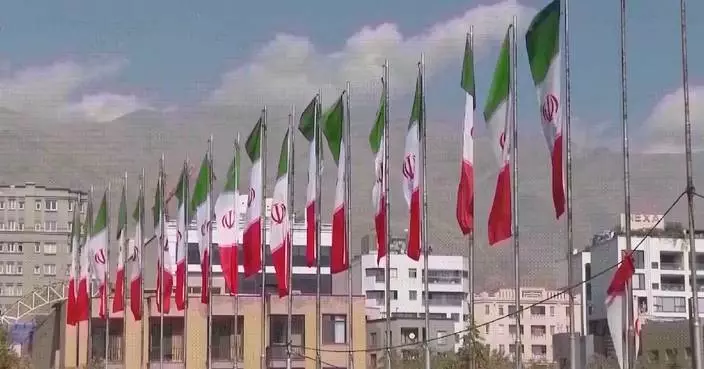
Iran has raised fuel prices for its heaviest users, adding to the financial strain on households already grappling with a weak currency and soaring living costs as uncertainties over the continuing conflict with the U.S. drag on.
According to the new policy, starting Tuesday, people who use more than 110 liters of gasoline a month will now pay double the previous rate, with the price rising to 100,000 rials (around 7 U.S. cents) per liter. The government said the change will affect around 15 percent of consumers.
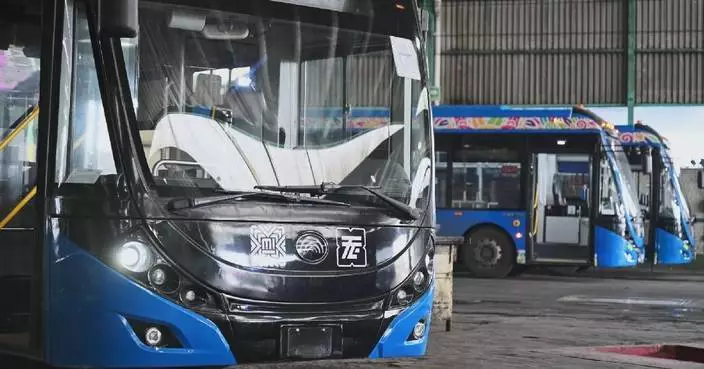
For people who rely on their vehicles to make a living, the higher costs are already being felt. Taxi drivers, in particular, use large amounts of fuel every day simply to stay on the road. They note the knock-on effects of these price hikes will also damage their business.
"When passengers see taxi fares rising, they quickly change their minds, saying they would rather walk a few kilometers and catch the subway. That's the effect we see," said Hossein, an online ride-hailing driver.
Long-distance commuters are also facing tough choices, with some cutting back on trips and others worrying about how higher fuel costs will affect their household budgets.
"With gas prices climbing, we just can't justify using our cars as much. Our paychecks haven't budged, so the more fuel costs rise, the less we're able to drive," said Ma'soomeh, a local commuter in Tehran.
The concerns come as Iran's rial has fallen to a record low of more than 2.2 million to the dollar.
Experts warn that higher fuel costs could ripple through the economy, pushing up transport costs first, followed by food prices and rents. For many families, even putting basic groceries on the table has become increasingly difficult.
At gas stations across the country, staff say customers continue to arrive steadily, but the atmosphere is tense. The restriction on purchasing gas overnight is also an issue, with truck drivers and other regular night-time workers being limited.
"The major problem now is that fueling cards are inactive from midnight to 06:00 every night and only work from 06:00 until midnight," said Sadeq, a gas station attendant.
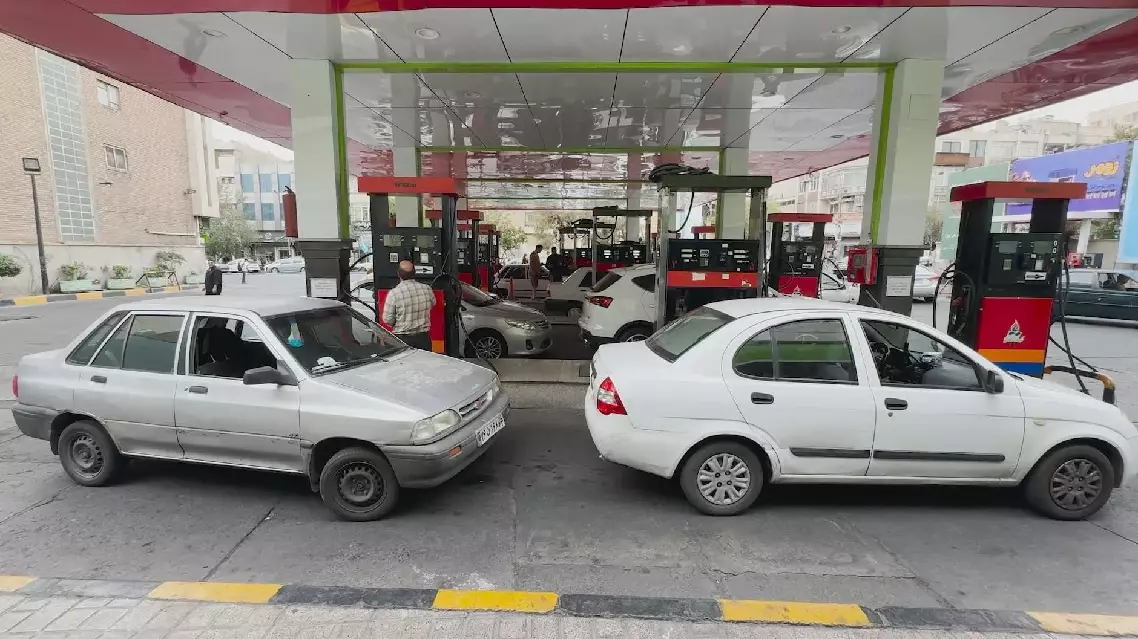
Iran raises gas prices for heavy users as currency weakens, living costs rise
The ninth Paris Peace Forum took place in the French capital from Tuesday to Wednesday, calling for reinforced multilateral cooperation to confront global challenges across security, climate, technology and development.
Held under the theme "From sovereignty to cooperation," the two-day forum gathered more than 350 global speakers across more than 80 discussion sessions. The agenda spanned four primary tracks: peace and geopolitics, the planet, development, and emerging technologies. Alongside the main event, organizers held a "Child Summit" focused on children's welfare amid global shifts.
Organizers said this year's forum was held in a backdrop of strain on multilateral institutions and international law, arguing that nations must strengthen mutual cooperation while preserving sovereignty to effectively address worldwide crises.
In a video speech delivered at the opening session, UN Secretary-General Antonio Guterres described sovereignty as a core principle of the UN Charter, while noting that cooperation remains essential for nations to safeguard their own sovereignty. Guterres called on the international community to build a networked, multipolar world grounded in international law.
Addressing the tension between safeguarding sovereignty and pursuing multilateralism, Cui Hongjian, a professor at the Academy of Regional and Global Governance at Beijing Foreign Studies University, warned against rising unilateralism.
"Currently, some countries are pursuing many unilateralist, or even hegemonic policies. As a result, for many nations, the issue of how to enhance their own capabilities -- especially the capability to safeguard and defend their sovereignty -- has become rather urgent. On the other hand, however, the enhancement and strengthening of sovereignty should not contradict international cooperation," Cui said.
This year's forum also placed particular emphasis on cooperation regarding critical mineral resources. Experts noted that as long-standing major suppliers of mineral resources, countries of the Global South still need stronger voice and protection of their interests in international resource cooperation, calling for more open and inclusive mechanisms to help them better participate in global industrial and supply chains.
"As a representative country of the Global South, China has actually made substantial policy, financial, and industrial investments over the years, both in strengthening trade and industrial cooperation with other Global South countries and in promoting green and digital transformation," Cui said.
Launched in 2018, the Paris Peace Forum serves as an international platform for states, international organizations, and non-governmental actors to advance global governance solutions.
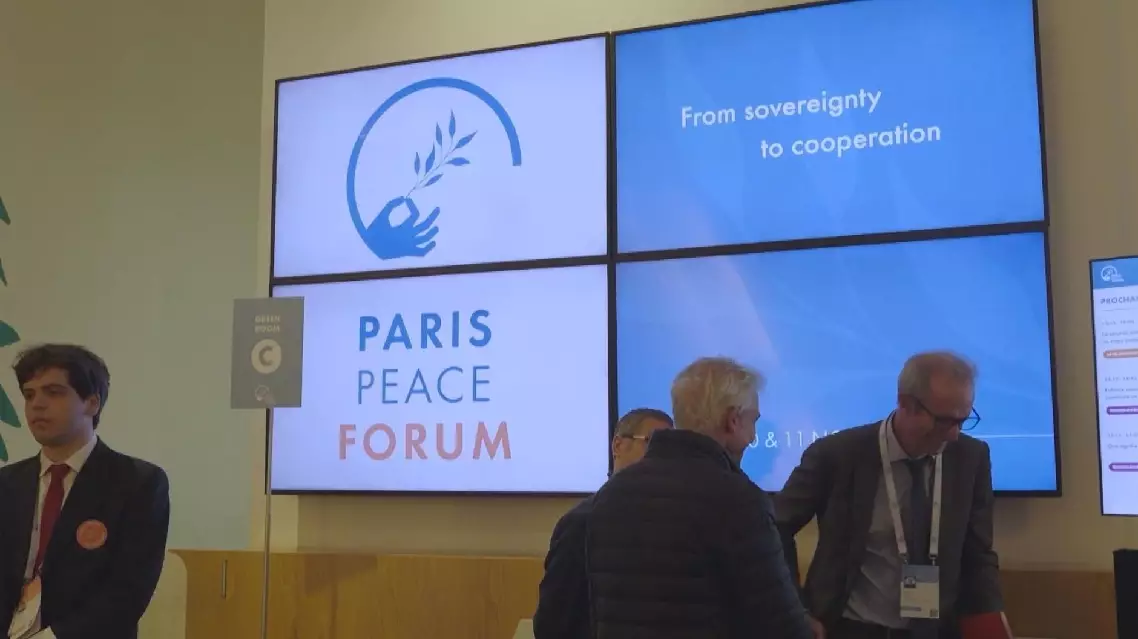
9th Paris Peace Forum urges global cooperation amid rising pressures on multilateralism