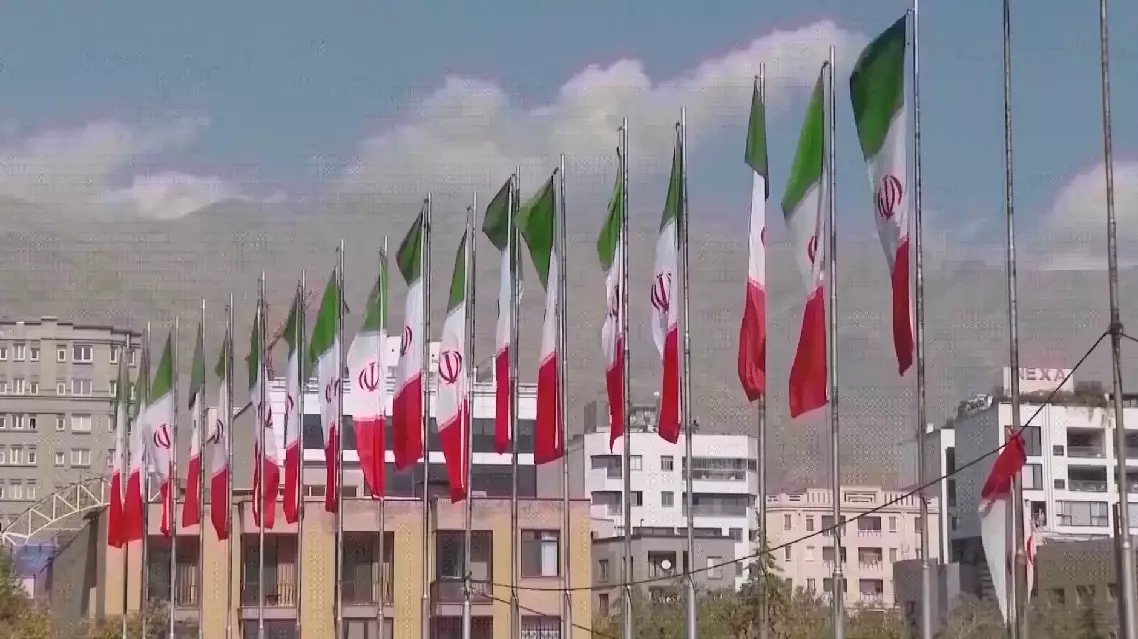
Mohsen Rezaei, secretary of Iran's Supreme National Security Council, warned on Thursday that every military base involved in any renewed U.S. aggression against Iran will become a legitimate target for Iranian strikes.
"If the U.S. launches another war against Iran, every military base involved in the aggression -- from West Asia to Europe -- will be a legitimate target for Iran's lethal strikes," Rezaei wrote in a post on social media platform X.
"No safe distance. No safe haven. No immunity," he added.
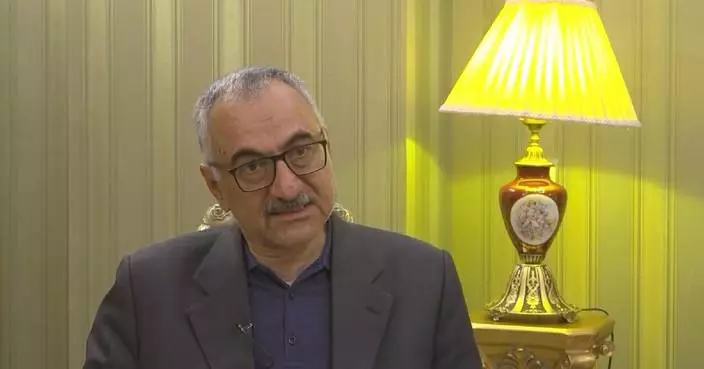
Rezaei's warning echoed remarks made a day earlier by Kioumars Heydari, deputy chief of staff of the Iranian Armed Forces. In an interview broadcast by Iranian state television on Wednesday, Heydari said that the confrontation with the United States has evolved into a broad regional conflict, placing all enemy interests and military bases within the direct range of Iranian missiles and drones.
Heydari noted that Iranian forces are on full alert and prepared to deliver a decisive, immediate, and devastating response without geographical restrictions to any new act of aggression. Under such an approach, if an aircraft takes off from any country to strike targets in Iran, the Iranian Armed Forces will have the right to retaliate against corresponding targets within that country's territory.
Iran has prepared an expanded target list for potential future hostilities that extends well beyond previous conflict theaters and has no geographical limitations, Heydari said. He also claimed that there is currently no U.S. military presence inside the Persian Gulf and that U.S. forces have lost their advanced defense and radar systems in the region due to Iranian strikes.
Bases involved in any new U.S. attack become legitimate targets, Iran warns
Chinese electric vehicles (EVs) are accelerating Mexico City's shift to green transport, easing the squeeze of soaring fuel costs and choking pollution on local residents while drawing praise from drivers, commuters and city officials.
Chinese EVs now account for almost 90 percent of all battery-electric cars sold in Mexico, a dominance driven by soaring fuel costs and the city's pressing pollution problem, with vehicle emissions blamed for roughly 80 percent of Mexico City's nitrogen oxide.
Frank Velazquez, an automotive reviewer, spoke highly of the Chinese-made vehicles at a track event on the outskirts of the Mexican capital.
"I like it. I like the instant reaction from the car," he said.
Beyond performance, continuously rising gas prices give Mexican drivers another reason to make the switch, Velazquez noted, with many owners turning to battery electric vehicles (BEVs) or plug-in hybrid electric vehicles (PHEVs).
The shift, however, reaches beyond private cars, as Chinese-made buses are playing a pivotal role in Mexico City's drive to electrify its public transport system.
"I think it's much better. I think it pollutes less," said one resident, and another shared the sentiment, recalling the heavy pollution of the old buses and describing the fully electric vehicles now on the streets as a huge step forward for Mexico City.
The city has been expanding its electric bus system for several years. During the FIFA World Cup 2026, it assembled 800 new energy buses for the tournament, more than 95 percent of them Chinese-made, with Yutong, a leading coach maker based in central China's Henan Province, accounting for 85 percent alone.
For the drivers behind the wheel, the new buses bring advantages they can feel on every route.
"The old vehicles used to break down frequently, often leaving us in a difficult spot. The new ones, however, are equipped with accessible ramps and a height lowering feature, making it much easier for the elderly to get on and off. Additionally, more seats have been designated specifically for women. There are so many benefits," said bus driver Israel Espinosa Rodriguez.
Chinese bus makers' commitment extends well beyond vehicle delivery, reaching into the day-to-day servicing of the fleet.
By dispatching engineers to Mexico to train local technicians in vehicle maintenance and repair, they are helping drive down operating costs, savings that can then be channeled into expanding the transport network and adding routes to serve more passengers.
Martin Lopez Delgado, director general of Mexico City Electric Transport Service, has much to show for what the city has achieved with the help of Chinese technology.
"We have become a model for many South American countries. Meanwhile, people from various European countries and several U.S. states have visited our electric transport system to draw upon the experience we have gained over the years," he said.
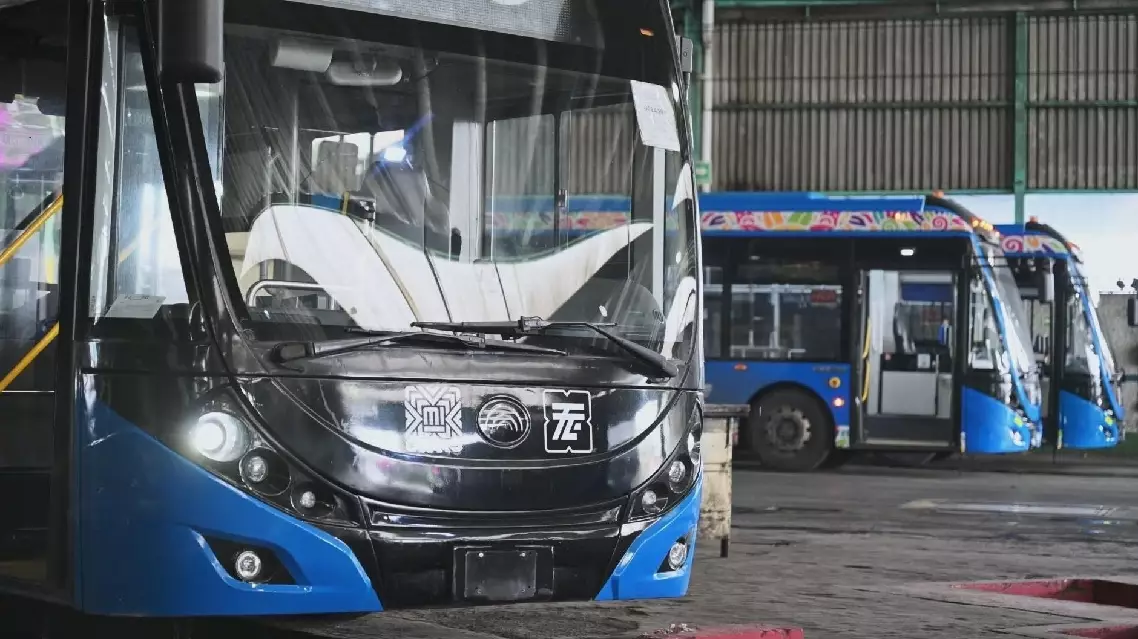
Chinese EVs drive Mexico City's green shift with performance, full-system solutions