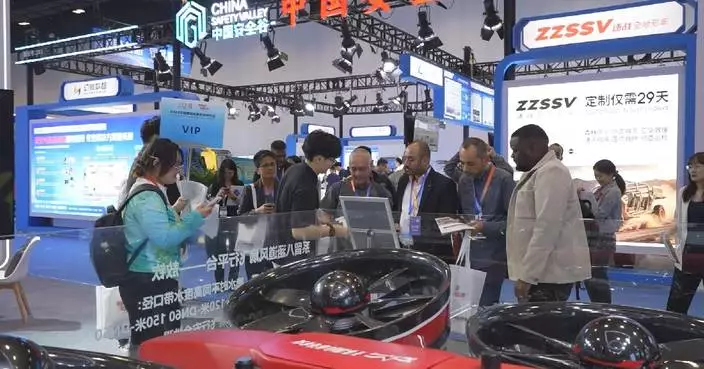
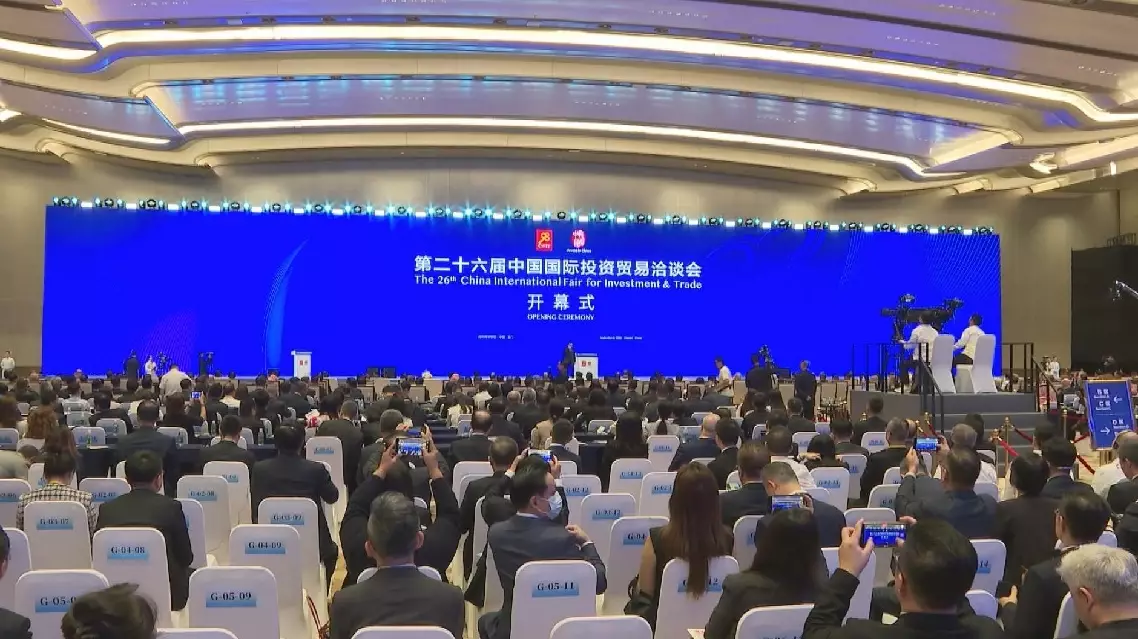
China has become an increasingly significant source of investment, moving beyond simply attracting investment, said economists and company executives at the 26th China International Fair for Investment and Trade (CIFIT), held from Sept 8 to 11 in the eastern Chinese coastal city of Xiamen.
The CIFIT is marking nearly four decades as a platform for global investment and cooperation. Although it was initially launched to draw in foreign investment, the fair has evolved alongside China's economic transformation.
Today, China is not only a major destination for investors, but also an increasingly important investor and one of the world's largest markets.
At this year's fair, foreign companies are seeking to strengthen their partnerships with China, with cooperation spanning technology, green energy and support for Chinese businesses expanding overseas.
"Last year, China ranked No. 4 in global FDI (foreign direct investment) inflows and No. 3 as an investing country. The balance between inward and outward FDI can change, but few countries achieve it. But China has successfully experienced this shift," said Liang Guoyong, a senior economist at the United Nations Conference on Trade and Development.
Chinese companies are increasingly expanding outward, which is creating new opportunities for services and technology.
"Now we can see a lot more integration, as the GBA (Guangdong-Hong Kong-Macao Greater Bay Area) integration down in south China, as well as Chinese companies wanting to go global. It gives a lot of companies, especially in the UK, a lot of opportunities to provide services and provide technologies," said Benjamin King, Chair of Supply Chain Working Group, British Chamber of Commerce South China.
And this two-way relationship is growing beyond individual firms to broader cooperation in technology and global markets.
"China is not only more producing. It's not only a market; it's a partner. You have technological products at a high technological level here in China, and that is good because as a developed economy in Germany, we need highly developed partners to work together, to sell products and even to buy products," said Joe Weingarten, head of the International Trade Department, Rhineland-Palatinate state of Germany.
China emerges as important investment source globally: business leaders
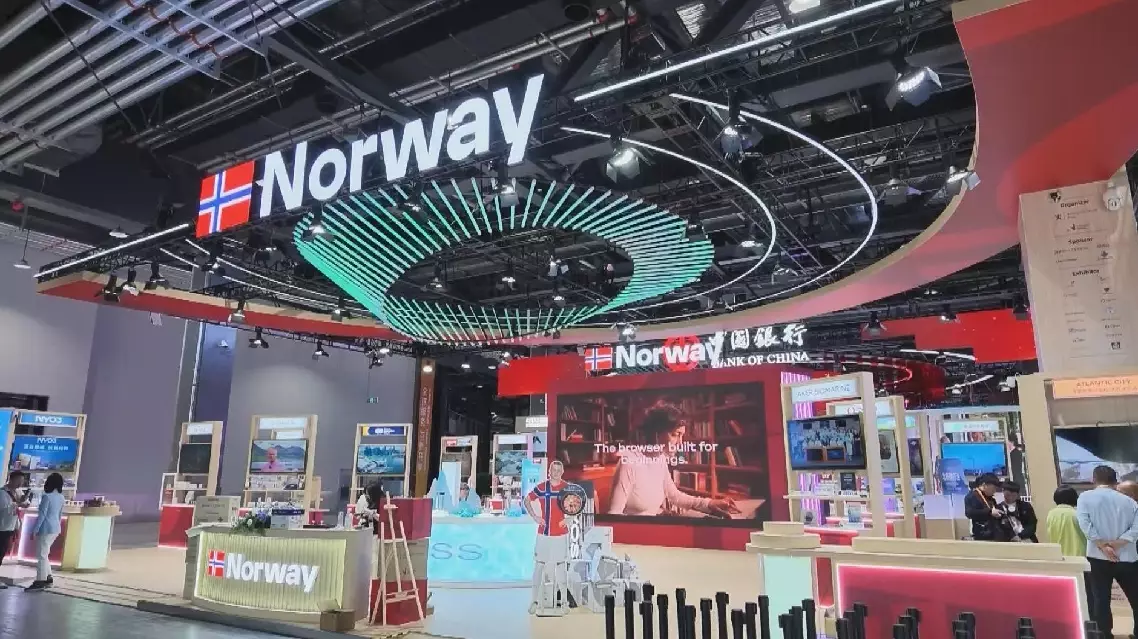
Norwegian companies hope to use Norway's status as a guest of honor country at the just-opened China International Fair for Trade in Services (CIFTIS) to showcase their products and deepen more concrete cooperation outcomes, said a Norwegian diplomat. Henning Kristoffersen, Commercial Counselor at the Norwegian Embassy in China, was speaking ahead of the start of the 2026 CIFTIS, which got underway in Beijing on Wednesday.
As China's flagship services trade fair and a key gateway for foreign companies into the Chinese market, the five-day fair sees more than 1,800 companies participating offline, while many new technologies and new products are making their debuts.
Given its guest of honor label at the event, Norway has a sizable national pavilion which is focused on green energy, digital technology, healthy home products and high-end nutrition.
China remained one of Norway's most important trading partners in 2025, and bilateral economic and trade ties are continuously expanding beyond traditional commodity trade toward technology and service sectors.
Chinese new energy vehicles and electronic products are being exported to Norway, while Norwegian seafood, energy products and maritime technologies are entering the Chinese market, forming diversified and complementary trade cooperation.
In a recent interview with China Central Television (CCTV), Kristoffersen pointed to the importance of this trade relationship, particularly in the face of current global challenges.
"CIFTIS is very important because it's a great platform to exhibit their products and services for the Norwegian companies. But I would also like to say that that particularly in these times where you have a lot of global trade tensions, it becomes even more important that China keeps opening up their market and gives us these opportunities to showcase our Norwegian services and products," he said.
Kristoffersen also highlighted how maritime industries are at the forefront of Norway's service trade, with non-financial enterprises achieving an export volume of approximately 151 billion Norwegian kroner (about 16.4 billion U.S. dollars) last year, solely from maritime and coastal transportation services.
Norway's industrial strength in shipping, engineering technology, ship classification certification and digital services through long-term development makes it a natural partner for China, which boasts a world-leading shipbuilding industrial system and a huge shipping market, laying a solid foundation for deeper bilateral cooperation based on respective strengths.
The Northern Lights project on Norway's west coast stands as one of Europe's representative cross-border carbon dioxide transportation and storage initiatives. The project transports industrially captured liquid carbon dioxide to Norway via purpose-built specialized vessels for subsea storage. Notably, the liquid CO2 carriers serving the project are built by Chinese shipyards, marking an exemplary case of industrial chain cooperation between China and Norway in the green energy sector.
"I think it says a lot, so I think there is also a beautiful opportunity in cooperation on research and development," Kristoffersen said.
From maritime shipping and subsea carbon storage to traditional energy collaboration and joint research on green technologies, the boundaries of service trade cooperation between China and Norway keep expanding, bringing broader prospects for bilateral exchanges.
"A great result for us is when Norwegian companies find Chinese partners and together succeed in the market. So that's what we hope for, concrete business for Chinese and Norwegian companies together," Kristoffersen said.
Norwegian companies hope CIFTIS platform can elevate trade with China: diplomat